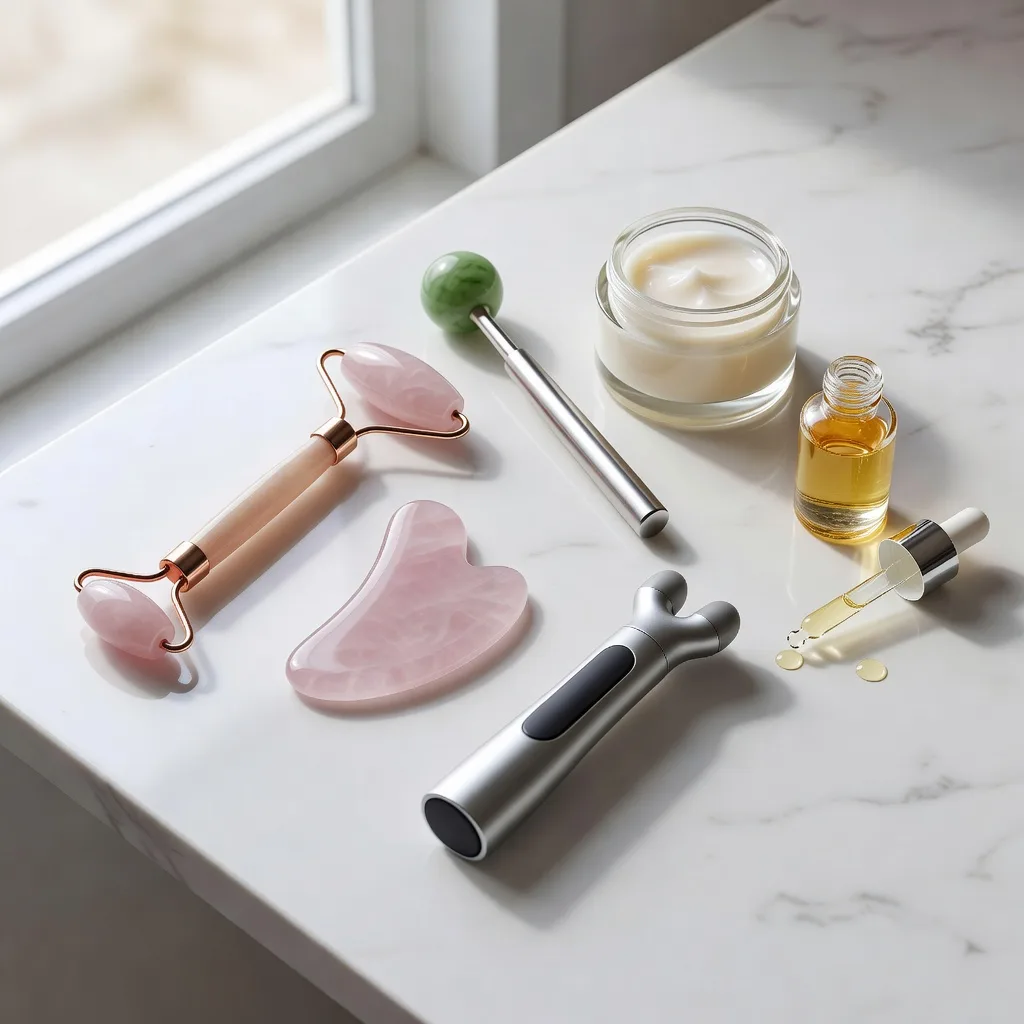
Face Tools for Anti-Aging: Which Ones Work and What the Evidence Says
Face tools promise firmer, smoother, younger-looking skin without a clinic visit. Some of them have real science behind them, some mainly make you feel good, and a few can do harm if used carelessly. Knowing which is which saves money and protects your skin.
Part of our guide to facial treatments. Start with: What Is the Best Anti-Aging Facial Treatment? Options Compared by Goal
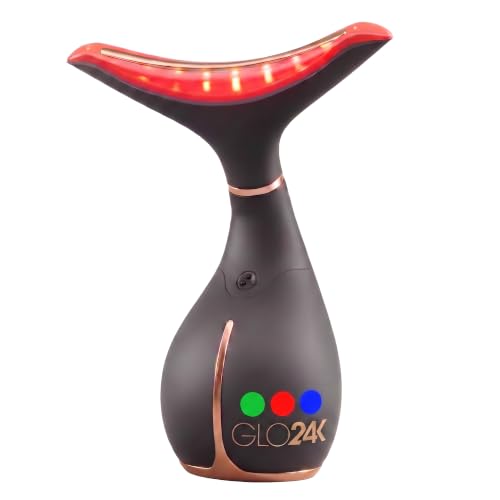
The face tools with the best evidence for anti-aging are LED devices using red or near-infrared light, at-home radiofrequency devices and, to a lesser degree, microcurrent devices, all of which show modest improvements in fine lines or firmness when used consistently for weeks. Gua sha, jade or rose quartz rollers and ice rollers mostly reduce puffiness and feel relaxing; their effects are temporary and there is little proof they reduce wrinkles. At-home microneedling rollers carry the most risk and need strict hygiene. No tool replaces daily sunscreen and a retinoid, which remain the most proven anti-aging steps.
In short: energy-based tools offer small, gradual gains, manual tools offer short-lived depuffing, and sunscreen still does the heavy lifting.
The American Academy of Dermatology stresses that daily broad-spectrum sunscreen is one of the best ways to prevent premature skin ageing, and home devices marketed with medical claims in the US are regulated as medical devices by the FDA.
This guide covers gua sha, rollers, microcurrent, LED, radiofrequency, microneedling rollers and ice rollers, what the evidence supports for each, and how to use them safely. It also explains which concerns no home device can fix, so you know when a clinic is the better route.
Shopping these picks?
Amazon Prime members get fast, free shipping on eligible items, plus Prime Video, Amazon Music and member deals. New members can start with a free trial.
Start a free Prime trialAged 18 to 24? Prime for Young Adults comes with a longer free trial and a lower price after it.
Affiliate link: we may earn a commission at no extra cost to you.
Recommended Face Tools for Anti-Aging



At a Glance
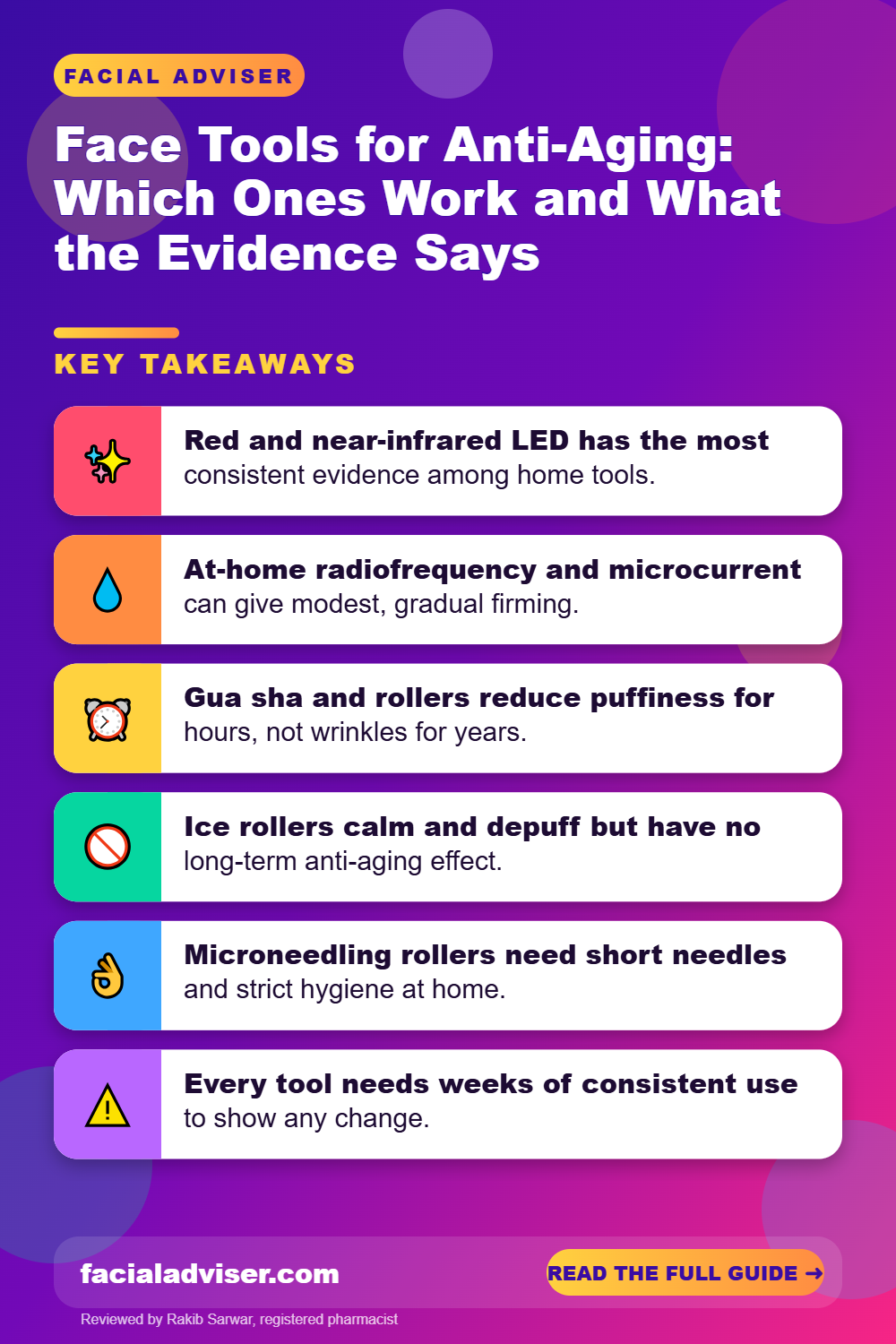
- Red and near-infrared LED has the most consistent evidence among home tools.
- At-home radiofrequency and microcurrent can give modest, gradual firming.
- Gua sha and rollers reduce puffiness for hours, not wrinkles for years.
- Ice rollers calm and depuff but have no long-term anti-aging effect.
- Microneedling rollers need short needles and strict hygiene at home.
- Every tool needs weeks of consistent use to show any change.
- Sunscreen and a retinoid matter more than any device.
What This Covers
- Face Tools for Anti-Aging Ranked by Evidence
- Gua Sha: Circulation and Depuffing, Not Wrinkle Removal
- Jade, Rose Quartz and Ice Rollers: What They Can and Cannot Do
- Microcurrent Devices: Modest Lift With Regular Use
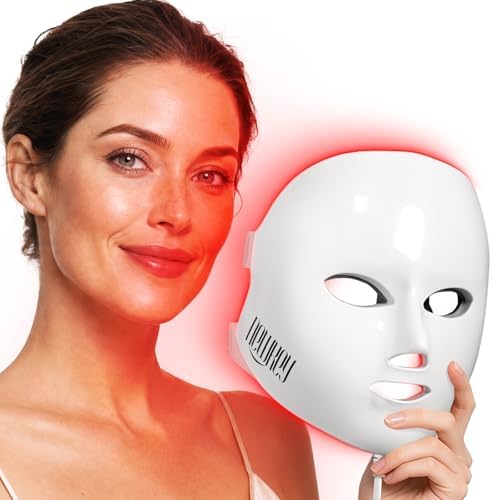
- LED Light Therapy: The Best-Studied Home Tool
- At-Home Radiofrequency: Gentle Heat for Firmness
- Microneedling Rollers: Real Science, Real Risks
- How to Build a Face Tool Routine That Works
- Which Face Tool Fits Your Concern?
- Dos and Don’ts for Face Tools
- Honest Limits
- When to See a Dermatologist
- Common Questions
- The Bottom Line
Face Tools for Anti-Aging Ranked by Evidence
Not all face tools belong in the same category. Energy-based devices deliver light, electrical current or heat into the skin and can influence collagen over time, while manual tools work on the surface and on fluid under the skin. This table sums up how they compare.
| Tool | What it does | Strength of evidence | Best for |
|---|---|---|---|
| Red or near-infrared LED | Light may stimulate collagen-making cells | Moderate | Fine lines, overall texture |
| At-home radiofrequency | Gently heats the dermis to encourage collagen | Moderate but small effects | Mild laxity, firmness |
| Microcurrent | Low-level current stimulates facial muscles | Limited | Short-term lift, contour |
| Microneedling roller | Tiny punctures trigger wound healing | Good in clinics, limited at home | Texture, scars (in-office) |
| Gua sha | Scraping massage moves fluid, boosts circulation | Limited | Puffiness, tension |
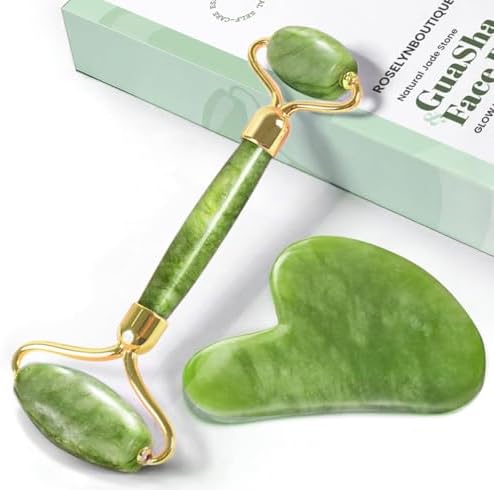
| Jade or quartz roller | Rolling massage, cool stone | Very limited | Puffiness, product spreading |
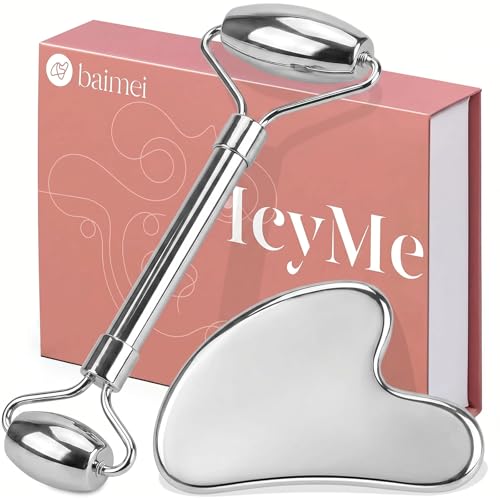
| Ice roller | Cold constricts vessels | Very limited | Morning puffiness, redness |
Evidence here means small studies, often funded by device makers, that measure changes over eight to twelve weeks. Results are real but modest, and they fade when you stop. Manual tools have even less research, and most claims about them come from tradition or marketing rather than trials. That does not make them useless, but it does mean you should buy them for comfort and depuffing, not for wrinkle reduction.
Gua Sha: Circulation and Depuffing, Not Wrinkle Removal
Gua sha uses a smooth, flat stone or metal tool scraped gently along the skin with oil. It comes from traditional Chinese medicine and has become one of the most popular facial tools.
- It boosts blood flow to the surface, giving a brief healthy flush.
- Gliding outward and downward helps move lymph fluid, which reduces puffiness.
- It can relax tight jaw and forehead muscles, which some people find softens tension lines for a while.
- The effects usually last hours, not weeks.
- Pressing too hard can cause redness, bruising or broken capillaries, especially on thin skin.
To use it, apply a facial oil, hold the tool almost flat against the skin and glide outward from the centre of the face in light strokes, repeating each stroke three to five times. A few minutes is enough.
There is little research showing gua sha reduces wrinkles or builds collagen. It is best seen as a massage tool that makes skin look fresher on the day. Our guide on facial roller vs gua sha compares the two manual tools in detail.
Jade, Rose Quartz and Ice Rollers: What They Can and Cannot Do
Stone rollers and ice rollers are the gentlest face tools. They feel pleasant, cost little and are hard to misuse, but their anti-aging claims outrun the evidence.
- Stone rollers help spread serum or oil evenly and give a light lymphatic massage.
- Cool stones and ice rollers constrict surface blood vessels, calming redness and morning puffiness.
- Ice rollers can soothe skin after a workout or on hot days.
- The type of stone makes no proven difference to results.
Rollers do not push skincare deeper into the skin in any meaningful way, and cold does not tighten pores permanently. Any smoothing you see is from reduced swelling and fades within a few hours.
Stone rollers are easy to use: roll upward and outward from the chin, cheeks and forehead for a couple of minutes after serum. Keep ice rollers wrapped or moving so the skin never freezes, and skip them on broken capillaries or rosacea flares if cold triggers redness.
Microcurrent Devices: Modest Lift With Regular Use
Microcurrent devices send a very low electrical current through two metal probes, which is thought to stimulate facial muscles and possibly skin cells. Users often notice a slightly lifted look straight after a session.
The research is limited and mixed. A few small studies suggest improvements in firmness and contour with daily or near-daily use over several weeks, but the results are subtle and stop when you stop. A conductive gel is essential, as the current does not travel well over dry skin. Our step-by-step guide to microcurrent facial steps and benefits explains technique.
Most devices suggest five to ten minutes a day at first, then a few times a week to maintain results. Glide slowly along the jaw, cheekbones and brow, holding briefly at the end of each stroke.
- Avoid if you have a pacemaker or other implanted electrical device.
- Avoid during pregnancy unless your doctor agrees.
- Avoid over active acne, broken skin or recent filler without advice.
LED Light Therapy: The Best-Studied Home Tool
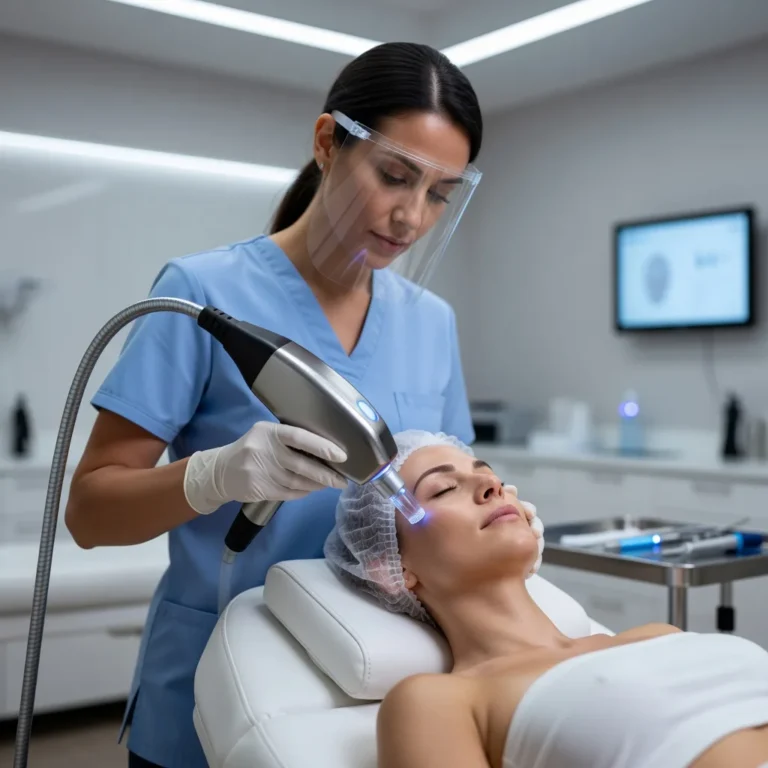
LED masks and wands shine specific wavelengths of light onto the skin. Red light, and invisible near-infrared light, are the colours linked to anti-aging, while blue light targets acne bacteria.
Studies of red and near-infrared light show modest improvements in fine lines, skin roughness and firmness after several weeks of regular sessions, likely by encouraging collagen production. Home devices are weaker than clinic panels, so they need consistent use, usually a few sessions a week for at least two to three months.
- Choose a device with clear wavelength details and safety information, ideally one that states FDA clearance.
- Use it on clean, dry skin before applying serums, unless the maker says otherwise.
- Use the eye protection supplied, especially with bright masks.
- Check with a doctor first if you take medicines that make you light-sensitive.
At-Home Radiofrequency: Gentle Heat for Firmness
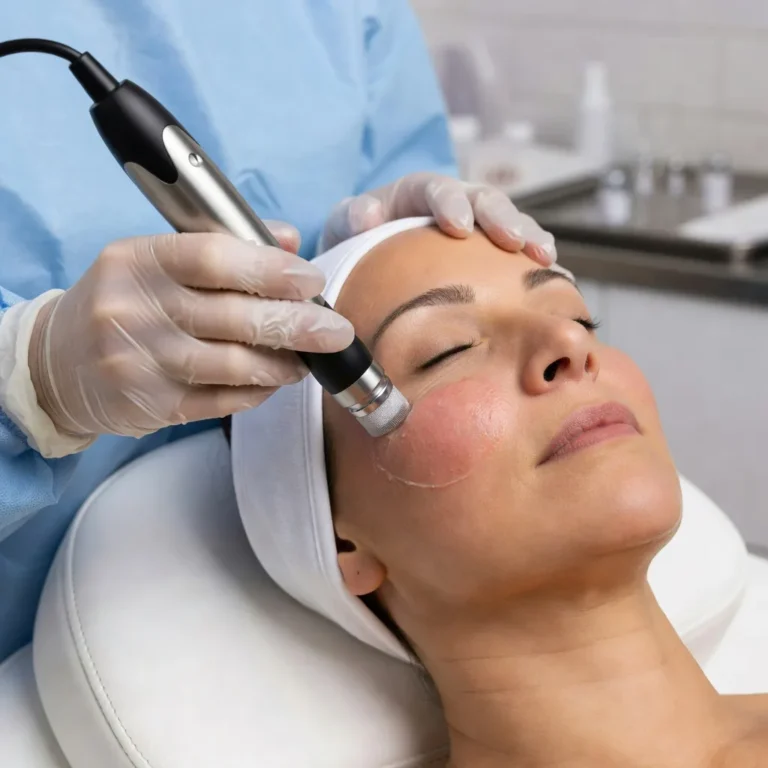
Radiofrequency (RF) devices warm the deeper layer of skin, the dermis, which can tighten existing collagen and prompt new collagen over time. In-office RF is much stronger; home versions are designed to be safe at lower heat.
Small studies show modest improvements in mild sagging and fine lines after weeks of regular use. Results are gradual and smaller than professional treatments, which reach higher temperatures. Our guide to radiofrequency facials explains the difference between clinic and home devices.
Keep the device moving, follow the time limits exactly and stop if skin feels hot or painful, as overheating can cause burns. Many devices need a conductive gel. Avoid RF over fillers, metal implants or active skin conditions unless a doctor approves, and expect to use it a few times a week for two to three months before judging it.
Microneedling Rollers: Real Science, Real Risks
Microneedling creates tiny channels in the skin that trigger a healing response and collagen production. In clinics, with sterile, longer needles, it has good evidence for acne scars and texture.
At-home rollers are a different story. Only short needles, around 0.25 millimetres or less, are appropriate for home use, and these mainly help products absorb rather than remodel collagen. Rollers also tear skin at an angle as they enter and exit, and they are hard to keep sterile.
Never use a microneedling roller on active acne, cold sores, eczema or broken skin, and never share one. Disinfect it before and after each use, replace it often, and do not use needles longer than 0.25 millimetres at home. Infection and scarring are real risks.
How to Build a Face Tool Routine That Works
A tool only helps if it fits into a routine you will actually follow. These steps put the evidence-backed basics first.
Start with the basics
Use daily broad-spectrum SPF 30 and a retinoid at night before buying any tool.
Pick one goal
Choose depuffing, texture or firmness so you can pick the right tool.
Choose one tool
LED or RF for gradual firming, gua sha or rollers for puffiness.
Cleanse first
Use tools on clean skin with gel, oil or serum as directed.
Follow the timing
Stick to the recommended session length and frequency.
Clean the tool
Wash or wipe it after every use and store it dry.
Review after 12 weeks
Compare photos in the same light to judge any change.
Take a photo in the same spot, light and angle before you start. Changes from devices are slow and small, so memory is a poor judge of whether a tool is working.
Which Face Tool Fits Your Concern?
Match the tool to what bothers you most. If a concern is not in the table, a device is probably not the right answer.
| Concern | Best tool to try | Better alternative if it fails |
|---|---|---|
| Morning puffiness | Ice roller or gua sha | Less salt, more sleep |
| Fine lines | Red or near-infrared LED | Retinoid, dermatologist treatments |
| Mild sagging | At-home RF or microcurrent | In-office RF or ultrasound |
| Rough texture | LED, gentle exfoliation | Professional microneedling or peels |
| Deep wrinkles | No home tool works well | Botox, fillers, lasers |
| Dullness | Gua sha massage | Vitamin C, exfoliation |
Dos and Don’ts for Face Tools
Good Habits
- Use tools on clean skin with slip
- Keep sessions short and consistent
- Clean tools after every use
- Choose FDA-cleared energy devices
- Wear sunscreen every day
Common Mistakes
- Press hard or drag skin
- Use tools on broken or inflamed skin
- Share microneedling rollers
- Expect results in days
- Replace a dermatologist for deep wrinkles
Honest Limits
Much of the research on face tools is small, short and often funded by the companies that sell them. Even the best home devices produce changes that are subtle compared with professional treatments, and many people see little difference at all.
Manual tools such as gua sha and rollers can be a lovely ritual, but they do not reverse ageing, and no stone or roller changes the structure of your skin. If you want measurable change, the foundation is still daily sunscreen, a retinoid and gentle care; see the AAD advice on how to apply sunscreen correctly.
When to See a Dermatologist
- You want visible change in deep wrinkles or significant sagging.
- A tool causes burns, persistent redness, bumps or infection.
- You have melasma, rosacea or eczema and want to try a device.
- You are considering professional microneedling, RF or laser.
This article is for general information and does not replace professional medical advice. See a board-certified dermatologist before using energy-based devices if you have a skin condition, implant or take light-sensitising medicines.
Common Questions
Do face tools really work for anti-aging?
Some do modestly; LED and RF have the best evidence.
Does gua sha reduce wrinkles?
Not proven; it mainly reduces puffiness temporarily.
Do jade rollers work?
They depuff and feel nice, but do not remove wrinkles.
Is microcurrent worth it?
It may give a subtle lift with regular use.
Does LED light therapy work?
Red light shows modest gains in fine lines over weeks.
Are ice rollers anti-aging?
No, they only reduce puffiness and redness briefly.
Is at-home microneedling safe?
Only with short needles and strict hygiene.
How long until face tools show results?
Usually 8 to 12 weeks of consistent use.
Can I use several tools together?
Yes, but add one at a time to spot reactions.
What is the most effective anti-aging tool?
Daily sunscreen, followed by a retinoid.
The Bottom Line
Among face tools for anti-aging, red light LED and at-home radiofrequency have the strongest evidence, microcurrent helps a little, and gua sha, rollers and ice rollers mostly offer short-lived depuffing.
Choose one tool for one goal, use it consistently for three months, keep it clean, and build it on top of sunscreen and a retinoid rather than instead of them.

Written by
Registered pharmacist and founder of Facial Adviser. Rakib's pharmacy training covers how skincare actives work and interact; a later course in cosmetology turned that into a focus on facial treatments and skincare products. He plans, researches and edits every guide on the site and checks health claims against sources such as the American Academy of Dermatology, the FDA and the NIH. He is not a dermatologist; see the Editorial Policy and Medical Disclaimer.
About · Editorial policy · How we choose products · Medical disclaimer · Contact
Keep reading: Anti-aging facials and treatments
- What Is the Best Anti-Aging Facial Treatment? Options Compared by Goal
- How to Apply Anti-Aging Cream on Face: Order, Amount and Timing
- How to Do an Anti-Aging Facial at Home: Steps, DIY Masks, Oils and Serums
- Best Treatment for Facial Wrinkles: At-Home Creams vs In-Office Options
- 10 Best Facial Products for Aging Skin (2026): Serums, SPF and Creams
- Best Facial Procedures for Aging Skin: Botox, Fillers, Lasers and Peels
- Fruit Facial at Home: Does It Actually Work?
- Facial Types: A Guide to 11 Popular Facials and How to Choose One