How to Apply Anti-Aging Cream on Face: Order, Amount and Timing
Anti-aging creams only work if they reach your skin in the right amount, at the right time and in the right order. Many people buy a good product and then undercut it by layering it in the wrong place, using too much of a strong active, skipping the neck or wearing a retinol cream in the morning without sunscreen.
Part of our guide to facial treatments. Start with: What Is the Best Anti-Aging Facial Treatment? Options Compared by Goal
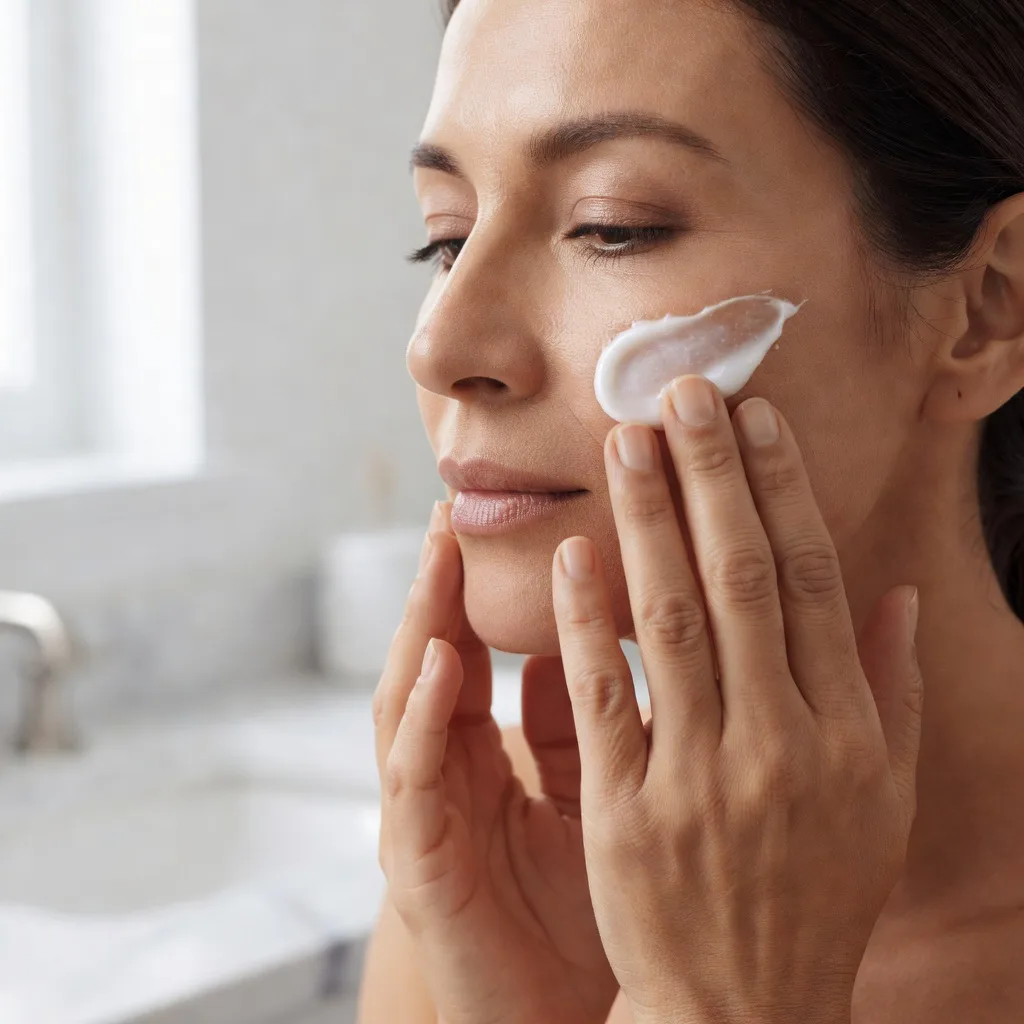
To apply anti-aging cream on your face, start with clean, dry skin, apply thin products such as serums first, then use about a pea-sized amount of cream for the whole face. Dot it on the forehead, cheeks, nose and chin, then spread it gently outwards with your fingertips, avoiding the lids and the corners of the nose and mouth if it contains retinol. Use retinoid creams at night and peptide or antioxidant creams in the morning or at night. Every morning, finish with broad-spectrum sunscreen. Extend leftover cream down the neck, and use a separate, gentler product around the eyes.
In short: thin to thick, a pea-sized amount, retinoids at night, sunscreen every morning, and do not forget the neck.
The American Academy of Dermatology recommends a broad-spectrum sunscreen of SPF 30 or higher on all exposed skin every day, because sun exposure is the main outside cause of wrinkles and spots, and no cream can undo damage that continues each day.
This guide covers routine order, morning versus night use, amounts, the upward strokes myth, and how to handle the delicate skin of the neck and eyes.
Shopping these picks?
Amazon Prime members get fast, free shipping on eligible items, plus Prime Video, Amazon Music and member deals. New members can start with a free trial.
Start a free Prime trialAged 18 to 24? Prime for Young Adults comes with a longer free trial and a lower price after it.
Affiliate link: we may earn a commission at no extra cost to you.
Recommended Anti-Aging Creams
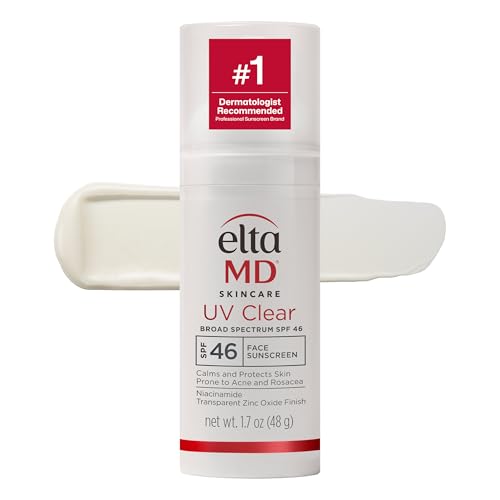

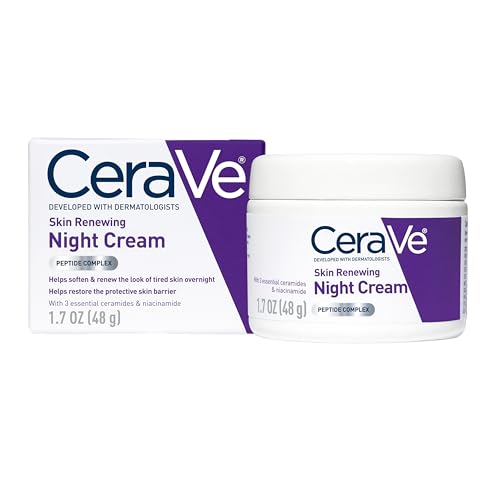
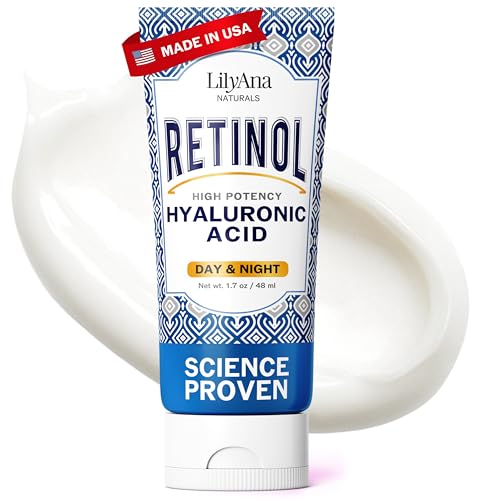
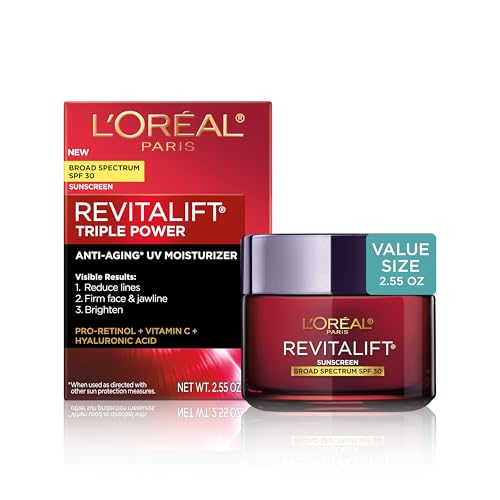
At a Glance
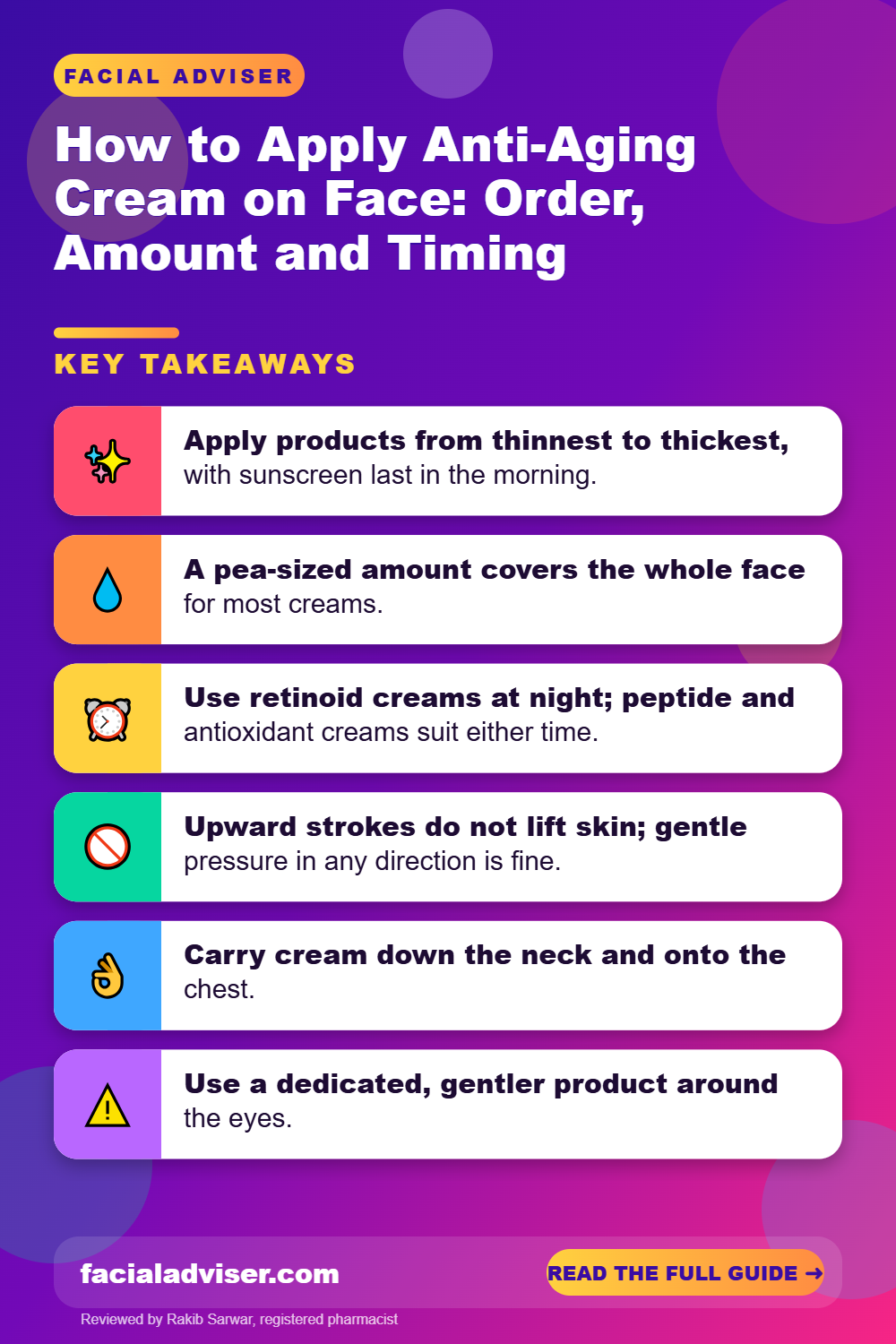
- Apply products from thinnest to thickest, with sunscreen last in the morning.
- A pea-sized amount covers the whole face for most creams.
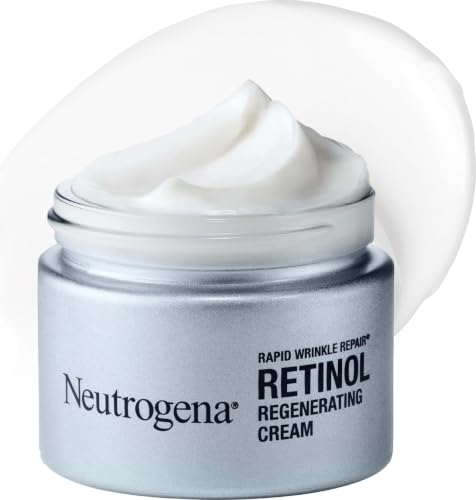
- Use retinoid creams at night; peptide and antioxidant creams suit either time.
- Upward strokes do not lift skin; gentle pressure in any direction is fine.
- Carry cream down the neck and onto the chest.
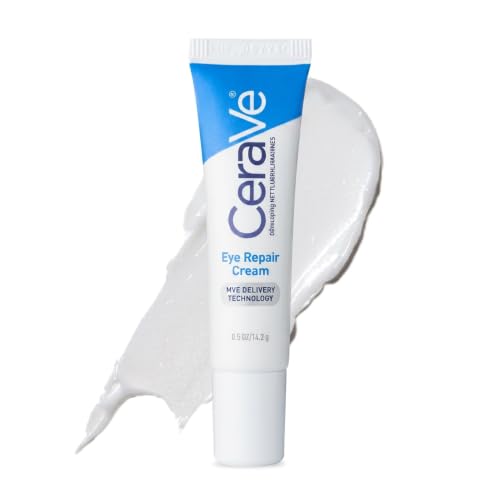
- Use a dedicated, gentler product around the eyes.
- Daily sunscreen matters more than any anti-aging cream.
What This Covers
- Where Anti-Aging Cream Goes in Your Routine
- Morning vs Night: Which Creams Go When
- How Much Anti-Aging Cream to Use
- How to Apply Anti-Aging Cream Step by Step
- The Upward Strokes Myth
- How to Apply Anti-Aging Cream on the Neck
- How to Apply Anti-Aging Cream Around the Eyes
- Common Application Mistakes
- Starting a New Anti-Aging Cream Safely
- Honest Limits
- When to See a Dermatologist
- Common Questions
- Summing Up
Where Anti-Aging Cream Goes in Your Routine
The general rule is to apply products from the thinnest, most watery texture to the thickest. Thin products absorb best on bare skin, while creams help seal them in. Sunscreen always goes last in the morning because it needs to sit on top as an even film.
| Step | Morning | Night |
|---|---|---|
| 1 | Gentle cleanser | Cleanser (double cleanse if wearing makeup or sunscreen) |
| 2 | Toner or essence, optional | Toner or essence, optional |
| 3 | Vitamin C or antioxidant serum | Retinoid serum, if not using a retinoid cream |
| 4 | Eye cream | Eye cream |
| 5 | Peptide or hydrating anti-aging cream | Retinol or peptide night cream |
| 6 | Broad-spectrum sunscreen SPF 30+ | Facial oil, optional, as the final seal |
If your anti-aging cream is your only active product, it simply goes after cleansing and before sunscreen. If it is a rich night cream, it is usually your last step. Our guide on morning vs night skincare routine order explains the full sequence in more detail.
Morning vs Night: Which Creams Go When
Not every anti-aging cream suits both times of day. The deciding factor is the main active ingredient and how it behaves in sunlight.
| Cream type | Best time | Why |
|---|---|---|
| Retinol or retinoid cream | Night | Breaks down in light and can increase sun sensitivity |
| Peptide cream | Morning or night | Stable and gentle; works under sunscreen |
| Vitamin C cream | Morning | Antioxidant support against daytime sun and pollution |
| Alpha hydroxy acid (AHA) cream | Night | Increases sun sensitivity |
| Rich ceramide or barrier cream | Night, or morning for dry skin | Can feel heavy under makeup |
| Moisturiser with SPF | Morning only | The SPF has no value at night |
A simple, effective pattern for most people is an antioxidant or peptide cream and sunscreen in the morning, and a retinoid cream at night. If you use an acid product as well, alternate it with your retinoid rather than applying both on the same night.
How Much Anti-Aging Cream to Use
More cream does not mean faster results. With retinoids and acids, too much often means more peeling and redness with no extra benefit. With rich moisturisers, excess cream sits on the surface, pills under makeup and can clog pores.
- Face creams: about a pea-sized amount for the whole face, or slightly more for very dry skin.
- Retinoid creams: a pea-sized amount at most; start with less if you are new to retinoids.
- Eye creams: about a grain of rice per eye area, patted along the orbital bone.
- Neck: a second pea-sized amount, or the leftover from your face if you used a little extra.
- Sunscreen: much more than your cream, about a quarter to a third of a teaspoon for the face.
Sunscreen is the one product people consistently underuse. The SPF on the label is tested with a thick layer, so a thin smear of SPF moisturiser gives far less protection than the number suggests. Use a dedicated sunscreen in a generous layer.
If your cream balls up or feels tacky after a few minutes, you are likely using too much or layering it too quickly. Our guide on how to avoid pilling when layering covers this in detail.
How to Apply Anti-Aging Cream Step by Step
These steps work for most anti-aging creams, whether you use them morning or night.
Cleanse gently
Wash with a mild cleanser and lukewarm water, then pat skin dry with a clean towel.
Wait for dry skin if using a retinoid
Damp skin absorbs retinoids faster and can make them sting, so wait a few minutes.
Apply thinner products first
Use serums or toners before your cream and give them a minute to settle.
Dot the cream on
Place small dots of a pea-sized amount on the forehead, each cheek, nose and chin.
Spread with light pressure
Smooth the cream outwards with your fingertips using gentle, even strokes. Do not tug.
Avoid sensitive spots
Keep retinoids away from the lids, the corners of the nose and the corners of the mouth.
Finish the neck and eyes
Carry leftover cream down the neck, and pat eye cream along the orbital bone with your ring finger.
Add sunscreen in the morning
Once the cream has settled, apply broad-spectrum SPF 30 or higher as the last step.
If your retinoid cream stings, try the buffer method: apply a plain moisturiser first, wait a few minutes, then apply the retinoid over it. This slows absorption and is kinder to sensitive skin while you adjust.
The Upward Strokes Myth
You may have been told to apply anti-aging cream only in upward strokes to avoid pulling the skin down and causing sagging. It is a popular piece of advice, but it does not hold up. The direction of a few seconds of light rubbing each day does not decide whether skin sags.
Sagging comes mainly from gradual loss of collagen and elastin, sun damage, changes in fat pads and bone, genetics and smoking. A cream applied in any direction with gentle pressure will not stretch the skin enough to matter. What does matter is avoiding rough, repeated tugging, especially around the eyes, and using products that actually support the skin, such as sunscreen and retinoids.
- Upward strokes: harmless and pleasant, but they do not lift the face.
- Downward strokes: also harmless when gentle.
- Pressing and patting: useful for the thin eye area and for spreading thick creams without drag.
- Hard rubbing or pulling: best avoided, as it can irritate skin, especially with active ingredients.
If you enjoy a massage-style application, there is no harm in it. Just keep the pressure light and the strokes brief.
How to Apply Anti-Aging Cream on the Neck
The neck often shows signs of ageing early because it gets plenty of sun and is usually left out of skincare routines. The skin there is also thinner and has fewer oil glands than the face, so it can be more sensitive to strong actives.
- Apply cream to the front and sides of the neck, moving from the collarbone towards the jaw or in any gentle direction.
- Include the area under the jaw, which is easy to miss.
- Start retinoids on the neck more slowly than on the face, for example two or three nights a week.
- A separate neck cream is optional; a well-tolerated face cream usually works just as well.
- Apply sunscreen to the neck and chest every morning, not just the face.
Many so-called neck creams contain the same ingredients as face creams in a different package. If your face cream suits you, using it on the neck is a reasonable, simpler option.
How to Apply Anti-Aging Cream Around the Eyes
The skin around the eyes is the thinnest on the face and reacts more easily to retinoids, acids and fragrance. Products can also migrate into the eyes and sting.
- Use a product labelled safe for the eye area, often with a lower strength of active ingredients.
- Apply a grain of rice per eye with your ring finger, which naturally uses the lightest pressure.
- Pat along the orbital bone, the ridge you can feel under the eye and just below the brow.
- Do not apply right up to the lash line or on the moving lid unless the product allows it.
- Apply eye cream at night at least a short while before bed so it does not travel into the eyes on the pillow.
Stop using any cream that causes burning, swelling, blistering or persistent redness, and never apply retinoids or acids to broken, sunburnt or eczema-affected skin. Around the eyes, rinse immediately with water if a product gets into the eye.
Common Application Mistakes
Try This
- Apply to clean, dry skin
- Use a pea-sized amount
- Keep retinoids to night-time
- Wear sunscreen every morning
- Include the neck and chest
Avoid This
- Layer retinol and strong acids on the same night
- Rub or tug the skin
- Pile on extra cream for faster results
- Apply retinoids to the lids or lips
- Rely on an SPF moisturiser alone outdoors
Consistency beats intensity. Anti-aging ingredients such as retinoids usually need at least two to three months of regular use before changes in fine lines or texture show. Changing products every few weeks, or using so much that your skin becomes irritated and you have to stop, undermines the results.
Starting a New Anti-Aging Cream Safely
New actives, especially retinoids, are best introduced slowly. Apply a small amount to the side of the neck or jaw for a few nights to check for a reaction, then build up gradually on the face.
- Weeks 1 to 2: retinoid cream two nights a week.
- Weeks 3 to 4: every other night if your skin is comfortable.
- After that: nightly, if tolerated.
- If dryness or peeling appears, drop back a step and use more moisturiser.
Our guide on how to transition to retinol smoothly has a more detailed plan, including what to do if your skin reacts.
Honest Limits
Even perfect application cannot make a cream do more than its ingredients allow. Over-the-counter retinol and peptide creams can soften fine lines and improve texture and tone over months, but they do not lift sagging skin, remove deep wrinkles or replace volume. Claims such as instant lifting usually describe a temporary film or plumping effect that fades once the product is washed off.
The steps with the strongest evidence are the least glamorous: daily broad-spectrum sunscreen, a retinoid used consistently at night, and a moisturiser that keeps your skin comfortable. The AAD guide on how to apply sunscreen explains how much to use and when to reapply, which will do more for your skin than any application technique.
When to See a Dermatologist
- Your skin stays red, peeling or stinging after several weeks of reduced use.
- You want stronger prescription retinoids such as tretinoin.
- You have rosacea, eczema or very sensitive skin and react to most creams.
- You notice a new, changing or unusual spot or mole.
- You want treatments for sagging or deep lines that creams cannot reach.
This article is for general information and does not replace professional medical advice. See a board-certified dermatologist for skin conditions and if you react to skincare products. Do not use retinoids if you are pregnant or trying to conceive unless your doctor advises it.
Common Questions
How much anti-aging cream should I use on my face?
About a pea-sized amount for the whole face.
Should I apply anti-aging cream in the morning or at night?
Retinoid creams at night; peptide and antioxidant creams at either time.
Do I apply anti-aging cream before or after serum?
After serum, since thinner products go first.
Does anti-aging cream go before sunscreen?
Yes, sunscreen is always the last morning step.
Do I need to apply anti-aging cream in upward strokes?
No, direction does not matter if you use gentle pressure.
Should I put anti-aging cream on my neck?
Yes, the neck ages too and benefits from the same care.
Can I use my face cream around my eyes?
Only if it is gentle and labelled safe for the eye area.
Should I apply retinol cream on damp skin?
No, dry skin reduces stinging and irritation.
How long before anti-aging cream works?
Usually two to three months of consistent use.
Can I use two anti-aging creams at once?
Yes, if they are gentle; avoid combining strong retinoids and acids.
Summing Up
Apply anti-aging cream to clean, dry skin after serums, use a pea-sized amount, keep retinoids for night-time and finish every morning with broad-spectrum sunscreen.
Extend your routine to the neck, use a gentler product around the eyes, skip the upward strokes worry, and give your cream a few months of steady use before judging it.

Written by
Registered pharmacist and founder of Facial Adviser. Rakib's pharmacy training covers how skincare actives work and interact; a later course in cosmetology turned that into a focus on facial treatments and skincare products. He plans, researches and edits every guide on the site and checks health claims against sources such as the American Academy of Dermatology, the FDA and the NIH. He is not a dermatologist; see the Editorial Policy and Medical Disclaimer.
About · Editorial policy · How we choose products · Medical disclaimer · Contact
Keep reading: Anti-aging facials and treatments
- What Is the Best Anti-Aging Facial Treatment? Options Compared by Goal
- How to Do an Anti-Aging Facial at Home: Steps, DIY Masks, Oils and Serums
- Best Treatment for Facial Wrinkles: At-Home Creams vs In-Office Options
- 10 Best Facial Products for Aging Skin (2026): Serums, SPF and Creams
- Best Facial Procedures for Aging Skin: Botox, Fillers, Lasers and Peels
- Best Facial for Wrinkles: Professional Treatments vs At-Home Options
- Facial Types: A Guide to 11 Popular Facials and How to Choose One
- Microneedling Facial: Real Results, Explained