Can Anti-Aging Creams Age You? Irritation, Sun Sensitivity and Fixes
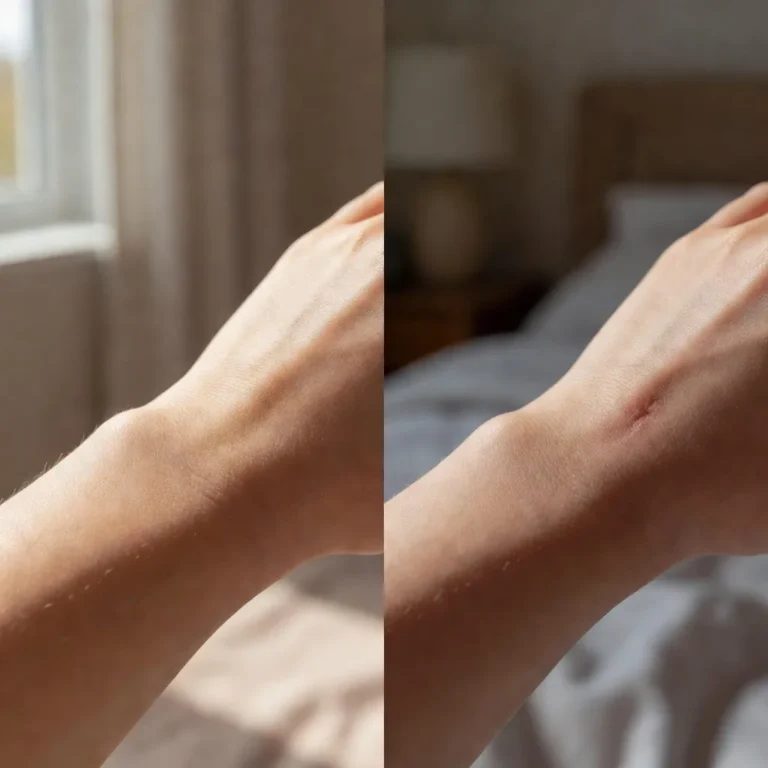
It sounds like a contradiction, but it is a fair question. Many people start a new retinol or acid cream and a few weeks later see redness, flaking, tight shiny skin or new dark marks, and they wonder whether the product meant to make them look younger is doing the opposite.
Part of our guide to facial treatments. Start with: What Is the Best Anti-Aging Facial Treatment? Options Compared by Goal
Anti-aging creams do not age your skin when they are used correctly. Retinoids and many acids are among the best-studied ingredients for improving fine lines, texture and tone. However, overusing them can cause irritation, peeling and a damaged skin barrier, which makes skin look dry, dull and more lined in the short term. Retinoids and alpha hydroxy acids can also increase sun sensitivity, and unprotected sun exposure is the main outside cause of skin ageing. Irritation can also leave dark marks on medium and deep skin tones. Starting slowly, moisturising and wearing daily sunscreen prevent almost all of these problems.
In short: the cream is rarely the problem; too much, too often and without sunscreen is.
The US Food and Drug Administration notes that alpha hydroxy acids can increase the skin’s sensitivity to the sun and advises using sun protection while using them and for a week afterwards.
This guide explains how anti-aging creams can backfire, how to recognise barrier damage, which ingredients are gentler, and how to use active products safely so they improve your skin rather than stress it over the long term.
Shopping these picks?
Amazon Prime members get fast, free shipping on eligible items, plus Prime Video, Amazon Music and member deals. New members can start with a free trial.
Start a free Prime trialAged 18 to 24? Prime for Young Adults comes with a longer free trial and a lower price after it.
Affiliate link: we may earn a commission at no extra cost to you.
Recommended Gentle Anti-Aging and Barrier Repair Creams

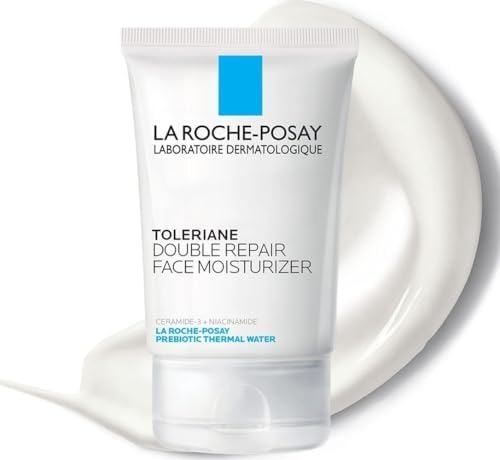
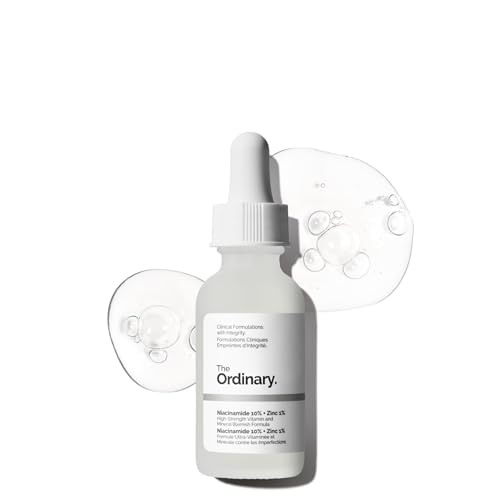

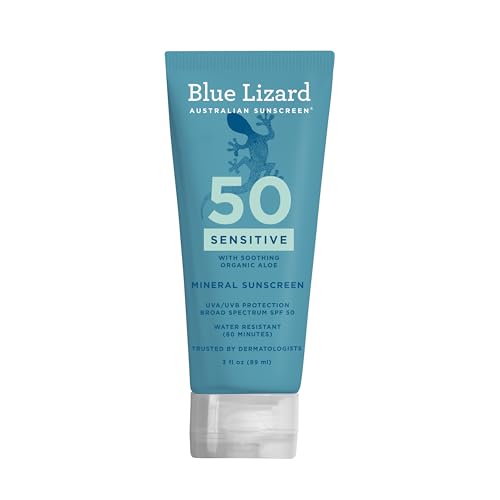
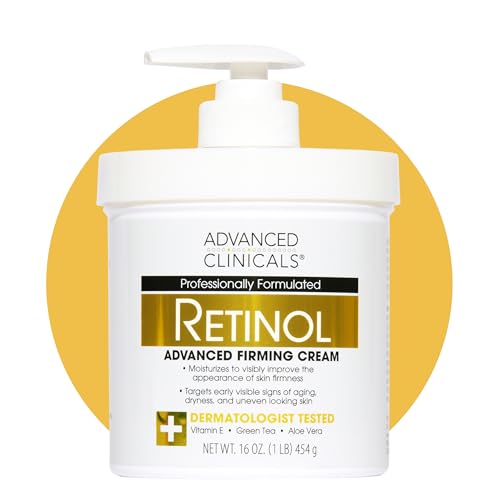

At a Glance
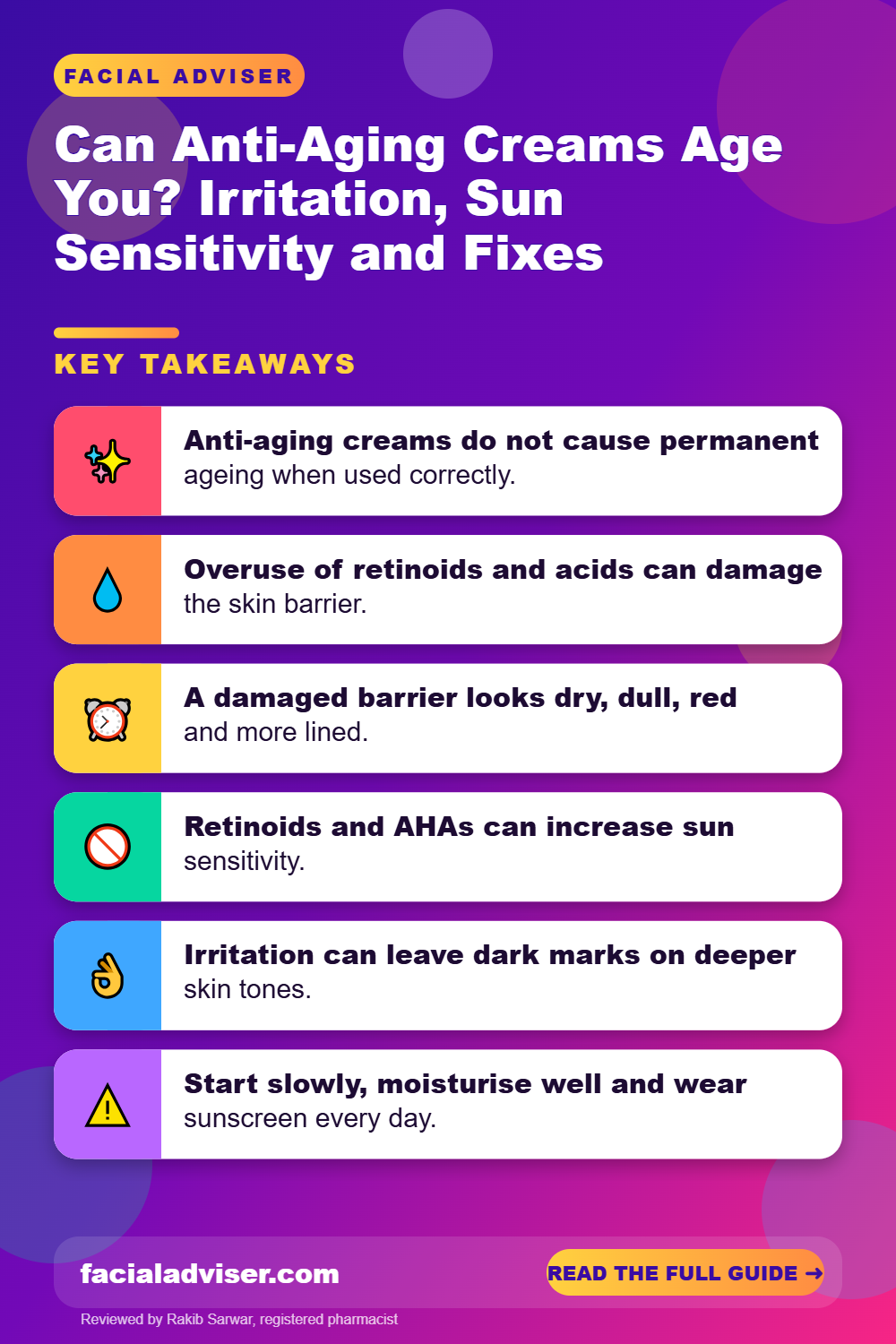
- Anti-aging creams do not cause permanent ageing when used correctly.
- Overuse of retinoids and acids can damage the skin barrier.
- A damaged barrier looks dry, dull, red and more lined.
- Retinoids and AHAs can increase sun sensitivity.
- Irritation can leave dark marks on deeper skin tones.
- Start slowly, moisturise well and wear sunscreen every day.
- Most barrier damage recovers within a few weeks of gentle care.
Contents
- How Anti-Aging Creams Can Make Skin Look Older
- Retinoid and Acid Irritation
- Sun Sensitivity: The Real Way a Cream Can Age You
- Signs Your Skin Barrier Is Damaged
- Irritation and Dark Marks on Deeper Skin Tones
- Over-Use: More Is Not Better
- Gentler Anti-Aging Ingredients to Consider
- How to Use Anti-Aging Creams Without Damaging Your Skin
- How to Repair an Over-Treated Skin Barrier
- Honest Limits
- When to See a Dermatologist
- Your Questions, Answered
- The Takeaway
How Anti-Aging Creams Can Make Skin Look Older
The ingredients that work best against ageing are also the ones most likely to irritate. Retinoids speed up cell turnover, and acids loosen the bonds between surface cells. That is how they smooth and brighten skin, but it also means that too much, too fast can strip away the protective outer layer faster than it can rebuild.
| Problem | Main cause | What you see |
|---|---|---|
| Retinoid irritation | Starting too strong or too often | Redness, peeling, stinging, tightness |
| Barrier damage | Layering several actives or over-exfoliating | Dry, rough, shiny or sensitive skin |
| Sun sensitivity | Retinoids or AHAs without sunscreen | Burning more easily, new spots |
| Post-inflammatory darkening | Irritation on medium or deep skin | Dark patches where skin was inflamed |
| Contact dermatitis | Fragrance, preservatives or botanicals | Itchy rash, swelling |
| Breakouts | Heavy, occlusive creams | Clogged pores and small bumps |
None of these are signs that the skin is ageing faster in a lasting way. They are signs the skin is under stress. The danger is that people often respond by adding more products to fix the problem, which makes it worse, or by skipping sunscreen because their skin stings, which does cause long-term damage. Recognising the difference between normal adjustment and genuine harm is the key to getting results without setbacks.
Retinoid and Acid Irritation
Retinoid irritation, sometimes called retinisation, is common in the first weeks of use. It usually peaks between the second and sixth week and settles as the skin adapts.
- Mild: slight dryness, a little flaking around the nose and mouth, tightness after washing.
- Moderate: visible peeling, pink patches, stinging when applying other products.
- Severe: raw, burning, weeping or swollen skin, which means stop and see a doctor.
Acids behave differently. Glycolic and lactic acids can sting on application, and daily use of strong acids, especially alongside a retinoid, can thin the protective surface layer and leave skin shiny and reactive. The AAD’s advice on how to safely exfoliate at home recommends being gentle, choosing a method that suits your skin type and exfoliating less often if skin becomes red or irritated.
Our guide on how to transition to retinol smoothly gives a week-by-week plan for building tolerance. In most cases, the answer to irritation is to slow down rather than give up, since the same product often becomes comfortable once it is used less often and paired with a good moisturiser. Many people who quit retinoids after two weeks would have tolerated them well by week eight with a gentler schedule.
Sun Sensitivity: The Real Way a Cream Can Age You
This is the one route by which an anti-aging routine could genuinely speed up ageing. Retinoids thin the dead outer layer of skin, and AHAs make skin more sensitive to ultraviolet light. If you use them and then spend time outdoors without protection, you may burn more easily and collect more of the sun damage that causes wrinkles, spots and sagging.
The FDA’s page on alpha hydroxy acids advises using sunscreen and protective clothing while using AHA products and for a week after stopping.
A cream that improves fine lines by a small amount over six months can be outweighed by a single summer of unprotected sun. If you use retinoids or acids, daily broad-spectrum sunscreen of SPF 30 or higher is not optional.
Signs Your Skin Barrier Is Damaged
The skin barrier is the outermost layer, made of skin cells and fats such as ceramides. It keeps water in and irritants out. When it is disrupted, the skin loses moisture quickly and reacts to products it used to tolerate.
- Products that never stung before now sting or burn.
- Skin feels tight within minutes of washing.
- Surface looks shiny or glassy but feels dry.
- Patches of redness, flaking or roughness.
- Fine lines look deeper because the skin is dehydrated.
- New breakouts or small bumps.
Dehydration lines are the part that makes people think a cream is ageing them. They are shallow lines caused by lack of water in the surface layer, and they usually soften within days to weeks once the barrier is repaired. True wrinkles, by contrast, form slowly over years and do not appear suddenly after a few weeks of using a new cream. If your lines appeared quickly and look finer and more crepey than usual, dehydration is far more likely than lasting damage.
Irritation and Dark Marks on Deeper Skin Tones
On medium and deep skin tones, inflammation can trigger extra pigment, leaving brown or grey patches known as post-inflammatory hyperpigmentation. Aggressive retinoid use, strong peels or at-home acids used too often can cause this, and the marks may take months to fade.
- Start retinoids at a low strength and low frequency.
- Avoid high-strength acid peels at home.
- Stop any product that causes visible redness or burning.
- Wear sunscreen daily, as sun darkens existing marks.
- Consider gentler brighteners such as niacinamide or azelaic acid if your skin is reactive.
Over-Use: More Is Not Better
A common pattern is layering several strong products at once: a retinol serum, a retinol night cream, an acid toner and a scrub. Each may be fine alone, but together they overwhelm the skin.
| Combination | Risk | Better approach |
|---|---|---|
| Retinol serum plus retinol cream | Double dose, more irritation | Use one retinoid product only |
| Retinoid plus AHA the same night | High irritation risk | Alternate nights |
| Retinoid plus scrub | Barrier damage | Drop the scrub |
| Vitamin C plus acid plus retinoid daily | Stinging and sensitivity | Vitamin C in the morning, retinoid at night, acids rarely |
| Actives plus fragranced products | Contact reactions | Choose fragrance-free basics |
Skin does not need constant stimulation. Our guide on whether skin adapts to skincare products explains why switching and stacking products rarely improves results.
Gentler Anti-Aging Ingredients to Consider
If your skin reacts easily, you do not have to give up on anti-aging care. Several ingredients offer smaller but real benefits with a lower risk of irritation, and some can be combined with a low-strength retinoid once your skin is settled.
- Peptides: signalling ingredients that may support firmness and are generally well tolerated.
- Niacinamide: helps the barrier, evens tone and reduces redness for many people.
- Azelaic acid: brightens and calms, and suits skin prone to redness and dark marks.
- Polyhydroxy acids such as gluconolactone: larger molecules that exfoliate more gently than glycolic acid.
- Lower-strength or encapsulated retinol: releases more slowly, so it is often easier to tolerate.
- Ceramides and glycerin: do not treat wrinkles directly, but keep skin hydrated so fine lines look softer.
Whatever you choose, sunscreen still does the heavy lifting. Gentle actives support the skin, but daily sun protection is what prevents most of the visible ageing that creams are trying to correct.
How to Use Anti-Aging Creams Without Damaging Your Skin
These steps keep the benefits of active ingredients while avoiding the problems above.
Choose one main active
Pick a single retinoid cream or an acid product to start, not both.
Start low and slow
Use a low strength two or three nights a week for the first few weeks.
Apply a pea-sized amount
Spread it thinly over dry skin, away from the eyes, nostrils and mouth corners.
Moisturise generously
Use a fragrance-free moisturiser with ceramides or glycerin every night and morning.
Wear sunscreen every day
Apply broad-spectrum SPF 30 or higher each morning and reapply outdoors.
Increase gradually
Add more nights only when your skin feels comfortable.
Pause if irritated
Stop actives for a few days and use only cleanser, moisturiser and sunscreen.
If your skin is sensitive, apply moisturiser first and your retinoid on top. This buffering slows absorption and reduces irritation without cancelling the benefits.
How to Repair an Over-Treated Skin Barrier
Try This
- Stop all retinoids, acids and scrubs for now
- Use a gentle, non-foaming cleanser
- Apply a fragrance-free barrier cream twice daily
- Wear mineral sunscreen every morning
- Reintroduce actives slowly after skin calms
Avoid This
- Add a new product to fix the irritation
- Use hot water or rough towels
- Pick at peeling skin
- Apply retinoids to broken skin
- Go back to your old routine at full strength
Most mild barrier damage improves within two to four weeks of a stripped-back routine. Look for moisturisers with ceramides, cholesterol, fatty acids, glycerin or niacinamide. Once your skin feels normal again, restart your active at a lower frequency than before, and keep your moisturiser in the routine even after the irritation has gone. Patience here saves months of setbacks later.
Stop using any product that causes burning, swelling, blistering, oozing or a spreading rash, and seek medical advice. These can be signs of an allergic reaction or a chemical burn rather than normal adjustment.
Honest Limits
There is no good evidence that correctly used retinoids or acids cause lasting, accelerated ageing. In fact, prescription retinoids are among the few topical treatments shown to improve sun-damaged skin over time. The short-term dryness and peeling some people see is real, but it is temporary and manageable.
At the same time, many anti-aging creams promise more than they deliver. Some contain actives at very low levels, and others rely on fragrance and botanical extracts that add irritation risk without proven benefit. A gentle routine that you can use consistently will always beat an aggressive one that leaves your skin inflamed.
When to See a Dermatologist
- Your skin stays red, burning or peeling for more than a few weeks despite stopping actives.
- You develop an itchy rash, swelling or blisters.
- You have rosacea, eczema or very reactive skin and want to use retinoids.
- Dark marks appear or spread after using anti-aging products.
- You want a prescription retinoid supervised by a professional.
This article is for general information and does not replace professional medical advice. See a board-certified dermatologist for skin conditions and reactions to skincare products. Avoid retinoids during pregnancy unless your doctor advises otherwise.
Your Questions, Answered
Can anti-aging creams make you look older?
Only temporarily, if overuse causes irritation or dehydration.
Does retinol age your skin?
No, it improves signs of ageing when used correctly with sunscreen.
Why does my skin look worse after starting retinol?
Early irritation is common and usually settles within weeks.
Can retinol thin your skin?
It thins the dead surface layer but tends to thicken the deeper layer over time.
Do anti-aging creams make you sun sensitive?
Retinoids and AHAs can, so wear daily sunscreen.
How do I know if my skin barrier is damaged?
Stinging, tightness, redness and a shiny, dry surface.
How long does barrier repair take?
Usually two to four weeks of gentle care.
Can I use retinol and glycolic acid together?
Alternate nights rather than layering them.
What should I use while my barrier heals?
Gentle cleanser, fragrance-free moisturiser and sunscreen only.
Should I stop anti-aging creams if they irritate me?
Pause, let skin recover, then restart more slowly.
The Takeaway
Anti-aging creams do not age your skin, but overused retinoids and acids can irritate it, damage the barrier and increase sun sensitivity, which can make skin look older for a while.
Use one active at a time, start slowly, moisturise well and wear broad-spectrum sunscreen every day, and your cream will work for your skin rather than against it.

Written by
Registered pharmacist and founder of Facial Adviser. Rakib's pharmacy training covers how skincare actives work and interact; a later course in cosmetology turned that into a focus on facial treatments and skincare products. He plans, researches and edits every guide on the site and checks health claims against sources such as the American Academy of Dermatology, the FDA and the NIH. He is not a dermatologist; see the Editorial Policy and Medical Disclaimer.
About · Editorial policy · How we choose products · Medical disclaimer · Contact
Keep reading: Anti-aging facials and treatments
- Anti Aging Facial Price: Affordable Treatments for Youthful Skin
- What Is the Best Anti-Aging Facial Treatment? Options Compared by Goal
- Does Skincare Actually Prevent Aging? What the Evidence Supports
- Face Tools for Anti-Aging: Which Ones Work and What the Evidence Says
- How to Apply Anti-Aging Cream on Face: Order, Amount and Timing
- Is Hydrafacial a Gimmick? What Evidence Shows
- Ultimate Guide Microdermabrasion: What to Know