Showering After Spray Tanning: The Real Timeline
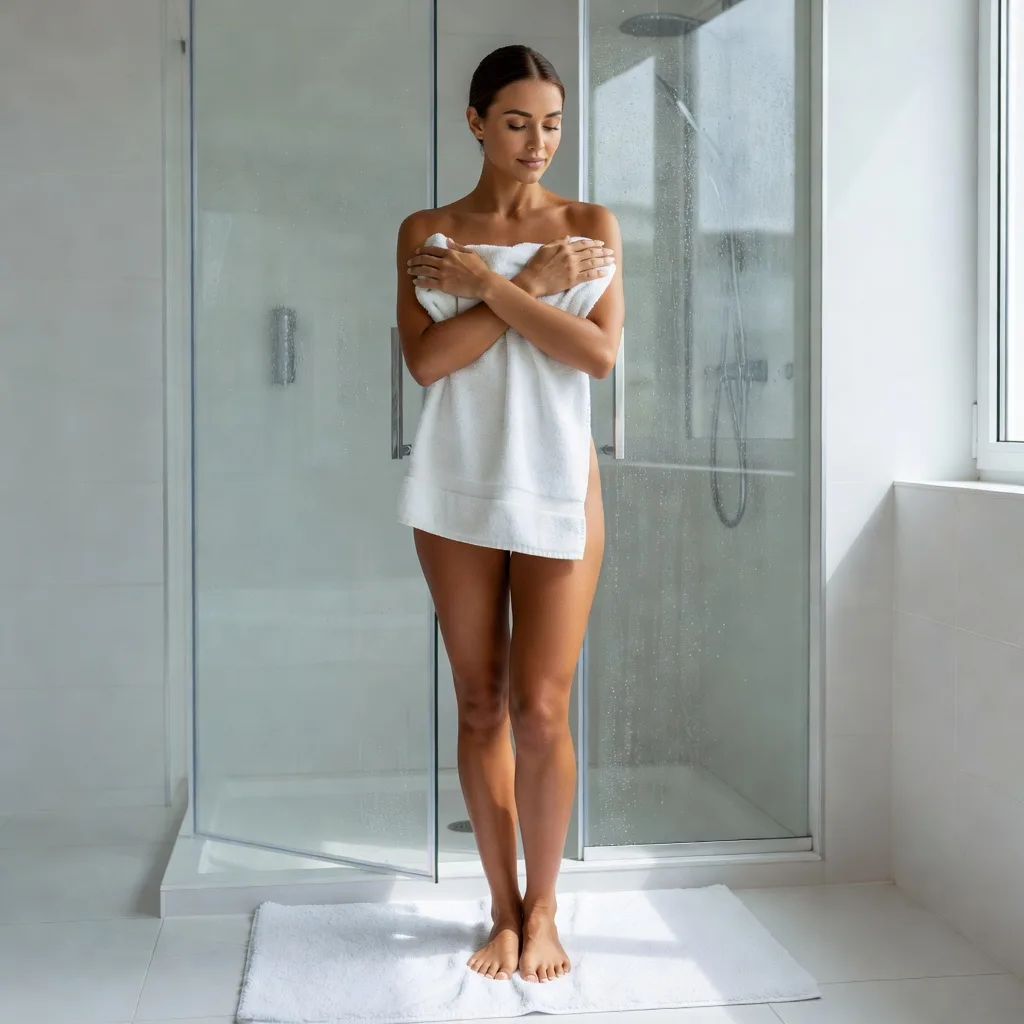
Showering after spray tanning at the wrong time is the single most common reason a spray tan turns out streaky, patchy, or lighter than expected.
Part of our guide to professional machines. Start with: Best Professional Oxygen Facial Machine: Features, Safety and Results
The DHA reaction behind your color keeps developing for 8 to 24 hours after application, and the FDA has explicitly not approved DHA for all-over spray-booth use, stating plainly that safety data for that application method was never submitted. A spray tan also provides zero meaningful sun protection, regardless of how dark the color develops.
Most solution-specific development windows come from individual product vendors rather than independent research, so confirming with your technician matters more than following generic advice.
This guide covers the real development timeline, the FDA’s actual regulatory stance, and exactly how to extend your color once it’s time to shower.
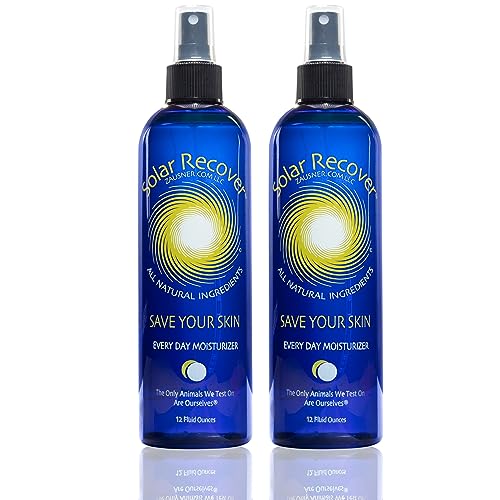
Recommended Post-Tan Moisturizers and Extenders

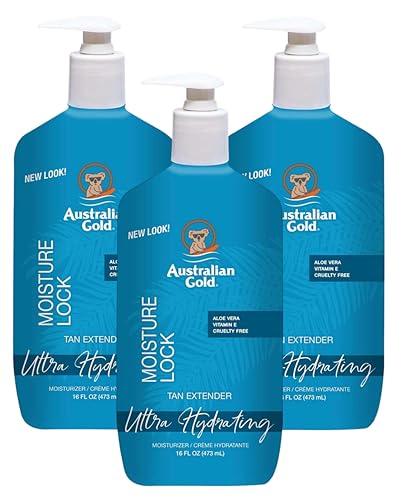

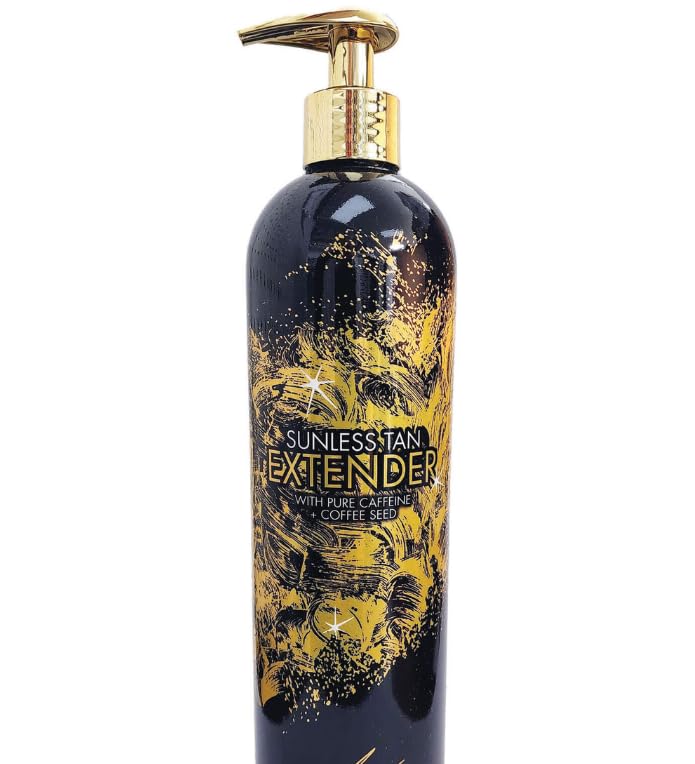
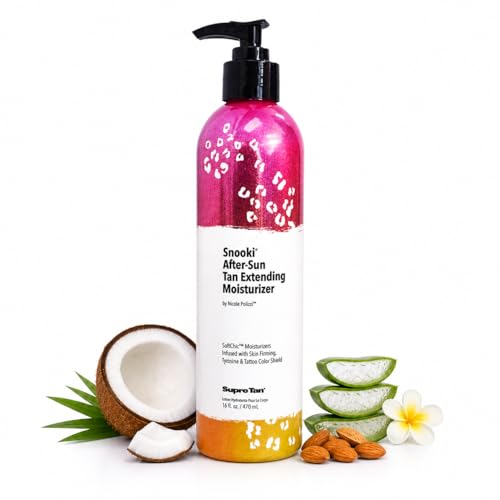
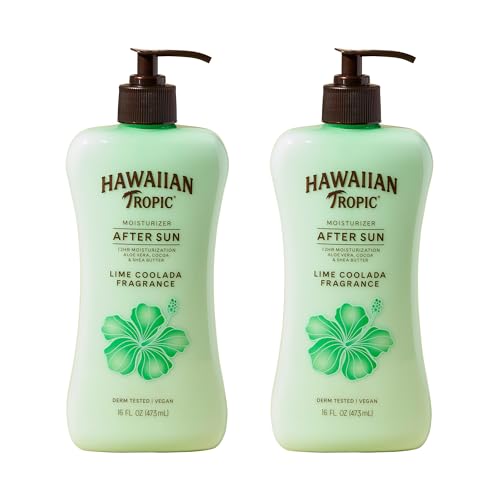
What’s Actually Happening While Your Tan Develops
A spray tan isn’t dye sitting on top of your skin — it’s a chemical reaction happening inside the outermost dead-cell layer of your skin. The active ingredient, dihydroxyacetone (DHA), reacts with amino acids in those dead cells through a non-enzymatic browning reaction called the Maillard reaction — the same basic chemistry that browns bread crust or a seared steak. DHA never penetrates living skin; it only reacts with the stratum corneum, which is exactly why the color is temporary and fades as those cells naturally shed.
Shopping these picks?
Amazon Prime members get fast, free shipping on eligible items, plus Prime Video, Amazon Music and member deals. New members can start with a free trial.
Start a free Prime trialAged 18 to 24? Prime for Young Adults comes with a longer free trial and a lower price after it.
Affiliate link: we may earn a commission at no extra cost to you.
The Essentials
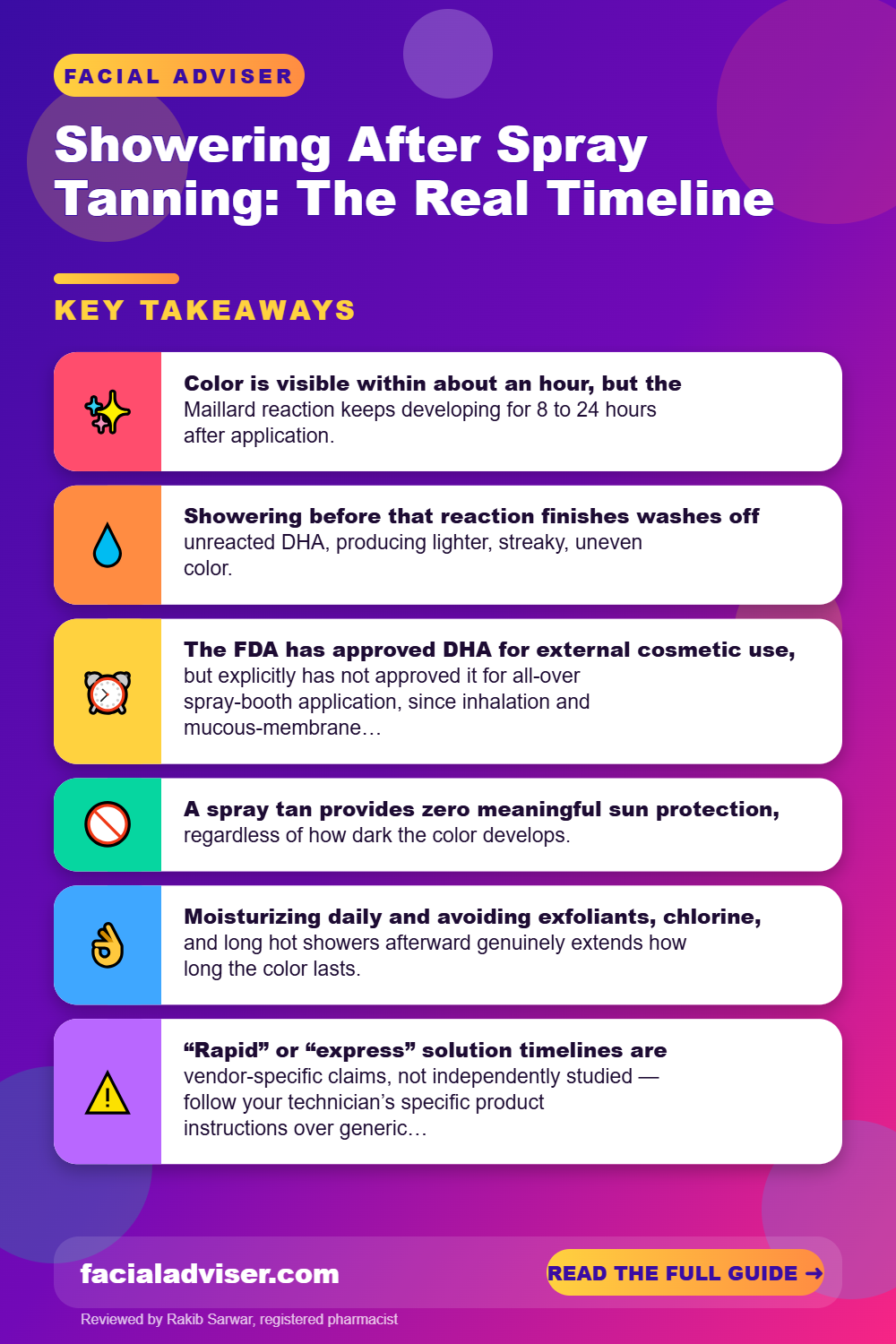
- Color is visible within about an hour, but the Maillard reaction keeps developing for 8 to 24 hours after application.
- Showering before that reaction finishes washes off unreacted DHA, producing lighter, streaky, uneven color.
- The FDA has approved DHA for external cosmetic use, but explicitly has not approved it for all-over spray-booth application, since inhalation and mucous-membrane exposure can’t be fully controlled that way.
- A spray tan provides zero meaningful sun protection, regardless of how dark the color develops.
- Moisturizing daily and avoiding exfoliants, chlorine, and long hot showers afterward genuinely extends how long the color lasts.
- “Rapid” or “express” solution timelines are vendor-specific claims, not independently studied — follow your technician’s specific product instructions over generic advice.
Article Contents
- What’s Actually Happening While Your Tan Develops
- The Real Development Timeline
- What Happens If You Shower Too Early
- The Bronzer Layer vs. the DHA Layer: Two Different Things
- The FDA’s Actual Stance on DHA and Spray Application
- Extending Your Tan After Showering
- The Sun Protection Myth
- How to Shower Safely Once It’s Time
- Who a Spray Tan Suits Best
- Questions Worth Asking Before You Book
- When to See a Dermatologist Instead
- A One-Minute Check Before Your Shower
- Where the Evidence Runs Out
- Frequently Asked Questions
The Real Development Timeline
Most professional guidance converges on the same basic window: visible color within about an hour, continued development for 8 to 24 hours, with full color typically peaking around the 24-hour mark. The tan itself lasts roughly 5 to 7 days as the tanned outer cells shed through normal skin turnover. Commercial “rapid” or “express” solutions are formulated to shorten that development window to as little as 2 to 6 hours, but those specific numbers come from individual product vendors rather than independent research, so they’re worth treating as a starting point to confirm with your technician rather than a universal rule.
What Happens If You Shower Too Early
Rinsing before the Maillard reaction has run its course washes away DHA that hasn’t yet bonded to your skin’s surface proteins. The real, predictable consequences are lighter-than-intended color, visible streaking, patchiness, and a tan that fades noticeably faster than one given the full development window. This isn’t salon upselling — the reaction is genuinely time-dependent, and once you rinse away the unreacted solution, that portion of the reaction simply doesn’t happen.
| Solution type | Typical development window | Note |
|---|---|---|
| Standard/original formula | Often 12+ hours recommended | Most conservative, most consistent color |
| Express formula | Roughly 4-6 hours | Vendor-specific claim, confirm with technician |
| Super express formula | Roughly 2-4 hours | Shortest window, least margin for early rinsing |
The FDA’s Actual Stance on DHA and Spray Application
DHA is the only color additive the FDA has approved for external cosmetic use in sunless tanning products — but that approval comes with real, specific limits worth knowing. The FDA states directly that DHA should not be inhaled, ingested, or exposed to areas covered by mucous membranes, including the lips, nose, and areas in and around the eyes, adding that the risks of that kind of exposure are unknown. More pointedly, the agency has not approved DHA for use in spray-tan booths as an all-over spray at all, stating plainly that safety data to support that specific application method has never been submitted. The regulatory concern isn’t the DHA molecule itself — it’s that spray application makes it genuinely difficult to avoid the exposure routes the approval doesn’t cover.
The Bronzer Layer vs. the DHA Layer: Two Different Things
Most spray-tan solutions actually contain two separate coloring agents working on two different timelines, and understanding the difference clears up a lot of confusion about the first rinse. The first is a temporary cosmetic bronzer — usually a wash-in, wash-out dye that gives you visible, instant color the moment the solution is sprayed on, purely for guidance during application and immediate confidence walking out of the salon. The second is the DHA itself, which is colorless at the moment of application and only develops its real, longer-lasting color over the following 8 to 24 hours through the Maillard reaction described above. When you take your first rinse, you’re washing off the instant bronzer layer, which is expected and by design — the true DHA-developed color underneath is what remains and continues to darken slightly over the following day. Seeing color rinse down the drain during that first shower isn’t your tan “washing off”; it’s the temporary guide bronzer doing exactly what it was meant to do.
Extending Your Tan After Showering
Once your tan has fully developed and you’ve had your first rinse, a few genuinely effective habits keep the color looking even and lasting longer. Daily moisturizing with a fragrance-free, oil-based lotion keeps the stratum corneum hydrated, which slows and evens out how those tanned cells shed. Avoiding mechanical or chemical exfoliants — scrubs, retinoids, AHAs, BHAs — matters because anything that speeds up cell turnover strips the tanned outer layer faster than it would shed naturally. Chlorinated pools and long hot showers are also worth minimizing, since hot water and chlorine are reasonably expected to strip the outer skin layer faster, even though this specific effect hasn’t been directly studied for spray tans specifically.
| Habit | Why it helps |
|---|---|
| Daily fragrance-free moisturizer | Keeps stratum corneum hydrated, slows uneven shedding |
| Pat dry instead of rubbing | Reduces mechanical removal of tanned surface cells |
| Lukewarm, shorter showers | Reduces the stripping effect of prolonged hot water |
| Skip exfoliants and retinoids for a few days | Avoids accelerating cell turnover past the tan’s natural fade rate |
The Sun Protection Myth
A spray tan provides no meaningful sun protection, no matter how dark the color develops. DHA’s browning reaction has nothing to do with melanin production or UV defense — it’s a surface-level cosmetic color change on dead cells. Sunscreen is exactly as necessary on tanned skin as it is on untanned skin, and treating a fresh spray tan as a reason to skip SPF is a genuinely common and genuinely mistaken assumption. If you’re deciding between mineral and chemical formulas for daily use, this breakdown of physical vs. chemical SPF covers the real differences, and if a sunscreen has ever left your skin feeling rough afterward, this guide to forehead roughness after sunscreen use walks through the likely causes.
How to Shower Safely Once It’s Time
Confirm your specific solution’s development window
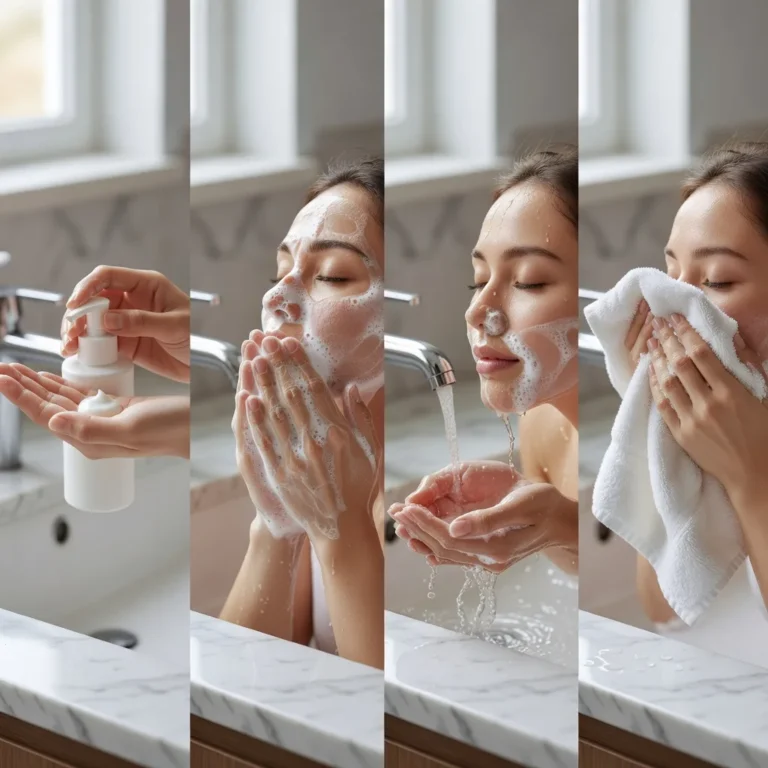
Check with your technician rather than assuming a generic timeframe applies.Rinse with lukewarm water only
No soap, shower gel, or scrubbing on the first rinse — just water until it runs clear.Pat skin dry
Avoid rubbing with a towel, which can unevenly lift freshly set color.Moisturize once skin is dry
A fragrance-free, oil-based lotion applied after the first rinse helps set and extend the color.
Who a Spray Tan Suits Best
People who want a temporary, cosmetic-only color change without UV exposure are the clear fit here — spray tanning avoids the DNA-damage risk of UV tanning beds and sun tanning entirely, since DHA’s reaction is confined to already-dead surface cells. It’s a reasonable option for anyone comfortable with a several-day color window that requires some aftercare discipline to maintain evenly.
Do
- Wait the full development window your specific technician recommends
- Ask the salon the FDA’s three protection questions before a spray-booth session
- Keep applying sunscreen exactly as you normally would
Don’t
- Shower, swim, or exercise heavily before the reaction has finished developing
- Assume a darker tan means any real UV protection
- Use retinoids, AHAs, or aggressive scrubs in the days right after your tan sets
Questions Worth Asking Before You Book
Beyond the FDA’s three booth-safety questions covered above, a few more practical questions are worth asking before you commit to an appointment. Ask whether the solution contains added fragrance, since fragrance-sensitive skin can react to some spray-tan formulations even without a true DHA allergy. If you’ve never had a spray tan before, ask whether the technician can do a small patch test on your inner arm at least 24 hours ahead, since a true allergic reaction to DHA, while uncommon, is a real documented possibility worth ruling out before your face and body are fully covered. If you’re pregnant or nursing, mention it to your provider — safety data on DHA exposure during pregnancy is limited rather than proven risky, so this is a caution based on an absence of data, not a confirmed hazard, and many providers prefer added care in that situation regardless.
When to See a Dermatologist Instead
A spray tan is a cosmetic service, and most reactions to it are mild and self-limited. See a dermatologist if you develop a rash, hives, significant itching, or swelling after a spray tan, particularly if it doesn’t resolve within a few days, since this can indicate a genuine sensitivity to DHA or another ingredient in the solution rather than ordinary post-tan skin texture changes.
A One-Minute Check Before Your Shower
Before you rinse, ask: has it actually been the full recommended development time for your specific solution, not just “a few hours”? Does your skin still feel slightly tacky or smell like the solution (a sign development may still be active)? If you’re unsure, waiting an extra hour costs little and protects against the far more common problem of uneven, prematurely-rinsed color.
Where the Evidence Runs Out
Be precise about what’s actually established here: the DHA/Maillard reaction chemistry and the FDA’s regulatory statements on DHA are well-documented and directly citable. What isn’t independently studied is the exact effect of hot showers or chlorine on tan longevity specifically — that guidance is a reasonable extrapolation from general skin-barrier science, not a dedicated spray-tan trial, and vendor-specific “rapid” development timelines are industry claims rather than independently verified research.
Frequently Asked Questions
How long should I wait to shower after a spray tan?
Most guidance recommends 8 to 24 hours depending on your specific solution, with your technician’s instructions taking priority over generic timeframes.
What happens if I shower too early?
You wash off unreacted DHA before it bonds with your skin, resulting in lighter, streaky, and faster-fading color.
Does a spray tan protect against sunburn?
No — DHA’s color reaction has nothing to do with melanin or UV defense, so sunscreen is exactly as necessary as before.
Is DHA safe to inhale during a spray-booth session?
The FDA has not approved DHA for all-over spray application specifically because inhalation and mucous-membrane exposure are difficult to fully avoid that way.
How can I make my spray tan last longer?
Moisturize daily, avoid exfoliants and retinoids, and skip long hot showers and chlorinated pools where possible.
Can I use soap on my first shower after a spray tan?
Most guidance recommends a water-only rinse the first time, saving cleanser for subsequent showers to avoid stripping fresh color.
Why does my spray tan look patchy after showering?
Patchiness is most often a sign the reaction was rinsed off before it fully developed, or that moisturizer wasn’t applied evenly afterward.
Are rapid or express spray tan formulas as reliable?
They’re formulated to develop faster, but the specific timeframes are vendor claims rather than independently studied, so confirming with your technician is worthwhile.
Can spray tanning cause an allergic reaction?
It’s possible, though uncommon — a rash, hives, or swelling that doesn’t resolve within a few days is a reason to see a dermatologist.
Is a spray tan safer than tanning beds or sun tanning?
Yes, in terms of UV exposure — DHA’s reaction is confined to already-dead skin cells and doesn’t involve UV radiation at all.

Written by
Registered pharmacist and founder of Facial Adviser. Rakib's pharmacy training covers how skincare actives work and interact; a later course in cosmetology turned that into a focus on facial treatments and skincare products. He plans, researches and edits every guide on the site and checks health claims against sources such as the American Academy of Dermatology, the FDA and the NIH. He is not a dermatologist; see the Editorial Policy and Medical Disclaimer.
About · Editorial policy · How we choose products · Medical disclaimer · Contact
Keep reading: Professional spa machines
- Best Professional Oxygen Facial Machine: Features, Safety and Results
- Spray Tan Aftercare Tips That Actually Work
- How to Make Your Spray Tan Last Longer
- Cavitation Massage: What the Real Evidence Shows
- Isavera Fat Freezing System: Does At-Home Fat Freezing Work?
- 10 Best Body Wash for Spray Tan (2026): Before and After Picks