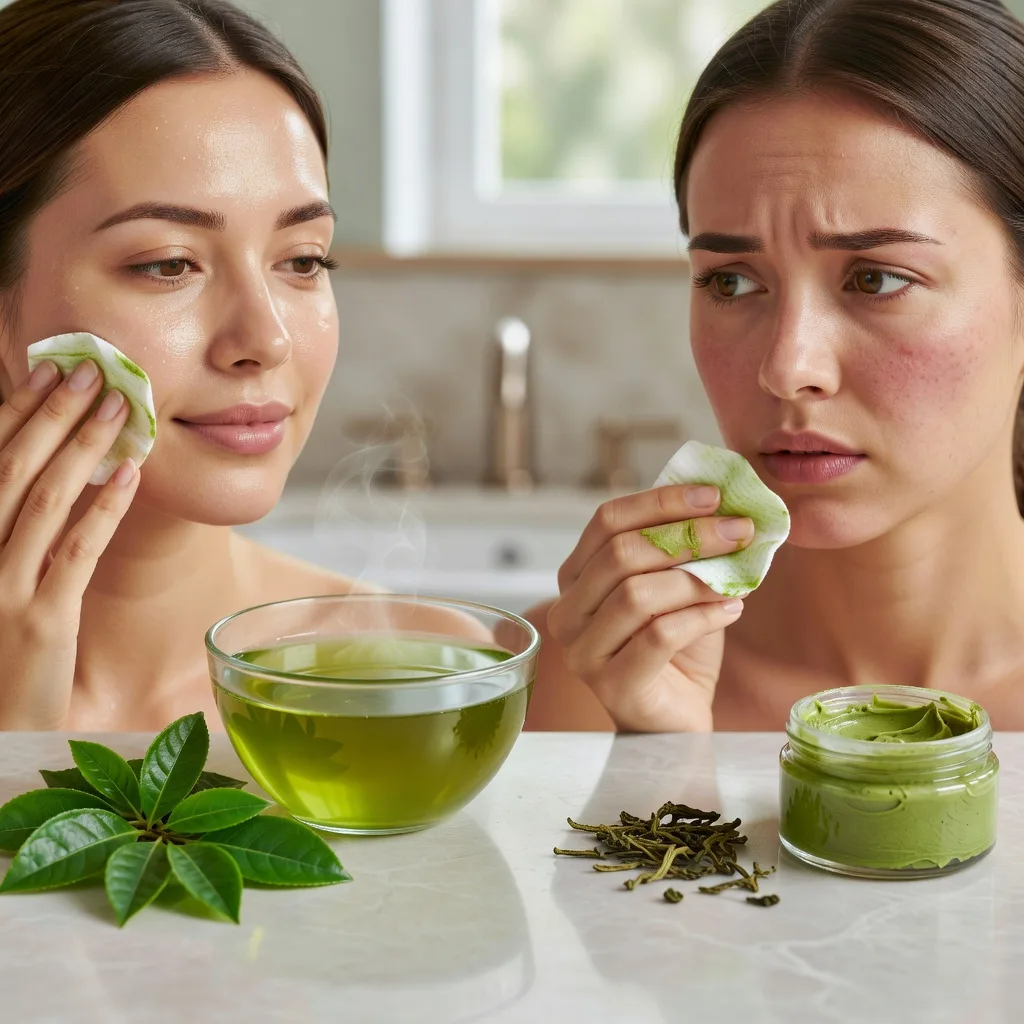
Green Tea Facial: Benefits and Side Effects
A green tea facial’s antioxidant reputation is grounded in real catechin chemistry, though the human clinical picture is more mixed than the marketing suggests.
Part of our guide to facial treatments. Start with: Fruit Facial at Home: Does It Actually Work?
A 2020 systematic review and meta-analysis found supportive evidence for green tea in acne, the strongest human claim in this guide, while separate human UV-protection trials found genuinely contradictory results at different doses. EGCG, green tea’s most studied antioxidant, also has notably poor bioavailability and degrades easily in cosmetic formulations.
Contact dermatitis from green tea extract is a documented, if uncommon, possibility worth a patch test before first use.
This guide covers the real evidence for acne and sun protection, genuine side effects, and the gap between a spa facial and a clinically-dosed product.
Recommended Green Tea Extract Serums and Masks
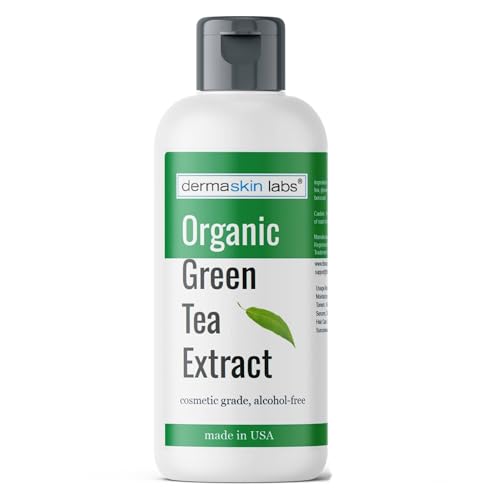
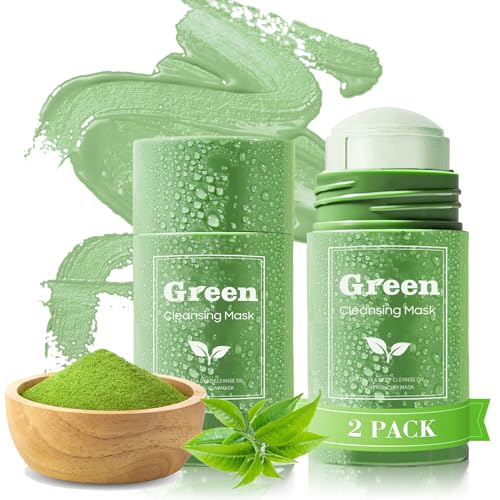
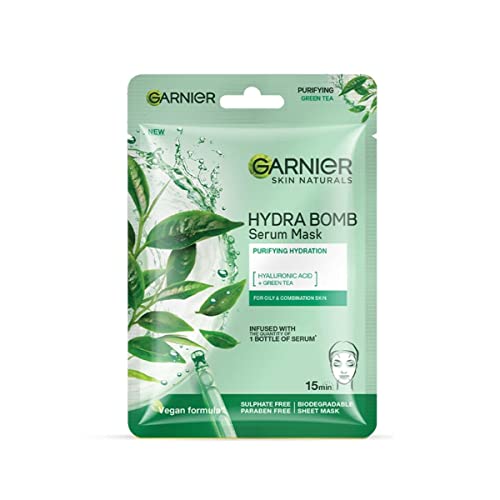
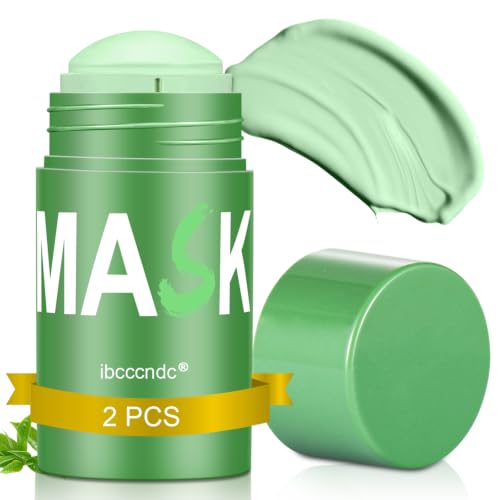
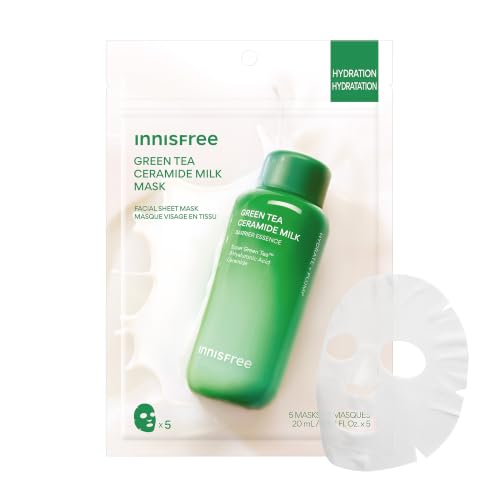


What’s Actually in a Green Tea Facial
Green tea’s skin-care reputation centers on catechins — a family of polyphenol antioxidants, the most studied of which is EGCG (epigallocatechin gallate). If antioxidant treatments in general interest you, this overview of antioxidant facials covers the broader category green tea belongs to. A spa “green tea facial” typically means a brewed tea rinse, a tea-infused mask, or a product listing green tea extract somewhere on its ingredient panel. The underlying chemistry is real and has been reviewed extensively, but as this guide covers, there’s a meaningful gap between what’s been shown in cell and animal studies and what a single spa treatment can realistically deliver.
Shopping these picks?
Amazon Prime members get fast, free shipping on eligible items, plus Prime Video, Amazon Music and member deals. New members can start with a free trial.
Start a free Prime trialAged 18 to 24? Prime for Young Adults comes with a longer free trial and a lower price after it.
Affiliate link: we may earn a commission at no extra cost to you.
Quick Summary
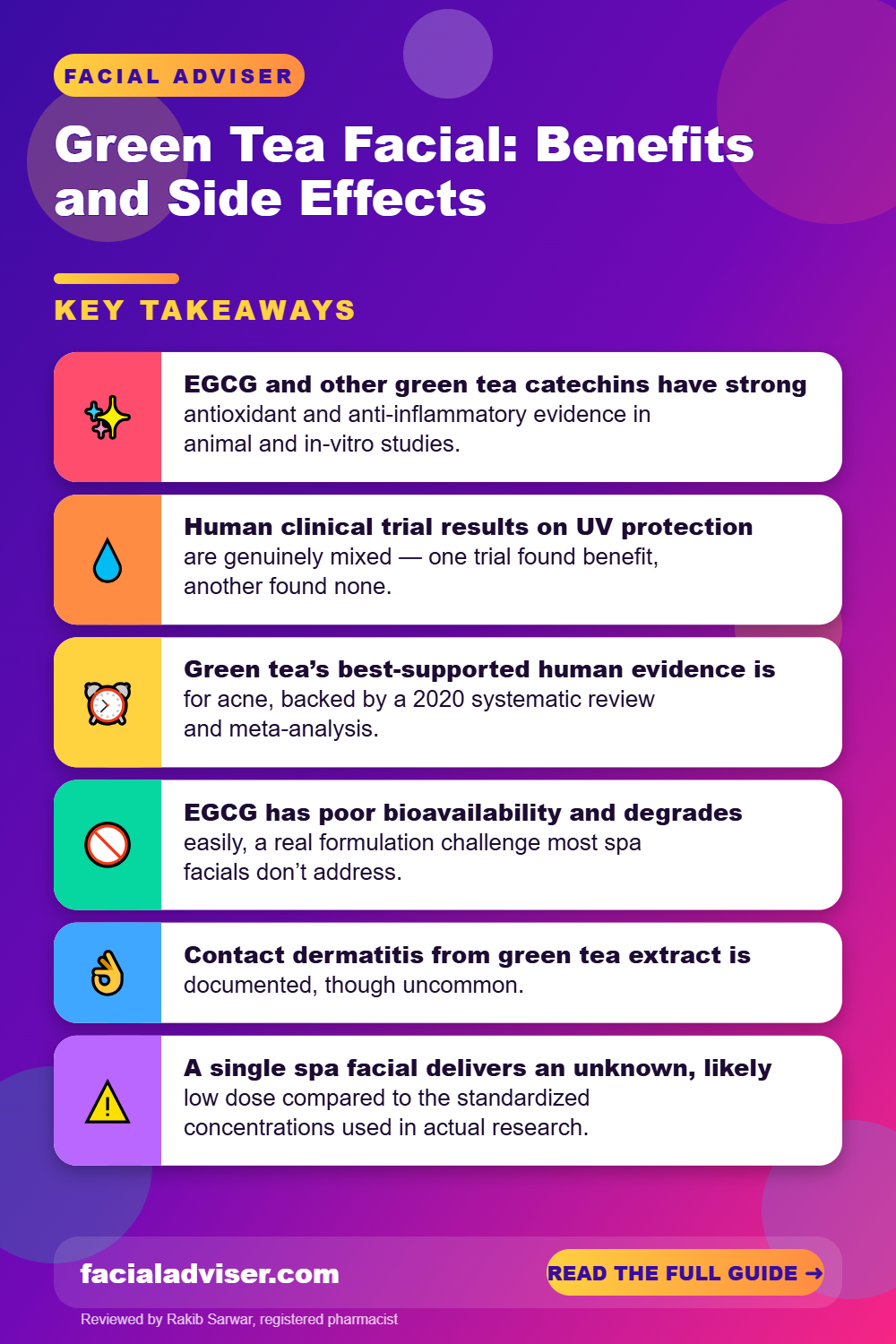
- EGCG and other green tea catechins have strong antioxidant and anti-inflammatory evidence in animal and in-vitro studies.
- Human clinical trial results on UV protection are genuinely mixed — one trial found benefit, another found none.
- Green tea’s best-supported human evidence is for acne, backed by a 2020 systematic review and meta-analysis.
- EGCG has poor bioavailability and degrades easily, a real formulation challenge most spa facials don’t address.
- Contact dermatitis from green tea extract is documented, though uncommon.
- A single spa facial delivers an unknown, likely low dose compared to the standardized concentrations used in actual research.
Jump To Section
- What’s Actually in a Green Tea Facial
- The Antioxidant Evidence: Animal and In-Vitro vs. Human Trials
- The Strongest Claim: Green Tea and Acne
- Green Tea and Sun Damage Protection Claims
- Spa Facial vs. Clinically-Dosed Product: The Real Gap
- Genuine Side Effects and Risks
- Choosing a Product With Meaningful Green Tea Content
- What a Typical Session Looks Like
- Who Tends to Benefit Most
- Who Should Modify or Skip It
- When to See a Dermatologist Instead
- A One-Minute Check Before Your Facial
- Where the Evidence Runs Out
- Frequently Asked Questions
The Antioxidant Evidence: Animal and In-Vitro vs. Human Trials
A 2024 review covering 117 articles on green tea catechins and skin health found the in-vitro and animal evidence consistently strong: EGCG reduces UVB-induced inflammatory markers and leukocyte infiltration in cell and animal models, and shows measurable photoprotective and immunomodulatory effects in that research. Human clinical trials tell a genuinely mixed story. One 12-week trial using 1,402 mg per day of oral green tea catechins found a significant reduction in UV-induced skin redness. A separate randomized trial using 800 mg per day of EGCG over 4 weeks found no protective effect against UV-induced erythema at all. That contradiction matters — it means the antioxidant story, while mechanistically real, hasn’t translated into a single consistent human result.
| Evidence type | Strength | What it shows |
|---|---|---|
| In-vitro / cell studies | Consistently strong | EGCG reduces inflammatory markers, oxidative stress signaling |
| Animal studies | Consistently strong | Photoprotective, immunomodulatory effects in UV-exposed models |
| Human RCTs (UV protection) | Mixed | One trial found benefit, another found none, at different doses/durations |
The Strongest Claim: Green Tea and Acne
Of everything covered in this guide, green tea and acne is the best-supported human claim. A 2020 systematic review and meta-analysis in Phytotherapy Research pooled randomized controlled trials testing both topical and oral green tea for acne vulgaris and found supportive evidence for real benefit. Additional research, including a study on green tea extract supplementation in post-adolescent women with acne and a broader systematic review of oral green tea preparations for skin conditions, reinforces this as one of the more genuinely defensible skin-care claims tied to green tea, rather than a stretch from unrelated lab data.
Green Tea and Sun Damage Protection Claims
Green tea is sometimes marketed as offering meaningful sun protection, and while the antioxidant mechanism is plausible, this claim needs care. One narrow but genuinely interesting human data point: topical EGCG applied to breast-cancer patients undergoing radiation therapy reduced radiation-dermatitis pain in the large majority of patients studied, which does demonstrate that topical EGCG has measurable bioactivity on human skin in the right clinical context. But that’s a specific medical application, not evidence that a spa facial provides sunscreen-level protection. Green tea should never be treated as a sunscreen substitute — it’s an antioxidant with plausible supportive effects, not a UV filter.
Spa Facial vs. Clinically-Dosed Product: The Real Gap
The studies behind green tea’s antioxidant and anti-acne evidence used specific, quantified concentrations — typically 10 to 15% green tea catechin extract or purified EGCG applied topically, or 800 to 1,402 mg per day taken orally, sustained over 4 to 12 weeks. A single spa green tea facial, by contrast, delivers an unstandardized and likely low concentration of active catechins in one sitting. That gap between a pleasant, mildly antioxidant spa treatment and a clinically-dosed leave-on product or supplement is real and worth understanding honestly before expecting research-level results from one appointment.
| Setting | Typical concentration | Duration |
|---|---|---|
| Research studies | 10-15% catechin extract (topical) or 800-1,402 mg/day (oral) | 4-12 weeks sustained use |
| Single spa green tea facial | Unknown, unstandardized, likely low | One session, typically 10-20 minutes |
Genuine Side Effects and Risks
Green tea extract can cause contact dermatitis in some people — a documented, if uncommon, possibility confirmed in skin-safety testing research. Plain green tea also naturally contains caffeine, unless a decaffeinated cosmetic extract is specifically used, which can have a mild stimulating or vasoconstricting effect topically, though solid data on topical caffeine irritation specifically is limited. Tannins, which give tea its astringency, are genuinely drying and can bind and precipitate proteins on the skin surface — worth factoring in if you have dry or sensitive skin. Reassuringly, the 2024 review covering 117 articles reported no serious adverse events across the human trials it reviewed. If caffeine specifically is a concern, this look at caffeine’s effect on facial blood flow covers the topical mechanism in more detail.
Choosing a Product With Meaningful Green Tea Content
Since EGCG degrades easily and a single spa facial’s concentration is unstandardized, how you evaluate a product matters if you’re specifically after green tea’s documented benefits rather than just a pleasant scent or marketing story. Ingredient lists are ordered by concentration, so “green tea extract” or “camellia sinensis leaf extract” listed near the top of the list, rather than buried near the end after preservatives and fragrance, is a reasonable signal of a more meaningful concentration. Packaging also matters more than most people realize: EGCG is sensitive to light, heat, and air exposure, so opaque, airtight packaging tends to preserve activity better than a clear jar left open to light on a bathroom shelf. None of this guarantees clinical-trial-level results from a cosmetic product, but it’s a reasonable, evidence-consistent way to separate a product more likely to deliver green tea’s real benefits from one using it mostly as a marketing ingredient.
What a Typical Session Looks Like
Cleanse
Skin is cleansed to remove makeup and surface oil before the treatment begins.Apply
A green tea-infused mask, brewed tea compress, or serum is applied to the face.Rest
The product sits for roughly 10 to 20 minutes, sometimes alongside steam or a light massage.Rinse and moisturize
The mask or compress is removed with warm water, followed by a standard moisturizer.
Who Tends to Benefit Most
People without a known sensitivity to tea or plant extracts who want a mild, pleasant antioxidant treatment are a reasonable fit, particularly those interested in acne-prone skin, where green tea’s evidence is comparatively strongest. It’s best approached as a gentle complement to an existing routine rather than a primary treatment expected to independently resolve acne or visibly reverse sun damage.
Do
- Patch test if you’ve never used green tea topically before
- Consider a standardized leave-on product if acne is your specific goal
- Keep using sunscreen regardless of any antioxidant treatment
Don’t
- Treat green tea as a sunscreen substitute
- Expect one spa session to match results from a 4- to 12-week clinical trial
- Assume all green tea products contain a meaningful, stable concentration of active catechins
Who Should Modify or Skip It
Anyone with a known allergy or prior contact reaction to tea, plant polyphenols, or caffeine-containing topicals should approach a green tea facial cautiously or skip it. Very dry or sensitive skin types may also want to be mindful of the astringent, tannin-driven drying effect, particularly with a strongly brewed tea compress.
When to See a Dermatologist Instead
A green tea facial is a cosmetic maintenance treatment. See a board-certified dermatologist for persistent or moderate-to-severe acne, a skin reaction that doesn’t resolve after stopping a green tea product, or any sun-damage concern more significant than what a mild antioxidant treatment is designed to address.
A One-Minute Check Before Your Facial
Before your appointment, ask: have you ever reacted to tea, plant extracts, or caffeine-containing skin products before? Is your skin currently dry, sensitive, or irritated? Are you expecting this single session to meaningfully treat acne or sun damage on its own, rather than as a mild complement to an existing routine? A “yes” to any prior reaction is worth mentioning to your provider or testing on a small area first.
Where the Evidence Runs Out
Be honest about what’s established: green tea’s antioxidant chemistry is real and well-reviewed at the cell and animal level, and its anti-acne evidence in humans is genuinely the strongest claim in this guide. What isn’t established is that a single, unstandardized spa facial reliably delivers UV protection or dramatic skin transformation — the human UV-protection trials are mixed, and no research specifically tested a one-time spa-style green tea facial against any of these outcomes.
Frequently Asked Questions
Does green tea actually help with acne?
It’s the best-supported human claim in this guide — a 2020 systematic review and meta-analysis found supportive evidence for both topical and oral green tea in acne vulgaris.
Does a green tea facial protect against sun damage?
The human evidence is mixed — one trial found reduced UV-induced redness, another found no protective effect, so it shouldn’t replace sunscreen.
What is EGCG?
Epigallocatechin gallate, the most studied antioxidant catechin in green tea, with strong lab and animal evidence but a poor bioavailability and stability profile.
Can green tea cause a skin reaction?
Yes — contact dermatitis from green tea extract is documented, though uncommon, so a patch test is reasonable for first-time use.
Is a spa green tea facial as effective as a green tea skin-care product?
Not necessarily — research uses standardized concentrations sustained over weeks, while a single facial delivers an unknown, likely lower dose.
Does green tea contain caffeine that could irritate skin?
Plain green tea naturally contains caffeine unless a decaffeinated extract is used; topical irritation data specifically is limited but worth knowing about.
Why does a green tea mask feel drying?
Tannins, which give tea its astringency, can bind and precipitate skin proteins, which is genuinely drying, especially with a strongly brewed compress.
How often can I get a green tea facial?
Occasional use is reasonable for most skin types; those with dry or sensitive skin may want to space sessions out further.
Is green tea extract the same in every product?
No — concentration, freshness, and formulation stability vary widely, and EGCG specifically degrades relatively easily over time.
Is a green tea facial worth trying?
It’s a mild, generally low-risk treatment with real if modest evidence behind it, particularly for acne-prone skin, as long as expectations stay realistic about what one session can do.

Written by
Registered pharmacist and founder of Facial Adviser. Rakib's pharmacy training covers how skincare actives work and interact; a later course in cosmetology turned that into a focus on facial treatments and skincare products. He plans, researches and edits every guide on the site and checks health claims against sources such as the American Academy of Dermatology, the FDA and the NIH. He is not a dermatologist; see the Editorial Policy and Medical Disclaimer.
About · Editorial policy · How we choose products · Medical disclaimer · Contact
Keep reading: DIY and ingredient facials
- Fruit Facial at Home: Does It Actually Work?
- Silver Facial: What the Real Evidence Shows
- What Are Home Remedies to Minimize Large Pores?
- How Much Does Paraffin Wax Treatment Cost?
- Which Fruit Facial Is Good for Oily and Pimple-Prone Skin?
- Which Fruit Facial Is Best for Glowing Skin?
- Ultimate Guide Microdermabrasion: What to Know
- Facial vs Chemical Peel: Differences, Results and Which to Choose