Antioxidant Facial Treatment: What Holds Up
An antioxidant facial treatment gets sold as a one-visit fix for sun damage and dullness, and the ingredients behind it, vitamin C, vitamin E, ferulic acid, niacinamide, do have real published research, just not for the claims usually printed on the menu.
Part of our guide to skincare products. Start with: 10 Best Facial Serums for Aging Skin (2026): Picks by Concern
The Duke research on combined vitamin C, E, and ferulic acid genuinely doubled photoprotection against UV damage, and niacinamide has real 12-week evidence for redness and barrier repair, but nearly every study behind these ingredients tested twice-daily topical use over weeks, not a single spa session. That’s the real gap between the evidence and how the treatment is marketed.
A vitamin C serum’s own stability is a bigger practical factor than most buyers realize, L-ascorbic acid oxidizes with light and air, and a serum that’s turned orange or brown has likely lost most of its potency regardless of what the label claims.
This guide covers what the clinical evidence actually supports, why ferulic acid matters as much as vitamin C itself, real safety and formulation considerations, and how to combine these actives with the rest of a skincare routine.
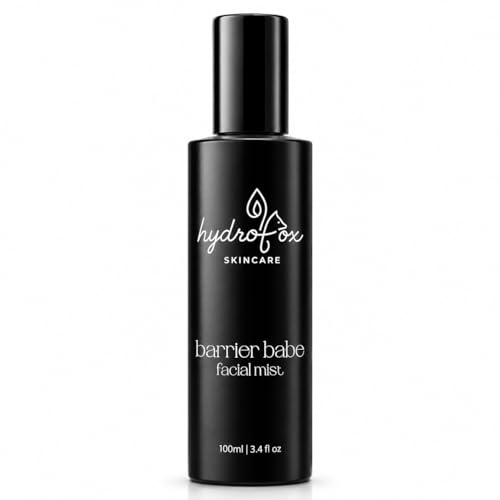
Recommended Products for Daily Antioxidant Protection

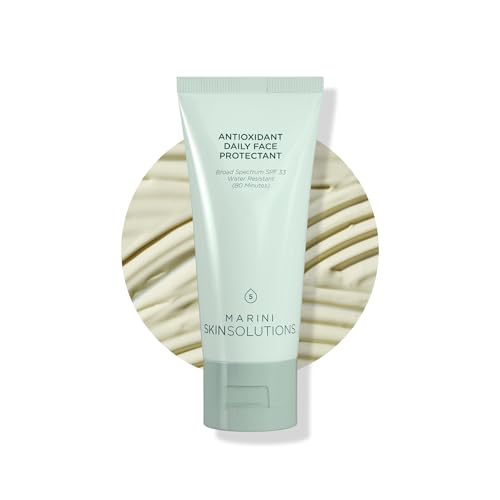

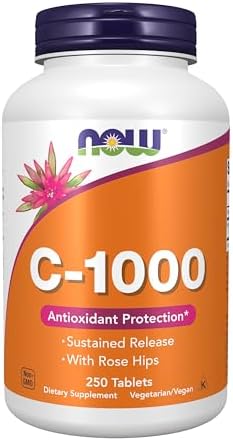
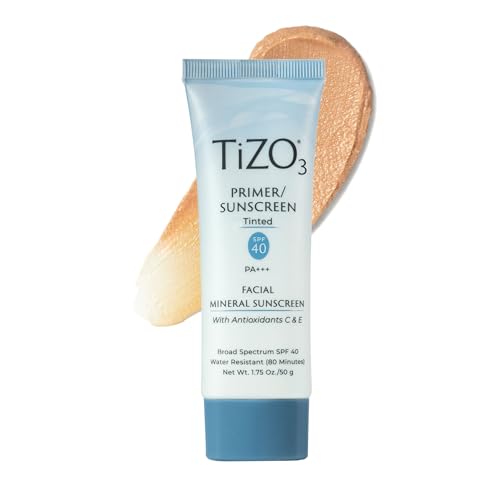

The Short Version
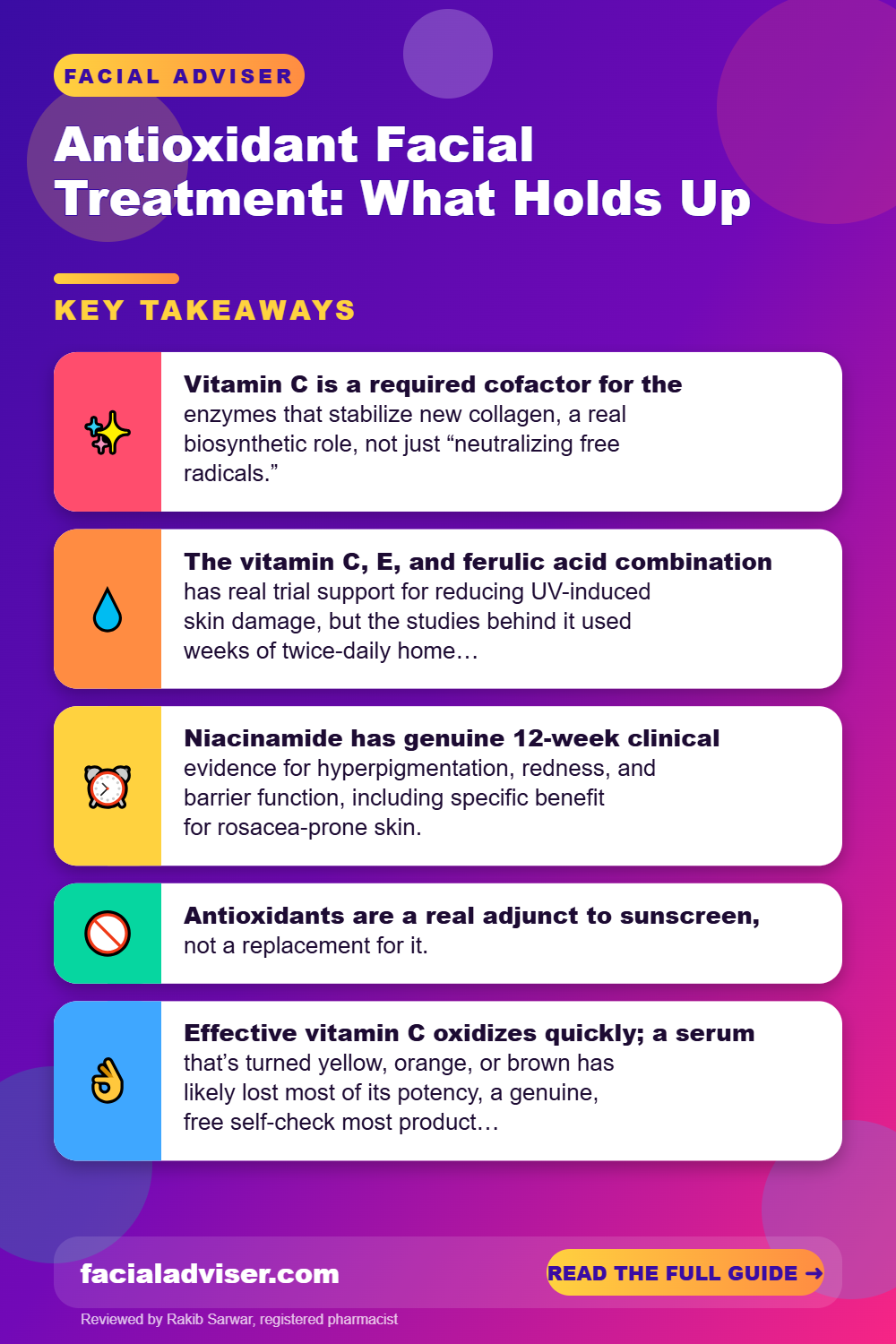
- Vitamin C is a required cofactor for the enzymes that stabilize new collagen, a real biosynthetic role, not just “neutralizing free radicals.”
- The vitamin C, E, and ferulic acid combination has real trial support for reducing UV-induced skin damage, but the studies behind it used weeks of twice-daily home application, not a single facial.
- Niacinamide has genuine 12-week clinical evidence for hyperpigmentation, redness, and barrier function, including specific benefit for rosacea-prone skin.
- Antioxidants are a real adjunct to sunscreen, not a replacement for it.
- Effective vitamin C oxidizes quickly; a serum that’s turned yellow, orange, or brown has likely lost most of its potency, a genuine, free self-check most product marketing never mentions.
What This Guide Covers
- What an Antioxidant Facial Actually Does
- Vitamin C’s Real Role in Skin
- The Clinical Evidence, Ingredient by Ingredient
- Marketing Claims vs. What Holds Up
- Why Your Serum’s Color Actually Matters
- Real Safety Considerations
- One Facial vs. a Daily Routine
- Why Ferulic Acid Is in the Formula at All
- Combining Antioxidants with Other Actives
- Getting Real Value from Antioxidant Skincare
- Do This, Not That
- When to See a Dermatologist
- Frequently Asked Questions
- The Bottom Line
What an Antioxidant Facial Actually Does
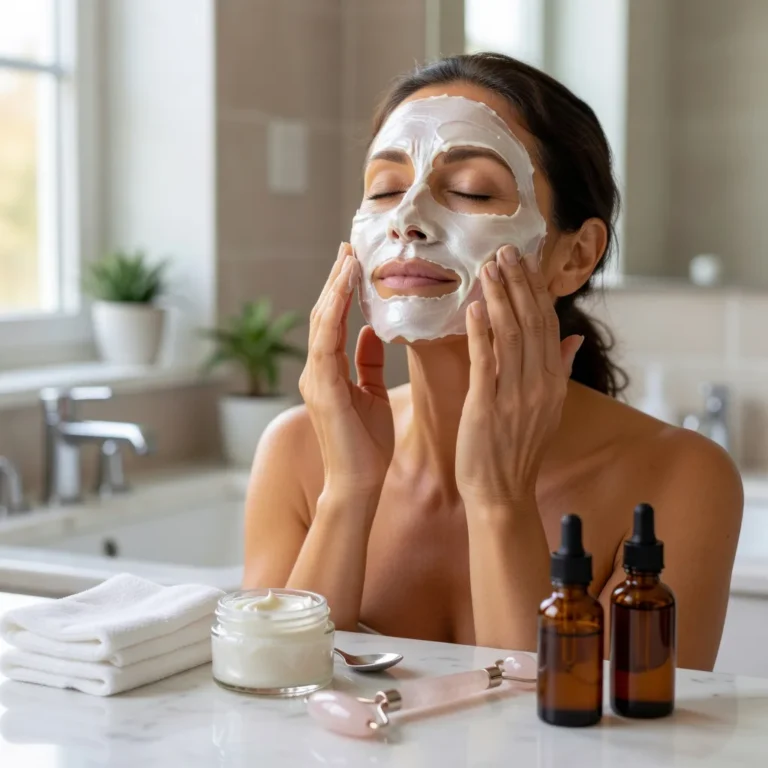
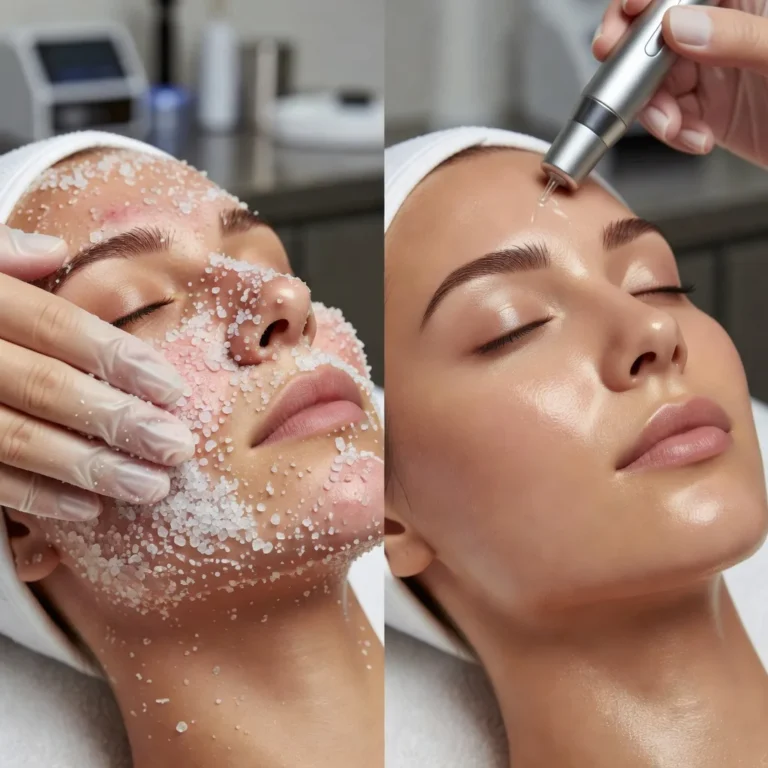
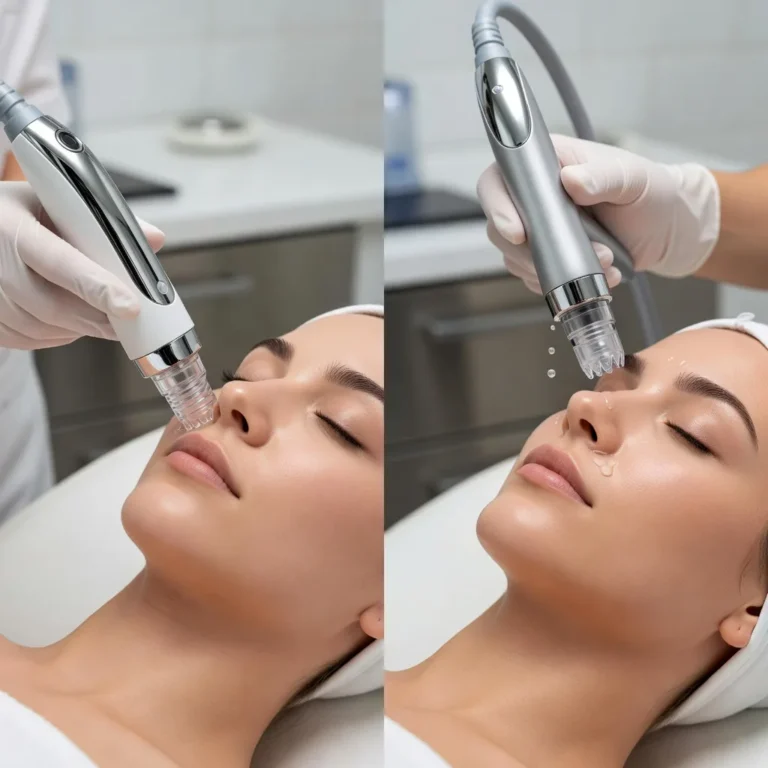
UV exposure and pollution generate reactive oxygen species inside skin, unstable molecules that drive lipid peroxidation, activate enzymes (matrix metalloproteinases) that break down existing collagen, and damage cellular DNA over time. Topical antioxidants, vitamin C, vitamin E, ferulic acid, green tea polyphenols, niacinamide, work by neutralizing those reactive molecules before they cause cumulative damage. An in-spa antioxidant facial typically applies a single, higher-concentration dose of these ingredients, sometimes alongside massage or a delivery-enhancing step like light microneedling.
Shopping these picks?
Amazon Prime members get fast, free shipping on eligible items, plus Prime Video, Amazon Music and member deals. New members can start with a free trial.
Start a free Prime trialAged 18 to 24? Prime for Young Adults comes with a longer free trial and a lower price after it.
Affiliate link: we may earn a commission at no extra cost to you.
Vitamin C’s Real Role in Skin
Vitamin C isn’t just an antioxidant in skin, it’s a required cofactor for prolyl and lysyl hydroxylase, the two enzymes that stabilize newly synthesized collagen. Without adequate vitamin C, those enzymes can’t do their job properly, which is a genuine biosynthetic role distinct from vitamin C’s separate, better-known antioxidant function of neutralizing free radicals. Both roles are real, and both are part of why vitamin C shows up in so much legitimate skincare formulation, not just marketing copy.
The Clinical Evidence, Ingredient by Ingredient
The foundational research here comes from a Duke University group: a stabilized combination of vitamin C, vitamin E, and ferulic acid doubled photoprotection against UV-induced erythema and sunburn-cell formation compared to vitamin C and E alone (Lin JY, Selim MA, Shea CR, et al., Journal of the American Academy of Dermatology, 2005). A follow-up study from the same group replicated reduced UV-induced damage markers with the stabilized formulation.
| Ingredient | Real Evidence | What It’s Actually For |
|---|---|---|
| Vitamin C + E + ferulic acid | Doubled UV-erythema protection vs. C+E alone (Lin et al., 2005) | Photoprotection adjunct, collagen cofactor |
| Niacinamide | Improved pigmentation, redness, elasticity over 12 weeks (Bissett et al., 2005) | Barrier support, hyperpigmentation, redness |
| Green tea (EGCG) | Reduced UVB-induced inflammation in human skin (Katiyar et al., 1999) | Anti-inflammatory, UVB protection |
| Niacinamide + rosacea | Improved barrier function and rosacea symptoms (Draelos et al., 2005) | Redness-prone, reactive skin |
A systematic review in the Journal of Clinical and Aesthetic Dermatology looked at 44 vitamin C studies in dermatology and found 20 RCTs supporting the stabilized vitamin C/E/ferulic acid system for photoaging specifically, plus evidence that certain derivatives (ascorbyl glucoside) paired with microneedling outperformed microneedling with saline alone for hyperpigmentation. Niacinamide’s evidence base is genuinely separate from vitamin C’s, worth knowing if you’re choosing between actives rather than assuming they compete with each other.
Marketing Claims vs. What Holds Up
| Claim | Reality |
|---|---|
| “Erases wrinkles” | Overstated; evidence supports reduced UV damage markers, not wrinkle reversal |
| “Reverses years of sun damage” | Not supported; antioxidants reduce ongoing oxidative damage, don’t undo existing damage |
| “Detoxifies skin” | Not a real mechanism; skin doesn’t accumulate “toxins” antioxidants remove |
| “Higher percentage is always better” | Efficacy plateaus around 15-20% L-ascorbic acid; irritation risk keeps rising past that |
| “Reduces UV-induced free-radical damage” | Genuinely supported, with weeks of consistent use |
Why Your Serum’s Color Actually Matters
Heads up: L-ascorbic acid is chemically unstable, it oxidizes rapidly with exposure to light, air, and heat. A vitamin C serum that has turned yellow, orange, or brown from its original clear or pale-yellow state has likely lost most of its active potency. This is a genuine, one-look diagnostic test anyone can run on a serum they already own, and it matters far more than the percentage printed on the label.
Formulation details that actually protect potency: opaque or dark glass bottles, airless pump dispensers rather than open jars, and storage away from direct light and heat. None of this is marketing, it’s basic photochemistry, and it’s worth checking before assuming a serum has stopped “working.”
Real Safety Considerations
Caution: effective L-ascorbic acid formulations require a low pH (generally below 3.5) to penetrate skin, and that acidity stings and irritates more on compromised, rosacea-prone, or very reactive skin. Combining high-percentage vitamin C with retinoids or AHA/BHA exfoliants in the same routine can compound irritation for reactive skin types, so layering order and frequency matter.
There’s also a regulatory line worth knowing: cosmetic products that claim to “treat,” “cure,” or “prevent” a disease, rather than simply improve skin’s appearance, cross into unapproved drug-claim territory under FDA guidance on cosmetic labeling. Marketing that promises an antioxidant facial “cures rosacea” or “treats hyperpigmentation” (as opposed to “improves the appearance of”) is overstepping that line.
One Facial vs. a Daily Routine
Nearly every study cited above tested twice-daily topical application over 2 to 12 weeks, not a single spa treatment. That’s a meaningful gap between the evidence and how an “antioxidant facial” is usually sold: a single session can feel good and provide a real, if modest and temporary, protective boost, but the durable benefits documented in the clinical literature come from consistent daily use over time, not an occasional facial appointment.
None of this means an in-spa antioxidant facial is worthless, the higher-concentration, professionally applied serum can still deliver a genuine short-term hydration and antioxidant boost, it just means the honest expectation is a nice occasional addition to a real daily routine, not a substitute for one.
Why Ferulic Acid Is in the Formula at All
Ferulic acid rarely gets discussed on its own merits because its real job is behind the scenes: it stabilizes and regenerates vitamin C and E through redox cycling, extending how long those two antioxidants stay functionally active in a topical formulation. Without it, a vitamin C serum degrades faster once opened, which is part of why the specific three-ingredient combination (not vitamin C alone) is what the Duke research actually tested and found doubled photoprotection. A product listing vitamin C prominently but ferulic acid as an afterthought further down the ingredient list may not be using it at a meaningful concentration.
Pro tip: if a straight vitamin C serum is too irritating, green tea polyphenols and niacinamide deliver real, if more modest, antioxidant benefit without requiring the same low pH, a genuinely gentler on-ramp for reactive skin rather than a downgrade.
Combining Antioxidants with Other Actives
A sensible order for a daily routine, supported by basic formulation logic rather than a single trial: cleanse, apply antioxidant serum (vitamin C is typically a morning step since its photoprotective role pairs with daytime UV exposure), moisturize, then sunscreen as the final step. Retinoids are generally better suited to a nighttime routine specifically to avoid layering conflicts and because retinoids themselves increase sun sensitivity, a separate reason to keep morning sunscreen non-negotiable regardless of what antioxidants are underneath it.
Green tea polyphenols and niacinamide are generally easier to combine with other actives than high-percentage L-ascorbic acid, since they don’t require the same low pH to be effective, which is worth knowing if reactive skin makes straight vitamin C too irritating to tolerate daily.
Getting Real Value from Antioxidant Skincare
Check your serum’s actual color and packaging
A clear-to-pale-yellow vitamin C serum in an opaque, airless container has a real chance of still being potent.Apply consistently, not occasionally
The documented benefits come from weeks of twice-daily use, not sporadic application.Layer thoughtfully with actives
Space high-percentage vitamin C away from retinoids or strong exfoliants if your skin is reactive.Always follow with sunscreen
Antioxidants are a real adjunct to SPF, never a substitute for it.Treat a single spa facial as a bonus, not the plan
The daily routine is what’s doing the documented work.
Do This, Not That
Do
- Check your vitamin C serum’s color before assuming it’s still effective
- Use antioxidants daily alongside sunscreen, not as a replacement
- Consider niacinamide specifically if redness or rosacea-prone skin is a concern
Don’t
- Expect one facial to reverse existing sun damage
- Assume a higher percentage vitamin C is automatically better for your skin
- Combine high-percentage actives without considering your skin’s reactivity
When to See a Dermatologist
See a dermatologist or skin specialist if you have diagnosed rosacea, persistent hyperpigmentation, or reactive skin that’s irritated by antioxidant products despite careful introduction, since a real diagnosis will point you toward a more targeted routine than an antioxidant facial alone.
Frequently Asked Questions
Do antioxidant facials actually work?
The individual ingredients (vitamin C, E, ferulic acid, niacinamide, green tea) have real evidence for reducing UV-induced damage and improving pigmentation and redness, but that evidence comes from weeks of daily use, not a single facial session.
Can vitamin C reverse existing wrinkles?
No; the evidence supports reduced UV damage markers and a collagen-stabilizing cofactor role, not reversal of existing wrinkles.
Why did my vitamin C serum turn orange?
L-ascorbic acid oxidizes with light, air, and heat exposure; a color change from clear or pale yellow to orange or brown means it has likely lost most of its potency.
Is a higher percentage of vitamin C always better?
No; efficacy tends to plateau around 15 to 20 percent L-ascorbic acid, while irritation risk keeps climbing past that point.
Can antioxidants replace sunscreen?
No; they’re a real adjunct that reduces oxidative damage alongside daily sunscreen, not a substitute for it.
Does niacinamide help with redness?
Yes, there’s real 12-week clinical evidence for niacinamide improving barrier function and benefiting rosacea-related redness specifically.
Can I use vitamin C with retinoids?
You can, but combining high-percentage vitamin C with retinoids or strong exfoliants can compound irritation on reactive skin, so consider spacing them apart.
How should I store my vitamin C serum?
In an opaque or dark glass container with an airless pump, away from direct light and heat, to protect its potency.
Do antioxidant facials detoxify skin?
No; “detoxifying” isn’t a real mechanism for topical antioxidants, which work by neutralizing reactive oxygen species, not removing toxins.
How long before antioxidant skincare shows results?
The clinical studies behind these ingredients generally measured results after 2 to 12 weeks of consistent twice-daily use.
The Bottom Line
Antioxidant skincare has real, ingredient-specific clinical support, particularly the stabilized vitamin C/E/ferulic acid combination and niacinamide, but that support comes from weeks of consistent daily use, not a single spa facial. Treat an antioxidant facial as a pleasant bonus on top of a genuine daily routine, and judge any product first by its formulation stability and packaging, not just its percentage claim on the label.

Written by
Registered pharmacist and founder of Facial Adviser. Rakib's pharmacy training covers how skincare actives work and interact; a later course in cosmetology turned that into a focus on facial treatments and skincare products. He plans, researches and edits every guide on the site and checks health claims against sources such as the American Academy of Dermatology, the FDA and the NIH. He is not a dermatologist; see the Editorial Policy and Medical Disclaimer.
About · Editorial policy · How we choose products · Medical disclaimer · Contact
Keep reading: Serums and actives
- 10 Best Facial Serums for Aging Skin (2026): Picks by Concern
- Vitamin C Facial: What the Real Data Shows
- Collagen Facial Treatment: What the Evidence Shows
- Is Hyaluronic Acid Good for Acne?
- Does Hyaluronic Acid Cause Purging?
- Collagen vs Hyaluronic Acid: What's the Difference?
- 10 Best Face Masks for Every Skin Type (2026): Clay, Gel and Sheet
- What Does a Facial Toner Do? The Real Answer