Is Daily Face Massage Good for Skin?
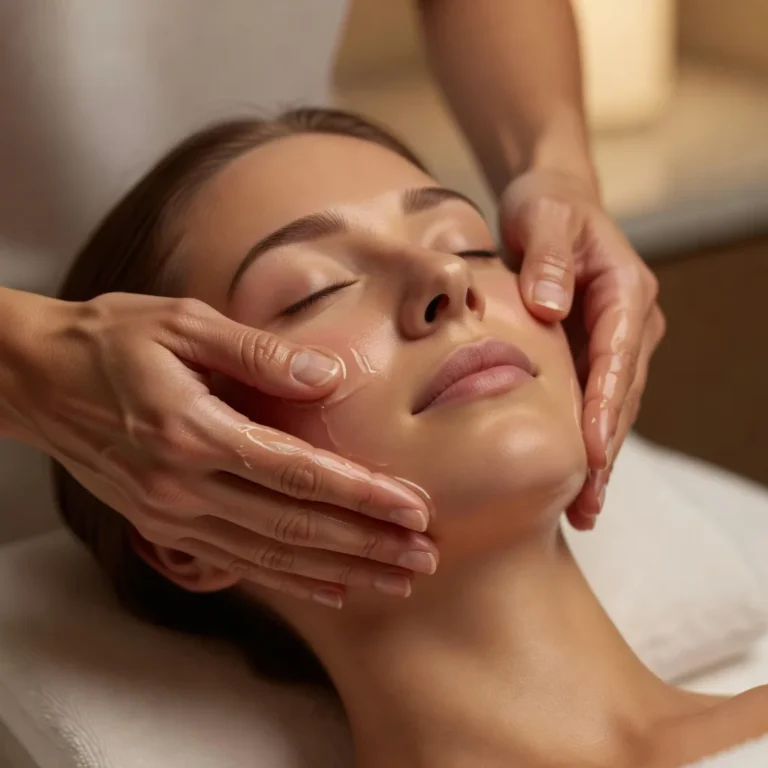
Is daily face massage good for skin, or is daily too frequent for the real benefits to hold up?
Part of our guide to at-home facial devices. Start with: 10 Best Gua Sha Facial Tools (2026): Stone and Steel Picks Compared
The strongest available evidence, a 2018 JAMA Dermatology pilot study, found daily facial exercise over the first 8 weeks of a 20-week program produced statistically significant improvement in cheek fullness — but that study tested active facial exercises, not manual rubbing or gua sha massage, and direct research on daily manual massage specifically remains thin. No single studied optimal frequency exists in the literature for cosmetic facial massage generally.
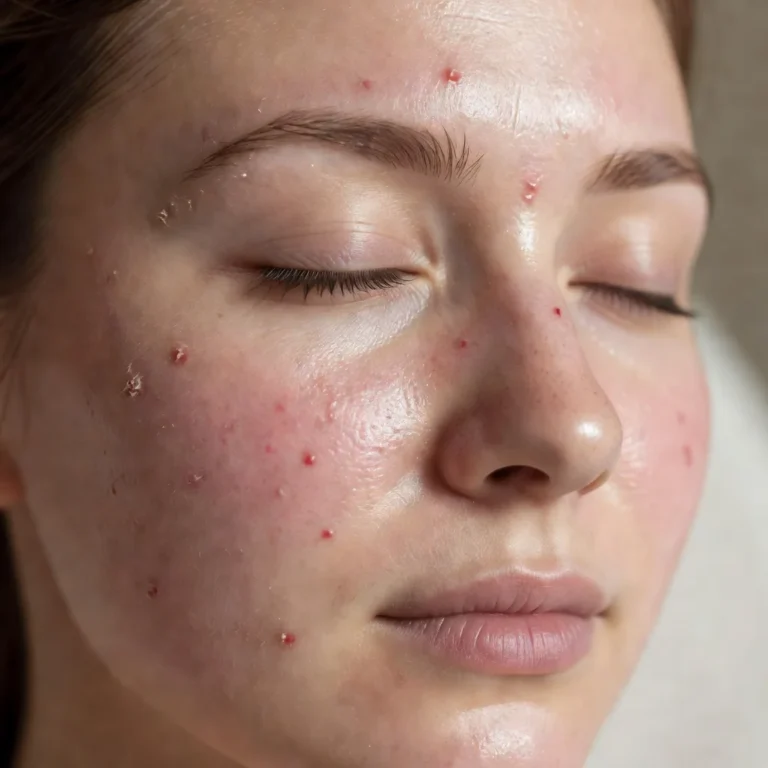
Real risks concentrate on reactive skin: rosacea can flare from manipulation and heat, and massaging over active inflamed acne can spread bacteria and worsen breakouts.
This guide covers what the evidence on facial exercise, gua sha, and lymphatic-style massage actually supports, and where daily use still lacks dedicated research.
Recommended Tools for Gentle Daily Facial Massage






The Short Take
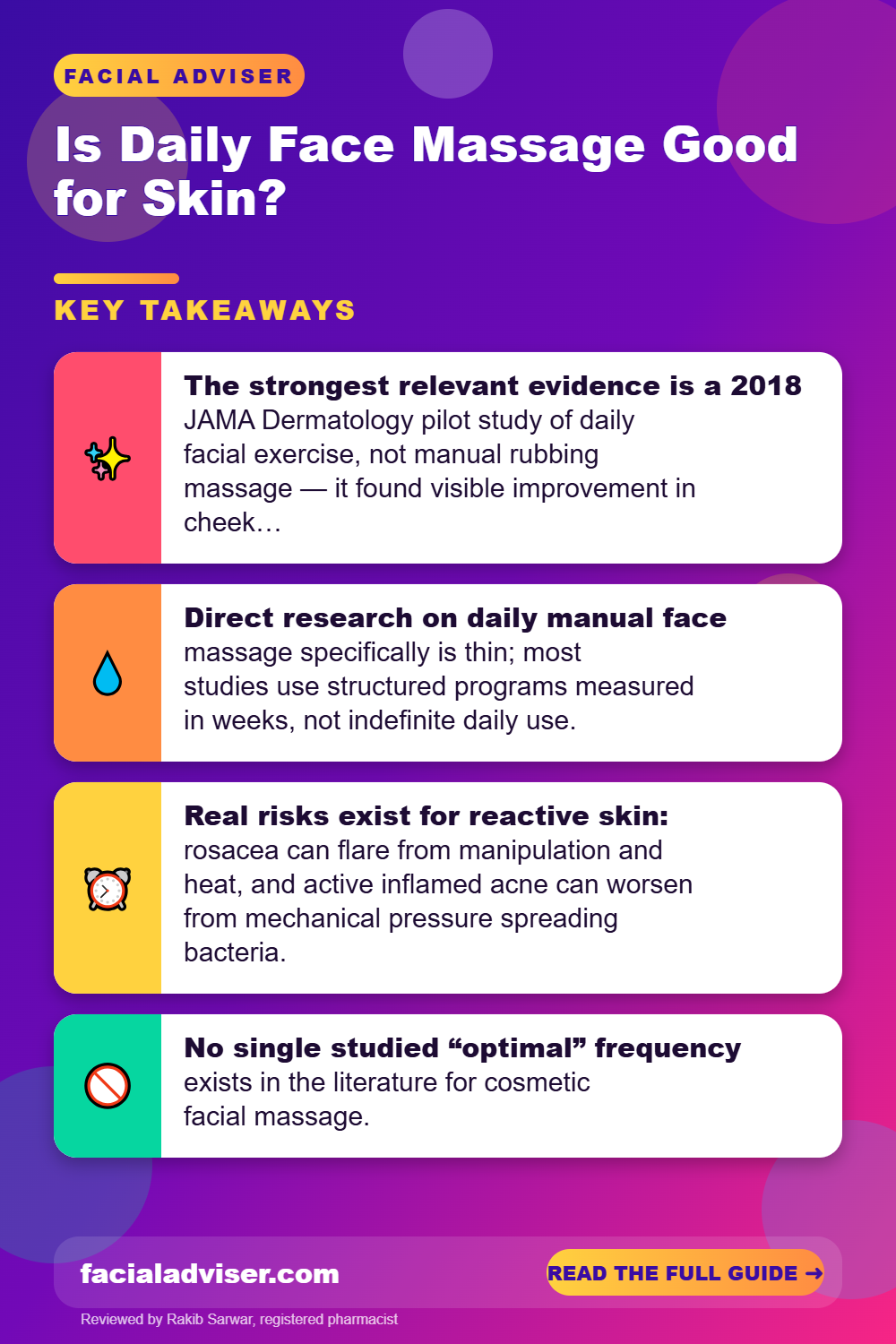
- The strongest relevant evidence is a 2018 JAMA Dermatology pilot study of daily facial exercise, not manual rubbing massage — it found visible improvement in cheek fullness after a 20-week program that started daily and tapered off.
- Direct research on daily manual face massage specifically is thin; most studies use structured programs measured in weeks, not indefinite daily use.
- Real risks exist for reactive skin: rosacea can flare from manipulation and heat, and active inflamed acne can worsen from mechanical pressure spreading bacteria.
- No single studied “optimal” frequency exists in the literature for cosmetic facial massage.
Read More
- What This Question Is Really Asking
- The Strongest Evidence: Facial Exercise, Not Rubbing
- Gua Sha and Roller Massage: What’s Known
- The Lymphatic Drainage Claim, Examined
- Is There a Research-Backed Sweet Spot?
- Massage Type vs. What’s Actually Known
- Real Risks of Frequent Massage
- Rosacea and Daily Massage
- Active Acne and Daily Massage
- Barrier Disruption From Repeated Friction
- Skin Type and a Reasonable Starting Frequency
- Setting Realistic Expectations
- Do This, Not That
- Doing Gentle Daily Massage More Safely
- What This Article Can’t Tell You
- Frequently Asked Questions
What This Question Is Really Asking
“Is daily face massage good for skin” usually gets asked about manual rubbing, gua sha, or roller-based massage, but the strongest available research actually studied something slightly different: structured facial muscle exercise. This guide is honest about that distinction, since conflating the two overstates what’s actually been tested for the kind of gentle stroking or gua sha most people mean by “face massage.”
Shopping these picks?
Amazon Prime members get fast, free shipping on eligible items, plus Prime Video, Amazon Music and member deals. New members can start with a free trial.
Start a free Prime trialAged 18 to 24? Prime for Young Adults comes with a longer free trial and a lower price after it.
Affiliate link: we may earn a commission at no extra cost to you.
The Strongest Evidence: Facial Exercise, Not Rubbing
A 2018 pilot study published in JAMA Dermatology followed 16 women (mean age 53.7) through a 20-week facial exercise program; 11 of the original 27 enrolled participants dropped out before completion. The protocol involved two 90-minute in-person training sessions on 32 specific facial exercises, followed by daily 30-minute sessions for the first 8 weeks, tapering to every other day for weeks 9 through 20. The results were genuinely notable: statistically significant improvement in upper and lower cheek fullness, and blinded raters estimated participants’ apparent age dropped from an average of 50.8 to 48.1 years. This is a real, if small and high-dropout, signal that daily structured facial exercise over weeks can produce a visible change. It’s important to be precise about what this does and doesn’t prove: this study tested active facial muscle exercises, not manual gua sha or stroking-style massage, and it doesn’t establish long-term safety data for indefinite daily use beyond the 20-week study window.
Gua Sha and Roller Massage: What’s Known
A 2023 review specifically examining gua sha, jade rollers, and facial massage within dermatology found the existing evidence base is limited and made up mostly of small studies. There’s some support for short-term improvements in facial contour, lymphatic flow-related puffiness reduction, and perceived skin tone, but the review found that broader mechanistic claims, like “detoxification” through lymph stimulation, are largely unproven. A separate 2025 randomized trial compared facial roller versus gua sha massage for contour, muscle tone, and elasticity, confirming this remains an active area of study, though detailed effect sizes from that trial weren’t independently verifiable in full.
The Lymphatic Drainage Claim, Examined
Manual lymphatic drainage is a real, established medical technique used to treat lymphedema, so the underlying physiological concept isn’t invented. But there’s a meaningful difference between that clinical application and daily cosmetic facial massage marketed as “lymphatic drainage” for puffiness or glow. No strong direct clinical evidence was found specifically validating daily cosmetic facial lymphatic massage for skin-health outcomes the way medical lymphedema therapy is validated for its own condition. This is an evidence gap worth naming honestly, not a proven negative — the mechanism is plausible, but the specific cosmetic-use claim hasn’t been rigorously tested the way the medical application has.
Is There a Research-Backed Sweet Spot?
No single studied optimal frequency exists in the literature for cosmetic facial massage generally. The Northwestern facial-exercise study used daily sessions for the first 8 weeks, then tapered to every other day, and still showed benefit at 20 weeks — which suggests daily isn’t inherently harmful in that specific structured-exercise context. But that finding doesn’t validate daily vigorous manual rubbing or gua sha generally, and it doesn’t establish that daily is superior to a less frequent routine for those specific techniques. The honest bottom line: gentle daily facial exercise has some real trial support over a multi-week program; daily vigorous manual massage lacks dedicated frequency-response research of its own.
Massage Type vs. What’s Actually Known
| Technique | What research actually supports |
|---|---|
| Structured facial exercise | Visible cheek-fullness improvement after a 20-week program (small pilot study) |
| Gua sha / roller massage | Some short-term contour/puffiness evidence; “detox” claims largely unproven |
| Cosmetic lymphatic-style massage | Mechanism is medically real elsewhere; direct cosmetic-use evidence is thin |
| Daily vigorous manual rubbing | No dedicated frequency-response research found |
Real Risks of Frequent Massage
Frequent or daily facial massage carries genuine, dermatologically recognized risks for certain skin types, even though it’s broadly considered low-risk for healthy, non-reactive skin. The clearest documented risks concern rosacea, active inflamed acne, and repeated mechanical friction on already-compromised skin barriers.
Rosacea and Daily Massage
The American Academy of Dermatology lists skin manipulation, heat, and friction among the trigger-management concerns for rosacea. Facial massage is generally discouraged, or must be kept very gentle, for rosacea-prone skin, since manipulation and any accompanying heat can provoke flushing and flare-ups in a condition already defined by vascular reactivity.
Active Acne and Daily Massage
Mechanical manipulation over active, inflamed acne lesions carries a real risk of spreading acne-causing bacteria, rupturing inflamed lesions, and worsening inflammation or scarring. This risk concentrates specifically on inflamed lesions like papules, pustules, and cysts, rather than on plain, non-inflamed comedones.
Barrier Disruption From Repeated Friction
Repeated mechanical stress from daily massage, especially with tools like gua sha stones used with real pressure, can plausibly contribute to micro-trauma and increased water loss through the skin barrier over time. This is a dermatologically reasoned, plausible risk rather than one directly quantified by a dedicated clinical trial measuring daily cosmetic massage specifically — it’s a real consideration, stated with appropriate honesty about the limits of the direct evidence behind it.
Skin Type and a Reasonable Starting Frequency
| Skin type/condition | Reasonable approach |
|---|---|
| Healthy, non-reactive skin | Daily gentle massage is plausible, though not specifically proven optimal |
| Rosacea-prone skin | Minimize or avoid; discuss with a dermatologist first |
| Active inflamed acne | Avoid direct massage over inflamed lesions |
| Sensitive or barrier-compromised skin | Start less frequently (2–3x/week) and monitor for irritation |
Setting Realistic Expectations
It’s worth being honest about the scale of change facial massage, of any kind, is likely to produce. The most rigorous evidence available here, the 20-week facial exercise pilot study, took five months of consistent effort to reach statistically significant, visible results, and even then those results were measured in millimeters of cheek fullness and a roughly two-and-a-half-year drop in perceived age, not a dramatic transformation. Gua sha and roller massage evidence points to similar modest, short-term effects on puffiness and contour, rather than the more sweeping “sculpting” or “lifting” language that markets these tools. None of this means facial massage isn’t worth doing. It means the honest expectation is a gradual, subtle change accumulated over weeks of consistency, not a visible difference after a single session, and framing it that way from the start avoids the disappointment that comes from expecting more than any current evidence actually supports.
Do This, Not That
Do
- Use genuinely gentle pressure, especially with a gua sha tool or roller.
- Skip massage over active, inflamed breakouts specifically.
- Discuss a daily routine with a dermatologist if you have rosacea.
Don’t
- Don’t assume “daily” is proven optimal — the direct evidence for daily manual massage specifically is thin.
- Don’t apply firm gua sha pressure over reactive or already-irritated skin.
- Don’t expect cosmetic facial massage to match medical lymphatic drainage’s evidence base.
Doing Gentle Daily Massage More Safely
Start with clean hands or tools
Reduces the risk of introducing bacteria to skin, especially relevant near active breakouts.
Use light pressure
Firm, aggressive pressure is where barrier-disruption and bruising risk concentrates.
Skip areas with active inflamed lesions
Work around papules, pustules, and cysts rather than massaging directly over them.
Watch for signs of irritation
Persistent redness or sensitivity after several days is a signal to reduce frequency.
Adjust for rosacea specifically
If you have rosacea, keep pressure minimal or check with a dermatologist before continuing daily.
What This Article Can’t Tell You
This guide can’t tell you a single scientifically established optimal frequency for facial massage, because the direct research on daily manual massage specifically doesn’t exist in the way it does for the structured facial-exercise study cited here. What it can tell you honestly is where the real evidence stands (facial exercise more than rubbing massage), where genuine risks concentrate (rosacea, active acne, aggressive pressure), and where the honest answer is simply “not enough dedicated research yet.”
Frequently Asked Questions
Is daily face massage actually good for skin?
The strongest evidence concerns structured facial exercise, not manual rubbing massage, and even that evidence comes from one small pilot study. Direct research on daily manual massage specifically is thin.
What did the 2018 facial exercise study actually find?
A 20-week program of daily-then-tapering facial exercises found statistically significant improvement in cheek fullness and a lower perceived age among the 16 women who completed it.
Does gua sha massage actually work?
Some short-term evidence supports contour and puffiness improvement, but the “detoxification via lymph” claim commonly used to market gua sha is largely unproven.
Can daily face massage cause skin damage?
Repeated firm pressure could plausibly contribute to barrier disruption over time, though this hasn’t been directly quantified in a dedicated trial for daily cosmetic massage specifically.
Is face massage safe with rosacea?
It needs real caution. The AAD lists manipulation, heat, and friction among rosacea trigger concerns, so massage is generally discouraged or must stay very gentle.
Can I massage over active acne breakouts?
It’s better to avoid direct massage over inflamed lesions specifically, since mechanical pressure can spread bacteria and worsen inflammation.
Is there a proven “best” frequency for face massage?
No single studied optimal frequency exists in the literature for cosmetic facial massage generally.
Does facial massage really drain lymph and reduce puffiness?
The underlying lymphatic-drainage mechanism is medically real in other contexts, but direct evidence specifically validating daily cosmetic facial lymphatic massage for skin outcomes is thin.
Should I use a gua sha tool or my hands for daily massage?
Either can be used gently; a gua sha tool concentrates pressure more, so it warrants a lighter touch, especially on reactive or sensitive skin.
How do I know if daily massage is irritating my skin?
Persistent redness, sensitivity, or new breakouts appearing after starting a daily routine are signals to reduce frequency or pressure.

Written by
Registered pharmacist and founder of Facial Adviser. Rakib's pharmacy training covers how skincare actives work and interact; a later course in cosmetology turned that into a focus on facial treatments and skincare products. He plans, researches and edits every guide on the site and checks health claims against sources such as the American Academy of Dermatology, the FDA and the NIH. He is not a dermatologist; see the Editorial Policy and Medical Disclaimer.
About · Editorial policy · How we choose products · Medical disclaimer · Contact
Keep reading: Facial rollers, gua sha and massagers
- 10 Best Gua Sha Facial Tools (2026): Stone and Steel Picks Compared
- Does Massaging Your Face Reduce Wrinkles? What It Can and Cannot Do
- Is a Face Massager Good for Your Skin? What Rollers, Gua Sha and Devices Can Do
- Frownies vs Facial Smoothies: Do Wrinkle Patches Actually Work?
- Facial Roller vs Gua Sha: What a 2025 Trial Found and Which to Choose
- Facial Cupping vs Gua Sha: Suction, Scraping, and What Each Is Good For
- 10 Best LED Light Therapy Masks (2026): Clearer Skin, Softer Lines
- How to Incorporate Microcurrent Into Your Routine: Gel, Timing and Safety