How to Incorporate Microcurrent Into Your Routine: Gel, Timing and Safety
At-home microcurrent devices promise a lifted, more toned look in a few minutes a day. Getting any benefit from one depends less on the device itself and more on how you use it: clean skin, enough conductive gel, slow upward passes and, above all, consistency. Used carelessly or by the wrong person, it can be a waste of time or even unsafe.
To incorporate microcurrent into your routine, use it after cleansing and before serums and moisturiser, on clean, dry-of-oil skin covered with a generous layer of water-based conductive gel. Glide or hold the device in slow, upward movements for about five to twenty minutes, following the maker’s instructions, then remove or massage in the gel and continue with your normal skincare. Most people use it three to five times a week for the first one to two months, then two or three times a week to maintain. Do not use it if you have a pacemaker or other implanted electronic device, are pregnant, have epilepsy or have metal implants in the face.
In short: cleanse, apply plenty of conductive gel, work upwards slowly, follow with skincare, and stay consistent while respecting the safety exclusions.
The American Academy of Dermatology recommends daily broad-spectrum sunscreen and gentle care for anyone trying to keep skin looking younger, and those basics matter far more than any at-home device.
This guide shows where microcurrent fits in your routine, how to use conductive gel, how often to use a device, who should avoid it and what results are realistic.
Shopping these picks?
Amazon Prime members get fast, free shipping on eligible items, plus Prime Video, Amazon Music and member deals. New members can start with a free trial.
Start a free Prime trialAged 18 to 24? Prime for Young Adults comes with a longer free trial and a lower price after it.
Affiliate link: we may earn a commission at no extra cost to you.
Recommended At-Home Microcurrent Devices and Conductive Gels




Jump to a Section
- What Microcurrent Does and Does Not Do
- Where Microcurrent Fits in Your Routine
- Conductive Gel: Why It Matters and How Much to Use
- How to Use a Microcurrent Device in Your Routine
- How Often to Use Microcurrent
- Combining Microcurrent With Other Skin Care
- Who Should Avoid At-Home Microcurrent
- Realistic Results and Timeline
- Cleaning and Caring for Your Device
- Microcurrent Dos and Don’ts
- Honest Limits
- When to See a Dermatologist
- Frequently Asked Questions
- Final Word
In Brief
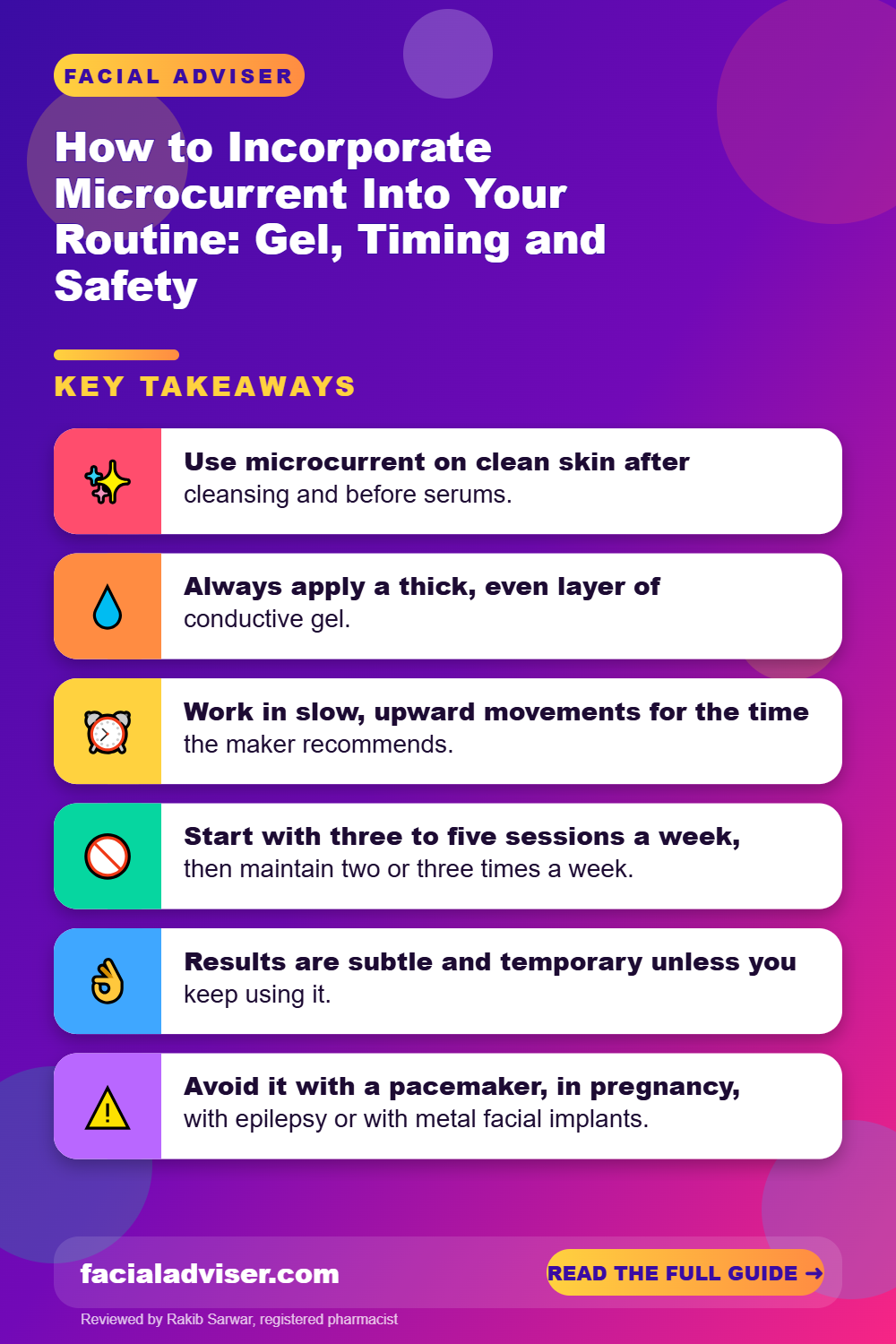
- Use microcurrent on clean skin after cleansing and before serums.
- Always apply a thick, even layer of conductive gel.
- Work in slow, upward movements for the time the maker recommends.
- Start with three to five sessions a week, then maintain two or three times a week.
- Results are subtle and temporary unless you keep using it.
- Avoid it with a pacemaker, in pregnancy, with epilepsy or with metal facial implants.
- Sunscreen and good skin care matter more than any device.
What Microcurrent Does and Does Not Do
Microcurrent devices send a very low electrical current, measured in millionths of an amp, through the skin between two contact points. The idea is that this current stimulates facial muscles and skin cells, giving a temporary toned or lifted look. Many users describe the effect as similar to a brief workout for the face.
The effect you see right after a session is usually modest, such as slightly lifted brows or a more defined cheekbone, and it tends to fade within a day or two. Regular use may keep that look more consistent, but at-home devices are much weaker than professional machines and do not replace surgical or clinical treatments. Our guide on microcurrent facial steps and benefits explains how professional treatments compare.
| Claim | What to expect at home |
|---|---|
| Lifted brows and cheeks | Subtle, temporary change after sessions |
| Sharper jawline | Small change at best, especially with regular use |
| Fewer wrinkles | Little evidence of a lasting change |
| Collagen building | Suggested by early research, not proven for home devices |
| Less puffiness | Some people notice this, partly from massage |
| Replaces fillers or a facelift | No |
Where Microcurrent Fits in Your Routine
The device needs clean skin and a conductive layer, so it belongs near the start of your routine. Serums, oils and creams can block or interfere with the current, and some actives may sting under it.
| Step | Morning session | Evening session |
|---|---|---|
| 1 | Cleanse | Remove makeup and cleanse |
| 2 | Pat dry | Pat dry |
| 3 | Apply conductive gel | Apply conductive gel |
| 4 | Microcurrent session | Microcurrent session |
| 5 | Remove excess gel or press it in | Remove excess gel or press it in |
| 6 | Hydrating or vitamin C serum | Hydrating serum or retinoid |
| 7 | Moisturiser | Moisturiser |
| 8 | Sunscreen | None |
Morning sessions are popular because the lifted look helps before a busy day or an event. Evening sessions fit more easily for many people and avoid a rushed routine. Either is fine; the time you will stick to is the right one. Whichever you choose, keep the rest of your routine the same so you can judge the device fairly.
Conductive Gel: Why It Matters and How Much to Use
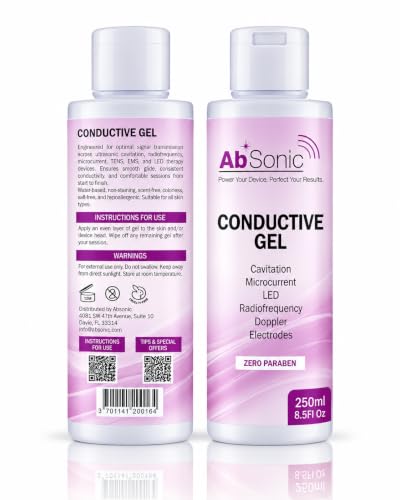
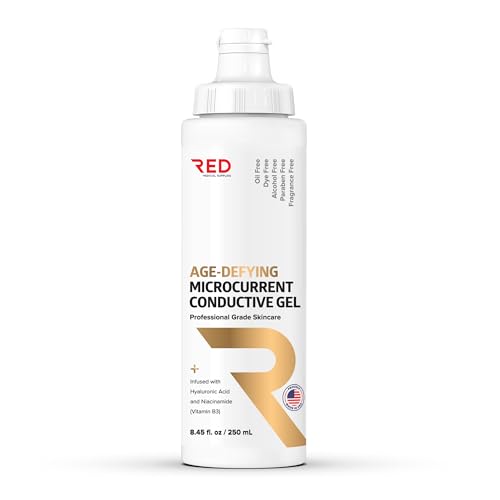
Conductive gel is not optional. It lets the current flow evenly through the skin, helps the device glide and prevents the prickling or zapping feeling that comes from dry spots. Most complaints about microcurrent devices feeling uncomfortable or not working come down to too little gel.
- Use a water-based gel made for facial devices, or the gel the maker recommends.
- Apply a thick layer, enough that you can still see gel on the skin, not a thin sheen.
- Work on one area at a time so the gel does not dry out before you reach it.
- Add more gel as soon as the device drags or you feel prickling.
- Avoid oils, balms and silicone-heavy creams as a substitute, as they do not conduct well.
- Plain aloe vera gel may conduct, but choose one without alcohol or fragrance.
Some serums are sold as conductive and can double as the gel layer. They can work, but check that the product is made for use with microcurrent and still apply enough to keep the skin visibly wet throughout the session.
How to Use a Microcurrent Device in Your Routine
Every device is slightly different, so always follow the manual first. These general steps cover what most at-home devices have in common.
Check you can use it safely
Read the contraindications and skip the device if any apply to you.
Cleanse and remove makeup
Oil, makeup and sunscreen residue can block the current.
Apply conductive gel
Work in sections, using a thick layer on the area you are treating.
Set a low level
Start on the lowest intensity and increase only if comfortable.
Glide or hold upwards
Move slowly from the centre of the face outwards and upwards, pausing where the device suggests.
Treat each side evenly
Spend the same time on both sides and keep sessions within the recommended time.
Finish your routine
Wipe or press in the gel, then apply serum, moisturiser and, in the morning, sunscreen.
Do one side of the face first and compare it with the untreated side in a mirror. It is an easy way to see what the device actually does for you, and to check you are using enough gel and the right direction.
How Often to Use Microcurrent
Consistency is the most important factor with at-home microcurrent. Occasional use rarely shows much, while a steady routine gives the best chance of a visible difference.
- First four to eight weeks: three to five sessions a week, as most makers suggest.
- Maintenance: two or three sessions a week.
- Session length: typically five to twenty minutes, depending on the device.
- Before an event: a session on the day can give a short-term lift.
- Rest days: skipping a day now and then is fine; long breaks let results fade.
More is not better. Longer sessions or higher settings than recommended do not speed up results and may leave skin irritated or muscles feeling tired. If you also enjoy facial massage, keep it gentle and do it on separate days or after the gel has been removed.
Combining Microcurrent With Other Skin Care
Microcurrent works on the look of muscle tone and firmness, while skin care works on the surface. Using both covers more ground than either alone.
- Use retinoids at night, but not straight before a session if they make your skin sensitive.
- Apply vitamin C and sunscreen after morning sessions.
- Leave at least a day between chemical exfoliation and microcurrent if your skin is reactive.
- Avoid using the device on skin that is freshly peeled, sunburned or broken.
- Hydrating serums after a session help the skin feel comfortable.
Exfoliated skin can sting under electrical current. The AAD’s advice on exfoliating safely at home recommends going gently and less often, which also makes it easier to fit microcurrent around exfoliation days. Our guide to face tools for anti-aging compares microcurrent with other devices you may already own.
Who Should Avoid At-Home Microcurrent
Microcurrent is low power, but it is still an electrical current, and some people should not use it at all or only with a doctor’s approval.
- Anyone with a pacemaker, implanted defibrillator or other implanted electronic device.
- People who are pregnant.
- People with epilepsy or a seizure disorder.
- Anyone with metal implants, plates or screws in the face or head, including some dental implants; check with your dentist or doctor.
- People with active skin infections, open wounds, rashes or active acne in the area.
- Anyone who has had recent facial surgery, fillers or injections, until cleared by their practitioner.
- People with heart conditions, cancer or other serious medical conditions, unless a doctor approves.
Never use a microcurrent device if you have a pacemaker or other implanted electronic device, are pregnant, or have epilepsy. Stop immediately if you feel pain, a burning sensation, dizziness, headache or heart palpitations, and speak to a doctor.
Realistic Results and Timeline
Microcurrent results are gradual and subtle. Many people notice a slight lift right after a session, and some see a more consistent change after four to eight weeks of regular use. If you stop, the look usually returns to baseline within a few weeks.
Results vary with age, skin laxity and how consistently you use the device. Deep wrinkles, significant sagging and volume loss are unlikely to improve much at home. Our guide on solutions for a sagging jowl area explains which treatments suit more noticeable sagging.
Cleaning and Caring for Your Device
Good hygiene keeps sessions comfortable and protects your skin. Gel left on the contact points can dry, harbour bacteria and make the current feel uneven next time.
- Wipe the contact points after every session with a damp cloth, then dry them.
- Use a mild cleaner or alcohol wipe only if the manual allows it.
- Charge and store the device as the maker advises, away from heat and moisture.
- Do not share the device, especially if anyone has active breakouts or a skin infection.
- Replace conductive gel once it passes its expiry date or changes smell or texture.
Check the device regularly for cracks, loose parts or damaged charging cables, and stop using it if anything looks faulty.
Microcurrent Dos and Don’ts
Do
- Read the manual and safety warnings
- Use plenty of conductive gel
- Work in slow, upward movements
- Stay consistent for at least a month
- Clean the device after every use
Don’t
- Use it on dry skin or over serums and oils
- Turn the intensity higher to get faster results
- Use it if you have a pacemaker or are pregnant
- Use it on broken, sunburned or infected skin
- Expect it to replace professional treatment
Honest Limits
Evidence for microcurrent is limited, and most of it comes from small studies, professional devices or research funded by manufacturers. Home devices deliver lower currents, and there are few independent trials showing lasting changes in wrinkles or firmness. Claims about collagen and building facial muscles are based on early or indirect evidence.
What at-home microcurrent can reasonably offer is a subtle, temporary toned look for people who enjoy the ritual and use it consistently. It will not lift significant sagging, restore lost volume or replace sunscreen, retinoids and professional treatments. Other home devices, such as radiofrequency and LED tools, work in different ways and have their own limits.
When to See a Dermatologist
- You have a medical condition or implant and are unsure whether microcurrent is safe.
- Your skin becomes red, irritated or develops a rash after sessions.
- You want significant lifting or tightening beyond what home devices offer.
- You are considering combining microcurrent with injectables or other procedures.
This article is for general information and does not replace professional medical advice. Check with a doctor or board-certified dermatologist before using an electrical skin device if you have any medical condition, implant or are pregnant.
Frequently Asked Questions
When should I use microcurrent in my routine?
After cleansing and before serums and moisturiser.
Do I need conductive gel for microcurrent?
Yes, always use a thick layer.
How often should I use a microcurrent device?
Three to five times a week at first, then two or three.
How long should a microcurrent session be?
Usually five to twenty minutes, per the maker’s guide.
Can I use microcurrent every day?
Some devices allow it, but more is not better.
Can I use microcurrent at night?
Yes, morning or night both work.
Can I use microcurrent with retinol?
Yes, but apply retinol after the session.
Who should not use microcurrent?
People with pacemakers, pregnancy, epilepsy or facial metal implants.
How long until I see results?
Some notice a lift right away; more consistent change takes weeks.
Are microcurrent results permanent?
No, they fade if you stop.
Final Word
To incorporate microcurrent into your routine, use it on clean skin with plenty of conductive gel, work in slow upward movements and follow with your usual serums, moisturiser and sunscreen.
Stay consistent, keep expectations realistic, and skip the device entirely if you have a pacemaker, are pregnant, have epilepsy or have metal facial implants.

Written by
Registered pharmacist and founder of Facial Adviser. Rakib's pharmacy training covers how skincare actives work and interact; a later course in cosmetology turned that into a focus on facial treatments and skincare products. He plans, researches and edits every guide on the site and checks health claims against sources such as the American Academy of Dermatology, the FDA and the NIH. He is not a dermatologist; see the Editorial Policy and Medical Disclaimer.
About · Editorial policy · How we choose products · Medical disclaimer · Contact
Keep reading: Microcurrent and RF devices
- Best Body Microcurrent Device: Evidence, Safety and How to Choose
- Thermage Treatment: What Actually Happens
- Electric Current Facial: Galvanic vs. Microcurrent
- Radiofrequency Facial: What FDA Clearance Really Means
- Microcurrent Facial: Steps, Benefits, Cost
- 10 Best Gua Sha Facial Tools (2026): Stone and Steel Picks Compared
- 10 Best Facial Tools (2026): LED, Cleansing, Gua Sha and More