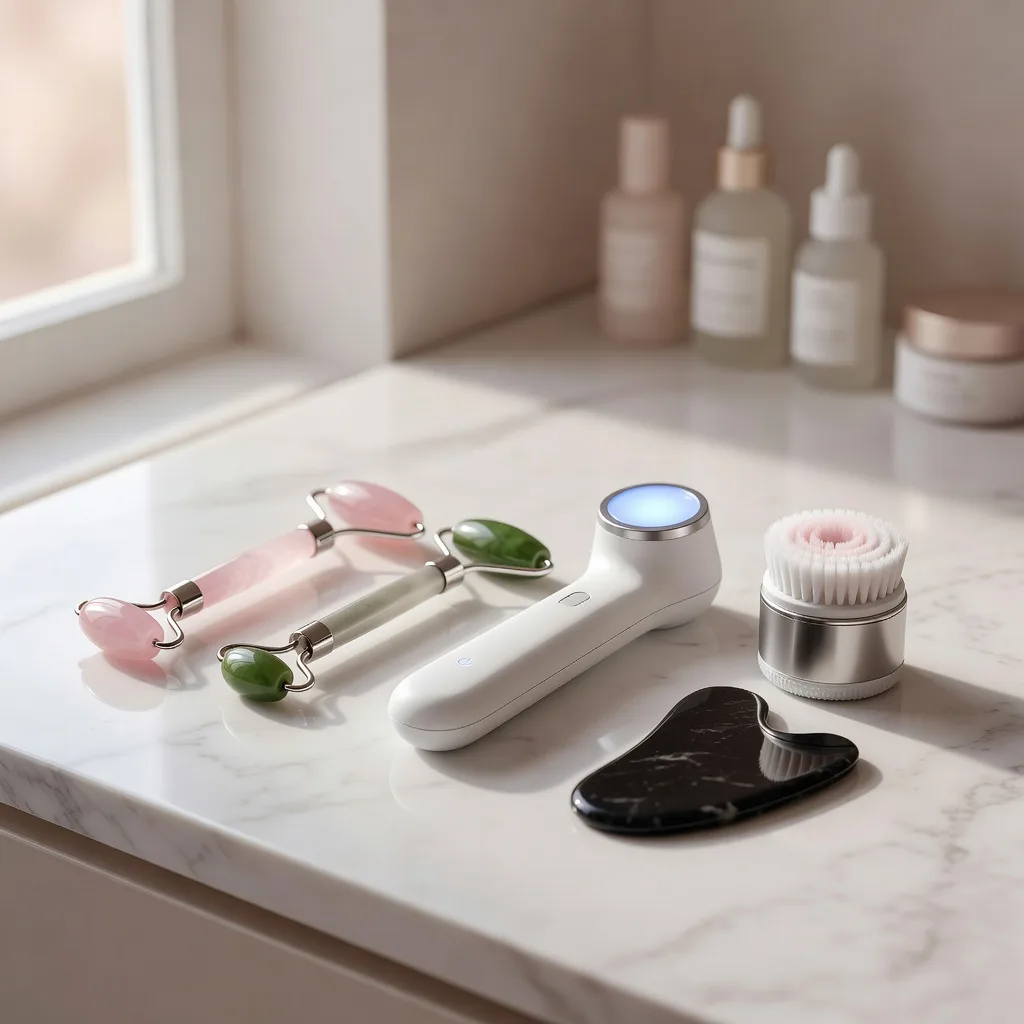
10 Best Facial Tools (2026): LED, Cleansing, Gua Sha and More
Facial tools promise sculpted cheeks, less puffiness, smoother skin and a spa glow at home. Some deliver a small, real benefit and some are pleasant rituals with little lasting effect. This list covers 10 options, from LED masks to gua sha, with notes on who each one suits and who should skip it.
The best facial tools are the ones matched to a realistic goal. For morning puffiness, a cool gua sha, facial roller or ice roller gives a quick, temporary depuffing effect. For a gentler cleanse than a washcloth, a soft silicone or sonic cleansing brush can help normal or oily skin. For fine lines, at-home LED masks and microcurrent devices have limited but growing evidence, and results are modest and need regular use. Dermaplaning tools remove peach fuzz and surface flakes for smoother makeup. None of these replace sunscreen, a retinoid or professional treatments, so choose one tool you will actually use, clean it well and set expectations low.
In short: pick a tool for one clear job, buy the simplest version that does it, and judge it after several weeks, not one session.
The American Academy of Dermatology notes that at-home light devices are less powerful than in-office treatments and that results take time, which is a sensible way to think about every device on this list.
Below you will find the ten picks, how we chose them, the main tool types, what to avoid, and how to use and clean each tool safely.
Shopping these picks?
Amazon Prime members get fast, free shipping on eligible items, plus Prime Video, Amazon Music and member deals. New members can start with a free trial.
Start a free Prime trialAged 18 to 24? Prime for Young Adults comes with a longer free trial and a lower price after it.
Affiliate link: we may earn a commission at no extra cost to you.
As an Amazon Associate we earn from qualifying purchases. This does not change which products we include.


The Short Version
- Shark CryoGlow is our top pick, with FDA clearance stated on its listing, short presets and under-eye cooling.
- INIA GLOW 4D is the best wireless LED mask, with flexible silicone and four light modes.
- NEWKEY 4D is a simple corded LED mask with a built-in ten-minute shut-off.
- Match the tool to one goal: depuffing, cleansing, smoothing or fine lines.
- Manual tools such as gua sha and rollers give temporary, mostly cosmetic results.
- FDA cleared means low risk for its intended use, not proven to work.
- Clean every tool after each use and stop using it on broken or inflamed skin.
On This Page
- The 10 Best Facial Tools Right Now
- How We Chose These Products
- The Main Types of Facial Tools Compared
- Gua Sha, Rollers and Ice Rollers: Features to Look For
- LED Masks and Microcurrent Devices: What the Evidence Says
- Sonic Brushes and Dermaplaning Tools
- Which Facial Tool Is Best for Your Goal?
- Facial Tools to Avoid or Approach With Caution
- How to Choose and Use a Facial Tool Safely
- How to Clean and Store Facial Tools
- Dos and Don’ts
- Honest Limits
- When to See a Dermatologist
- Your Questions, Answered
- The Bottom Line
The 10 Best Facial Tools Right Now
These ten tools were shortlisted from widely reviewed Amazon listings and span LED masks, cleansing brushes, dermaplaning tools and cooling tools, ranked by design, safety features and listing clarity. Each pick shows who it suits, its trade-offs and who should skip it.
| # | Product | Best For | Standout Feature | |
|---|---|---|---|---|
| 1 | Shark CryoGlow LED Face Mask | Fine lines and breakouts at home | FDA clearance stated, plus under-eye cooling | View |
| 2 | INIA GLOW 4D Wireless LED Mask | Moving around during sessions | Flexible silicone with 320 LEDs | View |
| 3 | NEWKEY 4D LED Mask | Steady power, simple routine | Corded design with 10-minute auto shut-off | View |
| 4 | PMD Beauty Clean Pro | A smarter daily cleanse | Silicone brush plus heated aluminium head | View |
| 5 | NagraCoola Cleansing Brush | Everyday cleansing on normal skin | Ultra-soft silicone with a massage function | View |
| 6 | WUXO Sonic Dermaplaning Tool | Peach fuzz and smoother makeup | Three sonic speeds and replacement blades | View |
| 7 | UMICKOO 2-Way Cleansing Brush | Adjustable cleansing intensity | Five heads and three modes | View |
| 8 | Tinkle Dermaplaning Razors (36) | Trying dermaplaning cheaply | Pack of single-blade face razors | View |
| 9 | ESARORA Ice Roller | Quick morning depuffing | Chilled roller for face and eyes | View |
| 10 | BAIMEI IcyMe Gua Sha and Roller Set | Low-cost facial massage ritual | Gua sha stone plus jade roller | View |
Shark CryoGlow LED Face Mask

Best for: Fine lines and breakouts at home
The Shark CryoGlow earns the top spot because it is the most complete powered tool on this list. Its listing states FDA clearance, it combines red, blue and infrared light, and it runs short preset treatments for ageing concerns and breakouts, so there is little guesswork about timing or which setting to choose.
The under-eye cooling feature adds a soothing extra that most masks lack. Keep expectations realistic: clearance covers safety and intended use, and home LED results are modest and gradual. It is also the most expensive tool here by some margin, so the INIA or NEWKEY masks are the cheaper way to try LED first.
- Red, blue and deep infrared light in one mask
- Preset treatments for ageing, clearing and under-eyes
- Under-eye cooling built in
- FDA clearance stated on the listing
Pros
- Short, preset sessions
- Covers both lines and breakouts
- Clear safety information on the listing
Cons
- Most expensive tool on this list
- Results are gradual and modest
Skip it if: Skip it if you take light-sensitising medicines or have an eye condition, unless your doctor agrees.
Check Price on AmazonINIA GLOW 4D Wireless LED Mask

Best for: Moving around during sessions
The INIA GLOW 4D is a wireless LED mask made from flexible silicone that shapes to the face, which helps keep the lights close to the skin. It offers four light modes, including red and blue, plus dual near-infrared channels, and a magnetic cooling gel pad for the under-eye area.
Being wireless, it suits people who dislike sitting tethered to a socket, which is the main difference from the corded NEWKEY. Its listing does not state FDA clearance, unlike the #1 pick, and some of its marketing goes further than the evidence, so treat it as a comfortable way to try home LED rather than a salon replacement.
- Wireless mask in flexible, face-hugging silicone
- Four light modes including red, blue and amber
- Dual near-infrared channels
- Magnetic cooling gel pad for under the eyes
Pros
- Cord-free sessions
- Close, flexible fit
- Cooling pad included
Cons
- Listing does not state FDA clearance
- Battery must be kept charged
Skip it if: Skip it if FDA clearance is your main buying rule; the Shark CryoGlow states it on its listing.
Check Price on AmazonNEWKEY 4D LED Mask
Best for: Steady power, simple routine
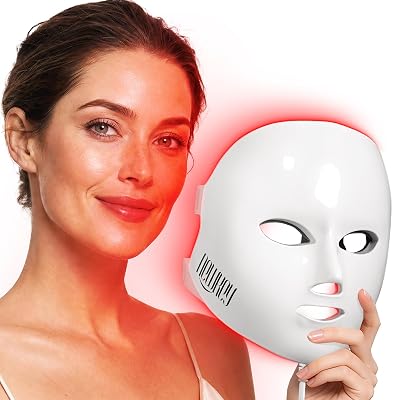
The NEWKEY 4D is a long-established red and blue LED mask with a corded design, which the maker says keeps power steady through each session. A contoured shape aims for full face coverage, and a ten-minute automatic shut-off keeps sessions controlled without a separate timer, which is helpful if you tend to lose track of time.
It is simpler than the Shark and INIA picks, with fewer modes and no cooling pad, but that also makes it easy to learn. Its listing makes strong clinical claims that we do not repeat; home LED effects are modest at best. The cord means sitting near a socket, which some people find limiting.
- Red and blue light modes
- Contoured shape for full face coverage
- Corded power for steady output
- Ten-minute automatic shut-off
Pros
- Simple to use
- Built-in session timer
- No battery to charge
Cons
- Must stay near a power socket
- Fewer modes than the Shark or INIA
Skip it if: Skip it if you want to move around during treatment; the wireless INIA mask suits you better.
Check Price on AmazonPMD Beauty Clean Pro

Best for: A smarter daily cleanse
The PMD Clean Pro is the premium cleansing pick. Its title describes a smart facial device with a silicone brush and a heated aluminium attachment, pairing a soft cleanse with a warming massage element, which sets it apart from the simpler NagraCoola and UMICKOO brushes further down the list. It suits someone who wants one upgraded device for the daily cleanse.
Its listing gives little detail in bullet form, so we have not assumed features beyond the title. Silicone is generally easier to keep clean than nylon bristles, which is a real advantage. Anyone with rosacea, eczema or active acne should still go gently, because even soft brushes add friction to already irritated skin.
- Silicone cleansing brush
- Heated aluminium attachment
- Smart facial device design
- Established beauty-device brand
Pros
- Silicone is easy to clean
- Adds a warming massage step
- Premium build
Cons
- Listing gives few specifics
- Pricier than other brushes here
Skip it if: Skip it if your skin is reactive or broken out; a gentle wash with your fingertips may be kinder.
Check Price on AmazonNagraCoola Cleansing Brush

Best for: Everyday cleansing on normal skin
The NagraCoola brush is a straightforward, ultra-soft silicone cleanser that suits people who want a gentler routine than a washcloth. It is waterproof and rechargeable, and it adds a massage function for a relaxing finish after you cleanse. It is the brush we would point most first-time buyers towards, because the soft silicone is forgiving and easy to keep hygienic between uses.
You use it on damp skin with your usual cleanser, gliding it over the face rather than pressing. Some of its listing language about firming and pores goes beyond what a brush can do; think of it as a cleaner, more pleasant way to wash. It is simpler than the PMD Clean Pro and has fewer modes than the UMICKOO.
- Ultra-soft silicone brush
- Waterproof and rechargeable
- Cleansing and massage functions
- Use with your normal cleanser on damp skin
Pros
- Very soft on skin
- Easy to rinse and dry
- Simple to use
Cons
- Fewer settings than the UMICKOO
- Claims about firming go beyond evidence
Skip it if: Skip it if you have active, inflamed acne; extra friction can make it worse.
Check Price on AmazonWUXO Sonic Dermaplaning Tool

Best for: Peach fuzz and smoother makeup
The WUXO tool adds gentle sonic motion to dermaplaning, which the maker says helps the blade glide over the cheeks, chin, upper lip and brow area. Three speeds let you slow down for trickier spots, and replacement blade heads come in the box, so you can swap to a fresh edge as soon as the blade starts to drag.
A magnetic holder and one-touch blade release make it tidier to store and change blades than disposable razors like the Tinkle. It is still a blade on skin, so use it only on clear, unbroken skin, hold it at a low angle and avoid acne, rashes and raised moles. Clean the head after every session.
- Sonic dermaplaning with three speeds
- Magnetic storage and one-touch blade release
- Slim rechargeable body with Type-C charging
- Replacement blade heads included
Pros
- Easier blade changes than disposables
- Adjustable speed
- Compact storage
Cons
- Blades need replacing over time
- Not for acne-prone or reactive skin
Skip it if: Skip it if you have active acne, rosacea or very sensitive skin.
Check Price on AmazonUMICKOO 2-Way Cleansing Brush

Best for: Adjustable cleansing intensity
The UMICKOO brush suits people who want to adjust how firm their cleanse feels. Its head rotates in two directions, it has gentle, daily and deep clean modes, and it comes with five interchangeable heads for different jobs, which is more choice than any other brush here. That flexibility suits households where different people want different heads.
It is rechargeable and waterproof, with a long listed battery life between charges. The trade-off is that rotating bristle heads create more friction than the silicone NagraCoola, so start on the gentle mode, use it a few times a week rather than daily and replace heads regularly so bacteria do not build up.
- Two-way rotating brush head
- Gentle, daily and deep clean modes
- Five interchangeable heads
- Rechargeable and waterproof
Pros
- Adjustable intensity
- Many heads for different uses
- Long battery life
Cons
- Bristle heads need regular replacing
- More friction than silicone brushes
Skip it if: Skip it if your skin is sensitive or prone to redness; the silicone NagraCoola is gentler.
Check Price on AmazonTinkle Dermaplaning Razors (36)

Best for: Trying dermaplaning cheaply
The Tinkle razors are the simplest way to try dermaplaning or tidy your brows. Each is a small single-blade tool that removes fine hairs and flakes for smoother makeup, and a large pack means you can use a fresh, sharp blade often, which is better for hygiene and gives a cleaner result.
They lack the speeds and holder of the WUXO, but there is nothing to charge and little to learn. Use them on clean, dry, clear skin with light, short strokes, and never over acne, cuts or raised spots. Some listing wording about looking younger is marketing; the real benefit is smoother texture.
- Single-blade face and brow razors
- Rust-free blades
- Removes fine hairs before makeup
- Small anti-slip handle
Pros
- Easy for beginners
- Fresh blade each time
- Nothing to charge
Cons
- Disposable, so more waste
- Easy to nick skin if rushed
Skip it if: Skip it if you have active acne or a skin condition; ask a dermatologist first.
Check Price on AmazonESARORA Ice Roller

Best for: Quick morning depuffing
The ESARORA ice roller is a cooling tool for face and eyes, designed to be chilled before use. Cold rolling can give a brief, visible reduction in morning puffiness and feels soothing, which is why it is a popular pick for quick routines before makeup or after a short night’s sleep.
Its listing mentions uses beyond skincare; we stick to depuffing, which is what most people buy it for. Effects fade within hours, so treat it as a ritual, not a treatment. Keep sessions short and stop if skin goes numb or very red. It is simpler than the BAIMEI set but has no gua sha stone.
- Chilled roller head for face and eyes
- Designed for depuffing
- Simple, no charging needed
- Easy to store in the freezer
Pros
- Fast, soothing effect
- Very low risk
- Easy for anyone to use
Cons
- Effect is temporary
- Needs time in the freezer
Skip it if: Skip it if you have cold sensitivity or poor circulation in the face.
Check Price on AmazonBAIMEI IcyMe Gua Sha and Roller Set

Best for: Low-cost facial massage ritual
The BAIMEI IcyMe set pairs a gua sha stone with a jade face roller, giving you two classic manual tools in one low-cost box. It is the simplest, lowest-risk way on this list to build a short massage ritual, and it is widely reviewed. It also makes a sensible gift for someone curious about facial massage.
Gua sha allows firmer, more targeted strokes along the jaw and cheekbones, while the roller is easier to use around the eyes. Results are mostly temporary depuffing and relaxation, not lifting. Use it over oil or serum, press lightly and clean both pieces after each use. For stronger cold, the ESARORA roller works better.
- Gua sha stone and jade roller in one set
- Suitable for use with facial oil or serum
- Manual tools with no charging
- Gift-ready packaging
Pros
- Low cost and low risk
- Two tools for different strokes
- Nothing to charge or replace
Cons
- Effects are temporary
- Natural stone can chip if dropped
Skip it if: Skip it if you expect lasting lifting or wrinkle reduction; no manual tool can deliver that.
Check Price on AmazonHow We Chose These Products
We shortlisted facial tools from Amazon listings that are highly rated by a large number of shoppers, favouring established brands and fuller-featured models, and chose a spread of tool types so there is a sensible option for each common goal. We then checked each product’s listed features against the safety guidance cited in this post, including the AAD’s advice on at-home light devices and gentle exfoliation.
These are research-based picks, not hands-on lab tests. We did not measure light output or blade sharpness ourselves, so rankings reflect listing detail, safety features and design rather than personal results. Where a listing makes clinical claims, we have not repeated them, and only the Shark CryoGlow states FDA clearance.
- Strong ratings from a large number of shoppers
- Established brands and fuller-featured models preferred
- A mix of LED, cleansing, dermaplaning and cooling tools
- Listed features checked against the cited safety guidance
- Products with thin or unclear listings excluded or ranked lower
The Main Types of Facial Tools Compared
Facial tools fall into two broad groups. Manual tools, such as gua sha stones, rollers and ice rollers, rely on pressure, movement and cold. Powered devices, such as LED masks, microcurrent devices and sonic brushes, use light, a low electrical current or vibration. Powered does not automatically mean better; it usually means more expensive and more steps.
| Tool type | Main job | What to expect | Evidence level |
|---|---|---|---|
| Gua sha stone | Massage, depuffing | Temporary lift and less puffiness for a few hours | Low; small studies on circulation |
| Facial roller | Massage, cooling | Short-lived depuffing, relaxing ritual | Low |
| Ice roller or cryo globes | Cooling, calming | Brief reduction in puffiness and redness | Low, but cold is a well-known short-term effect |
| Microcurrent device | Muscle stimulation, toning | Subtle, temporary lifted look with regular use | Limited, small studies |
| LED mask | Light therapy | Gradual, subtle change in fine lines or breakouts | Moderate for in-office; limited for home devices |
| Sonic or silicone brush | Cleansing | Cleaner feel, mild exfoliation | Low; mainly about gentleness and hygiene |
| Dermaplaning tool | Removing fuzz and flakes | Smoother surface and makeup for a few weeks | Cosmetic; no anti-ageing effect |
Our guide to face tools for anti-aging goes deeper into which of these have any effect on wrinkles specifically.
Gua Sha, Rollers and Ice Rollers: Features to Look For
Manual tools are the cheapest place to start and the easiest to use well. Their main benefit comes from gentle massage that moves fluid and from cold that briefly tightens the look of skin. The stone or material matters much less than the shape and finish.
- A smooth, polished edge with no chips, cracks or rough seams.
- A shape that fits your face: a curved notch for the jaw, a wide edge for cheeks, a small end for the brow.
- For rollers, a firm frame that does not squeak or wobble, and a roller that turns freely.
- Stainless steel or cold-retaining stone if you want a cooling effect; steel is easiest to clean.
- A size that feels secure in wet, slippery hands.
If you are choosing between a stone and a roller, our comparison of facial roller vs gua sha explains how the techniques differ. Crystal type, energy claims and colour make no measurable difference to skin.
LED Masks and Microcurrent Devices: What the Evidence Says
These are the tools most often sold as anti-ageing. The honest picture is that both have a plausible mechanism and some small studies, but at-home versions are weaker than clinic devices and results are gentle at best.
The American Academy of Dermatology’s page on red light therapy says at-home devices are less powerful than professional treatments, that short-term use appears safe with mild side effects, that you should wear the eye protection the instructions recommend, and that FDA cleared means a device is low risk, not that it works.
- LED: look for red and near-infrared for fine lines, blue for breakouts, clear treatment times, an automatic shut-off and eye protection if instructed.
- Microcurrent: look for adjustable intensity, a clear conductive gel requirement, a timer and easy-to-follow instructions.
- Both: check that the listing says FDA cleared rather than the misleading FDA approved, and read the full contraindication list before buying.
Do not use microcurrent devices if you have a pacemaker or other implanted electronic device, are pregnant, have epilepsy, or have metal implants in the face, unless your doctor agrees. Avoid LED if you have a light-sensitive condition or take medicines that make you sensitive to light.
Sonic Brushes and Dermaplaning Tools
Cleansing brushes and dermaplaning tools work on the surface of the skin, so they bring the highest risk of over-exfoliation. Soft silicone bristles are easier to keep clean than nylon brush heads and are generally gentler. Choose a device with several speed settings and a timer that stops you going over the same area too long.
Dermaplaning tools are small, single-edge blades designed for the face. Look for a guarded edge, a non-slip handle and replaceable or disposable blades. Our explainer on what dermaplaning is covers technique in more detail.
The AAD’s advice on how to safely exfoliate at home recommends short, light strokes with brushes, never exfoliating over cuts or sunburn, and moisturising straight afterwards.
Which Facial Tool Is Best for Your Goal?
Start with the problem you want to solve, then pick the simplest tool that addresses it.
| Your goal | Best-fit tool type | Skip or be cautious |
|---|---|---|
| Morning puffiness | Ice roller, chilled steel roller or gua sha | Heated tools |
| Relaxing massage ritual | Gua sha or facial roller | Heavy pressure over the eyes |
| Fine lines, subtle firmness | LED mask or microcurrent, used consistently | Expecting filler-like results |
| Oily skin that feels unclean | Soft silicone cleansing brush a few times a week | Daily brushing with a scrub |
| Smoother makeup base | Dermaplaning tool every few weeks | Use on active acne |
| Sensitive or rosacea-prone skin | Cool roller, fingertips | Brushes, dermaplaning, strong microcurrent |
Facial Tools to Avoid or Approach With Caution
Some tools are not worth the risk for home use, and some product claims are simply not believable.
- At-home microneedle derma rollers: hard to sterilise, and poor technique can cause infection, marks and scarring.
- Pore vacuums and suction extractors: can cause bruising and broken capillaries.
- Tools with rough, chipped or glued seams that can scratch or harbour bacteria.
- Devices without clear instructions, safety warnings or contraindications.
- Any tool promising permanent lifting, fat loss or results like surgery or injectables.
Price and technology do not guarantee results. A simple, well-used manual tool often gives a better everyday experience than an expensive device that sits in a drawer.
How to Choose and Use a Facial Tool Safely
These steps work for almost any tool, from a gua sha stone to an LED mask.
Pick one goal
Decide whether you want depuffing, cleansing, smoothing or help with fine lines.
Check contraindications
Read the warnings, especially for microcurrent and LED, and ask a doctor if you have a medical condition.
Start clean
Wash your face and the tool, and use a slip layer such as a facial oil or the gel the device needs.
Use light pressure
Glide upwards and outwards; skin should never drag, sting or turn blotchy.
Keep sessions short
A few minutes for manual tools; follow the exact time for powered devices.
Clean and dry the tool
Wash with mild soap and water or wipe with alcohol if the maker allows, then let it dry fully.
Review after several weeks
Take photos in the same light to judge whether it is worth continuing.
Keep a roller or gua sha in the fridge rather than the freezer. Cool is enough to depuff, and a frozen tool can feel painful and stick to damp skin.
How to Clean and Store Facial Tools
Dirty tools move oil, makeup and bacteria back onto your face. Cleaning takes a minute and extends the life of the tool.
- Rinse stone and steel tools after each use, wash with gentle soap and dry with a clean towel.
- Wipe powered devices with a damp cloth; never submerge anything not labelled waterproof.
- Replace brush heads and dermaplaning blades as the maker suggests, or sooner if they look worn.
- Store tools in a clean pouch or box, not loose in a steamy bathroom.
- Never share tools, especially blades or brushes.
If you also use brushes and sponges for makeup, apply the same routine to them: wash, rinse, dry fully and store them somewhere clean and airy.
Dos and Don’ts
Helps
- Choose one tool for one clear goal
- Patch test oils and gels you use with it
- Use gentle, upward strokes
- Clean the tool after every use
- Wear sunscreen daily alongside any tool
Backfires
- Use tools on acne, cold sores or broken skin
- Press hard or drag the skin
- Use microcurrent with a pacemaker or during pregnancy
- Try microneedling at home
- Believe claims of permanent lifting
Honest Limits
Most facial tools create short-term changes. Massage and cold reduce puffiness for hours, not weeks. Microcurrent and LED may soften the look of fine lines slightly over months of consistent use, but research on home devices is small, often funded by manufacturers and hard to compare.
No tool rebuilds lost volume, removes deep wrinkles or tightens loose skin in the way clinic procedures can. Daily sunscreen, a retinoid and not smoking do more for long-term skin ageing than any gadget.
When to See a Dermatologist
- Redness, burning or a rash that lasts after using a tool.
- Bruising, broken capillaries or swelling.
- Breakouts that worsen after starting a brush or device.
- Any medical condition or implant you are unsure about before using microcurrent or LED.
- A mole or spot that changes in size, shape or colour.
This article is for general information only and does not replace medical advice. Check with a doctor or board-certified dermatologist before using powered devices if you have a medical condition, implant or are pregnant.
Your Questions, Answered
What is the best facial tool for beginners?
The BAIMEI gua sha and roller set or the ESARORA ice roller: cheap, simple and low risk.
Do facial tools really work?
Some give temporary depuffing; LED and microcurrent have modest, limited evidence.
Is gua sha better than a jade roller?
Gua sha allows firmer, more targeted strokes; rollers are easier to use.
Are at-home LED masks safe?
Short-term use appears safe; follow eye protection instructions.
Who should not use microcurrent?
People with pacemakers, implants, epilepsy or who are pregnant, unless a doctor agrees.
Is the most expensive facial tool worth it?
Only if you want LED. The Shark CryoGlow adds FDA clearance and presets; the NEWKEY covers the basics.
Which facial tool is best for sensitive skin?
A cool roller or the soft silicone NagraCoola brush, used gently; skip blades and bristle brushes.
Is dermaplaning at home safe?
It can be with a guarded blade on clear skin; avoid acne.
Should I use a derma roller at home?
Not recommended; infection and scarring risk is real.
How do I clean a face tool?
Wash with mild soap and water after each use and dry fully.
The Bottom Line
The best facial tools are simple ones matched to one realistic goal: cool manual tools for puffiness, a soft brush for cleansing, and LED or microcurrent only if you will use them consistently and accept modest results.
Read the contraindications, keep pressure light, clean your tools after every use and keep sunscreen as the foundation of your routine.
Our top pick: Shark CryoGlow LED Face Mask
The Shark CryoGlow takes the top spot because its listing states FDA clearance, it offers short preset treatments and it adds under-eye cooling, which makes it the most complete powered tool here. Choose the BAIMEI gua sha and roller set instead if you mainly want a low-cost, low-risk depuffing ritual, or a gentle cleansing brush like the NagraCoola if a better daily cleanse is your goal.
Check Price on Amazon
Written by
Registered pharmacist and founder of Facial Adviser. Rakib's pharmacy training covers how skincare actives work and interact; a later course in cosmetology turned that into a focus on facial treatments and skincare products. He plans, researches and edits every guide on the site and checks health claims against sources such as the American Academy of Dermatology, the FDA and the NIH. He is not a dermatologist; see the Editorial Policy and Medical Disclaimer.
About · Editorial policy · How we choose products · Medical disclaimer · Contact
Keep reading: Cleansing brushes and skin tools
- 10 Best Silicone Facial Brushes (2026): Gentle Sonic and Manual Picks
- 10 Best Skincare Serum Applicators (2026): Cleaner Use, Less Waste
- FOREO LUNA mini 2: Is This Compact Silicone Cleanser Worth It?
- FOREO LUNA 4: Features, Pros, Cons and Who It Really Suits
- Are Face Brushes Good for Acne?
- 10 Best Products for Women's Facial Hair Removal (2026): Gentle Picks
- 10 Best Gua Sha Facial Tools (2026): Stone and Steel Picks Compared