10 Best Skincare Serum Applicators (2026): Cleaner Use, Less Waste
Most people think about which serum to buy, not how they get it out of the container. This list covers 10 options, from disposable and reusable spatulas to airless pump bottles and silicone applicators, with notes on who each one suits, because the tool you use affects how clean your serum stays over weeks of use.
Part of our guide to at-home facial devices. Start with: 10 Best Facial Tools (2026): LED, Cleansing, Gua Sha and More
The best skincare serum applicator for most people is the one that keeps the serum from touching skin or fingers before it is used. Airless pumps are the most hygienic and protect sensitive ingredients such as vitamin C from air. Glass droppers work well if you drip serum onto clean fingertips or your palm rather than touching the dropper to your face. Clean cosmetic spatulas are the best choice for jars and thicker serums, and soft silicone applicators suit masks and gels if washed after each use. Avoid dipping fingers into jars, touching droppers to skin, sharing products and leaving applicators wet.
In short: choose pumps or droppers for liquid serums, spatulas for jars, keep applicators away from skin and clean anything reusable.
The US Food and Drug Administration’s guidance on microbiological safety and cosmetics lists consumer habits such as dipping fingers into a product, adding water or saliva and sharing cosmetics among the ways products become contaminated, and notes that warm, damp storage can help microorganisms grow.
After the picks, this buyer’s guide compares serum applicator types, explains contamination risks, lists what to avoid and shows how to apply serum and clean your tools.
Shopping these picks?
Amazon Prime members get fast, free shipping on eligible items, plus Prime Video, Amazon Music and member deals. New members can start with a free trial.
Start a free Prime trialAged 18 to 24? Prime for Young Adults comes with a longer free trial and a lower price after it.
Affiliate link: we may earn a commission at no extra cost to you.
As an Amazon Associate we earn from qualifying purchases. This does not change which products we include.


What to Know First
- Kopperko disposable spatulas are our top pick because a fresh spatula each time keeps jars cleanest.
- Spatty Daddy is the best reusable scraper for getting serum and cream out of bottles and tubes.
- Cosywell airless pump bottles are the best way to decant sensitive serums for travel.
- Droppers are fine if they never touch your skin.
- Silicone applicators must be washed and dried after each use.
- Never share serums or applicators.
- Discard a serum that changes colour, smell or texture.
In This Guide
- The 10 Best Skincare Serum Applicators Right Now
- How We Chose These Products
- Serum Applicator Types Compared
- How Serums Get Contaminated
- Using a Dropper the Right Way
- Spatulas and Silicone Applicators
- What to Avoid When Choosing an Applicator
- How to Apply Serum Hygienically Step by Step
- Storing Serums and Applicators
- Applicators for Eye Serums and Spot Treatments
- Dos and Don’ts
- Honest Limits
- When to See a Dermatologist
- Common Questions
- The Bottom Line
The 10 Best Skincare Serum Applicators Right Now
These ten tools were shortlisted from widely reviewed Amazon listings and ranked by hygiene, ease of cleaning, how well they keep fingers out of products and how clearly each listing explains its use. Each pick shows who it suits and who should skip it.
| # | Product | Best For | Standout Feature | |
|---|---|---|---|---|
| 1 | Kopperko Mini Disposable Spatulas, 500 Pack | Jarred serums, balms and creams | Fresh, single-use spatula every time | View |
| 2 | Spatty Daddy 6 and 12 Inch Spatula Set | Getting the last drops from bottles | Long, thin scrapers with curved heads | View |
| 3 | Cosywell Airless Pump Bottles, 8 Pack | Decanting serums for travel | Strawless airless design with sealing | View |
| 4 | medicube Multi Silicone Jelly Brush | Masks, gels and gentle cleansing | Four textures including a flat applicator | View |
| 5 | Abnaok Mini Silicone Spatula Set, 9 Pieces | Jars and bottles of every size | Nine spatulas in three lengths | View |
| 6 | barsone Silicone Spatula Set, 6 Pieces | Thick creams and firm balms | Stainless steel core inside silicone | View |
| 7 | LORMAY Silicone Face Mask Brush, 2 Pack | Spreading gels, serums and masks | Soft, flat silicone paddles | View |
| 8 | medicube Jelly Brush Mask Applicator | Clay, mud and sleeping masks | Simple jelly paddle for even coverage | View |
| 9 | RamPula 2-in-1 Silicone Mask Brush | Scooping and spreading with one tool | Spoon-shaped scoop plus soft bristles | View |
| 10 | Tekson Metal Cosmetic Spatulas, 6 Pack | Low-waste scooping from jars | Metal spatulas that wash easily | View |
Kopperko Mini Disposable Spatulas, 500 Pack

Best for: Jarred serums, balms and creams
Kopperko’s disposable spatulas take the top spot because they remove the biggest hygiene risk with jarred skincare: fingers going back into the product. Each small spatula scoops serum, cream or balm out of the jar and is then thrown away, so there is nothing to wash, nothing left damp and no chance of reusing a dirty tool.
A large pack lasts a long time, and the tiny size slips into a bag for travel. The listing also suggests them for mixing masks and sampling products. The trade-off is waste: single-use plastic is less eco-friendly than the reusable #2 Spatty or #10 Tekson spatulas, so choose them when hygiene is your top priority.
- 500 small disposable skincare spatulas
- Scoops product without touching it with fingers
- For creams, masks, balms, gels and serums
- Compact for travel
Pros
- Most hygienic option for jars
- Nothing to wash or dry
- Huge pack lasts months
Cons
- Creates plastic waste
- Too short for deep bottles
Skip it if: Skip it if you want to cut waste; the Tekson metal spatulas are reusable.
Check Price on AmazonSpatty Daddy 6 and 12 Inch Spatula Set

Best for: Getting the last drops from bottles
The Spatty set solves a different problem: getting the last of an expensive serum, foundation or cream out of bottles and tubes. Its two lengths, a long thin handle and a curved micro head reach into narrow necks that other spatulas cannot, and the listing specifically mentions face serum among the products it reaches.
The flexible material is reusable and dishwasher safe, which makes proper cleaning easy. It is a scraper rather than an application tool, so dispense onto clean fingertips and then spread. It is longer and narrower than the #5 Abnaok or #6 barsone spatulas, which suits bottles more than wide jars.
- Two lengths for bottles and tubes
- Long thin handle with a curved micro head
- Reusable, flexible, dishwasher-safe material
- Fits most beauty containers
Pros
- Reaches the bottom of narrow bottles
- Reduces product waste
- Easy to clean
Cons
- Not an applicator for spreading serum
- Must be washed between products
Skip it if: Skip it if your serums come in pumps; you will rarely need it.
Check Price on AmazonCosywell Airless Pump Bottles, 8 Pack

Best for: Decanting serums for travel
Airless pumps are the most hygienic way to dispense a serum, and these Cosywell bottles let you get that benefit when decanting. A strawless design with improved sealing pushes product up without letting air back in, which helps protect sensitive formulas such as vitamin C and keeps fingers out entirely.
The small, travel-friendly size suits trips and gym bags, and a wide opening makes filling and cleaning easier. Labels are included so you can date each bottle. Decanting always adds some risk, so wash and dry bottles thoroughly first and use travel portions quickly. For jars, a spatula like the #1 Kopperko is still needed.
- Strawless airless pump design
- Enhanced sealing to limit air exposure
- 8 small travel-size bottles
- Wide opening and labels included
Pros
- Most hygienic dispensing for decanted serum
- Travel friendly
- Reusable after cleaning
Cons
- Decanting adds a contamination step
- Thick balms may not pump well
Skip it if: Skip it if your serum already comes in an airless pump.
Check Price on Amazonmedicube Multi Silicone Jelly Brush

Best for: Masks, gels and gentle cleansing
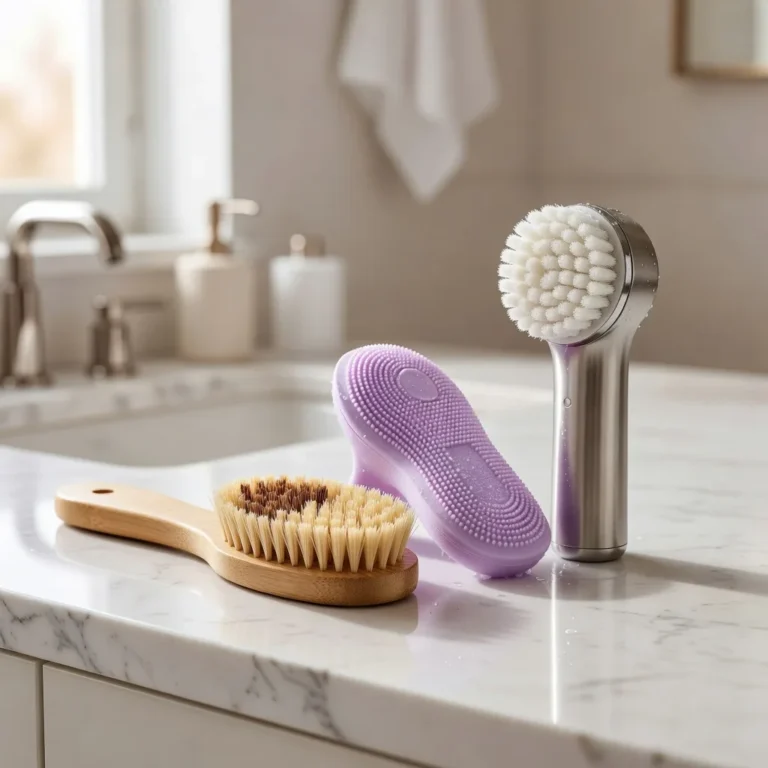
The medicube Multi brush is the most versatile silicone tool here. Its flat silicone head spreads gel serums, sleeping masks and clay masks in an even, thin layer without absorbing product, while three textured surfaces handle gentle cleansing and massage, with a narrow tip for the nose and a grooved edge for the jaw.
Silicone is non-porous, so it is easier to keep clean than sponges or brushes, but it still needs washing and drying after each use. Its listing pairs it with the brand’s own products, which you do not need. Compared with the #8 medicube Jelly Brush, it adds cleansing textures at the cost of a slightly busier design.
- Flat silicone head for applying masks and gels
- Three textured surfaces for cleansing and massage
- Narrow tip and grooved edge for detail
- Easy-rinse silicone
Pros
- Applies and cleanses in one tool
- Absorbs no product
- Easy to wash
Cons
- Busier shape than a simple paddle
- Textured sides trap residue if not rinsed well
Skip it if: Skip it if you only need a plain applicator; the medicube Jelly Brush is simpler.
Check Price on AmazonAbnaok Mini Silicone Spatula Set, 9 Pieces

Best for: Jars and bottles of every size
The Abnaok set gives you nine silicone spatulas in three sizes, so there is always one that fits, from a small jar of serum balm to a tall bottle. A narrow head and long body reach into skinny openings, and the one-piece moulded design has no crevices, which is exactly what you want in a tool that must be washed often.
The listing markets them for both cosmetics and kitchen jars, so keep a dedicated set for skincare rather than sharing them with food. Having several also means one can dry fully while you use another. They are softer and bendier than the #6 barsone spatulas, which have a steel core.
- Nine spatulas in small, medium and large
- Narrow head for skinny openings
- One-piece moulded silicone, easy to clean
- Reusable and non-toxic
Pros
- Fits almost any container
- No crevices to trap residue
- Spares for rotation
Cons
- Also sold for kitchen use
- Soft silicone can bend in thick balms
Skip it if: Skip it if you only use pump bottles; you will not need scrapers.
Check Price on Amazonbarsone Silicone Spatula Set, 6 Pieces

Best for: Thick creams and firm balms
The barsone spatulas stand out for their construction: food-grade silicone wrapped around a stainless steel core, which makes them sturdier than all-silicone spatulas when scraping thick balms or firm creams. Three sizes, each with a small spoon at the end, help you measure out a small amount and reach the corners of jars.
They are dishwasher safe, though hand washing is recommended, and BPA free. Like the #5 Abnaok set, they are sold for food as well as makeup, so keep them separate for skincare. They are firmer and more durable than the Abnaok, but slightly less flexible for very narrow bottle necks.
- Food-grade silicone with a stainless steel core
- Three sizes with a small spoon end
- BPA free
- Dishwasher safe, hand wash recommended
Pros
- Sturdy for thick products
- Spoon end helps portion small amounts
- Long lasting
Cons
- Less flexible than all-silicone spatulas
- Also marketed for kitchen use
Skip it if: Skip it if you mainly use runny serums in droppers; a scraper adds little.
Check Price on AmazonLORMAY Silicone Face Mask Brush, 2 Pack

Best for: Spreading gels, serums and masks
LORMAY’s two silicone brushes are designed for applying masks, serums and other skincare in a thin, even layer, and the listing notes they were designed with estheticians in mind for salon and home use. The soft, flexible silicone suits all skin types, including sensitive skin, and absorbs none of the product you put on it.
Having two means one can dry while the other is in use, which helps hygiene. They work best with gel-textured serums and masks; very thin, watery serums can run off a silicone paddle, so fingertips are often easier for those. Compared with the #4 medicube Multi, they are simpler, without cleansing textures.
- Two soft silicone face brushes
- For masks, serums and other skincare
- Designed for professional and home use
- Flexible silicone for all skin types
Pros
- Even application with no product absorbed
- Two for rotation
- Quick to rinse and dry
Cons
- Watery serums can run off the paddle
- No cleansing textures
Skip it if: Skip it if you only use thin serums; clean fingertips work just as well.
Check Price on Amazonmedicube Jelly Brush Mask Applicator

Best for: Clay, mud and sleeping masks
The medicube Jelly Brush is a simple, focused tool for applying masks evenly and closely to the skin, including into the corners around the nose. It keeps application hands-free and mess-free, and the durable silicone is easy to clean, which makes it a tidy choice for anyone who uses wash-off or sleeping masks alongside serums.
It does less than the #4 medicube Multi, with no cleansing textures, but that makes it quicker to rinse and dry. It is not designed for dispensing, so pair it with a spatula for jarred masks. Its listing on our shortlist is short, so it ranks behind the more detailed silicone picks.
- Silicone paddle for even mask application
- Reaches into corners of the face
- Hands-free, mess-free use
- Durable, easy-to-clean silicone
Pros
- Simple and quick to clean
- Even, thin coverage
- Keeps hands clean
Cons
- Only for spreading, not scooping
- Listing gives limited detail
Skip it if: Skip it if you rarely use masks; a spatula is more useful for serums.
Check Price on AmazonRamPula 2-in-1 Silicone Mask Brush

Best for: Scooping and spreading with one tool
The RamPula tool combines two jobs in one. A spoon-shaped end scoops product out of jars and spreads it smoothly, which keeps fingers out of the container, and the other end has soft silicone bristles for gentle washing, massage or removing a mask. That makes it handy for jarred gels and masks.
Because the same tool touches the jar and your face, wash it thoroughly after every use and never put it back into the product once it has touched skin. The bristled end traps more residue than a flat paddle. Compared with the #1 Kopperko disposables, it is reusable but needs more care to stay hygienic.
- Spoon-shaped end scoops and spreads product
- Soft silicone bristles on the other end
- Reusable, easy-to-clean silicone
- For masks, lotions, creams and moisturisers
Pros
- Scoops and applies in one tool
- Reusable
- Handy for jarred masks
Cons
- Must never go back into a jar after touching skin
- Bristles trap residue
Skip it if: Skip it if you want the simplest hygiene; disposable spatulas avoid cross-contamination.
Check Price on AmazonTekson Metal Cosmetic Spatulas, 6 Pack

Best for: Low-waste scooping from jars
Tekson’s metal spatulas are the low-waste alternative to disposables. From the listing title, the pack contains six small metal skincare spatulas and scoops for creams and masks. Metal is non-porous, easy to wash with soap and water and quick to dry, and having six means you can use a fresh one each day and wash them in a batch.
The listing on our shortlist gives only its title, so check the product page for size and finish. Dry them fully before storing, and keep them in a clean, covered container. They are sturdier than the #1 Kopperko plastic spatulas but need washing, so they suit people who are happy to clean tools to cut waste.
- Six small metal skincare spatulas
- Scoop shape for creams and masks
- Non-porous metal that washes easily
- Reusable
Pros
- Cuts single-use plastic waste
- Sturdy and easy to clean
- Six for rotation
Cons
- Must be washed and dried after each use
- Few details in the listing
Skip it if: Skip it if you do not want to wash tools; the Kopperko disposables need no cleaning.
Check Price on AmazonHow We Chose These Products
We shortlisted serum applicators from Amazon listings that are highly rated by a large number of shoppers, favouring established brands and well-described tools: disposable and reusable cosmetic spatulas, airless pump bottles for decanting, and silicone applicators that are easy to wash. We then checked each product’s listed features against the FDA guidance on microbiological safety in cosmetics cited in this post.
These are research-based picks, not hands-on lab tests. We did not test these tools for contamination ourselves, so rankings reflect listing detail, design and how well each tool keeps fingers and skin out of products. Several are general-purpose scrapers also sold for kitchen use; we have said so where it applies.
- Strong ratings from a large number of shoppers
- Established brands and clearly described tools preferred
- Hygiene and cleaning features checked against the cited FDA guidance
- Products with thin or unclear listings excluded or ranked lower
- Near-identical colour or pack variants counted once
Serum Applicator Types Compared
Serums come with different built-in applicators, and a few separate tools can make application cleaner. This table compares the main options.
| Applicator | How it works | Hygiene | Best for |
|---|---|---|---|
| Airless pump | Pushes product up without letting air in | Very good | Vitamin C, retinoids, sensitive formulas |
| Standard pump | Dispenses a set amount through a tube | Good | Most liquid and lotion serums |
| Glass dropper | Draws serum into a pipette | Good if it never touches skin | Thin, watery serums and oils |
| Cosmetic spatula | Scoops product from a jar | Good if cleaned or disposable | Jarred serums, balms, thick gels |
| Silicone applicator | Flat, flexible paddle or brush | Good if washed after use | Gel serums, masks, sleeping packs |
| Roller-ball | Rolls product directly onto skin | Moderate, touches skin | Eye serums, spot use |
| Single-dose capsules or ampoules | One use per container | Very good | Travel, very unstable ingredients |
If you are buying a new serum, packaging is part of the product. An airless pump or single-dose format often keeps the formula fresher than an open jar or a dropper bottle opened twice a day. If your favourite serum only comes in a dropper bottle, that is not a reason to avoid it. Careful use, closing the bottle straight away and finishing it within the recommended time after opening all reduce the risk, and good habits matter more than the exact type of applicator.
How Serums Get Contaminated
Preservatives help protect cosmetics, but they are designed for normal use, not for repeated exposure to skin, water and warmth.
- Touching the dropper tip to your face and putting it back in the bottle.
- Dipping fingers into a jar, even clean ones.
- Leaving the cap off or the dropper resting on the counter.
- Letting water from the shower or a wet hand drip into the product.
- Storing serums in a hot, steamy bathroom.
- Sharing a serum or applicator with another person.
Contamination is not always visible. A serum can carry microbes without changing colour or smell, so hygienic habits matter even when the product looks fine. A change in colour, smell, separation or texture is a sign to throw it away.
Using a Dropper the Right Way
Droppers are the most common serum applicator and the one most often misused.
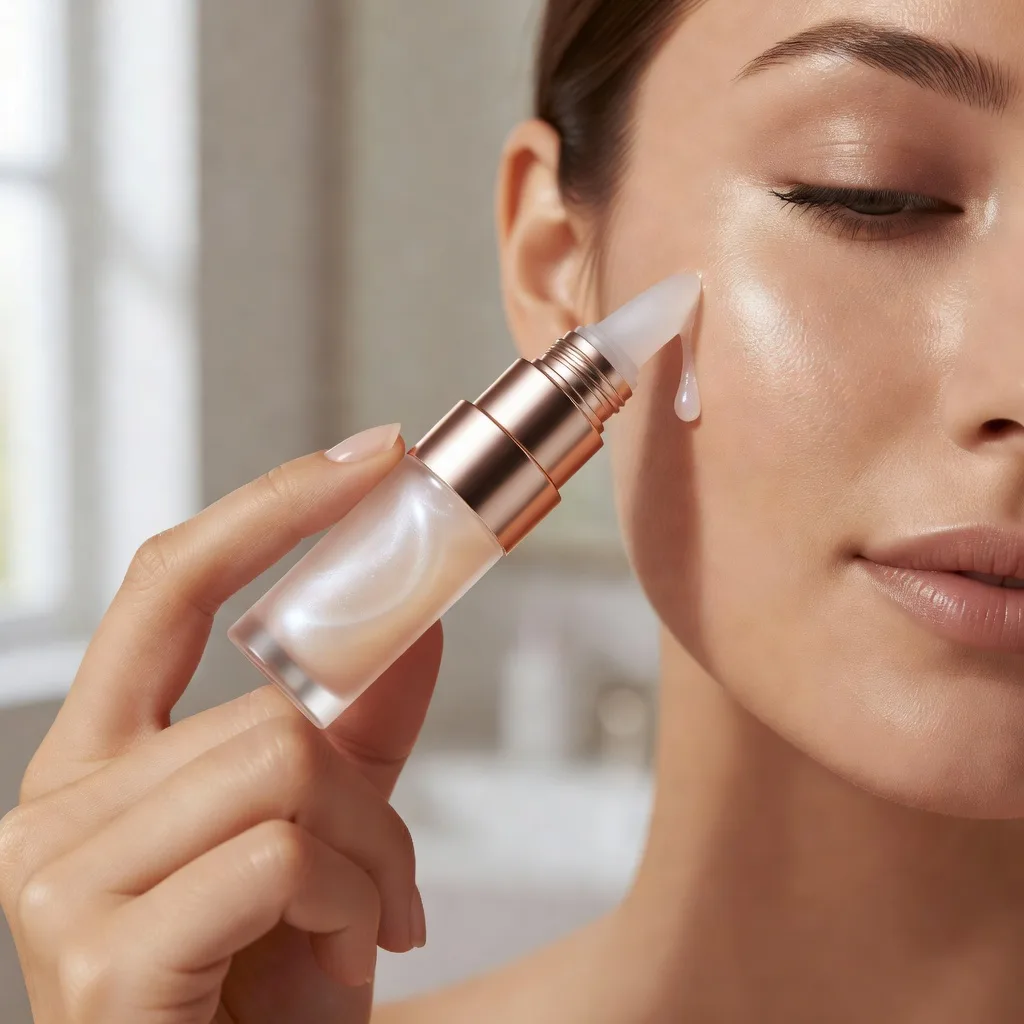
- Squeeze the bulb before putting the dropper into the bottle, then release to draw up serum.
- Drip the serum onto clean fingertips or into your clean palm, not directly onto the face.
- If you prefer dropping onto the face, hold the tip a little away so it never touches skin.
- Put the dropper straight back and close the bottle firmly.
- Do not rinse the dropper with water and put it back wet.
- Tilt the bottle to reach the last of the serum rather than leaving the dropper out.
Glass droppers in amber or opaque bottles also protect light-sensitive formulas. Our guide on how to store vitamin C serum properly explains why air, light and heat matter for that ingredient in particular.
Spatulas and Silicone Applicators
Separate applicators are useful for jars, thick serums and gel masks. They keep fingers out of the product and can spread thin layers evenly.
| Tool | Advantages | Drawbacks | Cleaning |
|---|---|---|---|
| Reusable plastic or metal spatula | Keeps fingers out of jars, easy to use | Can be lost; must be cleaned | Wash with soap and water, dry fully |
| Disposable spatula | Very hygienic, no cleaning | Creates waste | Use once and discard |
| Silicone paddle | Spreads gels and masks thinly, absorbs nothing | Can spread product unevenly on thin serums | Wash after each use, air dry |
| Silicone brush with bristles | Gentle on skin, even spread | Bristles trap residue | Wash carefully after each use |
Silicone tools are non-porous, so they are easier to clean than cotton or sponges. Even so, they need to be washed after every use and left to dry fully, because leftover product and water can build up. Replace any spatula or silicone tool that becomes scratched, cracked or sticky, since damaged surfaces are harder to clean.
Once serum is dispensed onto freshly washed hands, clean fingertips remain a perfectly good way to spread it: the problem is fingers in the product, not fingers on the face.
What to Avoid When Choosing an Applicator
- Open jars for vitamin C, retinoid or other unstable serums, since each opening lets in air.
- Clear bottles kept on a sunny windowsill.
- Droppers with rubber bulbs that are cracked, sticky or perished.
- Porous sponges or cotton pads soaked in serum, which waste product.
- Makeup brushes used for serum, which absorb product and are hard to clean.
- Decanting serums into non-sealing containers without cleaning them first.
- Sharing a spatula or applicator between different products without cleaning it.
If you decant serum for travel, use clean, dry, well-sealing containers such as small airless or dropper bottles, and use the travel portion up quickly.
How to Apply Serum Hygienically Step by Step
This routine keeps the serum clean and uses the right amount.
Wash your hands
Use soap and water and dry them with a clean towel before touching any product.
Cleanse your face
Apply serum to clean skin, slightly damp if the label suggests it.
Dispense without contact
Use a pump, a dropper held above your fingertips or a clean spatula.
Use the right amount
A few drops or one pump is usually enough for the whole face and neck; using more wastes product without adding benefit.
Press it in
Warm the serum between your fingertips and press it gently over the face and neck.
Close the product
Replace the dropper or cap straight away and store the product away from heat and light.
Clean reusable tools
Wash spatulas or silicone applicators and leave them to dry fully.
Wait until the serum has sunk in before moving on to moisturiser. Layering too quickly is a common cause of pilling. Our guide on how to avoid pilling when layering explains why and what to change.
Storing Serums and Applicators
Good storage protects both the serum and the tool.
- Keep serums closed, upright and away from direct sunlight and heat.
- Avoid storing serums on the edge of the shower or bath.
- Store reusable spatulas and silicone tools dry, in a clean covered container.
- Label decanted products with the date you opened them.
- Follow the period-after-opening symbol on the packaging where there is one.
Stop using a serum and throw it away if it changes colour, smells unusual, separates or grows anything visible, and stop if it causes burning, swelling, rash or eye irritation. Never use a serum or applicator that someone else has used on their skin.
Applicators for Eye Serums and Spot Treatments
Eye serums and targeted treatments are used on small areas, so their applicators are often designed to touch the skin directly. That makes hygiene even more important.
- Metal roller-ball and ceramic tips feel cool but touch the skin every time, so wipe them with a clean tissue after each use and keep the cap on.
- Avoid using roller-ball products on broken skin, active spots or during an eye infection.
- For eye serums in droppers or pumps, dispense a tiny amount onto the ring finger and tap it along the orbital bone, not on the lid.
- Use a clean cotton bud or disposable spatula for spot treatments in jars, rather than a fingertip.
- Keep eye products separate from face products and never share them.
Because the skin around the eyes is thin and easily irritated, keep product away from the lash line and stop using anything that stings or makes your eyes water.
Dos and Don’ts
Worth Doing
- Choose airless pumps for unstable serums
- Drip from droppers onto clean fingertips
- Use a clean spatula for jars
- Wash and dry silicone tools after use
- Store serums away from heat and light
Skip It
- Touch the dropper to your face
- Dip fingers into jars
- Put wet droppers or tools back into products
- Share serums or applicators
- Keep serums in a steamy bathroom
Honest Limits
An applicator improves hygiene and consistency, but it does not make a serum more effective. Results depend on the ingredients, their concentration and how consistently you use the product, not on whether you apply it with a silicone paddle or your fingertips.
Gadgets that claim to push serum deeper into the skin should be viewed with caution. A clean, simple way of dispensing and spreading serum is all most people need, and the money is usually better spent on a well-formulated product in protective packaging. If you are unsure which product type you need, our guide to the difference between essence and serum may help.
When to See a Dermatologist
- A serum causes burning, swelling, a rash or peeling that does not settle.
- You develop spots or bumps that seem linked to a new serum.
- You have eye irritation after applying serum near the eyes.
- You react to several skincare products and want to find the cause.
This article is for general information and does not replace professional medical advice. Patch test new serums, follow the label directions, stop using anything that irritates your skin or eyes, and see a board-certified dermatologist for persistent reactions.
Common Questions
What is the most hygienic serum applicator?
An airless pump, such as the Cosywell bottles for decanting, or a fresh disposable spatula like Kopperko for jars.
Is it bad to touch a serum dropper to my face?
Yes, it can carry skin oils and microbes back into the bottle.
Should I use a spatula for skincare jars?
Yes, a clean spatula keeps fingers out of the product.
Which silicone applicator is best for gel serums?
The LORMAY silicone brushes are designed for masks and serums; the medicube Multi adds cleansing textures.
Is it better to apply serum with fingers?
Clean fingertips are fine for spreading, but not for dipping.
Are metal or plastic spatulas better?
Reusable metal spatulas like Tekson are easy to wash and dry; disposable plastic ones like Kopperko need no cleaning.
How do I know if my serum is contaminated?
Changes in colour, smell or texture are warning signs, but not always present.
Do airless pumps keep vitamin C serum fresher?
They limit air exposure, which helps protect it.
Can I rinse my dropper with water?
Not if it goes back into the bottle wet.
How much serum should I use?
A few drops or one pump for the whole face usually.
The Bottom Line
The best skincare serum applicator keeps the product away from skin and fingers until you use it; the Kopperko disposable spatulas are our top pick, with airless pumps for sensitive formulas and droppers used without touching the face.
Wash your hands first, never share serums or tools, store products away from heat and light, and clean reusable applicators after every use to keep your serum fresh.
Our top pick: Kopperko Mini Disposable Spatulas, 500 Pack
The Kopperko disposable spatulas take the top spot because a fresh spatula for every scoop is the simplest way to keep fingers and skin out of jars, which is exactly the habit the FDA links to cleaner cosmetics. If your serums come in bottles, the Spatty Daddy set is the better buy for reaching the last drops, while the Cosywell airless pumps suit anyone decanting sensitive serums for travel.
Check Price on Amazon
Written by
Registered pharmacist and founder of Facial Adviser. Rakib's pharmacy training covers how skincare actives work and interact; a later course in cosmetology turned that into a focus on facial treatments and skincare products. He plans, researches and edits every guide on the site and checks health claims against sources such as the American Academy of Dermatology, the FDA and the NIH. He is not a dermatologist; see the Editorial Policy and Medical Disclaimer.
About · Editorial policy · How we choose products · Medical disclaimer · Contact
Keep reading: Cleansing brushes and skin tools
- 10 Best Facial Tools (2026): LED, Cleansing, Gua Sha and More
- FOREO LUNA mini 2: Is This Compact Silicone Cleanser Worth It?
- FOREO LUNA 4: Features, Pros, Cons and Who It Really Suits
- Are Face Brushes Good for Acne?
- How to Use a Comedone Extractor on Your Face
- Is Steaming Your Face Good for Your Skin? Benefits, Myths and Safe Use
- 10 Best Products for Women's Facial Hair Removal (2026): Gentle Picks
- 10 Best Gua Sha Facial Tools (2026): Stone and Steel Picks Compared