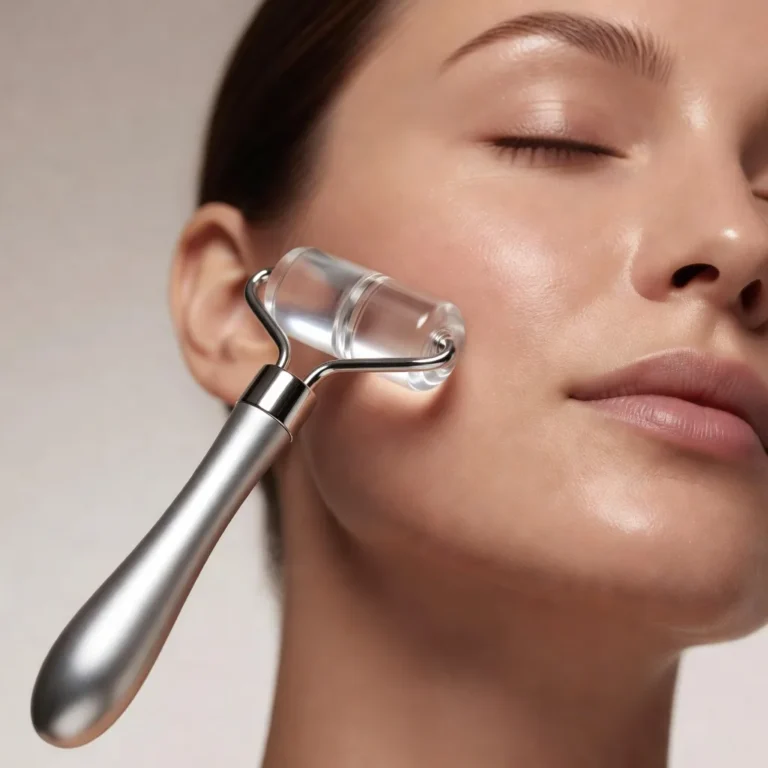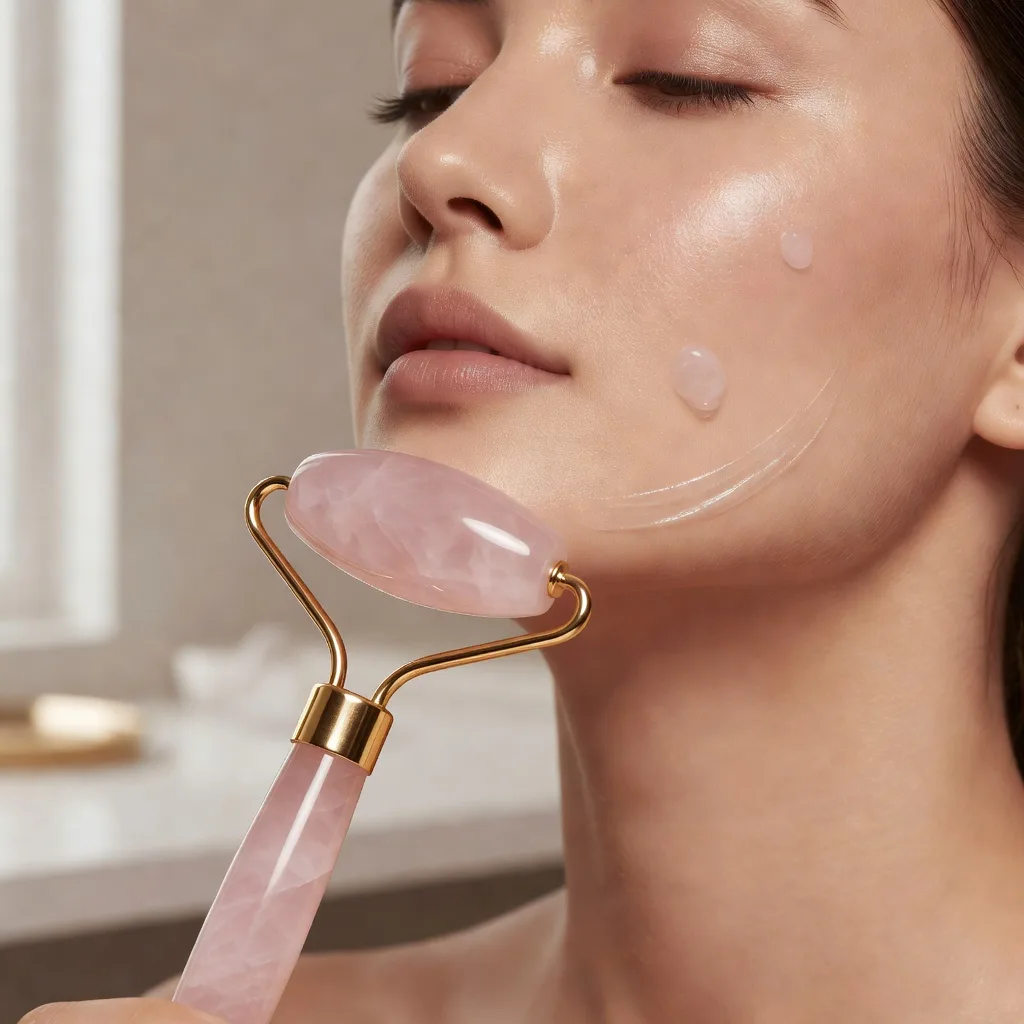
10 Best Facial Massager Rollers (2026): Depuff and Relax at Home
Facial rollers are one of the simplest beauty tools you can buy, and one of the most hyped. Stone rollers, steel rollers, ice rollers, microcurrent rollers and 3D rollers all promise a sculpted, glowing face, but they do not all work in the same way. This list covers 10 options across those types, with notes on who each one suits.
Part of our guide to at-home facial devices. Start with: 10 Best Gua Sha Facial Tools (2026): Stone and Steel Picks Compared
The best facial massager roller for most people is a smooth stainless steel or ice roller, because it stays cool, is easy to clean and gives the most noticeable short-term depuffing. Jade and rose quartz rollers do the same basic job and feel pleasant, but the stone itself has no special skin benefit. Microcurrent rollers add a weak electrical current with limited evidence for toning, and 3D rollers give a firmer massage. All rollers work mainly by gentle pressure and cooling, which can reduce morning puffiness and make skin look brighter for a few hours. They do not remove wrinkles, lift sagging skin or change face shape permanently.
In short: pick a cool, easy-to-clean roller for temporary depuffing and relaxation, and keep expectations modest.
The American Academy of Dermatology notes that scrubbing tools can irritate the skin and advises not touching or picking at breakouts, so gentle pressure and clean tools matter with any roller.
Below you will find the ten picks, how we chose them, how the main roller types compare, what the evidence supports, how to use one for depuffing and how to keep it clean and safe.
Shopping these picks?
Amazon Prime members get fast, free shipping on eligible items, plus Prime Video, Amazon Music and member deals. New members can start with a free trial.
Start a free Prime trialAged 18 to 24? Prime for Young Adults comes with a longer free trial and a lower price after it.
Affiliate link: we may earn a commission at no extra cost to you.
As an Amazon Associate we earn from qualifying purchases. This does not change which products we include.


Contents
- The 10 Best Facial Massager Rollers Right Now
- How We Chose These Products
- Types of Facial Rollers Compared
- Jade and Rose Quartz Rollers
- Stainless Steel and Ice Rollers
- Microcurrent and 3D Rollers
- What the Evidence Actually Shows
- Which Roller Should You Choose?
- How to Use a Facial Roller for Depuffing
- Cleaning and Safety
- Dos and Don’ts
- Honest Limits
- When to See a Dermatologist
- Your Questions, Answered
- The Bottom Line
Quick Answer
- Nurse Jamie Uplift is our top pick for its multi-stone massage, easy travel size and no charging.
- YOUTHLUX Radiance Roller is best for easing jaw and temple tension with a similar multi-stone head.
- Sacheu Stainless Steel Roller is the best depuffing pick, staying cool and easy to clean.
- All facial rollers work mainly through light pressure and cooling.
- The main realistic effect is temporary depuffing and a brief, healthy glow.
- Stone type does not change results; temperature and technique matter more.
- Clean the roller after every use and avoid broken or inflamed skin.
The 10 Best Facial Massager Rollers Right Now
These ten rollers were shortlisted from widely reviewed Amazon listings and cover every main type, from multi-stone and 3D massagers to steel, ice and crystal rollers. Each pick explains who it suits, its trade-offs and who should skip it.
| # | Product | Best For | Standout Feature | |
|---|---|---|---|---|
| 1 | Nurse Jamie Uplift Massaging Beauty Roller | A thorough, relaxing all-over massage | Many small stones for multi-angle rolling | View |
| 2 | YOUTHLUX Radiance Germanium Stone Roller | Easing jaw, temple and neck tension | Wide multi-stone head for jaw and temples | View |
| 3 | Sacheu Stainless Steel Dual-Sided Roller | Morning puffiness and easy hygiene | Self-cooling steel with two roller sizes | View |
| 4 | DANGSHAN 3-in-1 Electric 3D Roller Set | Trying several massage styles in one kit | Three heads, including 3D and under-eye | View |
| 5 | Tekson 3D Metal Face Massage Roller | Jawline and neck massage | Twin angled metal balls knead the skin | View |
| 6 | PRIME Fitness Steel Ice Globes | A cold massage for face, neck and eyes | Unbreakable steel globes for cold massage | View |
| 7 | Yeamon Stainless Steel Roller and Gua Sha Set | Steel roller plus gua sha in one set | Dual-head steel roller with quiet glide | View |
| 8 | PLANTIFIQUE Rose Quartz Roller and Gua Sha | A calm evening crystal ritual | Rose quartz pair with a how-to guide | View |
| 9 | ESARORA Ice Roller for Face and Eyes | Fast morning depuffing | Freezable roller for a very cold glide | View |
| 10 | BAIMEI IcyMe Jade Roller and Gua Sha Set | Trying rollers and gua sha for the first time | Classic jade roller and gua sha pair | View |
Nurse Jamie Uplift Massaging Beauty Roller

Best for: A thorough, relaxing all-over massage
The Nurse Jamie Uplift earns the top spot because it gives a fuller massage than a single stone or steel head. Its listing describes two dozen small massaging stones in a hexagon layout that roll at different angles as you move, so it kneads the cheeks, jaw and neck gently rather than simply gliding over them.
It needs no batteries or charging, feels cool and soothing, and is light enough to take travelling. The listing talks about sculpting and firming, but the realistic benefit is a relaxing massage and a brief reduction in morning puffiness. Compared with the #3 Sacheu it is less focused on cold depuffing, and it is a premium price for a manual tool.
- Multiple massaging stones in a hexagon layout
- Naturally cool, with no batteries or charging
- Can be rolled over serum or moisturiser
- Lightweight and travel-friendly
Pros
- More thorough massage than a single roller
- No charging or freezing needed
- Portable
Cons
- Premium price for a manual tool
- Firming claims go beyond the evidence
Skip it if: Skip it if you mainly want cold depuffing on a budget; the Sacheu or ESARORA does that more simply.
Check Price on AmazonYOUTHLUX Radiance Germanium Stone Roller

Best for: Easing jaw, temple and neck tension
The YOUTHLUX Radiance Roller is the pick for people who carry tension in the jaw, temples and neck. Like the #1 Nurse Jamie, it uses a wide head of many small stones, which the listing says are infused with germanium, so it feels more like a kneading massage than the smooth glide of a steel or crystal roller.
The germanium adds no proven skin benefit, and the listing’s lifting claims should be read loosely, but the massage itself can feel genuinely relaxing. You can chill it in the fridge for more of a depuffing effect, and it cleans easily with soap and water. It is a little less compact than the Nurse Jamie.
- Wide head with many small massage stones
- Cool to the touch; can be stored in the fridge
- Rolls over serum or moisturiser
- Washes with soap and water
Pros
- Relaxing kneading massage
- Good for jaw and neck tension
- Easy to clean
Cons
- Germanium claims have no real evidence
- Bulkier than a simple roller
Skip it if: Skip it if you want a quick, cold depuffing tool; a steel or ice roller such as the Sacheu or ESARORA works faster.
Check Price on AmazonSacheu Stainless Steel Dual-Sided Roller

Best for: Morning puffiness and easy hygiene
The Sacheu roller is the pick for people who mainly want to calm morning puffiness. Its listing describes a durable dual-sided steel roller that feels cool without needing the freezer, and steel is non-porous, so it is easier to keep clean than stone. Two sizes cover the cheeks and jaw as well as the smaller under-eye area.
This matches what the evidence supports best: a cool, smooth surface with light pressure gives a short-lived depuffing effect. The listing’s claims about repairing skin go too far, so treat it as a practical, hygienic tool rather than a treatment. Compared with the #1 and #2 multi-stone rollers it gives less massage but more cooling.
- Durable dual-sided steel roller
- Cool to the touch without a freezer
- Suitable for all skin types
- Easy to clean and use
Pros
- Non-porous and hygienic
- Two head sizes
- Very durable
Cons
- Less of a massage than multi-stone rollers
- Skin-repair claims are overstated
Skip it if: Skip it if you want a kneading massage for tension; the Nurse Jamie or YOUTHLUX suits that better.
Check Price on AmazonDANGSHAN 3-in-1 Electric 3D Roller Set

Best for: Trying several massage styles in one kit
The DANGSHAN set is the most versatile pick, bundling three attachment heads into one electric handle: a 3D roller for the jaw and neck, a rose quartz facial roller and an under-eye press massager. That makes it a good way to try different massage styles without buying several separate tools.
It runs on a single AA battery, which is not included, and uses a simple twist switch. The vibration adds a gentle extra sensation rather than any proven benefit. Compared with the Tekson at #5 its 3D head is part of a kit rather than a dedicated tool, and it has more parts to keep clean than a single steel roller.
- Three heads: 3D roller, facial roller and eye massager
- Rose quartz roller head
- Runs on one AA battery (not included)
- Simple twist on and off control
Pros
- Several tools in one kit
- Gentle vibration option
- Comes gift-boxed
Cons
- Needs batteries
- More parts to clean
Skip it if: Skip it if you want one simple, durable tool; the Sacheu steel roller is easier to live with.
Check Price on AmazonTekson 3D Metal Face Massage Roller

Best for: Jawline and neck massage
The Tekson is the pick for people who want a dedicated 3D roller for the jawline and neck. Its title describes a metal 3D facial massage roller, and like other 3D designs it uses two angled balls that gently pinch and knead the skin as you roll, giving a firmer massage than a flat roller.
The metal heads are easier to keep clean than stone. Use very light pressure, because 3D rollers can tug at thin or fragile skin, and keep them away from the under-eye area. Its listing is less detailed than most on this list, and it is less widely reviewed than the DANGSHAN kit at #4, which also includes a 3D head.
- 3D design with two angled metal balls
- Metal construction
- Designed for face, jaw and neck massage
- Manual, with no batteries
Pros
- Firmer, kneading massage
- Easy-to-clean metal
- No charging needed
Cons
- Can pinch thin skin if pressed hard
- Thin listing with few details
Skip it if: Skip it if you have fragile skin or want under-eye depuffing; a smooth roller like the Sacheu is gentler.
Check Price on AmazonPRIME Fitness Steel Ice Globes

Best for: A cold massage for face, neck and eyes
The PRIME Fitness Ice Globes are the pick for anyone who likes the idea of cryo globes but worries about glass. Rather than a roller, they are two steel globes on handles that glide over the face, neck and eye area, and the listing stresses that they are unbreakable, which is the main weakness of traditional glass globes.
Chilled globes give a similar short-term depuffing effect to an ice roller, and some people find the rounded shape easier to control around the eyes. Keep sessions short and never use them straight from the freezer on bare skin. Compared with the ESARORA ice roller at #9 they feel more like a spa tool.
- Pair of steel cooling globes
- Unbreakable steel construction
- For face, neck and eye-area massage
- Chill before use
Pros
- Cannot shatter like glass globes
- Smooth, controlled glide
- Easy to wipe clean
Cons
- Not a roller, so the technique is different
- Very thin listing detail
Skip it if: Skip it if you want a single, simple tool; the Sacheu steel roller does a similar job.
Check Price on AmazonYeamon Stainless Steel Roller and Gua Sha Set

Best for: Steel roller plus gua sha in one set
The Yeamon set is the pick for people who want both a steel roller and a gua sha tool. Its listing describes a dual-head roller in polished, high-density stainless steel that cools without refrigeration, with a larger head for broad areas and a small one for under the eyes, plus a quiet rolling mechanism.
Steel’s non-porous surface works well over serums and creams and is easy to clean, which is why we rate it highly for hygiene. The gua sha adds a second technique, but it needs gentle strokes to avoid redness. Compared with the Sacheu at #3 you get an extra tool; the Sacheu is simpler if you only want a roller.
- Dual-head polished stainless steel roller
- Cools without needing the fridge
- Low-noise rolling mechanism
- Includes a gua sha tool
Pros
- Hygienic, non-porous steel
- Two tools in one set
- Quiet, smooth glide
Cons
- Gua sha has a learning curve
- Less established brand than Sacheu
Skip it if: Skip it if you only want a roller; the Sacheu is simpler.
Check Price on AmazonPLANTIFIQUE Rose Quartz Roller and Gua Sha

Best for: A calm evening crystal ritual
The PLANTIFIQUE set is the pick for people who enjoy the look and feel of a crystal ritual. It pairs a rose quartz roller with a gua sha stone, and the listing says both are handcrafted in Brazil. An included ebook guide is useful for beginners who are unsure how to use gua sha without pressing too hard.
Rose quartz feels cool at first and warms quickly, and the stone itself has no special skin benefit, so the claims about toxins and pores should be ignored. As a relaxing evening tool with a facial oil, it is pleasant and well presented. It is more fragile than the steel picks and can chip if dropped.
- Rose quartz face roller
- Matching rose quartz gua sha
- Ebook guide to technique
- Designed for use with a facial serum
Pros
- Attractive, well-presented set
- Guide helps beginners
- Two techniques in one
Cons
- Stone can chip or crack
- Warms up quickly on skin
Skip it if: Skip it if you want something durable for travel; the Sacheu or Yeamon steel tools are tougher.
Check Price on AmazonESARORA Ice Roller for Face and Eyes

Best for: Fast morning depuffing
The ESARORA is the pick for people who want the coldest possible roll for puffy mornings. It is an ice roller that you keep in the freezer, and its listing suggests using it before makeup, during a sheet mask and around the eye sockets and temples, which covers the situations where cold helps most.
It is one of the most widely reviewed rollers on this list. Some listing claims, such as preventing wrinkles, go well beyond what cold can do, so read it as a depuffing tool. Wrap it in a thin cloth if it feels painfully cold, and limit each area to a few minutes. It is colder but less refined than the PRIME globes at #6.
- Freezable ice roller for face and eyes
- Suggested use before makeup for puffiness
- Can be used during a face mask
- Massages eye sockets and temples
Pros
- Very cold for quick depuffing
- Very widely reviewed
- Simple to use
Cons
- Needs freezer time before use
- Some listing claims are overstated
Skip it if: Skip it if you have cold-triggered rashes or poor circulation; choose a room-temperature steel roller instead.
Check Price on AmazonBAIMEI IcyMe Jade Roller and Gua Sha Set

Best for: Trying rollers and gua sha for the first time
The BAIMEI IcyMe set is the easiest way to try a jade roller and gua sha without spending much. It includes a smooth jade face and eye roller plus a gua sha tool, and the listing suggests keeping both in the fridge for a cooling morning routine, which is a sensible way to get more depuffing from stone.
It is by far the most widely reviewed set in this list. Like the #8 PLANTIFIQUE it will warm up quickly on skin and can chip if dropped, and claims about lifting or improving fine lines should be taken lightly. The listing also reminds you to wash the tools before and after each use, which we strongly agree with.
- Jade face and eye roller
- Jade gua sha tool
- Can be kept in the fridge
- Presented as a gift set
Pros
- Easy entry into facial tools
- Extremely widely reviewed
- Fridge-friendly for extra cooling
Cons
- Stone warms quickly on skin
- Can chip if dropped
Skip it if: Skip it if you want the most hygienic option; a steel roller like the Sacheu or Yeamon is easier to clean.
Check Price on AmazonHow We Chose These Products
We shortlisted facial rollers from Amazon listings that are highly rated by a large number of shoppers, favouring established brands and fuller-featured designs, and we made sure the list covers each main type: multi-stone, steel, ice, 3D, electric and crystal. We then checked each product’s listed features against the gentle-handling and skin-safety guidance cited in this post, including the AAD’s advice on avoiding irritation from tools.
These are research-based picks, not hands-on lab tests. We did not measure how long each roller stays cold, so rankings reflect materials, design and listing detail rather than personal results. Many listings make bold claims about lifting, firming or detoxing, and we have not repeated those as fact.
- Strong ratings from a large number of shoppers
- Established brands and fuller-featured designs preferred
- At least one pick for each main roller type
- Listed features checked against the cited safety guidance
- Products with thin or unclear listings excluded or ranked lower
Types of Facial Rollers Compared
Rollers differ in material, temperature and whether they add any technology. This table sums up how the common types compare.
| Roller type | How it feels | Main benefit | Cleaning | Durability |
|---|---|---|---|---|
| Jade | Cool at first, warms quickly | Relaxing massage, mild depuffing | Wipe with mild soap; porous if low quality | Can chip or crack |
| Rose quartz | Stays cool slightly longer than jade | Relaxing massage, mild depuffing | Wipe with mild soap | Can chip or crack |
| Stainless steel | Cold and smooth | Stronger short-term depuffing | Easy; non-porous | Very durable |
| Ice roller | Very cold | Fast depuffing, calming redness | Easy | Durable; keep in freezer |
| Microcurrent roller | Gentle tingle or none | Marketed for toning | Wipe only; keep electronics dry | Depends on build |
| 3D or ball roller | Firmer, kneading | Deeper massage feel | Easy if metal | Durable |
The practical differences are mostly about temperature and hygiene rather than magic properties. A smooth, cold, non-porous surface gives the most noticeable effect and is the easiest to keep clean. Our guide on jade vs rose quartz facial rollers covers the stone options in more detail.
Jade and Rose Quartz Rollers
Stone rollers are the classic choice and the ones most often seen on social media. They are pleasant to use and look attractive on a shelf, but claims about energy, healing properties or detoxing have no scientific support.
- Both stones feel cool at first but warm to skin temperature within a minute or two.
- Rose quartz is slightly denser and may hold the cold a little longer.
- Cheap rollers may be dyed glass or low-grade stone, which can crack or be porous.
- Squeaky or loose frames are common; a sturdy metal frame lasts longer.
- Store in the fridge for a cooler, more depuffing effect.
The benefit of a stone roller comes from the massage and the cool surface, not from the mineral. A fridge-cold steel roller will usually depuff better than a room-temperature crystal one.
Stainless Steel and Ice Rollers
Metal and ice rollers are the most practical options for depuffing. Stainless steel conducts cold well, is non-porous and can be cleaned thoroughly. Ice rollers contain a gel or water core that is frozen before use.
Cold narrows blood vessels for a short time and can reduce fluid build-up, which is why puffy eyes and a swollen face often look better after a few minutes of cold rolling. The effect is real but usually lasts a few hours. Our guide on the benefits of cold therapy for skin explains how cold affects the skin and where the evidence stops.
- Keep a steel roller in the fridge; freeze an ice roller only as directed.
- Wrap a very cold ice roller in a thin cloth if it feels painful.
- Limit cold rolling to a few minutes per area to avoid ice burn.
- Avoid very cold tools if you have poor circulation or cold-triggered rashes.
Microcurrent and 3D Rollers
Microcurrent rollers usually have small metal balls and a solar panel or battery that produces a very weak electrical current. They are marketed for firming and toning facial muscles, but home rollers deliver far less current than professional devices, and good evidence for visible results is limited.
3D rollers use two angled balls that pinch and knead the skin as you roll. They give a firmer, more massage-like feel, which some people enjoy on the jawline and neck. As with other rollers, any lifting effect is temporary and mostly due to massage and fluid movement.
- Avoid microcurrent rollers if you have a pacemaker, other implanted electronic device, epilepsy or are pregnant, unless your doctor agrees.
- Do not use microcurrent over broken skin, metal implants or recently injected areas.
- Use light pressure with 3D rollers, as pinching can irritate thin or fragile skin.
What the Evidence Actually Shows
There is very little high-quality research on facial rollers themselves. Most of what we know comes from studies on facial massage, cold therapy and lymphatic drainage, which suggest short-term benefits rather than lasting change.
| Claim | Evidence | Realistic result |
|---|---|---|
| Reduces puffiness | Plausible and commonly seen, especially with cold | Less swelling for a few hours |
| Improves circulation and glow | Short-term increase in blood flow | Brighter look that fades the same day |
| Drains lymph | Gentle massage may help fluid move | Temporary, most noticeable in the morning |
| Helps products absorb | Weak; mostly spreads product | Even application, not deeper penetration |
| Reduces wrinkles | No good evidence | Fine lines may look softer while skin is hydrated |
| Slims or reshapes the face | No evidence | No lasting change |
Rollers can be a relaxing ritual that eases facial tension and makes skin look fresher. That is a fair benefit, as long as it is not confused with the effects of retinoids, sunscreen or professional treatments.
Which Roller Should You Choose?
Choose based on what you want from the tool rather than on the stone or trend.
- Morning puffiness: a stainless steel or ice roller kept cold.
- Relaxing evening ritual: jade or rose quartz with a facial oil or serum.
- Sensitive or reactive skin: a smooth steel roller used with very light pressure.
- Jawline and neck massage: a 3D roller used gently.
- Curious about toning: a microcurrent roller, with realistic expectations.
- Travel: a small single-ended steel roller that will not break.
If you are deciding between a roller and a scraping tool, our comparison of facial roller vs gua sha explains how the two differ in technique and feel.
How to Use a Facial Roller for Depuffing
This routine takes two to five minutes and works with any roller type.
Chill the roller
Keep it in the fridge overnight, or freeze an ice roller as directed.
Cleanse your face
Start with clean skin and clean hands.
Add slip
Apply a thin layer of serum, moisturiser or facial oil so the roller glides.
Start at the neck
Roll gently downwards along the sides of the neck a few times.
Roll outwards
Work from the centre of the face outwards along the jaw, cheeks and forehead.
Treat under the eyes
Use the small end with very light pressure, rolling outwards towards the temples.
Clean and store
Wipe the roller clean, dry it and return it to the fridge.
Roll in one direction rather than back and forth on the delicate under-eye area. Lifting and repeating the stroke reduces dragging and is kinder to thin skin.
Cleaning and Safety
A roller sits on your skin along with serum and oil, which makes it an easy place for bacteria to build up. Regular cleaning helps prevent breakouts and irritation.
- Wipe the roller after every use with a mild soap and warm water, then dry it.
- Disinfect weekly with a cloth dampened with alcohol, avoiding the frame joints on stone rollers.
- Never soak rollers with metal frames or electronics.
- Store it in a clean pouch or container, not loose in a bathroom drawer.
- Do not share rollers.
Do not roll over active acne, cold sores, open cuts, sunburn, rashes or freshly treated skin. Stop if you notice redness that lasts, new breakouts, bruising or pain, and check with a doctor before using any roller soon after fillers or other injections.
The AAD acne tips point out that scrubbing tools and frequent face touching can irritate skin and trigger flare-ups, which is why clean tools and a gentle touch are essential.
Dos and Don’ts
Good Habits
- Keep your roller cold for the best depuffing
- Use a serum or oil so it glides
- Use light pressure and outward strokes
- Clean it after every use
- Pair it with sunscreen and a proven routine
Common Mistakes
- Press hard or drag the skin
- Roll over spots, rashes or broken skin
- Expect it to remove wrinkles or reshape your face
- Buy a roller with a loose or rough head
- Share your roller with others
Honest Limits
Facial rollers are pleasant, cheap and low-risk, but their effects are short-lived. Any reduction in puffiness or boost in glow fades within hours, and there is no reliable evidence that rolling builds collagen, removes wrinkles or permanently slims the face.
For lasting improvements in fine lines, tone and firmness, daily sunscreen, a retinoid and, if you want more, professional treatments will do far more. Think of a roller as a relaxing, depuffing extra rather than an anti-aging treatment.
When to See a Dermatologist
- Facial puffiness is persistent, one-sided or comes with other symptoms.
- Your skin becomes irritated, bruised or breaks out after using a roller.
- You have rosacea, eczema or acne and want to know if massage tools are safe.
- You want real changes in wrinkles or firmness and need treatment options.
This article is for general information and does not replace professional medical advice. See a doctor or board-certified dermatologist about ongoing facial swelling, skin conditions or reactions to a skin tool.
Your Questions, Answered
What is the best facial massager roller?
The Nurse Jamie Uplift is our top pick; the Sacheu steel roller is best for depuffing.
Do facial rollers really work?
They can reduce puffiness and add a brief glow, but effects are temporary.
Is jade better than rose quartz?
Not really; both work mainly through massage and cooling.
Are ice rollers good for your face?
Yes, for short-term depuffing, used for a few minutes.
Do microcurrent rollers tighten skin?
Evidence is limited, and any effect is likely small.
Can a facial roller reduce wrinkles?
No, though hydrated skin may look smoother for a while.
Is the most expensive face roller worth it?
Only if you want a multi-stone massage like the Nurse Jamie; simple steel or jade rollers depuff just as well.
Which roller on this list is best for puffy eyes?
The ESARORA ice roller or the Yeamon steel roller’s small head, used gently and kept cool.
Which roller is best for a jawline massage?
The Tekson 3D roller or the DANGSHAN 3D head, used with light pressure.
How do I clean a face roller?
Wipe with mild soap and water after each use and disinfect weekly.
The Bottom Line
The best facial massager roller for most people is a cold, smooth stainless steel or ice roller, with jade, rose quartz, 3D and microcurrent rollers as options if you prefer their feel.
Use light, outward strokes on clean skin, keep the roller spotless, and enjoy it as a quick depuffing ritual while relying on sunscreen and proven skincare for long-term results.
Our top pick: Nurse Jamie Uplift Massaging Beauty Roller
The Nurse Jamie Uplift roller takes the top spot because its many small massaging stones give a more thorough, relaxing massage than a single-head roller, with no batteries, no freezing and an easy travel size. Choose the Sacheu steel roller instead if depuffing and easy cleaning matter most, or the YOUTHLUX Radiance Roller if you want a similar multi-stone massage focused on jaw and temple tension.
Check Price on Amazon
Written by
Registered pharmacist and founder of Facial Adviser. Rakib's pharmacy training covers how skincare actives work and interact; a later course in cosmetology turned that into a focus on facial treatments and skincare products. He plans, researches and edits every guide on the site and checks health claims against sources such as the American Academy of Dermatology, the FDA and the NIH. He is not a dermatologist; see the Editorial Policy and Medical Disclaimer.
About · Editorial policy · How we choose products · Medical disclaimer · Contact
Keep reading: Facial rollers, gua sha and massagers
- 10 Best Gua Sha Facial Tools (2026): Stone and Steel Picks Compared
- 10 Best Lymphatic Drainage Massagers (2026): Gentle Tools That Depuff
- 10 Best Beauty Roller Sets (2026): Cooler, Calmer, Less Puffy Skin
- 10 Best Eye Massagers (2026): Heat, Cooling and Gentle Pressure
- Lymphatic Facial Massage: Does It Work?
- How to Do Lymphatic Massage After Lipo
- 10 Best LED Light Therapy Masks (2026): Clearer Skin, Softer Lines
- How to Incorporate Microcurrent Into Your Routine: Gel, Timing and Safety