Jade vs Rose Quartz Facial Roller: Does the Stone Actually Matter?
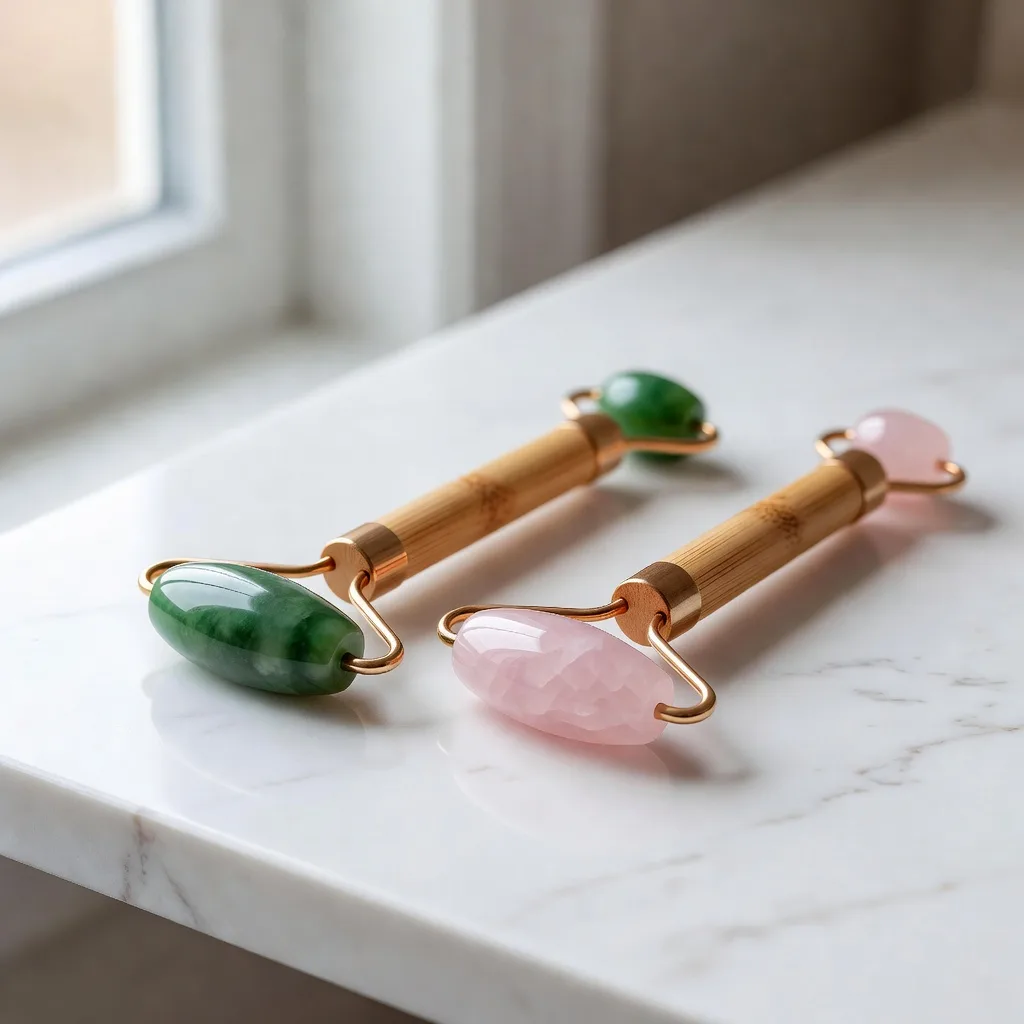
Jade and rose quartz are the two stones you will see most often on facial rollers, usually in soft green and pale pink. Product pages describe jade as balancing and detoxifying and rose quartz as calming and loving, and the prices can vary a lot depending on which stone and which brand you choose.
Part of our guide to at-home facial devices. Start with: 10 Best Gua Sha Facial Tools (2026): Stone and Steel Picks Compared
There is no evidence that one stone makes a roller work better than another. What a facial roller can do, reduce morning puffiness and, according to a small 2025 trial, modestly improve skin elasticity with regular use, comes from gentle rolling pressure and coolness. The type of stone is mostly a matter of feel, looks, durability, and price.
The claims about energy, healing vibrations, and emotional balance are part of crystal traditions rather than dermatology, and they have not been shown to affect skin. The more practical question is whether your roller is real stone at all, because dyed glass, resin, and cheaper look-alike stones are common, especially in low-priced sets.
You can check that yourself in a couple of minutes with a few simple observations, and it is worth doing if you paid a premium for genuine stone. You may also find that a stainless steel roller suits you better, since it stays colder, cleans easily, and does not chip.
This guide compares jade and rose quartz honestly, explains what the evidence says about rollers in general, shows you how to spot fake stone, and covers how to use and clean a roller safely.
Shopping these picks?
Amazon Prime members get fast, free shipping on eligible items, plus Prime Video, Amazon Music and member deals. New members can start with a free trial.
Start a free Prime trialAged 18 to 24? Prime for Young Adults comes with a longer free trial and a lower price after it.
Affiliate link: we may earn a commission at no extra cost to you.
Recommended Facial Rollers


What This Covers
- Jade Rollers
- Rose Quartz Rollers
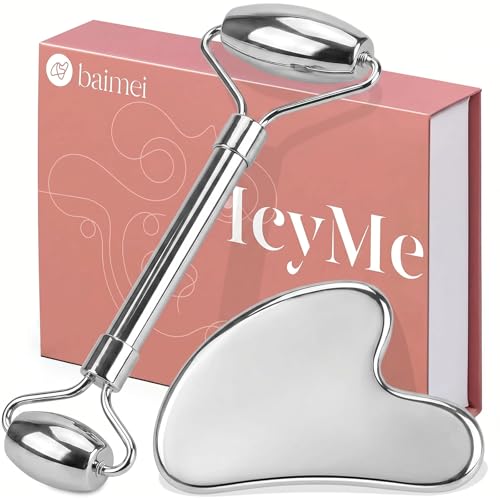
- Jade vs Rose Quartz vs Stainless Steel
- What Rollers Can Do, Whatever the Material
- The Real Stone Check
- How to Use a Facial Roller
- Cleaning and Caring for Your Roller
- What No Roller Can Do
- When to Skip a Roller and See a Doctor
- Common Questions
- The Bottom Line
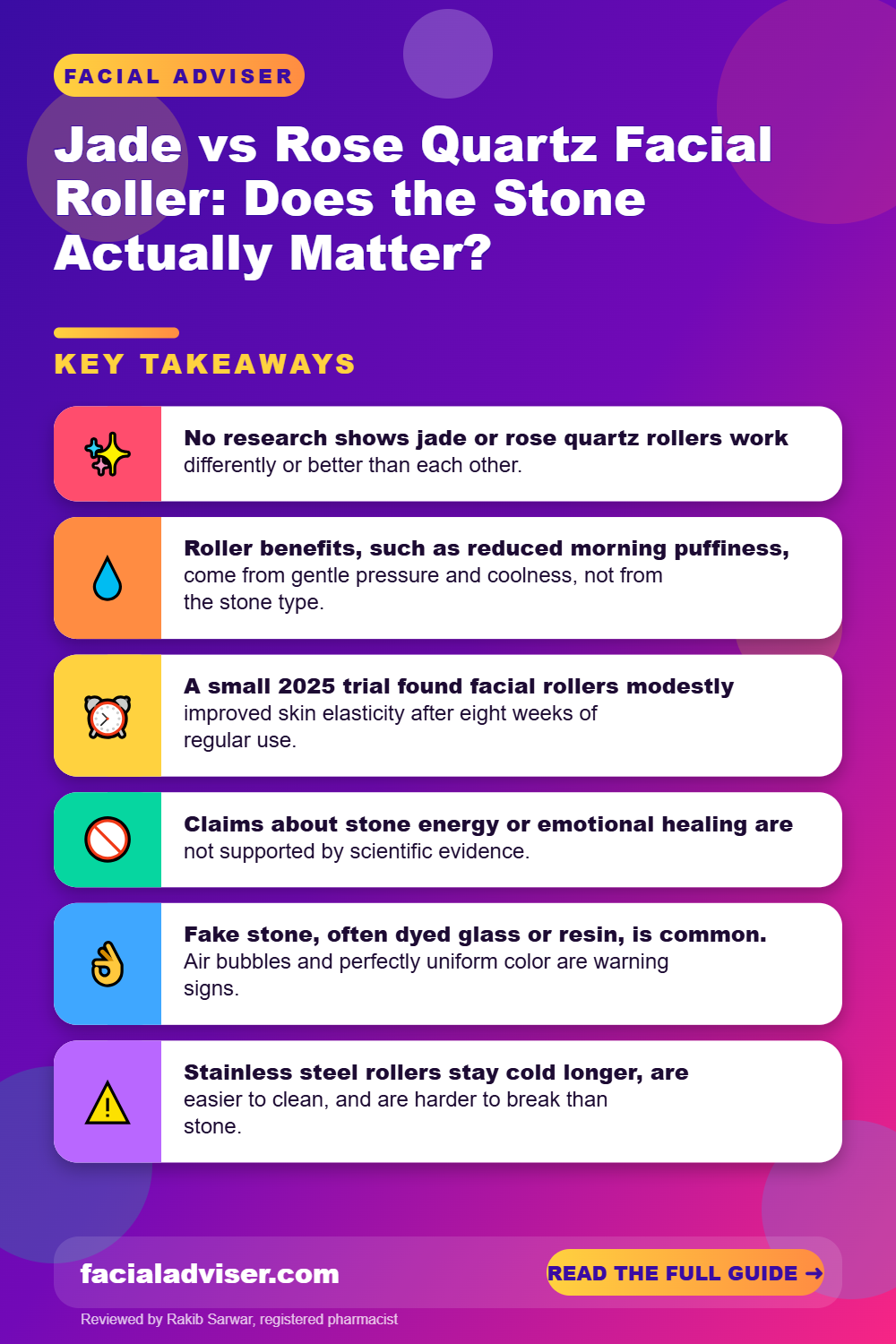
Key Takeaways
- No research shows jade or rose quartz rollers work differently or better than each other.
- Roller benefits, such as reduced morning puffiness, come from gentle pressure and coolness, not from the stone type.
- A small 2025 trial found facial rollers modestly improved skin elasticity after eight weeks of regular use.
- Claims about stone energy or emotional healing are not supported by scientific evidence.
- Fake stone, often dyed glass or resin, is common. Air bubbles and perfectly uniform color are warning signs.
- Stainless steel rollers stay cold longer, are easier to clean, and are harder to break than stone.
- Choose the roller you like using, keep pressure light, and clean it after every use.
Jade Rollers
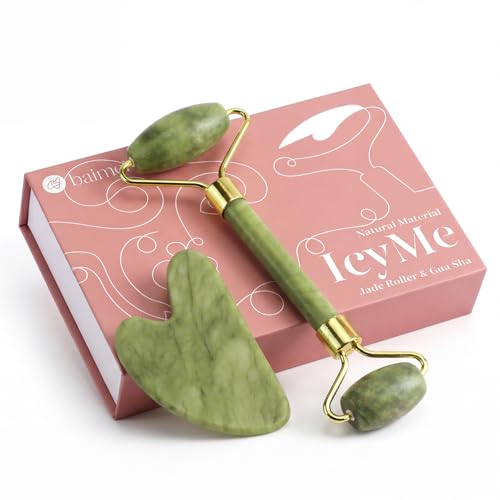
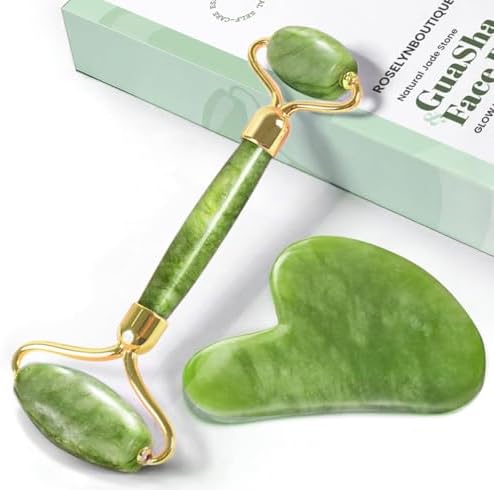
True jade comes in two mineral forms, jadeite and nephrite. Both are tough, dense stones that feel cool and smooth against the skin. Genuine jade can range from pale to deep green and often has natural variations in color and small inclusions.
Because real jade can be expensive, many low-cost jade rollers are actually made from other green stones, such as serpentine or dyed quartzite, or from colored glass. These are not harmful, but they are not jade.
Jade rollers have been associated with traditional Chinese beauty practices, which helped popularize them in modern skincare. The historical story is often exaggerated in marketing, but the tool itself is simple and pleasant to use.
Rose Quartz Rollers
Rose quartz is a pink variety of quartz, one of the most common minerals on Earth. It is hard and holds a smooth polish well, and its soft pink color has made it a favorite in beauty tools.
Because quartz is plentiful, genuine rose quartz rollers are widely available at modest prices. Color can range from very pale to deeper pink, and natural stones usually show slight cloudiness or subtle banding rather than perfect, glassy clarity.
Rose quartz is often described as being better at staying cool than jade. Any difference is small in practice. Both stones feel cool at first and warm up to skin temperature within a few minutes of use.
Jade vs Rose Quartz vs Stainless Steel
| Feature | Jade | Rose quartz | Stainless steel |
|---|---|---|---|
| Evidence of better results | None | None | None |
| Feels cool | Yes, warms in minutes | Yes, warms in minutes | Colder, holds cold longer |
| Durability | Tough but can chip | Hard but can chip | Very durable |
| Ease of cleaning | Good, avoid harsh chemicals | Good, avoid harsh chemicals | Excellent, easy to disinfect |
| Fake versions common? | Yes | Somewhat | Rarely |
| Typical price | Varies widely | Low to moderate | Low to moderate |
If the stone itself matters to you for aesthetic or personal reasons, choose the one you enjoy. If your goals are purely practical, stainless steel is often the better value.
What Rollers Can Do, Whatever the Material
The best evidence for facial rollers comes from a 2025 randomized controlled trial by Ahn and colleagues in the Journal of Cosmetic Dermatology. Thirty-four women used a facial roller or gua sha tool for ten minutes, five times a week, for eight weeks. The roller group saw small reductions in facial contour measurements and improved skin elasticity of roughly 7 to 9 percent.
The study was small and short, and it compared tool types rather than stone types, so it tells us nothing about jade versus rose quartz specifically. It does suggest that consistent use matters more than the material. Our guide to facial roller vs gua sha covers the trial in more detail.
Most of the immediate visible effect comes from moving fluid through the lymphatic vessels near the skin surface, which is why rolling works best on morning puffiness. If your swelling is persistent, our guide to facial swelling in the morning covers causes worth checking.
The Real Stone Check
If you paid for genuine jade or rose quartz, these simple observations can reveal a fake. None is perfect on its own, but together they are a good guide.
Look for bubbles
Examine the roller head in bright light. Tiny round air bubbles suggest glass or resin. Natural stone has irregular inclusions, not bubbles.
Check the color
Perfectly even, bright color with no variation can point to dye or glass. Natural stones usually show slight patches, veins, or cloudiness.
Wipe with a damp white cloth
Rub the stone firmly with a damp white cloth. Color transferring to the cloth suggests dye.
Feel the temperature
Hold the roller in your palm for a minute. Stone and glass both warm up, but stone usually feels cooler at first and warms a little more slowly.
Consider the price
A very cheap large set labeled genuine jade is unlikely to be real jade. It may still be a perfectly usable roller.
A fake stone roller still works as a roller. The only reasons to care are value for money and durability, since glass and resin can crack or scratch more easily.
How to Use a Facial Roller
Good Habits
- Start on a clean face with a few drops of oil or serum.
- Roll outward and upward with light pressure.
- Begin at the neck, then the jaw, cheeks, under-eyes, and forehead.
- Use the small head for under the eyes and around the nose.
- Chill the roller in the fridge for extra depuffing.
- Use it for about five minutes.
Common Mistakes
- Press hard or roll back and forth vigorously.
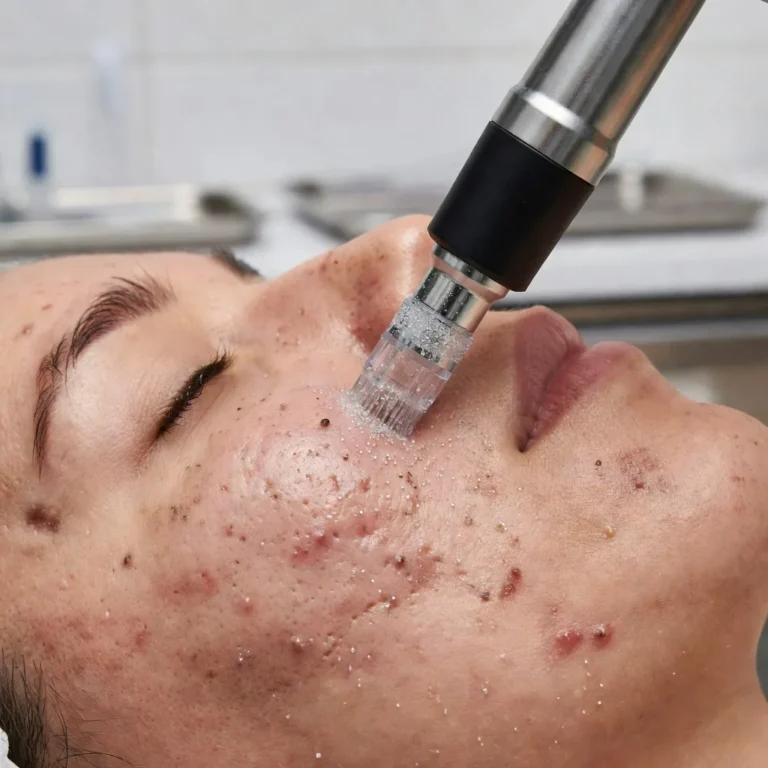
- Roll over active acne, cold sores, or broken skin.
- Use a chipped or cracked roller.
- Share rollers without cleaning them.
- Store it in a damp bathroom where bacteria can grow.
- Freeze stone rollers, which can crack them.
Inspect your roller regularly. Chipped edges can scratch the skin, and loose metal frames can pinch. Replace damaged rollers rather than continuing to use them.
Cleaning and Caring for Your Roller
Rollers touch your skin and skincare products, so they can pick up oil, bacteria, and residue. Wash the stone heads after each use with mild soap and warm water, rinse, and dry them with a clean towel.
About once a week, wipe the stones with an alcohol wipe or a cloth dampened with a little rubbing alcohol, then let them air dry. Avoid soaking the roller, since water can get into the metal frame and cause rust or loosen the stones.
Store it dry: keep your roller in a clean pouch or box away from the sink. If you like it cold, a sealed bag in the fridge is fine, but avoid the freezer.
What No Roller Can Do
No facial roller, whatever it is made of, can remove fat, change bone structure, or lift significantly sagging skin. The contour changes measured in research are a few millimeters and mostly reflect fluid movement.
Rollers also do not detoxify the skin, draw out impurities, or balance energy. Claims based on crystal properties are not supported by scientific evidence. If you enjoy the ritual, that is a genuine benefit in itself, since a calming routine can make skincare more consistent, but it is not a skin treatment.
Most roller marketing leans on the same handful of claims. Here is how each one holds up against what has actually been measured, so you can judge a product page without guessing.
| Claim you will see | What the evidence says |
|---|---|
| Jade balances energy or chi | A traditional belief, not something any skin study has measured or confirmed. |
| Rose quartz boosts collagen | No trial shows any stone changes collagen production in the skin. |
| Rolling drains lymph and slims the face | Light pressure may shift fluid briefly, so puffiness can ease for a few hours, but face shape does not change. |
| Stone stays colder than other materials | Both stones hold chill for a few minutes; stainless steel usually stays cold longer and is easier to sanitize. |
| Rolling pushes serum deeper into skin | Gentle massage can spread a product evenly, but there is no good evidence it drives ingredients deeper than normal application. |
| Daily rolling prevents wrinkles | No long-term study links roller use to fewer wrinkles; sunscreen and retinoids have far stronger evidence. |
The pattern is consistent. The short-term effects people notice, such as less morning puffiness and a cool, soothing feel, come from temperature and gentle pressure, and those work the same whether the head is jade, rose quartz, or metal. The bigger promises about energy, collagen, and anti-aging come from marketing and tradition rather than trials.
That does not make a roller useless. If a two-minute massage helps you slow down, apply your skincare more gently, or feel better about your morning routine, that is a fair reason to keep one. Just buy it for what it does, and put your anti-aging budget toward the products with real data behind them.
For fine lines and texture, daily sunscreen and a retinoid will do more. Our guide on whether daily face massage is good for skin covers realistic expectations.
When to Skip a Roller and See a Doctor
Avoid rolling and seek advice if you have:
- Active acne, infected spots, or cold sores.
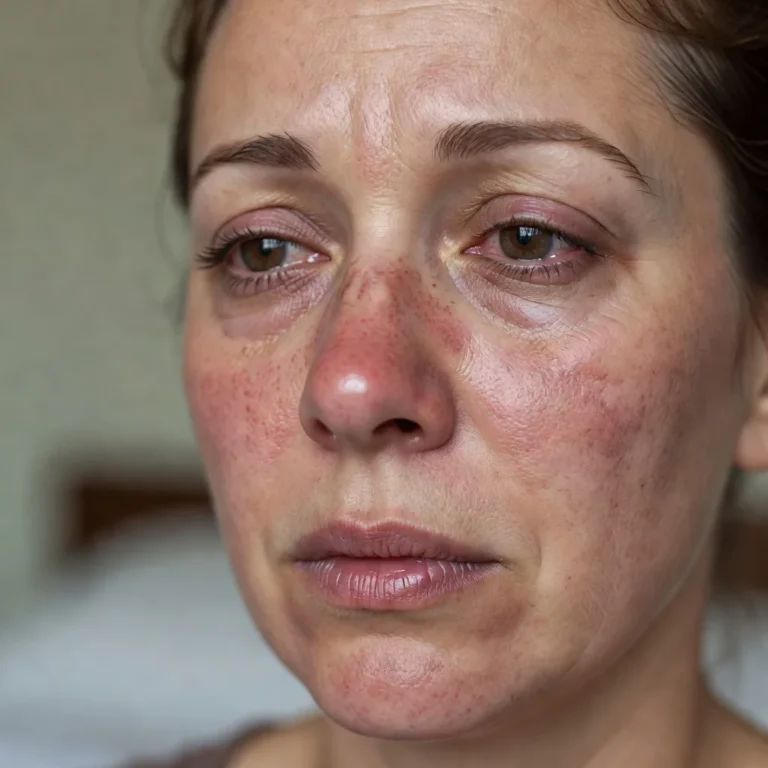
- Rosacea or visible broken vessels that worsen with pressure.
- Recent fillers, Botox, or facial procedures, unless your provider approves.
- Swelling on only one side of the face, or a lump that does not go away.
- Facial swelling with pain, fever, or redness, which may signal infection.
- Sudden facial swelling with difficulty breathing, which needs emergency care.
Medical disclaimer: This article is for general information and is not a substitute for professional medical advice. See a doctor about persistent, one-sided, or painful facial swelling.
Common Questions
Is jade or rose quartz better for a facial roller?
There is no evidence that either works better. Choose based on feel, appearance, durability, and price.
Does rose quartz stay colder than jade?
Both feel cool at first and warm to skin temperature within minutes. Any difference is small.
Do facial rollers actually work?
They can reduce morning puffiness, and one small 2025 trial found modest improvements in skin elasticity with regular use.
How can I tell if my jade roller is real?
Look for air bubbles, overly uniform color, and dye transfer on a damp white cloth. Very cheap genuine jade is unlikely.
Is a stainless steel roller better than stone?
Steel stays colder longer and is easier to clean and harder to break, but there is no evidence it gives better skin results.
How often should I use a facial roller?
A few minutes most days is common. The 2025 trial used ten-minute sessions five times a week.
Should I use my roller with oil or serum?
Yes. A slippery product helps the roller glide and reduces tugging on the skin.
Can I put my roller in the freezer?
It is safer to use the fridge. Freezing can crack stone and makes the roller uncomfortably cold.
How do I clean a facial roller?
Wash with mild soap and warm water after each use, and wipe with rubbing alcohol weekly. Do not soak it.
Do crystal rollers have healing properties?
There is no scientific evidence that crystal energy affects skin. Benefits come from pressure, coolness, and routine.
The Bottom Line
Jade and rose quartz rollers work the same way, through gentle pressure and coolness, and there is no evidence that one stone gives better results. The differences that matter are practical: how the roller feels, how durable it is, how easy it is to clean, and whether it is genuine stone for the price you paid.
Choose the one you will enjoy using, check it with the real stone test if authenticity matters to you, and consider stainless steel if you want something colder and tougher. Use light pressure, clean it every time, and keep expectations realistic.

Written by
Registered pharmacist and founder of Facial Adviser. Rakib's pharmacy training covers how skincare actives work and interact; a later course in cosmetology turned that into a focus on facial treatments and skincare products. He plans, researches and edits every guide on the site and checks health claims against sources such as the American Academy of Dermatology, the FDA and the NIH. He is not a dermatologist; see the Editorial Policy and Medical Disclaimer.
About · Editorial policy · How we choose products · Medical disclaimer · Contact
Keep reading: Facial rollers, gua sha and massagers
- 10 Best Gua Sha Facial Tools (2026): Stone and Steel Picks Compared
- Do Anti-Aging Face Massages Work? Evidence, Technique and Best Tools
- How to Use Anti-Wrinkle Patches: Silicone vs Hydrogel, Overnight Use and Results
- 10 Best Gua Sha Stones (2026): Shape, Material and How to Use
- 10 Best Jade Rollers for Reducing Puffiness (2026): Honest Picks
- Best Tea Tree Oil Facial Roller for Acne-Prone Skin: A Careful Guide
- 10 Best LED Light Therapy Masks (2026): Clearer Skin, Softer Lines
- How to Incorporate Microcurrent Into Your Routine: Gel, Timing and Safety