How Seasonal Allergies Affect Facial Skin and What Helps
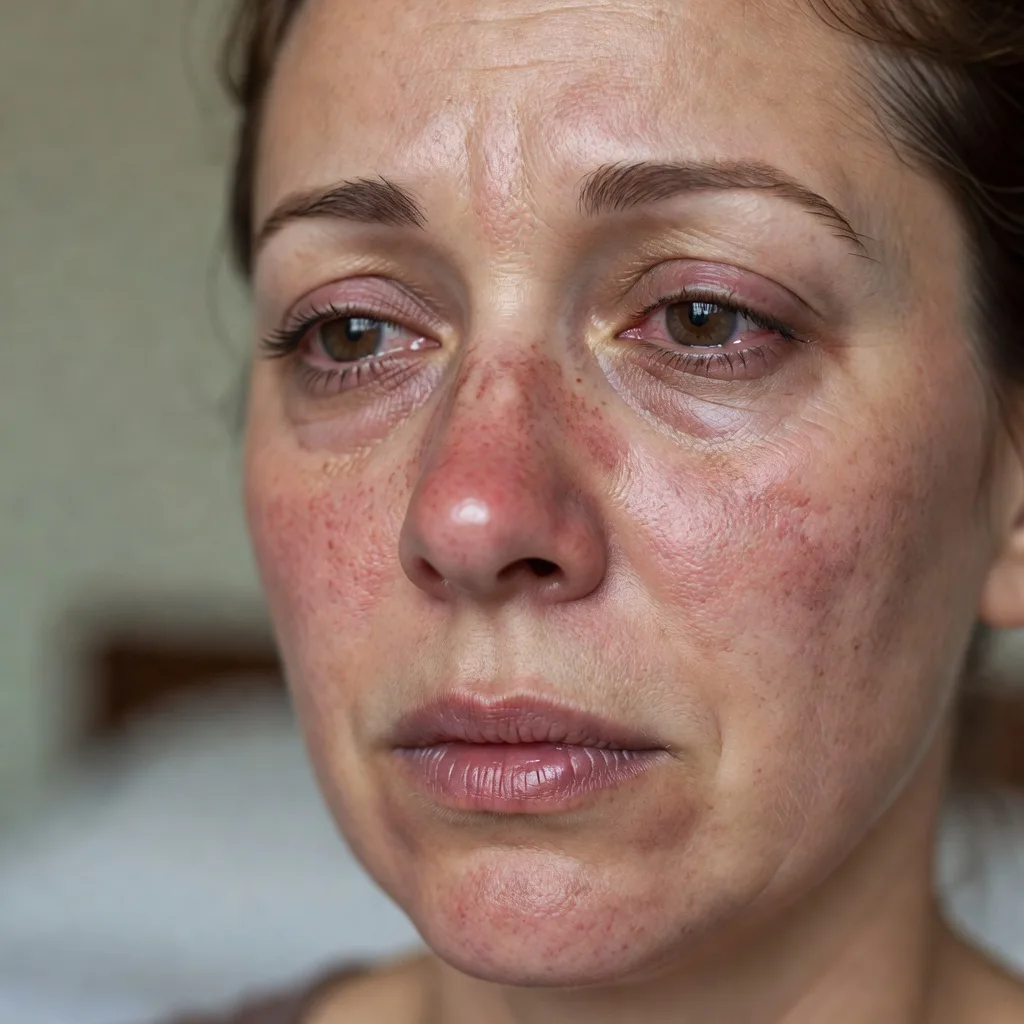
When pollen counts rise, most people think about sneezing, a runny nose, and itchy eyes. But seasonal allergies often show up on the face too: puffy eyelids, dark circles, red patches around the nose, and dry, itchy skin that seems to flare out of nowhere. For some people, the skin symptoms bother them as much as the sneezing.
Part of our guide to lifestyle and skin. Start with: How Diet Impacts the Skin Microbiome: What the Science Actually Shows
Seasonal allergies can affect facial skin in several ways. Congestion can cause dark circles and puffiness under the eyes, rubbing irritated eyes and noses can inflame the skin, and pollen can trigger flares of eczema and other sensitive skin conditions.
Allergies are extremely common. The American College of Allergy, Asthma and Immunology notes that more than 50 million Americans experience allergies each year. Many of them notice changes in their skin during peak pollen seasons. Tree pollen tends to peak in spring, grass pollen in late spring and summer, and weed pollen, such as ragweed, in late summer and fall, depending on where you live.
Managing the allergy itself usually improves the skin. Reducing pollen exposure, treating nasal congestion, and protecting the skin barrier with gentle care can make a big difference. Knowing which symptoms come from allergies also helps you avoid treating the wrong problem.
This guide explains the main ways allergies affect the face, how to tell allergy skin changes from other problems, a daily routine for allergy season, and when to see a doctor. It also covers makeup and children.
Shopping these picks?
Amazon Prime members get fast, free shipping on eligible items, plus Prime Video, Amazon Music and member deals. New members can start with a free trial.
Start a free Prime trialAged 18 to 24? Prime for Young Adults comes with a longer free trial and a lower price after it.
Affiliate link: we may earn a commission at no extra cost to you.
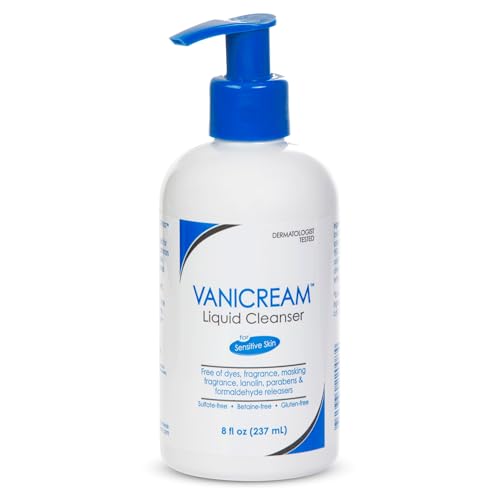
Recommended Products for Allergy-Season Skin


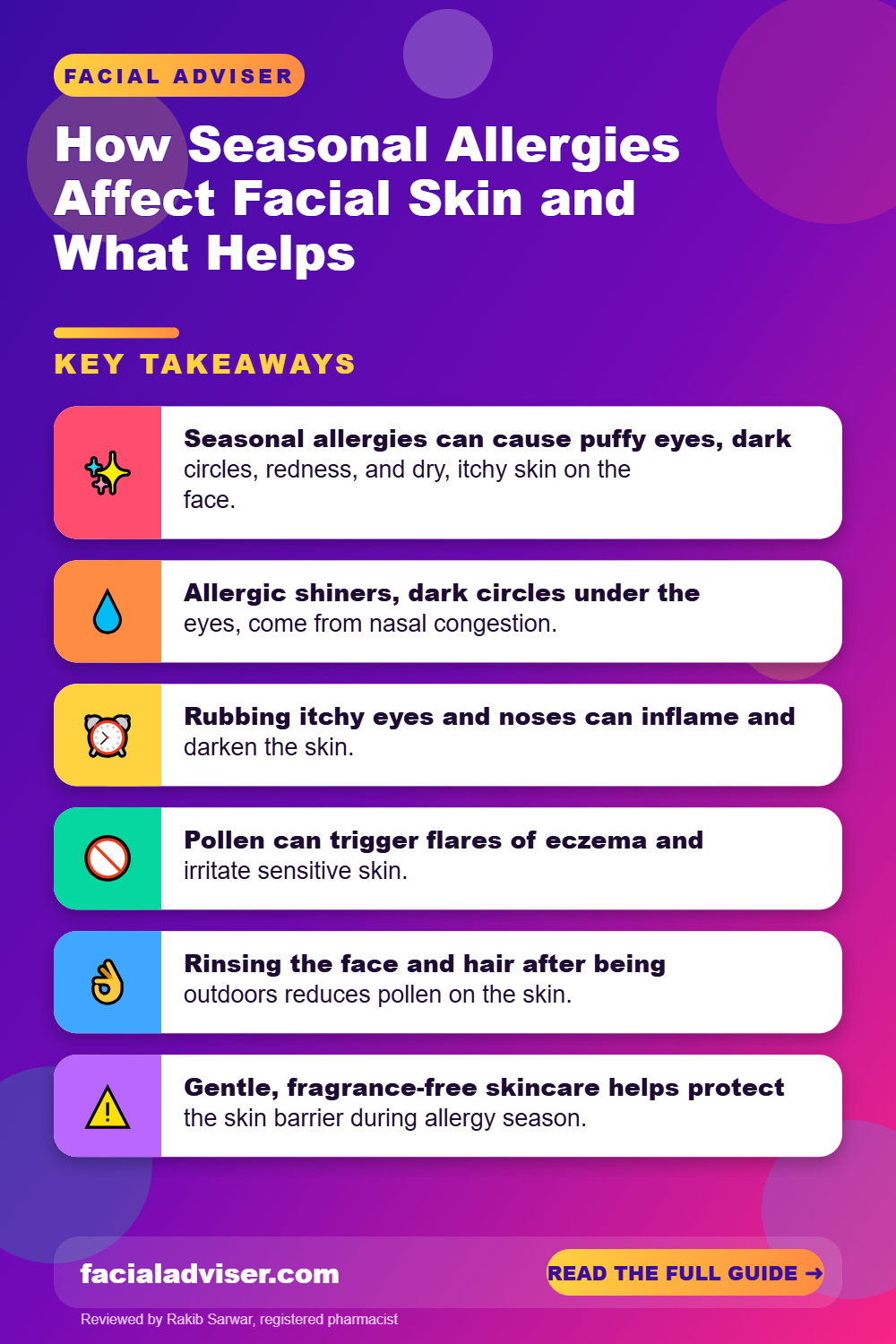
In Brief
- Seasonal allergies can cause puffy eyes, dark circles, redness, and dry, itchy skin on the face.
- Allergic shiners, dark circles under the eyes, come from nasal congestion.
- Rubbing itchy eyes and noses can inflame and darken the skin.
- Pollen can trigger flares of eczema and irritate sensitive skin.
- Rinsing the face and hair after being outdoors reduces pollen on the skin.
- Gentle, fragrance-free skincare helps protect the skin barrier during allergy season.
- Swelling of the lips or face with breathing difficulty needs emergency care.
Jump to a Section
- How Allergies Show Up on the Face
- Allergic Shiners and Puffy Eyes
- Pollen and Eczema
- An Allergy-Season Skin Routine
- Skincare Tips for Allergy Season
- Protecting Your Eyes and Eyelids
- Reducing Allergens at Home
- Allergy Skin vs Other Skin Problems
- Makeup During Allergy Season
- Children and Allergy-Related Skin Changes
- What Skincare Cannot Fix
- When to See a Doctor
- Frequently Asked Questions
- Where This Leaves You
How Allergies Show Up on the Face
| Skin change | Why it happens | What helps |
|---|---|---|
| Dark circles (allergic shiners) | Nasal congestion slows blood flow around the eyes | Treat congestion, cool compresses |
| Puffy eyelids | Histamine release and rubbing | Cold compresses, avoid rubbing |
| Red, raw skin around the nose | Frequent blowing and wiping | Soft tissues, barrier balm |
| Itchy, dry patches | Pollen irritating sensitive skin | Gentle cleansing, moisturizer |
| Eczema flares | Pollen and other allergens can trigger flares | Moisturize, medical treatment |
| Eyelid dermatitis | Rubbing, eye drops, or products | Identify triggers, see a doctor |
Many of these changes improve quickly once allergy symptoms are controlled.
Children with allergies may also develop a small horizontal crease across the lower part of the nose from repeatedly rubbing it upward, sometimes called the allergic salute.
Keeping a simple diary of pollen levels and skin symptoms for a few weeks can make these links clearer.
Allergic Shiners and Puffy Eyes
Allergic shiners are dark, bruise-like circles under the eyes. When the nose is congested, blood flow in small veins around the eyes and nose slows, causing blood to pool and appear darker through the thin under-eye skin.
Puffiness happens because allergies release histamine, which makes small blood vessels leak fluid into surrounding tissue. The eyelids are especially prone because the skin is thin and loose. Rubbing makes both puffiness and darkness worse.
A clean, cool compress for a few minutes can ease swelling. Our guide on facial swelling in the morning covers other reasons eyes may look puffy when you wake up.
Dark circles that come and go with allergy season are likely allergy-related. Circles that stay all year may have other causes, such as genetics or thin skin.
Allergy-related congestion can also disturb sleep, and poor sleep makes dark circles and puffiness more noticeable. Treating nighttime congestion often helps you look more rested.
Pollen and Eczema
People with atopic dermatitis, or eczema, often have other allergic conditions such as hay fever and asthma. Airborne allergens such as pollen, dust mites, and pet dander can trigger or worsen eczema on exposed areas like the face and neck.
During high pollen seasons, some people notice more itching, redness, and dryness on the cheeks, eyelids, and around the mouth. Keeping the skin barrier strong with a gentle cleanser and a good moisturizer helps reduce how much pollen irritates the skin.
If eczema flares are frequent or severe, a dermatologist can prescribe treatments that calm inflammation and may recommend allergy testing.
Cool, damp compresses followed by moisturizer can calm itchy flares, and keeping nails short reduces damage from scratching during sleep.
An Allergy-Season Skin Routine
Follow these steps on days with high pollen counts.
Check the pollen forecast
Many weather apps show daily pollen levels. On high days, limit time outdoors in the early morning when counts are often highest.
Protect your face outdoors
Wear sunglasses and a hat to reduce pollen reaching your eyes and face.
Rinse when you come in
Gently wash your face with lukewarm water and a mild cleanser, and consider rinsing your hair before bed.
Moisturize
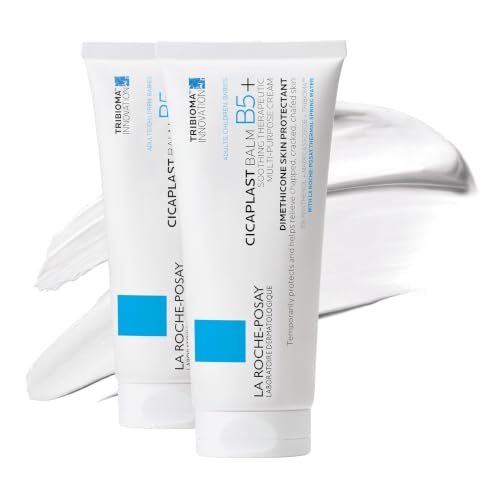
Apply a fragrance-free moisturizer to support the skin barrier, and a barrier balm around the nose if it is sore.
Treat allergy symptoms
Use allergy treatments recommended by your doctor or pharmacist, and saline rinses to clear the nose.
Change your pillowcase more often during allergy season, since pollen from your hair can transfer to it overnight.
Skincare Tips for Allergy Season
Do
- Use fragrance-free cleansers and moisturizers.
- Pat skin dry gently with a soft towel.
- Use soft, lotion-infused tissues for a sore nose.
- Apply a barrier balm to raw areas.
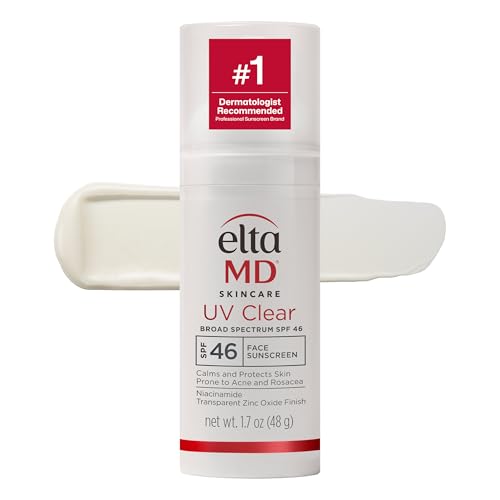
- Keep up daily sunscreen, choosing gentle mineral formulas.
Don’t
- Rub itchy eyes or nose.
- Use harsh scrubs or strong acids on irritated skin.
- Try many new products during flares.
- Use hot water on the face.
- Sleep with windows open on high pollen nights.
If your skin is sensitive, simplify your routine during allergy season and pause strong actives such as retinoids and acids until the skin calms down.
Showering and washing your face in the evening, rather than only in the morning, removes pollen collected during the day before it sits on your skin overnight.
Protecting Your Eyes and Eyelids
Itchy, watery eyes are one of the most common allergy symptoms. Rubbing them releases more histamine and irritates the delicate eyelid skin.
Cool compresses, preservative-free lubricating eye drops, and allergy eye drops recommended by a pharmacist or doctor can help. Remove eye makeup gently and consider skipping it on bad days.
If makeup or eye drops seem to make things worse, see our guide on what to do if makeup gets in your eye for gentle care tips.
Do not use eye drops or creams on the eyelids without advice if symptoms persist, since some products can irritate the eyelid skin further.
Wraparound sunglasses outdoors can help keep pollen away from the eyes on windy days.
Reducing Allergens at Home
Reducing the allergens you breathe and touch can help both your nose and skin.
Keep windows closed on high pollen days, use air conditioning if possible, and consider a HEPA air purifier in the bedroom. Wash bedding weekly in hot water, and shower before bed to remove pollen from hair and skin.
Nasal saline rinses can clear pollen and mucus from the nose, easing congestion that contributes to dark circles. Our guide on breathing habits explains why a blocked nose affects sleep and appearance.
If you have pets that go outdoors, wiping their fur when they come in can reduce the pollen they carry into the house.
Allergy Skin vs Other Skin Problems
Several skin conditions can look similar to allergy-related changes. Knowing the differences helps you choose the right approach.
Allergy-related skin changes tend to follow pollen seasons, often come with sneezing, a runny nose, or itchy eyes, and improve when allergies are treated. Contact dermatitis, by contrast, appears where a specific product or substance touched the skin, such as a new moisturizer, eye drops, or nail polish transferred by touching the face.
Rosacea causes persistent redness, flushing, and sometimes bumps on the cheeks and nose, and it is triggered by heat, sun, spicy foods, and alcohol rather than pollen. Seborrheic dermatitis causes greasy, flaky patches around the nose, eyebrows, and hairline.
If your skin symptoms do not match your allergy seasons, or they persist year-round, a dermatologist can help identify the cause, sometimes with patch testing.
Photos taken during flares are useful to show your doctor.
Makeup During Allergy Season
Makeup can be tricky when your eyes water and your nose is sore. Keep it simple on bad days: a tinted moisturizer or light foundation, a waterproof or tubing mascara if you wear any, and skip eyeliner on the waterline.
Apply a thin layer of barrier balm around the nostrils before makeup if the skin is raw, and avoid powder on flaky areas, which can make dryness more visible.
Clean brushes and sponges more often during allergy season, since pollen and bacteria can build up on tools. Remove makeup gently every night to avoid extra rubbing.
Choosing fragrance-free makeup during allergy season can also reduce the chance of extra irritation on already sensitive skin.
Children and Allergy-Related Skin Changes
Children with allergies often have dark circles, a crease across the nose from rubbing, and dry, itchy skin, especially if they also have eczema.
Keeping nails short, using fragrance-free moisturizers, and washing their face and hands after outdoor play can help. A pediatrician or allergist can recommend age-appropriate allergy treatments.
Frequent mouth breathing and snoring in children with allergies should also be checked, since chronic congestion can affect sleep and, over time, facial development.
Teach children to pat, not rub, itchy eyes and noses.
What Skincare Cannot Fix
| Belief | Reality |
|---|---|
| Eye creams cure allergic shiners | Treating congestion matters more |
| Allergy rashes are always from pollen | Products, pets, and other allergens can cause them |
| Stronger products help faster | Gentle care works better on irritated skin |
| Allergies only affect the nose and eyes | They can affect the whole face and skin |
| Allergy season skin problems are unavoidable | Reducing exposure and treating symptoms helps a lot |
Treating the allergy itself is usually the most effective way to improve allergy-related skin changes.
Combining allergy control with gentle skincare gives the best results.
When to See a Doctor
See a doctor or allergist if you have:
- Allergy symptoms that do not improve with over-the-counter treatments.
- Frequent eczema flares or itchy rashes on the face.
- Eyelid swelling, redness, or itching that lasts.
- Hives that appear often.
- Symptoms that interfere with sleep or daily life.
- Uncertainty about what you are allergic to.
Seek emergency care for swelling of the lips, tongue, or throat, difficulty breathing, or dizziness.
Medical disclaimer: This article is for general information and is not a substitute for professional medical advice. See a healthcare provider about allergy symptoms and treatment.
Frequently Asked Questions
Can seasonal allergies affect your skin?
Yes. They can cause dark circles, puffy eyes, redness, dryness, and eczema flares.
What are allergic shiners?
Dark circles under the eyes caused by nasal congestion and slowed blood flow.
Why are my eyes puffy during allergy season?
Histamine makes blood vessels leak fluid, and rubbing worsens swelling.
Can pollen cause a rash on the face?
It can irritate sensitive skin and trigger eczema flares.
How can I protect my skin from pollen?
Wear sunglasses and a hat, rinse your face after being outdoors, and moisturize.
What skincare is best during allergy season?
Gentle, fragrance-free cleansers and moisturizers, and mineral sunscreen.
Should I stop using retinol during allergy season?
If your skin is irritated, pausing strong actives can help it recover.
Do air purifiers help skin allergies?
They can reduce airborne allergens indoors, which may help both nose and skin.
How do I get rid of allergy dark circles?
Treat congestion, use cool compresses, avoid rubbing, and get enough sleep.
When is an allergic reaction an emergency?
When there is swelling of the lips, tongue, or throat, or difficulty breathing.
Where This Leaves You
Seasonal allergies can affect facial skin through dark circles and puffiness from congestion, irritation from rubbing and blowing the nose, and flares of eczema triggered by pollen. These changes often improve when allergy symptoms are controlled.
Limit pollen exposure, rinse your face after being outdoors, use gentle fragrance-free skincare, and treat congestion. See a doctor for persistent rashes or allergy symptoms, and seek emergency care for any facial swelling with breathing difficulty.

Written by
Registered pharmacist and founder of Facial Adviser. Rakib's pharmacy training covers how skincare actives work and interact; a later course in cosmetology turned that into a focus on facial treatments and skincare products. He plans, researches and edits every guide on the site and checks health claims against sources such as the American Academy of Dermatology, the FDA and the NIH. He is not a dermatologist; see the Editorial Policy and Medical Disclaimer.
About · Editorial policy · How we choose products · Medical disclaimer · Contact
Keep reading: Diet, sleep, stress and skin
- How Diet Impacts the Skin Microbiome: What the Science Actually Shows
- Cold Therapy for Skin: What It Really Does (and What It Doesn't)
- Sinuses and Facial Pressure: Why It Happens and How to Ease It
- Can Your Sleep Position Cause Wrinkles? What the Research Shows
- Thyroid Disorders and Facial Puffiness: Signs, Causes and Next Steps
- What Dehydration Does to Your Skin, Layer by Layer