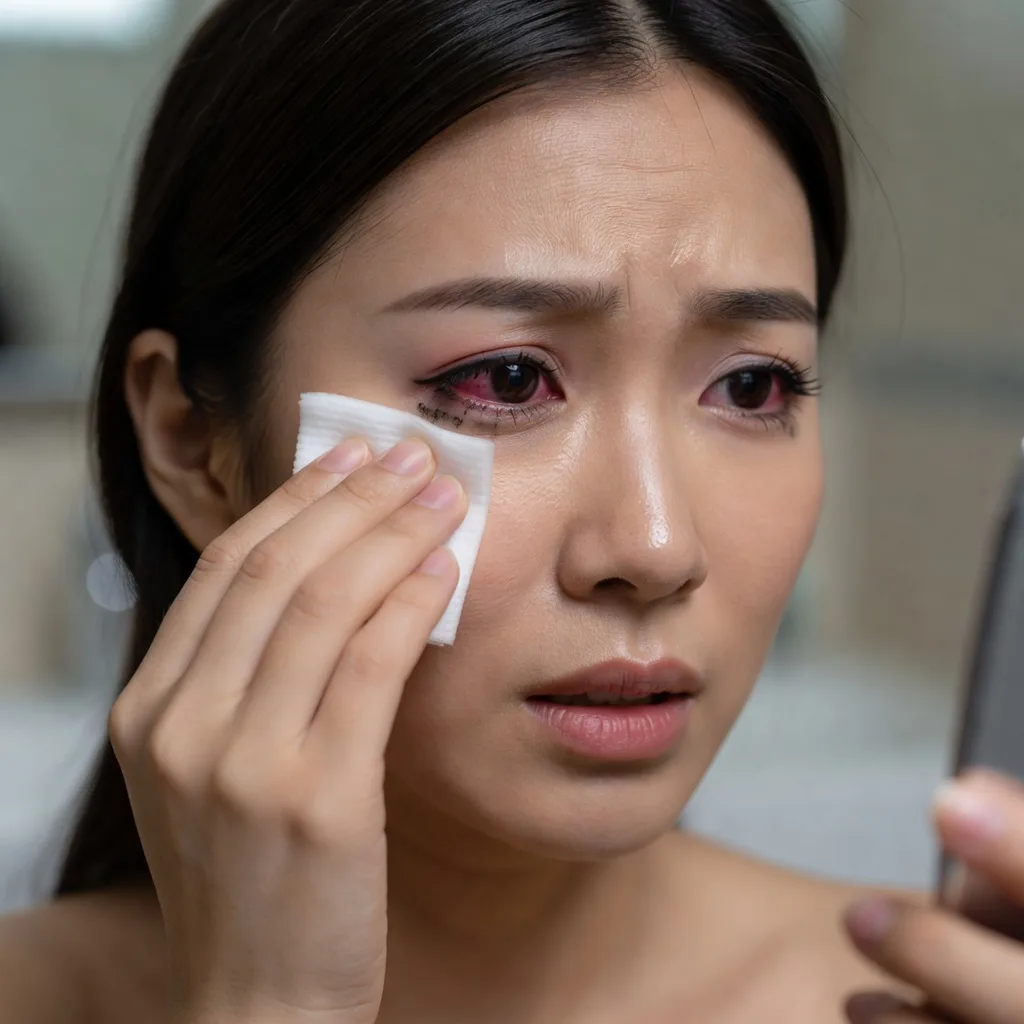
What to Do If Makeup Gets in Your Eye: First Aid and Warning Signs
A flake of mascara, a speck of glitter, a smear of eyeliner, or a poke from a mascara wand: getting makeup in your eye is one of the most common beauty mishaps. It stings, your eye waters, and your first instinct is to rub it. That instinct is the one to resist. It happens to beginners and professionals alike.
Part of our guide to makeup how-to. Start with: How to Properly Put On Face Makeup: The Right Order, Step by Step
If makeup gets in your eye, do not rub it. Blink several times to let tears wash it out, then rinse gently with clean, lukewarm water or sterile saline. Remove contact lenses first if you wear them. Most minor irritation settles within a few minutes to an hour.
Rubbing can drag particles across the surface of the eye and scratch the cornea, the clear front layer. A mascara wand can also cause a small scratch directly. Corneal scratches are painful but usually heal quickly with proper care, though they need a doctor’s check if pain or blurred vision continues.
Makeup can also carry bacteria into the eye, especially if products are old, shared, or have been contaminated. Research on used cosmetics has found potentially harmful bacteria in most everyday makeup items, which is why eye makeup hygiene matters.
This guide covers step-by-step first aid, what to do for different types of makeup, how to tell a minor irritation from a scratch or infection, and when to get medical help. It also explains how to prevent it happening again.
Shopping these picks?
Amazon Prime members get fast, free shipping on eligible items, plus Prime Video, Amazon Music and member deals. New members can start with a free trial.
Start a free Prime trialAged 18 to 24? Prime for Young Adults comes with a longer free trial and a lower price after it.
Affiliate link: we may earn a commission at no extra cost to you.
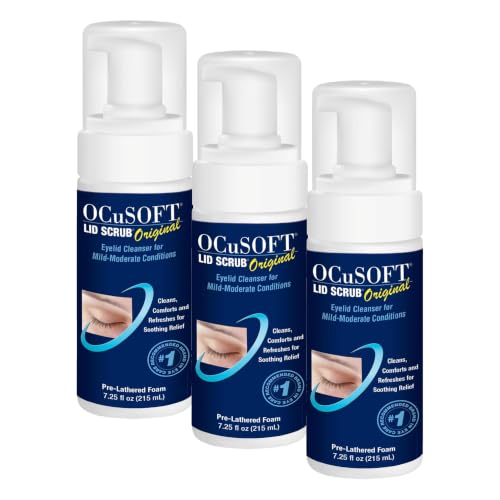
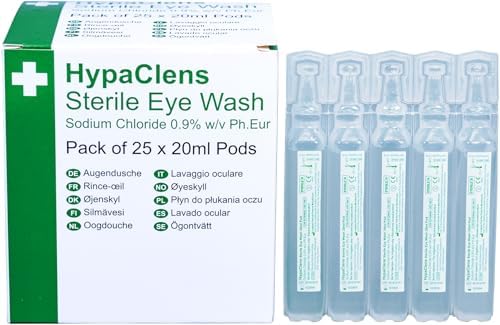
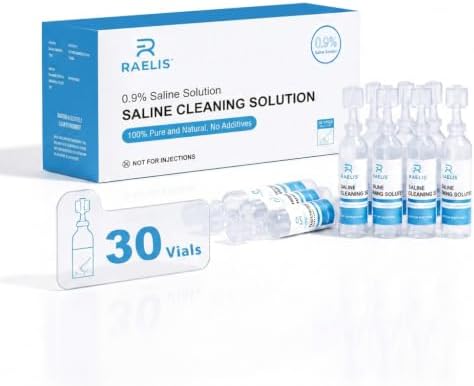
Recommended Eye Care and Eye Makeup Hygiene Products




What This Covers
- First Aid: What to Do Right Away
- What to Do for Different Types of Makeup
- Signs of a Scratched Eye
- Signs of an Eye Infection Later On
- If You Wear Contact Lenses
- Preventing Makeup From Getting in Your Eyes
- Removing Eye Makeup Gently
- Caring for Your Eye Afterward
- If It Happens to a Child
- What Home Care Cannot Fix
- When to Get Medical Help
- Frequently Asked Questions
- The Takeaway
At a Glance
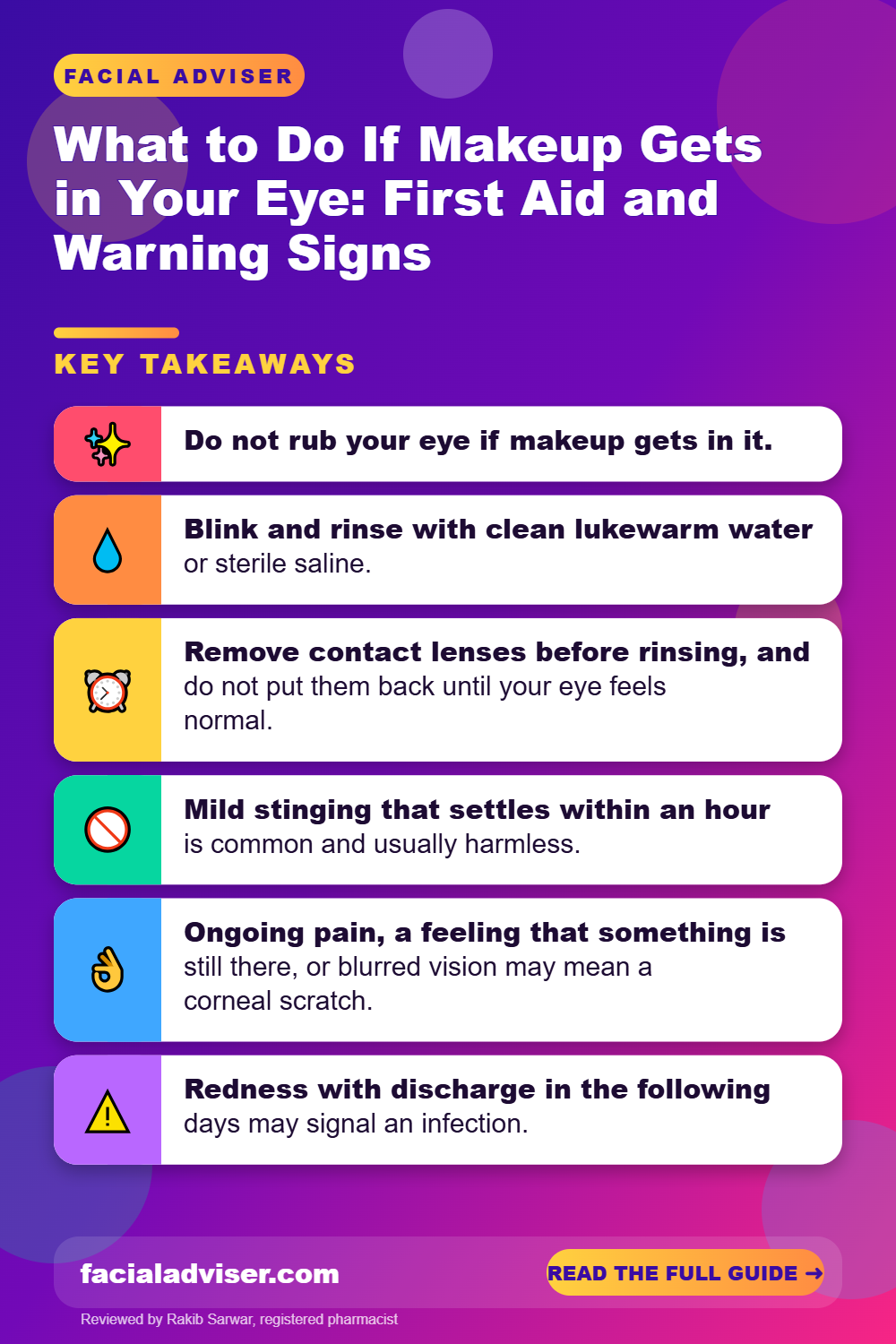
- Do not rub your eye if makeup gets in it.
- Blink and rinse with clean lukewarm water or sterile saline.
- Remove contact lenses before rinsing, and do not put them back until your eye feels normal.
- Mild stinging that settles within an hour is common and usually harmless.
- Ongoing pain, a feeling that something is still there, or blurred vision may mean a corneal scratch.
- Redness with discharge in the following days may signal an infection.
- Replace eye makeup regularly and never share it to reduce risk.
First Aid: What to Do Right Away
Follow these steps as soon as makeup gets into your eye.
Stop and do not rub
Put down your makeup and resist rubbing, which can scratch the eye or push particles further in.
Remove contact lenses
Wash your hands, then take out any contact lenses. Makeup can stick to lenses and keep irritating the eye.
Blink and let tears work
Blink several times. Tears are often enough to wash out small particles.
Rinse gently
Tilt your head so the affected eye is lower, then pour clean lukewarm water or sterile saline across the eye from the inner corner outward, or use an eye wash cup. Keep rinsing for a minute or two.
Check how it feels
If stinging fades and your vision is clear, you can rest your eye. If pain, blurriness, or a gritty feeling continues, see a doctor.
Keep single-use sterile saline vials in your makeup area. They are handy for rinsing eyes quickly and more hygienic than a shared bottle.
What to Do for Different Types of Makeup
| What got in | What usually happens | What to do |
|---|---|---|
| Mascara flakes | Grittiness, watering | Blink, rinse with saline, avoid rubbing |
| Mascara wand poke | Sharp pain, watering, possible scratch | Rinse gently; see a doctor if pain lasts |
| Eyeliner or kohl | Stinging, blurry film | Rinse; remove lenses; watch for irritation |
| Glitter or shimmer | Scratchy, foreign body feeling | Rinse well; seek care if particle remains |
| Powder or eyeshadow | Mild stinging | Blink and rinse |
| Foundation or concealer | Stinging, blurriness | Rinse thoroughly |
| Makeup remover or cleanser | Burning | Rinse with water for several minutes |
If a product label gives specific eye-contact instructions, follow them. For anything that causes severe burning, keep rinsing and seek medical advice.
Loose glitter deserves special caution. Its sharp edges can scratch the eye, and craft glitter is not designed for cosmetic use. If a glitter particle stays in the eye after rinsing, see a doctor rather than trying to remove it yourself.
Signs of a Scratched Eye
A corneal abrasion, or scratch on the surface of the eye, is a common result of a mascara wand poke or rubbing with makeup particles in the eye.
- Pain that persists or worsens after rinsing.
- A feeling that something is still in your eye.
- Watering and sensitivity to light.
- Blurred vision.
- Redness and difficulty keeping the eye open.
Most minor scratches heal within a day or two, but a doctor should check them to rule out a deeper scratch or embedded particle and to decide whether you need antibiotic drops to prevent infection.
Do not wear contact lenses or eye makeup until a scratch has fully healed and your doctor says it is safe.
It can help to tell the doctor exactly what happened, such as a wand poke, glitter, or rubbing, since this guides how they examine the eye. They may use a special dye and a blue light to see scratches on the surface.
Signs of an Eye Infection Later On
Sometimes irritation settles, but an infection develops over the next day or two, especially if the makeup or applicator was contaminated.
Watch for increasing redness, yellow or green discharge, crusting on the lashes in the morning, swelling of the eyelid, or pain. These can signal bacterial conjunctivitis or, more seriously, a corneal infection, particularly in contact lens wearers.
If you develop these symptoms, stop using the eye makeup you used that day and see a doctor. Our guide on makeup after pink eye explains what to throw away and when you can return to makeup.
Contact lens wearers should take any red, painful eye seriously, since lens-related infections can progress quickly and threaten vision if not treated early.
If You Wear Contact Lenses
Contact lenses can trap makeup particles against the eye, making irritation worse. They can also collect deposits of makeup over time, which may cloud vision.
If makeup gets in your eye while wearing lenses, remove them first, rinse the eye, and clean or replace the lenses before wearing them again. If you use daily disposables, simply throw them away.
To reduce problems, put lenses in before applying makeup and remove them before taking makeup off. A 2015 study in Eye and Contact Lens found that eyeliner applied on the waterline moved into the tear film more quickly than liner applied outside the lashes, so contact lens wearers may want to avoid the waterline.
Keep lens cases clean and replace them regularly, since contaminated cases are another source of eye infections.
Preventing Makeup From Getting in Your Eyes
Helps
- Apply mascara slowly with your elbow resting on a surface.
- Keep eyeliner outside the lash line if your eyes are sensitive.
- Tap off excess powder from brushes before applying.
- Replace mascara about every three months.
- Remove eye makeup gently every night.
Backfires
- Apply makeup in a moving car or while walking.
- Use loose glitter near the eyes.
- Share mascara or eyeliner.
- Pump the mascara wand, which pushes in air and bacteria.
- Sleep in eye makeup.
If you like lining your waterline, our guide on waterline makeup safety explains how to reduce risk.
Good lighting and a steady mirror make a real difference. Many mascara pokes happen in dim light or when rushing, so give yourself a few extra minutes for eye makeup.
Removing Eye Makeup Gently
Rough removal is another way makeup ends up in the eye. Instead of rubbing, soak a cotton pad in micellar water or eye makeup remover, hold it on closed lids for a few seconds, then wipe gently downward and outward.
Use a cotton swab dampened with remover for the lash line. Rinse afterward if your remover is oily, since oil in the eye can blur vision temporarily.
Our guide on whether makeup wipes are bad for your face covers gentler removal methods.
Always use a fresh pad or swab for each eye, so you do not transfer bacteria from one eye to the other.
Caring for Your Eye Afterward
Once the makeup is out, give your eye some time to recover before putting anything else near it.
- Skip eye makeup for the rest of the day, or longer if the eye still feels irritated.
- Use preservative-free lubricating drops if your eye feels dry or gritty.
- Wear glasses instead of contacts until your eye feels completely normal.
- Avoid rubbing, even if the eye feels itchy as it settles.
- Wash your hands before touching your face or eyes.
Keep the product you were using if symptoms get worse. It can help a doctor if an infection or reaction develops.
If your eye still feels irritated the next morning, that is a sign to get it checked rather than trying makeup again.
If It Happens to a Child
Children often play with makeup, and eye exposure is common. Stay calm and follow the same steps: stop them from rubbing, rinse gently with lukewarm water, and check how they feel.
Because young children cannot always describe their symptoms, watch for continued crying, keeping the eye shut, light sensitivity, or redness. Seek medical care if these do not settle quickly or if the product was a remover, adult cosmetic with strong ingredients, or anything that caused burning.
Store makeup, removers, and nail products out of reach of young children, and never let them share adult eye makeup.
If a child has swallowed makeup or remover as well, contact a poison control center for advice.
What Home Care Cannot Fix
| Belief | Reality |
|---|---|
| Rubbing helps get it out | Rubbing can scratch the cornea |
| Eye drops fix everything | They soothe but cannot remove embedded particles or treat infection |
| If it stops hurting, it is fine | Infection signs can appear a day or two later |
| Tap water is always unsafe | Clean tap water is fine for rinsing in an emergency; saline is gentler |
| A scratch needs no follow-up | A doctor should check persistent pain or blurred vision |
When in doubt, it is always better to have an eye checked than to wait.
Eyes heal quickly, but they are also precious, so err on the side of caution.
When to Get Medical Help
See a doctor or eye specialist promptly if you have:
- Eye pain that does not improve within an hour after rinsing.
- Blurred vision or any change in vision.
- A feeling that something is still in the eye after rinsing.
- Sensitivity to light.
- Increasing redness, discharge, or swelling.
- A chemical splash, such as a strong remover, that causes severe burning.
Seek emergency care for severe pain, a visible object stuck in the eye, or sudden vision loss.
Medical disclaimer: This article is for general information and is not a substitute for professional medical advice. Seek care promptly for eye pain or vision changes.
Frequently Asked Questions
What should I do if mascara gets in my eye?
Do not rub. Blink, remove contacts, and rinse gently with clean water or saline.
Can makeup in your eye cause damage?
Usually it causes mild irritation, but rubbing or a wand poke can scratch the cornea, and contaminated makeup can cause infection.
How long does eye irritation from makeup last?
Mild irritation usually settles within minutes to an hour.
Should I use eye drops after makeup gets in my eye?
Lubricating drops can soothe, but rinse first. See a doctor if pain continues.
What does a scratched eye feel like?
Ongoing pain, a feeling that something is in the eye, watering, light sensitivity, and blurred vision.
Can I wear contacts after makeup got in my eye?
Wait until your eye feels completely normal, and clean or replace the lenses.
Can makeup cause an eye infection?
Yes, especially old, shared, or contaminated products.
Should I throw away my mascara after it gets in my eye?
If you develop an infection, yes. Otherwise, replace mascara about every three months.
Is tap water safe to rinse my eye?
Clean tap water is fine in an emergency; sterile saline is gentler.
When should I go to the doctor?
If pain, blurred vision, light sensitivity, or discharge persist or worsen.
The Takeaway
If makeup gets in your eye, stay calm and do not rub. Remove contact lenses, blink, and rinse gently with clean lukewarm water or sterile saline. Most minor irritation settles quickly.
See a doctor if pain lasts, vision is blurred, something still feels stuck, or redness and discharge develop over the next few days. Replace eye makeup regularly, never share it, and remove it gently every night to lower the risk of future problems.

Written by
Registered pharmacist and founder of Facial Adviser. Rakib's pharmacy training covers how skincare actives work and interact; a later course in cosmetology turned that into a focus on facial treatments and skincare products. He plans, researches and edits every guide on the site and checks health claims against sources such as the American Academy of Dermatology, the FDA and the NIH. He is not a dermatologist; see the Editorial Policy and Medical Disclaimer.
About · Editorial policy · How we choose products · Medical disclaimer · Contact
Keep reading: Makeup basics and skin
- How to Properly Put On Face Makeup: The Right Order, Step by Step
- Why Does Makeup Make Me Look Tired? Causes and Easy Fixes
- How Do You Know If Makeup Is Oil-Free? Reading Labels and Ingredients
- Is It Safe to Wear Makeup While Pregnant? What to Use and Avoid
- What to Do If Makeup Is Causing Acne: Find the Culprit and Fix It
- Makeup for Asymmetrical Features: How to Balance Eyes, Brows and Lips
- Best Way to Use Makeup Remover: Micellar Water, Balms, Oils and Eye Removers
- How to Choose Lipstick Shade: Undertone, Skin Tone and Testing Tips