When Can You Wear Makeup After Pink Eye? A Safe Timeline
Pink eye is miserable enough on its own, and not being able to wear makeup can make it feel even longer. Once the redness starts to fade, it is tempting to reach for your usual mascara and liner. Doing that too soon, or with the same products, is one of the easiest ways to end up with a second round.
Part of our guide to makeup how-to. Start with: How to Properly Put On Face Makeup: The Right Order, Step by Step
You can usually return to eye makeup once your symptoms have fully cleared, with no redness, discharge, or irritation, and many eye care sources suggest waiting about two weeks after that for infectious pink eye. The exact timing depends on the type of conjunctivitis and how your eyes feel.
Just as important is what you put on your eyes. Mascara, liquid liner, and any eye product you used just before or during the infection may be contaminated. The standard advice is to throw those away and start fresh with new products, clean brushes, and new applicators.
Face makeup that never touched your eyes is usually fine to keep, but anything used near the eyes, including brushes and sponges, needs to be cleaned or replaced. Allergic pink eye is different, since it is not contagious, but it may still mean switching products if something in your makeup is triggering it.
This guide covers how long to wait for each type of pink eye, a checklist for returning to makeup safely, what to throw away and what you can keep, and the symptoms that mean you should see a doctor before you pick up a mascara wand again.
Shopping these picks?
Amazon Prime members get fast, free shipping on eligible items, plus Prime Video, Amazon Music and member deals. New members can start with a free trial.
Start a free Prime trialAged 18 to 24? Prime for Young Adults comes with a longer free trial and a lower price after it.
Affiliate link: we may earn a commission at no extra cost to you.
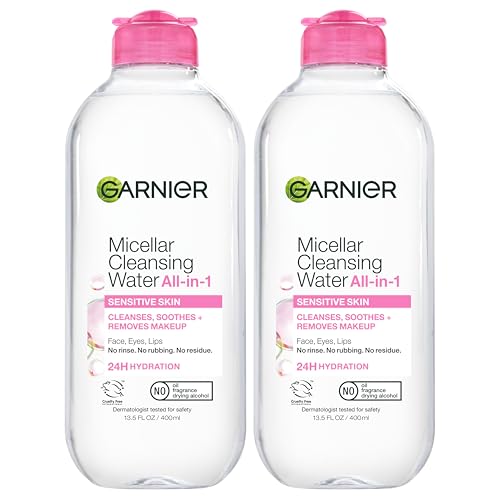
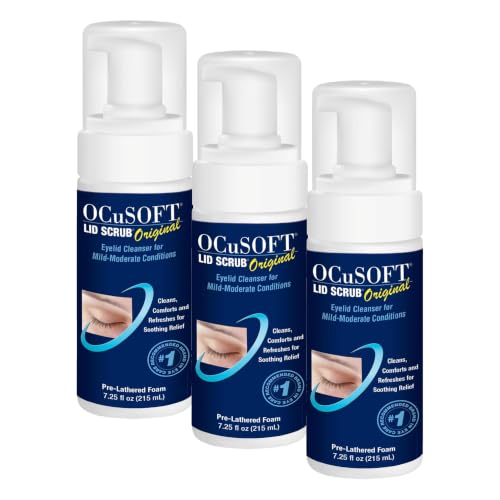
Recommended Products for Getting Back to Eye Makeup Safely



The Short Version
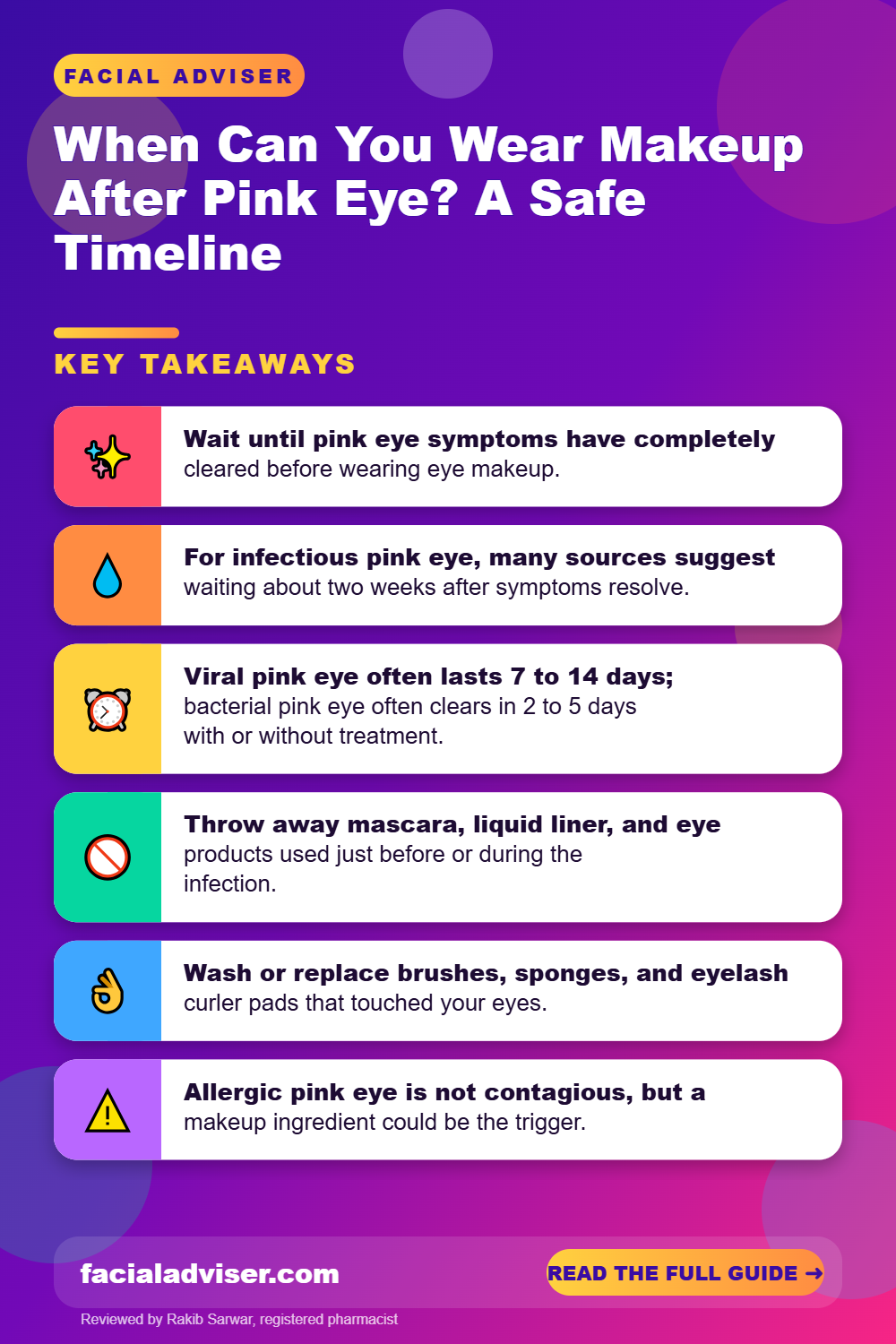
- Wait until pink eye symptoms have completely cleared before wearing eye makeup.
- For infectious pink eye, many sources suggest waiting about two weeks after symptoms resolve.
- Viral pink eye often lasts 7 to 14 days; bacterial pink eye often clears in 2 to 5 days with or without treatment.
- Throw away mascara, liquid liner, and eye products used just before or during the infection.
- Wash or replace brushes, sponges, and eyelash curler pads that touched your eyes.
- Allergic pink eye is not contagious, but a makeup ingredient could be the trigger.
- Pain, vision changes, light sensitivity, or worsening redness need prompt medical care.
Contents
- Why Makeup and Pink Eye Do Not Mix
- How Long to Wait by Type of Pink Eye
- Are You Ready? A Return-to-Makeup Checklist
- What to Throw Away and What You Can Keep
- Eye Makeup Habits That Prevent Future Infections
- Caring for Your Eyes While You Wait
- Contact Lenses and Pink Eye
- If Your Pink Eye Was Allergic
- What We Can and Cannot Say About Timing
- When to See a Doctor
- Questions People Ask
- Summing Up
Why Makeup and Pink Eye Do Not Mix
Conjunctivitis is inflammation of the thin membrane covering the white of the eye and the inside of the eyelids. It can be caused by viruses, bacteria, allergies, or irritants. Infectious types spread easily through contact with hands, towels, pillowcases, and anything that touches the eyes.
Makeup products create a perfect route for reinfection. Mascara wands and liquid liner brushes go from your eye back into the tube, carrying germs with them. The dark, moist environment inside the tube can help bacteria survive, and every use puts them back on your lashes.
Makeup can also irritate eyes that are still healing. Pigments, preservatives, and fragrance can cause stinging and redness, which makes it harder to tell whether the infection has cleared or your eyes are just reacting to the products.
It also helps to remember that the skin around the eyes is thin and easily irritated after days of rubbing, wiping, and drops. Giving it a short break after symptoms clear lets the lids recover, so your first day back in makeup feels comfortable rather than itchy.
How Long to Wait by Type of Pink Eye
| Type | Typical duration | When to resume eye makeup |
|---|---|---|
| Viral | Often 7 to 14 days, sometimes longer | After symptoms fully clear; many sources suggest waiting about 2 more weeks |
| Bacterial | Often 2 to 5 days, can take up to 2 weeks | After symptoms clear and any antibiotic course is complete |
| Allergic | As long as exposure continues | When eyes are calm; avoid any product that may be the trigger |
| Irritant | Usually improves within a day or two once removed | After irritation settles; avoid the irritating product |
The durations above reflect CDC descriptions of conjunctivitis. Adenovirus infections, including a more severe form called epidemic keratoconjunctivitis, can take longer to settle. The American Academy of Ophthalmology advises allowing extra healing time in that case.
If you were given antibiotic drops, finish the full course even if your eyes look better, and wait until the course is complete before wearing eye makeup.
Are You Ready? A Return-to-Makeup Checklist
Go through this checklist before putting makeup near your eyes again.
Check for any remaining symptoms
Look for redness, discharge, crusting, itching, or a gritty feeling. If any are still present, wait longer.
Count the days
For infectious pink eye, count from the day symptoms fully cleared. Many people wait about two weeks from that point before using eye makeup.
Replace risky products
Throw away mascara, liquid liner, and any eye product used in the days before or during the infection. Open new products only when you are ready.
Clean your tools
Wash brushes and sponges with soap and warm water and let them dry fully. Replace eyelash curler pads and sharpen pencil liners to remove the outer layer.
Start slowly
Begin with a small amount of makeup for a day or two. If redness, itching, or discharge returns, stop and contact a doctor.
Mark the opening date on your new mascara with a permanent marker. It makes it easy to replace it on time in the future.
What to Throw Away and What You Can Keep
Good Habits
- Keep face makeup that never touched your eyes.
- Keep pencil liners after sharpening off the outer layer.
- Keep powder eyeshadows if you scrape off the top layer and used clean brushes.
- Keep brushes after thorough washing and drying.
- Keep eyelash curlers after cleaning and replacing the pad.
Common Mistakes
- Keep mascara used before or during the infection.
- Keep liquid or gel eyeliner used during that time.
- Keep cream eyeshadows applied with fingers near infected eyes.
- Keep old makeup sponges that touched your eyes.
- Share any eye makeup with anyone.
When in doubt, throw it out. Replacing a few eye products costs far less than another round of infection and a doctor visit.
Eye Makeup Habits That Prevent Future Infections
Good habits can reduce your risk of infection long after pink eye has cleared.
- Replace mascara about every three months, a timeframe recommended by the US Food and Drug Administration and many eye doctors.
- Never share eye makeup, including testers in stores.
- Do not add water or saliva to thin out dried mascara.
- Wash your hands before applying eye makeup.
- Remove eye makeup fully every night.
- Clean brushes regularly, ideally weekly for eye brushes.
Avoid applying liner on the inner rim of the eyelid, the waterline, if you are prone to irritation. Product there can mix with tears and get into the eye more easily.
If you have had other recent eye or facial procedures, similar principles apply. Our guides on makeup after Botox and makeup after lip filler explain the waiting times for those.
Caring for Your Eyes While You Wait
The days between the start of pink eye and your return to makeup are a good time to focus on keeping the infection from spreading and helping your eyes recover.
- Wash your hands often, especially after touching your eyes or applying drops.
- Use a clean towel and washcloth each day, and do not share them.
- Change your pillowcase daily while symptoms last.
- Use a clean, damp cloth to gently wipe away discharge from the inner corner outward, using a fresh part of the cloth for each eye.
- Cool compresses and lubricating eye drops can ease discomfort; ask your doctor or pharmacist which drops suit you.
- Avoid rubbing your eyes, which can spread infection and worsen irritation.
If you normally rely on eye makeup to feel put together, a little face makeup, a groomed brow, and a lip color can help you feel more like yourself without putting anything near your eyes. Keep brow products away from the lash line and use a clean spoolie.
Contact Lenses and Pink Eye
If you wear contact lenses, stop wearing them while you have pink eye and until your eye doctor says it is safe. Throw away disposable lenses worn during the infection, and replace or thoroughly disinfect reusable lenses and the case.
When you return to both contacts and makeup, put lenses in before applying makeup and remove them before taking makeup off. This keeps product and germs off the lenses.
Contact lens wearers with red, painful eyes need prompt care. Symptoms that look like pink eye can sometimes be a corneal infection, which can threaten vision.
If Your Pink Eye Was Allergic
Allergic conjunctivitis is not contagious, so you do not need to throw away makeup for fear of reinfection. But if your symptoms began soon after using a new product, that product may be the trigger.
Stop using any new eye products and watch whether symptoms improve. Fragrance, certain preservatives, and some pigments are common culprits. Fragrance-free, ophthalmologist-tested products may be better tolerated, though no label guarantees you will not react.
If allergic symptoms keep returning, an eye doctor or allergist can help identify the cause, sometimes with patch testing.
What We Can and Cannot Say About Timing
There is no single rule that applies to everyone. The two-week guideline is a cautious rule of thumb rather than a precise medical cutoff, and your doctor may advise differently based on your type of conjunctivitis and how quickly it clears.
| Belief | Reality |
|---|---|
| Once it looks better, it is gone | Symptoms can linger; wait until they fully clear |
| Old mascara is fine if you clean the wand | The product inside the tube may be contaminated |
| Allergic pink eye means tossing makeup | Not for contagion, but a product may be the trigger |
| Antibiotic drops work on all pink eye | They do not treat viral or allergic conjunctivitis |
| Makeup can hide red eyes safely | Makeup can irritate healing eyes and spread infection |
If you are unsure whether you are ready, it is always safer to wait a few more days.
When to See a Doctor
Most pink eye is mild, but some symptoms need prompt medical attention. See a doctor or eye specialist if you have:
- Eye pain, rather than just irritation or grittiness.
- Blurred vision that does not clear with blinking.
- Strong sensitivity to light.
- Intense redness or symptoms that get worse instead of better.
- Symptoms that do not improve after a week, or return after makeup use.
- A weakened immune system, or symptoms in a newborn.
Medical disclaimer: This article is for general information and is not a substitute for professional medical advice. Consult a doctor or eye care professional about eye symptoms.
Questions People Ask
When can I wear makeup after pink eye?
Once symptoms have completely cleared. For infectious pink eye, many sources suggest waiting about two weeks after that.
Do I need to throw away my mascara after pink eye?
Yes, throw away mascara and liquid liner used just before or during the infection.
Can I keep my eyeshadow after pink eye?
Powder shadows applied with clean brushes can often be kept if you remove the top layer. Cream shadows applied with fingers are safer to replace.
Can I wear face makeup while I have pink eye?
Face makeup away from the eyes is usually fine, but wash your hands and do not use shared tools near your eyes.
How long is pink eye contagious?
Viral pink eye can be contagious while symptoms are present; bacterial pink eye usually becomes less contagious after starting antibiotics. Ask your doctor.
Can makeup cause pink eye?
Contaminated makeup can spread infection, and some ingredients can cause allergic or irritant conjunctivitis.
Should I clean my makeup brushes after pink eye?
Yes. Wash all brushes that touched your eyes with soap and warm water and let them dry fully.
Can I wear contacts after pink eye?
Only after your eye doctor says it is safe. Replace disposable lenses and the case.
What if my eyes get red again after wearing makeup?
Stop using the makeup and see a doctor, since it may be reinfection or a reaction.
How often should I replace mascara?
About every three months, or sooner if it smells odd or has dried out.
Summing Up
Wait until pink eye symptoms have completely cleared before wearing eye makeup, and for infectious pink eye, consider waiting about two more weeks. Throw away mascara, liquid liner, and any eye product used before or during the infection, and clean or replace brushes, sponges, and curler pads.
When you do return to makeup, start slowly with fresh products and good hygiene habits. If symptoms come back or you notice pain, vision changes, or light sensitivity, stop and see a doctor promptly.

Written by
Registered pharmacist and founder of Facial Adviser. Rakib's pharmacy training covers how skincare actives work and interact; a later course in cosmetology turned that into a focus on facial treatments and skincare products. He plans, researches and edits every guide on the site and checks health claims against sources such as the American Academy of Dermatology, the FDA and the NIH. He is not a dermatologist; see the Editorial Policy and Medical Disclaimer.
About · Editorial policy · How we choose products · Medical disclaimer · Contact
Keep reading: Makeup basics and skin
- How to Properly Put On Face Makeup: The Right Order, Step by Step
- When Can You Wear Makeup After Cataract Surgery?
- How Do You Know If Makeup Is Non-Comedogenic?
- How Do You Know If Makeup Is Fake? 8 Signs of Counterfeit Cosmetics
- Where Do Makeup Ingredients Come From? Minerals, Plants, Animals, and Labs
- How to Wear the Least Amount of Makeup and Still Look Put Together
- How to Find the Right Shade of Makeup: Undertone, Depth and Testing
- How to Choose the Right Eye Makeup Color for Your Eyes and Skin