Makeup Mistakes That Age You and What to Do Instead
Skin changes with age. It usually becomes drier, thinner and less elastic, fine lines appear and colouring can become more uneven. The makeup habits that worked years ago may start to sit differently, and small changes in technique can make a surprisingly big difference to how fresh your face looks.
Part of our guide to makeup how-to. Start with: How to Properly Put On Face Makeup: The Right Order, Step by Step
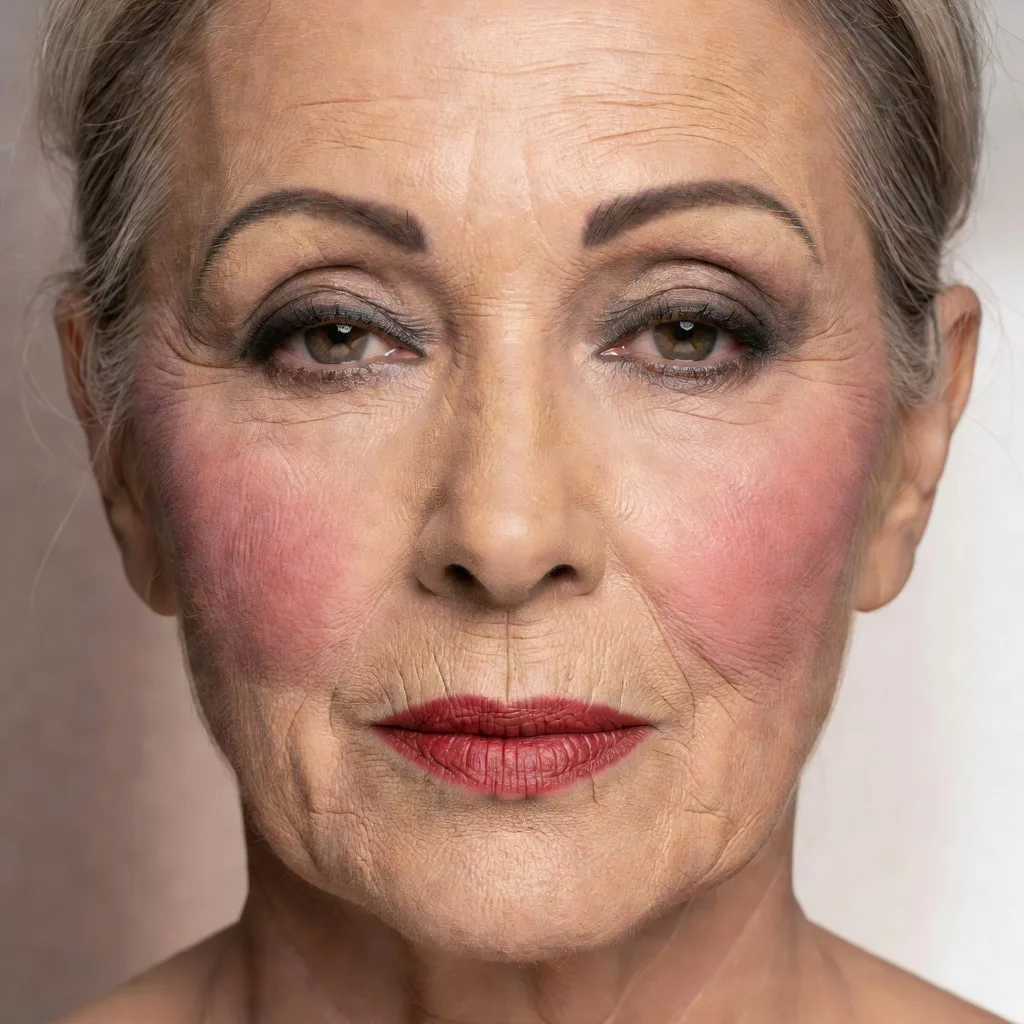
The makeup mistakes most likely to age you are heavy, matte foundation that settles into lines, too much powder, especially under the eyes, harsh or thick eyeliner, overly dark or skinny brows, skipping blush, placing blush or contour too low, dark or very matte lipstick on dry lips, and shimmer on textured areas. Simple swaps help: prep with hydrating skincare, use thinner, more luminous bases, apply powder only where needed, soften liner, fill brows with light strokes, add cream blush higher on the cheeks and keep lips smooth and lined. Sunscreen every day matters most of all for how skin looks over time.
None of these are rules. Makeup is personal, and bold looks can be beautiful at any age. These tips are for people who feel their makeup is working against them and want a fresher effect.
The American Academy of Dermatology notes that sun protection is one of the most important steps in reducing premature skin ageing, which is why daily sunscreen sits at the heart of any routine for mature skin.
This guide covers the most common makeup habits that can add years, why they happen and what to do instead.
Shopping these picks?
Amazon Prime members get fast, free shipping on eligible items, plus Prime Video, Amazon Music and member deals. New members can start with a free trial.
Start a free Prime trialAged 18 to 24? Prime for Young Adults comes with a longer free trial and a lower price after it.
Affiliate link: we may earn a commission at no extra cost to you.
Recommended Products for a Fresher Makeup Look

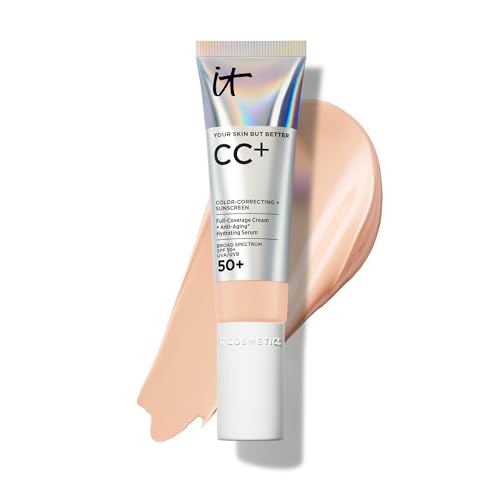
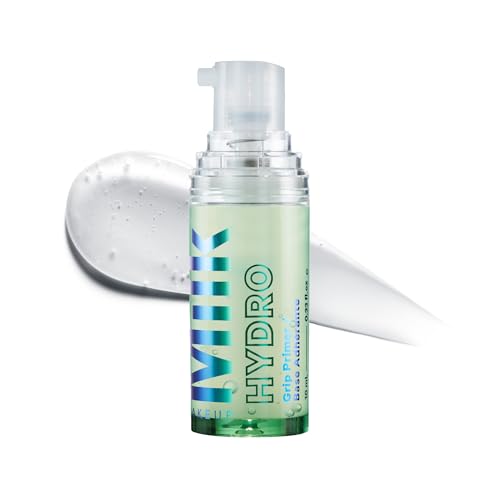
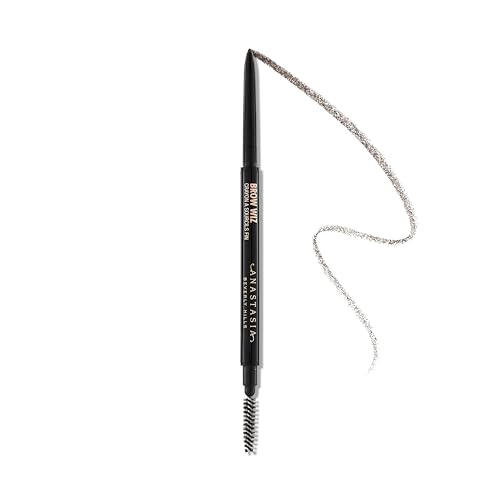


In Brief
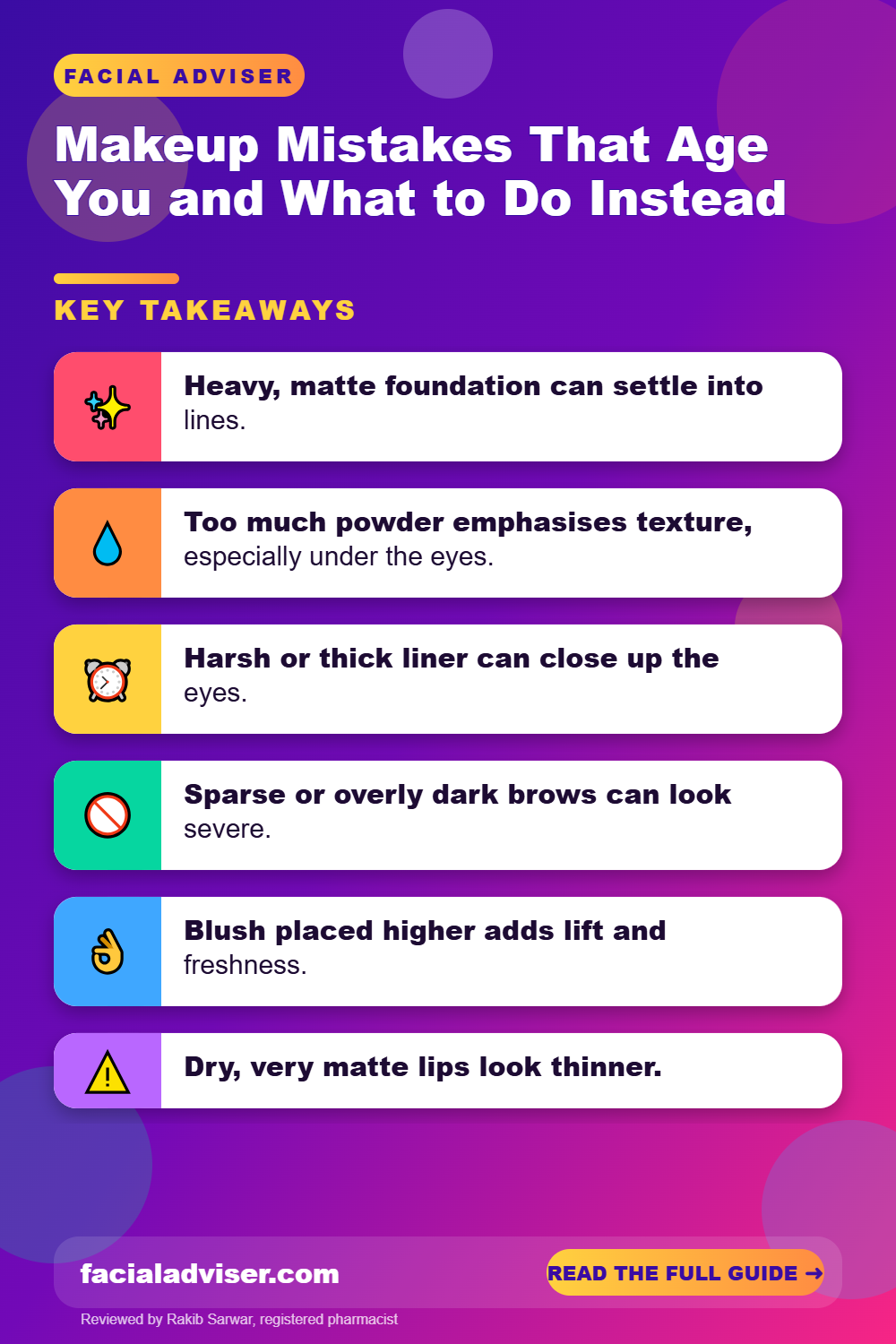
- Heavy, matte foundation can settle into lines.
- Too much powder emphasises texture, especially under the eyes.
- Harsh or thick liner can close up the eyes.
- Sparse or overly dark brows can look severe.
- Blush placed higher adds lift and freshness.
- Dry, very matte lips look thinner.
- Daily sunscreen is the most important anti-ageing step.
In This Guide
- The Most Common Ageing Makeup Mistakes
- Foundation and Concealer
- Powder: Less Is More
- Eyes and Brows
- How to Build a Fresh, Flattering Makeup Routine
- Blush, Bronzer and Highlight
- Lips
- Updating Your Shades as Skin Changes
- Skincare and Sun Protection Matter Most
- Dos and Don’ts
- Honest Limits
- When to See a Dermatologist
- Your Questions, Answered
- Summing Up
The Most Common Ageing Makeup Mistakes
| Mistake | Why it ages | What to do instead |
|---|---|---|
| Thick, matte foundation | Settles into lines, looks flat | Thin, satin or radiant base applied with a damp sponge |
| Too much powder | Emphasises texture and dryness | Powder only the T-zone; use finely milled powder |
| Heavy concealer under the eyes | Creases and draws attention to lines | Thin, hydrating concealer only where needed |
| Harsh black liner all around | Makes eyes look smaller | Soft brown or grey on the upper lash line |
| Overly thin or dark brows | Looks severe and dated | Fuller, softer brows one shade lighter than hair |
| Skipping blush | Face can look flat and tired | Cream blush on the upper cheeks |
| Blush or contour too low | Drags features down | Place higher, blending toward the temples |
| Dark, dry, matte lips | Makes lips look thinner | Hydrating formulas, lip liner and softer shades |
Most of these come down to two ideas: texture and placement. Products that sit on top of dry skin or settle into lines add age, while colour placed too low pulls the face down. Many of these habits are simply routines we learned years ago and never updated, so small tweaks can refresh a look without changing your whole style.
Foundation and Concealer
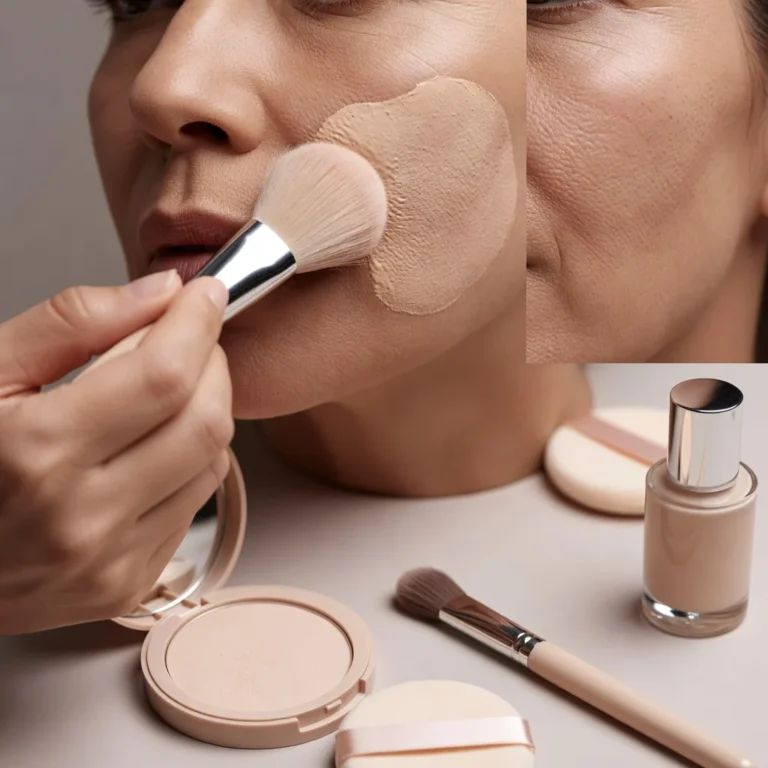
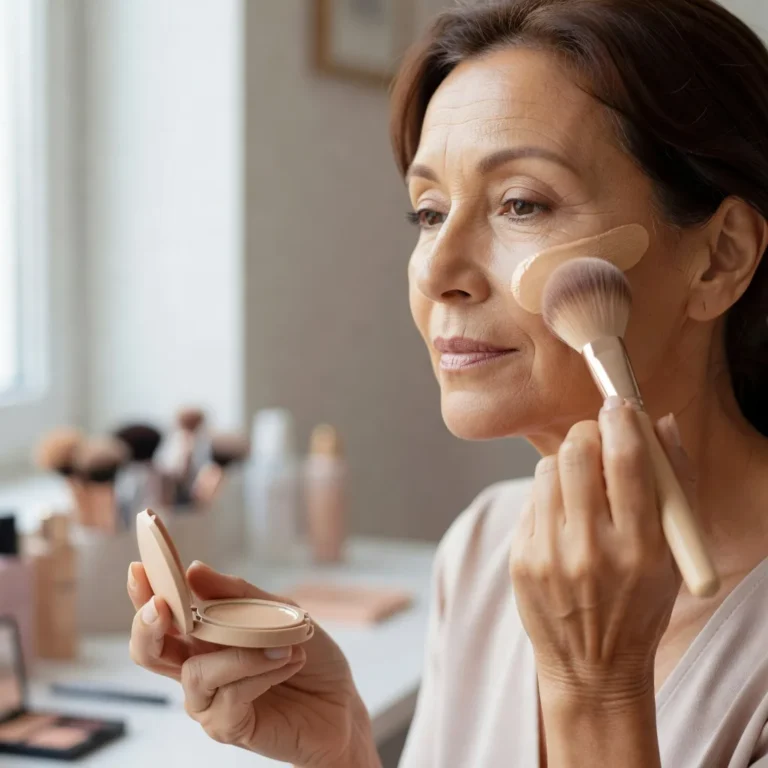
As skin loses moisture and elasticity, heavy, matte bases tend to sit in lines and look mask-like. Lighter, more flexible formulas usually look fresher, because they move with the skin and let some of its natural texture and glow show through.
- Prep with a hydrating moisturiser and let it absorb.
- Use a hydrating or smoothing primer where needed.
- Choose satin, natural or radiant foundations, or a tinted moisturiser or CC cream.
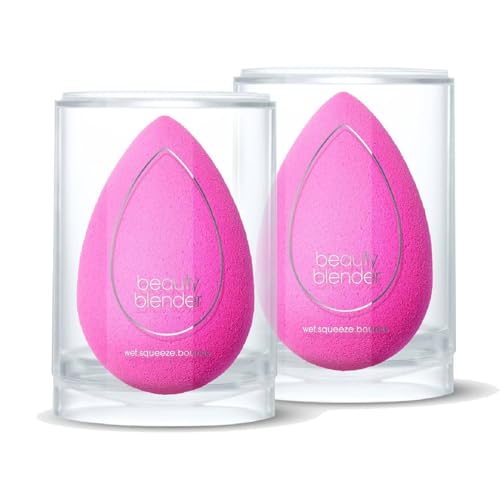
- Apply thin layers with a damp sponge and build coverage only where you need it.
- Use a thin, creamy concealer and set it lightly, if at all.
Our guide on layering cream and powder products explains how to keep a base looking smooth.
Coverage is not the enemy. Spot-concealing redness or dark spots with a small brush often looks more natural than a thick layer of foundation all over.
Powder: Less Is More
Powder absorbs moisture and oil. On drier, more textured skin, too much of it makes lines and flakes more visible and can give a dull, grey look. Baking, where a thick layer of powder is left on the under-eyes before dusting off, is especially unforgiving on mature skin and usually best avoided.
Use a finely milled translucent powder, pressed lightly only where you get shiny, usually the centre of the forehead, nose and chin. Skip powder on the cheeks and under the eyes if you can, or use a tiny amount on a small brush.
A hydrating setting spray can replace much of your powder, helping makeup last while keeping a fresh finish. Our guide on the soft-focus effect in makeup explains how blurring products soften texture without heavy powder.
Eyes and Brows
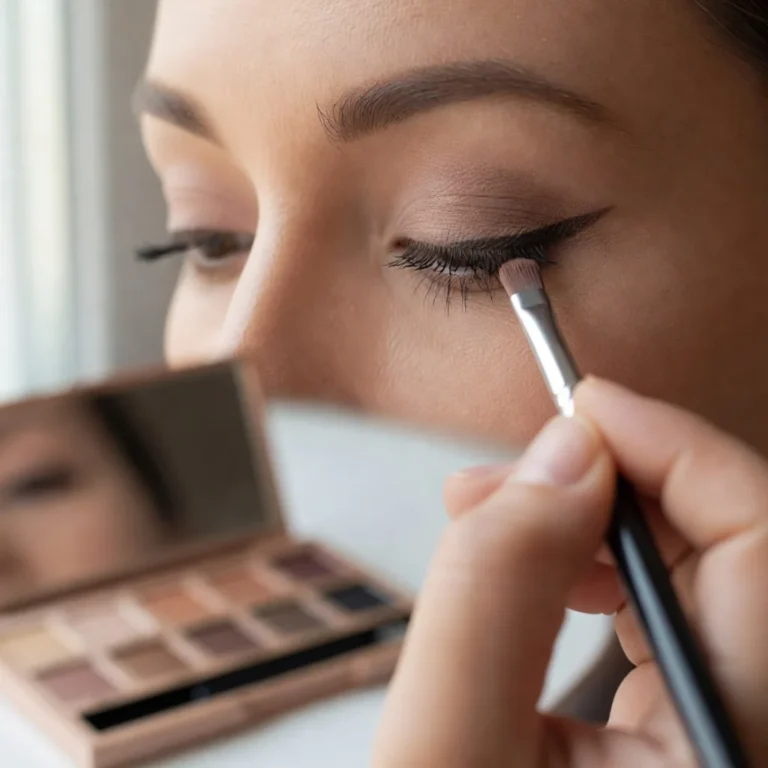
Liner: heavy liner is one of the most common habits that adds years. Thick black liner all around the eye can make eyes look smaller and more tired. A soft brown, grey or navy line along the upper lashes, smudged slightly, defines the eyes without closing them up. Shadow: matte and satin shades in soft neutrals are more flattering on crepey lids than chunky shimmer. A little satin on the centre of the lid adds light without highlighting texture. Mascara: focus on the upper lashes and use a lighter touch on the lower lashes, where mascara can smudge into fine lines. Curling lashes first opens up the eyes, which often matters more than extra coats of mascara. Brows: brows often thin with age. Fill gaps with light, hair-like strokes and a shade close to your natural brow colour or slightly lighter than your hair. A tinted gel adds fullness.If liner tends to smudge into lines, our guide on fixing smudged eyeliner covers formulas and techniques that stay put.
How to Build a Fresh, Flattering Makeup Routine
Hydrate
Apply moisturiser and sunscreen and let them absorb.
Smooth
Use a hydrating primer where needed.
Even out
Apply a thin satin or radiant base with a damp sponge.
Conceal selectively
Spot-conceal redness or dark spots with a small brush.
Add warmth
Tap cream blush on the upper cheeks and blend upward.
Define softly
Fill brows lightly and use soft liner on the upper lash line.
Finish lips
Line lips and apply a hydrating lipstick or balm.
Set lightly
Powder only the T-zone and mist with setting spray.
Look at your finished makeup in daylight near a window. Harsh bathroom lighting often hides how heavy powder and foundation really look.
Blush, Bronzer and Highlight
Skipping blush is one of the quickest ways to look tired. A little colour on the cheeks adds life and warmth.
Cream and liquid blushes usually look more natural than powder on drier skin. Place them on the upper cheeks, just above the apples, and blend up toward the temples. Our guide on how to apply blush explains placement that lifts.
Keep bronzer soft and warm rather than heavy and orange, and avoid placing contour low on the cheeks, which can drag the face down. A light sweep of bronzer at the temples and along the hairline adds warmth without emphasising hollows.
Choose cream or liquid highlight with a fine sheen rather than glittery powder, and place it on the tops of the cheekbones, away from lines around the eyes.
Lips
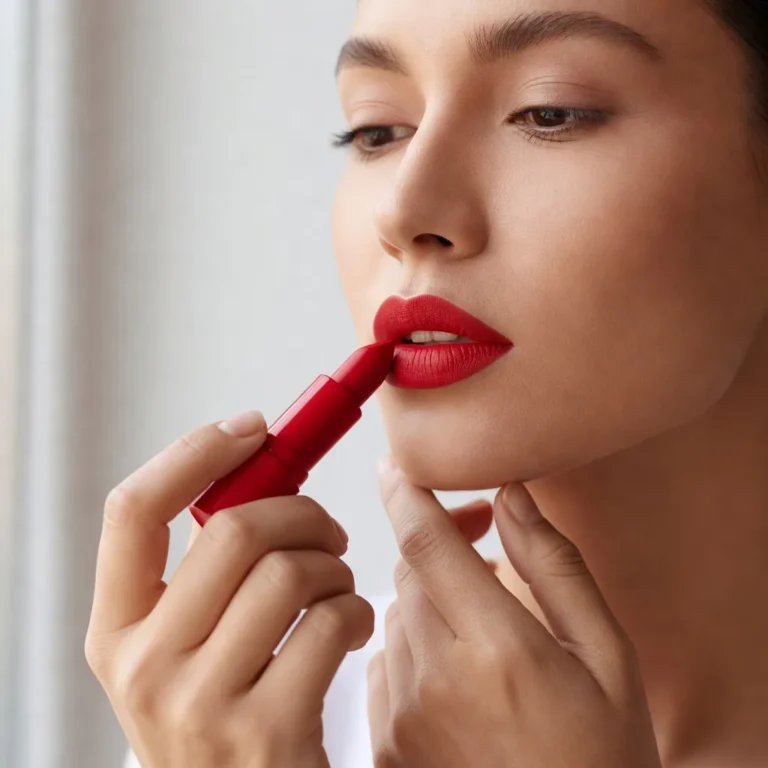
Lips often become thinner and drier with age, and colour can bleed into fine lines around the mouth.
- Exfoliate gently and use a lip balm before lipstick.
- Line lips with a pencil close to your natural lip colour to define the shape and stop bleeding.
- Choose creamy or satin formulas rather than very dry mattes.
- Mid-tone shades such as rose, berry and warm pink often look fresher than very dark or very pale ones.
- Add a touch of gloss or a lighter shade in the centre of the lower lip for fullness.
A lip liner is one of the most useful tools for mature lips, because it gives a crisp shape and stops colour feathering. Tracing just along the natural line, rather than far outside it, keeps the result natural.
Updating Your Shades as Skin Changes
Skin tone and undertone can shift over the years because of sun exposure, hormonal changes and changes in hair colour. A foundation or blush shade that suited you ten years ago may now look too pink, too yellow or too dark.
| Product | Common mistake | Better approach |
|---|---|---|
| Foundation | Wearing an old shade that no longer matches | Re-match in daylight on the jaw every few years |
| Concealer | Going too light under the eyes | Choose one shade lighter at most, with a peach tone for darkness |
| Blush | Using very cool or very bright shades | Soft rose, peach or berry that echoes your natural flush |
| Brows | Matching a hair colour you no longer have | Match your current hair or go slightly lighter |
| Lips | Very dark or very pale shades | Mid-tone rose, berry or warm pink |
If your hair has become grey or silver, very dark brow products and liners can look harsh. Soft taupe, grey-brown or ash tones often look more natural.
A quick way to check your foundation is to swatch three shades along your jaw and look in daylight. The one that seems to disappear is the right match. Our guide on makeup for mature skin discusses formulas designed for changing skin.
Skincare and Sun Protection Matter Most
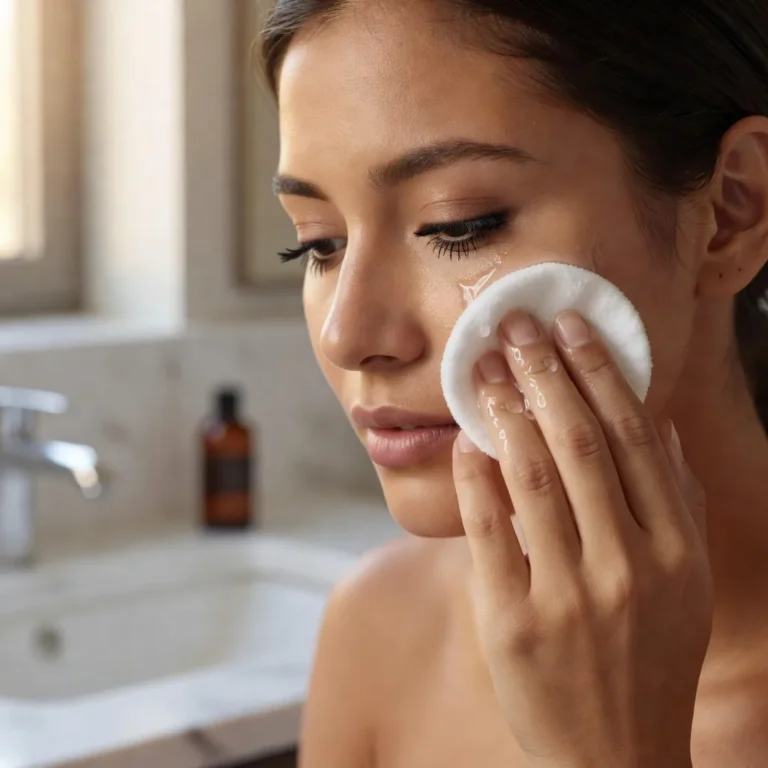
No makeup technique can replace good skincare. Hydration, gentle cleansing and daily sunscreen make the biggest difference to how skin looks over time, and they also make makeup sit better. Even a simple routine of cleanser, moisturiser and sunscreen, used consistently, gives makeup a smoother canvas.
The AAD’s advice on reducing premature skin ageing includes protecting skin from the sun every day, not smoking and using a moisturiser.
Do not rely on the SPF in foundation or powder alone. Most people apply far too little makeup to reach the SPF on the label, so wear a separate sunscreen underneath.
Dos and Don’ts
Worth Doing
- Prep with hydrating skincare
- Use thin, luminous bases
- Powder only where needed
- Place blush higher on the cheeks
- Line and hydrate lips
Skip It
- Pile on matte foundation
- Bake powder under the eyes
- Wear heavy black liner all around
- Over-pluck or draw harsh brows
- Skip sunscreen
Honest Limits
Makeup can soften the look of lines and texture, but it cannot change the skin itself. These tips are about looking fresh, not about hiding age.
There is no single right way to wear makeup at any age. If you love a bold red lip or dramatic liner, wear it; the techniques here simply help it look its best. Confidence and comfort matter more than following any list of rules.
Skin varies a lot between people of the same age. Oily mature skin may still need some powder, while dry skin in younger people can benefit from these tips too.
When to See a Dermatologist
- You notice a new or changing spot, mole or patch of skin.
- Dryness or flaking does not improve with moisturiser.
- Makeup causes redness, stinging or a rash.
- You want advice on treatments for sun damage, lines or uneven tone.
This article is for general information and does not replace professional medical advice. See a dermatologist for skin concerns or any changing spots.
Your Questions, Answered
What makeup mistakes make you look older?
Heavy matte foundation, too much powder, harsh liner, thin brows, no blush and dry dark lips.
Does powder make you look older?
Too much can, because it emphasises texture and dryness.
What foundation finish is best for mature skin?
Satin, natural or radiant finishes applied thinly.
Should I stop wearing eyeliner as I get older?
No; soft brown or grey liner on the upper lash line is very flattering.
Where should blush go on mature skin?
On the upper cheeks, blended up toward the temples.
How do I stop lipstick bleeding into lines?
Use a lip liner and creamy rather than very glossy formulas.
Is shimmer bad for mature skin?
Fine, subtle sheen is flattering; chunky shimmer can show texture.
How should I fill in thinning brows?
Use light, hair-like strokes and a tinted brow gel.
Is concealer under the eyes ageing?
Heavy concealer can crease; use a thin, hydrating formula.
What matters most for younger-looking skin?
Daily sunscreen and good skincare.
Summing Up
Makeup mistakes that age you usually come down to texture and placement: heavy, matte products that settle into lines and colour placed too low or too harshly. Thin, luminous bases, less powder, soft liner, fuller brows, higher blush and smooth lips look fresher.
Pair these swaps with good skincare and daily sunscreen, and choose the looks you enjoy. Fresh makeup is about working with your skin, not hiding it.

Written by
Registered pharmacist and founder of Facial Adviser. Rakib's pharmacy training covers how skincare actives work and interact; a later course in cosmetology turned that into a focus on facial treatments and skincare products. He plans, researches and edits every guide on the site and checks health claims against sources such as the American Academy of Dermatology, the FDA and the NIH. He is not a dermatologist; see the Editorial Policy and Medical Disclaimer.
About · Editorial policy · How we choose products · Medical disclaimer · Contact
Keep reading: Makeup basics and skin
- How to Properly Put On Face Makeup: The Right Order, Step by Step
- How to Adjust Your Makeup to Match a Tan Without Buying New Foundation
- Makeup Tips for Uneven Skin Tone: Even Out Redness, Spots and Dullness
- Makeup or Hair First? The Real Chemistry Behind It
- Makeup vs No Makeup: Does Wearing It Damage Skin?
- Why Can't I Wear Makeup After Botox?
- How to Find the Right Shade of Makeup: Undertone, Depth and Testing
- How to Choose the Right Eye Makeup Color for Your Eyes and Skin