Makeup Tips for Uneven Skin Tone: Even Out Redness, Spots and Dullness
Uneven skin tone can mean many things: red cheeks, a darker area around the mouth, brown spots left by old breakouts, patches of sun damage or simply skin that looks dull in some places and brighter in others. The instinct is often to cover everything with a thick layer of full-coverage foundation, but that usually makes the skin look flat and masklike, and it can still leave the darkest spots showing through.
Part of our guide to makeup how-to. Start with: How to Properly Put On Face Makeup: The Right Order, Step by Step
The best makeup for uneven skin tone combines a light, even base with targeted correction. Start with sunscreen and hydrated skin, then neutralise strong discolouration with a thin layer of colour corrector: green for redness and peach or orange for brown or blue-toned darkness. Apply a light to medium coverage foundation or tinted sunscreen that matches your neck, and use a concealer only on the spots that still show. Press products in with a damp sponge, set lightly and add blush or bronzer to bring back natural dimension.
The goal is skin that looks even from a normal viewing distance, not skin that looks painted. Using a lighter base everywhere and more coverage only where you need it gives a more natural result, and it tends to last longer too.
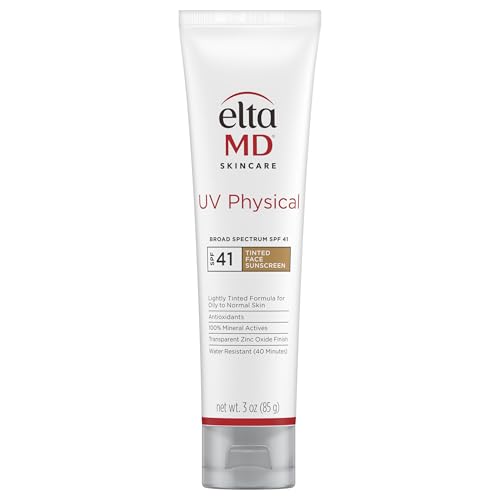
Sun protection matters for uneven tone because sunlight can make dark spots and patches darker. The American Academy of Dermatology recommends a broad-spectrum sunscreen with SPF 30 or higher every day, and tinted formulas can double as a light base.
This guide explains the common causes of uneven tone, how colour correcting works, how to choose shades and formulas, a step-by-step routine, adjustments for different skin tones and concerns, and when to see a dermatologist.
Shopping these picks?
Amazon Prime members get fast, free shipping on eligible items, plus Prime Video, Amazon Music and member deals. New members can start with a free trial.
Start a free Prime trialAged 18 to 24? Prime for Young Adults comes with a longer free trial and a lower price after it.
Affiliate link: we may earn a commission at no extra cost to you.
Recommended Products for Evening Out Skin Tone



The Short Version
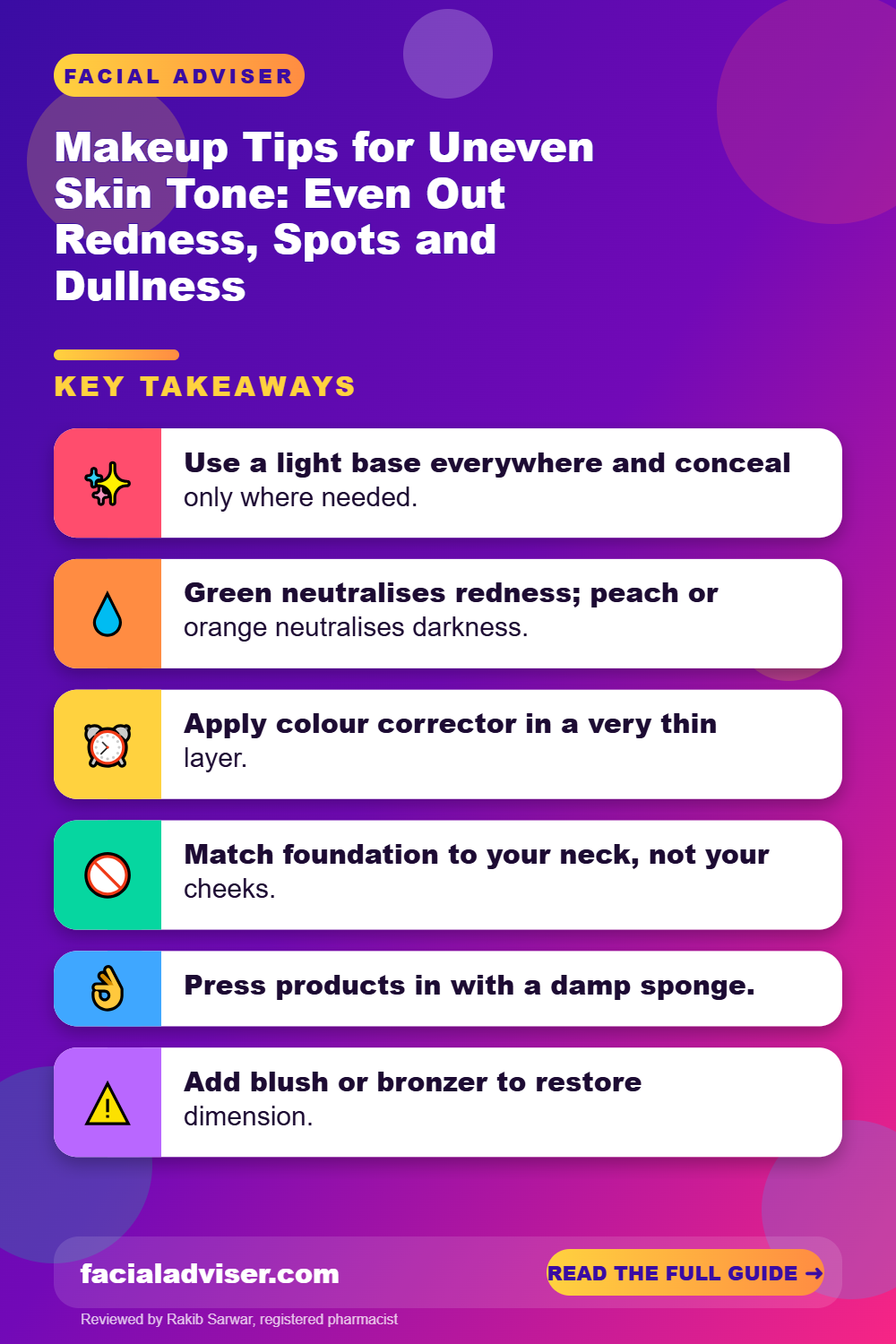
- Use a light base everywhere and conceal only where needed.
- Green neutralises redness; peach or orange neutralises darkness.
- Apply colour corrector in a very thin layer.
- Match foundation to your neck, not your cheeks.
- Press products in with a damp sponge.
- Add blush or bronzer to restore dimension.
- Daily sunscreen helps prevent spots getting darker.
In This Guide
- What Causes Uneven Skin Tone
- How Colour Correcting Works
- Choosing the Right Base
- How to Even Out Skin Tone With Makeup
- Bringing Back Dimension
- Adjusting for Different Skin Tones
- Skincare That Helps Over Time
- Common Mistakes With Uneven Skin Tone
- Dos and Don’ts
- Honest Limits
- When to See a Dermatologist
- Common Questions
- Final Word
What Causes Uneven Skin Tone
Uneven tone usually comes from one or more of three things: redness, darker pigmentation or differences in how light the skin reflects. Knowing which one you are dealing with makes it easier to choose the right makeup approach.
| Concern | What it looks like | Makeup approach |
|---|---|---|
| Redness | Pink or red cheeks, nose or chin | Thin green corrector, then foundation |
| Post-blemish marks | Flat brown, pink or purple spots | Spot concealer; peach corrector on deeper skin |
| Sun spots | Small brown patches on cheeks and forehead | Peach corrector or concealer, sunscreen daily |
| Darker areas around the mouth or eyes | Shadowy patches | Peach or orange corrector, then concealer |
| Dullness | Skin looks flat or grey in places | Hydrating base, light-reflecting primer, blush |
| Uneven face and neck colour | Face lighter or darker than neck | Match foundation to the neck and blend down |
Some causes, such as melasma or long-lasting redness, need treatment from a dermatologist. Makeup can make them look more even but cannot treat the underlying cause.
How Colour Correcting Works
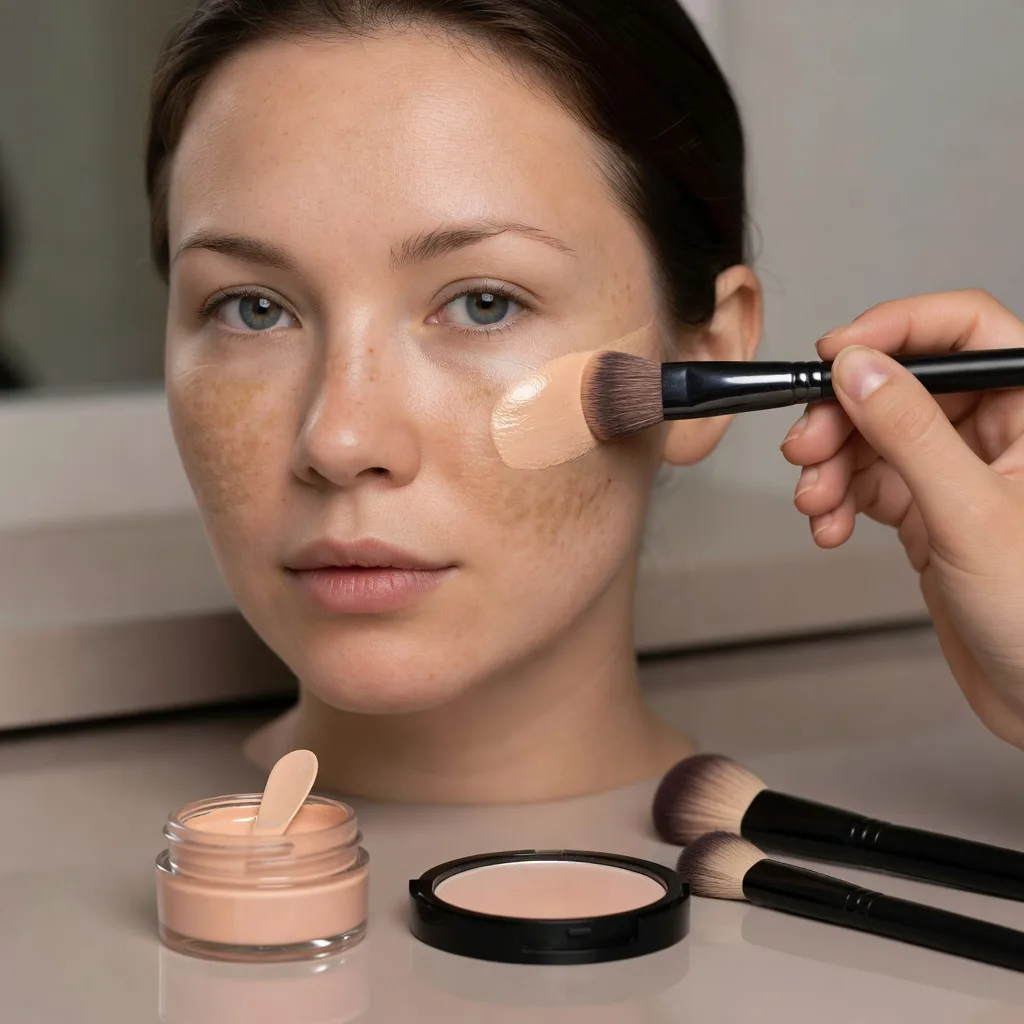
Colour correcting is based on opposite colours on the colour wheel. A colour placed thinly over its opposite cancels it out, making the area look more neutral before foundation. It works best on strong, localised discolouration rather than over the whole face.
| Corrector colour | Neutralises | Best for |
|---|---|---|
| Green | Red | Rosacea-like redness, blemishes, broken capillaries |
| Peach | Blue and light brown | Dark circles and sun spots on light to medium skin |
| Orange or red | Deep brown and grey | Dark circles and hyperpigmentation on deeper skin |
| Yellow | Purple and mild redness | Light purple under-eyes, mild redness |
| Lavender | Yellow and sallowness | Dull, yellowish areas on fair skin |
The most common mistake is using too much corrector. A thick layer will show through foundation as a green or orange cast. Tap on a small amount with a fingertip or small brush, blend the edges, and let it set for a minute before applying foundation on top.
Choosing the Right Base
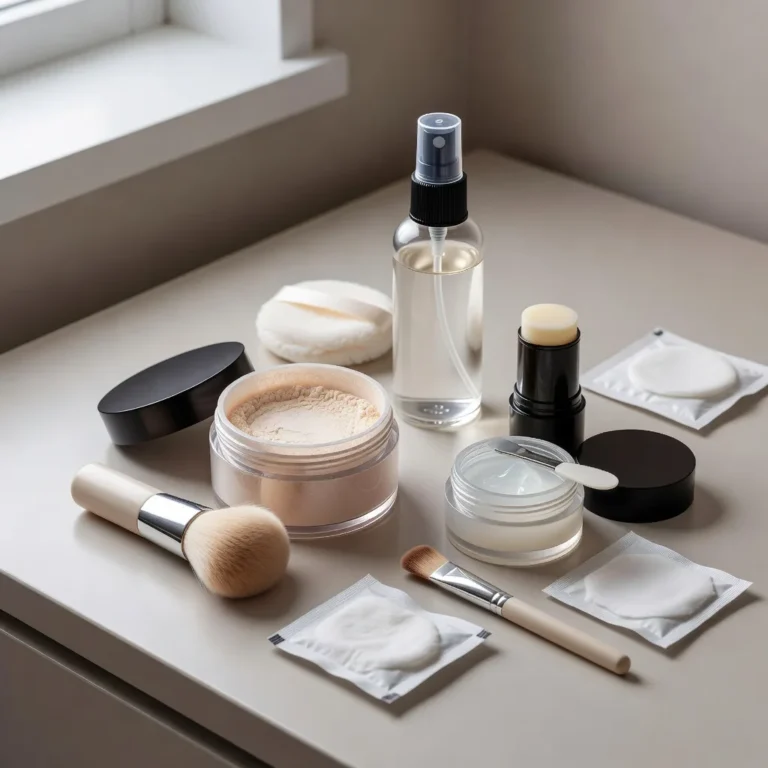
The right base evens out tone without hiding the skin. For most uneven skin, light to medium coverage that can be built in specific areas works better than heavy, full-coverage foundation everywhere.
- Tinted sunscreen or skin tint: sheer, fine for mild unevenness.
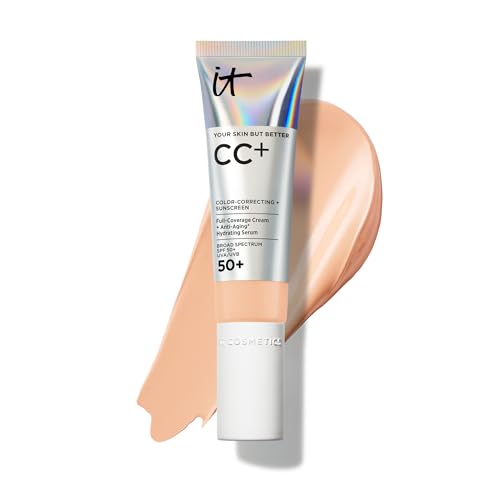
- CC cream: light coverage with colour-correcting pigments.
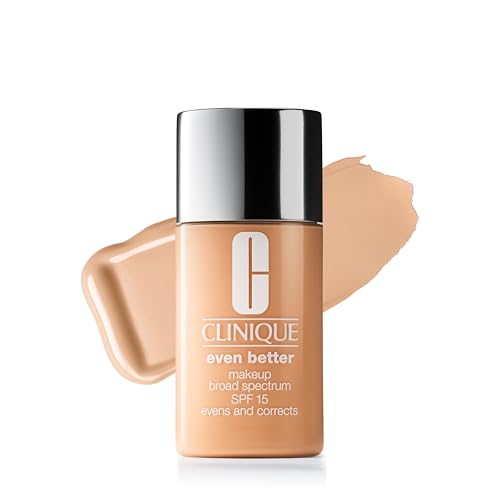
- Serum or satin foundation: medium coverage that still looks like skin.
- Full-coverage foundation: use only on areas that need it, thinned with moisturiser elsewhere.
Shade matching is especially important. If your face is uneven, your cheeks may be redder or darker than your natural base colour. Match foundation to your neck or jaw in natural light, so your face and neck look like one colour. Our guide on the purpose of foundation explains coverage and finish in more detail.
If you are between shades, choose the one that matches your neck and use a slightly deeper bronzer or a slightly lighter concealer to add dimension, rather than choosing a foundation that is lighter than your skin.
How to Even Out Skin Tone With Makeup
Prep and protect
Moisturise and apply sunscreen, then let both absorb for a few minutes.
Colour correct
Tap a thin layer of corrector only on strong redness or dark patches.
Apply a light base
Press a light layer of foundation, CC cream or tint over the whole face with a damp sponge.
Spot conceal
Dot concealer on any spots still showing and tap the edges to blend.
Set lightly
Press a thin layer of powder only where you get oily or where concealer sits.
Add dimension
Tap on blush and a little bronzer to bring back natural colour.
Check in daylight
Look in natural light and at arm’s length to see if anything needs adjusting.
Apply concealer after foundation, not before. Foundation often covers much of the unevenness on its own, so you need far less concealer and the result looks more natural.
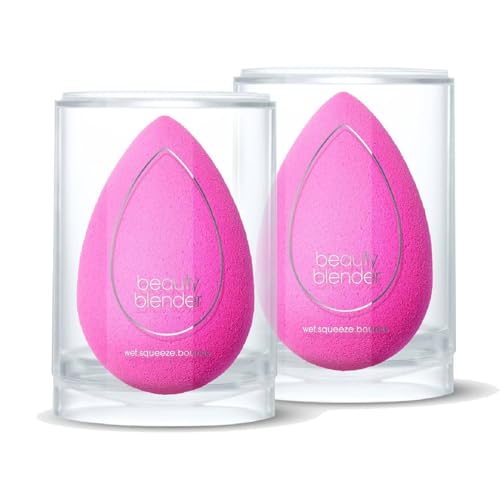
Pressing products in with a damp sponge gives a thinner, more even layer than rubbing or buffing, which can move product around and leave patches. For small spots, a small concealer brush or clean fingertip gives more precision. Work in good light and build coverage slowly. It is much easier to add a second thin layer to a stubborn spot than to remove a heavy layer that has started to look cakey, and thin layers also wear better through the day.
Bringing Back Dimension
When the whole face is evened out, it can look flat. Natural skin has variation in colour, and adding some of it back makes makeup look more realistic.
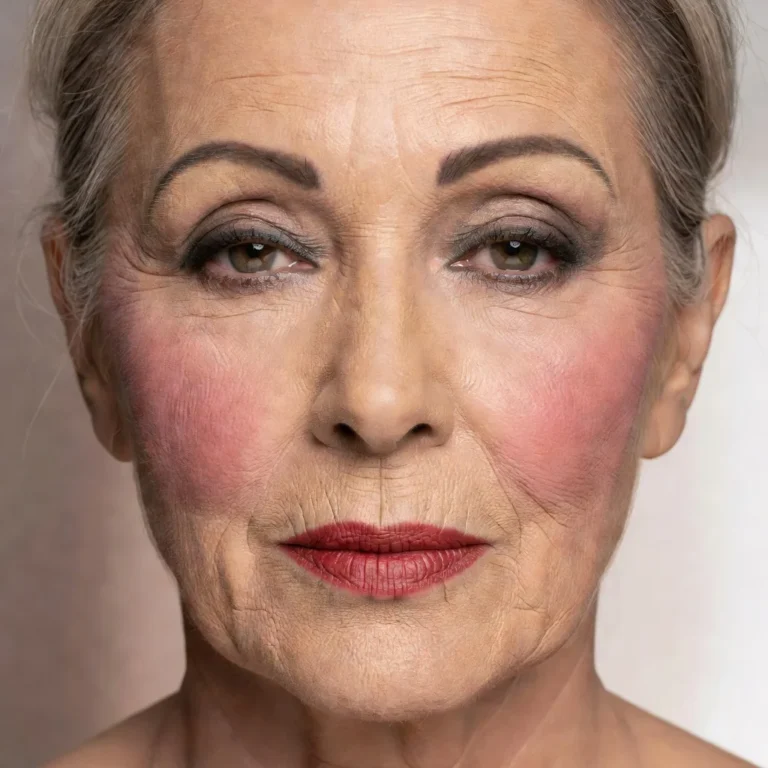
A soft blush on the apples of the cheeks brings back warmth, while a light bronzer around the edges of the face adds depth. A small amount of highlighter on the high points of the cheekbones reflects light. Keep shimmer away from areas with texture or visible pores, as it can make them more noticeable. Cream blush and bronzer often melt into the base more naturally than powders on uneven skin, because they add colour without sitting on top of dry patches. Our guide on makeup for enlarged pores has more tips for textured areas.
If you want to wear less makeup overall, focus on correcting and concealing only the areas that bother you most, then skip foundation elsewhere. Our guide on how to wear the least amount of makeup explains this approach.
Adjusting for Different Skin Tones
Colour correcting and shade choice work slightly differently depending on your skin tone. Using the wrong corrector colour can leave the skin looking grey or ashy.
- Fair skin: light peach for dark circles, soft green for redness, used very thinly.
- Light to medium skin: peach or apricot correctors and neutral or warm foundations.
- Medium to tan skin: apricot or orange correctors for darker areas.
- Deep skin: orange or red correctors for hyperpigmentation, with foundation matched to undertone.
People with deeper skin tones often experience post-inflammatory hyperpigmentation, where dark marks remain after spots or irritation have healed. An orange or red corrector followed by a well-matched concealer usually covers these more naturally than a lighter concealer, which can look grey. Avoid concealers that are much lighter than your foundation over dark spots.
Skincare That Helps Over Time
Makeup is a short-term fix, but consistent skincare can make uneven tone less noticeable over months. Daily sunscreen is the most important step, because sunlight can deepen dark spots and patches. The American Academy of Dermatology explains how to choose the right sunscreen, including broad-spectrum protection and SPF 30 or higher.
Ingredients such as vitamin C, niacinamide, azelaic acid and retinoids may help brighten skin and fade marks over time. Introduce one at a time and be patient; results often take several weeks. For dark marks left after acne, the AAD describes treatment options for acne scars that a dermatologist can offer. Our guide on uneven skin texture on the cheeks covers texture-related causes.
Avoid picking at spots or using harsh scrubs to fade marks. Irritation can trigger more pigmentation, especially on darker skin tones, and make unevenness worse.
Common Mistakes With Uneven Skin Tone
- Using one thick layer of full-coverage foundation over the whole face.
- Applying corrector everywhere instead of only on strong discolouration.
- Choosing a foundation shade to match the redder or darker cheeks.
- Using a very light concealer over dark spots, which looks grey.
- Skipping blush, so the face looks flat after evening it out.
- Forgetting the neck, ears and jaw, so the face looks like a different colour.
Most of these mistakes come from trying to hide everything at once. It helps to look at your skin in daylight before you start and decide which two or three areas bother you most. Correct and conceal those, keep everything else light, and you will usually get a more even result with less product.
Lighting also plays a part. Bathroom lights are often warm or come from directly above, which can hide redness and exaggerate shadows. Checking your makeup by a window gives a more accurate picture of how even your skin looks to other people.
Dos and Don’ts
Helps
- Use a light base and conceal only where needed
- Apply corrector in a very thin layer
- Match foundation to your neck
- Press products in with a damp sponge
- Wear sunscreen every day
Backfires
- Pile on full coverage everywhere
- Use thick layers of colour corrector
- Choose concealer much lighter than your skin
- Rub or buff over patchy areas
- Pick at spots or scrub hard
Honest Limits
Makeup can make uneven tone look much more even, but it does not treat the cause. Some unevenness will still show in very bright or harsh lighting, and that is normal.
Colour correcting takes some practice. It is easy to use too much or the wrong shade at first. Start with a small amount and adjust over a few days until you find what works for your skin.
Skin tone also changes with the seasons, with sun exposure and sometimes with hormones, so the shades and correctors that work in winter may need adjusting in summer.
When to See a Dermatologist
- You have patches of darker skin that are spreading or not fading.
- Redness on your face is persistent, flushes easily or comes with bumps.
- Dark spots change in size, shape or colour.
- Makeup or skincare products cause irritation or more discolouration.
This article is for general information and does not replace professional medical advice. See a dermatologist for persistent discolouration, redness or any spot that changes in appearance.
Common Questions
What is the best makeup for uneven skin tone?
A light base with targeted colour correcting and spot concealing.
What colour corrector covers redness?
Green, applied in a thin layer before foundation.
What colour corrector covers dark spots?
Peach on lighter skin; orange or red on deeper skin.
Should I use full-coverage foundation?
Only where needed; light coverage elsewhere looks more natural.
Do I apply concealer before or after foundation?
After foundation, so you need less.
Why does my corrector show through?
You are likely using too much; apply a very thin layer.
Can tinted sunscreen even out skin tone?
Yes, for mild unevenness, and it adds sun protection.
How do I stop my face looking flat?
Add blush, bronzer and a little highlighter.
Does makeup make hyperpigmentation worse?
Not usually, but irritation from products or picking can.
What skincare helps uneven skin tone?
Daily sunscreen, and ingredients such as vitamin C, niacinamide and retinoids.
Final Word
Evening out skin tone with makeup works best with a light base everywhere and targeted correction only where you need it. Use a thin layer of green corrector for redness and peach or orange for darkness, then a well-matched foundation and a little concealer.
Press products in, set lightly and add back colour with blush and bronzer. Combined with daily sunscreen and consistent skincare, these steps help your skin look even, fresh and natural.

Written by
Registered pharmacist and founder of Facial Adviser. Rakib's pharmacy training covers how skincare actives work and interact; a later course in cosmetology turned that into a focus on facial treatments and skincare products. He plans, researches and edits every guide on the site and checks health claims against sources such as the American Academy of Dermatology, the FDA and the NIH. He is not a dermatologist; see the Editorial Policy and Medical Disclaimer.
About · Editorial policy · How we choose products · Medical disclaimer · Contact
Keep reading: Makeup basics and skin
- How to Properly Put On Face Makeup: The Right Order, Step by Step
- Makeup or Hair First? The Real Chemistry Behind It
- Makeup vs No Makeup: Does Wearing It Damage Skin?
- Why Can't I Wear Makeup After Botox?
- How to Fix Makeup on Dry Skin
- Is It Bad to Do Your Makeup Everyday?
- How to Choose the Right Eye Makeup Color for Your Eyes and Skin
- What Can You Use to Make Your Makeup Stay On All Day? 9 Products and Tricks