What Can You Use to Make Your Makeup Stay On All Day? 9 Products and Tricks
You spend twenty minutes on your makeup in the morning, and by lunch your foundation has faded, your concealer has creased and your nose is shiny. It is one of the most common makeup complaints, and the fix is rarely a single miracle product.
To make your makeup stay on all day, use a combination of good skin prep and long-wear products rather than relying on one item. The most effective tools are a primer suited to your skin type, a long-wear or transfer-resistant foundation applied in thin layers, a thin layer of setting powder on oily areas, a long-wear setting spray to lock everything in, and blotting papers to remove oil during the day without adding more product. Waterproof eye products and lip liner help the rest of your look last too. Oily skin needs the most help; dry skin needs hydration so makeup does not cling and flake.
In short: prep, prime, apply thin layers, set, and blot instead of re-powdering.
The American Academy of Dermatology recommends oil-free, noncomedogenic, matte makeup for oily skin, and blotting papers pressed gently against the skin to lift oil during the day. Those two habits alone make a noticeable difference to how long makeup lasts.
This guide covers each product that helps makeup last, how to layer them, what to do for different skin types and the habits that quietly wear makeup down.
Shopping these picks?
Amazon Prime members get fast, free shipping on eligible items, plus Prime Video, Amazon Music and member deals. New members can start with a free trial.
Start a free Prime trialAged 18 to 24? Prime for Young Adults comes with a longer free trial and a lower price after it.
Affiliate link: we may earn a commission at no extra cost to you.
Recommended Products to Make Makeup Last All Day
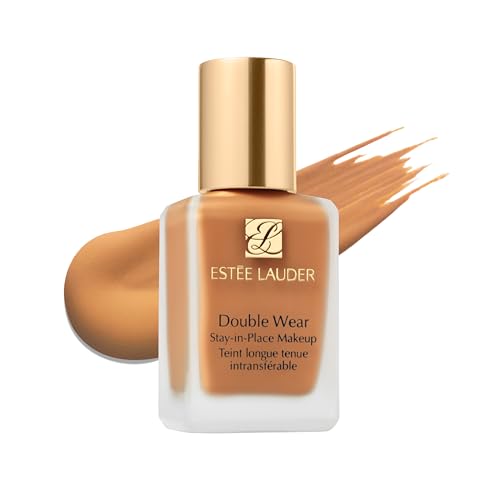
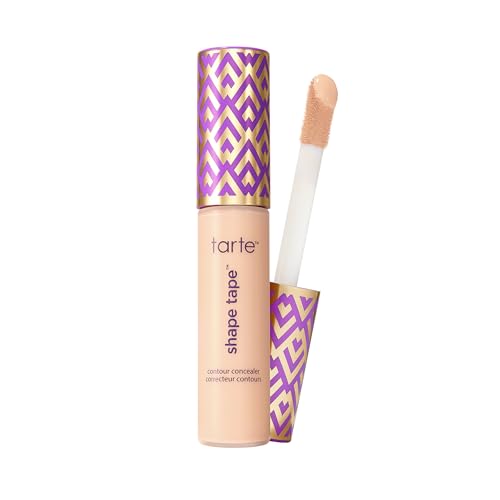


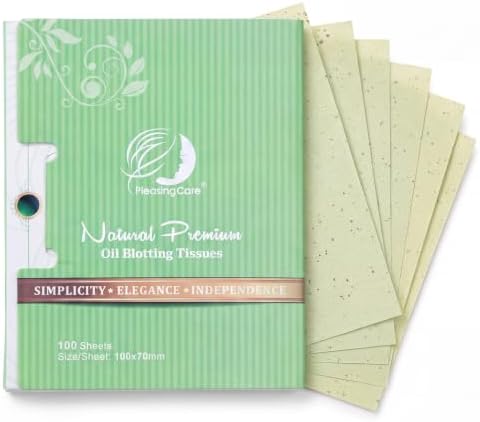

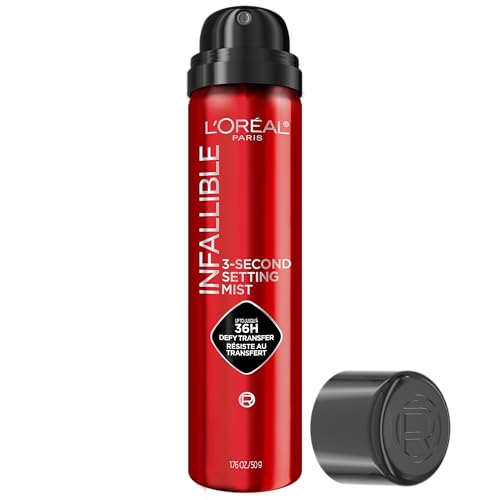
What to Know First
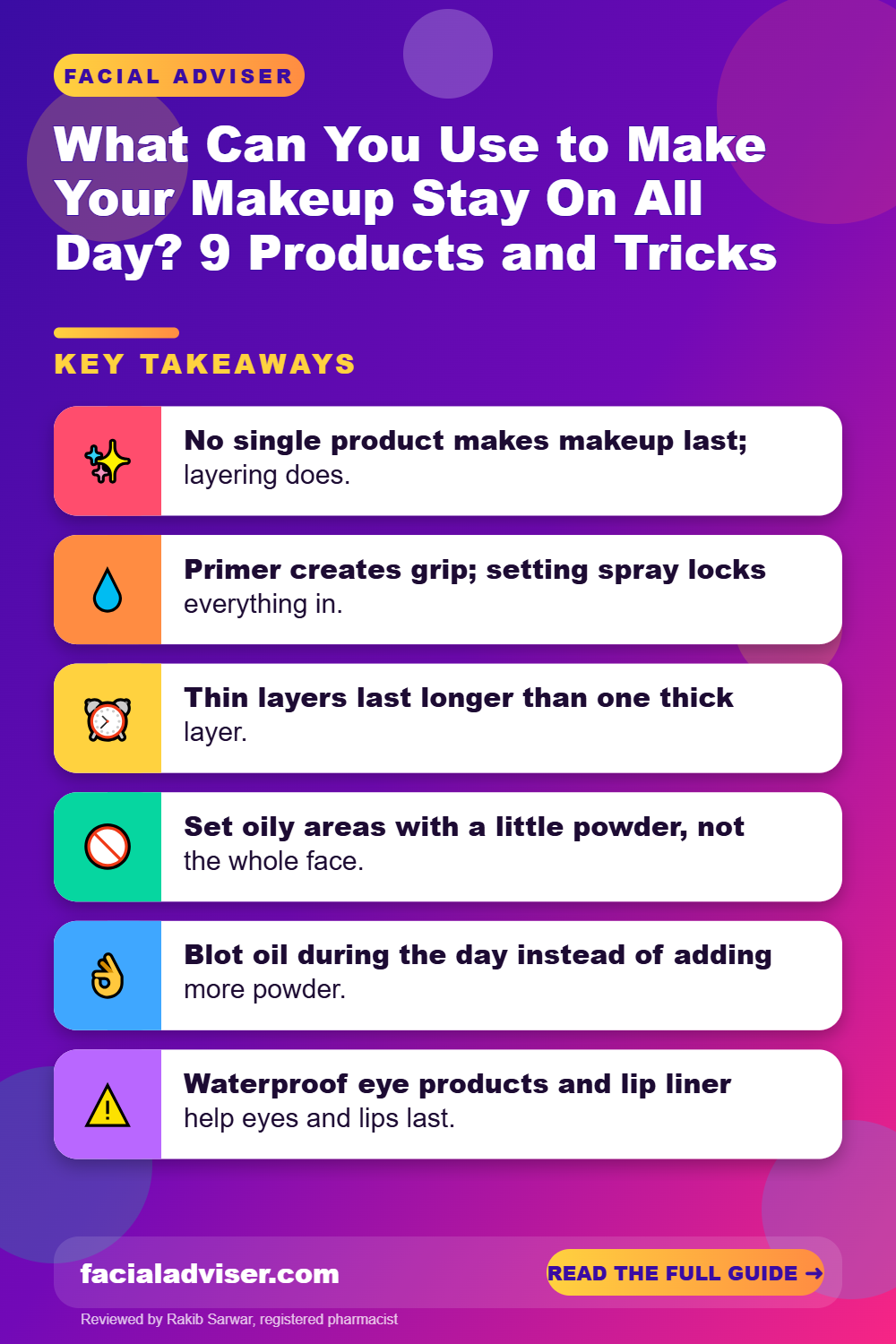
- No single product makes makeup last; layering does.
- Primer creates grip; setting spray locks everything in.
- Thin layers last longer than one thick layer.
- Set oily areas with a little powder, not the whole face.
- Blot oil during the day instead of adding more powder.
- Waterproof eye products and lip liner help eyes and lips last.
- Well-prepped, hydrated skin holds makeup best.
Contents
- 9 Things That Make Makeup Stay On All Day
- Why Makeup Wears Off
- Start With Skin Prep
- Primer and Long-Wear Foundation
- How to Apply Makeup So It Lasts All Day
- Midday Touch-Ups That Do Not Build Up
- Tips by Skin Type
- Habits That Wear Makeup Down
- Keeping Makeup On in Heat and Humidity
- Dos and Don’ts
- Honest Limits
- When to See a Dermatologist
- FAQ
- Where This Leaves You
9 Things That Make Makeup Stay On All Day
Each of these tackles a different reason makeup breaks down. You do not need all of them every day.
| Product or step | What it does | Best for |
|---|---|---|
| Lightweight moisturiser | Stops dry patches that make makeup cling | All skin types |
| Primer | Creates a smooth, grippy base | Oily skin, long days |
| Long-wear foundation | Formula designed to resist oil and transfer | Oily and combination skin |
| Thin layers | Less product to slide or crease | Everyone |
| Setting powder | Absorbs oil and sets creams | Oily T-zone, under-eyes |
| Setting spray or fixer | Forms a flexible film over makeup | Heat, events, long days |
| Blotting papers | Remove oil without adding product | Oily skin, midday touch-ups |
| Waterproof mascara and liner | Resist smudging from oil and tears | Oily lids, humid weather |
| Lip liner and long-wear lipstick | Anchor lip colour | All-day lip colour |
Start with the steps that match your biggest problem. If your makeup slides, focus on primer, powder and blotting. If it looks dry and patchy, focus on moisturiser and a hydrating setting spray. If it fades evenly across the whole face, a long-wear foundation and a setting spray are usually the biggest upgrades. Adding one step at a time also shows you which product is actually making the difference, so you do not end up buying items you do not need.
Why Makeup Wears Off
Understanding what breaks makeup down makes it easier to choose the right fix, and stops you buying products that solve a problem you do not have.
- Oil: sebum mixes with foundation, making it slide and separate, especially on the T-zone.
- Sweat and heat: loosen makeup and cause it to move or streak.
- Dry skin: makeup clings to flakes and can look patchy or crack.
- Friction: touching your face, phones, masks and scarves rub makeup away.
- Too much product: thick layers crease and slide more easily.
- Incompatible layers: some skincare and makeup bases do not mix and cause pilling or separation.
Our guide on why foundation separates by midday goes into these causes in more detail. Most people have one main cause, such as oil on the nose or dryness on the cheeks, and fixing that one problem often solves most of the wear issue without changing the rest of the routine.
Start With Skin Prep
Long-lasting makeup starts before any makeup goes on. Clean, balanced skin gives foundation something smooth and even to hold on to. Gentle exfoliation once or twice a week also helps, because makeup clings to flakes and dry patches and breaks up around them during the day.
- Cleanse gently with a foaming or gel cleanser if you are oily.
- Use a lightweight, oil-free moisturiser, even on oily skin.
- Apply sunscreen and let it settle for a few minutes.
- Wait until skincare no longer feels wet or slippery before primer.
Heavy, rich creams under makeup are a common reason for sliding, so keep morning skincare light. Save richer products for the evening, when they can work overnight without affecting your makeup. If your skin feels tight by midday, a hydrating serum under a light moisturiser usually works better than a thick cream. Our guide on the makeup base order for primer and sunscreen explains how to layer skincare and makeup.
Primer and Long-Wear Foundation
Primer and foundation are the core of a long-lasting base. Getting these two right does more for wear time than any finishing product, because powder and setting spray can only hold what is underneath.
- Mattifying primer: controls oil on the T-zone.
- Gripping or hydrating primer: helps foundation cling to drier areas.
- Long-wear foundation: formulas labelled long-wear, transfer-resistant or 24-hour are designed to resist oil.
- Matching bases: water-based foundations over water-based primers, silicone over silicone, to reduce pilling.
Apply foundation in thin layers with a damp sponge or brush, building coverage only where you need it. Our guide on the purpose of makeup primer explains how to choose one for your skin. Long-wear foundations tend to set quickly, so work on one area of the face at a time and blend before the formula dries. Spot-concealing only where you need it keeps the overall layer thin and flexible.
How to Apply Makeup So It Lasts All Day
This order works for most people. Adjust the amount of powder and the type of spray to your skin type.
Prep your skin
Cleanse, apply a light moisturiser and sunscreen, then wait a few minutes.
Prime where you need it
Use a pea-sized amount, focusing on oily areas or large pores.
Apply foundation in thin layers
Press it in with a damp sponge rather than rubbing.
Conceal sparingly
Use a thin layer of long-wear concealer and blend the edges.
Set with powder
Press a little powder onto the T-zone and under the eyes.
Finish eyes and lips
Use waterproof mascara and liner, and line lips before lipstick.
Lock with setting spray
Spray at arm’s length with eyes closed and let it dry.
Baking is not necessary for everyday wear. A thin, pressed layer of powder on oily areas usually holds just as well without looking heavy.
Midday Touch-Ups That Do Not Build Up
Even the best routine needs a little help on long or hot days. The goal is to remove oil rather than pile on more powder, because layers of powder mixed with oil quickly turn cakey and make pores and texture look more obvious.
- Blot first: press blotting paper against oily areas for a few seconds without rubbing.
- Then powder lightly: only if you still need it, and only where you need it.
- Refresh with spray: a light mist can revive powdery makeup.
- Fix creases: tap under-eye creases with a clean fingertip before adding anything.
The American Academy of Dermatology advises gently pressing blotting papers against the skin rather than rubbing, which spreads oil around. See its tips on how to control oily skin.
Tips by Skin Type
Different skin types need slightly different approaches for makeup to last. Oily skin usually needs more control, while dry and mature skin need more hydration and less powder.
| Skin type | Main challenge | What helps most |
|---|---|---|
| Oily | Shine and sliding | Mattifying primer, long-wear matte foundation, powder, blotting |
| Combination | Oily T-zone, dry cheeks | Primer and powder only on the T-zone, hydrating spray on cheeks |
| Dry | Flaking and clinging | Hydrating primer, dewy foundation, minimal powder |
| Mature | Settling into lines | Thin layers, hydrating primer, light-reflecting setting spray |
| Sensitive | Irritation | Fragrance-free products, fewer layers |
Our guide on an oily T-zone with dry cheeks explains how to treat combination skin in zones. Whatever your skin type, test a new routine on a normal day before relying on it for an important event, and check it at lunchtime and in the evening to see where it breaks down first.
Habits That Wear Makeup Down
Some everyday habits undo even the best makeup routine. Most of them involve friction or moisture, both of which break the film that long-wear products form on the skin.
- Touching or resting your face on your hands.
- Rubbing your eyes or nose.
- Wearing a tight mask without setting spray.
- Using a phone pressed against your cheek.
- Wiping sweat instead of blotting it.
Makeup that lasts all day also needs to come off properly at night. Long-wear and waterproof formulas often need an oil-based cleanser or micellar water to remove completely, followed by your usual cleanser.
Keeping Makeup On in Heat and Humidity
Hot, humid weather is the hardest test for makeup. Sweat and extra oil loosen products from underneath, and humidity stops powders and sprays from drying as quickly as they normally would. On the hottest days, lighter coverage often looks better for longer than a full, heavy base.
- Keep skincare very light, or use a gel moisturiser.
- Choose water-resistant or long-wear formulas.
- Use less product overall.
- Set with powder and a long-wear spray.
- Carry blotting papers and a small mirror.
Waterproof and long-wear products can be harder to remove. Rubbing hard around the eyes to take them off can irritate skin and pull lashes. Use a dedicated eye makeup remover, hold it on the lid for a few seconds, then wipe gently.
Dos and Don’ts
Good Habits
- Keep morning skincare light
- Apply foundation in thin layers
- Set oily areas with a little powder
- Use setting spray as the final step
- Blot oil during the day
Common Mistakes
- Apply heavy creams under makeup
- Pile on powder to hide shine
- Rub your face during the day
- Skip removing long-wear makeup at night
- Mix incompatible bases without testing
Honest Limits
Wear-time claims such as 24-hour are based on brand testing under controlled conditions. In real life, heat, sweat, oil, masks and touching your face all shorten how long makeup lasts.
No combination of products makes makeup truly permanent. The realistic goal is makeup that still looks good by the afternoon with a quick blot, rather than makeup that never needs attention. Building a simple routine that suits your skin, then keeping a small touch-up kit with blotting papers and a mini setting spray, is usually more effective than chasing the newest long-wear launch.
When to See a Dermatologist
- Your skin is very oily despite a good routine.
- Makeup regularly triggers breakouts or irritation.
- You have redness, flaking or itching under makeup.
- Long-wear products cause a rash or eye irritation.
This article is for general information and does not replace professional medical advice. See a board-certified dermatologist for persistent skin problems or reactions to makeup.
FAQ
What can I use to make my makeup stay on all day?
Primer, long-wear foundation, setting powder, setting spray and blotting papers.
What is the most important step for long-lasting makeup?
Good skin prep and thin layers matter most.
Does setting spray make makeup last longer?
Yes, long-wear formulas help lock makeup in place.
How do I stop my makeup from sliding off?
Use a mattifying primer, set oily areas and blot during the day.
Should I powder my whole face?
Usually not; focus on oily areas.
Why does my makeup disappear by lunch?
Usually oil, heavy skincare or too many layers.
Does moisturiser help makeup last?
Yes, a light moisturiser stops makeup clinging to dry patches.
How do I touch up makeup during the day?
Blot first, then add a little powder only if needed.
Is waterproof makeup bad for skin?
Not usually, but remove it gently and fully at night.
What helps makeup last in humid weather?
Light skincare, long-wear products, powder and setting spray.
Where This Leaves You
Makeup stays on all day when you combine good skin prep with long-wear products: a primer suited to your skin, thin layers of long-wear foundation, a little powder on oily areas and a setting spray to finish.
Blot oil during the day instead of adding more powder, avoid touching your face and remove long-wear makeup gently at night.

Written by
Registered pharmacist and founder of Facial Adviser. Rakib's pharmacy training covers how skincare actives work and interact; a later course in cosmetology turned that into a focus on facial treatments and skincare products. He plans, researches and edits every guide on the site and checks health claims against sources such as the American Academy of Dermatology, the FDA and the NIH. He is not a dermatologist; see the Editorial Policy and Medical Disclaimer.
About · Editorial policy · How we choose products · Medical disclaimer · Contact
Keep reading: Making makeup last
- Why Doesn't Makeup Stay on My Upper Lip? Causes and Fixes That Work
- Why Indoor Heating Dries Out Your Face (and How to Fix It)
- Oily T-Zone but Dry Cheeks? How to Fix Combination Skin
- Why Do I Get a Rash on My Face When Sweating? Causes and What Helps
- Heat Rash on Face: How to Treat It Naturally, and How to Tell If It Is Something Else
- How to Choose the Right Eye Makeup Color for Your Eyes and Skin
- How to Get Started as a Freelance Makeup Artist: Training, Kit and Clients