Why Foundation Separates by Midday (and How to Stop It)
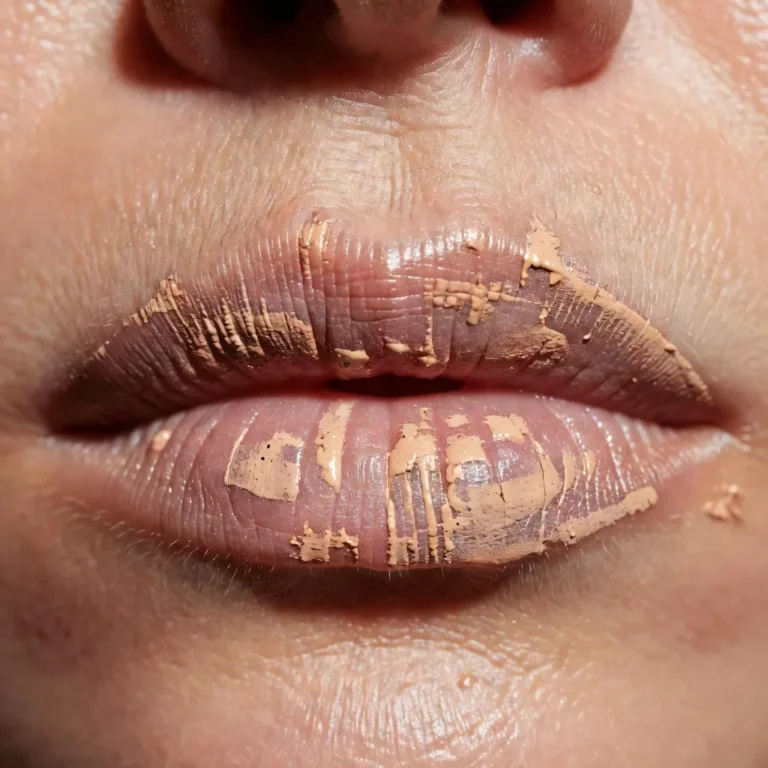
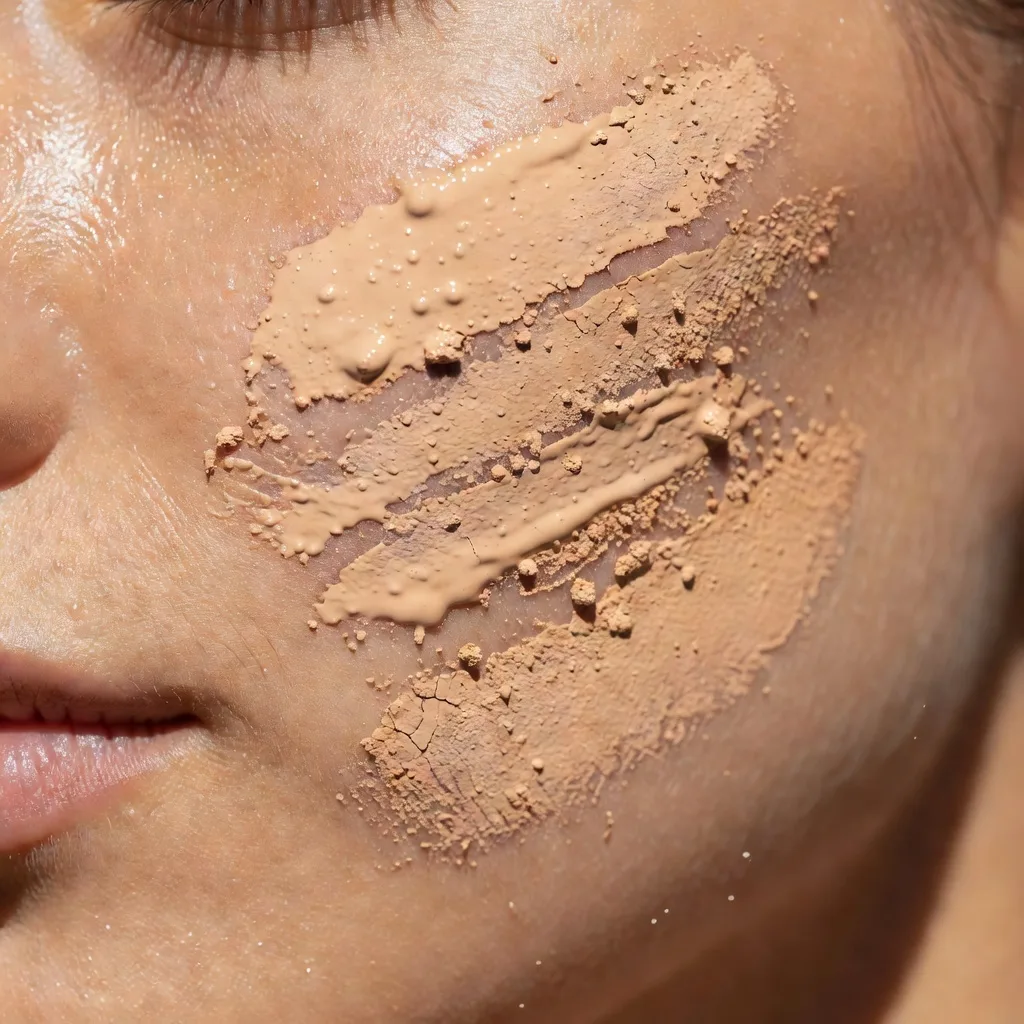
Your foundation looks smooth at eight in the morning. By lunchtime it has broken up on your nose, chin and forehead, with patches of bare skin showing through and pigment gathered around your pores. Separation is one of the most common foundation complaints, and it rarely means the foundation itself is bad.
Part of our guide to makeup how-to. Start with: How to Find the Right Shade of Makeup: Undertone, Depth and Testing
Foundation usually separates by midday because oil from your skin breaks down the formula, especially on the T-zone, or because the skincare underneath does not suit the foundation, for example a rich moisturiser under a long-wear matte formula. Using too much product, applying it before skincare has settled, and touching your face also play a part. The fixes are to use lighter skincare, let it absorb before makeup, choose a primer and foundation that suit your skin type, apply thin layers, set the oiliest areas lightly and blot rather than add more powder.
Separation is different from foundation simply wearing away. When foundation separates, it pulls apart into patches, leaving gaps and emphasising texture. It usually starts where skin is oiliest or moves most.
The American Academy of Dermatology suggests blotting papers for people with oily skin to manage shine through the day, and that simple habit is one of the most effective ways to keep foundation intact.
This guide explains the main causes of separation, how to tell which one is affecting you, and a step-by-step routine to make foundation last.
Shopping these picks?
Amazon Prime members get fast, free shipping on eligible items, plus Prime Video, Amazon Music and member deals. New members can start with a free trial.
Start a free Prime trialAged 18 to 24? Prime for Young Adults comes with a longer free trial and a lower price after it.
Affiliate link: we may earn a commission at no extra cost to you.
Recommended Products for Long-Lasting Foundation





What This Covers
- Why Foundation Separates
- When Oil Is the Problem
- When Skincare Is the Problem
- How to Stop Foundation Separating
- Choosing Primer and Foundation Together
- Separation on Dry Skin
- Touching Up Without Making It Worse
- Sunscreen Under Foundation
- Heat, Humidity and Long Days
- Dos and Don’ts
- Honest Limits
- When to See a Dermatologist
- Frequently Asked Questions
- The Takeaway
At a Glance
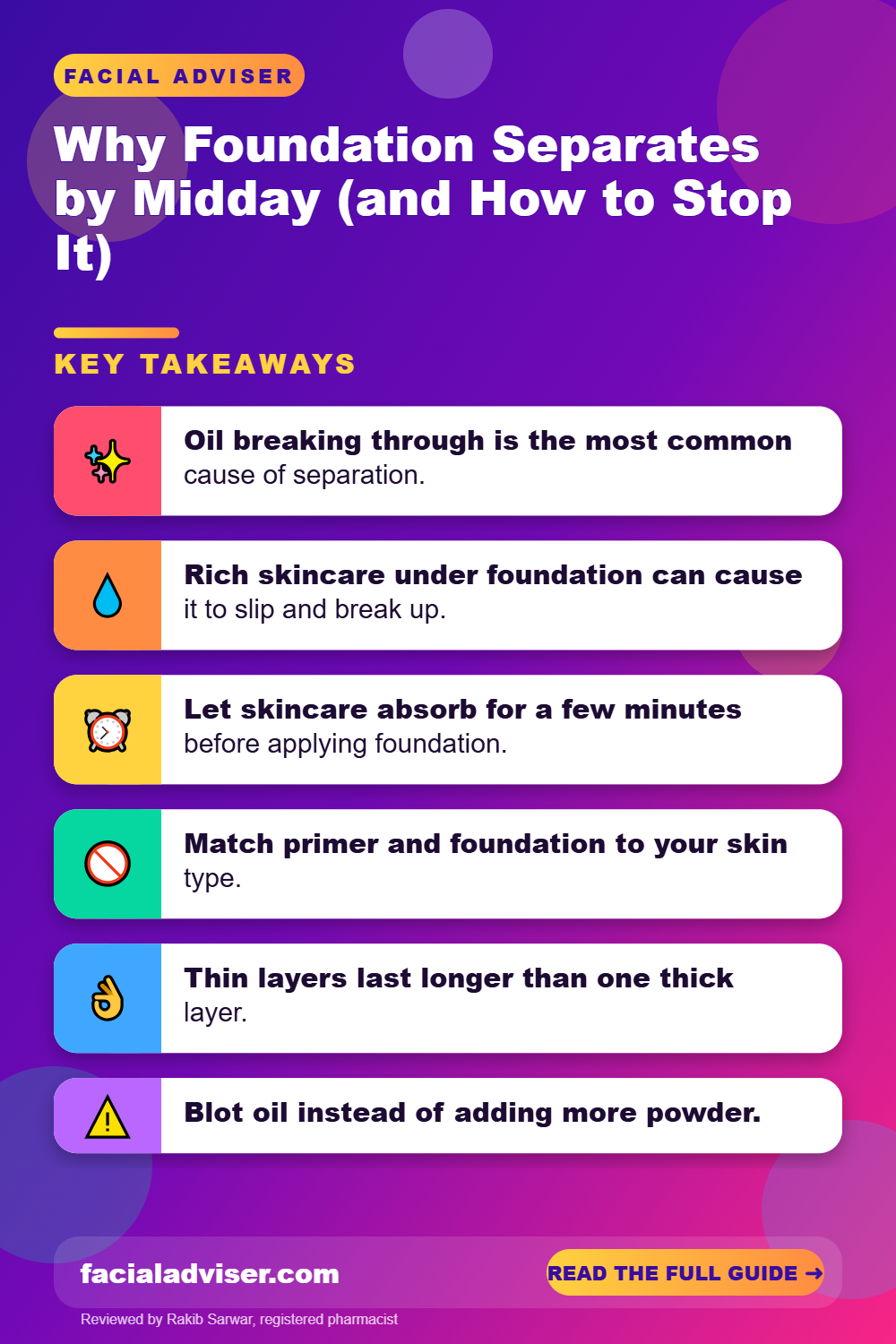
- Oil breaking through is the most common cause of separation.
- Rich skincare under foundation can cause it to slip and break up.
- Let skincare absorb for a few minutes before applying foundation.
- Match primer and foundation to your skin type.
- Thin layers last longer than one thick layer.
- Blot oil instead of adding more powder.
- Separation on dry patches usually means the skin needs more moisture.
Why Foundation Separates
| Cause | Where it shows | Fix |
|---|---|---|
| Oil breaking through | Nose, forehead, chin | Oil-control primer; blot through the day |
| Rich skincare underneath | All over, especially cheeks | Lighter moisturiser; wait before makeup |
| Skincare not absorbed | Patchy all over | Wait a few minutes after skincare |
| Primer and foundation clash | Pilling or patches | Match water-based with water-based, silicone with silicone |
| Too much foundation | Creases and patches | Use thinner layers |
| Dry, flaky skin | Patches cling to dry areas | Moisturise more; gentle exfoliation |
| Touching your face | Around mouth, chin, nose | Keep hands off your face |
Often more than one cause is at work. Oily skin with a rich moisturiser underneath and a heavy layer of foundation is a very common combination.
Checking your face at a few points during the day, such as mid-morning and after lunch, shows you where and when separation starts. That pattern points you towards the right fix much faster than changing products at random.
Where separation starts is a useful clue. If it begins on the nose and forehead, oil is likely to blame. If it appears on dry cheeks, dryness or the wrong skincare is more likely.
When Oil Is the Problem
Sebum can dissolve and push apart the film that foundation forms on the skin. That is why separation often starts on the T-zone, where there are more oil glands.
Heat, humidity and exercise increase oil and sweat, so separation is often worse in summer or on busy days. Our guide on why makeup separates on your nose focuses on the area where this is most common.
The AAD’s advice for oily skin includes using oil-free products and blotting papers, both of which help foundation last.
If you are oily, look for oil-free or matte foundations, a mattifying or gripping primer on the T-zone, and a light setting powder only where you shine. Blotting once or twice during the day often does more than any single product to keep the base intact.
When Skincare Is the Problem
Skincare underneath foundation has a big effect on how it wears. Rich creams, facial oils and heavy sunscreens can leave a slippery layer that foundation cannot grip, so it slides and separates.
Mixing formulas that do not work well together can also cause problems. A water-based foundation over a silicone-heavy primer, or the reverse, may pill or break up.
Timing matters as much as products. Applying foundation straight after moisturiser and sunscreen, before they have settled, is a common cause of patchy wear. Our guide on how to stop skincare pilling explains how to layer products so they sit smoothly.
A quick check before foundation is to touch the back of a clean finger lightly to your cheek. If it feels wet, slippery or leaves a shiny print, wait a little longer. If it feels smooth and only slightly tacky, your skin is ready for makeup.
How to Stop Foundation Separating
Cleanse and moisturise lightly
Use a moisturiser suited to your skin; gel textures suit oily skin.
Apply sunscreen and wait
Give skincare and sunscreen several minutes to settle before makeup.
Prime where needed
Use a gripping or mattifying primer on oily areas, and a hydrating one on dry areas.
Apply thin layers of foundation
Start with a small amount and press it in with a damp sponge or brush.
Build only where needed
Use concealer on specific spots instead of adding more foundation all over.
Set the oily zones
Press a small amount of powder onto the T-zone only, or use a setting spray.
Blot through the day
Use blotting papers to lift oil before adding any more powder.
Before powdering, press a clean tissue gently over your T-zone. It removes excess product and oil, so the powder sets a thinner, longer-lasting layer.
Choosing Primer and Foundation Together
| Skin type | Primer | Foundation |
|---|---|---|
| Oily | Mattifying or gripping, oil-free | Oil-free, matte or long-wear |
| Dry | Hydrating | Satin or dewy, hydrating |
| Combination | Mattifying on T-zone, hydrating on cheeks | Natural or satin finish |
| Sensitive | Fragrance-free, simple | Fragrance-free, non-comedogenic |
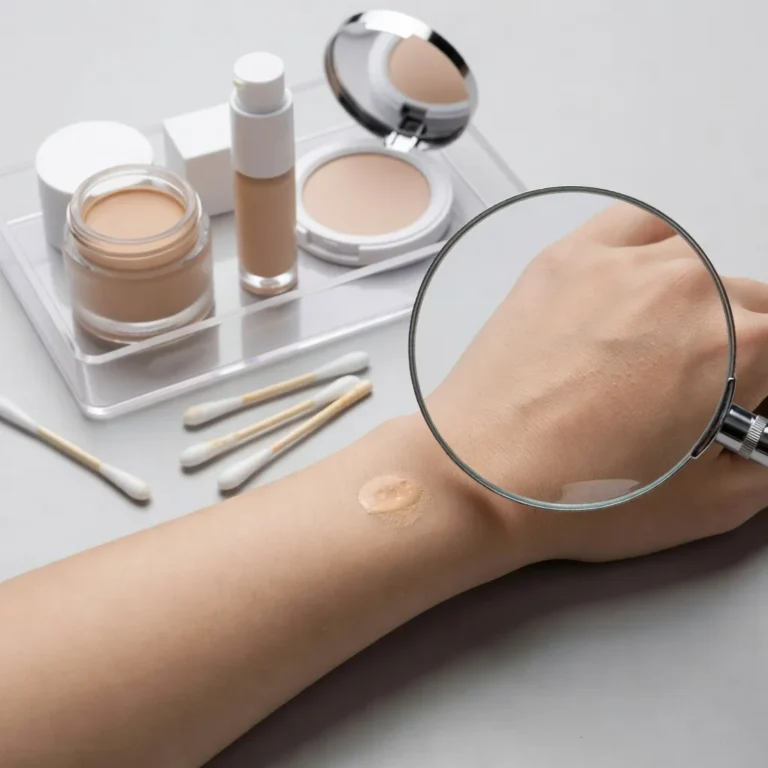
A simple test for compatibility is to mix a small amount of primer and foundation on the back of your hand. If they separate or bead up, they are unlikely to wear well together on your face.
Many people do not need a primer at all. If your skin is well prepped and your foundation suits your skin type, a primer may not add much. Adding a primer you do not need is just one more layer that can pill or slide, so it is worth testing a day without one to see whether it actually helps.
Separation on Dry Skin
On dry skin, foundation can cling to flakes and separate around them, leaving a patchy, cracked look. This usually means your skin needs more hydration rather than a different foundation.
A richer moisturiser applied a few minutes before makeup, gentle exfoliation once or twice a week and a hydrating foundation often solve the problem. Our guide on what to do when makeup looks cakey covers more fixes for dry skin.
Avoid heavy powder on dry areas. It absorbs moisture from the foundation and makes dry patches more obvious. If you like a set finish, a finely milled translucent powder pressed lightly onto the centre of the face is usually enough.
Touching Up Without Making It Worse
Adding more powder over oily, separated foundation usually creates a heavy, cakey layer. Blot first, then touch up only where needed.
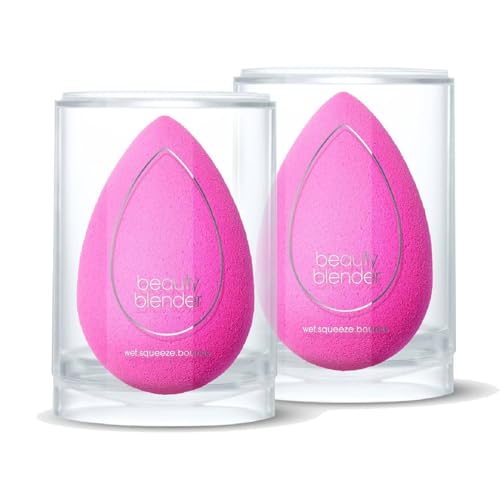
For small patches, press a tiny amount of foundation or concealer onto the area with a fingertip or damp sponge, then blend the edges. A small, clean sponge kept in a bag makes this quick and tidy.
If your makeup has broken up badly, it can be better to blot, then pat a little moisturiser or a hydrating mist over the area to soften the existing layer before adding a thin touch-up.
If foundation consistently causes breakouts, itching or redness, stop using it. Look for non-comedogenic, fragrance-free options and see a dermatologist if problems continue.
Sunscreen Under Foundation
Sunscreen is essential, but it is also one of the most common reasons foundation separates. Many sunscreens are designed to form a durable film on the skin, and some leave an oily or silicone-rich finish that foundation struggles to grip.
Choosing a sunscreen that dries down to a light, non-greasy finish makes a big difference. Fluid or gel textures are often easier to wear under makeup than thick creams. Letting sunscreen set for several minutes before foundation is just as important as the product itself.
If you have oily skin, a mattifying sunscreen may let you skip primer altogether. If you have dry skin, a moisturising sunscreen can replace your morning moisturiser, reducing the number of layers under your foundation.
Never skip or dilute sunscreen to make foundation last longer. Instead, adjust the texture of your sunscreen and the products around it.
Heat, Humidity and Long Days
Foundation that lasts well on a cool day can separate quickly in heat and humidity, when oil and sweat increase and skin produces more shine by mid-morning. On those days, lighter layers of everything, a mattifying primer on the T-zone and a setting spray can help.
Long days, masks, glasses and phone use all add friction. Glasses often rub foundation off the bridge of the nose, and phones press it off the cheek. A little extra setting powder in those spots, or simply expecting a small touch-up, is realistic.
Our guide on skincare for humid climates covers how to adapt your base routine when the weather is hot and damp.
Dos and Don’ts
Helps
- Let skincare settle before makeup
- Match primer and foundation to your skin type
- Apply thin layers
- Blot before touching up
- Set only where you get oily
Backfires
- Apply foundation over wet skincare
- Use rich creams under long-wear foundation on oily skin
- Pile on powder when makeup separates
- Touch your face throughout the day
- Use a thick layer to cover everything
Honest Limits
Even well-chosen products and good technique cannot stop all oil and sweat, especially in heat or during exercise. Some breakdown over a long day is normal, and a quick blot and touch-up is part of wearing makeup rather than a sign of failure.
Foundation performance also varies from person to person. A formula that lasts all day on one person may separate on another with oilier skin or a different routine. Testing products on your own skin through a full day is the only reliable way to know.
If you have very oily skin, managing oil with your skincare, such as using a gentle salicylic acid product or niacinamide, may help foundation last longer than any makeup product alone. Treating the skin underneath, rather than adding more layers on top, tends to give the most lasting improvement.
When to See a Dermatologist
- Your skin is extremely oily despite a sensible routine.
- You have persistent breakouts under makeup.
- Makeup regularly causes itching, redness or a rash.
- You have flaky, red patches around the nose and eyebrows that makeup clings to.
This article is for general information and does not replace professional medical advice. See a dermatologist for persistent skin concerns.
Frequently Asked Questions
Why does my foundation separate on my nose?
The nose has many oil glands, and oil breaks down foundation there first.
Can moisturiser make foundation separate?
Yes, if it is too rich for your skin or has not absorbed before you apply foundation.
How long should I wait after skincare before foundation?
A few minutes, until your skin no longer feels wet or slippery.
Does primer stop foundation separating?
It can help if it suits your skin type and works with your foundation.
Should I use more powder to stop separation?
No. Blot oil first and use a small amount of powder only where needed.
Why does my foundation separate on dry skin?
It clings to dry patches; your skin likely needs more moisture.
Can sunscreen cause foundation to separate?
Yes, heavy or oily sunscreens can. Let sunscreen set or try a lighter formula.
Does setting spray help?
It can help some foundations last longer, especially on oily skin.
How do I fix separated foundation during the day?
Blot, then touch up thinly only where needed.
Is separation a sign of a bad foundation?
Not usually; it is more often about skin type, skincare or application.
The Takeaway
Foundation usually separates because oil breaks through, the skincare underneath is too rich or not absorbed, or too much product is used.
Use skincare suited to your skin, let it settle, pair primer and foundation carefully, apply thin layers and blot rather than piling on powder. Treat dry-skin separation with more moisture, not more makeup.

Written by
Registered pharmacist and founder of Facial Adviser. Rakib's pharmacy training covers how skincare actives work and interact; a later course in cosmetology turned that into a focus on facial treatments and skincare products. He plans, researches and edits every guide on the site and checks health claims against sources such as the American Academy of Dermatology, the FDA and the NIH. He is not a dermatologist; see the Editorial Policy and Medical Disclaimer.
About · Editorial policy · How we choose products · Medical disclaimer · Contact
Keep reading: Foundation, BB cream and base
- How to Find the Right Shade of Makeup: Undertone, Depth and Testing
- 10 Best Primers for Humid Weather (2026): Shine Control That Lasts
- How Foundation Shades Are Formulated (and Why Matching Is Hard)
- What Makes Foundation Waterproof? The Science Explained
- How Color Correctors Neutralize Undertones: Which Shade Fixes What
- Why Foundation Oxidizes on Skin (and How to Stop It Turning Orange)
- How to Choose Lipstick Shade: Undertone, Skin Tone and Testing Tips
- How to Choose the Right Eye Makeup Color for Your Eyes and Skin