What Makes Foundation Waterproof? The Science Explained
Waterproof and water-resistant foundations promise to survive sweat, humidity, rain and even tears. Some genuinely last through a hot day or a wedding; others slide off at the first sign of moisture. The difference comes down to how the formula is built.
Part of our guide to makeup how-to. Start with: How to Find the Right Shade of Makeup: Undertone, Depth and Testing
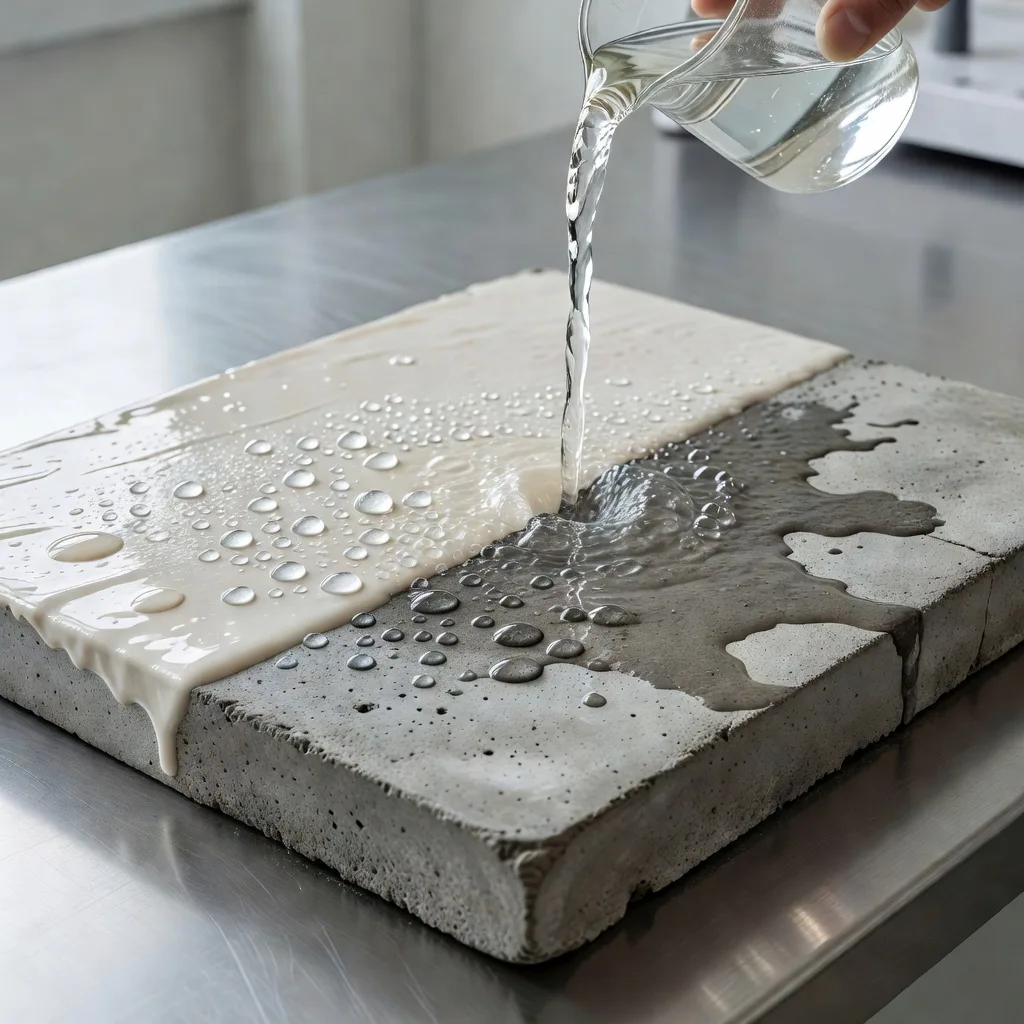
Foundation becomes waterproof or water-resistant mainly through film-forming polymers that create a flexible, water-repelling layer on the skin, silicones that resist water and help the film spread, pigments coated to repel water, and a base that contains little water or keeps water inside an oil or silicone phase. Once the volatile parts evaporate, what is left is a thin, hydrophobic film that sweat and water cannot easily dissolve. Because it resists water, it also resists ordinary face washes, so it needs an oil-based cleanser to remove it properly.
No foundation is completely waterproof in every situation. Friction from towels, masks and hands, and oil from your own skin, can still break the film down. Most products described as waterproof are best thought of as highly water-resistant.
For sunscreens, the FDA does not allow the term waterproof at all and permits only water resistant claims backed by testing, because no sunscreen stays fully effective in water indefinitely. The same logic applies informally to makeup.
This guide explains the ingredients that make foundation water-resistant, why it can still break down, and how to wear and remove it without irritating your skin.
Shopping these picks?
Amazon Prime members get fast, free shipping on eligible items, plus Prime Video, Amazon Music and member deals. New members can start with a free trial.
Start a free Prime trialAged 18 to 24? Prime for Young Adults comes with a longer free trial and a lower price after it.
Affiliate link: we may earn a commission at no extra cost to you.
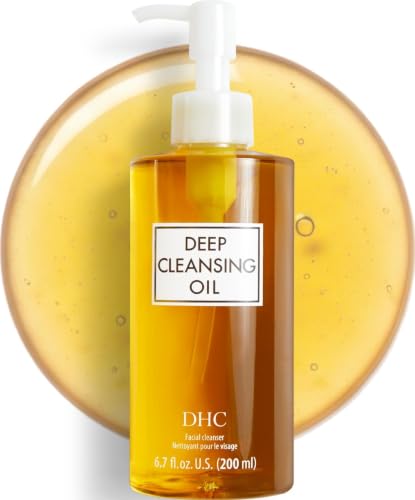
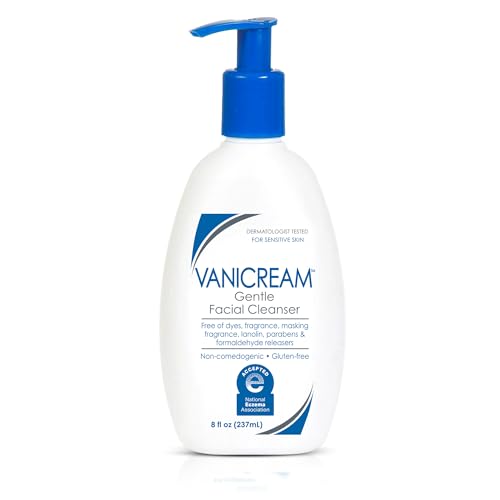
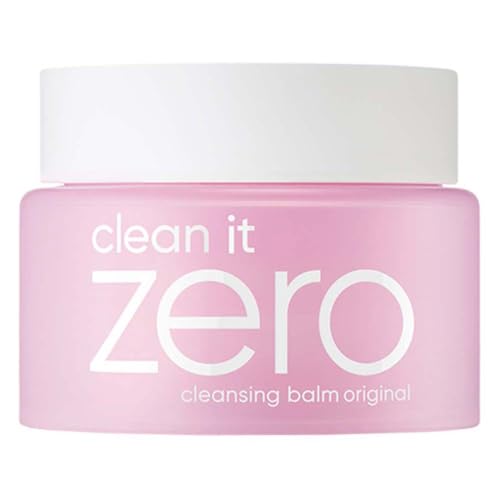
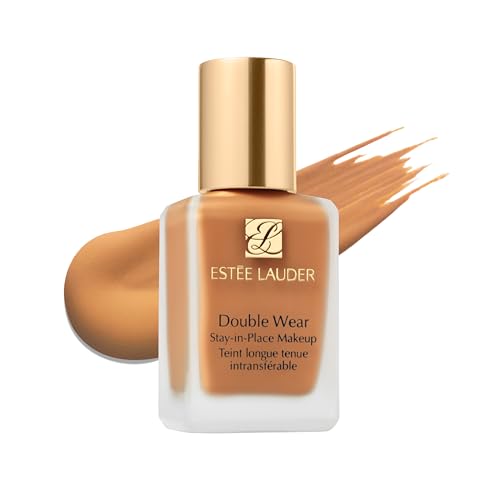
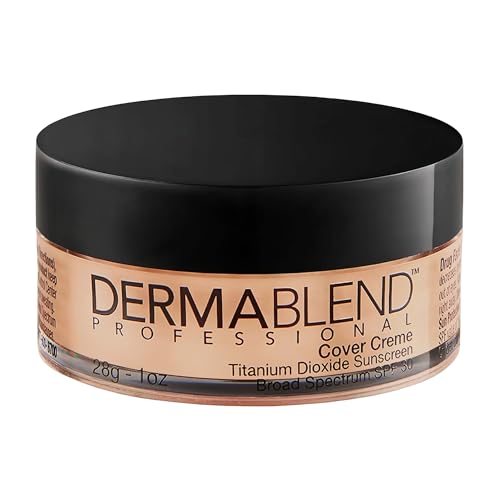
Recommended Long-Wear Foundations and Removers

Key Takeaways
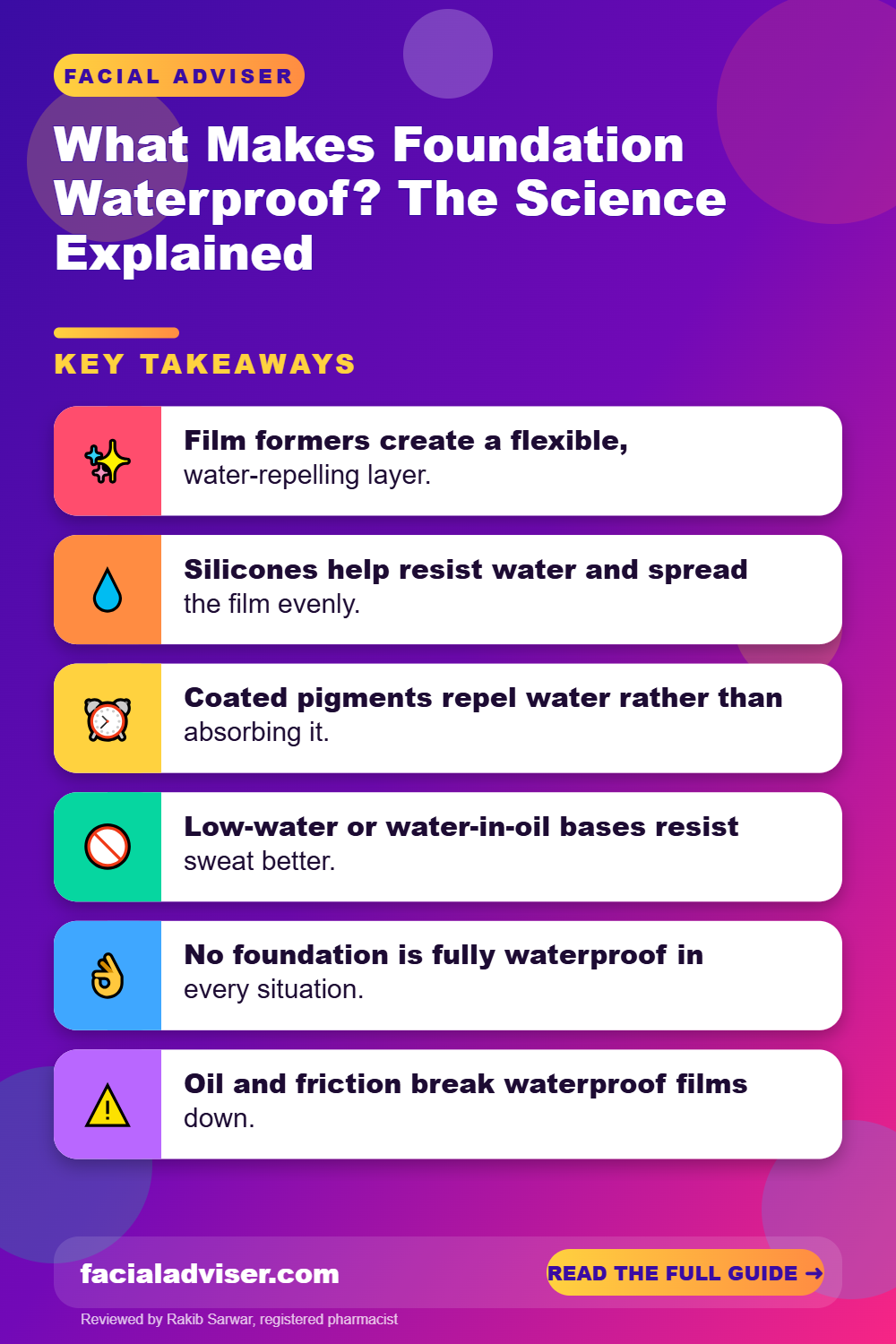
- Film formers create a flexible, water-repelling layer.
- Silicones help resist water and spread the film evenly.
- Coated pigments repel water rather than absorbing it.
- Low-water or water-in-oil bases resist sweat better.
- No foundation is fully waterproof in every situation.
- Oil and friction break waterproof films down.
- Remove with an oil or balm cleanser, then a gentle cleanser.
Contents
- The Ingredients That Make Foundation Water-Resistant
- Why the Base Matters
- Why Waterproof Foundation Still Breaks Down
- How to Wear and Remove Waterproof Foundation
- Removing Waterproof Foundation Gently
- Waterproof Foundation and Your Skin
- When Waterproof Foundation Makes Sense
- The Same Science in Other Long-Wear Makeup
- How to Test Long-Wear Claims at Home
- Dos and Don’ts
- Honest Limits
- When to See a Dermatologist
- Common Questions
- Summing Up
The Ingredients That Make Foundation Water-Resistant
| Ingredient type | Examples on labels | What it does |
|---|---|---|
| Film-forming polymers | Acrylates copolymer, trimethylsiloxysilicate, polyurethanes | Form a flexible film that holds pigment and resists water |
| Silicones | Dimethicone, cyclopentasiloxane, other siloxanes | Repel water, spread smoothly, some evaporate to leave a thin film |
| Coated pigments | Titanium dioxide or iron oxides treated with silicones or other coatings | Make pigment repel water and disperse evenly |
| Oils and esters | Isododecane, isononyl isononanoate | Carry pigments, then evaporate or stay as part of the film |
| Waxes | Microcrystalline wax, synthetic wax | Add structure, especially in cream and stick formulas |
Most long-wear foundations combine several of these. The volatile ingredients, such as cyclopentasiloxane and isododecane, help the foundation spread and then evaporate, leaving behind a concentrated layer of pigment held in place by the film formers. That is why many long-wear foundations feel wet and easy to move for the first minute, then set quickly and stop moving.
Water-resistant is not the same as transfer-resistant. A foundation can resist sweat but still rub off on a collar or phone if the film stays slightly soft. Many long-wear formulas aim for both.
Why the Base Matters
Most everyday foundations are oil-in-water emulsions: droplets of oil dispersed in water. They feel light but are more easily broken down by sweat and moisture.
Many long-wear and waterproof foundations use water-in-oil or water-in-silicone emulsions, where tiny water droplets are held inside an oil or silicone phase. Once applied, the continuous oily or silicone phase forms the outer surface, which repels water.
Some very long-wearing products, such as certain cream foundations and sticks, contain little or no water at all. These rely on waxes, oils and silicones and tend to be the most water-resistant.
The trade-off is feel. Water-rich foundations feel fresher and lighter, while low-water and water-in-silicone formulas can feel more occlusive or drying, especially on dry skin. Formulators often add humectants or emollients to balance this, but the finish is still usually more set and less dewy than a water-rich foundation.
Why Waterproof Foundation Still Breaks Down
- Oil from your skin: sebum can soften and dissolve the film, especially on the T-zone.
- Friction: towels, masks, phones and hands rub the film away.
- Very heavy sweating: large amounts of sweat can lift the film from underneath.
- Rich skincare underneath: oily layers stop the film from gripping the skin.
- Too thick a layer: thick films crack and flake more easily.
This is why the same foundation can last all day on one person and break up on another. Our guide on why foundation separates by midday covers these causes in more detail.
Heat plays a part as well. Warm skin softens some film formers and waxes, which is why even long-wear makeup can look shinier and slightly less secure by mid-afternoon on a hot day. Blotting oil and adding a light touch of powder usually restores it without needing to reapply foundation.
How to Wear and Remove Waterproof Foundation
Prep with light skincare
Use a light moisturiser and let it settle for several minutes.
Apply sunscreen and let it set
A fluid or gel sunscreen sits better under long-wear foundation.
Use a thin layer
Long-wear formulas set quickly, so apply small amounts and blend promptly.
Set lightly
A setting spray or light powder on oily areas can extend wear.
Avoid touching your face
Friction is one of the main reasons waterproof makeup breaks down.
Remove with oil first
Massage a cleansing oil or balm over dry skin to dissolve the film.
Follow with a gentle cleanser
Remove any remaining residue and oil.
Long-wear foundations often dry within a minute or two, so work on one area of the face at a time. Blending section by section prevents streaks and patchy edges.
Removing Waterproof Foundation Gently
Because waterproof foundation is designed to resist water, a quick splash and a foaming cleanser often leave some behind. Scrubbing harder is not the answer; it irritates the skin and still may not remove the film. Makeup wipes are also less effective on long-wear formulas and encourage rubbing.
Oil-based cleansers dissolve the silicones, oils and film formers that make up the foundation. Massage a cleansing oil or balm onto dry skin for about a minute, add a little water to emulsify it, rinse, then follow with a gentle water-based cleanser.
Our guide to cleansing oils versus micellar water explains why oils work better for long-wear makeup.
Do not sleep in waterproof foundation. The same film that resists water can trap oil and debris against the skin overnight and contribute to clogged pores.
Waterproof Foundation and Your Skin
For most people, wearing waterproof foundation for a day is not harmful, as long as it is removed properly. The film formers and silicones used are generally well tolerated by most skin types.
People with dry skin may find some long-wear formulas tight or flaky, particularly those with a lot of volatile silicones and alcohol. A hydrating primer or a more emollient long-wear formula may help. Applying moisturiser a few minutes earlier than usual, so it has time to absorb, also helps long-wear foundation grip without drying the skin.
If you are acne-prone, look for non-comedogenic formulas and be thorough with removal. Our guide on whether skipping cleanser at night matters explains why the evening cleanse is especially important after long-wear makeup.
When Waterproof Foundation Makes Sense
| Situation | Waterproof or long-wear? | Tip |
|---|---|---|
| Hot, humid weather | Yes | Pair with a mattifying primer on the T-zone |
| Weddings and events | Yes | Test the full look in advance |
| Exercise | Consider going bare or using a light tint | Sweat and friction still break the film |
| Swimming | Not recommended | Makeup will not survive prolonged water; wear only sunscreen |
| Everyday office wear | Optional | A standard foundation may feel more comfortable |
| Dry or sensitive skin | Use with care | Choose hydrating long-wear formulas |
Our guide on skincare for humid climates covers how to prepare your skin when you need makeup to last in the heat.
For everyday wear, many people prefer a standard foundation with a light setting powder and save long-wear formulas for days when durability really matters. That balance keeps skin comfortable most of the time while still giving you a reliable option for special occasions.
The Same Science in Other Long-Wear Makeup
The ingredients that make foundation water-resistant show up across long-wear makeup. Waterproof mascaras rely on waxes and film formers, often in a water-free base, which is why they need an oil-based remover. Long-wear liquid lipsticks use volatile solvents and film formers to leave a thin, flexible layer of colour.
Setting sprays marketed for long wear often contain film-forming polymers too. When sprayed over makeup, they form a light mesh that helps hold everything in place and resist moisture.
Waterproof eyeliners and brow products use similar approaches. The common thread is a film that stays flexible enough to move with your skin but does not dissolve in water.
Our guide on bi-phase makeup removers explains why oil-containing removers are so effective on waterproof eye makeup.
How to Test Long-Wear Claims at Home
Brand claims such as 24-hour wear are usually based on controlled tests that may not match your day. A simple home test gives a better idea of how a foundation will perform for you.
- Apply the foundation as you normally would, on a day you can check it several times.
- Look at it after two, four and eight hours in natural light, especially on the nose, chin and forehead.
- Press a clean tissue lightly to your cheek after a few hours to see how much transfers.
- Note how it looks after exercise, heat or a long commute if those matter to you.
- Check how easily it removes and how your skin feels afterwards.
Testing on a normal day, rather than just before an important event, avoids unwelcome surprises and gives you time to adjust your skincare or setting routine if the foundation does not hold up as well as you hoped.
Dos and Don’ts
Do
- Use light skincare under long-wear foundation
- Apply thin layers and blend quickly
- Set oily areas lightly
- Remove with an oil or balm cleanser
- Follow with a gentle cleanser
Don’t
- Expect any foundation to be fully waterproof
- Layer rich creams underneath
- Scrub to remove long-wear makeup
- Sleep in waterproof foundation
- Rely on foundation SPF for sun protection in water
Honest Limits
Waterproof and long-wear are marketing terms for makeup, not tightly regulated categories. Two products with the same claim can perform very differently on your skin.
The chemistry described here is simplified. Real formulas balance dozens of ingredients to achieve wear, comfort and finish, and small changes can make a big difference.
Testing a foundation through a full day in the conditions you care about, whether that is heat, a long event or a sweaty commute, is the only reliable way to know how well it holds up for you. Samples and mini sizes make this much less expensive.
When to See a Dermatologist
- You break out regularly after wearing long-wear makeup.
- Your skin becomes red, itchy or flaky after using a foundation.
- You have persistent irritation despite gentle removal.
- You notice a new or changing spot under your makeup.
This article is for general information and does not replace professional medical advice. See a dermatologist for persistent skin concerns.
Common Questions
What makes foundation waterproof?
Film-forming polymers, silicones, coated pigments and a low-water or water-in-oil base.
Is any foundation completely waterproof?
No. Most are highly water-resistant but can still break down with oil and friction.
Why does my waterproof foundation still slide off?
Skin oil, friction and rich skincare underneath can break down the film.
How do I remove waterproof foundation?
Use a cleansing oil or balm on dry skin, then a gentle cleanser.
Is waterproof foundation bad for skin?
Not usually, as long as it is removed properly.
What is a film former?
A polymer that forms a flexible layer on the skin to hold pigment and resist water.
Is waterproof the same as transfer-proof?
No. A foundation can resist water but still transfer with friction.
Can I swim in waterproof foundation?
It is not designed for prolonged water exposure or chlorinated pools.
Why can sunscreen not be called waterproof?
The FDA allows only water-resistant claims, backed by testing.
Does waterproof foundation suit dry skin?
Some formulas can feel drying; choose hydrating long-wear options.
Summing Up
Waterproof foundation relies on film formers, silicones, coated pigments and a low-water or water-in-oil base to create a thin film that resists sweat and moisture.
No foundation is fully waterproof, and oil and friction still break it down. Use light skincare underneath, apply thin layers, set lightly and always remove it with an oil-based cleanser followed by a gentle wash.

Written by
Registered pharmacist and founder of Facial Adviser. Rakib's pharmacy training covers how skincare actives work and interact; a later course in cosmetology turned that into a focus on facial treatments and skincare products. He plans, researches and edits every guide on the site and checks health claims against sources such as the American Academy of Dermatology, the FDA and the NIH. He is not a dermatologist; see the Editorial Policy and Medical Disclaimer.
About · Editorial policy · How we choose products · Medical disclaimer · Contact
Keep reading: Foundation, BB cream and base
- How to Find the Right Shade of Makeup: Undertone, Depth and Testing
- How Color Correctors Neutralize Undertones: Which Shade Fixes What
- Why Foundation Oxidizes on Skin (and How to Stop It Turning Orange)
- How Particle Size Affects Foundation Finish, Coverage and Wear
- Makeup Base Order: Primer vs Sunscreen, Which Goes First?
- How to Match Makeup to Your Undertone: Foundation, Blush, Bronzer and Lips
- How to Choose the Right Eye Makeup Color for Your Eyes and Skin
- What Can You Use to Make Your Makeup Stay On All Day? 9 Products and Tricks