Skincare for Humid Climates: A Practical Routine
Living in a hot, humid climate changes what your skin needs. Rich creams that felt comforting in a cooler place suddenly feel greasy. Sunscreen slides off by lunchtime. Your forehead shines within an hour of washing, and breakouts or small itchy bumps appear where they never did before.
Part of our guide to makeup how-to. Start with: What Can You Use to Make Your Makeup Stay On All Day? 9 Products and Tricks
In humid climates, most people do best with a lighter routine: a gentle cleanser morning and night, a light gel moisturiser or none at all if your skin is oily, and a broad-spectrum, water-resistant sunscreen of SPF 30 or higher that you reapply when outdoors. A salicylic acid product a few times a week can help keep pores clear. Rinsing off sweat promptly, choosing breathable fabrics and avoiding heavy, occlusive products all reduce breakouts and heat rash.
Humidity itself is not bad for skin. Moist air means your skin loses less water, and many people find their skin feels softer and less flaky in humid places. The problems come mainly from heat, sweat, oil and products that are too heavy for the conditions.
The American Academy of Dermatology recommends washing your face twice a day and after sweating, using oil-free or non-comedogenic products if you are acne-prone, and reapplying sunscreen every two hours when outdoors, or after swimming or sweating. Those basics matter even more in the heat.
This guide covers a simple routine for humid climates, how to handle sweat and shine, and the skin problems that tend to flare in hot, damp weather.
Shopping these picks?
Amazon Prime members get fast, free shipping on eligible items, plus Prime Video, Amazon Music and member deals. New members can start with a free trial.
Start a free Prime trialAged 18 to 24? Prime for Young Adults comes with a longer free trial and a lower price after it.
Affiliate link: we may earn a commission at no extra cost to you.
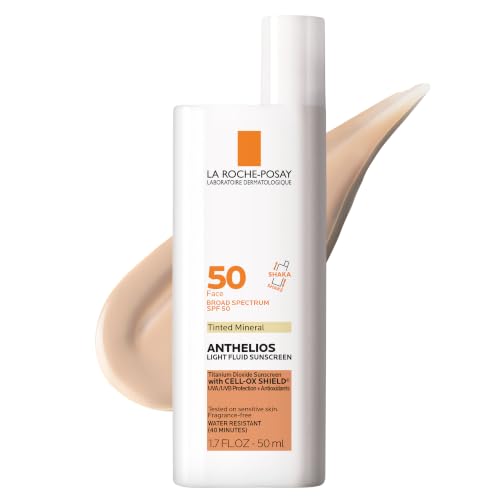
Recommended Products for Hot, Humid Weather




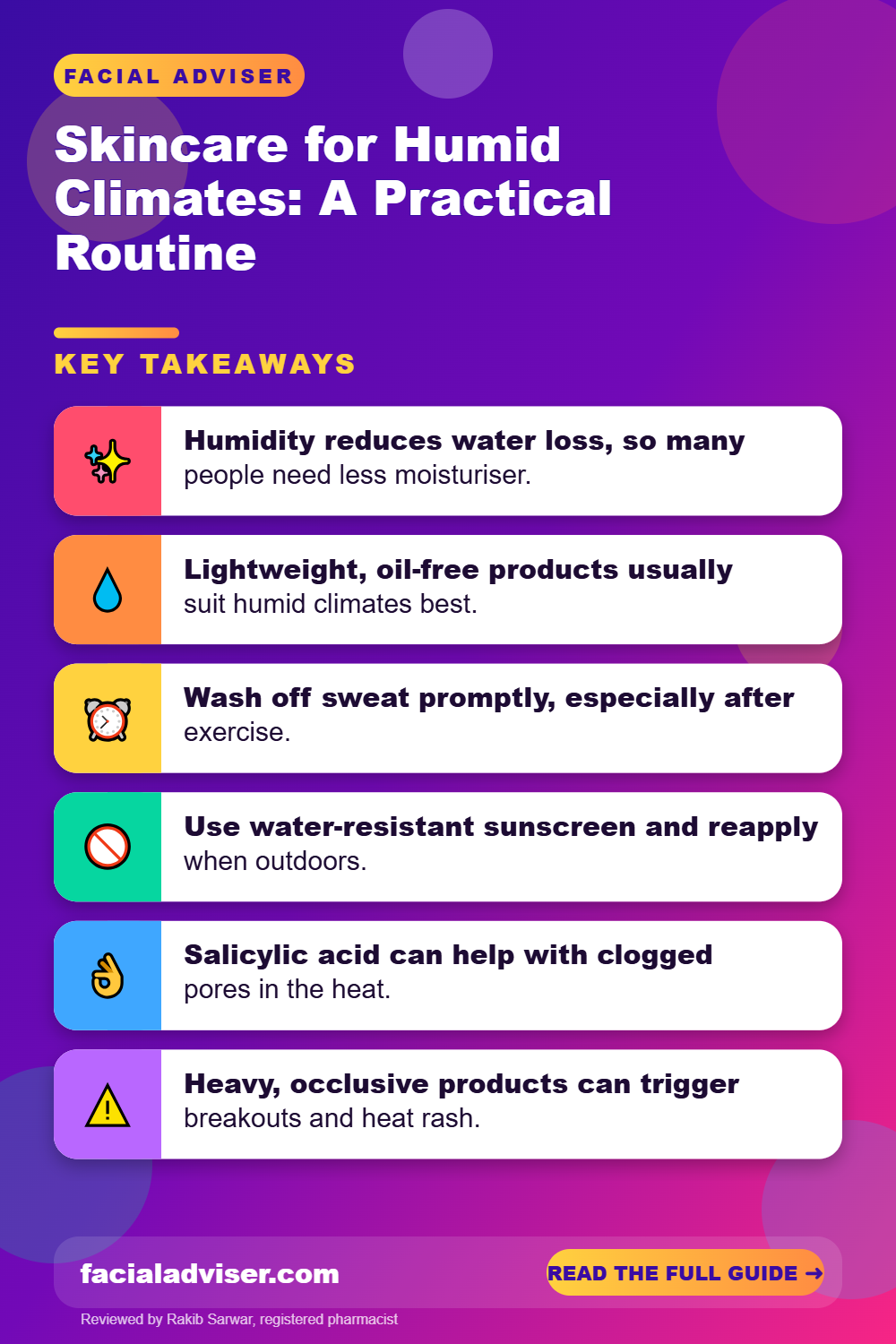
In Brief
- Humidity reduces water loss, so many people need less moisturiser.
- Lightweight, oil-free products usually suit humid climates best.
- Wash off sweat promptly, especially after exercise.
- Use water-resistant sunscreen and reapply when outdoors.
- Salicylic acid can help with clogged pores in the heat.
- Heavy, occlusive products can trigger breakouts and heat rash.
- Air conditioning can dry skin, so adjust indoors.
In This Guide
- How Heat and Humidity Affect Your Skin
- How to Build a Humid-Climate Skincare Routine
- Choosing Products for the Heat
- Managing Sweat and Shine
- Skin Problems That Flare in Humid Weather
- Air Conditioning and Indoor Dryness
- Adjusting for Your Skin Type
- Dos and Don’ts
- Evening Routine in the Heat
- Honest Limits
- When to See a Dermatologist
- Common Questions
- Summing Up
How Heat and Humidity Affect Your Skin
| What changes | Effect on skin | What helps |
|---|---|---|
| More moisture in the air | Less water loss; skin may feel softer | Lighter moisturisers |
| Higher temperature | More oil and sweat | Gentle cleansing, oil-free products |
| Sweat sitting on skin | Clogged pores, irritation, heat rash | Rinse after sweating; breathable fabrics |
| Stronger sun in many humid regions | Higher risk of sunburn and dark spots | Daily broad-spectrum sunscreen, reapplied |
| Warm, damp conditions | Can encourage yeast-related skin problems | Keep skin clean and dry; see a doctor if persistent |
Not everyone reacts the same way. Dry skin often improves in humid weather, while oily and acne-prone skin tends to struggle more. Adjusting your routine to your own skin is more useful than following a single rule.
Diet, stress and sleep also feel different in the heat. Poor sleep on hot nights and dehydration can make skin look dull and tired, so drinking enough water and keeping your bedroom cool are worthwhile, even if they are not skincare in the usual sense.
If you move from a cool, dry climate to a hot, humid one, give your skin a few weeks to adjust before changing lots of products. Some shine and a few breakouts in the first weeks are common.
How to Build a Humid-Climate Skincare Routine
Cleanse gently
Use a mild gel or cream cleanser morning and evening, and rinse after heavy sweating.
Hydrate lightly
Use a light gel moisturiser or a hydrating serum; skip moisturiser in the morning if your skin is oily.
Treat if needed
Use salicylic acid or niacinamide a few times a week if you have clogged pores or breakouts.
Protect with sunscreen
Apply a broad-spectrum, water-resistant SPF 30 or higher every morning.
Reapply when outdoors
Reapply every two hours outdoors, and after swimming or heavy sweating.
Cleanse thoroughly at night
Remove sunscreen, sweat and oil before bed.
The AAD’s guide to choosing the right sunscreen recommends broad-spectrum, SPF 30 or higher and water-resistant formulas, which are particularly useful when you sweat.
Choosing Products for the Heat
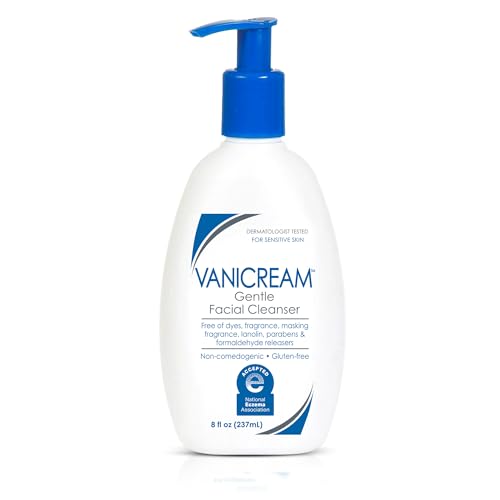
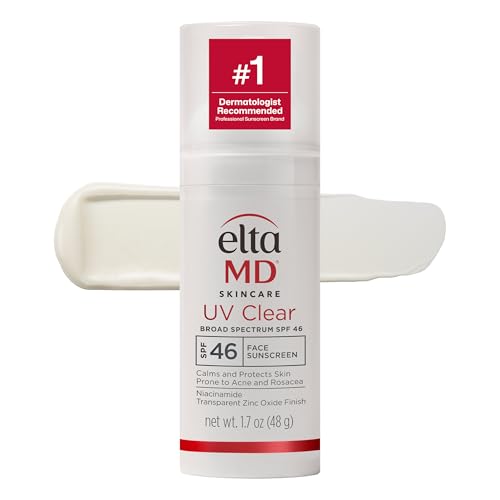
Cleansers: a gentle gel cleanser is often more comfortable than a rich cream in humid weather. Avoid harsh foaming cleansers that leave skin tight, as stripping can make some people produce even more oil. Moisturisers: look for words such as gel, water cream, oil-free or non-comedogenic. Humectants such as glycerin and hyaluronic acid give light hydration without heaviness. Our guide on which humectants work best in humidity covers the details. Sunscreens: fluids, gels and light lotions usually feel better than thick creams. Many people in humid climates prefer mattifying or oil-free sunscreens. Makeup: lighter, oil-free formulas and less of them tend to last better in the heat. Heavy foundation is more likely to slide and clog pores.The AAD’s advice for oily skin includes using oil-free, non-comedogenic products and a gentle cleanser, which suits most people in hot, humid weather.
Managing Sweat and Shine
Sweat itself is mostly water and salt, but left on the skin with oil and sunscreen, it can contribute to clogged pores and irritation.
- Rinse your face with water or cleanse gently after exercise or heavy sweating.
- Blot shine with blotting papers rather than piling on powder.
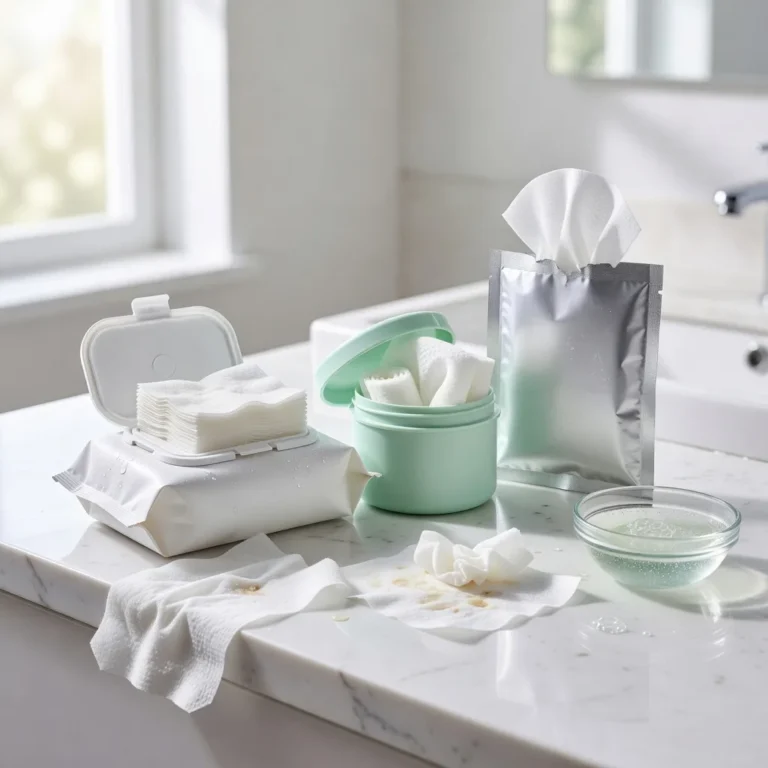
- Carry a clean cloth or tissues and pat, rather than wipe, sweat away.
- Wear breathable fabrics and change out of sweaty clothes promptly.
- Keep hair products away from your forehead, as they can run in the heat.
If your skin looks shiny by midday, that is usually normal rather than a sign that your routine is wrong. Blotting is gentler than washing your face several times a day, which can dry and irritate it.
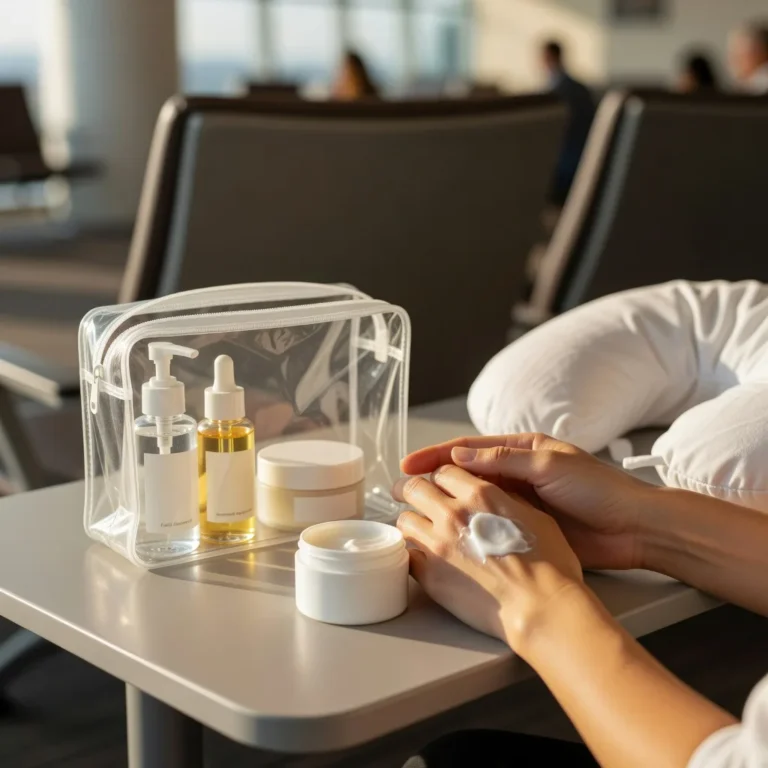
A small travel-size sunscreen stick or spray kept in your bag makes reapplying outdoors much easier. Pat it on gently over any makeup rather than rubbing.
Skin Problems That Flare in Humid Weather
| Problem | What it looks like | What helps |
|---|---|---|
| Acne and clogged pores | Blackheads, whiteheads, inflamed spots | Gentle cleansing, salicylic acid, non-comedogenic products |
| Heat rash | Tiny itchy or prickly bumps where sweat is trapped | Cool down, loose clothing, avoid heavy creams |
| Fungal acne | Clusters of small, uniform, itchy bumps on forehead, chest or back | See a dermatologist; often needs antifungal treatment |
| Seborrheic dermatitis | Red, flaky, greasy patches around nose and brows | Medicated cleansers; see a dermatologist |
| Sunburn and dark spots | Redness, peeling, new or darker marks | Daily sunscreen, reapplication, shade |
Heat rash, sometimes called prickly heat, happens when sweat ducts become blocked and sweat is trapped under the skin. Cooling down, wearing loose, breathable clothing and avoiding heavy products usually helps it settle.
Fungal acne is caused by an overgrowth of yeast in hair follicles rather than by the bacteria involved in ordinary acne, so standard acne products may not work. It is more common in hot, humid conditions and is worth getting checked if small, itchy bumps keep coming back.
Do not self-treat widespread rashes, painful spots or persistent itchy bumps with multiple products at once. See a doctor or dermatologist for a proper diagnosis.
Air Conditioning and Indoor Dryness
Many people in humid climates spend the day moving between hot, damp air outdoors and cool, dry air indoors. Air conditioning pulls moisture out of the air, and skin can feel tight or dry after hours in an air-conditioned office.
If that happens, a light moisturiser in the morning, or a hydrating serum kept at your desk, can help. You do not need to switch to a heavy cream; a gel or light lotion is usually enough.
Our guide to facial dryness from indoor heating covers similar issues in winter, and many of the same fixes apply.
It can also help to keep an eye on how often you move between the two. Stepping out of a cold office into hot, damp air can make you sweat heavily for a few minutes, and then the sweat dries in the cool air when you come back in. A quick blot and, if needed, a fresh thin layer of sunscreen before heading back outside keeps skin more comfortable through the day.
Adjusting for Your Skin Type
Oily skin: a gel cleanser, a hydrating serum or no moisturiser in the morning, and a mattifying sunscreen are often all you need. Niacinamide can help with the look of oiliness for some people. Acne-prone skin: keep everything non-comedogenic, rinse off sweat promptly and use salicylic acid a few times a week. If breakouts are frequent, an over-the-counter adapalene gel at night may help, introduced slowly. Dry skin: humidity often helps, but you may still need a light lotion, especially if you spend time in air conditioning. Avoid stripping cleansers. Combination skin: use a light gel all over and add a little more moisturiser only on dry areas such as the cheeks. Sensitive skin: heat and sweat can make sensitive skin sting. Choose fragrance-free products, avoid menthol and alcohol-heavy toners, and cool the skin with lukewarm rather than hot water.Dos and Don’ts
Helps
- Use light, oil-free products
- Cleanse morning and night, and after sweating
- Wear water-resistant sunscreen and reapply
- Blot shine instead of washing repeatedly
- Change out of sweaty clothes promptly
Backfires
- Use heavy creams and balms by day
- Leave sweat and sunscreen on overnight
- Over-cleanse or scrub oily skin
- Skip sunscreen on cloudy days
- Ignore rashes that keep coming back
Evening Routine in the Heat
Evenings are when you remove the day’s sweat, oil and sunscreen. A gentle cleanse, or a cleansing oil followed by a gentle cleanser if you wore water-resistant sunscreen or makeup, keeps pores clearer.
After cleansing, a light gel moisturiser is usually enough. If you use a treatment such as a retinoid or salicylic acid, apply it to clean, dry skin before moisturiser. Our guide on whether skipping cleanser at night matters explains why the evening wash is especially important in hot weather.
A cool bedroom and a clean pillowcase also help. Sleeping hot and sweaty on a pillowcase full of oil and product can add to breakouts and irritation, so changing pillowcases a couple of times a week is a simple habit worth keeping in humid weather.
Honest Limits
No routine will stop all shine or sweat in a hot, humid climate. Some oil and sweat are part of how your body keeps cool, and trying to eliminate them completely usually leads to over-cleansing and irritation.
Individual skin also varies widely. Some people with dry skin find humid climates easier; others with oily or acne-prone skin find them harder. Use this routine as a starting point and adjust based on how your skin feels.
Product choice is personal as well. A sunscreen that feels light to one person may feel heavy to another, so it can take some trial and error to find formulas you are happy to wear every day in the heat.
When to See a Dermatologist
- Breakouts are persistent, painful or leaving marks.
- You have small, itchy bumps that do not respond to acne products.
- Heat rash keeps returning or becomes infected.
- You have red, flaky patches that do not settle.
- You notice new or changing spots or moles.
A dermatologist can diagnose conditions that are common in hot, humid climates, such as fungal acne and seborrheic dermatitis, and recommend targeted treatment.
This article is for general information and does not replace professional medical advice. See a dermatologist for persistent skin concerns.
Common Questions
What skincare is best for humid climates?
A gentle cleanser, a light gel moisturiser or none if oily, and a water-resistant broad-spectrum sunscreen.
Do I need moisturiser in humid weather?
Oily skin may not; dry or combination skin often still benefits from a light one.
How often should I wash my face in humid weather?
Twice a day and after heavy sweating is usually enough.
How can I stop sunscreen melting in the heat?
Use a water-resistant, light formula and reapply every two hours outdoors.
Why do I break out more in humid weather?
Heat, sweat, oil and heavy products can clog pores.
What is heat rash?
Small itchy or prickly bumps caused by trapped sweat under the skin.
What is fungal acne?
Clusters of small, uniform, itchy bumps caused by yeast, more common in heat and humidity.
Should I use salicylic acid in humid weather?
It can help with clogged pores; start a few times a week.
Is humidity good for skin?
It reduces water loss, which many people find helpful, but heat and sweat can cause problems.
What about air conditioning?
It dries the air, so a light moisturiser may help indoors.
Summing Up
Skincare for humid climates works best when it is light and simple: gentle cleansing, light hydration, water-resistant sunscreen and prompt removal of sweat.
Avoid heavy creams by day, reapply sunscreen when outdoors, and watch for heat rash or fungal acne that may need a dermatologist’s help. Adjust for air-conditioned rooms, where your skin may need a little more moisture.

Written by
Registered pharmacist and founder of Facial Adviser. Rakib's pharmacy training covers how skincare actives work and interact; a later course in cosmetology turned that into a focus on facial treatments and skincare products. He plans, researches and edits every guide on the site and checks health claims against sources such as the American Academy of Dermatology, the FDA and the NIH. He is not a dermatologist; see the Editorial Policy and Medical Disclaimer.
About · Editorial policy · How we choose products · Medical disclaimer · Contact
Keep reading: Making makeup last
- What Can You Use to Make Your Makeup Stay On All Day? 9 Products and Tricks
- How to Make Setting Spray at Home: 3 Simple Recipes and Safety Tips
- Why Emulsions Separate Over Time: What It Means for Your Skincare and Makeup
- How to Keep Makeup From Melting and Bleeding in the Heat
- How to Avoid Product Pilling: Why Skincare and Makeup Ball Up
- Makeup Hacks for an Oily T-Zone: Stay Matte Without Looking Flat
- How to Choose Lipstick Shade: Undertone, Skin Tone and Testing Tips
- How to Find the Right Shade of Makeup: Undertone, Depth and Testing