How to Choose Lipstick Shade: Undertone, Skin Tone and Testing Tips
Standing in front of a wall of lipsticks, it is easy to pick a shade that looked lovely in the tube and then looks wrong on your mouth. The good news is that choosing a shade is not guesswork. A few simple checks narrow the options quickly and save you from a drawer of lipsticks you never wear.
To choose a lipstick shade, start with your undertone, then consider your skin depth and your natural lip colour. Cool undertones usually suit blue-based shades such as berry, rose and blue-red, warm undertones suit yellow- or orange-based shades such as coral, brick and warm red, and neutral undertones can wear most families. Skin depth guides how light or deep to go: fair skin looks fresh in soft pinks, rosy nudes and clear reds, while deeper skin carries richer, more saturated colour. Always test on your lips or fingertip, not the back of your hand, and check it in daylight before you buy.
In short: match the undertone first, adjust the depth to your skin, and test on your actual lips in natural light.
The American Academy of Dermatology also recommends protecting your lips with a lip balm of SPF 30 or higher, which is worth remembering because most lipsticks offer little or no sun protection.
This guide explains how to find your undertone, the best shade families for each skin tone, how to pick lipstick for fair skin, and a simple way to test shades so you buy with confidence.
Shopping these picks?
Amazon Prime members get fast, free shipping on eligible items, plus Prime Video, Amazon Music and member deals. New members can start with a free trial.
Start a free Prime trialAged 18 to 24? Prime for Young Adults comes with a longer free trial and a lower price after it.
Affiliate link: we may earn a commission at no extra cost to you.
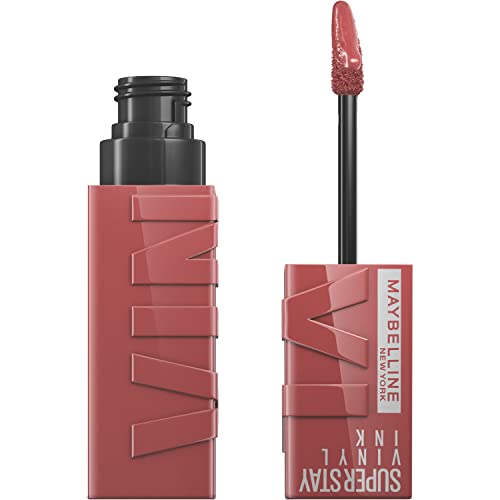
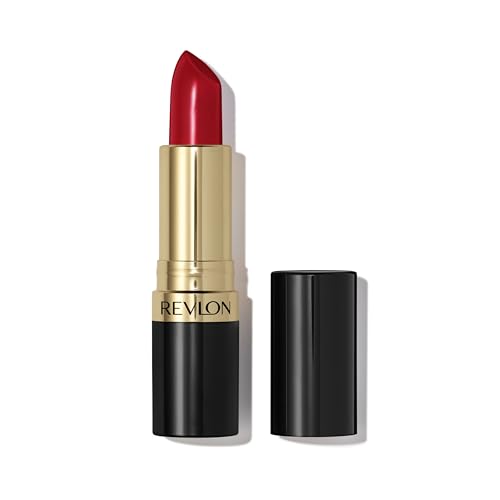
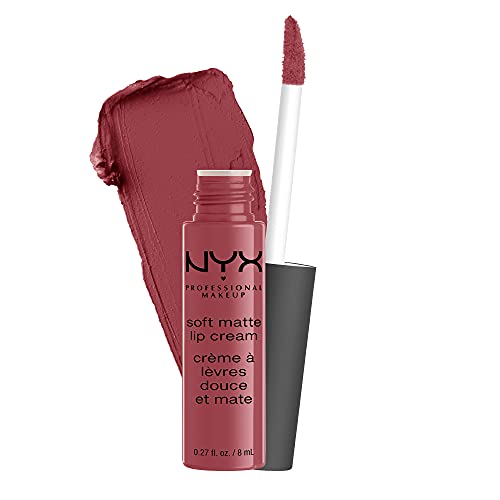
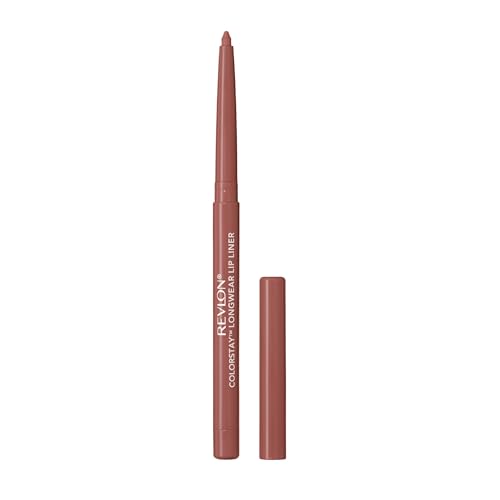
Recommended Versatile Lipsticks and Lip Liners


Jump to a Section
- Step One: Find Your Undertone
- Step Two: Match the Depth to Your Skin Tone
- How to Pick Lipstick for Fair Skin
- How Your Natural Lip Colour Changes the Result
- Build a Versatile Trio: Nude, Rose and Red
- How to Test a Lipstick Shade Before You Buy
- Finish Changes How a Shade Looks
- Choosing Shades for Occasions and Lighting
- Dos and Don’ts When Choosing a Lipstick Shade
- Honest Limits
- When to See a Doctor
- FAQ
- The Bottom Line
In Brief
- Undertone matters more than surface skin colour when picking a lipstick.
- Cool undertones suit blue-based shades; warm undertones suit orange- or yellow-based shades.
- Skin depth decides how light or deep the shade should be.
- Your natural lip colour shifts how sheer lipsticks look on you.
- Fair skin suits soft pinks, rosy nudes and clear reds.
- Test on your lips or fingertip, never only on the back of your hand.
- Nude, rose and red make a versatile starter trio.
Step One: Find Your Undertone
Your undertone is the subtle hue under the surface of your skin. It does not change with a tan or with redness, which is why it is a more reliable guide to lipstick than how light or dark your skin looks on a given day.
| Check | Cool undertone | Warm undertone | Neutral undertone |
|---|---|---|---|
| Wrist veins in daylight | Look blue or purple | Look green or olive | Mix of blue and green |
| Jewellery that flatters | Silver, platinum | Gold, brass | Both look fine |
| Pure white fabric near face | Looks crisp and bright | Can look harsh; cream is kinder | Both work |
| How skin reacts to sun | Burns easily, tans slowly | Tans more easily | Varies |
| Lipstick families | Berry, rose, plum, blue-red | Coral, peach, brick, orange-red | Most families, mid-tone versions |
No single check is perfect, so look for the answer that comes up most often. Olive skin can read as both warm and green-toned and often suits muted rose, terracotta and brick shades. Our guide on matching makeup to your undertone goes through these tests in more detail.
Step Two: Match the Depth to Your Skin Tone
Once you know the undertone, choose how light or deep to go. A shade that suits your undertone can still look chalky if it is much lighter than your skin, or harsh if it is much deeper than suits your features.
| Skin tone | Everyday nudes | Pinks and roses | Reds | Deeper shades |
|---|---|---|---|---|
| Fair | Pink-beige, rosy nude | Soft pink, sheer rose | Clear cherry or blue-red | Sheer berry, soft plum |
| Light to medium | Rosy beige, mauve nude | Dusty rose, warm pink | True red, raspberry | Berry, wine |
| Medium to olive | Caramel, warm rose | Terracotta rose, mauve | Brick, tomato red | Burgundy, rich berry |
| Tan to deep | Toffee, cinnamon, cocoa | Deep rose, fuchsia | Wine red, deep blue-red | Plum, chocolate, oxblood |
A useful rule for nudes is to choose one to two shades deeper than your skin, or close to your natural lip colour. Nudes that are lighter than your skin tend to make the mouth look washed out, especially in photos.
How to Pick Lipstick for Fair Skin
Fair skin shows colour clearly, which is a bonus: even a sheer lipstick makes a visible difference. The challenge is avoiding shades that look too heavy or too pale.
- Pick nudes with a hint of pink or peach rather than beige, which can look grey on fair skin.
- Choose soft rose and pale berry shades for everyday wear.
- Try a clear red with a blue base for a classic look; it tends to make teeth look whiter.
- Warm, golden-fair skin often suits peach, coral and apricot tones.
- Start with sheer or satin finishes; heavy matte browns can overwhelm fair features.
- If a bold shade feels too strong, blot it and press it in with your fingertip for a stained effect.
Fair skin with cool undertones can look slightly flushed or red around the nose and cheeks. Orange-red lipsticks sometimes emphasise that redness, while blue-reds and berries usually balance it.
How Your Natural Lip Colour Changes the Result
Lipstick is not applied to a blank canvas. Your lips have their own pigment, and sheer or satin formulas mix with it, so the same shade looks different on different people.
- Pigmented or darker lips: sheer pinks and pale nudes may barely show; opaque, creamy formulas show truer colour.
- Pale or pink lips: sheer shades show clearly and can look brighter than in the tube.
- Uneven lip colour: a lip liner or a thin layer of concealer first helps the lipstick show evenly.
- Very dry lips: colour grabs onto flakes, so exfoliate gently and use balm first.
If a lipstick never looks the way it does in the tube, it is often the formula, not the shade. A more opaque version of a similar colour usually solves it. If red is the shade you struggle with most, our guide on how to apply red lipstick covers prep, lining and blotting for an even result.
Build a Versatile Trio: Nude, Rose and Red
You do not need dozens of shades. Three well-chosen lipsticks cover almost every occasion, and choosing them one at a time makes the process easier.
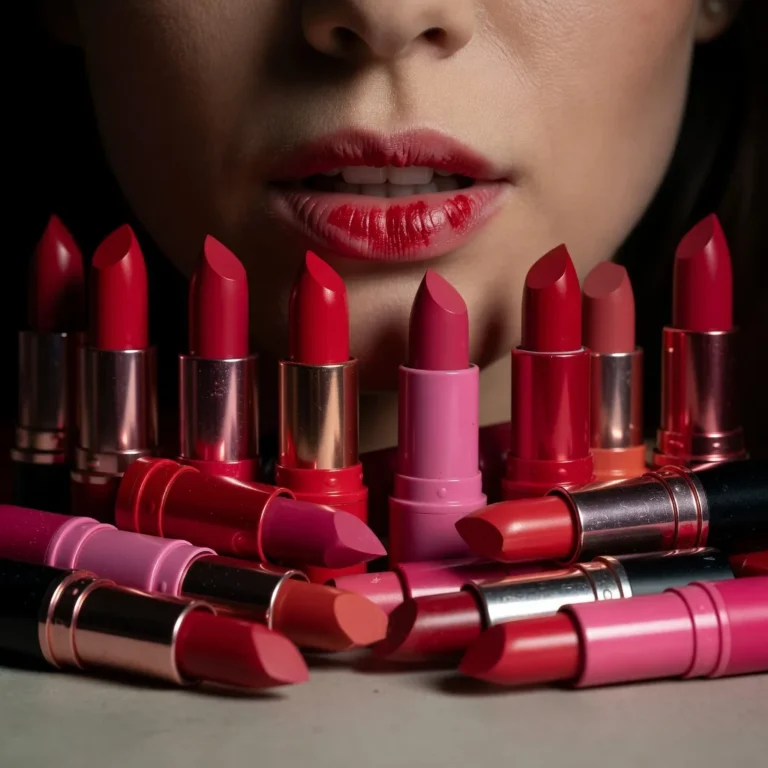
Your nude should be close to your lip colour or slightly deeper, with the same undertone as your skin. Your rose is your everyday colour: a pink, mauve or berry that looks like a healthier version of your own lips. Your red is the statement: blue-red for cool undertones, orange- or brick-red for warm, and a true red that sits between the two for neutral undertones.Add a lip liner that matches your nude or your natural lip line. It works under all three shades, helps lipstick last and stops colour drifting past the edges.
How to Test a Lipstick Shade Before You Buy
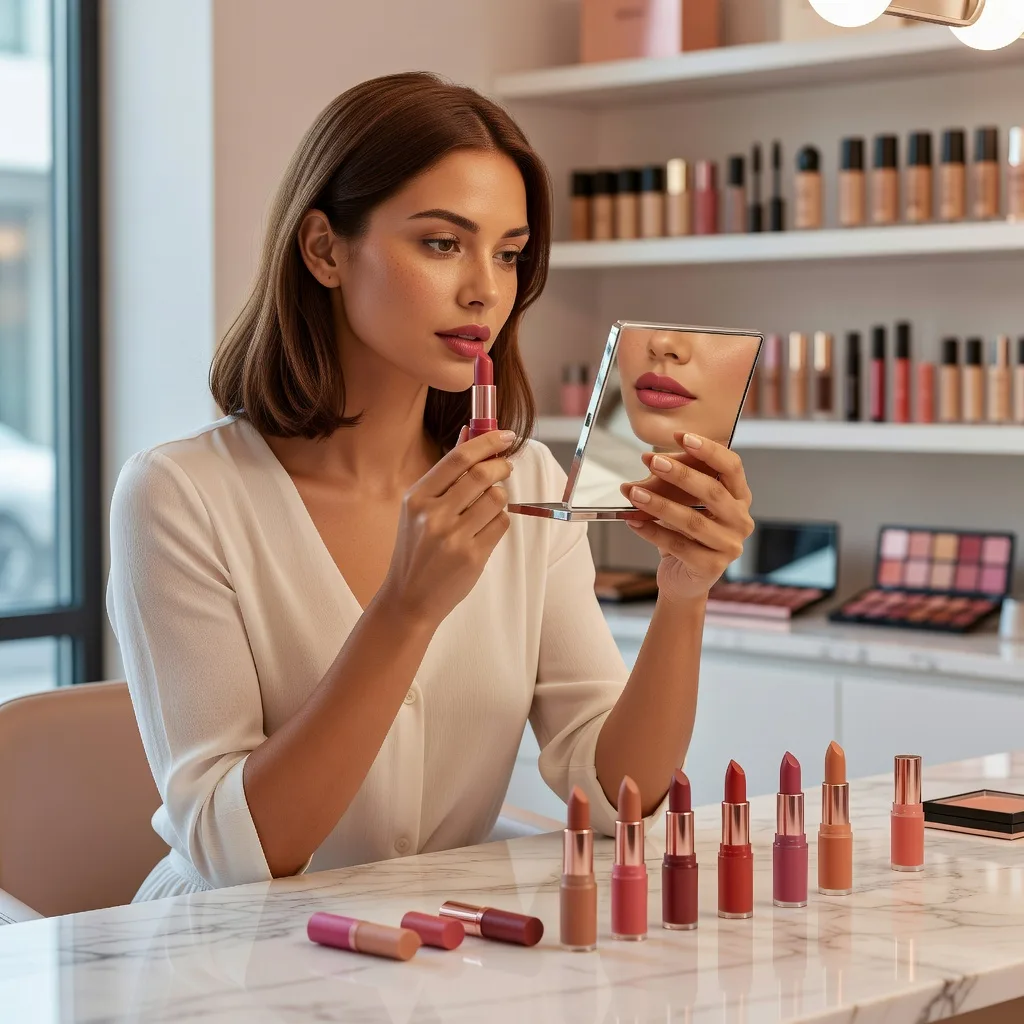
Testing properly is the difference between a lipstick you wear daily and one you forget about. These steps work in a shop or at home with samples.
Know your undertone first
Decide whether you are cool, warm or neutral so you only test shades from the right families.
Swatch on your fingertip
Fingertips are closer in colour and texture to lips than the back of your hand.
Hold it near your mouth
Look in a mirror to see how the swatch sits beside your skin and teeth.
Use a clean tester
Ask for a disposable applicator or cotton bud rather than applying a shared tester straight to your lips.
Check in daylight
Step towards a window or outside; shop lighting is usually warm and bright.
Wait a few minutes
Some formulas darken or shift as they settle.
Take a photo
A quick photo in daylight shows whether the shade flatters you from a normal distance.
When shopping online, compare a shade with a lipstick you already own and like. Swatch photos on several skin tones are more useful than a single product image.
Finish Changes How a Shade Looks
The same colour looks different in each finish. Finish also affects comfort and how forgiving the lipstick is on dry or lined lips.
- Sheer: shows your lip colour through; easy to wear and hard to get wrong.
- Satin or cream: soft shine and good colour; flattering on most lips.
- Matte: strongest colour and longest wear; can emphasise dryness.
- Gloss or shine: makes lips look fuller; colour is lighter and wears off faster.
- Metallic or shimmer: adds dimension, but shows texture and fine lines.
If you are unsure, start with a satin finish. Our guide on the difference between matte and satin finishes explains which suits dry lips, long days and photos.
Choosing Shades for Occasions and Lighting
Context matters as much as skin tone. A lipstick that looks right at a desk can disappear in candlelight or look too strong in bright sun.
- Daytime and office: rosy nudes, soft pinks and muted berries.
- Evening: deeper reds, wines and plums, which hold up in dim light.
- Photos and video: choose a shade slightly deeper or brighter than usual, as cameras flatten colour.
- Summer sun: sheer, bright shades feel lighter; add a lip balm with SPF underneath.
- Winter: richer, creamier formulas help dry lips and suit deeper tones.
Lighting also changes undertones. Warm indoor bulbs make orange-based shades look richer and can turn cool pinks slightly muddy, while cool daylight and office lights do the opposite. This is why a lipstick bought under bright shop lights can look quite different at home. If you often wear lipstick in one setting, such as an office with cool overhead lights, test your shortlist in similar light before deciding.
Shared lipstick testers can spread cold sores and bacteria. Never apply a tester straight to your lips; use a fresh disposable applicator, and skip testing on your mouth altogether if you have a cold sore or cracked lips.
Dos and Don’ts When Choosing a Lipstick Shade
Try This
- Start with your undertone
- Test on your fingertip or lips
- Check the colour in daylight
- Choose nudes slightly deeper than your skin
- Use a liner to keep edges neat
Avoid This
- Choose by the colour in the tube
- Swatch only on the back of your hand
- Apply shared testers directly to your lips
- Pick nudes much paler than your skin
- Buy several similar shades at once
If a shade is almost right, you do not have to throw it away. Mixing it with another lipstick, layering it over a liner, or blotting it down to a stain often fixes the balance.
Honest Limits
Undertone and skin tone rules are guides, not laws. Plenty of people wear shades outside their suggested family and look great, and personal style, hair colour and confidence matter too. If you love a colour, wear it.
Shade names are also unreliable. One brand’s nude is another brand’s rose, and names such as classic red say nothing about undertone, so judge by the swatch rather than the label.
Online swatches are also affected by screen settings, camera white balance and editing, so no photo is a perfect match. Your own fingertip in daylight will always be more accurate than any shade finder or chart.
When to See a Doctor
- Your lips become itchy, swollen or peel after using a new lipstick.
- You have a sore, patch or crust on the lip that does not heal within a few weeks.
- Your lips are persistently cracked or split despite using balm.
- You notice a lip colour change you cannot explain.
Lips have thin skin and burn easily, so the AAD guide on how to apply sunscreen advises a lip balm with SPF 30 or higher.
This article is for general information only. Patch test new lip products if you have sensitive skin or allergies, stop using any product that causes irritation, and see a doctor or dermatologist about persistent lip problems.
FAQ
How do I choose the right lipstick shade?
Match your undertone, adjust for skin depth and test in daylight.
What lipstick suits cool undertones?
Blue-based shades such as berry, rose, plum and blue-red.
What lipstick suits warm undertones?
Coral, peach, brick and orange-red shades.
What lipstick colour is best for fair skin?
Rosy nudes, soft pinks and clear blue-reds.
How do I pick a nude lipstick?
Choose one close to your lip colour or slightly deeper than your skin.
Where should I swatch lipstick?
On your fingertip or lips, not the back of your hand.
Why does lipstick look different on me than in the tube?
Your natural lip colour and the formula’s opacity change it.
Can I wear red lipstick with any skin tone?
Yes, choose a red whose undertone matches yours.
Do I need lip liner?
It is optional but helps with neat edges and wear.
Is it safe to use lipstick testers?
Use a disposable applicator rather than the tester directly.
The Bottom Line
The easiest way to choose a lipstick shade is to find your undertone, pick a depth that suits your skin tone, and account for your natural lip colour.
Test on your fingertip or lips in daylight, build a small trio of nude, rose and red, and do not be afraid to break the rules when a colour makes you happy.

Written by
Registered pharmacist and founder of Facial Adviser. Rakib's pharmacy training covers how skincare actives work and interact; a later course in cosmetology turned that into a focus on facial treatments and skincare products. He plans, researches and edits every guide on the site and checks health claims against sources such as the American Academy of Dermatology, the FDA and the NIH. He is not a dermatologist; see the Editorial Policy and Medical Disclaimer.
About · Editorial policy · How we choose products · Medical disclaimer · Contact
Keep reading: Lipstick
- How to Keep Lipstick Off Teeth: Finger Trick, Blotting, Liner and More
- Best Lip Plumping Device: Suction Plumpers, Glosses and Honest Limits
- How to Make Lipstick Last Longer Chemically: Formulas, Stains and Setting
- How to Keep Lipstick Under a Mask: Transfer-Proof Tips That Work
- Balancing a Heavy Eye and a Light Lip: How to Get It Right
- How to Choose the Right Eye Makeup Color for Your Eyes and Skin
- What Can You Use to Make Your Makeup Stay On All Day? 9 Products and Tricks