How to Keep Lipstick Under a Mask: Transfer-Proof Tips That Work
Face masks and lipstick do not get along easily. The fabric presses on your lips, your breath adds warmth and moisture, and every time you talk the mask shifts a little. The result is often a stained mask, a smeared lip line and colour that has vanished by lunch.
Part of our guide to makeup how-to. Start with: How to Choose Lipstick Shade: Undertone, Skin Tone and Testing Tips
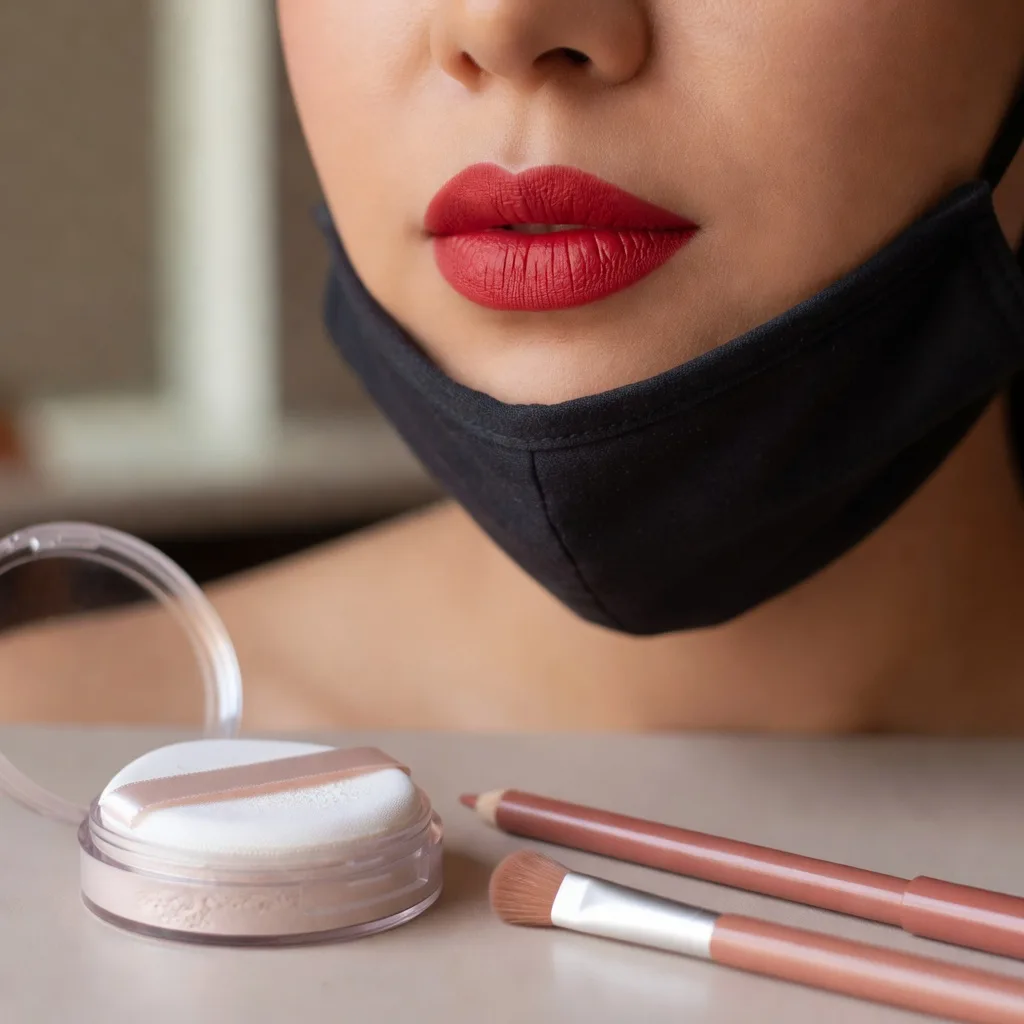
To keep lipstick under a mask, choose a transfer-proof liquid lipstick or a lip stain, apply it in thin layers on dry, smooth lips, and give it time to set completely before the mask goes on. Blot with a tissue between layers, and if you prefer a creamy lipstick, press a little translucent powder through a tissue to lock it down. Line and fill the whole lip with liner for a base that clings. Keep lip care simple: exfoliate gently, use a light balm well before applying colour, and choose a mask that sits slightly away from your lips. Glosses and creamy balms will transfer no matter what, so save them for mask-free moments.
In short: thin layers of a transfer-proof formula, fully set, under a well-fitted mask.
Lip care matters as much as colour. The American Academy of Dermatology advises protecting your lips with a lip balm of SPF 30 or higher when you are outdoors, which is worth doing on mask-free days and under a stain.
This guide covers which formulas survive a mask, how to apply them, how to blot and set, and how to stop masks drying out or chafing your lips.
Shopping these picks?
Amazon Prime members get fast, free shipping on eligible items, plus Prime Video, Amazon Music and member deals. New members can start with a free trial.
Start a free Prime trialAged 18 to 24? Prime for Young Adults comes with a longer free trial and a lower price after it.
Affiliate link: we may earn a commission at no extra cost to you.
Recommended Transfer-Proof Lipsticks, Stains and Lip Care




Key Takeaways
- Transfer-proof liquid lipsticks and lip stains cope best with masks.
- Apply colour to clean, dry lips in thin layers.
- Let each layer set fully before putting on your mask.
- Blotting and a light dusting of powder help creamy lipsticks stay put.
- Glosses and rich balms transfer easily, so skip them under a mask.
- Apply lip balm well before colour, not right before the mask.
- A mask with a little space in front of the mouth reduces smudging.
Jump to a Section
- Why Lipstick Smudges Under a Mask
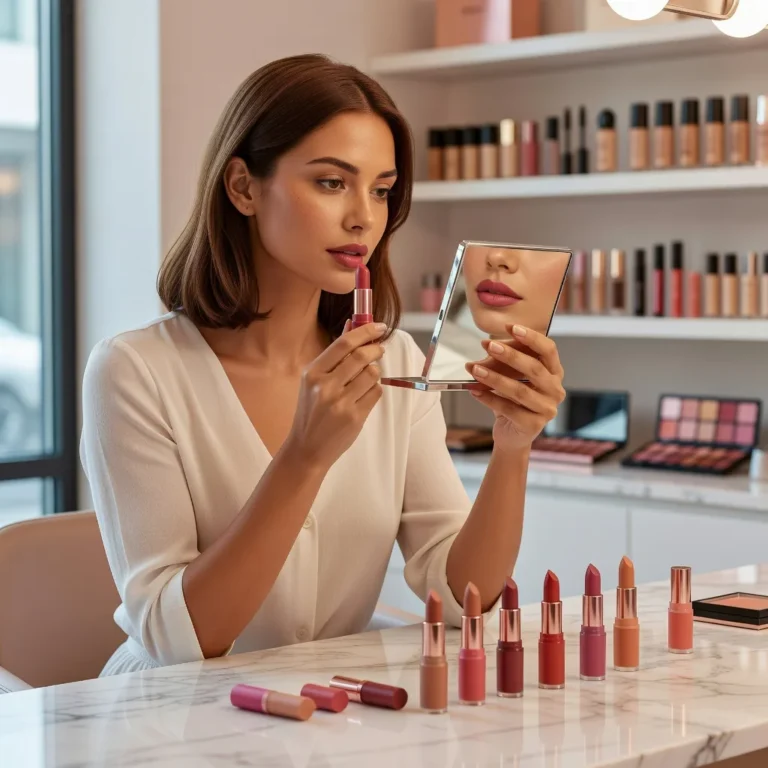
- Which Lipstick Formulas Work Best Under a Mask
- Lip Stains: The Low-Effort Mask Option
- How to Apply Lipstick That Stays Put Under a Mask
- Blotting and Setting Tricks for Creamy Lipsticks
- Mask-Friendly Lip Care
- Choosing and Wearing a Mask to Protect Your Lipstick
- Shade Choices That Hide Transfer
- Touching Up Without Making a Mess
- Dos and Don’ts for Lipstick Under a Mask
- Honest Limits
- When to See a Dermatologist
- Frequently Asked Questions
- The Bottom Line
Why Lipstick Smudges Under a Mask
Understanding what goes wrong makes the fixes easier. Lipstick under a mask faces three problems at once: friction, moisture and warmth. Each one works against the waxes and oils that hold colour on your lips.
- Friction: the mask rubs across your lips every time you talk, smile or adjust it.
- Moisture: warm breath creates a humid pocket that softens creamy formulas.
- Warmth: body heat under the mask melts waxy lipsticks faster than in open air.
- Pressure: close-fitting masks press directly on the lips, lifting colour onto the fabric.
- Oils: lip balm or a greasy base underneath makes colour slide rather than grip.
Creamy and glossy lipsticks are designed to stay soft and moist on the lips, which is exactly what makes them transfer. Formulas that dry down to a flexible film, or that stain the top layer of the lips, have far less loose product to rub off. That is why the choice of formula matters more than any single trick.
Which Lipstick Formulas Work Best Under a Mask
Not every long-wear label means mask-proof. This table compares the most common formulas and how they usually behave under fabric. Individual products vary, so test yours for a few hours at home first.
| Formula | Transfer under a mask | Comfort | Best for |
|---|---|---|---|
| Transfer-proof liquid lipstick | Very low once set | Can feel dry | Long days, bold colours |
| Lip stain or tint | Very low | Light, barely there | Natural flush, all-day wear |
| Peel-off tint | Very low | Tight while drying | Weekends, low-maintenance wear |
| Satin bullet lipstick | Moderate | Comfortable | Short wear, blotted and powdered |
| Matte bullet lipstick | Low to moderate | Medium | Office days with a touch-up |
| Cream lipstick | High | Very comfortable | Mask-free occasions |
| Gloss or balm | Very high | Very comfortable | Not recommended under masks |
Transfer-proof liquid lipsticks contain volatile ingredients that evaporate after application, leaving pigment in a thin, flexible film. Our guide on how to make lipstick last longer chemically explains why these film-formers grip so well. If you prefer bullets, choose a matte or satin finish, which carries less slip than a cream and wears down more evenly under fabric.
Lip Stains: The Low-Effort Mask Option
Lip stains are the simplest way to keep colour under a mask because there is very little product sitting on the surface. They tint the top layer of the lips with dyes rather than coating them with pigment, so there is almost nothing to wipe off.
- Water-based tints give a sheer, natural wash of colour that builds with layers.
- Gel stains are slightly thicker and easier to control around the lip line.
- Peel-off tints dry into a film you remove after a few minutes, leaving colour behind.
- Stain pens give precise application and are handy for quick touch-ups.
- Most stains fade gradually from the centre, so you may need to refresh the middle after meals.
The trade-off is shade range and finish. Stains usually look sheer and slightly uneven, which suits a natural look but not a crisp bold lip. Dyes sink into the surface and fade gradually, while pigments sit on top, which is why stains behave so differently from opaque lipstick.
Stains can cling to dry patches and emphasise flakes. Smooth your lips the night before rather than right before applying, because freshly exfoliated lips can absorb stain unevenly.
How to Apply Lipstick That Stays Put Under a Mask
Technique turns a good formula into a reliable one. Follow these steps in order, and allow a few extra minutes in your morning routine for setting time.
Prep the night before
Apply a thick balm or overnight lip mask so lips are smooth by morning.
Remove leftover balm
Blot off any balm in the morning so the surface is clean and dry.
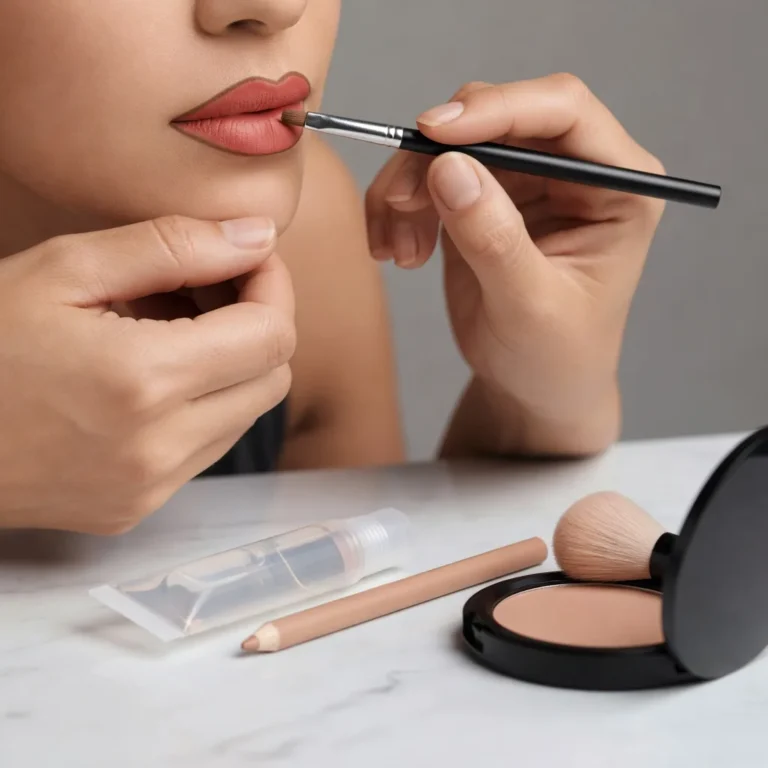
Line and fill with liner
Outline your lips and fill them in completely to create a grippy base.
Apply a thin first layer
Use a transfer-proof liquid lipstick or stain, starting at the centre and working outwards.
Wait and blot
Let the layer dry for a minute or two, then press a tissue gently between your lips.
Add a second thin layer
Build colour slowly rather than applying one thick coat.
Set before masking
Wait three to five minutes until the lips feel completely dry, then put on your mask.
Test whether your lipstick is set by pressing the back of your hand lightly to your lips. If any colour transfers, wait another minute before putting on the mask.
Blotting and Setting Tricks for Creamy Lipsticks
If you love a bullet lipstick that is not transfer-proof, you can still reduce smudging a lot. The goal is to remove excess product and give what is left something to grip.
- Apply one layer, then press a single-ply tissue between your lips to lift excess oil.
- Separate a tissue into one thin layer, lay it over your lips and dust translucent powder through it.
- Apply a second layer of lipstick and blot again.
- Repeat once more for very long days; three thin, set layers outlast one thick one.
- Finish with a lipstick sealer or top coat if you have one, following the label.
This method will not make a cream lipstick fully transfer-proof, but it greatly reduces the amount that ends up on your mask. It also helps with bleeding into fine lines, which our guide on how to keep lipstick from bleeding covers in more detail.
Mask-Friendly Lip Care
Long-wear formulas and masks can both dry out your lips. Warm, humid air under the mask followed by cold, dry air outside is hard on thin lip skin, and dry lips make lipstick look patchy and flake off sooner.
| Time | What to do | Why |
|---|---|---|
| Night | Thick balm or overnight lip mask | Repairs and softens while you sleep |
| Morning | Blot off balm before colour | Clean surface helps colour grip |
| Midday | Light balm over a stain if lips feel tight | Adds comfort without much transfer |
| Outdoors without a mask | Lip balm with SPF 30 or higher | Protects lips from sun damage |
| Evening | Remove long-wear colour gently | Prevents rubbing and flaking |
Choose simple, fragrance-free balms if your lips sting or peel. The AAD guide on how to apply sunscreen recommends a lip balm with SPF 30 or higher to protect your lips outdoors. Avoid licking your lips under the mask; saliva evaporates quickly and leaves them drier than before. If the skin around your mouth is also flaking, our guide on patchy dry skin around the mouth explains common causes and fixes.
Choosing and Wearing a Mask to Protect Your Lipstick
The mask itself makes a big difference. A mask that sits flat against your mouth will pick up colour with every word, while one that holds fabric away from your lips leaves your lipstick far more intact.
- Choose masks with a structured or cone shape that creates space in front of the mouth.
- Use a mask bracket, a small frame worn inside the mask, to lift fabric off the lips.
- Pick darker fabrics if you wear bold colours, so any transfer is less visible.
- Adjust the nose wire so the mask does not slide down onto your lips.
- Carry a spare mask for long days in case the first one gets marked.
Wash reusable fabric masks after each wear, because trapped makeup, oil and bacteria can irritate the skin around your mouth. Lipstick marks usually lift with a little washing-up liquid rubbed in before washing, and a stain remover can help with stubborn marks on light fabrics.
Shade Choices That Hide Transfer
Even the best formula may fade a little by the end of a long day. Some shades wear down more gracefully than others, which helps when you cannot touch up often.
- Nudes and your-lips-but-better shades look natural even as they fade.
- Soft pinks and berries fade into a flushed stain rather than a patchy ring.
- Deep reds and browns are dramatic but show every gap, so reapply more often.
- Very bright or neon shades stain masks visibly and are best reserved for mask-free events.
- Matching your liner closely to your lipstick hides fading at the edges.
If you are not sure which colours suit you, start with a shade close to your natural lip colour or one step deeper. Remember that above the mask, your eyes do most of the work, so a stronger eye look and a softer lip can balance nicely.
Touching Up Without Making a Mess
Transfer-proof liquids often wear first at the centre of the lips, especially after eating or drinking. Adding more on top can cause flaking, so touch up with care.
- Wash your hands before touching your lips or removing your mask.
- Apply a tiny amount of balm to the worn centre only, then pat colour over it.
- Use a lip stain pen or the same liquid in a very thin layer on bare areas.
- Let the touch-up dry fully before replacing your mask.
- Use a clean cotton bud to tidy the edges instead of rubbing with fingers.
Avoid sharing lipsticks, lip applicators or masks. Lip products can carry cold sore viruses and bacteria. Replace any lip product you used during a cold sore outbreak.
Dos and Don’ts for Lipstick Under a Mask
Do
- Choose transfer-proof liquids or stains
- Apply thin layers and let each one set
- Blot and powder creamy lipsticks
- Keep lips moisturised overnight
- Wash fabric masks after each wear
Don’t
- Wear gloss or rich balm under a mask
- Put your mask on while colour is still wet
- Layer liquid lipstick thickly
- Lick your lips under the mask
- Share lip products or masks
Honest Limits
No lipstick is completely smudge-proof under a mask all day. Even the most durable transfer-proof formulas soften with oils from food, wear at the centre of the lips and may leave a faint mark on fabric after hours of talking. Claims such as 24-hour wear describe ideal conditions, not a warm mask on a busy day.
The most long-lasting formulas are also often the most drying. If your lips feel tight, peel or crack, a sheer stain with a balm routine may look better overall than a bold matte that flakes. Comfort and healthy lips are worth more than perfect colour that only lasts until lunch.
When to See a Dermatologist
- Your lips stay cracked, peeling or sore despite regular balm.
- You develop redness, swelling or itching after using a lip product.
- The skin around your mouth breaks out or develops a rash under masks.
- You have cold sores that return frequently.
This article is for general information and does not replace professional medical advice. Patch test new lip products, stop using anything that irritates you, and see a board-certified dermatologist for persistent lip or skin problems.
Frequently Asked Questions
What lipstick does not come off under a mask?
Transfer-proof liquid lipsticks and lip stains, once fully set.
How long should lipstick dry before putting on a mask?
Around three to five minutes, until it feels completely dry.
Does setting powder stop lipstick transfer?
It reduces transfer when dusted through a tissue, but does not stop it fully.
Can I wear lip balm under a mask with lipstick?
Apply balm well before colour, and blot it off first.
Are lip stains good for masks?
Yes, they have very little surface product to rub off.
Why does my liquid lipstick flake under a mask?
Thick layers, dry lips or layering over a worn film.
Should I wear gloss under a mask?
No, gloss transfers very easily.
Does a mask bracket help lipstick stay on?
Yes, it keeps fabric away from your lips.
How do I get lipstick off a fabric mask?
Pre-treat with washing-up liquid, then wash as usual.
Can masks dry out your lips?
Yes, the change between humid and dry air can dry lips.
The Bottom Line
The most reliable way to keep lipstick under a mask is a transfer-proof liquid or stain, applied thinly to smooth, dry lips and allowed to set fully.
Blot and powder creamy lipsticks, choose a mask that sits away from your mouth, and look after your lips overnight so colour goes on smoothly each morning.

Written by
Registered pharmacist and founder of Facial Adviser. Rakib's pharmacy training covers how skincare actives work and interact; a later course in cosmetology turned that into a focus on facial treatments and skincare products. He plans, researches and edits every guide on the site and checks health claims against sources such as the American Academy of Dermatology, the FDA and the NIH. He is not a dermatologist; see the Editorial Policy and Medical Disclaimer.
About · Editorial policy · How we choose products · Medical disclaimer · Contact
Keep reading: Lipstick
- How to Choose Lipstick Shade: Undertone, Skin Tone and Testing Tips
- Balancing a Heavy Eye and a Light Lip: How to Get It Right
- When Can You Wear Makeup After Lip Filler?
- How to Sanitize Lipstick: Alcohol Method, After Illness and Testers
- What Lipstick Goes With Green Eyeshadow? Shades for Every Occasion
- What Is the Most Expensive Lipstick in the World? Luxury Lipsticks Explained
- How to Properly Put On Face Makeup: The Right Order, Step by Step
- How to Find the Right Shade of Makeup: Undertone, Depth and Testing