How to Make Lipstick Last Longer Chemically: Formulas, Stains and Setting
Most lipsticks fade because of simple chemistry: the oils and waxes that make them creamy also make them soft, mobile and easy to wipe away. Long-wear lipsticks, stains and setting tricks all work by changing that chemistry, either in the formula itself or in the way you apply and set colour on your lips.
Part of our guide to makeup how-to. Start with: How to Choose Lipstick Shade: Undertone, Skin Tone and Testing Tips
To make lipstick last longer chemically, use a formula designed to set, or change how your lipstick sits on the lips. Long-wear and transfer-proof liquid lipsticks contain film formers, such as silicone resins and polymers, dissolved in volatile solvents that evaporate after application, leaving a thin, flexible film that grips pigment in place. Lip stains use dyes that bind to the surface of the lip rather than sitting on top. With ordinary lipstick, you can mimic the effect by lining and filling with a waxy liner, blotting away excess oil, pressing translucent powder through a tissue and layering again. Setting spray adds a light film on top.
In short: film formers, stains and oil-absorbing layers are what keep colour in place, not just more product.
Long-wear formulas can be drying, so the American Academy of Dermatology’s advice to use a lip balm with SPF 30 or higher is useful for keeping lips comfortable and protected between wears.
This guide explains the chemistry behind long-wear and transfer-proof lipsticks, how lip stains differ, how powder, tissue and spray setting work, and how to keep long-lasting colour comfortable.
Shopping these picks?
Amazon Prime members get fast, free shipping on eligible items, plus Prime Video, Amazon Music and member deals. New members can start with a free trial.
Start a free Prime trialAged 18 to 24? Prime for Young Adults comes with a longer free trial and a lower price after it.
Affiliate link: we may earn a commission at no extra cost to you.
Recommended Long-Wear Lipsticks, Stains and Setting Products




In Brief
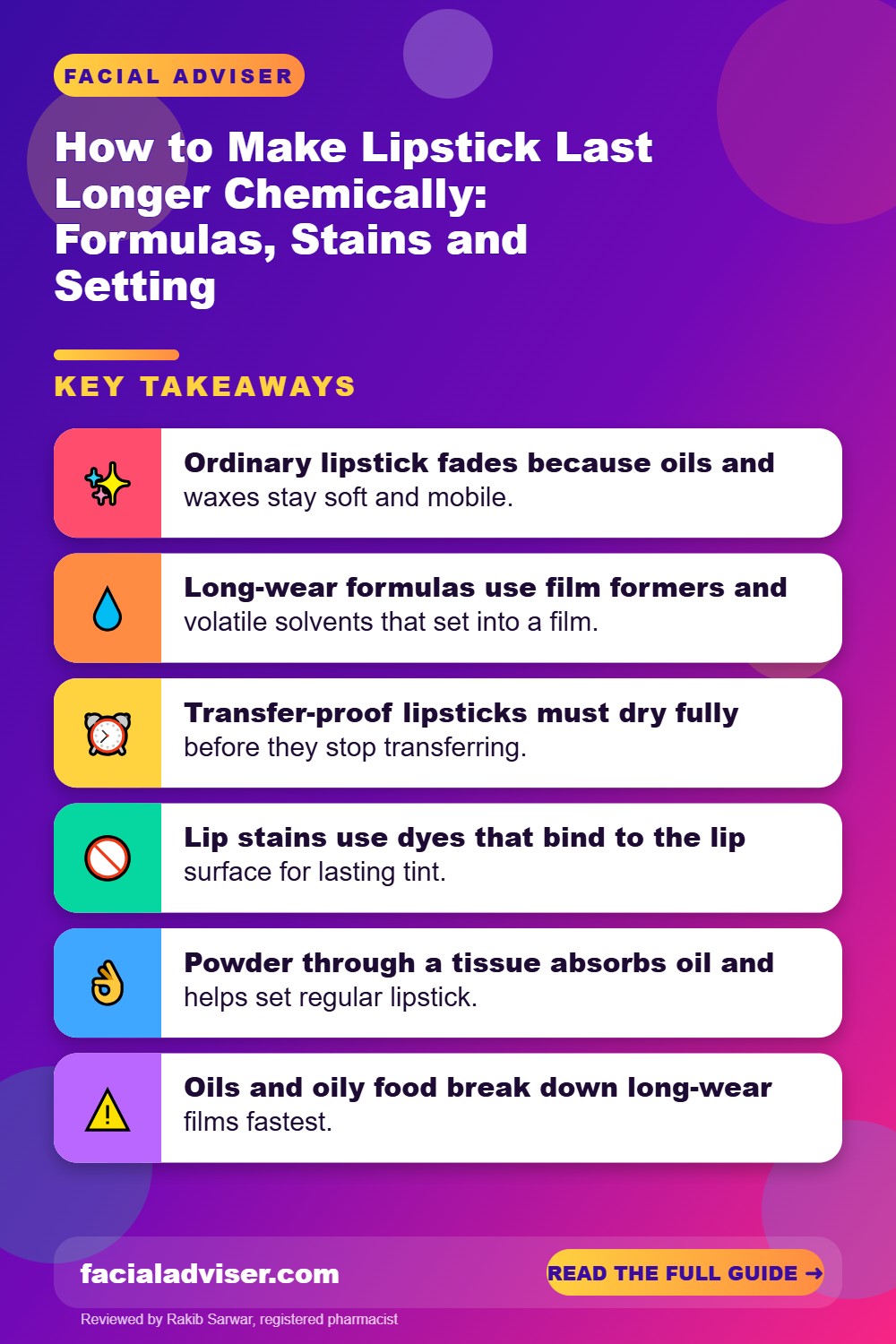
- Ordinary lipstick fades because oils and waxes stay soft and mobile.
- Long-wear formulas use film formers and volatile solvents that set into a film.
- Transfer-proof lipsticks must dry fully before they stop transferring.
- Lip stains use dyes that bind to the lip surface for lasting tint.
- Powder through a tissue absorbs oil and helps set regular lipstick.
- Oils and oily food break down long-wear films fastest.
- Long-wear colour can dry lips, so balm and gentle removal matter.
In This Guide
- Why Regular Lipstick Fades So Quickly
- How Long-Wear and Transfer-Proof Formulas Work
- Lip Stains: Colour That Binds to the Lip
- Comparing Long-Lasting Lip Options
- Setting Tricks: Powder, Tissue and Spray
- How to Layer Lip Products for Maximum Wear
- What Breaks Down Long-Wear Colour
- Keeping Long-Wear Colour Comfortable
- Dos and Don’ts for Long-Wear Lipstick
- Honest Limits
- When to See a Doctor
- Your Questions, Answered
- Summing Up
Why Regular Lipstick Fades So Quickly
A classic bullet lipstick is mostly waxes, oils and pigments. The waxes give it shape, the oils make it glide and feel comfortable, and the pigments give colour. That same mix explains why it does not last.
- Oils never fully dry, so the colour layer stays soft and wipes off easily.
- Body heat softens waxes, so lipstick moves and bleeds.
- Eating, drinking and talking rub the soft layer away.
- Oily food and drinks dissolve the oils in the lipstick.
- Saliva and licking your lips gradually break down the layer.
Long-wear products solve this by replacing some of the oil with ingredients that dry and set, or by using colourants that attach to the lip instead of sitting on top. If you want to understand how colourants differ, our guide on the difference between pigment and dye explains why stains behave so differently from opaque lipsticks.
How Long-Wear and Transfer-Proof Formulas Work
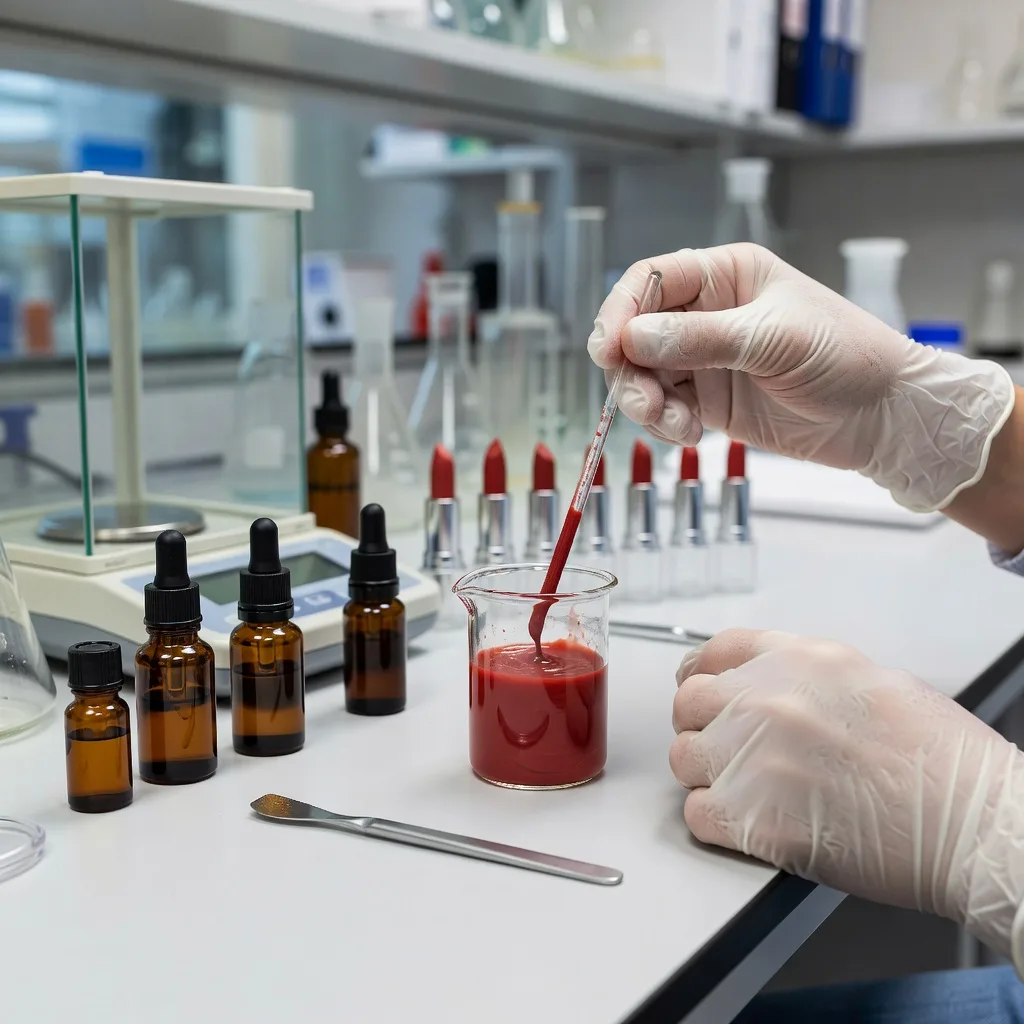
Most long-wear liquid lipsticks rely on the same basic idea: dissolve a film-forming ingredient in a liquid that evaporates, so the colour sets once the liquid is gone.
| Ingredient type | Role | What you notice |
|---|---|---|
| Volatile solvents (such as isododecane or volatile silicones) | Carry the colour, then evaporate | A wet feel that dries down within a minute or two |
| Film formers (such as silicone resins or acrylate polymers) | Form a thin, flexible film that holds pigment | Colour that stops transferring once dry |
| Pigments | Provide the colour and opacity | Strong, even colour |
| Plasticisers and small amounts of oil | Keep the film flexible | Less cracking and a more comfortable feel |
| Powders and fillers | Give a matte finish and absorb oil | A soft, velvety texture |
Once the solvent evaporates, the film clings to the lips and resists rubbing. This is why transfer-proof lipsticks feel slightly tight and why you must let them dry fully before pressing your lips together. Rubbing them too early breaks the film before it has formed.
Ingredient names on labels vary. Look for words such as trimethylsiloxysilicate, isododecane, acrylates copolymer or polymer on the ingredient list as signs of a film-forming, long-wear formula.
Lip Stains: Colour That Binds to the Lip
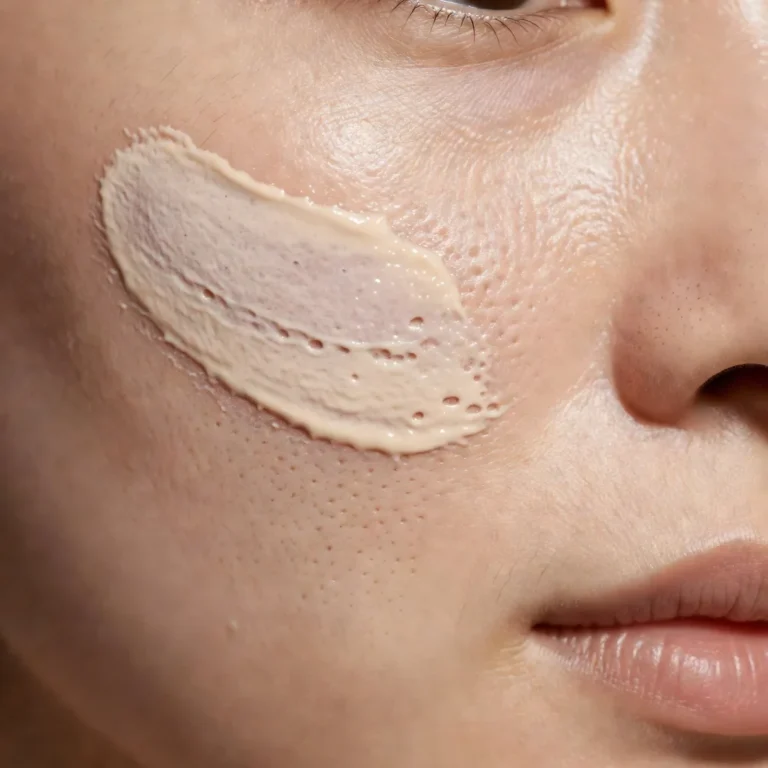
Lip stains take a different approach. Instead of laying a coloured film on top, they use water-soluble dyes in a thin water or gel base. The dyes are taken up by the outermost layer of the lips and leave a tint that lasts until those surface cells are shed or the dye gradually fades.
- They feel almost weightless, because there is very little on the surface.
- They rarely transfer once dry.
- Colour is usually sheer and buildable rather than fully opaque.
- They can look uneven on very dry or flaky lips, because flakes absorb more dye.
- Some stains can be drying, especially those with alcohol.
Stains are a good base under any lipstick. Even when the lipstick on top wears off, the tinted base underneath keeps your lips looking coloured.
Comparing Long-Lasting Lip Options
Each approach has trade-offs between wear time, comfort and finish. Use this as a quick guide.
| Product | Typical wear | Transfer | Comfort | Best for |
|---|---|---|---|---|
| Creamy bullet lipstick | A few hours | High | Very comfortable | Short events, dry lips |
| Matte bullet lipstick | Several hours | Medium | Comfortable | Everyday wear |
| Long-wear liquid lipstick | Most of the day | Low once set | Can feel dry | Weddings, work, heat |
| Lip stain or tint | Most of the day as a tint | Very low | Light | Natural colour, base layer |
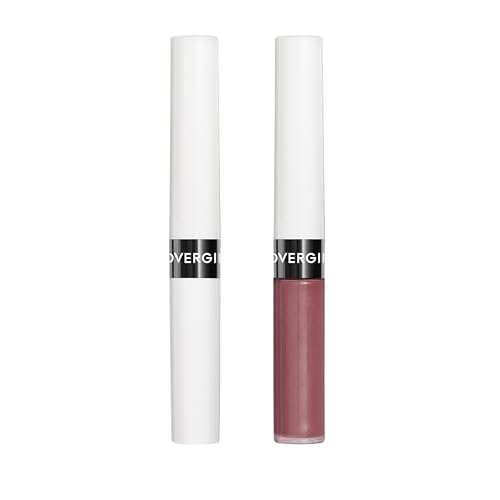
| Two-step lipstick with topcoat | Most of the day | Low | Moderate | Bold, long-wear colour with shine |
Wear times depend on what you eat and drink, how often you touch your lips and how carefully you apply, so treat these as rough guides rather than guarantees.
Setting Tricks: Powder, Tissue and Spray
If you prefer a regular lipstick, you can borrow some long-wear chemistry. These tricks remove excess oil and add a dry, grippy layer that helps colour stay.
- Blotting: pressing a tissue between your lips removes surface oil and leaves the pigment behind.
- Powder through tissue: separate a single ply of tissue, hold it over the lips and pat translucent powder through it; the powder absorbs oil and sets the pigment.
- Layering: apply lipstick, blot, powder, then apply a second thin layer; each layer grips the one below.
- Setting spray: a light mist adds a thin film-forming layer on top; hold it at arm’s length and keep your lips closed.
- Liner base: a waxy liner filled over the whole lip is less oily than most lipsticks and holds colour underneath.
These tricks will not make a creamy lipstick fully transfer-proof, but they can noticeably extend wear. For setting the rest of your face the same way, see our guide on what you can use to make makeup stay on all day.
How to Layer Lip Products for Maximum Wear
Combining a stain, liner and long-wear or set lipstick gives the most durable result. Follow these steps in order.
Prep and remove oil
Exfoliate flakes gently, apply balm well ahead of time, then blot the lips so they are clean and dry.
Apply a stain as a base
Dab a thin layer of lip stain and let it dry fully.
Line and fill
Outline the lips with a long-wear liner and fill in the whole lip.
Apply colour in thin layers
Use a long-wear liquid lipstick, or a regular lipstick applied with a brush.
Let it dry or blot and powder
Keep lips apart until a liquid lipstick dries, or blot and powder a regular lipstick through tissue.
Add a second layer if needed
Apply another thin coat for deeper colour and longer wear.
Mist and leave it alone
Finish with a light setting spray and avoid pressing your lips together for a minute.
To touch up a long-wear liquid lipstick, add a very thin layer only to the centre of the lips. Piling on full layers makes the film thick, flaky and more likely to crack.
What Breaks Down Long-Wear Colour
Even the toughest formulas have a weakness: oil. Because many long-wear films are made from silicone or polymer ingredients that dissolve in oil, oily food and some lip products break them down quickly.
- Oily or greasy foods, such as pizza, fries and dressings.
- Lip balm or gloss applied on top of a long-wear lipstick.
- Rubbing with a napkin rather than blotting.
- Licking the lips often.
- Hot drinks, which soften films and waxes at the rim of the cup.
The same fact is useful at the end of the day. An oil-based cleanser or micellar water with oil is what removes long-wear lipstick most gently. Our guide on how to keep lipstick from bleeding covers liners and primers that also help colour stay in place.
Keeping Long-Wear Colour Comfortable
Dryness is the most common complaint about long-wear lipsticks and stains. Because the formula is designed to hold on and resist oils, it can leave lips feeling tight by the end of the day, and removing it can be harsh if you scrub.
- Apply a nourishing balm at night and on days off from long-wear colour.
- Hydrate lips well ahead of application, then blot so the film can still grip.
- Choose formulas with a satin or comfort-matte finish if fully matte ones crack.
- Remove colour by holding an oil-soaked pad on the lips for a few seconds before wiping.
- Alternate long-wear days with creamy or sheer lipsticks.
If your lips crack or peel every time you wear long-wear colour, save it for occasions when you really need it and use a stain or satin lipstick with a liner day to day.
Dos and Don’ts for Long-Wear Lipstick
Worth Doing
- Start with clean, blotted, oil-free lips
- Let liquid lipstick dry fully before pressing your lips together
- Apply thin layers
- Use an oil-based remover at night
- Moisturise lips between wears
Skip It
- Apply balm straight under a liquid lipstick
- Add gloss on top unless the formula is designed for it
- Scrub off long-wear colour with a dry wipe
- Wear transfer-proof formulas every day if your lips are dry or cracked
- Expect any lipstick to survive a greasy meal untouched
Honest Limits
There is always a trade-off between wear and comfort. The ingredients that make a lipstick set and resist transfer are the same ones that can make it feel tight and dry. Very long-wearing formulas can also emphasise lines and flakes, because a firm film shows texture more than a soft one.
No lipstick is truly permanent or completely smudge-proof through eating, especially oily food. Claims such as 24-hour wear usually describe ideal conditions. A realistic goal is colour that stays neat through normal drinking and talking, with a quick touch-up after meals.
When to See a Doctor
Long-wear lipsticks are safe for most people, but they can dry or irritate sensitive lips, particularly with daily use.
Stop using a long-wear lipstick or stain if your lips become red, itchy, swollen, peeling or blistered. Irritation and allergic reactions to lip products do happen, and some reactions only appear after repeated use.
- Your lips stay dry, cracked or sore despite balm and breaks from long-wear products.
- You react to several different lip products.
- You have a sore or patch on the lip that does not heal within a few weeks.
- You notice swelling of the lips or face after applying a product.
For everyday protection, the AAD guide on how to apply sunscreen recommends a lip balm with SPF 30 or higher.
This article is for general information only. Patch test new lip products if you have sensitive skin or allergies, and see a doctor or board-certified dermatologist about lip reactions or persistent lip problems. Seek urgent care for sudden lip or facial swelling.
Your Questions, Answered
What makes lipstick last longer chemically?
Film formers and volatile solvents that set into a flexible film.
What is a film former in lipstick?
An ingredient, such as a silicone resin or polymer, that forms a thin layer holding pigment in place.
How does transfer-proof lipstick work?
The solvent evaporates and leaves a set film that resists rubbing.
Do lip stains last longer than lipstick?
Usually yes, because the dye binds to the lip surface.
Does powder make lipstick last longer?
Yes, powder through a tissue absorbs oil and sets colour.
Does setting spray work on lipstick?
It can add a little wear when misted lightly.
Why does oily food remove long-wear lipstick?
Oils dissolve many long-wear films.
How do I remove long-wear lipstick?
Use an oil-based cleanser or micellar water with oil.
Is long-wear lipstick bad for lips?
It can be drying, so moisturise and take breaks.
Can I put lip balm over liquid lipstick?
It usually breaks down the film, so avoid it unless the formula allows it.
Summing Up
Lipstick lasts longer when its chemistry changes: film formers and evaporating solvents set colour into a flexible layer, stains bind to the lip surface, and powder and blotting remove the oil that makes ordinary lipstick move.
Start with clean, oil-free lips, layer a stain, liner and thin coats of colour, keep oily products away, and look after your lips with balm, gentle removal and SPF between wears.

Written by
Registered pharmacist and founder of Facial Adviser. Rakib's pharmacy training covers how skincare actives work and interact; a later course in cosmetology turned that into a focus on facial treatments and skincare products. He plans, researches and edits every guide on the site and checks health claims against sources such as the American Academy of Dermatology, the FDA and the NIH. He is not a dermatologist; see the Editorial Policy and Medical Disclaimer.
About · Editorial policy · How we choose products · Medical disclaimer · Contact
Keep reading: Lipstick
- How to Choose Lipstick Shade: Undertone, Skin Tone and Testing Tips
- How to Keep Lipstick Under a Mask: Transfer-Proof Tips That Work
- Balancing a Heavy Eye and a Light Lip: How to Get It Right
- When Can You Wear Makeup After Lip Filler?
- How to Sanitize Lipstick: Alcohol Method, After Illness and Testers
- What Lipstick Goes With Green Eyeshadow? Shades for Every Occasion
- Best Way to Use Makeup Remover: Micellar Water, Balms, Oils and Eye Removers
- How to Properly Put On Face Makeup: The Right Order, Step by Step