How to Keep Lipstick From Bleeding Into Lines Around Your Lips
Lipstick that starts crisp and ends up in tiny coloured lines around your mouth is frustrating, and it becomes more common with age. The movement is called bleeding or feathering, and it happens when colour travels into the fine lines at the edge of the lips.
Part of our guide to makeup how-to. Start with: How to Choose Lipstick Shade: Undertone, Skin Tone and Testing Tips
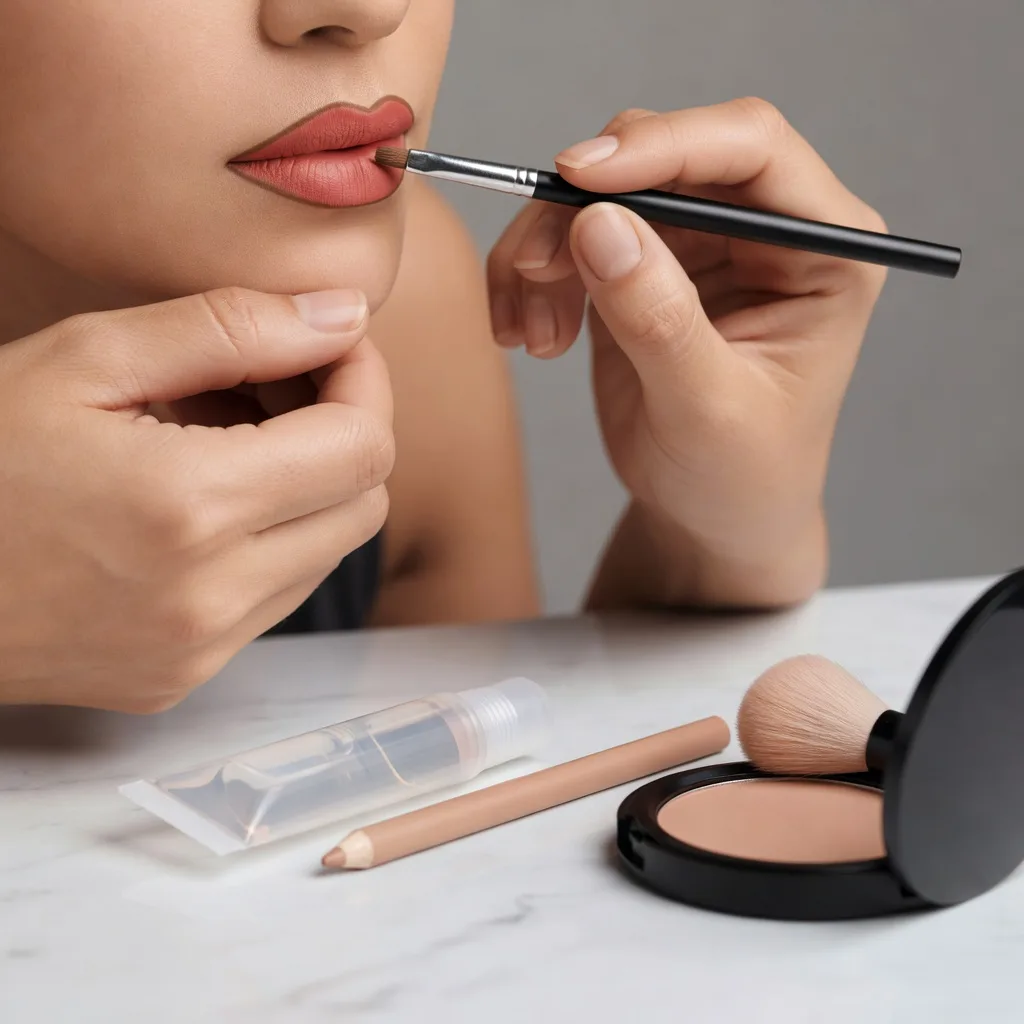
To keep lipstick from bleeding, create a barrier at the lip line and use less slippery colour. Start with smooth, hydrated but not greasy lips, apply a lip primer, then outline your lips with a clear anti-feathering liner or a liner that matches your lipstick or lip colour. Fill in with liner, apply a thin layer of a long-wear or matte lipstick, blot and reapply. For extra hold, trace a thin line of concealer around the outside of the lips. Creamy, glossy and very emollient formulas bleed most, especially in heat, so save them for short wear or use them only in the centre of the lips.
In short: prime, line, use a thinner or longer-wearing formula and seal the edge with concealer.
Because lines around the mouth are partly linked to sun damage, the American Academy of Dermatology’s advice to wear a lip balm with SPF 30 or higher also helps keep the lip border smoother over time.
This guide explains why lipstick bleeds into lines around the lips, which products help, a step-by-step application routine and what to do if feathering is caused by deeper wrinkles.
Shopping these picks?
Amazon Prime members get fast, free shipping on eligible items, plus Prime Video, Amazon Music and member deals. New members can start with a free trial.
Start a free Prime trialAged 18 to 24? Prime for Young Adults comes with a longer free trial and a lower price after it.
Affiliate link: we may earn a commission at no extra cost to you.
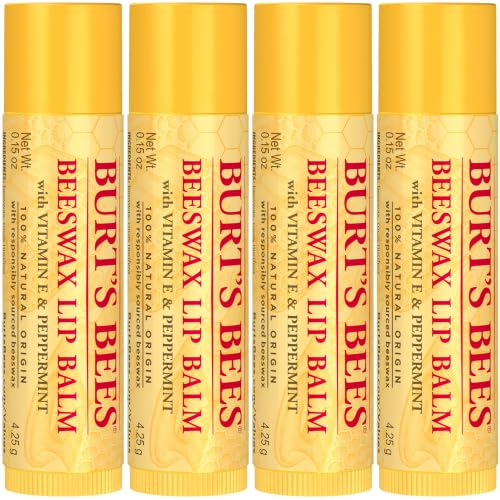
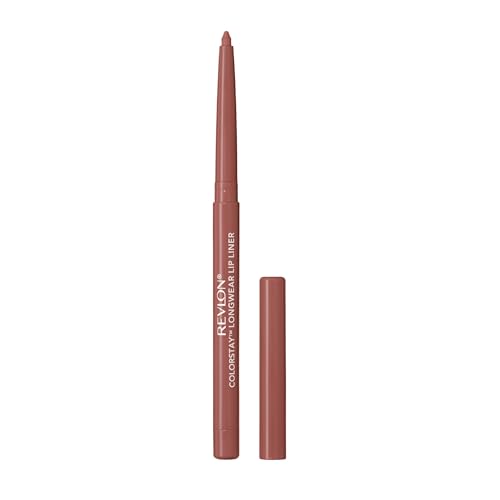
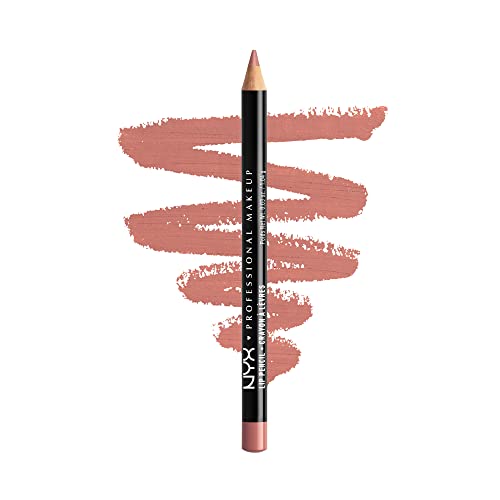
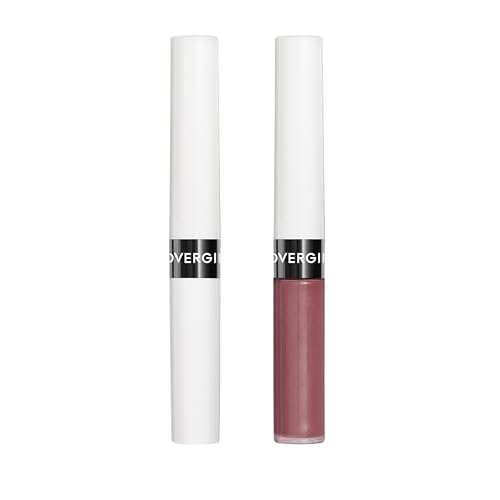
Recommended Anti-Feathering Liners, Primers and Long-Wear Lipsticks


Jump to a Section
- Why Lipstick Bleeds Into Lines Around the Lips
- Products That Stop Lipstick Bleeding
- Using Lip Liner the Right Way
- Primer, Balm and Concealer: Getting the Base Right
- How to Apply Lipstick So It Does Not Bleed
- Which Lipstick Formulas Bleed Least
- The Concealer Border Trick
- Bleeding in Heat and on Long Days
- Dos and Don’ts
- Honest Limits
- When to See a Dermatologist
- Common Questions
- Where This Leaves You
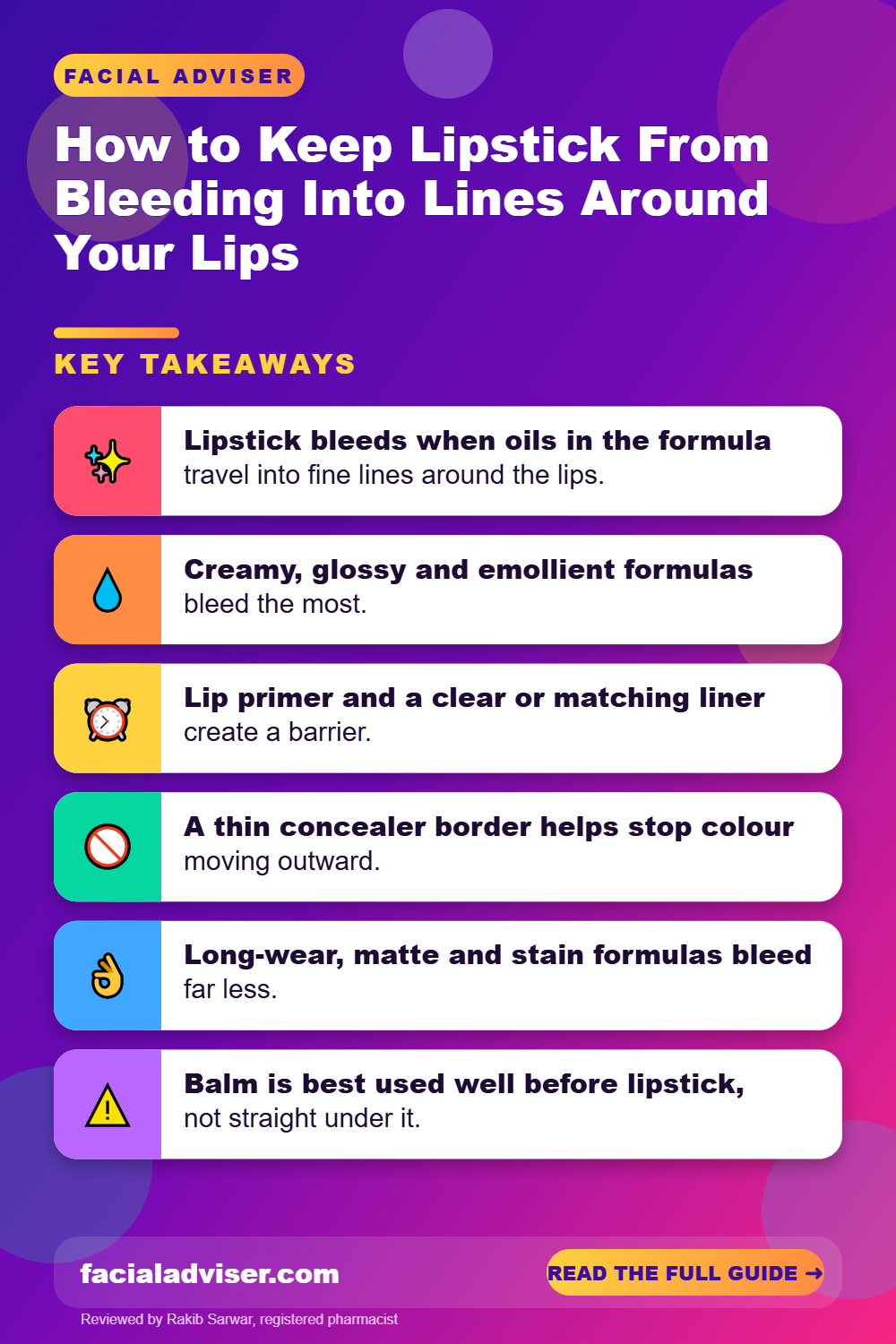
The Short Version
- Lipstick bleeds when oils in the formula travel into fine lines around the lips.
- Creamy, glossy and emollient formulas bleed the most.
- Lip primer and a clear or matching liner create a barrier.
- A thin concealer border helps stop colour moving outward.
- Long-wear, matte and stain formulas bleed far less.
- Balm is best used well before lipstick, not straight under it.
- Sun protection for the lips helps slow the lines that cause feathering.
Why Lipstick Bleeds Into Lines Around the Lips
Lipstick is a blend of waxes, oils and pigments. When the oils warm up on your lips, they soften and can move. The fine vertical lines around the mouth act like tiny channels, and colour wicks along them.
- Fine lines and wrinkles: the most common cause, often more visible from the 40s onwards.
- A less defined lip border: the edge of the lip, called the vermilion border, becomes softer with age and sun exposure.
- Emollient formulas: creamy, glossy and balm-like lipsticks stay soft and mobile.
- Heat and humidity: warmth makes waxes and oils melt and move faster.
- Too much product: a thick layer has more oil to travel.
- Heavy balm underneath: rich balm right before lipstick makes colour slide.
Smokers and people who purse their lips often, such as through drinking from straws, may notice lines forming earlier. Our guide on preventing fine lines around the mouth explains the habits that contribute.
Products That Stop Lipstick Bleeding
You do not need every product on this list. Most people get good results with one barrier product and a better-suited lipstick.
| Product | How it helps | Best for |
|---|---|---|
| Clear anti-feathering liner | Forms an invisible waxy barrier around the edge | Any shade, especially bright or dark colours |
| Colour-matched lip liner | Defines the border and grips lipstick | Everyday wear, reshaping a soft lip line |
| Lip primer | Smooths lines and gives colour something to grip | Visible lines, long days |
| Long-wear or matte lipstick | Dries down and moves less | Heavy feathering, heat, long wear |
| Concealer border | Seals the edge and sharpens the outline | Bold colours, events, photos |
| Translucent powder | Absorbs surface oil and sets the colour | Creamy formulas you want to keep |
Clear anti-feathering liners are usually firm, waxy pencils. They work best on dry, balm-free skin around the lips and can feel slightly stiff. If yours drags, warm it on the back of your hand for a few seconds first.
Using Lip Liner the Right Way
Lip liner is the single most useful tool for bleeding. The trick is choosing the right one and applying it so it actually forms a barrier rather than just outlining.
- Choose a liner that matches your lipstick, your natural lip colour or a clear anti-feathering version.
- Sharpen it so the tip is fine but not needle-sharp.
- Draw on the natural lip border, not far outside it; overlining over lines encourages bleeding.
- Start at the cupid’s bow and the outer corners, then join the lines with short strokes.
- Fill in the whole lip lightly with liner so the lipstick has a grippy base.
- Go over the line once more after the lipstick to reinforce the edge.
For bright or dark shades, many makeup artists use two liners: a clear anti-feathering liner just outside the border and a colour-matched liner on the border itself. The clear liner blocks colour from moving, while the coloured one defines the shape.
Primer, Balm and Concealer: Getting the Base Right
How you prepare the lips and the skin around them matters as much as the lipstick itself. Too much slip makes colour move; too little moisture makes it crack and flake.
- Apply lip balm at least 10 to 15 minutes before lipstick, or the night before, then blot away any excess.
- Use a thin layer of lip primer on the lips and just over the border.
- Avoid rich eye cream or face oil around the mouth right before makeup, as it helps colour travel.
- Pat a small amount of matte concealer or foundation around the lip border and set it with powder.
- Keep the skin around the lips moisturised on non-makeup days so lines look softer.
If you get dry, flaky patches around your mouth, treat those first, because lipstick clings to flakes and bleeds into cracks. Gentle, fragrance-free moisturiser and patience usually help more than scrubbing, which can make the skin around the mouth rougher.
How to Apply Lipstick So It Does Not Bleed
This routine takes a couple of extra minutes but can keep colour sharp for hours.
Moisturise ahead of time
Apply balm well before makeup, then blot off any residue.
Prime the lips
Apply a thin layer of lip primer to the lips and border and let it set.
Draw a barrier
Trace a clear anti-feathering liner just around the outside of the lip line.
Line and fill
Use a matching liner on the border and fill in the lips lightly.
Apply a thin layer of lipstick
Use a brush for precision and keep the colour inside the line.
Blot and set
Blot with a tissue, press translucent powder through a single ply of tissue, then add a second thin layer.
Seal the edge
Trace a little concealer around the outline with a fine brush and blend outward.
Apply lipstick with a lip brush rather than straight from the bullet. A brush lets you use less product and keep the edge exactly where you want it, which is the main way to prevent feathering.
Which Lipstick Formulas Bleed Least
If you often fight feathering, the formula you choose makes the biggest long-term difference. Look at the texture and finish more than the brand claims.
| Formula | Bleeding risk | Notes |
|---|---|---|
| Glossy or sheer balm | High | Very slippery; use only in the centre of the lips |
| Creamy or moisturising lipstick | Medium to high | Comfortable but mobile, especially in heat |
| Satin lipstick | Medium | Good balance with a liner |
| Matte bullet lipstick | Low to medium | Firmer and less oily |
| Long-wear liquid lipstick | Low | Dries down and sets in place; can feel dry |
| Lip stain or tint | Low | Soaks into the lip surface; little to move |
Long-wear formulas work because film formers dry into a flexible layer that stays put. Our guide on how to make lipstick last longer explains how these formulas work and how to keep them comfortable.
The Concealer Border Trick
A concealer border is a makeup artist technique for sharp, bold lips. It works in two ways: the dry, powdered concealer gives colour nothing oily to travel along, and it visually tidies the outline so small wobbles disappear.
- Choose a matte concealer or foundation that matches your skin, not a lighter brightening shade.
- Pick up a tiny amount on a small, flat synthetic brush.
- Trace just outside the lip line after your lipstick is on, pressing rather than painting.
- Blend the outer edge into the skin with a fingertip so there is no visible stripe.
- Set it with a little translucent powder so it stays dry.
Some people prefer to apply the concealer border before lipstick, which creates a barrier, while others use it afterwards to clean the edges. Both work; doing it after gives a sharper line, and doing it before gives a stronger barrier. On mature skin, use very little concealer, because a thick layer can settle into the same lines you are trying to protect.
Bleeding in Heat and on Long Days
Warm weather is one of the biggest triggers. Wax softens as the temperature rises, and even long-wear formulas can slide if there is a lot of balm or oil underneath.
- Choose matte or long-wear formulas in summer.
- Keep the lipstick itself cool; a very soft bullet deposits more oil.
- Blot through the day rather than adding extra layers.
- Carry a clear liner and concealer to refresh the edge.
- Avoid gloss on top in heat, as it dissolves long-wear layers.
- Touch up the centre of the lips only, so fresh colour does not pile up at the edges.
If you are also dealing with foundation or eye makeup that slips in warm weather, our guide on keeping makeup from bleeding in heat covers setting products and blotting for the whole face.
Dos and Don’ts
Worth Doing
- Use a clear or matching liner every time
- Apply balm well before lipstick
- Keep layers thin and blot between them
- Set the edge with concealer or powder
- Protect lips from the sun daily
Skip It
- Apply heavy balm straight before lipstick
- Overline far past your natural lip border
- Pile on creamy or glossy formulas
- Rub the edges when colour starts to move
- Expect makeup to erase deep lines
Honest Limits
These techniques reduce bleeding, but they cannot remove the lines that cause it. Deep vertical lines around the mouth will always let some colour travel, especially with creamy formulas and in heat.
If feathering bothers you a lot, the most effective change is often switching to long-wear, matte or stain formulas and softer, lip-like shades that make any movement less visible. Skincare such as sunscreen and retinoids can help slow further line formation over time, and in-clinic treatments can soften existing lines, but no lipstick or primer does that on its own. Choosing a mid-tone shade close to your natural lip colour also makes any small amount of movement far less noticeable than a dark or very bright colour would.
When to See a Dermatologist
Protecting the lips from sun is one of the simplest ways to slow line formation. The AAD guide on how to apply sunscreen recommends a lip balm with SPF 30 or higher.
- You want to discuss treatments for deep lines around the mouth.
- Your lips or the skin around them are persistently dry, cracked or scaly.
- You react to lip liners, primers or long-wear lipsticks.
- You have a sore or rough patch on the lip that does not heal.
A rough, scaly patch on the lip that does not heal, especially on the lower lip, can be a sign of sun damage that needs checking. See a doctor rather than covering it with makeup.
This article is for general information and does not replace professional medical advice. Patch test new lip products and see a board-certified dermatologist about lip changes, reactions or treatment for lines.
Common Questions
Why does my lipstick bleed?
Oils in the formula travel into fine lines around the lips.
What stops lipstick from feathering?
A lip liner or clear anti-feathering liner, primer and thin layers.
Does clear lip liner work?
Yes, it creates an invisible barrier that helps stop colour moving.
Does lip primer stop bleeding?
It helps by smoothing lines and giving colour grip.
Can concealer stop lipstick bleeding?
A thin concealer border helps seal the edge.
Which lipstick does not bleed?
Long-wear, matte and stain formulas bleed the least.
Should I use lip balm before lipstick?
Yes, but well before and blotted, not straight under it.
Why does lipstick bleed more with age?
Fine lines deepen and the lip border softens.
Does powder help lipstick stay put?
Blotting powder through a tissue helps set it.
Can treatments reduce lines around the lips?
A dermatologist can advise on options for deeper lines.
Where This Leaves You
Lipstick bleeds when colour travels into the fine lines around the lips, and it can be greatly reduced with a primer, a clear or matching liner, thin layers and a concealer border.
Choose long-wear, matte or stain formulas if feathering is a regular problem, apply balm well before makeup, and protect your lips from sun to slow the lines that cause it.

Written by
Registered pharmacist and founder of Facial Adviser. Rakib's pharmacy training covers how skincare actives work and interact; a later course in cosmetology turned that into a focus on facial treatments and skincare products. He plans, researches and edits every guide on the site and checks health claims against sources such as the American Academy of Dermatology, the FDA and the NIH. He is not a dermatologist; see the Editorial Policy and Medical Disclaimer.
About · Editorial policy · How we choose products · Medical disclaimer · Contact
Keep reading: Lipstick
- How to Choose Lipstick Shade: Undertone, Skin Tone and Testing Tips
- What Color Lipstick With a Red Dress? Red, Nude and Berry Options
- What Is Lipstick Made Of? Waxes, Oils, Pigments, Scent and Allergens
- What Color Lipstick With a Royal Blue Dress? Red, Nude, Pink and Berry
- How to Get Lipstick Stains Out of Clothes, Carpet and Other Fabrics
- What Does Lipstick Symbolize? History, Colour Meanings and Psychology
- What Can You Use to Make Your Makeup Stay On All Day? 9 Products and Tricks
- How to Get Started as a Freelance Makeup Artist: Training, Kit and Clients