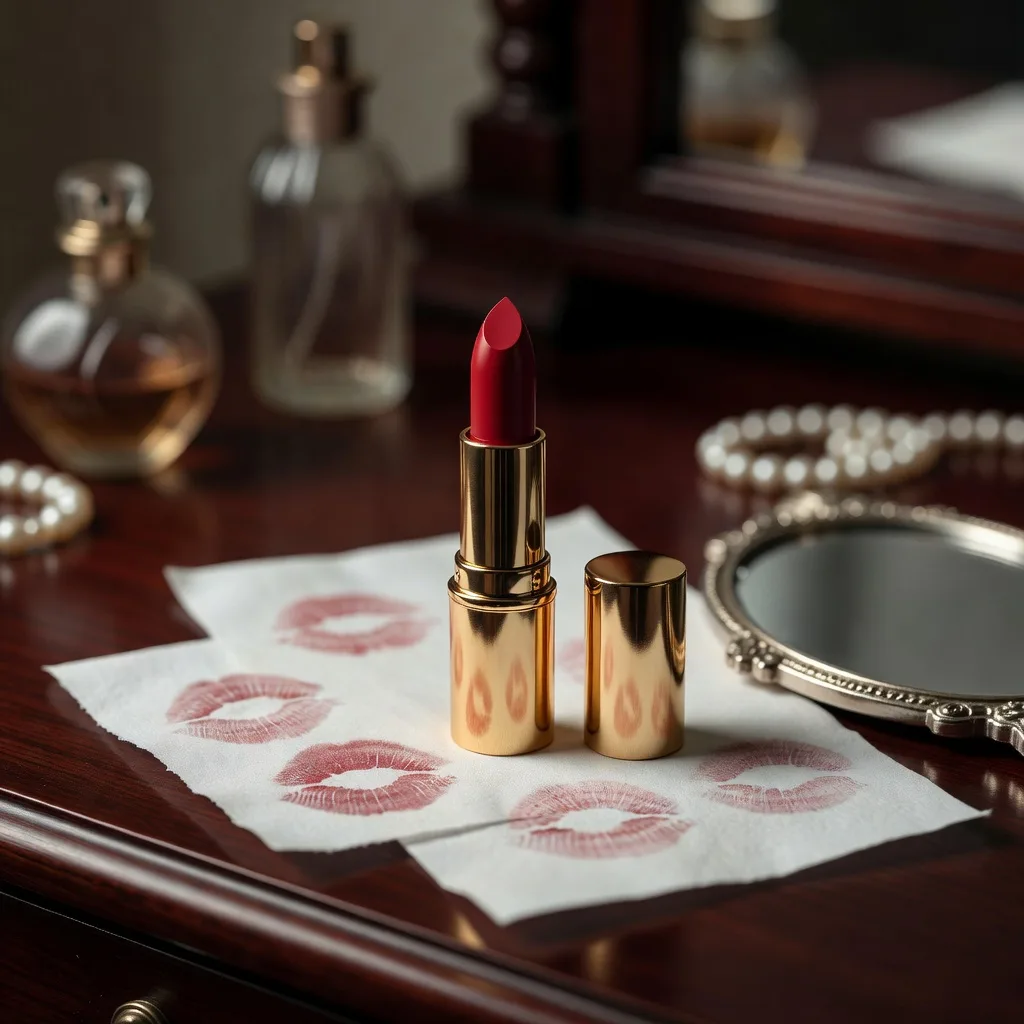
What Does Lipstick Symbolize? History, Colour Meanings and Psychology
Lipstick is a small object with a surprisingly large meaning. Across thousands of years it has signalled rank, wealth, rebellion, respectability, seduction, mourning and simple self-care, and the colour you choose today still sends a message before you say a word. Understanding that message helps you use it on purpose.
Part of our guide to makeup how-to. Start with: How to Choose Lipstick Shade: Undertone, Skin Tone and Testing Tips
Lipstick symbolises confidence, femininity, status and self-expression, but the exact meaning depends on the colour, the era and the culture. Historically it marked status in ancient Egypt and Mesopotamia, was condemned as deceitful in parts of medieval Europe, and became a symbol of defiance and morale when suffragettes and wartime women wore bright red. Today red signals confidence and boldness, nude suggests polish and restraint, pink reads as soft, youthful or playful, and dark or black shades express individuality and edge. Psychology research generally finds that people wearing lipstick are perceived as more confident and put-together, and that wearing it can lift the wearer’s own mood, although effects are modest and depend on context.
In short: lipstick symbolises confidence and self-expression, and each colour carries its own set of associations that you can choose deliberately.
Because lipstick sits on skin that is eaten, licked and absorbed throughout the day, the US Food and Drug Administration regulates the colour additives used in it and advises consumers to stop using any lip product that causes irritation, which matters whatever message you are trying to send.
This guide traces the history of lipstick symbolism, decodes what each colour family signals, looks at cultural and psychological meanings, and shows how to pick a shade that says exactly what you intend.
Shopping these picks?
Amazon Prime members get fast, free shipping on eligible items, plus Prime Video, Amazon Music and member deals. New members can start with a free trial.
Start a free Prime trialAged 18 to 24? Prime for Young Adults comes with a longer free trial and a lower price after it.
Affiliate link: we may earn a commission at no extra cost to you.
Recommended Lipsticks for Every Message


At a Glance
- Lipstick has symbolised status, morality, rebellion and confidence at different times.
- Red is the most loaded colour: power, passion, defiance and glamour.
- Nude shades signal polish, restraint and a natural look.
- Pink reads as soft, friendly and youthful; dark shades read as bold and individual.
- Meanings shift between cultures, so context matters.
- Research generally links lipstick with perceived confidence and competence.
- Choose finish and shade together, because texture changes the message.
Jump to a Section
- A Short History of What Lipstick Has Meant
- What Each Lipstick Colour Symbolises
- Why Red Lipstick Carries the Most Meaning
- Cultural Meanings Around the World
- What Psychology Research Says About Lipstick
- Lipstick in Dreams, Art and Literature
- Which Shade Sends the Right Message for Each Occasion
- How to Choose a Lipstick Shade That Says What You Mean
- Dos and Don’ts of Sending a Message With Lipstick
- Honest Limits
- When to See a Dermatologist About Your Lips
- Your Questions, Answered
- Where This Leaves You
A Short History of What Lipstick Has Meant
Lipstick’s symbolism has flipped back and forth for millennia. The same red mouth has been a mark of nobility, a sign of low morals and a badge of courage, sometimes within a single century.
- Ancient Mesopotamia and Egypt: crushed gemstones, red ochre and carmine coloured the lips of the elite, signalling rank and wealth.
- Ancient Greece and Rome: lip colour was associated with courtesans in some periods and with status in others.
- Medieval and early modern Europe: church authorities often condemned painted lips as deceitful, while royal courts set fashions for red and later for pale, unpainted mouths.
- Victorian era: visible makeup was considered improper for respectable women; lip colour went underground.
- Early twentieth century: suffragettes wore red lipstick at marches as a visible sign of emancipation, and the first push-up tubes made it portable.
- 1920s: film stars made dark, defined lips a symbol of modern independence.
- Second World War: red lipstick was promoted as a morale booster and a sign of resilience, with bright shades named for the war effort.
- 1950s to today: red became glamorous and classic, nude and pink took turns as the everyday look, and dark shades became a symbol of subculture and individuality.
The common thread is that lipstick has always been more than decoration. It is a visible decision, and that is why it carries so much meaning.
What Each Lipstick Colour Symbolises
Colour is the loudest part of the message. These associations are broad patterns in Western fashion and media rather than rules, but they are the ones most people will read.
| Colour family | Common associations | Typical message |
|---|---|---|
| Classic red | Confidence, power, passion, glamour, defiance | I am here and I mean it |
| Deep or blue-red | Sophistication, drama, formality | Polished and serious |
| Orange-red / coral | Energy, warmth, playfulness | Fun and approachable |
| Nude / neutral | Restraint, professionalism, natural beauty | Put-together without effort |
| Soft pink | Youth, sweetness, friendliness, romance | Gentle and open |
| Bright or hot pink | Fun, boldness, creativity | Playful and confident |
| Berry / plum | Maturity, richness, autumn moods | Elegant with an edge |
| Brown / terracotta | Earthiness, 1990s nostalgia, calm | Relaxed and modern |
| Dark burgundy / oxblood | Mystery, authority, gothic glamour | Bold and self-assured |
| Black | Rebellion, subculture, artistic expression | Unconventional on purpose |
| Purple / unusual shades | Creativity, individuality, experimentation | Expressive and fearless |
| Gloss or balm only | Simplicity, freshness, low-maintenance | Natural and unfussy |
Undertone changes the message within each family. A blue-based red looks formal and classic; a warm tomato red looks lively and casual. Our guide on how to choose a lipstick shade explains how undertone affects both the look and the feel of a colour.
Why Red Lipstick Carries the Most Meaning
Red is the original lipstick colour and still the one with the most symbolic weight. It has been a sign of royalty, of sin, of sexual confidence and of political courage, often at the same time.
- Power and authority: red draws the eye and signals that the wearer is comfortable being seen.
- Passion and romance: red lips have long been associated with attraction and vitality.
- Defiance and morale: suffragettes and wartime women wore red as a deliberate statement of strength.
- Glamour and tradition: the classic red lip is shorthand for old-Hollywood elegance.
- Occasion: red marks a moment as special, which is why it still feels bold on an ordinary Tuesday.
Red is also the shade people most often get wrong, usually by picking the wrong undertone or by letting it feather. A liner in the same shade and a quick blot keep the edges crisp.
The message of red depends heavily on finish. A matte red reads as deliberate and polished, a satin red as classic, a sheer red stain as effortless, and a high-shine red gloss as playful or glamorous.
Cultural Meanings Around the World
Lipstick symbolism is not universal. The same shade can mean confidence in one setting and impropriety in another, so it helps to know the local reading before an important meeting or event.
- Western professional settings: nude, soft pink and muted red are read as polished; very bright or dark shades can be read as statement-making.
- East Asian beauty trends: gradient or blurred lips in soft coral and pink signal youthfulness and freshness.
- South Asian traditions: deep reds and maroons are associated with bridal and ceremonial dress.
- Parts of the Middle East and North Africa: bold lips are part of celebratory and bridal makeup, while everyday looks may be more subdued.
- Subcultures worldwide: black, purple and metallic lips mark belonging to goth, punk, drag and alternative scenes.
- Religious and conservative communities: visible lip colour may be discouraged or reserved for private or married life.
When in doubt, a muted version of a strong colour, such as a brick red instead of a bright one, keeps the message without the shock.
What Psychology Research Says About Lipstick
Researchers have studied makeup, and lipstick in particular, for decades. The findings are consistent in direction even if the effects are modest.
- Perceived confidence: people wearing lipstick are generally rated as more confident, attractive and competent than the same people without it.
- Attention: red lips in particular draw and hold visual attention in eye-tracking studies.
- Wearer effects: many participants report feeling more confident, prepared or positive after applying lipstick, sometimes described as a small performance boost.
- Context: in some workplace studies, heavier or brighter makeup was rated as less trustworthy, so more is not always better.
- Mood and routine: applying lipstick can act as a small ritual that marks the start of a day or an event.
These results come from small samples and specific cultures, so treat them as tendencies rather than laws. The practical takeaway is that lipstick is a cheap and reversible way to shift how you feel and how you are read, and that moderation matters in formal settings.
Lipstick in Dreams, Art and Literature
Lipstick appears constantly as a symbol in storytelling, and the meaning is usually one of three things: identity, desire or disguise.
- Dreams: dream dictionaries commonly read lipstick as a wish to be noticed, a concern about how you present yourself or a desire for romance. There is no scientific basis for these readings, but they show how strongly the object is tied to self-image.
- Art: pop art and fashion photography use the red mouth as a symbol of consumer glamour and female power, sometimes celebrated and sometimes critiqued.
- Literature and film: a lipstick mark on a collar signals betrayal, a smeared mouth signals distress, and a freshly applied red lip signals a character taking control.
- Protest and politics: red lipstick has been used in demonstrations as a deliberate symbol of resistance and visibility.
When you put on a strong colour, you are borrowing a little of that shared story, and other people have absorbed it too.
Which Shade Sends the Right Message for Each Occasion
Use this table as a quick reference when you want your lipstick to match the moment. These are starting points, and personal style always wins.
| Occasion | Message you probably want | Shades that send it | Finish |
|---|---|---|---|
| Job interview | Capable, polished, trustworthy | Nude, rosy neutral, muted berry | Satin or soft matte |
| Business presentation | Confident and credible | Classic red, brick, deep rose | Matte or satin |
| First date | Approachable and attractive | Soft pink, coral, sheer red | Satin, gloss or balm |
| Wedding guest | Elegant without upstaging | Rose, mauve, soft berry | Satin |
| Evening event | Glamorous and bold | Blue-red, burgundy, plum | Matte or satin |
| Casual weekend | Fresh and effortless | Tinted balm, nude, peach | Sheer or gloss |
| Creative or music event | Expressive and individual | Dark, purple, metallic, black | Any |
| Video call | Awake and defined | Warm pink, soft red | Satin, not gloss |
Finish matters as much as colour. Our comparison of matte and satin finishes explains why the same red can look severe in matte and friendly in satin.
How to Choose a Lipstick Shade That Says What You Mean
Follow these steps to translate the message you want into an actual shade and finish.
Decide the message in one word
Confident, soft, polished, playful, bold or natural. One word stops you buying a shade that sends a mixed signal.
Pick the colour family
Use the colour table: red for confident, nude for polished, pink for soft, dark for bold.
Match the undertone to your skin
Cool skin suits blue-based shades; warm skin suits orange or brown-based ones; neutral skin can wear both.
Choose the finish
Matte reads deliberate, satin reads classic, sheer or gloss reads relaxed.
Check the setting
Tone a strong colour down for conservative workplaces and up for events.
Test in daylight
Swatch on your lips, not your hand, and look in natural light before buying.
Prep and apply well
Exfoliate lightly, hydrate, line and blot so the message is clean rather than smudged.
Wear it once before the big day
A trial run shows how the shade transfers, fades and feels over several hours.
If you want the confidence of red without the attention, choose a sheer red balm or stain. You get the mood boost and a hint of the colour’s symbolism with none of the maintenance.
Dos and Don’ts of Sending a Message With Lipstick
Do
- Match the shade to the occasion and the room
- Test undertone against your skin in daylight
- Keep lips hydrated so colour sits smoothly
- Carry the shade for touch-ups
- Own a strong colour fully once you wear it
Don’t
- Assume one shade suits every setting
- Wear a brand-new bold shade for the first time at a big event
- Let red feather or transfer to your teeth
- Ignore cultural context when travelling
- Keep wearing a product that stings or swells your lips
If feathering undermines your look, our guide on how to keep lipstick from bleeding covers liners, blotting and prep that keep edges sharp.
Honest Limits
Symbolism is a shared shorthand, not a rulebook. Colour associations shift with fashion, generation and region, and the same red that reads as power in one office can read as overdone in another. Most people also notice far less than you think: the biggest effect of lipstick is usually on how you feel, not on how others judge you.
The psychology findings are real but small, drawn from limited samples, and they do not mean lipstick makes anyone more capable. It is a tool for presentation and mood. If you dislike wearing it, no colour meaning is worth the discomfort, and a bare lip has its own clear message of ease and authenticity.
The FDA’s page on allergens in cosmetics notes that fragrances and certain preservatives and dyes are among the most common causes of cosmetic allergies, and that reactions can appear after repeated use of a product you have tolerated before.
Lip products can cause allergic reactions and contact dermatitis, especially formulas with fragrance, certain dyes or lanolin. Stop using any lipstick that causes burning, swelling, peeling or a rash, and never share lipstick, because it can pass on cold sores and other infections.
When to See a Dermatologist About Your Lips
Lipstick symbolism is a styling question, but lip skin is thin and reactive, and some problems need medical attention rather than a new shade.
- Swelling, blistering or a rash after using a lip product.
- Persistent dryness, cracking or peeling that balm does not fix.
- Recurring cold sores, especially after sharing products.
- A sore, lump or patch on the lip that does not heal within a few weeks.
- Dark or uneven pigmentation on the lips that is new or changing.
This article is for general information and does not replace professional medical advice. Patch test new lip products, and see a board-certified dermatologist for persistent lip irritation, allergic reactions or any sore that does not heal.
Your Questions, Answered
What does lipstick symbolize?
Confidence, femininity, status and self-expression, with meaning that varies by colour and culture.
What does red lipstick symbolize?
Power, passion, glamour and defiance.
What does nude lipstick symbolize?
Polish, restraint and a natural, professional look.
What does pink lipstick symbolize?
Softness, youth, friendliness and romance.
What does dark or black lipstick symbolize?
Boldness, individuality and belonging to alternative styles.
Why did women wear red lipstick in wartime?
It was promoted as a sign of morale, resilience and normality.
Does lipstick make you look more confident?
Research generally finds wearers are perceived as more confident and put-together.
Does lipstick symbolize something in dreams?
Popular readings link it to self-image and a wish to be noticed, with no scientific basis.
Is lipstick considered professional?
Yes, in muted or classic shades; very bright or dark colours read as statements.
How do I pick a lipstick that matches the message I want?
Choose the colour family for the message, match the undertone to your skin and pick the finish for the setting.
Where This Leaves You
Lipstick symbolises confidence, status and self-expression, with a history that runs from Egyptian royalty to wartime red and a colour code that most people read instinctively.
Choose the colour family for the message, the undertone for your skin and the finish for the room, then wear it with intent and stop using anything that irritates your lips.

Written by
Registered pharmacist and founder of Facial Adviser. Rakib's pharmacy training covers how skincare actives work and interact; a later course in cosmetology turned that into a focus on facial treatments and skincare products. He plans, researches and edits every guide on the site and checks health claims against sources such as the American Academy of Dermatology, the FDA and the NIH. He is not a dermatologist; see the Editorial Policy and Medical Disclaimer.
About · Editorial policy · How we choose products · Medical disclaimer · Contact
Keep reading: Lipstick
- How to Choose Lipstick Shade: Undertone, Skin Tone and Testing Tips
- How to Apply Lipstick on Thin Lips: Overlining, Shades, Gloss and Highlight
- How to Wear Black Lipstick: Styling, Makeup Pairing, Application and Removal
- How to Apply Red Lipstick: Prep, Liner, Brush and Clean Edges
- How to Fix Broken Lipstick: Re-Set It, Melt It or Make a Lip Palette
- When Can You Wear Lipstick After Lip Blushing? Healing Timeline and Aftercare
- How to Choose the Right Eye Makeup Color for Your Eyes and Skin
- What Can You Use to Make Your Makeup Stay On All Day? 9 Products and Tricks