Is It Safe to Buy Makeup From Amazon? How to Shop Smart
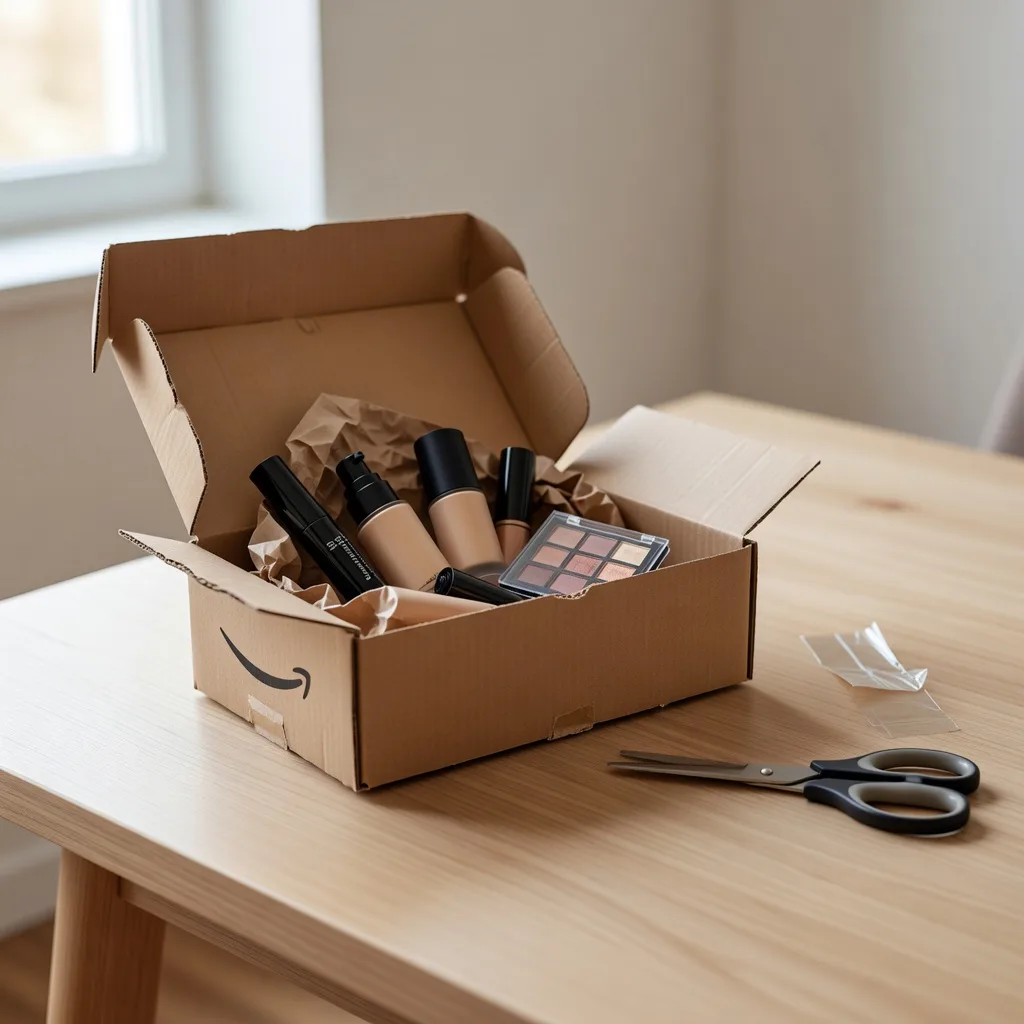
Amazon is convenient, often cheaper, and delivers quickly, so it is no surprise that many people buy makeup there. At the same time, stories about counterfeit cosmetics make people nervous about what might be in the tube they just ordered. Both reactions make sense, and the truth sits somewhere in between.
Part of our guide to makeup how-to. Start with: How to Properly Put On Face Makeup: The Right Order, Step by Step
Buying makeup on Amazon is generally safe when you buy from the brand’s official store, from listings sold by Amazon for brands that sell through Amazon, or from well-established authorized sellers. The risk comes mainly from unfamiliar third-party sellers offering popular products at unusually low prices.
Amazon runs brand protection programs, including Brand Registry and Project Zero, and has a Counterfeit Crimes Unit that works with brands and law enforcement. These help, but on any large marketplace with many sellers, counterfeits and expired or tampered products can still slip through. Knowing how the system works makes it much easier to shop with confidence.
Counterfeit cosmetics are a real safety concern, not just a waste of money. According to the Personal Care Products Council, which cites reports from US government agencies and the OECD, fake cosmetics have been found to contain heavy metals, carcinogens, and harmful bacteria.
This guide explains how Amazon listings and sellers work, a step-by-step check before you buy, which products need the most caution, how other online shops compare, and what to do if you think you received something fake.
Shopping these picks?
Amazon Prime members get fast, free shipping on eligible items, plus Prime Video, Amazon Music and member deals. New members can start with a free trial.
Start a free Prime trialAged 18 to 24? Prime for Young Adults comes with a longer free trial and a lower price after it.
Affiliate link: we may earn a commission at no extra cost to you.
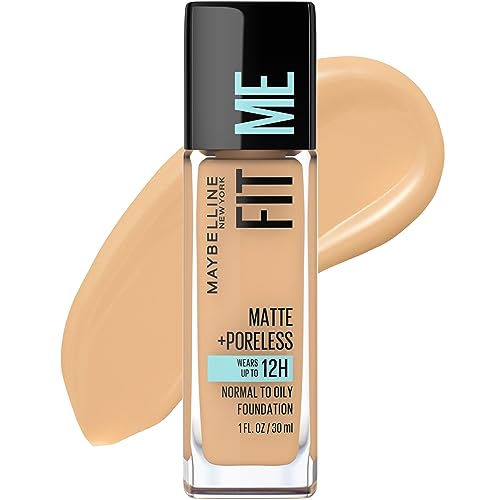
Recommended Makeup Staples From Well-Known Brands




In Brief
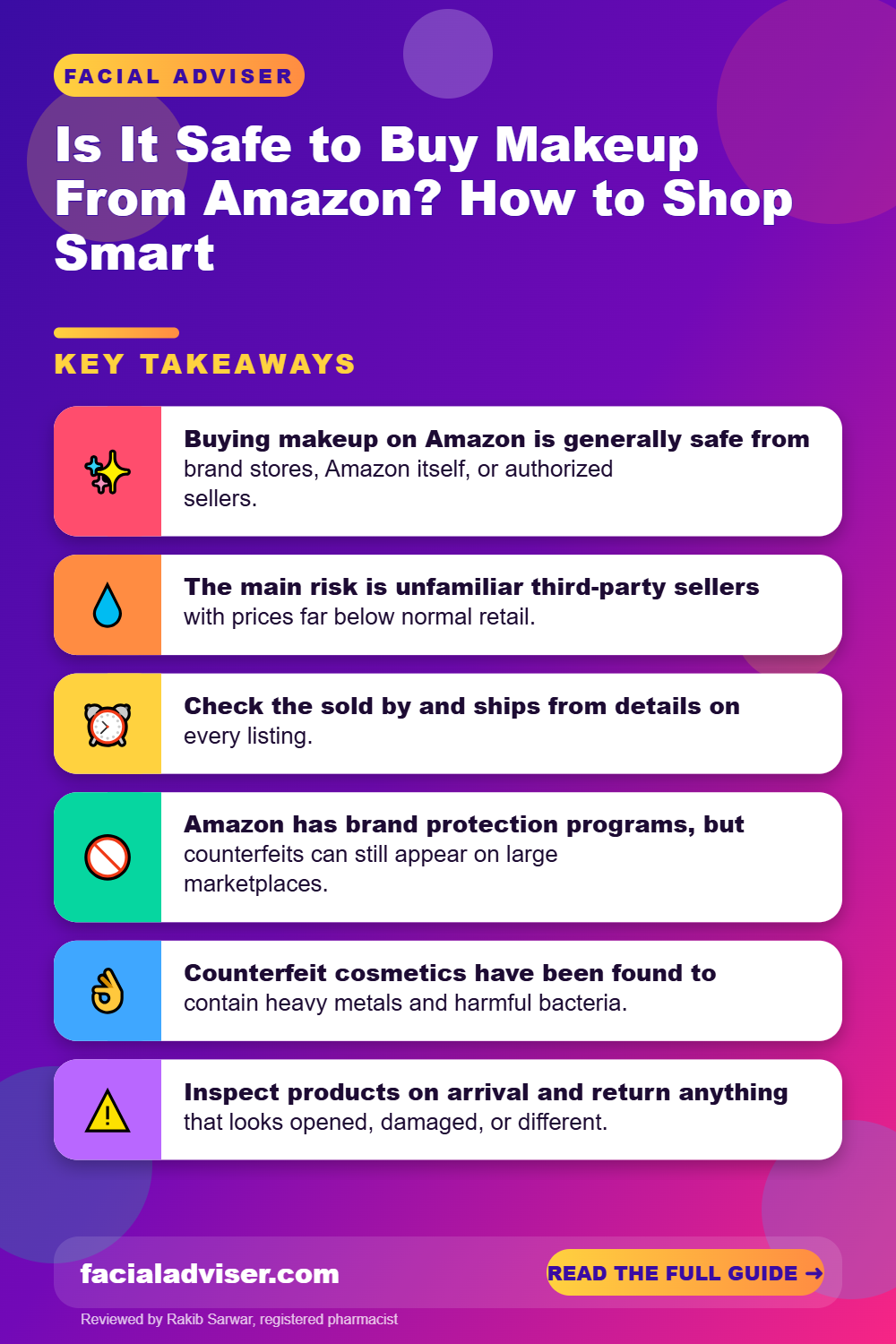
- Buying makeup on Amazon is generally safe from brand stores, Amazon itself, or authorized sellers.
- The main risk is unfamiliar third-party sellers with prices far below normal retail.
- Check the sold by and ships from details on every listing.
- Amazon has brand protection programs, but counterfeits can still appear on large marketplaces.
- Counterfeit cosmetics have been found to contain heavy metals and harmful bacteria.
- Inspect products on arrival and return anything that looks opened, damaged, or different.
- Stop using any product that causes burning, swelling, or eye irritation.
What This Covers
- How Makeup Is Sold on Amazon
- A Five-Step Check Before You Buy
- Safer vs Riskier Listings
- Products That Need the Most Caution
- What to Check When It Arrives
- What to Do If You Think It Is Fake
- Getting Good Deals Safely
- Other Online Marketplaces and Social Shops
- Repeat Orders and Subscriptions
- What No Checklist Can Guarantee
- When a Product Causes a Reaction
- Your Questions, Answered
- Where This Leaves You
How Makeup Is Sold on Amazon
When you buy on Amazon, the product may come from one of several types of sellers, even on the same product page:
- Sold by Amazon: Amazon buys stock and sells it directly.
- Brand stores: the brand itself sells through its official Amazon storefront.
- Authorized third-party sellers: retailers or distributors with permission to sell the brand.
- Other third-party sellers: independent sellers whose sourcing may be unclear.
Many listings show several sellers offering the same item. The default seller shown may not be the brand or Amazon, so it is worth checking every time.
Another issue is stock that is stored together in warehouses. For some products, items from different sellers may be pooled, which is one reason brands often push for tighter controls on who can sell their products.
Brand Registry lets brands manage their own listings and report suspected counterfeits, and Project Zero allows some brands to remove counterfeit listings directly. These tools help protect shoppers, but they depend on brands using them actively.
A Five-Step Check Before You Buy
Use these steps on any makeup listing.
Look at sold by and ships from
Check these lines near the buy button. Sold by the brand or by Amazon is the safest option for most makeup.
Visit the brand store
Click the brand name link. Official brand stores usually have consistent branding and a full product range.
Compare the price
Check the price against the brand’s own website or major retailers. A price far below normal is a warning sign.
Read recent reviews
Look at the newest reviews, especially one- and two-star ones, for mentions of fake products, odd smells, or different packaging.
Check the listing details
Look for clear photos, full ingredient lists, and consistent product names. Vague listings with stock photos are a red flag.
If multiple sellers offer the same product, click to see all offers and pick the brand or Amazon, even if it costs slightly more.
Safer vs Riskier Listings
| Factor | Safer choice | Riskier choice |
|---|---|---|
| Seller | Brand store or sold by Amazon | Unknown seller with few ratings |
| Price | Close to normal retail | Far below usual price |
| Reviews | Consistent, recent, detailed | Mentions of fakes, strange smells, broken seals |
| Listing | Clear photos and ingredient list | Stock photos, vague or misspelled text |
| Product type | Everyday drugstore staples from brand | Limited editions or luxury items at deep discounts |
| Shipping | Clear return policy | Unclear returns or long international shipping |
Not every third-party seller is a problem. Many are legitimate retailers. The combination of an unknown seller and an unusually low price is what deserves caution.
A quick way to judge a seller is to click their name and look at their ratings, how long they have been selling, and what else they sell. A seller offering a random mix of luxury makeup, electronics, and household items at deep discounts deserves extra caution.
Products That Need the Most Caution
Some products are more commonly counterfeited or riskier if fake:
- Eye products: mascara and eyeliner are used near the eyes, where contamination can cause infections.
- Lip products: you swallow small amounts of lipstick and gloss over time.
- Luxury and viral products: high demand and high prices attract counterfeiters.
- Limited editions: hard-to-find items are often faked.
- Sunscreen: fake or expired sunscreen may not protect you.
For these, it is especially worth buying directly from the brand or a major retailer. Our guide on how to tell if makeup is fake covers the warning signs.
If you are unsure about a particular product, buy it once from the brand’s own website or a major retailer to learn exactly how the genuine version looks, smells, and feels. That makes it much easier to spot differences later.
What to Check When It Arrives
Do
- Check that seals are intact.
- Compare packaging with the brand’s website photos.
- Look for batch codes on the product and box.
- Smell and look at the product before using it.
- Keep the packaging until you are sure it is fine.
Don’t
- Use a product with a broken seal.
- Ignore misspellings or blurry printing.
- Use makeup that smells sour or chemical.
- Throw away the box before checking codes.
- Use a suspicious product near your eyes.
Check expiration and freshness too. Even genuine products can be old stock. Look for an expiration date on sunscreen and check that liquids have a normal texture and smell.
It helps to open and inspect products within the return window, even if you plan to use them later. Many problems, such as broken seals or mismatched packaging, are much easier to resolve quickly.
What to Do If You Think It Is Fake
If you suspect a product is counterfeit or tampered with:
- Stop using it.
- Take photos of the product, packaging, and batch code.
- Request a return or refund through Amazon.
- Report the listing to Amazon as a possible counterfeit.
- Contact the brand, which may track fake products.
- In the US, report skin reactions to the FDA through MedWatch.
Amazon’s A-to-z Guarantee may help if a third-party seller does not resolve the problem.
Leaving an honest review that describes the problem, such as different packaging or a strange smell, also helps other shoppers avoid the same seller.
Getting Good Deals Safely
Amazon’s large sale events, such as Prime Day in summer and its fall deals event, can include genuine discounts on well-known makeup brands. The same safety checks apply: look at the seller, compare prices, and be wary of prices that seem too good to be true.
Our guide on the best time to buy makeup covers the main sale periods across retailers.
During big events, deal pages change quickly and third-party offers can appear on popular listings. Taking an extra minute to confirm the seller before checking out is worth it.
Other Online Marketplaces and Social Shops
The same principles apply beyond Amazon. Marketplaces such as eBay, Walmart Marketplace, and various global shopping apps also host many third-party sellers, and social media shops and live-stream sales have become popular places to buy makeup.
On any platform, the safest options are official brand stores and well-known retailers. Be especially cautious with social media ads that link to unfamiliar websites, very steep discounts on luxury brands, and sellers who pressure you to buy quickly.
Look for clear contact information, a physical business address, and a genuine return policy. If a site has no way to contact the seller or return items, it is safer to shop elsewhere.
Resale platforms for used or swatched makeup carry extra hygiene risks, since you cannot know how a product was stored or handled. Many dermatologists advise against buying used eye and lip products at all.
Repeat Orders and Subscriptions
Many people set up repeat deliveries for products they use constantly, such as cleanser, makeup remover, or a favorite mascara. This can save money and time, but it is worth checking occasionally that the seller is still the brand or Amazon, since offers on a listing can change.
Match delivery frequency to how quickly you use products, especially items with a short life after opening like mascara, to avoid a drawer full of products that expire before you open them.
Review your subscriptions every few months to cancel products you no longer use.
If a subscribed item arrives looking different from usual, check the seller before using it.
What No Checklist Can Guarantee
| Belief | Reality |
|---|---|
| All makeup on Amazon is fake | Most is genuine, especially from brands and Amazon |
| Sold by Amazon means zero risk | It greatly lowers risk, but always inspect products |
| Five-star ratings prove authenticity | Ratings can be shared across sellers on the same page |
| Sealed means genuine | Counterfeits can be sealed too |
| Cheaper is just a good deal | Very low prices can signal fakes or old stock |
Harmful contaminants cannot be seen or smelled, so buying from trusted sources is the most reliable protection.
A sensible approach is to buy everyday staples from brand stores or Amazon directly, and buy luxury, limited-edition, or unfamiliar products from the brand or a major beauty retailer. That balance gives you convenience with lower risk.
When a Product Causes a Reaction
Stop using a product and see a doctor or dermatologist if you notice:
- Burning, blistering, or peeling skin.
- Swelling of the face, eyelids, or lips.
- A spreading rash or hives.
- Eye pain, redness, discharge, or blurred vision.
- Painful bumps or signs of infection where you applied it.
- Difficulty breathing, which needs emergency care.
Keep the product and packaging so a doctor can check the ingredients, and report the reaction to the seller and brand.
Medical disclaimer: This article is for general information and is not a substitute for professional medical advice. Marketplace policies change; always check current seller details.
Your Questions, Answered
Is it safe to buy makeup from Amazon?
Generally yes, when you buy from the brand’s store, from Amazon directly, or from established authorized sellers.
How do I know if makeup on Amazon is real?
Check who it is sold by, compare the price, read recent reviews, and inspect packaging and batch codes on arrival.
What does sold by Amazon mean?
Amazon bought the stock and is selling it directly, which lowers the risk of counterfeits.
Are third-party sellers on Amazon bad?
Not necessarily. Many are legitimate, but unfamiliar sellers with very low prices deserve caution.
Why is makeup cheaper on Amazon?
Sometimes due to genuine sales, but prices far below normal can signal fakes or old stock.
What makeup is most often faked?
Popular luxury items, limited editions, eye products, and viral products are common targets.
What should I do if I get fake makeup?
Stop using it, document it, return it, and report it to Amazon and the brand.
Can I trust Amazon reviews for makeup?
They help, but read recent reviews carefully for mentions of fakes.
Is drugstore makeup on Amazon safe?
Usually, especially when sold by the brand or Amazon.
Does Amazon check for fake makeup?
Amazon has brand protection programs, but counterfeits can still appear, so check listings yourself.
Where This Leaves You
Buying makeup from Amazon is generally safe when you choose the brand’s official store, items sold by Amazon, or established authorized sellers. The main risk comes from unfamiliar third-party sellers offering popular products at prices far below normal.
Check the seller, price, and recent reviews before buying, inspect products when they arrive, and return anything that looks opened or different. Be especially careful with eye and lip products, and stop using anything that causes a reaction.

Written by
Registered pharmacist and founder of Facial Adviser. Rakib's pharmacy training covers how skincare actives work and interact; a later course in cosmetology turned that into a focus on facial treatments and skincare products. He plans, researches and edits every guide on the site and checks health claims against sources such as the American Academy of Dermatology, the FDA and the NIH. He is not a dermatologist; see the Editorial Policy and Medical Disclaimer.
About · Editorial policy · How we choose products · Medical disclaimer · Contact
Keep reading: Makeup basics and skin
- How to Properly Put On Face Makeup: The Right Order, Step by Step
- What Is the Difference Between Makeup and Skincare?
- How Much Makeup Can I Take on a Plane? Carry-On and Checked Bag Rules
- Are You Supposed to Put Makeup on Your Forehead?
- Should You Wear Makeup After a Facial? How Long to Wait
- How to Make Makeup at Home Safely: Simple Recipes and Real Risks
- How to Choose Lipstick Shade: Undertone, Skin Tone and Testing Tips
- How to Find the Right Shade of Makeup: Undertone, Depth and Testing