How to Keep Makeup From Melting and Bleeding in the Heat
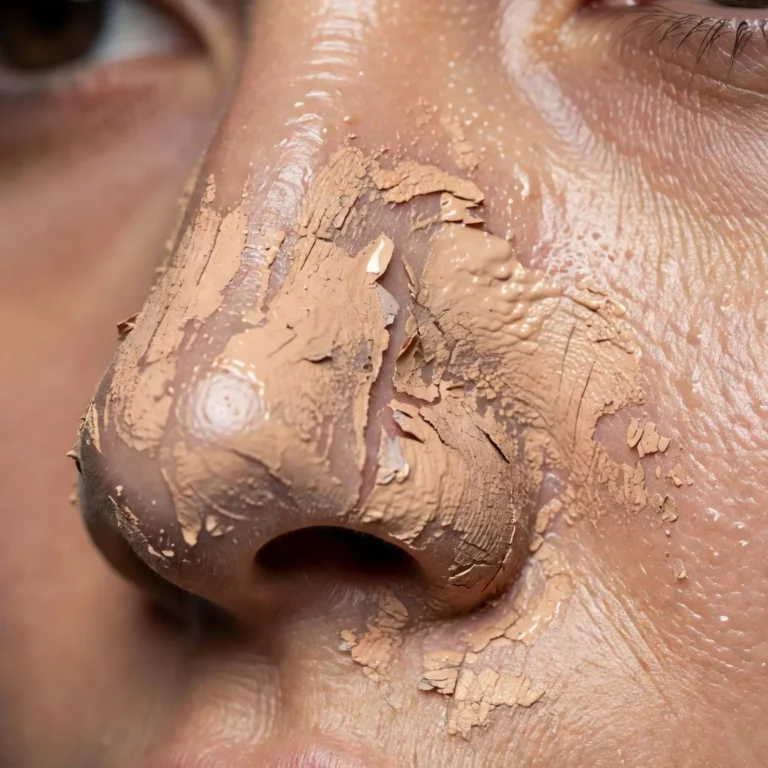
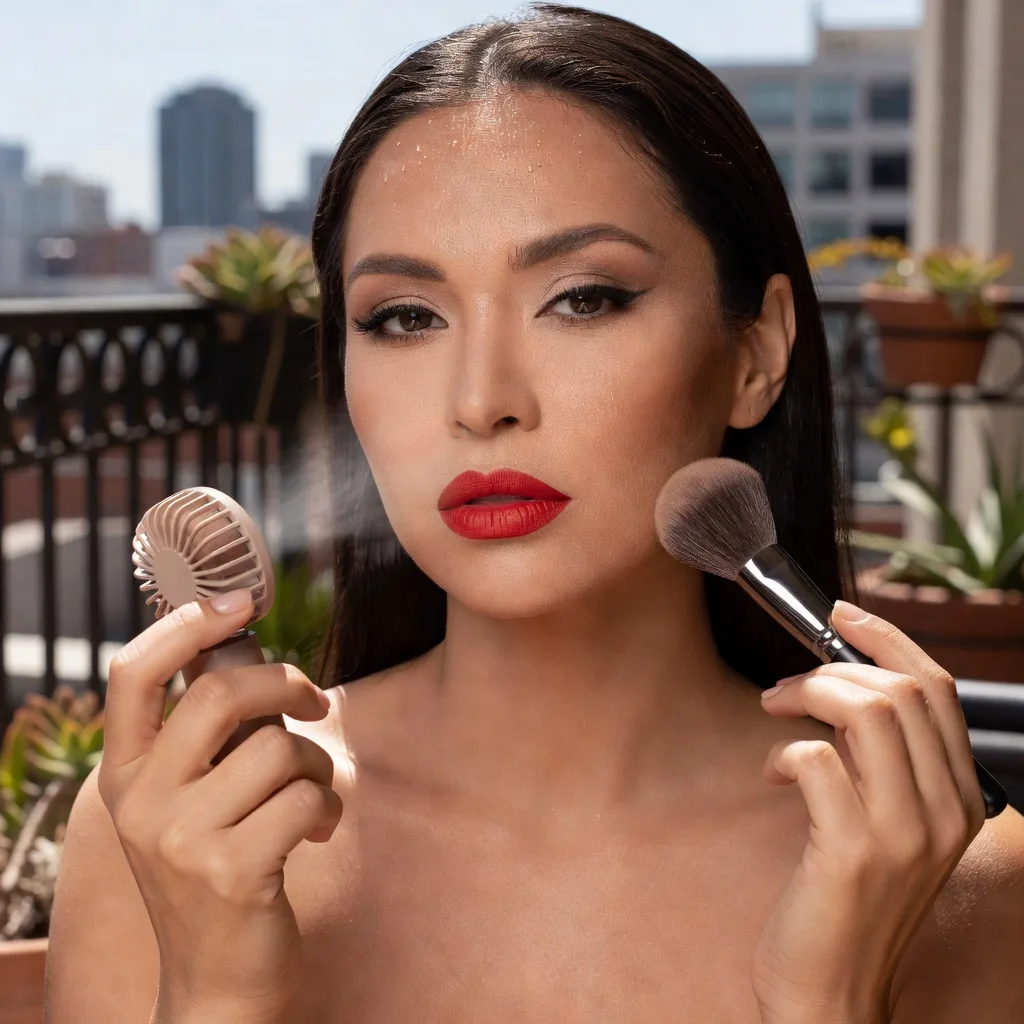
On a hot day, makeup that looked perfect in the morning can slide, streak and fade within an hour. Foundation separates around the nose, eyeliner transfers to the lids, mascara smudges under the eyes and lipstick bleeds into the fine lines around the lips.
Part of our guide to makeup how-to. Start with: What Can You Use to Make Your Makeup Stay On All Day? 9 Products and Tricks
Makeup melts and bleeds in the heat because warmth softens oils and waxes in the formula, while sweat and extra skin oil break it down and carry it across the skin. To keep makeup in place, use lightweight, oil-free skincare, a primer suited to your skin, thin layers of long-wear or water-resistant formulas, powder only where you get shiny and a setting spray. Swap creamy eye and lip products for waterproof, tubing or transfer-resistant versions, and use a lip liner to stop colour bleeding. Blot rather than adding more powder during the day, and keep sunscreen as its own layer underneath.
Heat-proofing is less about piling on products and more about using fewer, better-suited layers that grip the skin and resist oil and moisture. The good news is that small changes make a big difference.
The American Academy of Dermatology’s guide on how to apply sunscreen recommends reapplying every two hours outdoors and after sweating or swimming, so a heat-proof routine should also make sunscreen top-ups easy.
This guide explains why makeup breaks down in the heat, then walks through skin prep, product choices and application for face, eyes and lips.
Shopping these picks?
Amazon Prime members get fast, free shipping on eligible items, plus Prime Video, Amazon Music and member deals. New members can start with a free trial.
Start a free Prime trialAged 18 to 24? Prime for Young Adults comes with a longer free trial and a lower price after it.
Affiliate link: we may earn a commission at no extra cost to you.
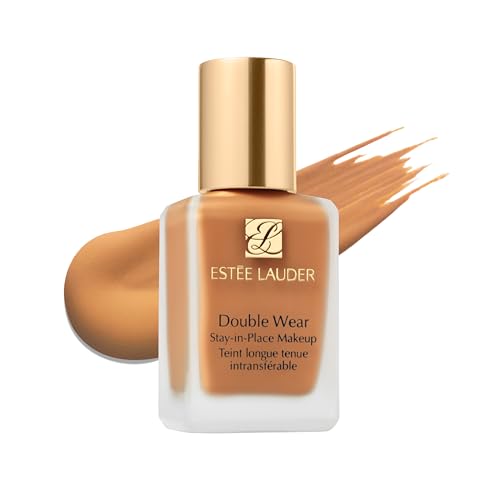
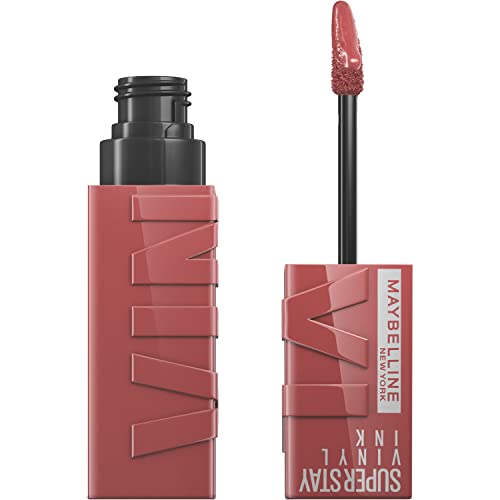
Recommended Heat-Proof Primers, Setting Products and Formulas



Contents
- Why Makeup Melts and Bleeds in the Heat
- Prep Your Skin for Hot Days
- How to Heat-Proof Your Makeup Routine
- Keeping Eye Makeup in Place
- Stopping Lipstick From Bleeding
- Touching Up During the Day
- Choosing Heat-Friendly Formulas
- Adjusting for Your Skin Type
- Outdoor Events, Weddings and Exercise
- Dos and Don’ts
- Honest Limits
- When to See a Dermatologist
- Your Questions, Answered
- The Takeaway
At a Glance
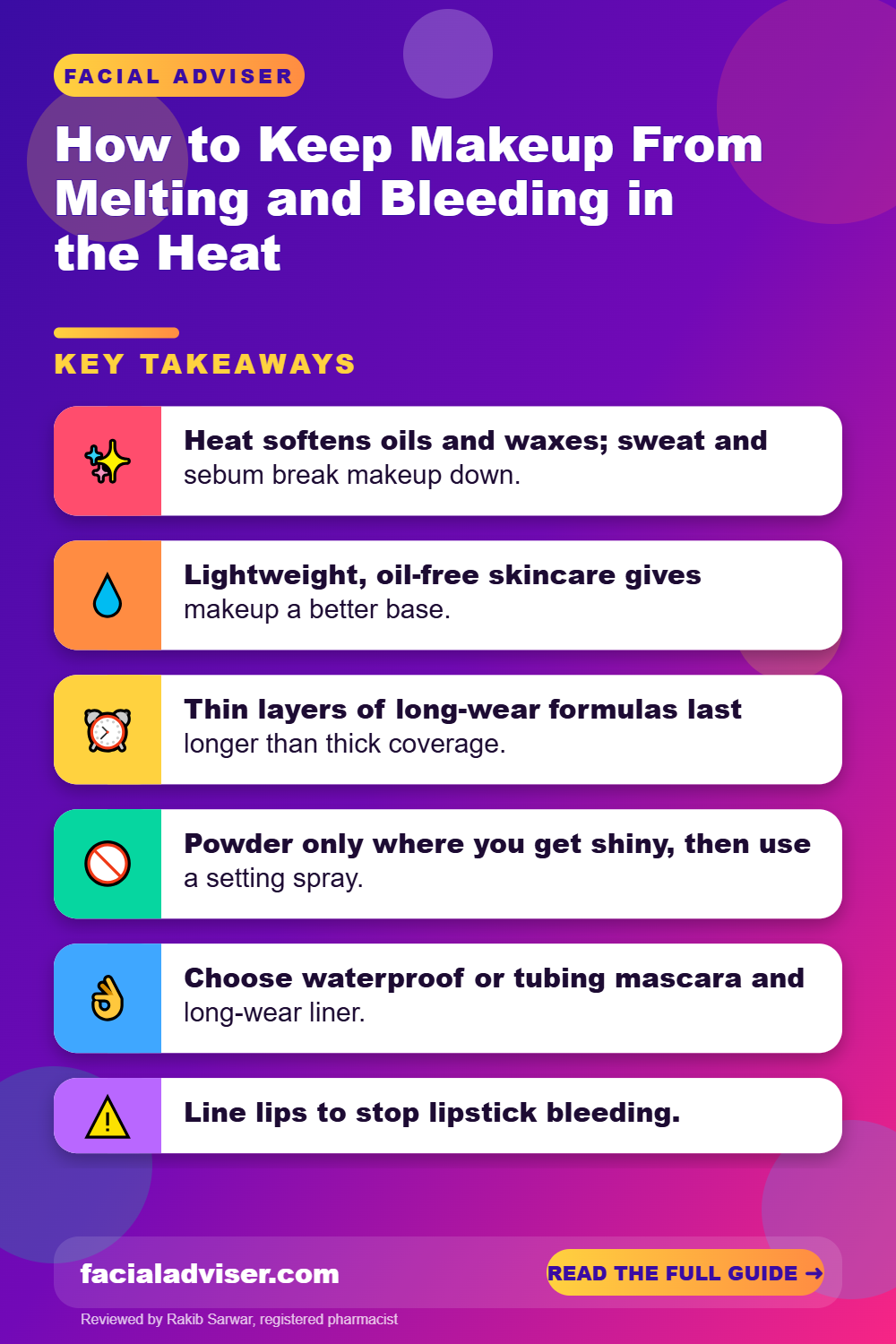
- Heat softens oils and waxes; sweat and sebum break makeup down.
- Lightweight, oil-free skincare gives makeup a better base.
- Thin layers of long-wear formulas last longer than thick coverage.
- Powder only where you get shiny, then use a setting spray.
- Choose waterproof or tubing mascara and long-wear liner.
- Line lips to stop lipstick bleeding.
- Blot, do not pile on powder, during the day.
Why Makeup Melts and Bleeds in the Heat
| Cause | What happens | Where you notice it |
|---|---|---|
| Warmth | Oils and waxes soften and spread | Lipstick, cream blush, eyeliner |
| Sweat | Water breaks down non-water-resistant formulas | Forehead, upper lip, hairline |
| Extra sebum | Oil dissolves foundation and concealer | Nose, chin, forehead |
| Humidity | Skin stays damp, so powder and setting products struggle | Everywhere, especially the T-zone |
| Touching and blotting with fingers | Moves softened makeup around | Around the nose and mouth |
These causes add up. A creamy foundation over a rich moisturiser on an oily T-zone in a humid, 30-degree day has almost no chance of staying put, however carefully it is applied.
Our guide on what makes foundation waterproof explains how film formers and silicones help makeup resist sweat and water.
Prep Your Skin for Hot Days
Makeup lasts longer when the skin underneath is balanced: hydrated but not greasy. Heavy creams and facial oils stay slippery on the surface and give makeup nothing to grip.
- Cleanse with a gentle cleanser to remove overnight oil.
- Use a lightweight gel moisturiser or skip moisturiser on very oily areas if your sunscreen hydrates enough.
- Apply a lightweight, oil-free sunscreen and let it set for a few minutes.
- Blot any excess oil or sunscreen residue before primer.
Our guide on skincare for humid climates covers how to adjust your routine when temperatures and humidity rise.
Do not skip sunscreen to help makeup last. Choose a lighter, matte or gel-texture sunscreen instead, and give it time to set before makeup.
How to Heat-Proof Your Makeup Routine
Prime strategically
Use a mattifying or pore-filling primer on the T-zone and a gripping primer elsewhere.
Choose long-wear formulas
Use a long-wear or water-resistant foundation, or a lighter skin tint if you prefer less coverage.
Apply thin layers
Press foundation in with a damp sponge and add coverage only where needed.
Set the T-zone
Press a light layer of translucent powder where you get oily.
Use cream-to-powder layering sparingly
Set cream blush with a matching powder blush for extra hold.
Finish with setting spray
Mist from arm’s length and let it dry without touching.
Pack a touch-up kit
Blotting papers, a mini powder and lip colour are enough for most days.
Keep your setting spray or a hydrating mist in the fridge on very hot days. A cool mist feels refreshing and helps you resist touching your face.
Keeping Eye Makeup in Place
The eyelids and under-eye area are warm and often oily, so eye makeup is usually the first thing to move in the heat.
- Use an eyeshadow primer to control oil on the lids.
- Choose long-wear cream shadows or powder shadows set over a primer.
- Use gel, liquid or long-wear pencil liner rather than soft kohl.
- Choose tubing or waterproof mascara.
- Set the lower lash line with a little translucent powder.
Tubing mascaras resist both sweat and skin oil, which makes them especially good in heat. Our guide on why some mascaras smudge explains which formulas work best for oily lids and watery eyes.
Stopping Lipstick From Bleeding
Lipstick bleeds when warm, softened colour travels into the fine lines around the lips. It is more common with creamy, glossy or highly emollient formulas and with age, as those lines deepen.
| Problem | Cause | Fix |
|---|---|---|
| Colour spreading into lines | Creamy, oily formula softening in heat | Line lips first; choose matte or long-wear formulas |
| Gloss sliding off | Very slippery texture | Blot, or wear a stain under gloss |
| Colour fading quickly | Sweat and eating | Use a stain or transfer-resistant liquid lipstick |
| Feathering at the edges | No barrier at the lip line | Apply liner around and slightly inside the lip line |
A clear or nude lip liner traced just around the lip line acts as a barrier. Blotting after the first layer, then applying a second, also improves wear. Lip stains are particularly reliable in hot weather because the colour sits in the skin rather than on top. Our guide on pigment versus dye explains why stains last longer.
Touching Up During the Day
Even the best routine needs a little maintenance in real heat. The key is to remove oil and sweat before adding anything new.
- Press blotting papers onto oily areas; do not rub.
- Dab sweat with a clean tissue before touching up.
- Add a light press of powder only where needed.
- Refresh with a quick mist of setting spray.
- Reapply lip colour after blotting the lips.
Adding powder over sweat or oil without blotting first creates a thick, cakey layer that breaks down even faster. If an area has completely broken down, it is often quicker to gently remove it with a cotton bud dipped in micellar water and reapply a thin layer than to cover it up.
The AAD’s guide on how to apply sunscreen advises reapplying about every two hours when outdoors and after swimming or sweating, which is worth building into any hot-day touch-up routine.
Remember to reapply sunscreen. If you are outside for long periods, a sunscreen stick, powder or mist designed to go over makeup can help, but a generous reapplication of regular sunscreen gives the most reliable protection.
Choosing Heat-Friendly Formulas
Foundation: long-wear, matte or soft-matte formulas with film formers usually outlast dewy, emollient ones. Silicone-based formulas often resist sweat better. Our guide on silicone versus water-based cosmetics explains the difference. Concealer: use a thin layer of long-wear concealer and set it with powder. Blush and bronzer: powder or gel-cream formulas last longer than rich creams. Stains and tints work well on cheeks too. Brows: a tinted brow gel or waterproof pencil holds up better than powder alone. Lips: stains, long-wear liquids and matte lipsticks outlast glosses and balms in the heat.Storing makeup properly helps too. Lipsticks, cream products and liquid foundations left in a hot car or bag can soften, separate or even melt before you apply them. Keep them in a cool, shaded place, and let an overheated lipstick firm up in a cool room before use.
Adjusting for Your Skin Type
Oily skin: heat makes oily skin produce even more sebum, so focus on mattifying primer on the T-zone, oil-free long-wear foundation and a light layer of powder. Blotting papers are essential. Avoid heavy highlighter on the forehead and nose, which will look greasy by midday. Combination skin: treat the T-zone as oily and the cheeks as normal. A gripping or hydrating primer on the cheeks and a mattifying one in the centre of the face gives the best balance. Dry skin: dry skin can still sweat, but very matte long-wear formulas may feel tight and look flat. A lightweight hydrating base, a satin long-wear foundation and a setting spray rather than much powder usually work better. Sensitive or acne-prone skin: sweat trapped under heavy makeup can irritate skin and contribute to breakouts or heat rash. Keep layers light, choose non-comedogenic products and cleanse thoroughly as soon as you get home. Mature skin: heavy powder can settle into lines when you sweat. Use thin layers, set only the areas that need it and choose a lip liner to prevent lipstick feathering.Outdoor Events, Weddings and Exercise
For long outdoor events in summer, such as weddings or festivals, a waterproof or long-wear base, waterproof mascara, a lip stain and a small touch-up kit give you the best chance of lasting all day. Doing a trial run on a warm day beforehand shows you where your makeup tends to break down.
For exercise, less is more. Heavy makeup mixed with sweat can clog pores and irritate skin. A tinted sunscreen, water-resistant mascara if you want it and a lip balm with SPF are usually enough. Remove makeup and cleanse soon after a workout.
For photos in the heat, blot just before the picture is taken and avoid adding fresh powder, which can cause flashback. A quick mist of setting spray takes away any powdery look.
Dos and Don’ts
Worth Doing
- Use lightweight, oil-free skincare
- Apply thin layers of long-wear formulas
- Set the T-zone with powder
- Use waterproof or tubing mascara
- Blot before touching up
Skip It
- Wear heavy creams or oils under makeup
- Pile on full coverage
- Powder over sweat without blotting
- Rub your face with your hands
- Skip sunscreen to help makeup last
Honest Limits
In very high heat and humidity, or during exercise, no makeup is completely sweat-proof. Expect some fading and plan for a quick touch-up.
Individual skin varies a lot. Very oily skin will always challenge makeup more, while dry skin may find long-wear formulas uncomfortable. Choosing products that suit your skin type matters as much as choosing heat-proof labels.
Heat tolerance also varies with activity, shade and air conditioning, so the same routine can last all day in an office and only an hour outdoors. On the hottest days, wearing less makeup is often the most practical choice. A tinted sunscreen, waterproof mascara and a lip stain can look fresh all day with minimal effort.
When to See a Dermatologist
- You develop heat rash, itching or bumps under makeup in hot weather.
- You break out regularly after wearing long-wear makeup.
- Your skin becomes very oily or irritated in summer despite a simple routine.
- You notice redness or stinging from sweat-resistant products.
This article is for general information and does not replace professional medical advice. See a dermatologist for persistent skin concerns.
Your Questions, Answered
Why does my makeup melt in the heat?
Warmth softens oils and waxes, and sweat and sebum break makeup down.
How do I stop foundation sliding in summer?
Use lightweight skincare, a primer, thin long-wear layers, powder and setting spray.
What mascara is best for hot weather?
Tubing or waterproof mascara.
How do I stop lipstick bleeding?
Line your lips first and choose matte, long-wear or stain formulas.
Does setting spray help in heat?
Yes, especially with film-forming or matte formulas.
Should I use more powder in summer?
No. Use a light layer where needed and blot rather than adding more.
Is silicone foundation better in heat?
It often resists sweat better than dewy, water-based formulas.
Can I skip moisturiser in hot weather?
Oily skin may skip it if sunscreen hydrates; dry skin still needs a light one.
How do I touch up makeup in heat?
Blot oil and sweat first, then press on a little powder and mist.
Is any makeup completely sweat-proof?
No, but long-wear and waterproof formulas last much longer.
The Takeaway
Makeup melts and bleeds in the heat because warmth softens oils and waxes while sweat and sebum break formulas down. Lightweight skincare, targeted primer, thin long-wear layers, strategic powder and setting spray make the biggest difference.
Switch to waterproof or tubing mascara, long-wear liner and lip liner with stains or long-wear lipstick, blot before touching up and keep sunscreen as its own layer. On the hottest days, less makeup often looks and feels best.

Written by
Registered pharmacist and founder of Facial Adviser. Rakib's pharmacy training covers how skincare actives work and interact; a later course in cosmetology turned that into a focus on facial treatments and skincare products. He plans, researches and edits every guide on the site and checks health claims against sources such as the American Academy of Dermatology, the FDA and the NIH. He is not a dermatologist; see the Editorial Policy and Medical Disclaimer.
About · Editorial policy · How we choose products · Medical disclaimer · Contact
Keep reading: Making makeup last
- What Can You Use to Make Your Makeup Stay On All Day? 9 Products and Tricks
- How to Avoid Product Pilling: Why Skincare and Makeup Ball Up
- Makeup Hacks for an Oily T-Zone: Stay Matte Without Looking Flat
- Makeup on Textured Skin: How to Get a Smoother-Looking Finish
- Makeup Tips for Dry, Flaky Skin: How to Stop Foundation Clinging to Flakes
- How to Keep Makeup Intact for Photos: Camera-Ready Tips That Last
- How to Choose the Right Eye Makeup Color for Your Eyes and Skin
- How to Get Started as a Freelance Makeup Artist: Training, Kit and Clients