Makeup Tips for Dry, Flaky Skin: How to Stop Foundation Clinging to Flakes
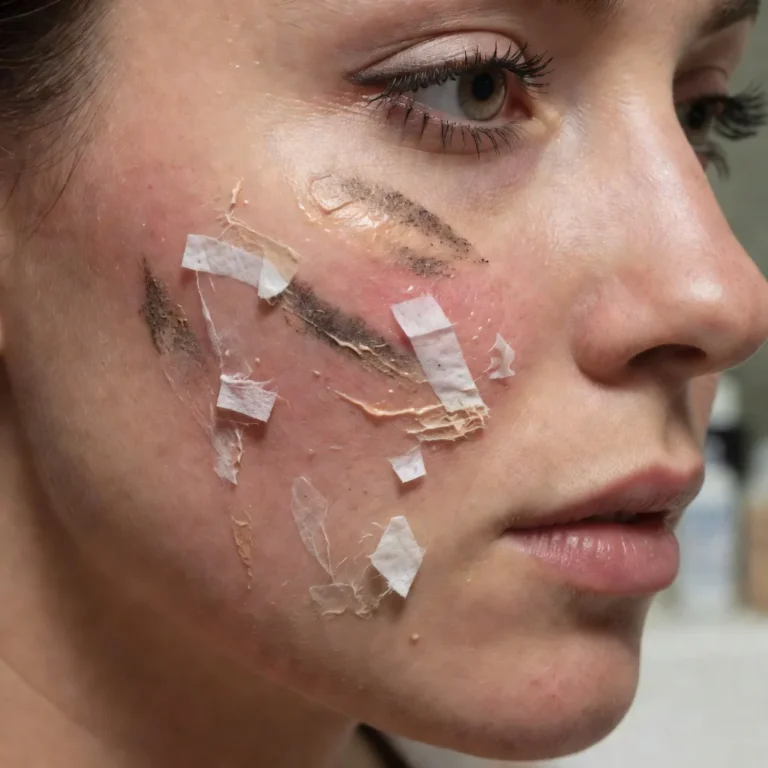
Dry, flaky skin can make even the best foundation look patchy. Product clings to flakes around the nose, mouth and eyebrows, powder turns chalky and by midday the skin feels tight and looks dull.
Part of our guide to makeup how-to. Start with: What Can You Use to Make Your Makeup Stay On All Day? 9 Products and Tricks
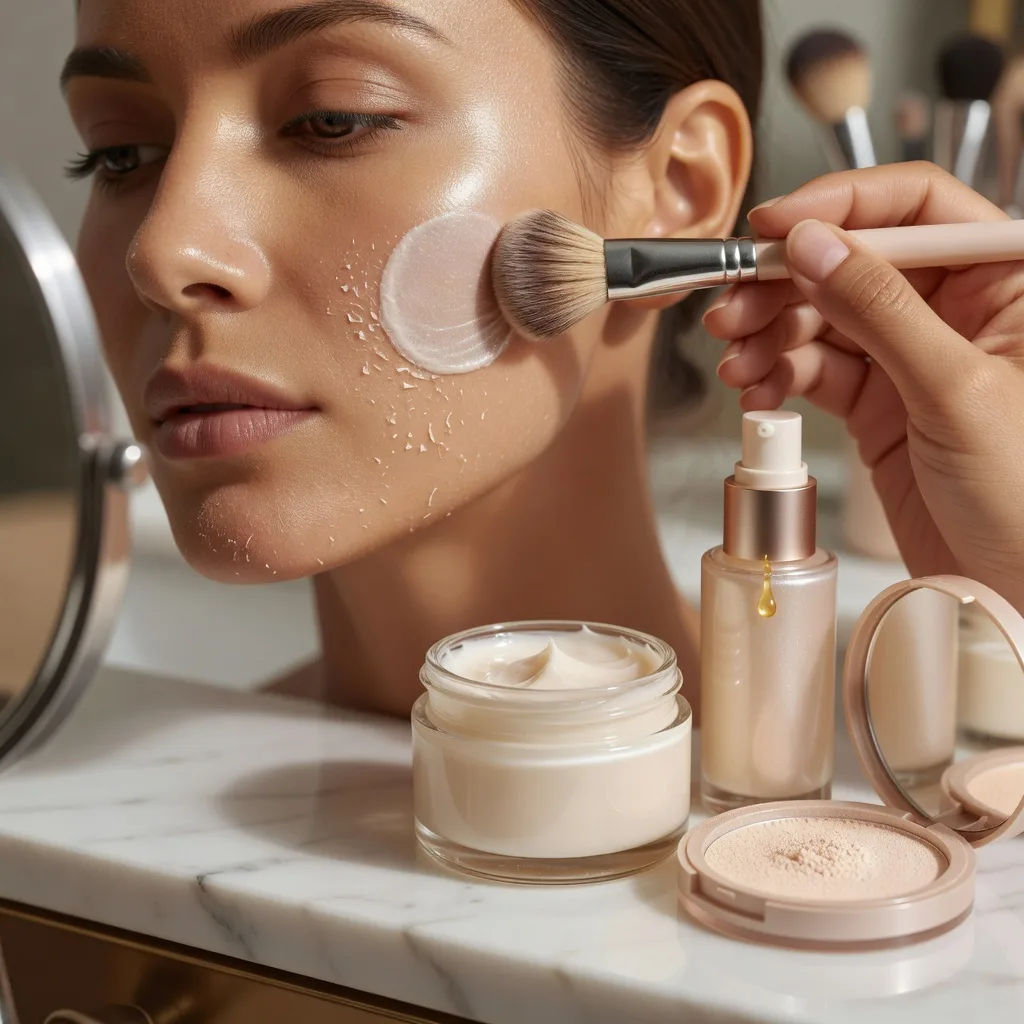
Makeup on dry, flaky skin looks best when you focus on hydration and gentle exfoliation first, then use creamy, flexible products in thin layers. Exfoliate flaky areas gently a few times a week, apply a hydrating serum and a richer moisturiser and give them time to absorb. Use a hydrating primer, a satin or dewy foundation or skin tint, and press it on with a damp sponge. Choose cream blush and cream highlight, set only where you truly need to with a finely milled powder, and finish with a hydrating mist. Avoid heavy matte foundations and lots of powder, which cling to flakes and emphasise dryness.
Flakes that appear occasionally in winter are very common, and small changes to your routine usually make a big difference. Persistent flaking, redness or itching can be a sign of a skin condition that needs different care.
The American Academy of Dermatology recommends moisturising straight after washing and choosing creams or ointments over lotions for dry skin, which is the foundation of any makeup routine for flakes.
This guide covers skincare prep, product choices, application tips and quick fixes for flaky patches during the day, plus when flaking needs a dermatologist.
Shopping these picks?
Amazon Prime members get fast, free shipping on eligible items, plus Prime Video, Amazon Music and member deals. New members can start with a free trial.
Start a free Prime trialAged 18 to 24? Prime for Young Adults comes with a longer free trial and a lower price after it.
Affiliate link: we may earn a commission at no extra cost to you.
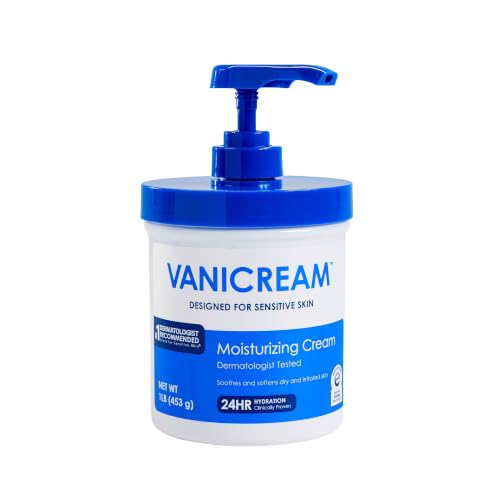
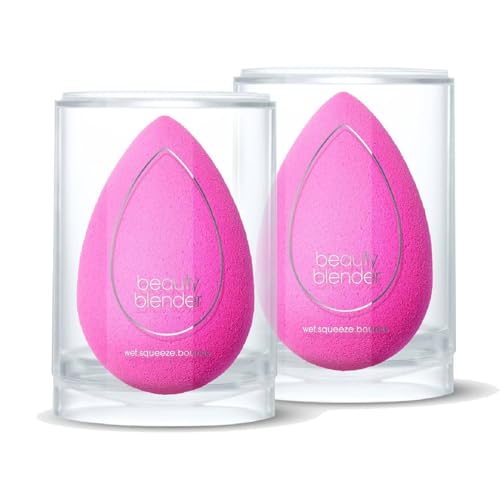
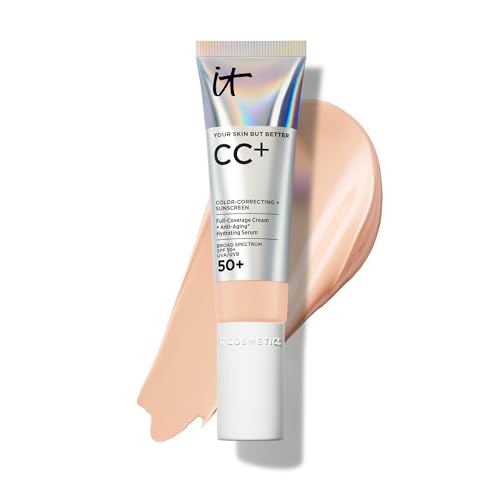
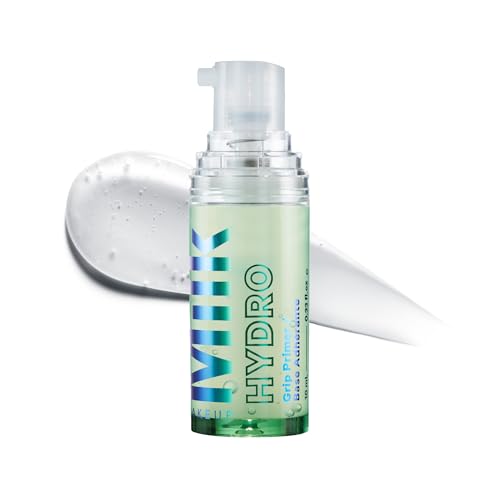
Recommended Products for Dry, Flaky Skin



What to Know First
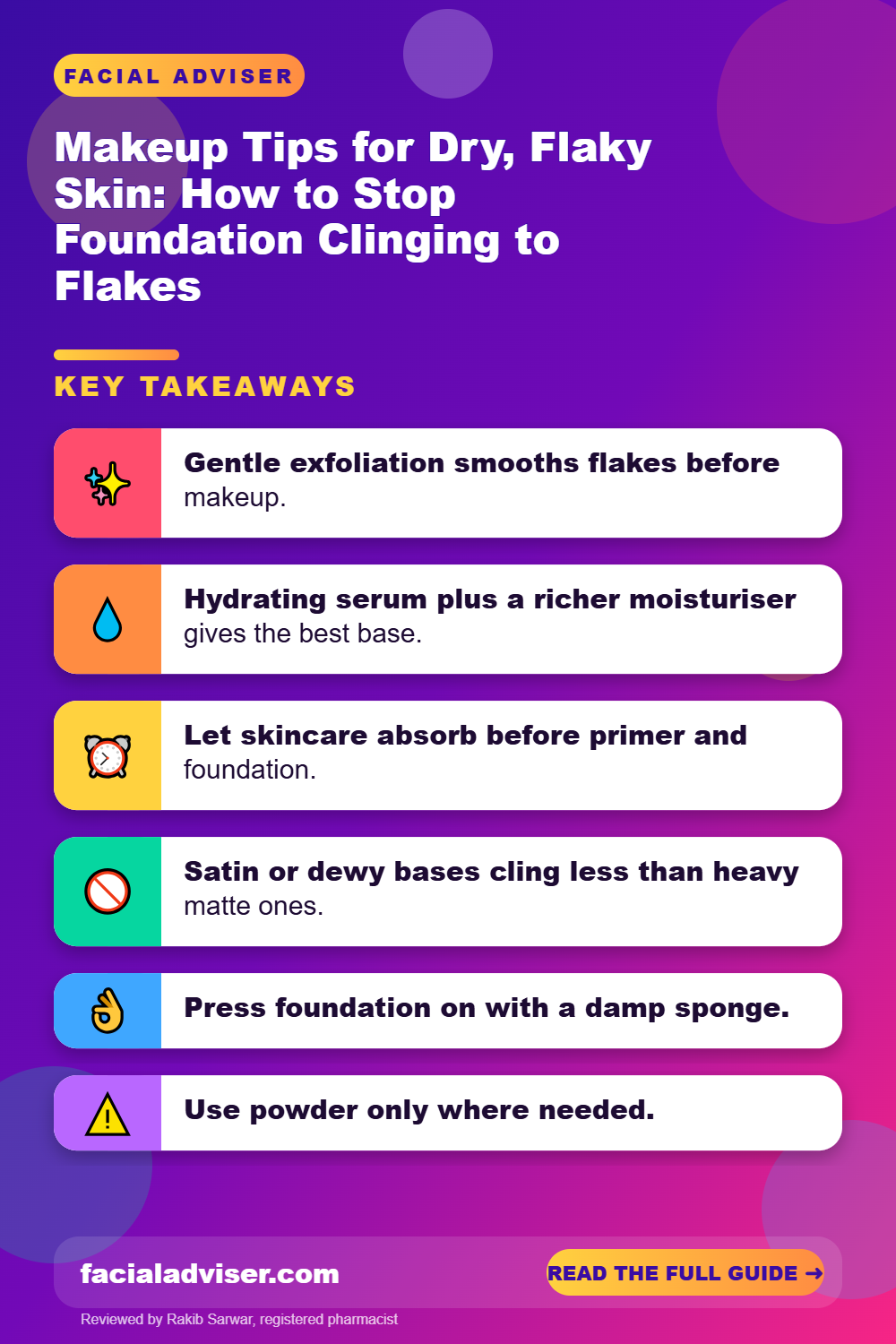
- Gentle exfoliation smooths flakes before makeup.
- Hydrating serum plus a richer moisturiser gives the best base.
- Let skincare absorb before primer and foundation.
- Satin or dewy bases cling less than heavy matte ones.
- Press foundation on with a damp sponge.
- Use powder only where needed.
- A hydrating mist softens a dry look.
On This Page
- Why Makeup Clings to Dry Flakes
- Skincare Prep for Flake-Free Makeup
- How to Apply Makeup on Dry, Flaky Skin
- Choosing Products for Dry Skin
- Quick Fixes for Flakes During the Day
- Mistakes That Make Flakes Worse
- Flaky Areas and How to Handle Each One
- Dry Under-Eyes and Lips
- Dry Skin in Winter and Air Conditioning
- Dos and Don’ts
- Honest Limits
- When to See a Dermatologist
- Your Questions, Answered
- Summing Up
Why Makeup Clings to Dry Flakes
Dry skin has a weakened moisture barrier, so the outer layer of skin cells lifts and curls instead of lying flat. The skin also holds on to dead cells for longer, so they build up in small patches. Foundation and powder catch on those raised edges, making flakes more visible rather than hiding them.
Matte and long-wear foundations often contain oil-absorbing powders and film formers that dry quickly, which is great for oily skin but challenging for dry skin. On dry skin, they can pull moisture from the surface and tighten around flakes. Powder does the same, soaking up what little moisture is left.
Common flaky areas include the sides of the nose, around the mouth, the chin, between the brows and the hairline. Our guide on patchy dry skin around the mouth covers one of the most stubborn spots.
Dehydrated skin, which lacks water, can flake too, even if it is oily. Humectant serums help dehydrated skin, while richer creams help dry skin that lacks oil.
Skincare Prep for Flake-Free Makeup
| Step | What to use | Why it helps |
|---|---|---|
| Cleanse gently | Cream or gel cleanser, lukewarm water | Avoids stripping the skin barrier |
| Exfoliate lightly (2 to 3 times a week) | PHA, lactic acid or a soft cloth | Removes loose flakes without irritation |
| Hydrate | Hyaluronic acid or glycerin serum on damp skin | Adds water to the skin |
| Moisturise | Cream with ceramides or shea butter | Softens flakes and seals in moisture |
| Protect | Hydrating sunscreen | Prevents further dryness from sun |
| Wait | Five minutes | Lets skincare absorb before makeup |
The AAD’s tips for relieving dry skin include short, lukewarm showers, gentle fragrance-free cleansers and applying moisturiser straight after washing.
If your skin feels tight, stings or looks red as well as flaky, your barrier may be damaged. Our guide on how to repair your moisture barrier explains how to calm it before adding more products.
How to Apply Makeup on Dry, Flaky Skin
Prep the skin
Cleanse, hydrate and moisturise, then wait a few minutes.
Smooth stubborn flakes
Gently lift any loose flakes with a damp cloth or a dab of balm.
Use a hydrating primer
Apply a thin layer, focusing on dry areas.
Choose a flexible base
Apply a satin, dewy or tinted moisturiser in thin layers.
Press, do not rub
Use a damp sponge to press foundation into the skin.
Use cream colour
Tap on cream blush and highlight with fingers.
Set only where needed
Press a tiny amount of fine powder on the T-zone if you get shiny.
Mist to finish
Use a hydrating setting spray to melt everything together.
Mix a drop of facial oil or moisturiser into your foundation on very dry days. It sheers the formula and adds slip so it glides over flakes instead of catching.
Choosing Products for Dry Skin
Primer: hydrating or glow primers suit dry skin better than mattifying ones. Some primers contain glycerin or hyaluronic acid for extra moisture. Foundation: satin, radiant or dewy finishes, skin tints and CC creams move with the skin and cling less than matte, long-wear formulas. Serum foundations and those with humectants such as glycerin feel especially comfortable on dry skin. Concealer: creamy, hydrating concealers crease less and sit more smoothly than thick, matte ones. Apply a small amount and blend with a fingertip for the smoothest finish. Blush and highlight: cream and liquid formulas blend into the skin, while powders can sit on top of flakes. Powder: if you need it, choose a finely milled translucent powder and use a small brush only where you get shiny. Setting spray: hydrating or dewy setting sprays add moisture and help makeup melt into the skin, making them a good alternative to powder for dry skin.Our guide on layering cream and powder products explains how to combine textures without patchiness.
Quick Fixes for Flakes During the Day
- Mist your face with a hydrating spray, then press with clean fingers or a damp sponge.
- Tap a small amount of moisturiser or balm over flaky patches, then press foundation back in with a sponge.
- Gently lift a visible flake with a damp cotton bud rather than picking.
- Avoid adding more powder, which makes flakes more obvious.
A small tube of moisturiser or a multi-purpose balm in your bag is one of the most useful tools for dry skin. A thin layer over makeup can soften flakes and add a healthy glow. Warm it between your fingertips first and press rather than rub, so the makeup underneath stays in place.
Do not pick or scrub flakes off with your nails. It damages the skin and can cause redness, sores and more flaking.
Mistakes That Make Flakes Worse
Over-exfoliating: scrubbing daily or using strong acids too often damages the barrier and causes more flaking. If your skin stings when you apply moisturiser, pause exfoliation until it settles. Skipping moisturiser to help makeup last: dry skin needs moisture for makeup to sit well. Using a mattifying primer all over: it can dry out flaky areas further. Applying makeup straight after skincare: products that have not absorbed can pill and lift flakes. Buffing foundation with a dense brush: it can lift flakes and push product into them. Heavy powder and baking: soaks up moisture and emphasises every dry patch.If flakes come with texture and bumps, our guide on makeup on textured skin has more tips.
Flaky Areas and How to Handle Each One
| Area | Common cause | Makeup tip |
|---|---|---|
| Sides of the nose | Dryness, friction from blowing the nose, seborrheic dermatitis | Moisturise well; tap foundation on thinly with a fingertip |
| Around the mouth | Licking lips, toothpaste, dryness | Use a barrier balm at night; keep foundation thin |
| Between the brows | Dryness or seborrheic dermatitis | Skip powder; use a creamy concealer if needed |
| Chin | Dryness, touching the face | Hydrate and use a hydrating primer |
| Hairline | Dry skin, hair products | Blend foundation away before the hairline |
Treating each area on its own terms works better than applying the same amount of product everywhere. Many people need only a thin base on flaky areas, with a little more coverage elsewhere. A fingertip gives the most control over small areas like the sides of the nose.
If flakes near the nose and brows are greasy and yellowish rather than dry and white, the cause may be seborrheic dermatitis rather than simple dryness. That usually needs a different skincare approach, and a dermatologist can confirm it and suggest suitable treatment.
Dry Under-Eyes and Lips
Under-eyes: the skin here is thin and dries easily. Use a hydrating eye cream at night and a light one in the morning, let it absorb, then apply a creamy concealer in a thin layer. Skip powder or use the tiniest amount on a small brush only where the concealer creases. Pat products in rather than rubbing to protect this delicate skin. Lips: flaky lips make lipstick look patchy. Exfoliate gently with a soft, damp cloth, apply a balm and wait a few minutes, then blot before lipstick. Creamy or satin lipsticks and tinted balms are kinder to dry lips than long-wear mattes.Our guide on makeup mistakes that age you covers more tips for keeping the under-eyes and lips looking smooth.
Dry Skin in Winter and Air Conditioning
Cold air outside and heated air indoors both lower humidity, which makes dry skin worse. Air conditioning in summer can have a similar effect.
Switch to a richer moisturiser in colder months, use a humidifier at home if the air is very dry and keep showers short and lukewarm. Hot water strips natural oils. Wind and cold outdoors can also chap exposed skin, so a scarf and a layer of balm on the cheeks and lips help on very cold days.
You may need to adjust your makeup with the seasons: more hydration and less powder in winter, lighter layers and a little more powder in humid summer weather. Keeping two moisturisers, a lighter one and a richer one, makes these seasonal switches easy.
Dos and Don’ts
Worth Doing
- Hydrate and moisturise before makeup
- Exfoliate gently a few times a week
- Use satin or dewy bases
- Press foundation on with a damp sponge
- Carry a hydrating mist
Skip It
- Scrub flakes off
- Use heavy matte foundation
- Pile on powder
- Apply makeup over wet skincare
- Pick at flakes
Honest Limits
Makeup can soften the look of dry skin, but it cannot fix a damaged skin barrier. Consistent, gentle skincare is what reduces flaking over time, and most people notice a difference within a few weeks of a simpler, more hydrating routine.
Some flaking is caused by skin conditions such as eczema, seborrheic dermatitis or psoriasis, which need specific treatment rather than more moisturiser or makeup.
If a product seems to make flaking worse, it may be irritating your skin. Fragrance, alcohol-heavy products and strong actives are common culprits. Stopping the suspected product for a week or two usually shows whether it was the cause.
When to See a Dermatologist
- Flaking does not improve after a few weeks of gentle care and moisturiser.
- You have red, itchy or scaly patches.
- Flakes appear around the nose, brows and hairline with redness or greasiness.
- Your skin cracks, bleeds or stings.
This article is for general information and does not replace professional medical advice. See a dermatologist for persistent dryness, flaking or irritation.
Your Questions, Answered
Why does my foundation cling to dry patches?
Flakes have raised edges that catch foundation and powder.
What foundation is best for dry, flaky skin?
Satin, dewy or tinted moisturiser formulas applied thinly.
Should I use powder on dry skin?
Only where you get shiny, and use a finely milled powder.
How do I get rid of flakes before makeup?
Exfoliate gently a few times a week and moisturise well.
Can I use a facial oil under makeup?
Yes, a few drops mixed into moisturiser or foundation can help.
What primer is best for dry skin?
A hydrating or glow primer.
How do I fix flakes during the day?
Mist, then press a little moisturiser and foundation back in with a sponge.
Is a damp sponge better than a brush for dry skin?
Usually, because it presses product in without lifting flakes.
Why is my skin flaky around my nose?
Dryness is common there, but redness and greasy flakes may be seborrheic dermatitis.
When should I see a dermatologist about flaky skin?
If flaking persists, itches, or comes with redness or scaling.
Summing Up
Makeup looks smoothest on dry, flaky skin when you start with gentle exfoliation and good hydration, then use creamy, flexible products in thin layers pressed on with a damp sponge.
Keep powder to a minimum, carry a hydrating mist for touch-ups and avoid scrubbing or picking flakes. If flaking persists or comes with redness and itching, a dermatologist can find the cause.

Written by
Registered pharmacist and founder of Facial Adviser. Rakib's pharmacy training covers how skincare actives work and interact; a later course in cosmetology turned that into a focus on facial treatments and skincare products. He plans, researches and edits every guide on the site and checks health claims against sources such as the American Academy of Dermatology, the FDA and the NIH. He is not a dermatologist; see the Editorial Policy and Medical Disclaimer.
About · Editorial policy · How we choose products · Medical disclaimer · Contact
Keep reading: Making makeup last
- What Can You Use to Make Your Makeup Stay On All Day? 9 Products and Tricks
- How to Keep Makeup Intact for Photos: Camera-Ready Tips That Last
- Makeup for Enlarged Pores: How to Blur Them Without Clogging Skin
- Best Setting Techniques for Longevity: Powder, Spray and Layering Tips
- Makeup Fixer vs Setting Spray: What Is the Difference and Which Do You Need?
- Why Does Makeup Separate on My Nose? Causes and Fixes That Work
- How to Properly Put On Face Makeup: The Right Order, Step by Step
- How to Choose Lipstick Shade: Undertone, Skin Tone and Testing Tips