Makeup for Enlarged Pores: How to Blur Them Without Clogging Skin
Enlarged pores are one of the most common reasons people reach for more foundation, and one of the most common reasons makeup ends up looking worse. Thick layers sink into pores, collect around the nose and cheeks and make them look more obvious by midday. Oil then breaks the base down further, leaving small dots of product in each pore.
Part of our guide to makeup how-to. Start with: What Can You Use to Make Your Makeup Stay On All Day? 9 Products and Tricks
The best makeup for enlarged pores uses thin layers and smoothing products rather than heavy coverage. Start with clean, lightly moisturised skin and a non-comedogenic, oil-free base. Press a small amount of silicone-based or blurring primer into areas with visible pores, then apply a light, matte or soft-matte foundation with a damp sponge or dense brush, using pressing motions instead of rubbing. Set with a thin layer of finely milled powder, blot oil during the day, and avoid chunky shimmer on areas with large pores.
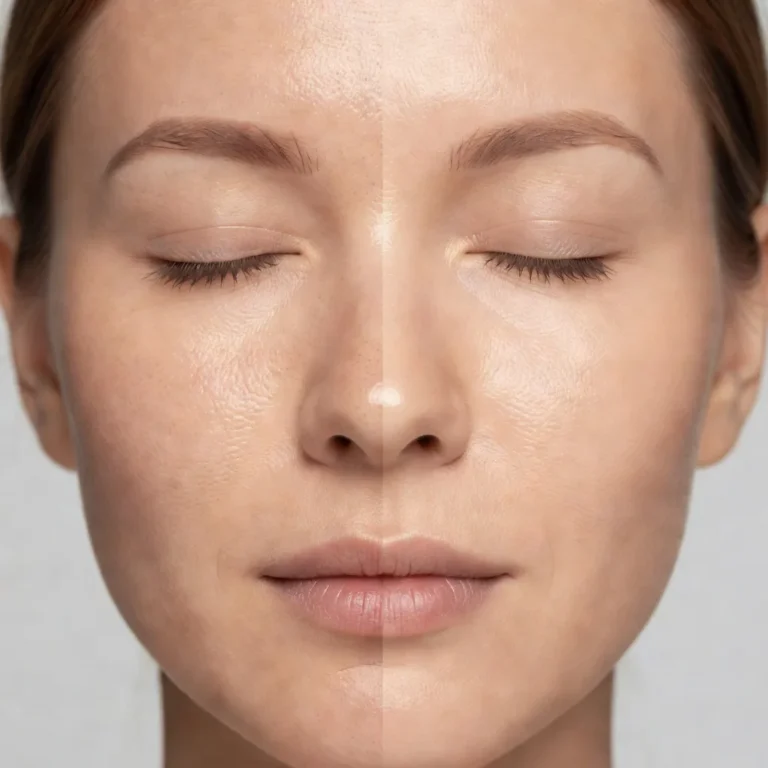
Makeup cannot change pore size, but it can change how visible pores look. Light reflects off smooth surfaces and falls into dips and shadows, so the goal is to fill the surface slightly and diffuse light, not to cover pores with a thick layer of product.
Good skincare makes a noticeable difference too. The American Academy of Dermatology recommends choosing products labelled non-comedogenic or oil-free if you have acne-prone or oily skin, because they are less likely to clog pores.
This guide explains why pores look larger, how to prep, which primers and foundations work best, a step-by-step application method, how to keep makeup from settling during the day and when to see a dermatologist.
Shopping these picks?
Amazon Prime members get fast, free shipping on eligible items, plus Prime Video, Amazon Music and member deals. New members can start with a free trial.
Start a free Prime trialAged 18 to 24? Prime for Young Adults comes with a longer free trial and a lower price after it.
Affiliate link: we may earn a commission at no extra cost to you.
Recommended Products for Minimising the Look of Pores


What This Covers
- Why Pores Look Bigger Under Makeup
- Prep: Skincare That Helps Makeup Sit Smoothly
- Choosing a Primer for Enlarged Pores
- How to Apply Makeup Over Enlarged Pores
- Choosing Foundation and Powder
- Keeping Makeup From Settling Into Pores During the Day
- Adjusting for Your Skin Type
- Dos and Don’ts
- Long-Term Habits That Help
- Honest Limits
- When to See a Dermatologist
- Common Questions
- The Bottom Line
At a Glance
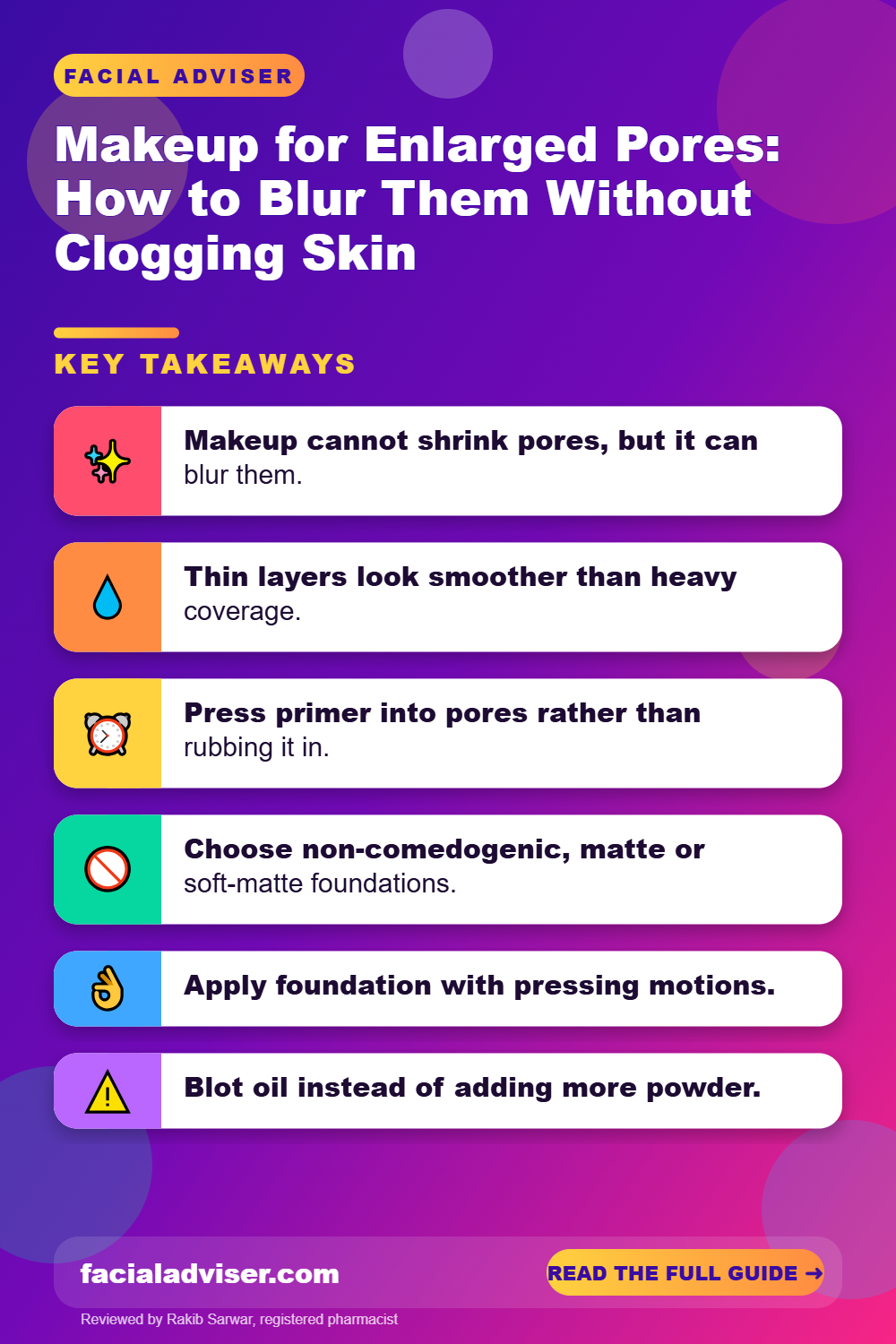
- Makeup cannot shrink pores, but it can blur them.
- Thin layers look smoother than heavy coverage.
- Press primer into pores rather than rubbing it in.
- Choose non-comedogenic, matte or soft-matte foundations.
- Apply foundation with pressing motions.
- Blot oil instead of adding more powder.
- Consistent skincare helps pores look smaller over time.
Why Pores Look Bigger Under Makeup
Pore size is largely genetic, and pores tend to be larger on the nose, inner cheeks and forehead where there are more oil glands. They can look more noticeable with oily skin, as skin loses firmness with age and after long-term sun exposure. Makeup can either soften their appearance or make them stand out.
| Cause | How it affects makeup | What helps |
|---|---|---|
| Excess oil | Breaks down foundation and leaves product in pores | Oil control, blotting, mattifying primer |
| Clogged pores | Pores look darker and more visible | Regular cleansing and salicylic acid |
| Heavy foundation | Settles into pores and emphasises them | Thin layers, pressed in |
| Dehydrated skin | Makeup clings to texture | Light, oil-free moisturiser |
| Shimmer and glow products | Highlights texture | Keep shimmer off pore-prone areas |
| Loss of firmness | Pores look more stretched | Sunscreen and retinoids over time |
Because pores are three-dimensional, they catch shadows in overhead light and photos. Makeup that fills and flattens the surface slightly, then diffuses light, makes them look far less obvious than trying to hide them with opaque coverage.
Prep: Skincare That Helps Makeup Sit Smoothly
How pores look under makeup starts with skincare. Clean, balanced skin with less oil and fewer clogged pores gives makeup a smoother surface to sit on.
- Cleanse gently twice a day with a non-comedogenic cleanser.
- Use salicylic acid a few times a week to clear inside pores.
- Try niacinamide, which may help with oil and the look of pores.
- Moisturise with a light, oil-free formula.
- Wear sunscreen daily to protect skin firmness.
The American Academy of Dermatology notes that people with oily skin benefit from washing twice a day, choosing oil-free products and blotting during the day. Over-washing or scrubbing can backfire, making skin produce more oil. Our guide on sebaceous filaments versus blackheads explains why some dots in pores are normal and should not be squeezed.
Let skincare absorb for a few minutes before primer. Applying makeup over wet or slippery skin makes foundation slide into pores rather than sitting on top.
Choosing a Primer for Enlarged Pores
Primer is where most of the pore-blurring happens. Silicone-based primers, often labelled pore-filling or blurring, fill the surface slightly and give foundation a smoother base. Mattifying primers control oil so the base lasts longer.
| Primer type | What it does | Best for | Tips |
|---|---|---|---|
| Silicone pore-filling | Fills and smooths the surface | Visible pores on nose and cheeks | Press in with a fingertip; use a small amount |
| Mattifying | Absorbs oil and reduces shine | Oily T-zone | Apply only where you get oily |
| Hydrating gel | Adds moisture and slip | Dehydrated skin with pores | Combine with a pore-filler on the nose |
| Soft-focus or blurring | Diffuses light | Pores and fine texture | Keep layers thin to avoid pilling |
Use primer only where you need it. A pore-filling primer on the nose and inner cheeks and a hydrating one elsewhere often gives a better result than one product all over. Our guide on the soft-focus effect in makeup explains how blurring products work.
How to Apply Makeup Over Enlarged Pores
Cleanse and moisturise
Use a light, oil-free moisturiser and let it absorb.
Apply sunscreen
Let it set for a few minutes so it does not pill under primer.
Press in primer
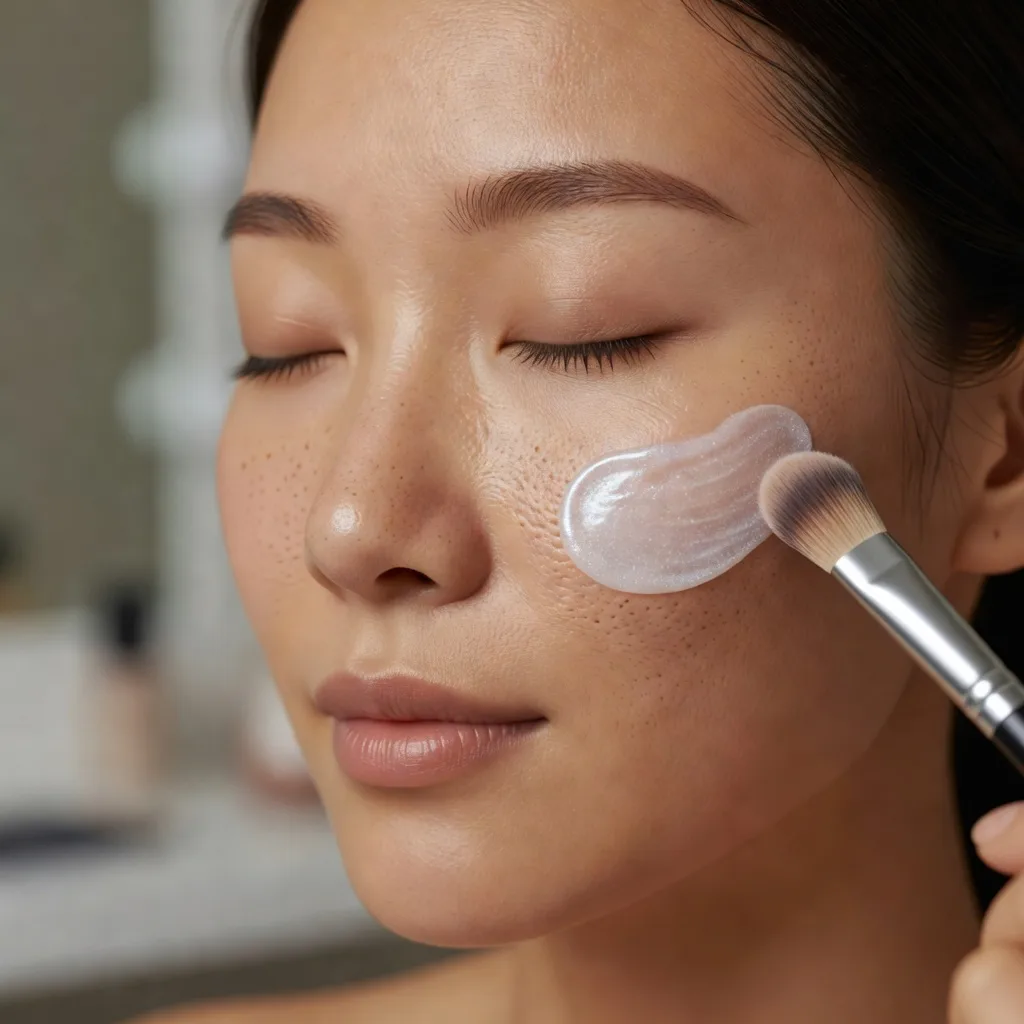
Tap a small amount of pore-filling primer into pores with a fingertip.
Apply thin foundation
Use a damp sponge or dense brush and press rather than rub.
Spot conceal
Cover only redness or blemishes with a small amount of concealer.
Set lightly
Press a thin layer of fine powder onto the T-zone and pore areas.
Blot during the day
Use blotting sheets to lift oil before adding more product.
Press, do not buff. Circular buffing pushes foundation into pores and can make them look like small dots. Pressing or stippling lays the product across the surface instead.
A little product goes a long way. It is usually better to apply one thin layer, wait a minute, then add a second thin layer only where you need more coverage. Heavy layers applied all at once are what most often make pores look bigger by the afternoon. Tools matter as well. A damp sponge absorbs excess product and leaves a thin, even layer, while a dense, flat-top brush gives more coverage with the same pressing motion. Fingers warm the product and work well for sheer formulas, but they can leave streaks on the nose, so a sponge is useful for finishing that area.
Choosing Foundation and Powder
Lightweight, matte or soft-matte foundations tend to work best on enlarged pores. Very dewy or shimmery formulas reflect light off texture and can make pores look more noticeable, especially on oily skin.
- Look for non-comedogenic, oil-free formulas.
- Choose light to medium coverage that can be built.
- Prefer matte or soft-matte finishes for oily areas.
- Use finely milled powders rather than heavy, chalky ones.
- Keep glowy products to the high points of cheeks away from pores.
If you have dry or combination skin with visible pores, a satin finish on the drier areas and a matte finish on the T-zone often gives the best of both. Our guide on makeup hacks for an oily T-zone covers ways to combine textures, and our guide on makeup on textured skin covers bumps and uneven texture.
Keeping Makeup From Settling Into Pores During the Day
Even well-applied makeup can start to show pores after a few hours, usually because oil builds up and breaks the base down. The fix is to remove the oil first, not to add more product on top. Heat, humidity, exercise and long days all speed up oil production, so plan for a quick touch-up at lunchtime if your skin tends to get shiny.
- Blot with blotting sheets, pressing rather than wiping.
- Tap a sponge over any areas where product has gathered.
- Add a very light dusting of powder only where needed.
- Mist a setting spray to refresh and melt layers together.
Adding powder over oily skin without blotting first creates a thick paste that sits in pores and looks cakey. Blotting takes a few seconds and keeps the base thin.
Avoid squeezing or picking at pores to make them look smaller before makeup. It can cause inflammation, marks and scarring, and it makes makeup look worse by adding redness and texture.
Adjusting for Your Skin Type
Enlarged pores show up on every skin type, but the approach changes depending on how much oil your skin makes and how dry the surrounding areas are.
- Oily skin: mattifying primer on the T-zone, oil-free matte foundation, powder on the centre of the face and blotting sheets in your bag.
- Combination skin: pore-filling primer on the nose and inner cheeks, hydrating primer elsewhere and a soft-matte or satin foundation.
- Dry skin: a richer moisturiser left to absorb fully, a small amount of pore-filler only where needed and very little powder.
- Mature skin: thin, flexible foundation, minimal powder and a light hydrating mist to stop the base looking dry.
Dry skin with enlarged pores can be tricky, because mattifying products that help pores often make dry areas flake. Targeting products to small areas of the face, rather than using one product everywhere, usually solves this. The same approach works for acne-prone skin: keep formulas non-comedogenic, spot-treat blemishes with concealer only where needed and avoid heavy layers that trap oil.
Climate matters too. In hot, humid weather, oil breaks through faster, so a mattifying primer and a setting spray become more important. In cold, dry weather, you may find you need a little more hydration and less powder to keep the base from looking textured.
Dos and Don’ts
Helps
- Use non-comedogenic, oil-free products
- Press primer and foundation in
- Build coverage in thin layers
- Blot before touching up
- Remove makeup fully every night
Backfires
- Pile on heavy foundation
- Buff in circles over pores
- Use chunky shimmer on the nose and cheeks
- Add powder over oil without blotting
- Squeeze or pick at pores
Long-Term Habits That Help
Makeup works best on skin that is well cared for. Removing makeup every night, cleansing gently and using ingredients such as salicylic acid, retinoids and niacinamide can make pores look smaller over time. Results take weeks, not days. Introduce one new active at a time and give it at least a month before judging whether it helps, so you can tell which product is making the difference.
Sunscreen matters too. Sun damage can weaken the skin’s support over the years, making pores look larger. Daily sunscreen protects skin firmness and helps keep pores from looking more stretched with age. Our guide on whether cold water closes pores explains why some popular tricks do not change pore size.
Honest Limits
No makeup product can shrink pores or make them disappear completely. Pores are a normal part of skin, and everyone has them. In close-up photos and bright lighting, some texture will always show.
Products labelled pore-minimising or poreless describe how the skin looks, not a change in pore size. Results vary with skin type, climate and how products are layered.
If you are frustrated with pores, it can help to look at your skin from a normal viewing distance rather than in a magnifying mirror. Most people notice far less texture than you see up close.
When to See a Dermatologist
- You have frequent breakouts or blackheads despite a good routine.
- Pores look inflamed, red or painful.
- You want to explore prescription retinoids or in-office treatments.
- Makeup regularly causes irritation or breakouts.
This article is for general information and does not replace professional medical advice. See a dermatologist for persistent breakouts, skin concerns or reactions to products.
Common Questions
What makeup is best for enlarged pores?
Light, non-comedogenic, matte or soft-matte foundation over a pore-filling primer.
Does primer really help pores?
Silicone-based primers can fill and blur pores so foundation sits more smoothly.
Why do my pores look bigger with foundation?
Heavy layers and oil make product settle into pores.
Should I use a brush or sponge?
Either works; press or stipple rather than buffing in circles.
Can makeup make pores bigger?
It cannot change pore size, but clogged pores can look larger.
Is powder good for large pores?
A thin layer of finely milled powder helps; heavy powder can cake.
Should I avoid highlighter?
Keep shimmer away from areas with visible pores.
How do I stop makeup settling into pores?
Blot oil during the day and keep layers thin.
Do pore strips help before makeup?
They remove surface debris briefly but can irritate skin.
What skincare helps pores look smaller?
Salicylic acid, retinoids, niacinamide and daily sunscreen.
The Bottom Line
Makeup for enlarged pores works best when it blurs rather than covers. Prep with a light, oil-free routine, press a pore-filling primer where you need it, and apply thin layers of non-comedogenic foundation with pressing motions.
Set lightly, blot oil before adding more product and keep shimmer away from pore-prone areas. Combined with consistent skincare, those habits help your base look smoother from morning to evening.

Written by
Registered pharmacist and founder of Facial Adviser. Rakib's pharmacy training covers how skincare actives work and interact; a later course in cosmetology turned that into a focus on facial treatments and skincare products. He plans, researches and edits every guide on the site and checks health claims against sources such as the American Academy of Dermatology, the FDA and the NIH. He is not a dermatologist; see the Editorial Policy and Medical Disclaimer.
About · Editorial policy · How we choose products · Medical disclaimer · Contact
Keep reading: Making makeup last
- Best Setting Techniques for Longevity: Powder, Spray and Layering Tips
- Makeup Fixer vs Setting Spray: What Is the Difference and Which Do You Need?
- Why Does Makeup Separate on My Nose? Causes and Fixes That Work
- Best Way to Wear Makeup in Hot Weather: Light Layers That Last
- What Can You Use to Make Your Makeup Stay On All Day? 9 Products and Tricks
- How to Choose Lipstick Shade: Undertone, Skin Tone and Testing Tips
- How to Find the Right Shade of Makeup: Undertone, Depth and Testing