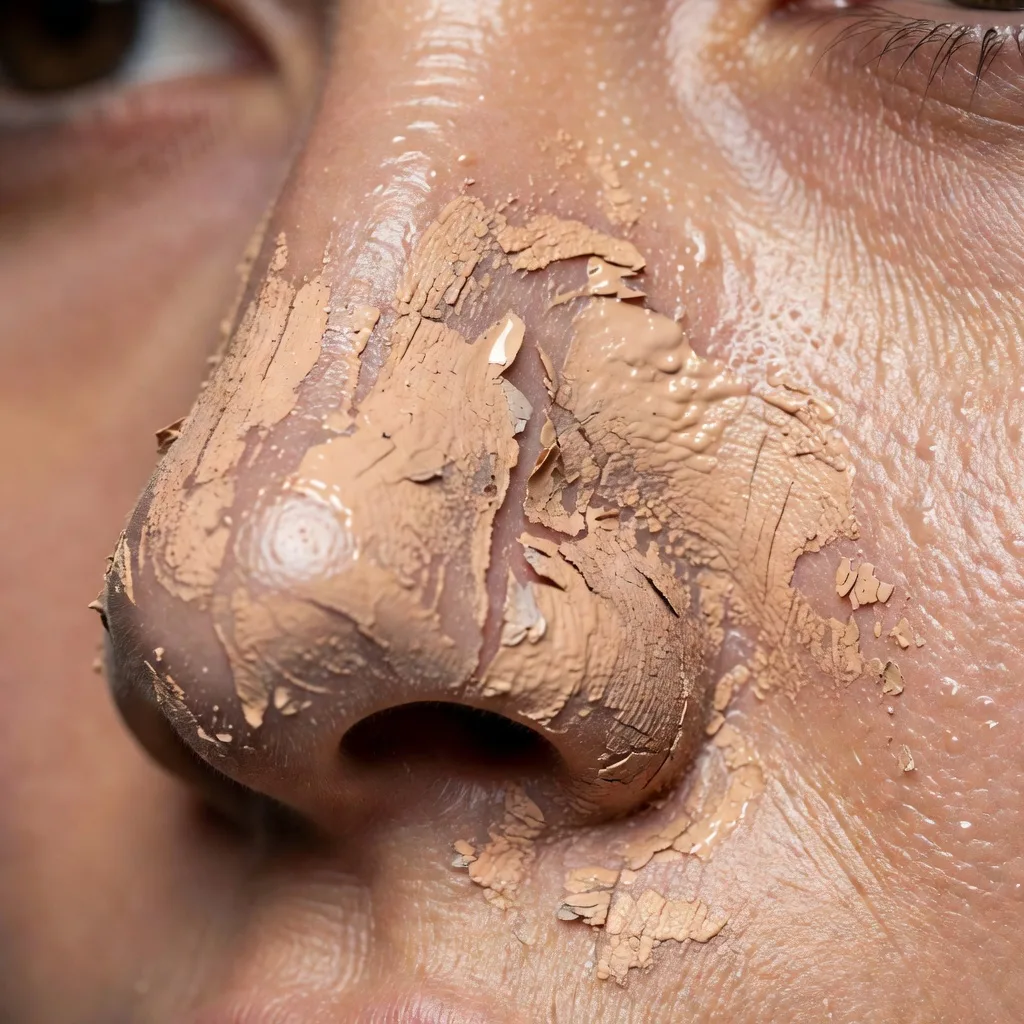
Why Does Makeup Separate on My Nose? Causes and Fixes That Work
You apply foundation, it looks smooth, and by mid-morning there is a patch on your nose where the makeup has split apart, slid into your pores, or gathered around the sides of your nostrils. The rest of your face may still look fine. It is one of the most common makeup complaints, and the nose is the usual culprit.
Part of our guide to makeup how-to. Start with: What Can You Use to Make Your Makeup Stay On All Day? 9 Products and Tricks
Makeup separates on the nose mainly because this area produces more oil than almost anywhere else on the face, which breaks down foundation over the day. Flaky skin around the nostrils, visible pores, products that do not mix well, and touching or blowing your nose all add to the problem.
The nose has a very high concentration of oil glands, and those pores often look larger and more noticeable than on the cheeks. As oil rises through the day, it mixes with your makeup and pushes it apart, leaving patches, streaks, or makeup that settles into pores.
The fix depends on which cause is behind your separation. Oily noses need less product and oil control. Flaky noses need hydration and gentle exfoliation. Separation within minutes often points to products that clash. Once you know which it is, the solution is usually simple.
This guide includes a quick test to find your cause, step-by-step fixes for each one, how to touch up without making things worse, and when flaky or red skin around the nose may be a skin condition worth checking.
Shopping these picks?
Amazon Prime members get fast, free shipping on eligible items, plus Prime Video, Amazon Music and member deals. New members can start with a free trial.
Start a free Prime trialAged 18 to 24? Prime for Young Adults comes with a longer free trial and a lower price after it.
Affiliate link: we may earn a commission at no extra cost to you.
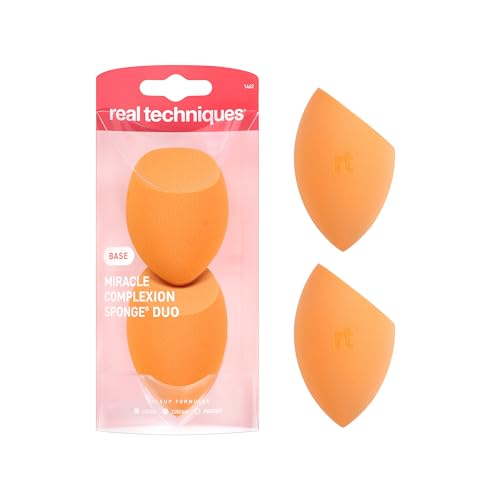
Recommended Products to Keep Makeup in Place on the Nose




What to Know First
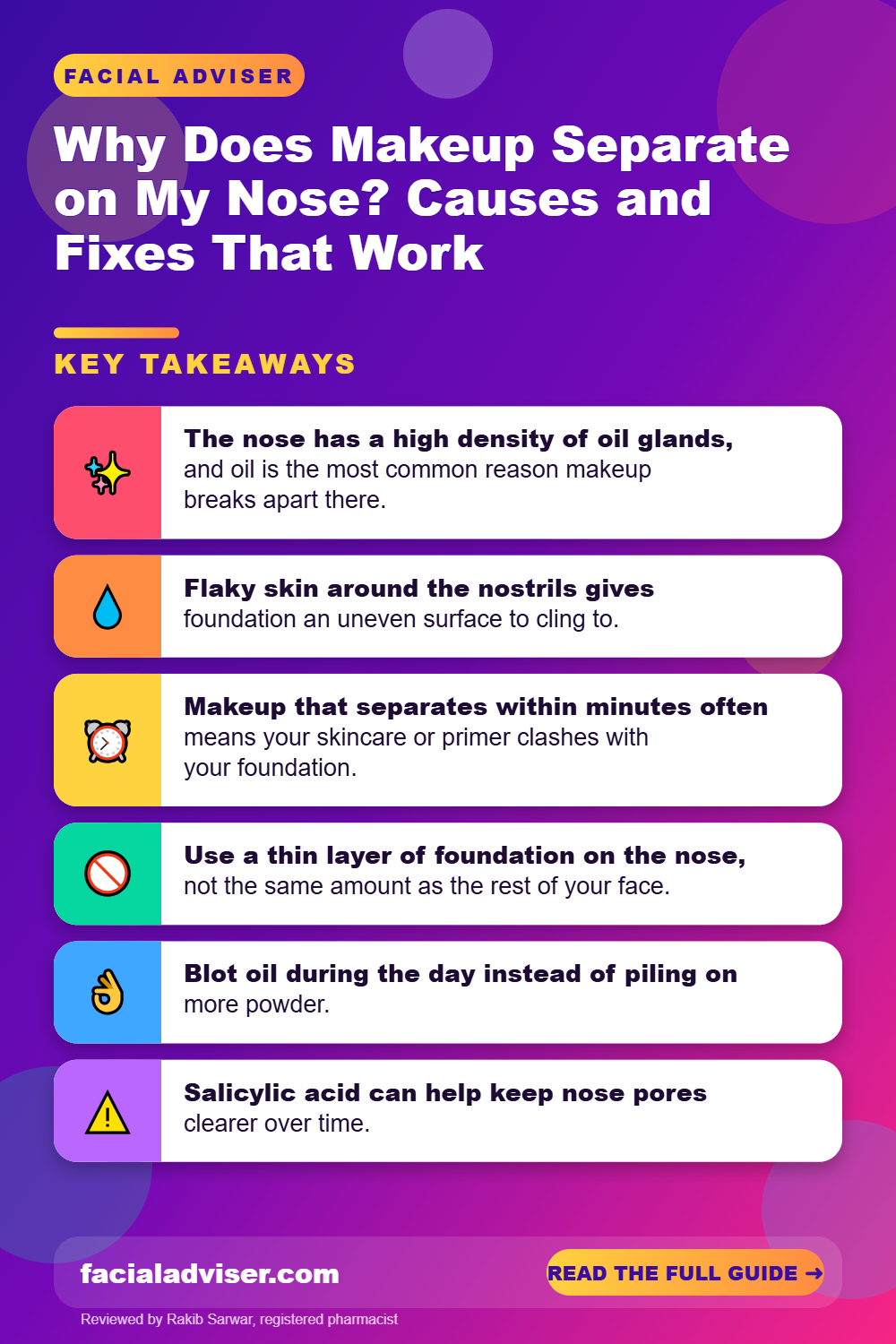
- The nose has a high density of oil glands, and oil is the most common reason makeup breaks apart there.
- Flaky skin around the nostrils gives foundation an uneven surface to cling to.
- Makeup that separates within minutes often means your skincare or primer clashes with your foundation.
- Use a thin layer of foundation on the nose, not the same amount as the rest of your face.
- Blot oil during the day instead of piling on more powder.
- Salicylic acid can help keep nose pores clearer over time.
- Red, flaky patches around the nose that keep returning may be seborrheic dermatitis.
Contents
- Why the Nose Is the Problem Area
- Find Your Cause: A Quick Test
- Causes and Fixes at a Glance
- Fixes for an Oily Nose
- Fixes for a Flaky Nose
- When Products Clash
- Application Tips for the Nose
- How to Touch Up Without Making It Worse
- What Makeup Cannot Change
- When to See a Dermatologist
- Questions People Ask
- Final Word
Why the Nose Is the Problem Area
Your face is not evenly oily. The nose, forehead, and chin, the T-zone, have more active sebaceous glands than the cheeks. The nose in particular is packed with them, which is why oil and visible pores are more common there.
The nose also moves. Smiling, talking, and wrinkling your nose create tiny creases, especially around the nostrils. Makeup sitting on top of those creases breaks up faster than makeup on flatter areas.
Finally, the nose gets touched a lot. Blowing your nose, pushing up glasses, wearing a mask, and simply touching your face all rub makeup away or push it into pores. Glasses can leave marks on the bridge that interrupt foundation.
Find Your Cause: A Quick Test
This test helps you pinpoint what is making your makeup separate. Do it on a day when you can check your nose a few times.
Check your bare nose in the morning
Before skincare, look for flakes around the nostrils and on the bridge. Visible dry patches mean flakiness is part of the problem.
Blot one hour after cleansing
With no products on, press a blotting sheet on your nose after an hour. Lots of oil means oil is likely the main cause.
Apply your usual skincare and wait
Put on moisturizer, sunscreen, and primer as usual, then wait five minutes. Touch lightly. If it still feels slippery or tacky, your skincare may not be settling.
Apply foundation and watch
If makeup separates or pills within the first 10 to 15 minutes, a product clash is likely. If it holds for a few hours and then breaks up, oil is more likely.
Note your habits
Think about glasses, masks, nose blowing, or touching your face. Friction can cause separation even with the right products.
Most people have more than one cause. An oily nose with flaky edges around the nostrils is very common and needs both oil control and hydration.
Causes and Fixes at a Glance
Once you have run the test, use this table to match what you saw with the most useful fix.
| What you notice | Likely cause | Best first fix |
|---|---|---|
| Makeup breaks up after a few hours, nose shiny | Oil | Thin layer, mattifying primer on nose, blot during the day |
| Makeup clings to flakes around the nostrils | Dry, flaky skin | Moisturize, gentle exfoliation, hydrating base |
| Pilling or patches within minutes | Product clash or wet base | Wait longer between layers, drop the primer |
| Makeup settles into dots on the nose | Visible pores and sebaceous filaments | Pore-filling primer, BHA a few nights a week |
| Bare patches on the bridge | Glasses or mask friction | Light powder, clean nose pads, touch up with a sponge |
It is common to see two or three of these at once. Start with the fix for the most noticeable problem, give it a week, and then address the next one. Changing everything at the same time makes it hard to tell what actually helped.
Fixes for an Oily Nose
If oil is your main issue, the goal is to keep the nose balanced without drying it out.
- Use a lightweight, oil-free moisturizer rather than skipping moisturizer, which can leave skin dehydrated and more prone to shine.
- Apply a mattifying or pore-filling primer only on the nose, not your whole face.
- Use a thin layer of foundation on the nose; blend what is left on your sponge or brush rather than adding fresh product.
- Set the nose with a light press of translucent powder.
- Blot through the day instead of adding more powder.
Over time, a salicylic acid exfoliant a few nights a week can help keep oil from building up inside pores. Many of the tiny dots on the nose are sebaceous filaments rather than blackheads. Our guide to sebaceous filaments vs blackheads explains the difference.
Fixes for a Flaky Nose
Flakes around the nostrils are often caused by dry skin, frequent nose blowing, cold weather, or irritation from acne products. Foundation clings to these flakes and separates around them.
Worth Doing
- Moisturize the nose and nostril area generously at night.
- Exfoliate gently once or twice a week.
- Tap a little moisturizer onto flaky spots before makeup.
- Use a hydrating foundation or skin tint on the nose.
- Press makeup in with a damp sponge rather than wiping.
Skip It
- Scrub the area hard before makeup.
- Use a mattifying primer on dry patches.
- Apply heavy powder over flakes.
- Pick at flaky skin.
- Use harsh toners with alcohol on the nose.
If your nose is both oily and flaky, apply a small amount of moisturizer to the flaky edges and a mattifying primer to the oily bridge and tip.
When Products Clash
Makeup that separates or pills within minutes is often a product compatibility issue. Some water-based foundations do not sit well on top of silicone-heavy primers, and some sunscreens leave a slippery film that foundation cannot grip.
To troubleshoot, remove one product at a time. Try foundation without primer. If that works better, the primer was the problem. If separation continues, try a different sunscreen or wait longer for it to set before applying makeup.
Wait between layers. Give moisturizer and sunscreen about five minutes to settle. Applying foundation over a wet or tacky base is one of the most common causes of separation.
If your whole face looks heavy rather than just your nose, our guide to fixing cakey makeup may help.
Application Tips for the Nose
How you apply foundation matters as much as what you use.
Start with foundation on the center of your face and blend outward, but apply the nose last, using only what remains on your sponge or brush. The nose rarely needs much coverage.
Press and roll a damp sponge rather than swiping, especially around the nostrils, where product can collect in creases. A small, dense brush can help get into the corners.
Set with a light press of powder using a small brush or the corner of a sponge. A matte setting spray can help lock everything in place.
Avoid layering too much. Primer, foundation, concealer, powder, and contour on the nose can add up to a thick layer that is bound to break apart.
How to Touch Up Without Making It Worse
When your nose starts to look patchy during the day, avoid simply adding more powder, which can create a cakey, textured look.
- Blot oil first with a blotting sheet, pressing gently rather than rubbing.
- Press a clean, slightly damp sponge over separated areas to blend the makeup back together.
- If needed, add a tiny amount of foundation or concealer only where coverage is missing.
- Finish with a very light press of powder.
If you wear glasses, try a thin layer of powder on the nose bridge where pads sit, and clean the nose pads regularly.
What Makeup Cannot Change
Makeup can reduce shine and blur the look of pores, but it cannot stop your nose from producing oil or shrink pores permanently.
| Belief | Reality |
|---|---|
| Stronger primer stops all separation | Primers help but cannot stop oil production |
| More powder keeps makeup in place | Too much powder makes texture more obvious |
| Pore strips fix the problem | They remove surface debris briefly; filaments return |
| Oily skin should skip moisturizer | Dehydrated skin can look oilier and break makeup down |
| Separation means bad foundation | Often it is prep, amount, or product clashes |
Long-lasting improvement usually comes from a consistent skincare routine rather than any single makeup product. Choosing formulas less likely to clog pores also helps; see our guide on how to know if makeup is non-comedogenic.
When to See a Dermatologist
Sometimes separation around the nose is a sign of an underlying skin condition. See a dermatologist if you notice:
- Red, greasy, or flaky patches around the nose, brows, or hairline that keep returning.
- Persistent redness, flushing, or visible vessels on the nose.
- Small bumps or pustules around the nose and mouth.
- Thickening skin or enlarging pores on the nose.
- A sore, scaly, or bleeding spot on the nose that does not heal.
- Itching or burning where you apply makeup.
These may point to conditions such as seborrheic dermatitis, rosacea, or perioral dermatitis, which usually improve with the right treatment.
Medical disclaimer: This article is for general information and is not a substitute for professional medical advice. See a healthcare provider about persistent skin changes.
Questions People Ask
Why does my makeup separate on my nose?
Most often because the nose produces a lot of oil, which breaks down makeup. Flaky skin and product clashes also play a role.
How do I stop foundation from separating on my nose?
Use a thin layer, apply a mattifying primer only on the nose, set lightly with powder, and blot oil through the day.
Why does my makeup separate right after I apply it?
Usually because skincare or sunscreen has not settled, or because your primer and foundation do not work well together.
Should I use primer on my nose?
A mattifying or pore-filling primer can help oily noses. Skip it on dry, flaky areas.
Why does makeup gather around my nostrils?
Creases and flaky skin around the nostrils collect product. Moisturize the area and press makeup in with a damp sponge.
Does setting spray help?
A matte setting spray can help makeup last longer on an oily nose.
Can glasses make makeup separate on my nose?
Yes. Nose pads rub makeup away. Powder the area lightly and keep pads clean.
Should I use less foundation on my nose?
Yes. The nose usually needs very little foundation.
How often should I exfoliate my nose?
Once or twice a week for most people. Salicylic acid is a good option for oily skin.
Why is the skin around my nose red and flaky?
It may be dryness or irritation, but recurring red, flaky patches can be seborrheic dermatitis. See a dermatologist if it persists.
Final Word
Makeup separates on the nose mainly because of oil, flaky skin, product clashes, and friction. The nose has more oil glands than most of the face, and its creases and constant contact make makeup break up faster there than anywhere else.
Find your main cause with the quick test, then use the matching fix: oil control and thin layers for an oily nose, hydration and gentle exfoliation for a flaky one, and simplified layers for product clashes. Blot rather than powder during the day, and see a dermatologist if redness or flaking keeps coming back.

Written by
Registered pharmacist and founder of Facial Adviser. Rakib's pharmacy training covers how skincare actives work and interact; a later course in cosmetology turned that into a focus on facial treatments and skincare products. He plans, researches and edits every guide on the site and checks health claims against sources such as the American Academy of Dermatology, the FDA and the NIH. He is not a dermatologist; see the Editorial Policy and Medical Disclaimer.
About · Editorial policy · How we choose products · Medical disclaimer · Contact
Keep reading: Making makeup last
- Best Way to Wear Makeup in Hot Weather: Light Layers That Last
- What Can You Use to Make Your Makeup Stay On All Day? 9 Products and Tricks
- Why Doesn't Makeup Stay on My Upper Lip? Causes and Fixes That Work
- Why Indoor Heating Dries Out Your Face (and How to Fix It)
- Oily T-Zone but Dry Cheeks? How to Fix Combination Skin
- How to Choose the Right Eye Makeup Color for Your Eyes and Skin
- How to Get Started as a Freelance Makeup Artist: Training, Kit and Clients