How to Avoid Product Pilling: Why Skincare and Makeup Ball Up
You smooth on moisturiser, then sunscreen, and as you rub it in, tiny flakes or balls start rolling across your skin. Or your foundation goes on patchy and crumbles into little specks. This is pilling, and it is one of the most annoying problems in any routine because it wastes product and makes makeup look uneven.
Part of our guide to makeup how-to. Start with: What Can You Use to Make Your Makeup Stay On All Day? 9 Products and Tricks
Pilling happens when a product cannot absorb or spread evenly, so it binds with the layer underneath and rolls up into small balls when you rub. The most common causes are using too much product, layering too many products, not waiting for each layer to settle, rubbing instead of pressing, combining formulas that do not mix well, such as some silicone-heavy and water-heavy products, and applying products over dry, flaky skin. Film-forming ingredients in sunscreens, primers and some serums are frequent culprits. Using less product, applying thinnest to thickest, waiting a minute or two between steps and pressing rather than rubbing prevent most pilling.
Pilling does not mean a product is bad or that you are allergic to it. It is almost always a layering problem, and small changes usually solve it.
The American Academy of Dermatology recommends gentle exfoliation for the right skin types, and a smoother skin surface also helps products spread instead of catching on dry patches.
This guide explains what causes pilling, which ingredients are most likely to pill, how to layer products properly and how to rescue makeup that has already started to ball up.
Shopping these picks?
Amazon Prime members get fast, free shipping on eligible items, plus Prime Video, Amazon Music and member deals. New members can start with a free trial.
Start a free Prime trialAged 18 to 24? Prime for Young Adults comes with a longer free trial and a lower price after it.
Affiliate link: we may earn a commission at no extra cost to you.
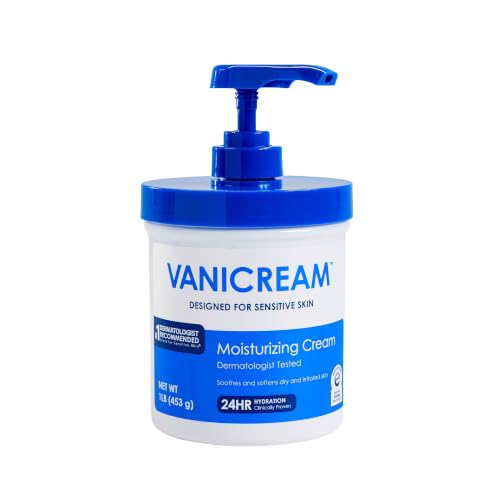
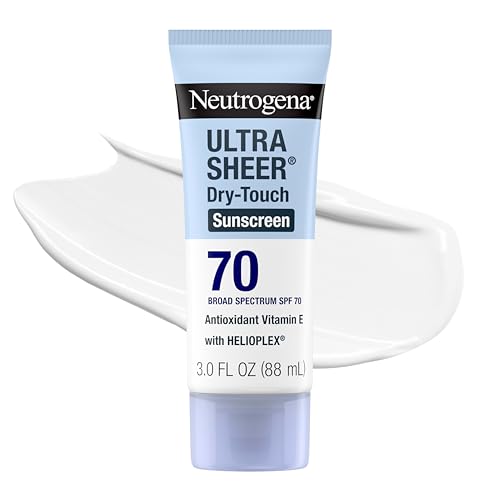
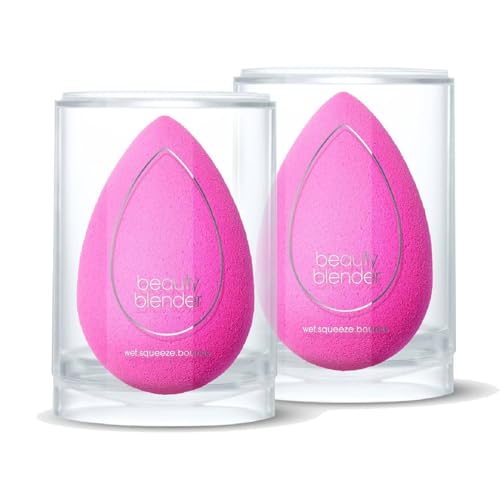
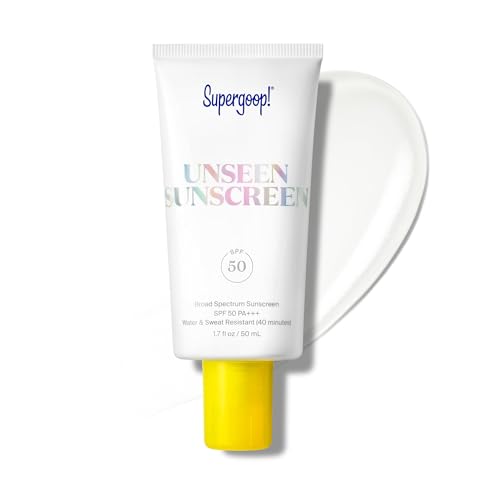
Recommended Lightweight Layers and Pilling-Friendly Basics



In This Guide
- What Pilling Is
- The Main Causes of Pilling
- Ingredients That Pill Most Often
- How to Layer Skincare and Makeup Without Pilling
- Example Layering Orders That Avoid Pilling
- Sunscreen: The Most Common Culprit
- Makeup Pilling: Primer and Foundation
- How to Fix Pilling Once It Happens
- Skin Texture and Exfoliation
- Dos and Don’ts
- Honest Limits
- When to See a Dermatologist
- Questions People Ask
- Summing Up
The Short Version
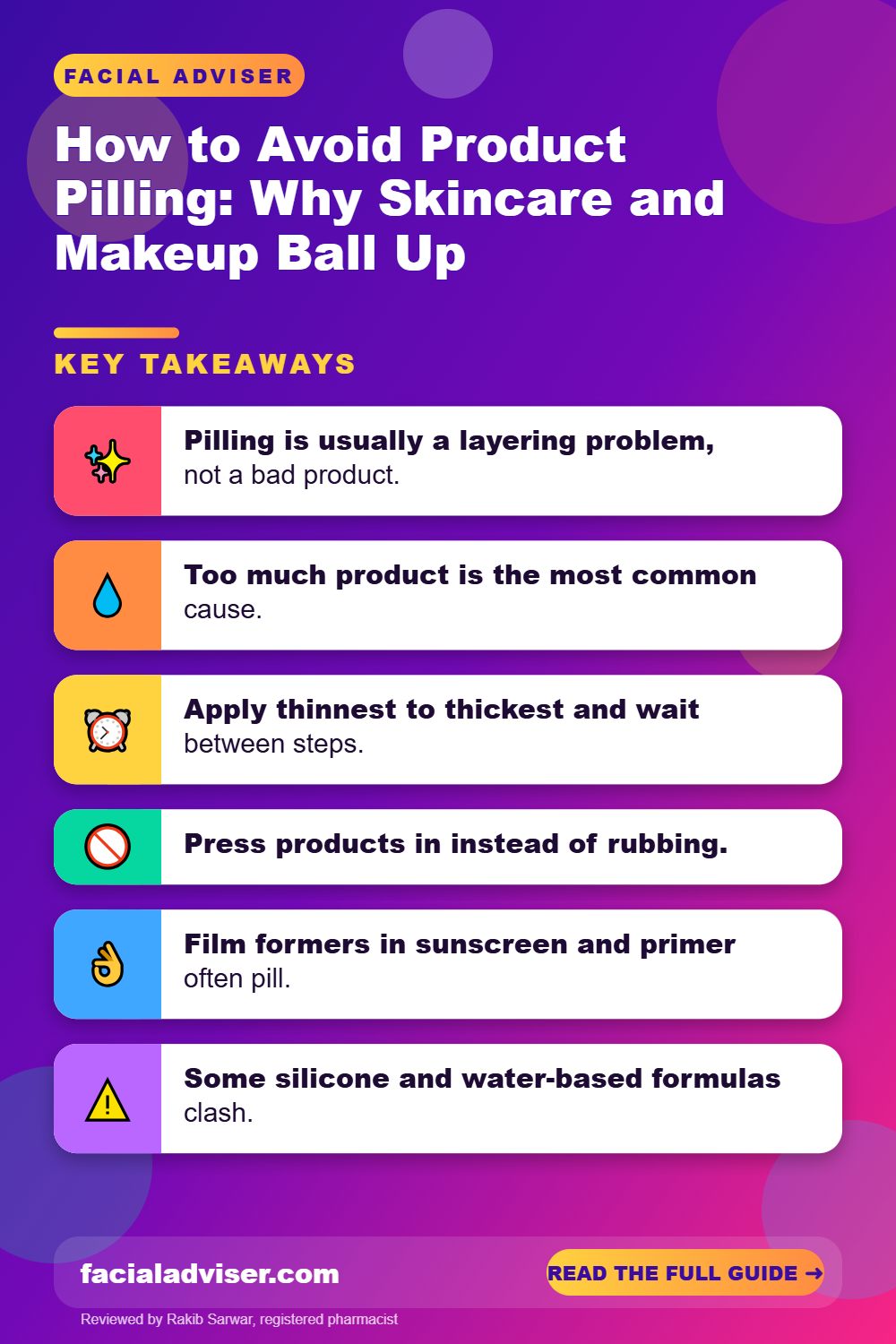
- Pilling is usually a layering problem, not a bad product.
- Too much product is the most common cause.
- Apply thinnest to thickest and wait between steps.
- Press products in instead of rubbing.
- Film formers in sunscreen and primer often pill.
- Some silicone and water-based formulas clash.
- Dry, flaky skin makes pilling more likely.
What Pilling Is
Pilling looks like small crumbs, flakes or balls of product that appear when you rub your skin. They may be clear, white or skin-coloured, and they are made of the product itself mixed with the layer underneath and sometimes dead skin.
It usually happens when a product sits on the surface instead of spreading into a thin film. Rubbing then rolls it up, a bit like rubbing dried glue off your fingers. It is most noticeable on the cheeks, nose and chin, where people tend to rub hardest, and around the hairline where products collect.
Pilling is different from flaking caused by dry skin, although the two often happen together. If you see flakes even without makeup, the skin itself may need more hydration or gentle exfoliation. A simple test is to apply only your moisturiser and wait. If flakes appear on their own, the issue is your skin rather than how products layer together.
Pilling is not the same as a reaction. If products sting, burn or cause redness, stop using them; that is irritation, not pilling.
The Main Causes of Pilling
| Cause | Why it pills | What to do |
|---|---|---|
| Too much product | Excess sits on top and cannot absorb | Use a pea-sized amount per layer |
| Too many layers | Each layer has less room to settle | Simplify to the essentials |
| Not waiting between steps | Wet layers mix and roll up | Wait one to two minutes between steps |
| Rubbing | Friction rolls film formers into balls | Press or pat products in |
| Clashing formulas | Some silicone- and water-heavy products do not mix well | Match bases or change the order |
| Film formers and polymers | They form a film that can peel if disturbed | Apply thin layers and let them set |
| Dry, flaky skin | Product catches on flakes | Hydrate and exfoliate gently |
In practice, pilling usually comes from a combination: for example, a generous layer of moisturiser, followed straight away by a silicone sunscreen rubbed in quickly.
Ingredients That Pill Most Often
Certain ingredients are more likely to pill, especially at high concentrations or when layered heavily.
- Silicones such as dimethicone and silicone crosspolymers in primers and sunscreens.
- Film formers such as acrylates copolymers and polyvinylpyrrolidone in long-wear products and sunscreens.
- Thickeners such as carbomers, xanthan gum and other gums in gels and serums.
- Mineral sunscreen filters such as zinc oxide in thick formulas.
- Some hyaluronic acid serums used in large amounts, which can feel tacky and roll up under other layers.
These ingredients are not bad; they give products their feel and staying power. The issue is usually quantity and layering, not the ingredient itself. You do not need to memorise ingredient lists to avoid pilling, but noticing when two products both list several silicones or polymers near the top can explain why they struggle together.
Our guide on silicone versus water-based cosmetics explains how to check a product’s base and pair it with compatible layers.
How to Layer Skincare and Makeup Without Pilling
Start with clean, smooth skin
Cleanse gently and exfoliate dry patches a couple of times a week if your skin tolerates it.
Apply thinnest to thickest
Toner or essence, then serum, then moisturiser, then sunscreen.
Use less product
Start with a pea-sized amount for each layer.
Wait between layers
Give each step one to two minutes to settle.
Press, do not rub
Pat products in with fingertips, especially sunscreen and primer.
Let sunscreen set
Wait a few minutes before primer or foundation.
Apply makeup with a damp sponge
Press foundation in rather than buffing hard.
If a product pills, try applying it to the back of your hand over your other layers. If it pills there too, change the order or amount before blaming your skin.
Example Layering Orders That Avoid Pilling
| Routine | Order | Tips to prevent pilling |
|---|---|---|
| Simple morning | Cleanser, moisturiser, sunscreen | Let moisturiser absorb fully before sunscreen |
| Morning with serum | Cleanser, serum, light moisturiser, sunscreen | Use a small amount of serum; skip moisturiser if the serum and sunscreen are enough |
| Morning with makeup | Cleanser, light moisturiser, sunscreen, primer, foundation | Wait a few minutes after sunscreen; use primer only where needed |
| Evening | Cleanser, treatment, moisturiser | Let active treatments dry before moisturiser |
| Oily skin morning | Cleanser, gel moisturiser or none, sunscreen | A hydrating sunscreen may replace moisturiser |
The fewer steps in your morning routine, the less chance there is for pilling. Many people find that combining steps, for example using a moisturiser with SPF on low-exposure days or a hydrating sunscreen instead of a separate moisturiser, solves the problem completely.
When adding a new product, introduce it on its own for a few days before combining it with the rest of your routine. That way you know whether it pills alone or only with certain partners.
It also helps to keep the texture of each step similar in weight. Jumping from a very watery serum straight to a thick, occlusive cream, then to a silicone sunscreen, gives three very different textures a chance to fight. Gentle steps up in thickness usually layer more smoothly.
Sunscreen: The Most Common Culprit
Sunscreen is the product that pills most often because it usually contains film formers and silicones to help it spread evenly and resist water. Applied generously over moisturiser and rubbed in quickly, it can easily roll up.
You still need to apply enough sunscreen to get the protection on the label, so the answer is not to use less than you need. Instead, reduce the amount of moisturiser underneath, let it absorb fully, then apply sunscreen in two thinner layers, pressing each in.
The AAD’s guide on how to apply sunscreen explains how much to use and when to reapply. If one sunscreen consistently pills with your makeup, try a different texture, such as a gel or fluid, rather than cutting back on the amount.
Do not skip sunscreen or apply too little to prevent pilling. Change your layering, texture or timing instead.
Makeup Pilling: Primer and Foundation
Primer is designed to create a film, which is why it can pill if it is applied thickly or over wet skincare. A pea-sized amount pressed only where you need it is usually plenty.
Foundation pills when it cannot grip the layer underneath. This is more likely with a heavy silicone primer under a water-based foundation, or when foundation is buffed hard over a film that has not set.
Try pairing products from the same base, applying foundation with a damp sponge and building coverage in thin layers. If your foundation already contains skin-smoothing silicones, you may not need a separate primer at all, which removes one of the layers most likely to pill. Our guide on why foundation separates by midday covers other reasons makeup breaks up during the day.
How to Fix Pilling Once It Happens
If you notice pilling while applying products, stop rubbing. More friction makes it worse.
- Gently brush the pills away with a clean fingertip or a soft brush.
- If makeup has pilled badly, remove it from that area with micellar water and let skin settle.
- Reapply a thinner layer, pressing rather than rubbing.
- Next time, wait longer between steps or reduce the amount.
Mild pilling in skincare alone often disappears once the layer dries. Waiting a few minutes before touching the skin again is sometimes all it takes. If your hands are slightly damp or have leftover product on them, wipe them before touching your face, because extra moisture or residue on the fingertips can start the rolling process.
Skin Texture and Exfoliation
Dry, flaky skin gives products something to catch on. Dead skin can also mix with products and roll up with them, making pilling look worse.
Gentle exfoliation once or twice a week, if your skin tolerates it, can help. The AAD’s advice on how to safely exfoliate at home recommends choosing a method that suits your skin type and being gentle. Over-exfoliating can damage the skin barrier and create more flaking.
Hydration matters as well. Our guide on what emollients are explains how softening ingredients smooth rough skin.
Dos and Don’ts
Worth Doing
- Use a pea-sized amount per layer
- Apply thinnest to thickest
- Wait between steps
- Press products in
- Exfoliate gently if flaky
Skip It
- Pile on many layers at once
- Rub products in hard
- Apply sunscreen over wet moisturiser
- Use too little sunscreen to avoid pilling
- Keep rubbing once pilling starts
Honest Limits
Some product combinations simply do not work well together, however carefully you layer them. If two products always pill together, it may be easier to change one of them.
Pilling can vary with climate and season. Products that sit well in humid weather may pill in dry winter air, and vice versa.
There is no universal order that works for every product. Testing combinations on the back of your hand is often the quickest way to find what works for you. Keep in mind that brands sometimes reformulate products, so a combination that worked last year may behave differently with a new version of one product.
When to See a Dermatologist
- Your skin is persistently dry, flaky or rough despite moisturising.
- Products sting, burn or cause redness.
- You notice scaly patches that do not improve.
- You are unsure which products suit a skin condition such as eczema or rosacea.
This article is for general information and does not replace professional medical advice. See a dermatologist for persistent skin concerns.
Questions People Ask
Why does my skincare pill?
Usually too much product, too many layers, not waiting or rubbing instead of pressing.
Why does sunscreen pill under makeup?
Film formers and silicones can roll up if applied over wet skincare or rubbed.
How do I stop foundation from pilling?
Use less primer, wait for layers to set and press foundation in with a damp sponge.
Does pilling mean a product is bad?
No. It is usually a layering or amount issue.
What order should I apply skincare?
Thinnest to thickest, finishing with sunscreen in the morning.
How long should I wait between layers?
About one to two minutes, longer for sunscreen.
Can dry skin cause pilling?
Yes. Products catch on flakes and roll up.
Can silicone and water-based products pill together?
Sometimes; thin layers and matching bases help.
Should I use less sunscreen to stop pilling?
No. Change the texture, timing or layering instead.
How do I fix pilled makeup?
Stop rubbing, brush away pills, remove and reapply thinly if needed.
Summing Up
Pilling happens when products cannot spread or absorb evenly and roll up when rubbed. Too much product, too many layers, not waiting, rubbing and clashing formulas are the usual causes.
Use less, apply thinnest to thickest, wait between steps and press products in. Keep sunscreen at the full amount but adjust texture and timing, and exfoliate gently if dry skin is part of the problem.

Written by
Registered pharmacist and founder of Facial Adviser. Rakib's pharmacy training covers how skincare actives work and interact; a later course in cosmetology turned that into a focus on facial treatments and skincare products. He plans, researches and edits every guide on the site and checks health claims against sources such as the American Academy of Dermatology, the FDA and the NIH. He is not a dermatologist; see the Editorial Policy and Medical Disclaimer.
About · Editorial policy · How we choose products · Medical disclaimer · Contact
Keep reading: Making makeup last
- What Can You Use to Make Your Makeup Stay On All Day? 9 Products and Tricks
- Makeup Hacks for an Oily T-Zone: Stay Matte Without Looking Flat
- Makeup on Textured Skin: How to Get a Smoother-Looking Finish
- Makeup Tips for Dry, Flaky Skin: How to Stop Foundation Clinging to Flakes
- How to Keep Makeup Intact for Photos: Camera-Ready Tips That Last
- Makeup for Enlarged Pores: How to Blur Them Without Clogging Skin
- How to Get Started as a Freelance Makeup Artist: Training, Kit and Clients
- Best Way to Use Makeup Remover: Micellar Water, Balms, Oils and Eye Removers