Why Is Fragrance Added to Makeup? Reasons, Risks and Alternatives
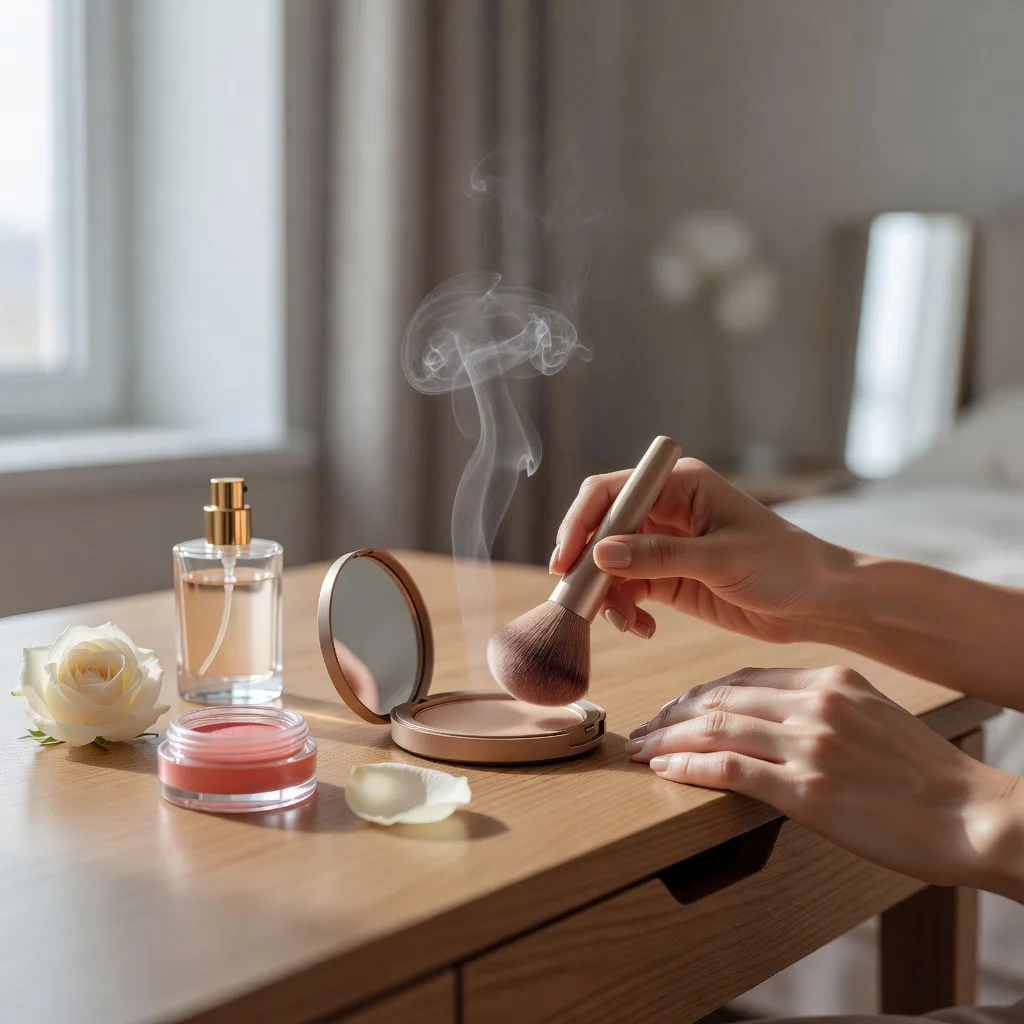
Open a lipstick, a foundation or a setting spray and there is often a faint scent: vanilla, roses, fruit or just something clean. Makeup is not perfume, so why do so many products smell of anything at all?
Part of our guide to cosmetic science. Start with: How to Read a Cosmetic Ingredient List: A Beginner Guide
Fragrance is added to makeup for a few main reasons. Many raw ingredients such as oils, waxes, pigments and preservatives have their own smell, which can be earthy, fatty or chemical, so fragrance masks those base odours. Scent also makes products more pleasant to use, supports a brand’s identity and signals freshness to shoppers. Some lip products use flavour for the same reason. The downside is that fragrance is one of the most common causes of cosmetic allergy and irritation, especially on sensitive skin and around the eyes. If fragrance bothers you, look for fragrance-free products and check the ingredient list for parfum, fragrance, essential oils and known fragrance allergens.
Fragrance is not added to make makeup work better. It changes how a product smells, not how it covers, lasts or protects.
The FDA explains that fragrance ingredients can be listed simply as fragrance on cosmetic labels and that some people are allergic or sensitive to them, which is why fragrance-free products matter for sensitive skin.
This guide explains why brands add fragrance, how it affects skin, how to identify it on labels and how to choose makeup if fragrance does not agree with you.
Shopping these picks?
Amazon Prime members get fast, free shipping on eligible items, plus Prime Video, Amazon Music and member deals. New members can start with a free trial.
Start a free Prime trialAged 18 to 24? Prime for Young Adults comes with a longer free trial and a lower price after it.
Affiliate link: we may earn a commission at no extra cost to you.
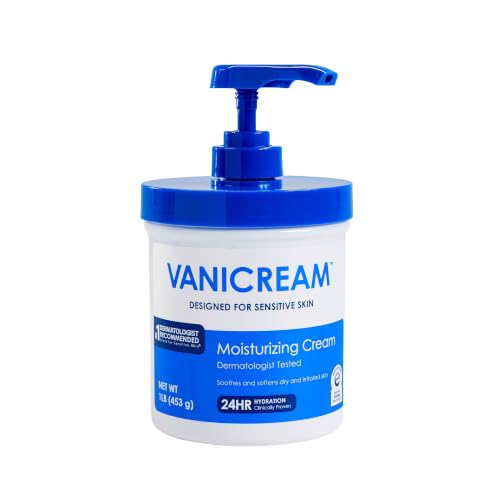
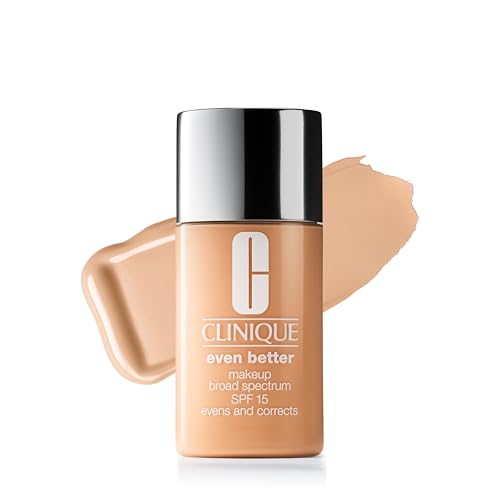
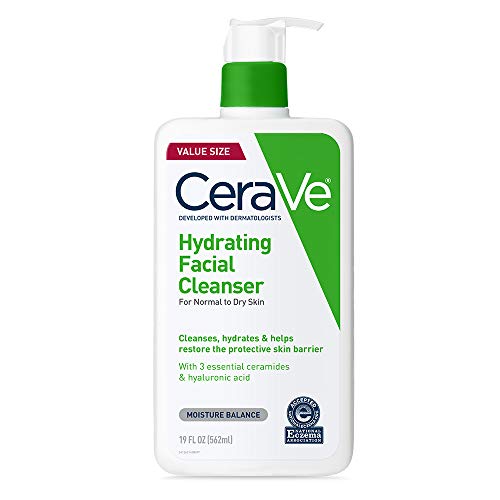
Recommended Fragrance-Free Makeup and Skincare




At a Glance
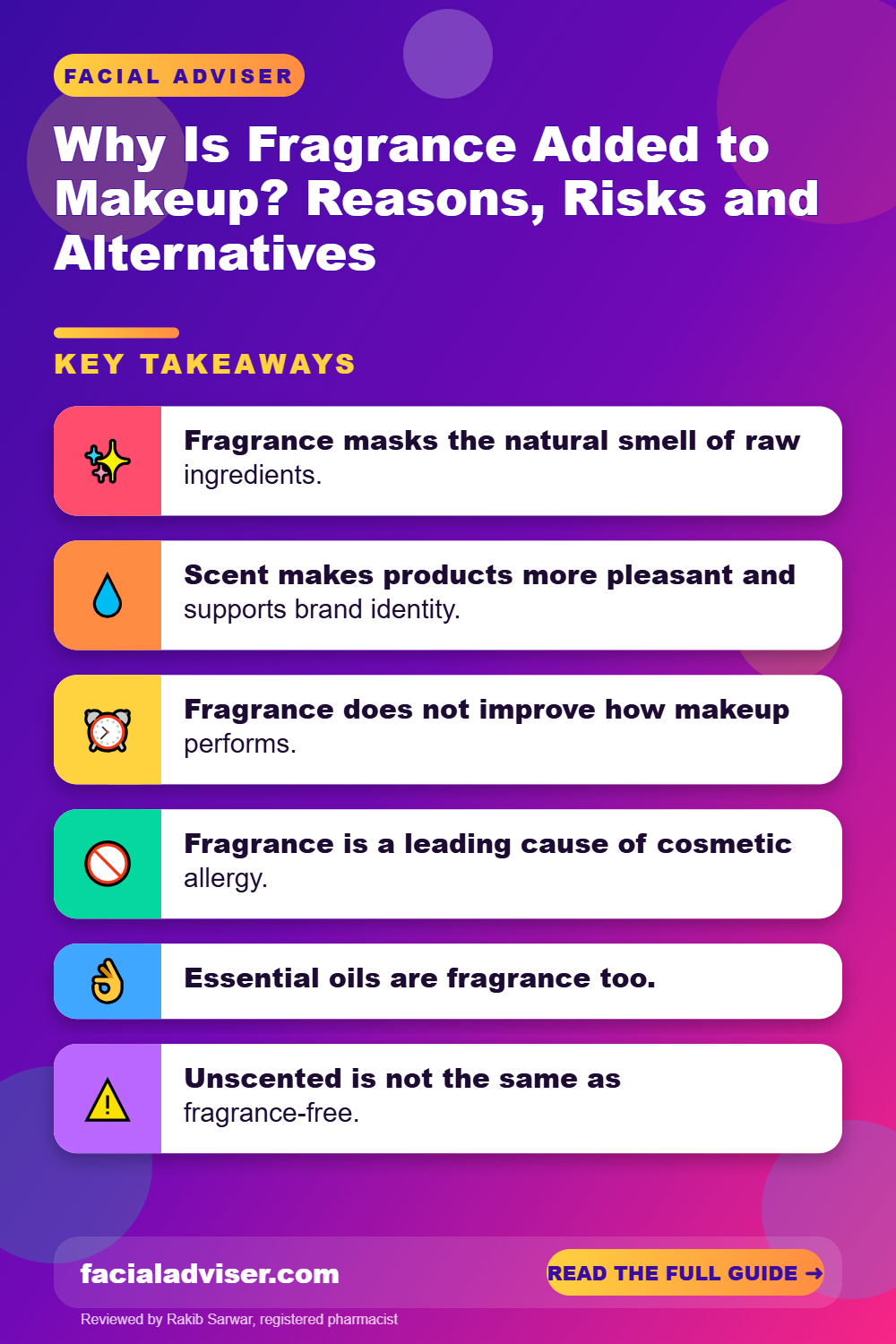
- Fragrance masks the natural smell of raw ingredients.
- Scent makes products more pleasant and supports brand identity.
- Fragrance does not improve how makeup performs.
- Fragrance is a leading cause of cosmetic allergy.
- Essential oils are fragrance too.
- Unscented is not the same as fragrance-free.
- Sensitive skin and eyes usually do better without fragrance.
Jump to a Section
- Why Brands Add Fragrance
- How Fragrance-Free Products Handle Odour
- How Fragrance Appears on Labels
- How Fragrance Affects Skin
- Natural Fragrance and Essential Oils
- How to Choose Makeup If Fragrance Bothers Your Skin
- Where Fragrance Is Most Common
- Fragrance Labelling Rules Are Changing
- If You Love Scented Makeup
- Dos and Don’ts
- Honest Limits
- When to See a Dermatologist
- FAQ
- Final Word
Why Brands Add Fragrance
| Reason | What it means | Example |
|---|---|---|
| Masking base odours | Covers the smell of oils, waxes, clays and preservatives | A lipstick with a faint vanilla scent |
| Sensory appeal | Makes applying the product more enjoyable | A scented setting spray or primer |
| Brand identity | A signature scent that customers recognise | A house scent across a whole range |
| Perception of freshness | A clean smell suggests a product is fresh | Lightly scented cleansers and removers |
| Flavour for lips | Makes lip products taste pleasant | Fruit or mint lip glosses |
Of these, masking is the most practical reason. Natural ingredients vary from batch to batch, and a little fragrance helps a product smell the same every time you buy it. Many cosmetic ingredients smell unpleasant on their own. Castor oil, lanolin, some clays and certain preservatives all have distinctive odours that a small amount of fragrance can cover.
The rest are largely about experience and marketing. A pleasant scent can make people feel a product is more luxurious or effective, even though it does not change how the product performs.
Scent also affects how long a product seems to last. A foundation or setting spray that smells fresh can feel cleaner and more pleasant to reapply, which is why fragrance is especially common in products that people use several times a day, such as lip glosses and face mists.
How Fragrance-Free Products Handle Odour
If fragrance mainly masks base odours, how do fragrance-free products manage? Formulators have several options.
Choosing low-odour ingredients. Highly refined oils, purified waxes and newer emollients have far less smell than crude or unrefined versions. Using them keeps the base neutral. Keeping formulas simple. Fewer ingredients usually means fewer odours to cover. Many fragrance-free products have short ingredient lists for this reason. Adjusting the preservative system. Some preservatives have a noticeable smell. Choosing low-odour preservatives or using packaging that protects the product reduces the problem. Accepting a faint natural smell. Some fragrance-free products do smell slightly waxy, oily or earthy. That is a sign nothing has been added to cover it up, not a sign the product has gone off.If a fragrance-free product suddenly smells sour, rancid or very different from when you bought it, though, it may have spoiled and should be replaced.
How Fragrance Appears on Labels
Fragrance can be listed as fragrance, parfum or aroma. A single word can represent a blend of many individual ingredients, because the exact recipe is treated as a trade secret.
The FDA’s page on fragrances in cosmetics explains that fragrance ingredients can be listed collectively and that some people have allergies or sensitivities to them.
You may also see individual fragrance components listed by name, such as linalool, limonene, geraniol, citronellol, eugenol or benzyl alcohol, and essential oils such as lavender, peppermint or citrus oils.
Our guide on how to spot fragrance in an ingredient list goes through the names to look for in more detail. Some ingredients, such as benzyl alcohol, can act as a preservative as well as a fragrance component, so their presence does not always mean a product is scented.
Unscented does not always mean fragrance-free. Some unscented products contain a masking fragrance to neutralise odours. Fragrance-free generally means no fragrance has been added for scent.
How Fragrance Affects Skin
Fragrance is one of the most common causes of allergic contact dermatitis from cosmetics. Once someone becomes allergic to a fragrance ingredient, they usually stay allergic and can react to it in many different products.
Fragrance can also cause irritation without a true allergy, especially on dry, damaged or sensitive skin. Stinging, redness and itching are common signs.
The eyes and lips are particularly sensitive. Scented eye products and flavoured lip products are frequent causes of reactions in these areas. Reactions around the eyes can also come from fragrance transferred by the fingers, for example from hand cream or perfume, so it is worth considering all scented products you use, not just makeup.
The AAD’s overview of contact dermatitis lists fragrance among the common causes of allergic skin reactions.
Natural Fragrance and Essential Oils
Many brands replace synthetic fragrance with essential oils and describe the product as naturally scented. Essential oils are still fragrance. They contain the same kinds of aromatic compounds, such as linalool and limonene, and can cause the same allergic reactions.
Some essential oils, such as citrus oils, can also make skin more sensitive to sunlight, and peppermint or eucalyptus can feel tingly or irritating on sensitive skin. Tingling lip plumpers often rely on ingredients such as peppermint oil or cinnamon to create their effect, which is a form of mild irritation by design.
If you react to fragrance, natural scent is not a safe alternative. Fragrance-free is the better choice. Our guide on what clean-label cosmetics are explains why natural does not always mean gentle.
How to Choose Makeup If Fragrance Bothers Your Skin
Look for fragrance-free
Choose products labelled fragrance-free rather than unscented.
Check the ingredient list
Look for fragrance, parfum, aroma and essential oils.
Watch for named allergens
Check for linalool, limonene, geraniol, eugenol and similar names.
Start with eye and lip products
These areas react most easily, so prioritise fragrance-free here.
Patch test new products
Try a small area for several days before full use.
Keep a record
Note products that caused reactions to spot common ingredients.
Smell is not a reliable guide. Some fragrance-free products still have a faint natural odour from their ingredients, while some products with masking fragrance smell of almost nothing.
Where Fragrance Is Most Common
| Product type | How often scented | Notes |
|---|---|---|
| Lipsticks and glosses | Often | Flavours and fragrance are common |
| Foundations and primers | Sometimes | Many brands now offer fragrance-free versions |
| Setting sprays | Often | Floral and fresh scents are popular |
| Powders and blushes | Sometimes | Scent is usually light |
| Mascaras and eyeliners | Less often | Eye products are more likely to be fragrance-free |
| Makeup removers and wipes | Often | Choose fragrance-free if you are sensitive |
Because eye products and removers touch the delicate eye area, they are the most important to choose fragrance-free if you are sensitive. Face mists and setting sprays are also worth checking, since they are sprayed over the whole face and can reach the eyes. Our guide on what hypoallergenic makeup really means explains other labels to watch for.
Fragrance Labelling Rules Are Changing
For many years, US cosmetic labels could list fragrance as a single word without naming the individual chemicals inside. That made it hard for people with specific fragrance allergies to know what to avoid.
The Modernization of Cosmetics Regulation Act of 2022 requires the FDA to establish rules for disclosing fragrance allergens on cosmetic labels. Until those rules are finalised and in force, many products will still list fragrance as a single ingredient, although some brands already name common allergens voluntarily.
In the European Union, cosmetics must already list certain fragrance allergens by name when they are present above set levels. That is why you may see names such as linalool and limonene on products sold internationally.
These changes are helpful for people with confirmed fragrance allergies, who can check labels for the specific ingredients their dermatologist has identified.
If You Love Scented Makeup
Scent can be part of the pleasure of makeup, and many people use scented products without any trouble. If your skin tolerates fragrance, there is no need to avoid it.
- Keep scented products away from the eye area if your eyes are sensitive.
- Avoid layering several heavily scented products on the face at once.
- Patch test new scented products, especially if you have had reactions before.
- Stop using a product if your skin starts to sting or itch, even if it was fine before.
Reactions to fragrance can develop after years of use, so a product that has always been fine may start to cause problems. If that happens, switching to fragrance-free versions of your favourite products is usually the simplest fix.
Dos and Don’ts
Good Habits
- Choose fragrance-free if you are sensitive
- Check for essential oils as well as fragrance
- Patch test new products
- Prioritise fragrance-free eye and lip products
- Keep a note of products that react
Common Mistakes
- Assume unscented means fragrance-free
- Assume natural scent is gentler
- Judge a product only by smell
- Keep using a product that stings
- Layer several scented products on reactive skin
Stop using a product if you develop itching, redness, swelling or a rash. Seek urgent medical help for swelling of the lips, tongue or throat or difficulty breathing.
Honest Limits
Many people use scented makeup every day with no problems. Fragrance is not harmful for everyone, and enjoying a scented product is a personal choice.
Because fragrance blends can be listed with one word, it is not always possible to tell exactly which ingredients a product contains. If you react to many products, dermatologist patch testing can identify specific fragrance allergens.
Fragrance-free products can still cause reactions from other ingredients such as preservatives or pigments, so fragrance-free is a helpful step rather than a guarantee. It is also worth remembering that labels vary between countries, so the same product may list its fragrance ingredients differently depending on where it is sold.
When to See a Dermatologist
- You react to many different products.
- You get repeated rashes around the eyes, lips or face.
- A reaction spreads beyond where you applied the product.
- You want patch testing to find specific allergens.
This article is for general information and does not replace professional medical advice. See a dermatologist for persistent or severe skin reactions.
FAQ
Why is fragrance added to makeup?
To mask ingredient odours, make products pleasant to use and support brand identity.
Does fragrance make makeup work better?
No. It affects smell, not coverage, wear or protection.
Is fragrance bad for skin?
Not for everyone, but it is a common cause of allergy and irritation.
What does parfum mean on a label?
It is another name for fragrance, often a blend of ingredients.
Are essential oils fragrance?
Yes. They contain aromatic compounds that can cause reactions.
Is unscented the same as fragrance-free?
No. Unscented products may contain masking fragrance.
Which makeup should be fragrance-free?
Eye products, lip products and removers are the most important.
Why do some lipsticks smell of vanilla?
Fragrance masks the smell of waxes and oils.
Can fragrance-free makeup still cause reactions?
Yes, from other ingredients, though less often.
How do I know if I am allergic to fragrance?
A dermatologist can confirm it with patch testing.
Final Word
Fragrance is added to makeup mainly to mask the natural smell of ingredients and to make products more pleasant and recognisable. It does not improve how makeup performs.
Fragrance is a common cause of allergy and irritation, so if you have sensitive skin or eyes, choose fragrance-free products, remember that essential oils count as fragrance and patch test anything new.

Written by
Registered pharmacist and founder of Facial Adviser. Rakib's pharmacy training covers how skincare actives work and interact; a later course in cosmetology turned that into a focus on facial treatments and skincare products. He plans, researches and edits every guide on the site and checks health claims against sources such as the American Academy of Dermatology, the FDA and the NIH. He is not a dermatologist; see the Editorial Policy and Medical Disclaimer.
About · Editorial policy · How we choose products · Medical disclaimer · Contact
Keep reading: How cosmetics are made
- How to Read a Cosmetic Ingredient List: A Beginner Guide
- Can Cosmetics Cause Heart Disease? What the Evidence Actually Shows
- 8 Ways You Can Use Fragrance Oils Safely
- What Happens When Makeup Is Tested on Animals?
- What Is the Difference Between Makeup and Cosmetics?
- What Must Be Done Before Applying Any Cosmetics? A Pre-Makeup Checklist