Pigment vs Dye in Makeup: Why Some Colours Stain and Others Wipe Off
Why does a lip stain leave colour on your lips long after the gloss has gone, while a pressed eyeshadow wipes away with a cotton pad? The answer usually comes down to whether the colour comes from a dye or a pigment.
Part of our guide to cosmetic science. Start with: How to Read a Cosmetic Ingredient List: A Beginner Guide
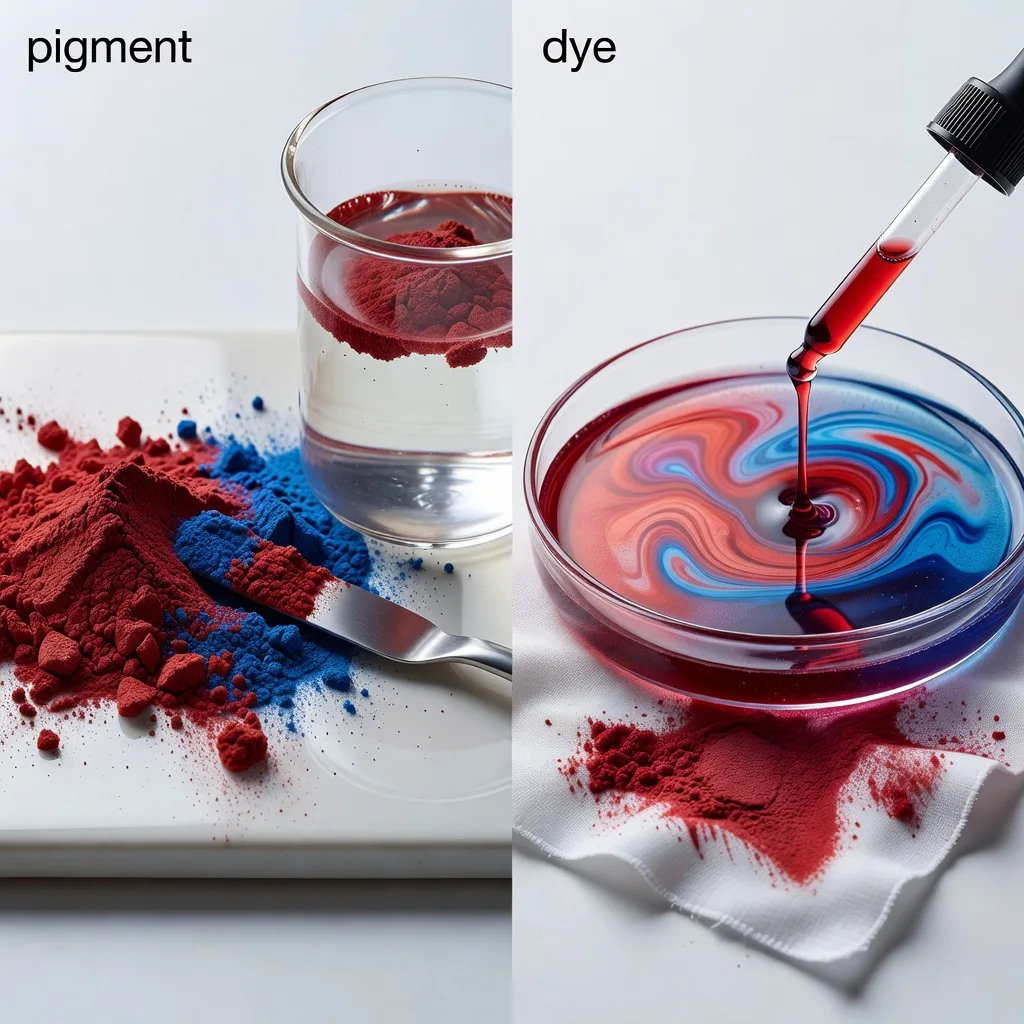
Dyes are colourants that dissolve in water, oil or alcohol. Because they dissolve, they can soak into the top layer of skin and leave a stain, which is how lip and cheek tints work. Pigments are tiny solid particles that do not dissolve. They sit on the surface of the skin, give opaque colour and coverage, and wipe off more easily. Lakes are a middle ground: a dye fixed onto an insoluble base so it behaves like a pigment. Most makeup uses a mix. Foundations and eyeshadows rely mainly on pigments, while stains, tints and some long-wear lip products rely more on dyes.
Knowing the difference helps you choose the right product for the finish you want and explains why some colours last, some transfer and some leave a faint tint behind long after the rest has gone.
The FDA regulates colour additives in cosmetics and lists which dyes, lakes and pigments are permitted and where, including which may be used around the eyes and on the lips.
This guide explains how dyes, pigments and lakes differ, what they look like on labels, how they behave on skin and how to choose and remove them.
Shopping these picks?
Amazon Prime members get fast, free shipping on eligible items, plus Prime Video, Amazon Music and member deals. New members can start with a free trial.
Start a free Prime trialAged 18 to 24? Prime for Young Adults comes with a longer free trial and a lower price after it.
Affiliate link: we may earn a commission at no extra cost to you.
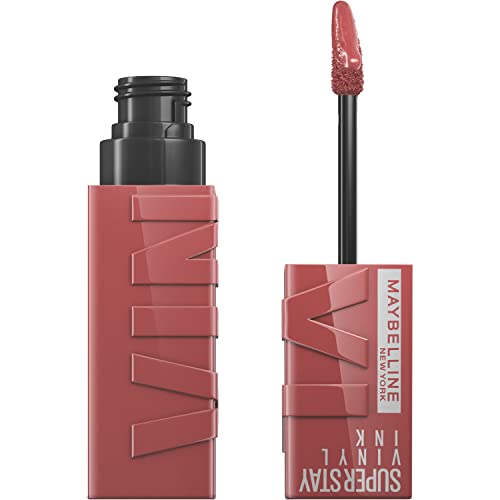
Recommended Stains, Tints and Pigment-Rich Products


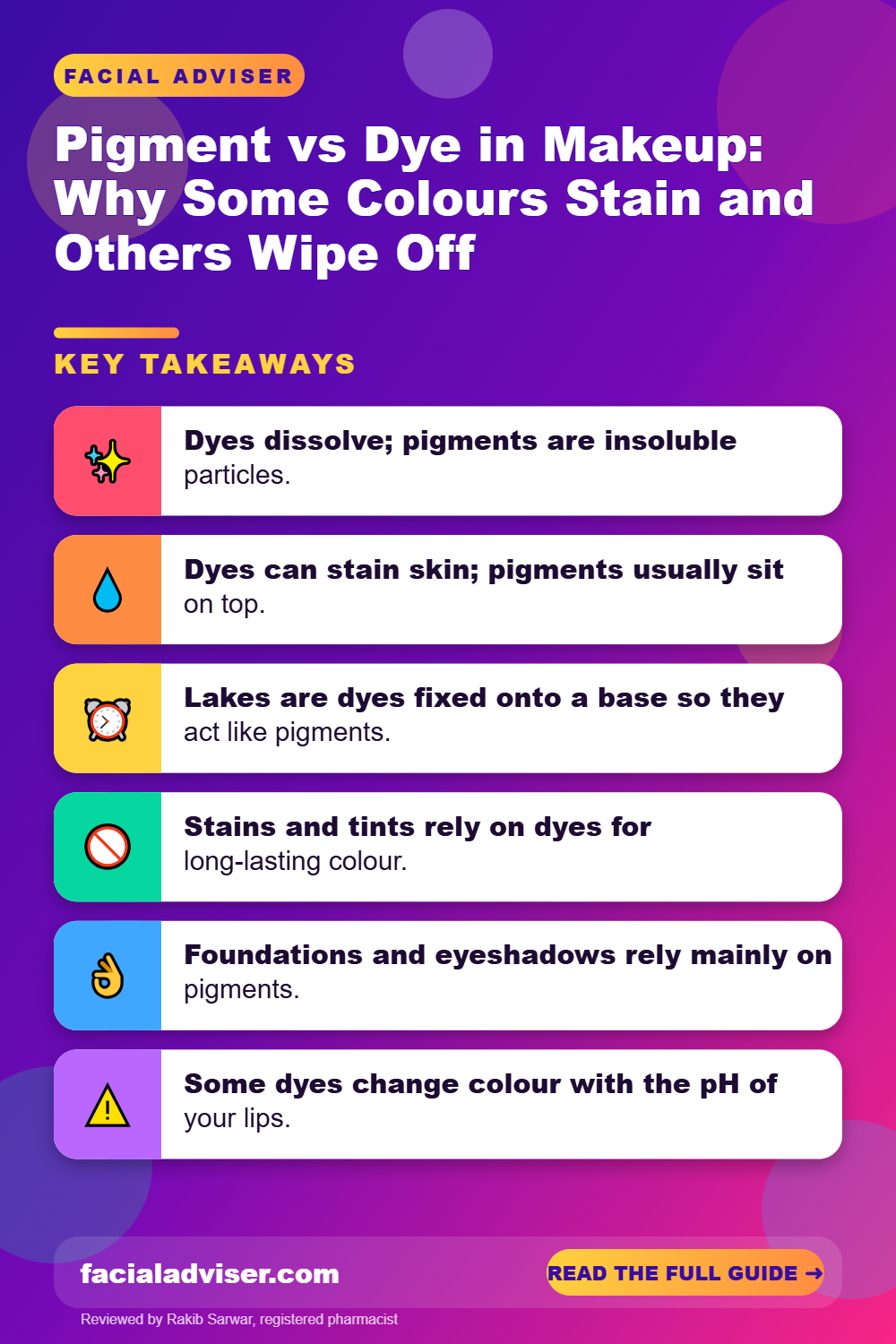
In Brief
- Dyes dissolve; pigments are insoluble particles.
- Dyes can stain skin; pigments usually sit on top.
- Lakes are dyes fixed onto a base so they act like pigments.
- Stains and tints rely on dyes for long-lasting colour.
- Foundations and eyeshadows rely mainly on pigments.
- Some dyes change colour with the pH of your lips.
- Not all colourants are permitted around the eyes.
Contents
- Pigments, Dyes and Lakes Explained
- Why Dyes Stain and Pigments Do Not
- Colour-Changing Lip Products
- How to Tell Whether a Product Uses Dyes or Pigments
- Where Each Type Is Used
- Which Colourants Are Permitted
- Sensitivity and Staining Concerns
- Removing Stains and Pigments
- Dos and Don’ts
- Honest Limits
- When to See a Doctor
- Common Questions
- The Takeaway
Pigments, Dyes and Lakes Explained
| Type | What it is | How it behaves | Examples on labels |
|---|---|---|---|
| Dye | Colourant that dissolves in water, oil or alcohol | Transparent colour; can stain | Red 33, Yellow 5, Blue 1 (without the word Lake) |
| Pigment | Insoluble solid particle | Opaque colour; sits on surface | Iron oxides, titanium dioxide, ultramarines |
| Lake | Dye bonded to an insoluble base such as alumina | Behaves like a pigment; less staining | Red 7 Lake, Yellow 5 Lake, Blue 1 Lake |
| Natural colourant | Plant or insect-derived colour | Varies | Carmine, beet extract, annatto |
Pigments give colour by absorbing some wavelengths of light and scattering the rest. Because they scatter light, they can also add opacity and coverage, which is why titanium dioxide and iron oxides are the backbone of foundations and concealers.
Dyes are transparent. They add colour without much coverage, which is why stains look like a natural flush rather than a layer of makeup. They are also very concentrated, so a tiny amount goes a long way, and a stain that looks bright in the bottle usually needs to be applied sparingly and blended quickly before it sets.
Lakes are named after the dye they contain, such as Red 7 Lake. The word Lake on a label tells you the dye has been made insoluble, so it is less likely to stain.
Why Dyes Stain and Pigments Do Not
Because dyes dissolve, they can move into the outer layer of dead skin cells on the lips and cheeks. The colour stays there even after the product on the surface has worn away, and it fades gradually as those cells shed.
Pigments are too large to penetrate the skin. They cling to the surface with the help of oils, waxes and film formers, so they can be wiped, rubbed or washed away. That makes them easier to remove but more likely to transfer.
This is why a lipstick based mainly on pigments can leave marks on a cup, while a stain leaves colour on the lips even after you eat. Many long-wear lip products combine the two, using a dye for a lasting tint and pigments for opacity.
Film formers add a third layer to the story. Transfer-proof liquid lipsticks and long-wear foundations often use polymers that set into a flexible film, trapping pigment on the skin so it resists rubbing. The colour still comes from pigment, but the film is what keeps it in place, which is why these products need an oil-based remover even though they do not stain.
Our guide on filler versus pigment explains how pigments are balanced with other powders to control colour intensity.
Colour-Changing Lip Products
Some lip balms and lipsticks look green, orange or clear in the tube but turn pink on the lips. They usually contain a dye such as Red 27 or Red 21 that changes colour depending on pH and moisture.
In the dry, waxy product, the dye stays in a nearly colourless form. When it meets the moisture and slightly different pH of your lips, it shifts to its coloured form and binds to the skin, creating a personalised shade that lasts.
Because each person’s lips differ slightly, the same product can look pinker on one person and more coral on another. The effect also tends to deepen over the first hour.
These products are popular because they give a natural-looking flush that feels like a balm, but the stain can be patchy on dry, flaky lips. Applying them over smooth, lightly moisturised lips gives the most even colour, and blotting after a few minutes removes excess waxy product while leaving the tint behind.
How to Tell Whether a Product Uses Dyes or Pigments
Read the colourant list
Look near the end of the ingredient list or after may contain.
Spot pigments
Iron oxides, titanium dioxide, ultramarines, chromium oxides and mica.
Spot lakes
Names ending in Lake, such as Red 7 Lake.
Spot dyes
Numbered colours without the word Lake, such as Red 33 or Red 27.
Test on skin
Swatch, wait ten minutes and wipe. A remaining tint suggests a dye.
Match to your goal
Choose dyes for a lasting flush and pigments for coverage and easy removal.
If you want a natural flush that lasts through lunch, look for a water-based tint. If you want bold, opaque colour you can remove easily, choose a pigment-rich cream or lipstick.
Where Each Type Is Used
| Product | Main colourant type | Why |
|---|---|---|
| Foundation and concealer | Pigments | Opacity and coverage |
| Eyeshadow | Pigments, lakes and mica | Opaque or shimmery colour on the surface |
| Blush (powder) | Pigments and lakes | Buildable colour that blends |
| Cheek and lip stains | Dyes | Transparent, long-lasting tint |
| Traditional lipstick | Pigments and lakes | Opaque colour and coverage |
| Long-wear liquid lip | Pigments plus dyes or film formers | Opacity with staying power |
| Tinted balm | Dyes, lakes or sheer pigments | Sheer colour with comfort |
Shimmer adds another dimension. Many shimmer shades use mica coated with titanium dioxide and iron oxides, which creates colour through light interference rather than absorption. Our guide on how mica creates shimmer explains this in detail.
Which Colourants Are Permitted
In the United States, colour additives used in cosmetics must be approved for their intended use. Many synthetic dyes and their lakes must be batch-certified by the FDA before use, while colourants such as iron oxides, titanium dioxide, mica and carmine are approved but exempt from certification.
Approval also depends on where the product is used. Some colourants are permitted in general cosmetics but not around the eyes. The FDA’s list of colour additives permitted in cosmetics shows which are approved and any restrictions.
This is why some bright, neon or unusual shades carry a warning not to use them in the eye area, and why brands sometimes sell different formulas for eyes and lips even in similar colours.
Do not use lip or face products that are not labelled for eye use around the eyes, and never use craft dyes or pigments on skin. Some colourants that are fine on the lips are not permitted near the eyes.
Sensitivity and Staining Concerns
Most permitted colourants are well tolerated, but reactions do happen. Carmine, some red dyes and occasionally other colourants can cause allergic reactions in a small number of people. If you react only to certain shades, a specific colourant may be the cause.
Carmine deserves a special mention because it comes from insects and is also a concern for people who avoid animal-derived ingredients. It appears on labels as carmine, cochineal or CI 75470. Vegan brands usually replace it with synthetic red lakes or iron oxides.
Dyes can also stain skin that is dry or flaky more deeply, leaving patchy colour. Exfoliating lips gently and applying a thin layer of balm a few minutes before a stain can help it apply evenly.
Our guide on what hypoallergenic makeup really means explains how to find the ingredients that trigger reactions for you.
Removing Stains and Pigments
Pigment-based makeup usually comes off with micellar water, a cleansing oil or a gentle cleanser. Long-wear formulas with film formers may need an oil-based remover.
Dye-based stains are harder to remove completely because the colour sits within the top layer of skin. An oil-based remover or balm will lift some of it, and the rest fades naturally within a day as skin cells shed. Avoid scrubbing, which irritates the lips. Stains on the cheeks can be lifted in the same way, and a little moisturiser afterwards helps skin recover.
- Hold a remover-soaked pad on lips for a few seconds before wiping.
- Use a cleansing oil or balm for long-wear and transfer-proof products.
- Follow with a gentle cleanser and a lip balm.
- Accept a faint remaining tint from stains; it will fade on its own.
Dos and Don’ts
Try This
- Check whether a product is labelled for eye use
- Choose dyes for a lasting flush
- Choose pigments for coverage
- Prep dry lips before a stain
- Use an oil-based remover for long-wear colour
Avoid This
- Use lip stains or neon shades around the eyes
- Scrub stained lips
- Use craft pigments or dyes on skin
- Assume every red colourant is the same
- Apply stains to flaky skin
Honest Limits
Real formulas often combine dyes, lakes and pigments, so a single product rarely fits neatly into one category. The ingredient list tells you what colourants are present but not how much of each.
How much a product stains also depends on your skin, how dry it is and how long you wear it, so the same tint can last longer on one person than another.
Regulations differ between countries, so a colourant permitted in one market may be restricted in another. Brands selling internationally often adjust formulas to meet each set of rules. That is one reason the same product can have slightly different ingredient lists, or even look a little different, depending on where you buy it.
When to See a Doctor
- Your lips swell, blister or become very itchy after using a lip product.
- You develop a rash where you applied a coloured product.
- Your eyes become red, watery or painful after using eye makeup.
- Reactions happen with certain shades but not others.
This article is for general information and does not replace professional medical advice. See a doctor or dermatologist for persistent or severe reactions.
Common Questions
What is the difference between pigment and dye?
Dyes dissolve and can stain; pigments are insoluble particles that sit on the surface.
Why do lip stains last so long?
They use dyes that soak into the top layer of skin.
What is a lake in makeup?
A dye fixed onto an insoluble base so it behaves like a pigment.
Are pigments better than dyes?
Neither is better; they suit different products and finishes.
Why does my lip balm change colour?
It contains a pH-sensitive dye that changes colour on your lips.
Can I use lip stain on my cheeks?
Many are designed for both; check the label.
Can I use lip products on my eyes?
Only if they are labelled safe for eye use.
How do I remove a lip stain?
Use an oil-based remover; any remaining tint fades naturally.
What does Red 7 Lake mean?
It is the Red 7 dye made insoluble on a base.
Which colourants are used in foundation?
Mainly iron oxides and titanium dioxide.
The Takeaway
Dyes dissolve and can stain skin, giving transparent, long-lasting colour. Pigments are insoluble particles that sit on the surface, giving opaque colour that wipes off more easily. Lakes sit in between.
Choose dye-based stains for a natural, lasting flush and pigment-rich products for coverage and bold colour. Always check whether a product is permitted for the eye area before using it there.

Written by
Registered pharmacist and founder of Facial Adviser. Rakib's pharmacy training covers how skincare actives work and interact; a later course in cosmetology turned that into a focus on facial treatments and skincare products. He plans, researches and edits every guide on the site and checks health claims against sources such as the American Academy of Dermatology, the FDA and the NIH. He is not a dermatologist; see the Editorial Policy and Medical Disclaimer.
About · Editorial policy · How we choose products · Medical disclaimer · Contact
Keep reading: How cosmetics are made
- How to Read a Cosmetic Ingredient List: A Beginner Guide
- What Is the Soft-Focus Effect in Makeup? How Blurring Products Work
- What Does Paraben-Free Mean? Parabens, Safety and What Replaces Them
- Why Is Fragrance Added to Makeup? Reasons, Risks and Alternatives
- Can Cosmetics Cause Heart Disease? What the Evidence Actually Shows
- 8 Ways You Can Use Fragrance Oils Safely