How Mica Creates Shimmer in Makeup: The Science of Sparkle
Almost every highlighter, shimmer eyeshadow, glowy foundation and lip gloss that catches the light owes its effect to one ingredient: mica. It appears on labels as mica, CI 77019 or sometimes as part of a coated pigment, and it is one of the oldest ingredients used in cosmetics.
Part of our guide to cosmetic science. Start with: How to Read a Cosmetic Ingredient List: A Beginner Guide
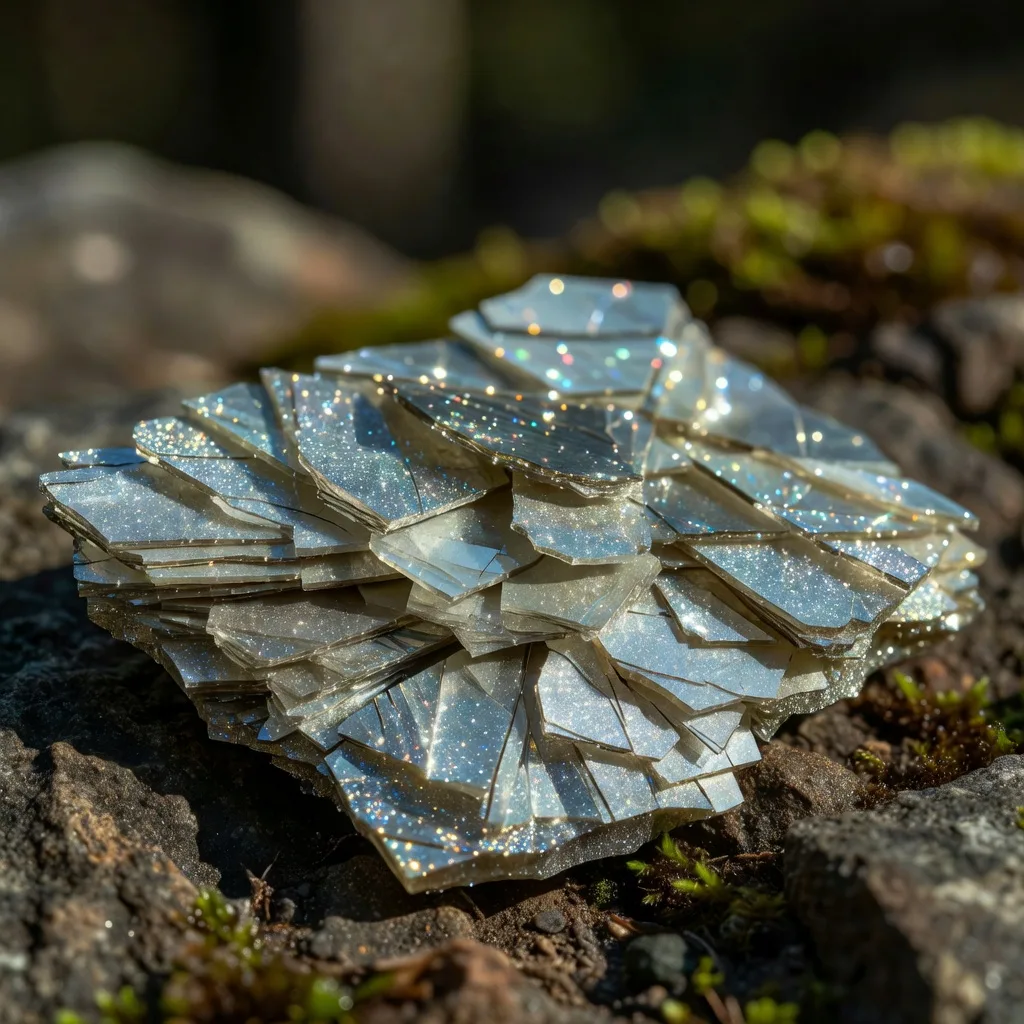
Mica creates shimmer because it forms extremely thin, flat, transparent flakes that reflect light like tiny mirrors. On its own, mica gives a soft, pearly sheen. When the flakes are coated with a very thin layer of titanium dioxide or iron oxides, light reflects from both the top and bottom of the coating and the waves interfere with each other, producing brighter shimmer and colours such as gold, pink, blue and green. The size of the flakes decides the effect: fine particles give a soft satin glow, while larger flakes create visible sparkle and glitter-like shine.
This is the same principle that makes soap bubbles and fish scales shimmer. It is why a single highlighter can look pink from one angle and gold from another.
The FDA lists mica among the colour additives permitted for use in cosmetics, including products used around the eyes, which is one reason it is so common in eyeshadows and highlighters.
This guide explains how mica works, how particle size and coatings change the look, how to wear shimmer well and what to know about mica sourcing and alternatives.
Shopping these picks?
Amazon Prime members get fast, free shipping on eligible items, plus Prime Video, Amazon Music and member deals. New members can start with a free trial.
Start a free Prime trialAged 18 to 24? Prime for Young Adults comes with a longer free trial and a lower price after it.
Affiliate link: we may earn a commission at no extra cost to you.
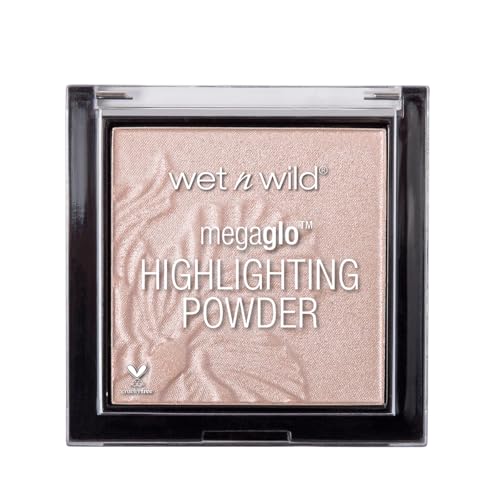
Recommended Shimmer and Glow Products


At a Glance
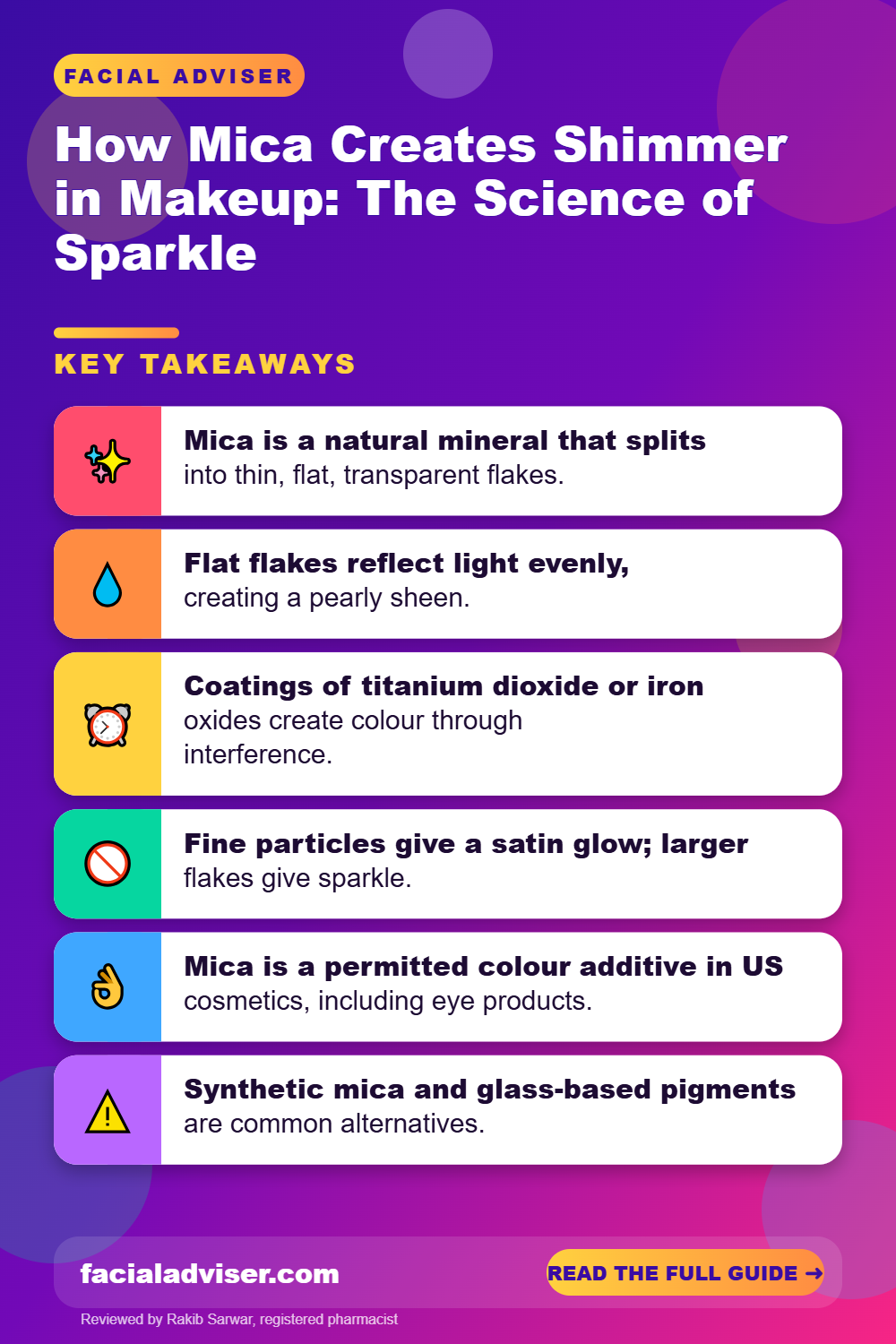
- Mica is a natural mineral that splits into thin, flat, transparent flakes.
- Flat flakes reflect light evenly, creating a pearly sheen.
- Coatings of titanium dioxide or iron oxides create colour through interference.
- Fine particles give a satin glow; larger flakes give sparkle.
- Mica is a permitted colour additive in US cosmetics, including eye products.
- Synthetic mica and glass-based pigments are common alternatives.
- Shimmer highlights texture, so placement matters.
Jump to a Section
- What Mica Is
- The Science: How Mica Makes Light Shimmer
- Why Particle Size Matters
- Mica and Its Alternatives
- How to Choose and Wear Shimmer Without Emphasising Texture
- Where Shimmer Works Best
- Is Mica Safe in Makeup?
- Mica Sourcing and Ethics
- Dos and Don’ts
- Honest Limits
- When to See a Doctor
- Your Questions, Answered
- Where This Leaves You
What Mica Is
Mica is a group of silicate minerals that form in layers. The layers split apart easily into very thin sheets, which is why mica can be milled into tiny flat flakes. Cosmetic mica is usually muscovite, a light-coloured variety, which is purified and ground to a specific size range.
Because it is flat, smooth and slightly transparent, mica also improves texture. It helps powders glide, adds slip and gives a soft-focus effect even when it is not meant to look shimmery. Our guide on where makeup ingredients come from explains how minerals such as mica and talc are mined and processed for cosmetics.
On labels, mica is listed as mica or CI 77019. The FDA’s list of colour additives permitted in cosmetics includes mica as exempt from certification.
Mica is not the same as glitter. Traditional glitter is usually cut plastic film. Mica shimmer comes from natural or synthetic mineral flakes, and the effect is generally finer and more skin-like.
The Science: How Mica Makes Light Shimmer
Reflection. Each mica flake is a tiny flat surface. When millions of flakes lie roughly parallel on the skin, they reflect light in a similar direction, much like a mirror. This creates a soft, pearly glow rather than the diffuse, flat look of ordinary pigments. Interference. Most shimmer pigments are mica coated with a very thin layer of titanium dioxide. Light reflects off the top of the coating and off the boundary between the coating and the mica. These reflected waves overlap. Depending on the thickness of the coating, some colours are strengthened and others cancelled out.A thin coating produces a silvery white pearl. Slightly thicker coatings produce gold, then red, violet, blue and green interference colours. These are sometimes called duochrome or interference pigments because they can shift colour as the viewing angle changes.
Absorption. Adding iron oxides to the coating gives warmer, richer metallic shades such as bronze, copper and rose gold, because the iron oxides also absorb some light as well as reflecting it. Combining interference colours with absorbing pigments creates the huge range of shimmer shades you see in makeup.Why Particle Size Matters
| Particle size | Effect on skin | Common use |
|---|---|---|
| Very fine (under about 15 microns) | Soft satin sheen, blurs texture | Foundations, primers, finishing powders |
| Fine to medium (about 10 to 60 microns) | Visible shimmer, smooth glow | Highlighters, blushes, satin eyeshadows |
| Medium to large (about 20 to 100 microns) | Noticeable sparkle | Shimmer eyeshadows, body glow products |
| Large (over about 100 microns) | Glitter-like sparkle | Special-effect eyeshadows and toppers |
Smaller flakes scatter light more evenly and look smoother, which is why radiant foundations use very fine mica. Larger flakes act like bigger mirrors and create distinct points of light, which is why sparkly eyeshadows feel grittier.
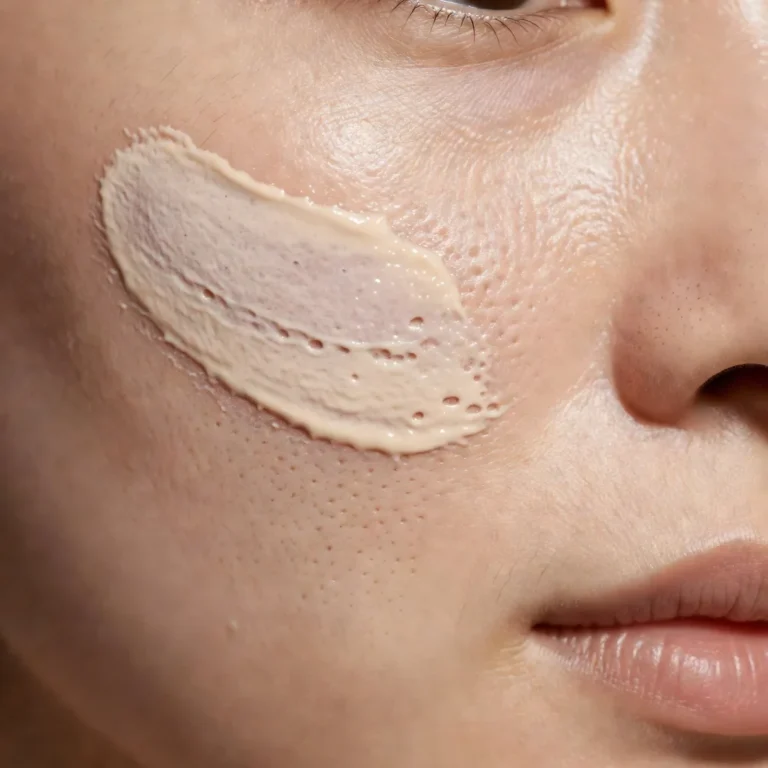
This is also why shimmer can emphasise texture. Larger, more reflective particles catch light on every bump and pore. If you want glow without highlighting texture, choose products described as satin, sheen or soft focus rather than sparkle or metallic.
Mica and Its Alternatives
| Pigment base | What it is | Look | Notes |
|---|---|---|---|
| Natural mica | Mined silicate mineral | Classic pearly shimmer | Most widely used |
| Synthetic mica (fluorphlogopite) | Lab-made mica | Brighter, cleaner, more reflective | Consistent quality; avoids mining concerns |
| Calcium sodium borosilicate | Thin glass flakes | Very bright, sparkly, high clarity | Popular in intense shimmer and toppers |
| Bismuth oxychloride | Crystalline compound | Pearly, silky sheen | Can itch or irritate some sensitive skin |
| Aluminium or silica flakes | Coated metal or silica | Metallic or soft glow | Used in special effect shades |
Synthetic mica is made in a laboratory and has a smoother surface and more uniform thickness than natural mica. It tends to look brighter and more reflective, and it avoids some of the ethical questions around mica mining.
Glass-based pigments such as calcium sodium borosilicate create a very clean, intense sparkle and are often used in shades described as prismatic or multichrome.
How to Choose and Wear Shimmer Without Emphasising Texture
Match the finish to your skin
Choose satin or fine shimmer for textured or mature skin and bigger sparkle for smooth areas such as lids.
Prep the skin
Hydrate well and use a smoothing primer so the surface reflects light evenly.
Place shimmer on high points
Apply to cheekbones, brow bones, the nose bridge and the centre of the lids.
Use the right tool
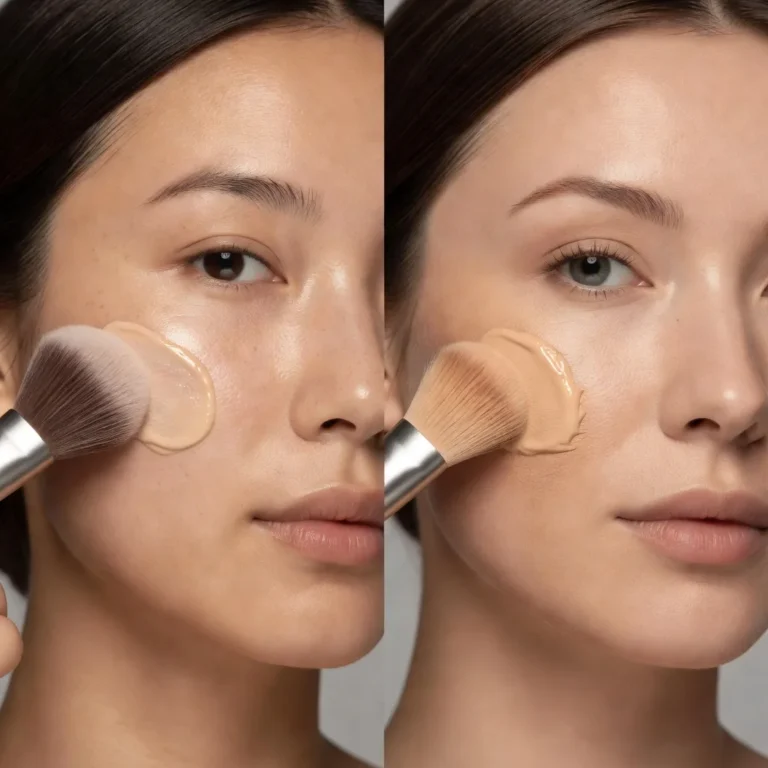
A fluffy brush gives a sheer glow; a fingertip or damp sponge intensifies it.
Build in thin layers
Tap on a little at a time rather than sweeping on a thick layer.
Keep shimmer off textured areas
Avoid pores, active breakouts and fine lines under the eyes.
For a lit-from-within look, mix a drop of liquid illuminator into your foundation or moisturiser rather than placing shimmer powder on top. The fine particles spread evenly and look more like skin.
Where Shimmer Works Best
Shimmer looks most natural where light would naturally hit the face. On the cheekbones it gives a healthy glow, on the brow bone it lifts the eye area and in the centre of the eyelid it makes eyes look brighter and more open.
Cream and liquid shimmer products usually look softer and more skin-like than powders because the flakes sit within a film rather than on top of dry skin. Our guide on creating a glossy finish without oil covers how to build glow with hydration and liquid illuminators.
For eyeshadow, shimmer usually looks best in the centre of the lid and the inner corners, with matte shades in the crease and outer corner to add depth. A damp brush or fingertip packs shimmer on more intensely, and an eyeshadow primer or cream base underneath helps larger flakes stick and reduces fallout onto the cheeks. If fallout does happen, apply eye makeup before foundation so you can clean up easily. On lips, a shimmer gloss or balm can make lips look fuller, because the reflected light makes the centre of the lips appear more prominent.
Is Mica Safe in Makeup?
Mica is widely used in cosmetics and is generally well tolerated on the skin. It is inert and does not usually cause allergic reactions. Most concerns relate to breathing in fine dust in large amounts, which is mainly an occupational issue in mining and manufacturing rather than for people using makeup.
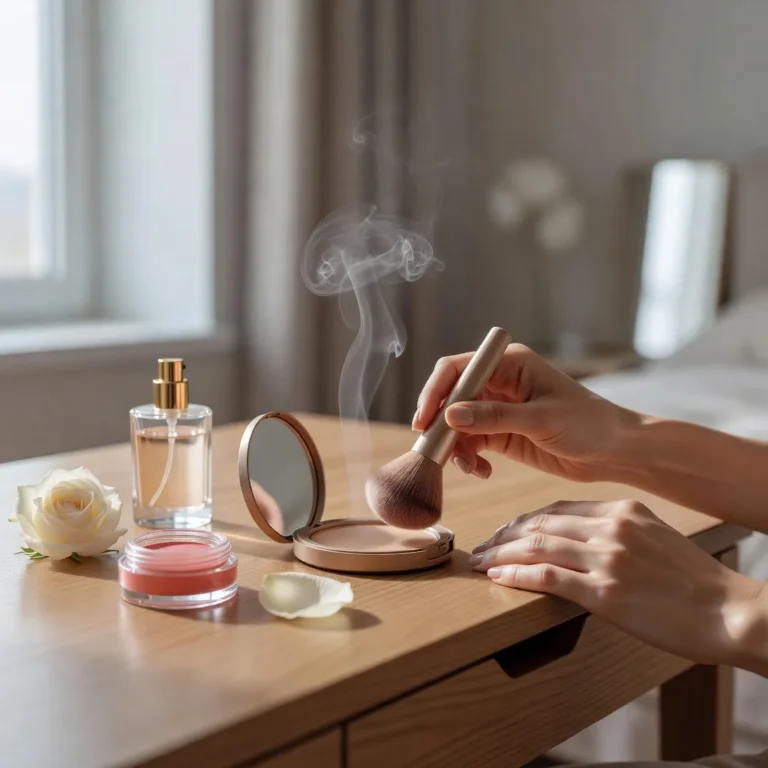
With loose shimmer powders, it is still sensible to avoid creating clouds of powder near the nose and mouth. Tap off excess and apply gently.
Some shimmer products also contain other ingredients that can irritate, such as bismuth oxychloride or fragrance. If a shimmer product itches or stings, check the label for these rather than assuming mica is the cause. Our guide on whether talc causes breakouts looks at another common powder mineral.
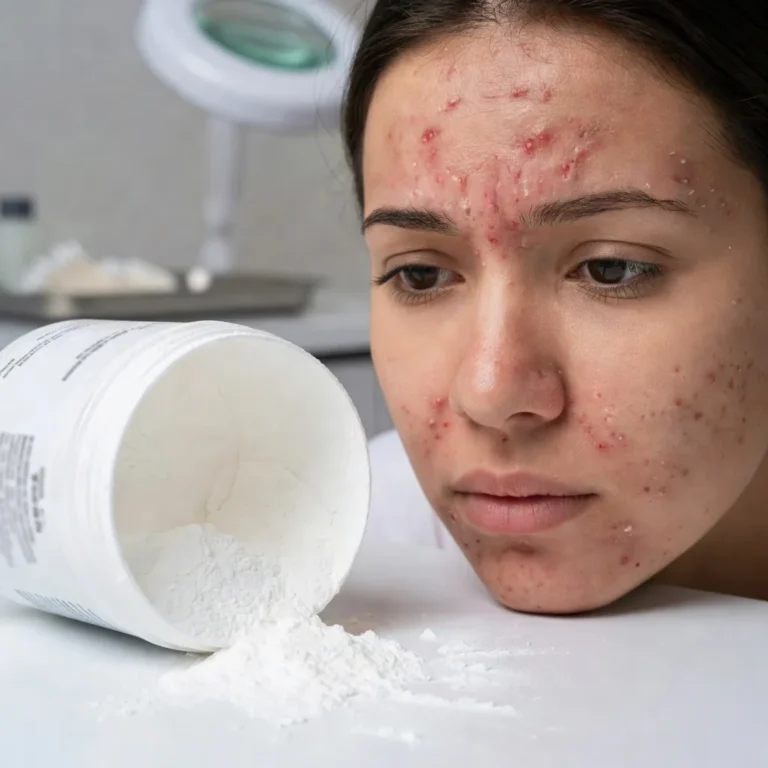
Do not use craft glitter or non-cosmetic shimmer powders on the face or near the eyes. They are not made for skin and may contain dyes, sharp edges or particles that can scratch the eye.
Mica Sourcing and Ethics
A significant share of natural mica has historically come from small-scale mining regions, and reports have raised concerns about child labour and unsafe working conditions in parts of the supply chain.
Many cosmetics companies and suppliers now take part in industry programmes aimed at improving traceability and working conditions in mica supply chains. Some brands choose synthetic mica specifically to avoid these concerns.
If this matters to you, look for brands that publish information about their mica sourcing or that use synthetic mica. Labels do not always make this clear, so brand websites and sustainability reports are usually the best source.
Dos and Don’ts
Try This
- Choose finer shimmer for textured skin
- Apply shimmer to high points
- Build in thin layers
- Use cream or liquid shimmer for a skin-like glow
- Check sourcing if ethics matter to you
Avoid This
- Put chunky shimmer over pores or breakouts
- Sweep shimmer all over the face
- Use craft glitter near the eyes
- Create clouds of loose powder
- Assume every sparkle is mica
Honest Limits
Particle size ranges and descriptions vary between manufacturers, so the figures in this guide are approximate. Two products labelled fine shimmer can look quite different on the skin.
How shimmer looks also depends on lighting. Shimmer that looks subtle indoors can look much more intense in direct sunlight or flash photography, so check your makeup in natural light before a big event.
Personal preference matters most. Some people love strong sparkle and others prefer a barely-there sheen. There is no right amount of shimmer, only the amount you enjoy wearing. It is also worth remembering that makeup trends change; glow and shimmer come in and out of fashion, but choosing finishes that make you feel confident is always in style.
When to See a Doctor
- Your eyes become red, painful or watery after using shimmer eyeshadow.
- You feel something scratching your eye that does not rinse out.
- You develop itching, redness or a rash where you applied a shimmer product.
- Your eyelids stay irritated or flaky after stopping the product.
This article is for general information and does not replace professional medical advice. See a doctor or eye specialist for persistent eye or skin symptoms.
Your Questions, Answered
How does mica create shimmer?
Its thin, flat flakes reflect light like tiny mirrors, and coatings create colour through interference.
What is mica in makeup?
A natural silicate mineral milled into fine flakes for shimmer and texture.
What does CI 77019 mean on a label?
It is the colour index number for mica.
Why do some highlighters change colour?
Interference pigments reflect different colours at different viewing angles.
Is mica safe in makeup?
It is generally well tolerated and is a permitted colour additive in US cosmetics.
What is synthetic mica?
A lab-made mica, often called fluorphlogopite, that looks brighter and more uniform.
Why does shimmer show my pores?
Reflective particles catch light on uneven texture; finer shimmer helps.
Is mica the same as glitter?
No. Traditional glitter is usually cut plastic film; mica is a mineral.
Can mica cause breakouts?
Mica itself rarely causes breakouts; other ingredients or poor removal are more likely.
Why is mica sourcing controversial?
Some natural mica mining has been linked to child labour and unsafe conditions.
Where This Leaves You
Mica creates shimmer because its thin, flat flakes reflect light evenly, and coatings of titanium dioxide or iron oxides turn that reflection into colour through interference. Particle size decides whether you get a soft satin glow or a bold sparkle.
Choose finer shimmer for textured skin, place it on the high points of the face and build in thin layers. If sourcing matters to you, look for brands that explain where their mica comes from or use synthetic alternatives.

Written by
Registered pharmacist and founder of Facial Adviser. Rakib's pharmacy training covers how skincare actives work and interact; a later course in cosmetology turned that into a focus on facial treatments and skincare products. He plans, researches and edits every guide on the site and checks health claims against sources such as the American Academy of Dermatology, the FDA and the NIH. He is not a dermatologist; see the Editorial Policy and Medical Disclaimer.
About · Editorial policy · How we choose products · Medical disclaimer · Contact
Keep reading: How cosmetics are made
- How to Read a Cosmetic Ingredient List: A Beginner Guide
- Filler vs Pigment in Makeup: What Each Does and Why It Matters
- How to Choose Cruelty-Free Brands: Logos, Loopholes and What to Check
- Pigment vs Dye in Makeup: Why Some Colours Stain and Others Wipe Off
- What Is the Soft-Focus Effect in Makeup? How Blurring Products Work
- What Does Paraben-Free Mean? Parabens, Safety and What Replaces Them