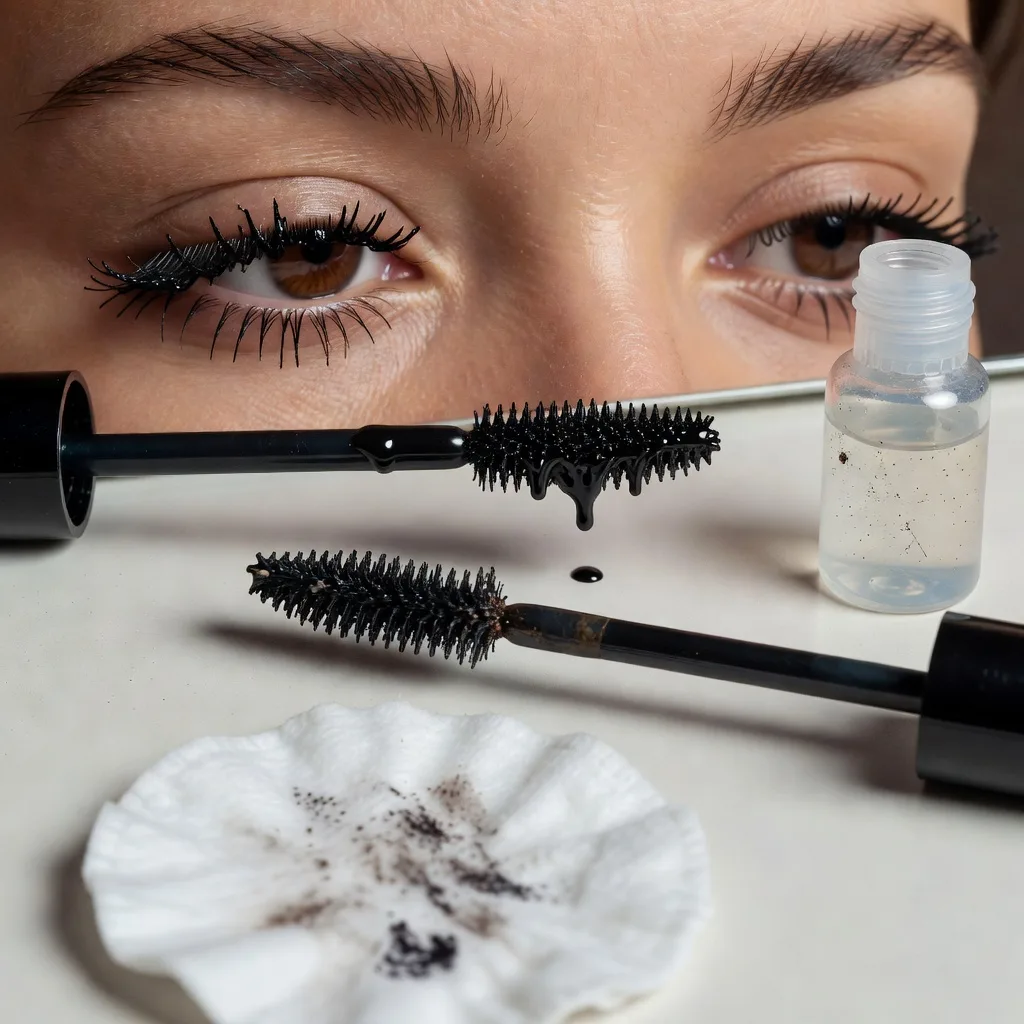
What Causes Mascara Clumping and How to Get Clean, Separated Lashes
Clumpy mascara is one of the most common makeup frustrations. Instead of long, fluttery lashes, you end up with spiky clusters, blobs at the tips or lashes stuck together in groups. It can happen with an expensive mascara as easily as with a budget one.
Part of our guide to makeup how-to. Start with: How to Choose the Right Eye Makeup Color for Your Eyes and Skin
Mascara clumps when too much product builds up on the lashes before it can spread evenly. The most common causes are an old or dried-out formula that has thickened, too much product on the wand, pumping the wand in the tube, applying extra coats after the first has half-dried, and a wand or formula that does not suit your lashes. Leftover mascara, oily residue or skincare on the lashes can make it worse. Wiping excess off the wand, wiggling from the root to the tip, applying the next coat while the first is still wet and combing through straight away usually fixes the problem. A fresh tube every three months also helps.
The good news is that most clumping is caused by technique and product age rather than the mascara being bad, so small changes make a big difference.
The FDA’s advice on eye cosmetic safety includes keeping mascara clean, not sharing it and not adding water or saliva to thin it, which also happens to be good advice for avoiding clumps.
This guide explains what causes clumping, how different formulas and wands behave, a step-by-step method for separated lashes and how to rescue a clumpy application.
Shopping these picks?
Amazon Prime members get fast, free shipping on eligible items, plus Prime Video, Amazon Music and member deals. New members can start with a free trial.
Start a free Prime trialAged 18 to 24? Prime for Young Adults comes with a longer free trial and a lower price after it.
Affiliate link: we may earn a commission at no extra cost to you.
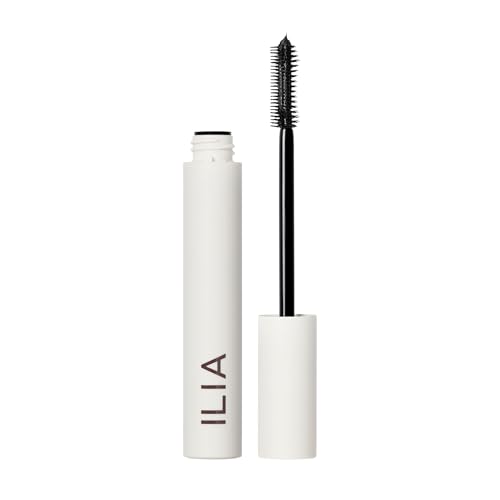
Recommended Mascaras and Lash Tools for Clump-Free Lashes




What This Covers
- The Main Causes of Mascara Clumping
- Why Old Mascara Clumps More
- How Formula and Wand Affect Clumping
- How to Apply Mascara Without Clumps
- How to Fix Clumpy Lashes Once They Happen
- Your Lashes Make a Difference
- Lower Lashes, Lash Primers and Storage
- Mascara Hygiene and Eye Health
- Dos and Don’ts
- Honest Limits
- When to See a Doctor
- Frequently Asked Questions
- Final Word
What to Know First
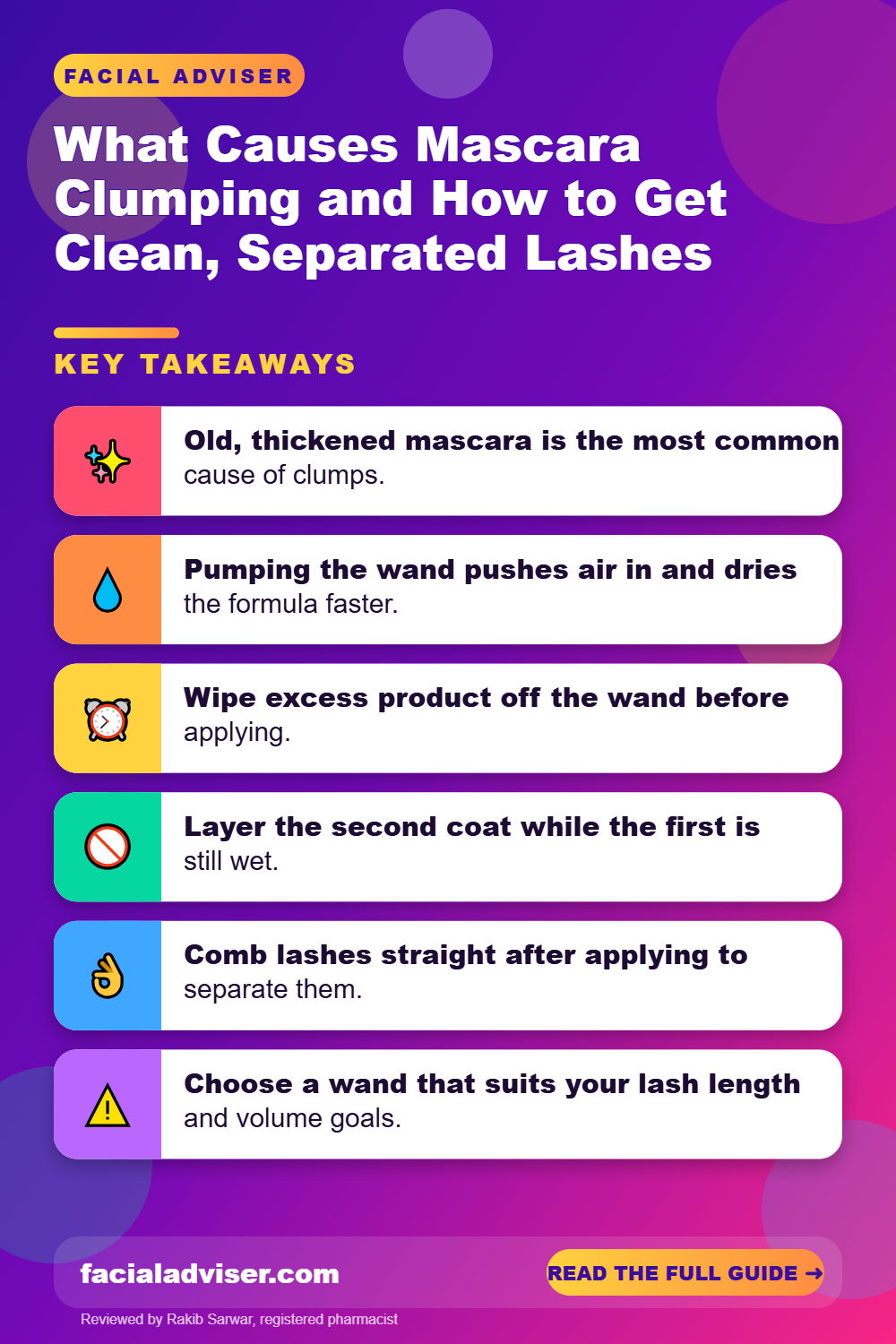
- Old, thickened mascara is the most common cause of clumps.
- Pumping the wand pushes air in and dries the formula faster.
- Wipe excess product off the wand before applying.
- Layer the second coat while the first is still wet.
- Comb lashes straight after applying to separate them.
- Choose a wand that suits your lash length and volume goals.
- Replace mascara about every three months.
The Main Causes of Mascara Clumping
| Cause | What happens | Fix |
|---|---|---|
| Old or dried-out formula | Solvents evaporate and the mascara thickens | Replace every three months |
| Pumping the wand | Air enters and dries the formula faster | Twist the wand to collect product instead |
| Too much product on the wand | Excess globs transfer to the lashes | Wipe the wand on the tube opening or a tissue |
| Layering on half-dried mascara | New coat drags and binds lashes together | Apply coats back to back while wet |
| Volumising formula on fine lashes | Heavy formula weighs lashes down and sticks them together | Try a lengthening or tubing formula |
| Residue on lashes | Oil or old mascara stops even coating | Remove makeup fully and keep eye cream off lashes |
Clumping can also look different depending on the cause. Blobs at the tips usually mean too much product on the wand, while lashes stuck together in spiky groups usually mean a thick formula or slow layering. Often two or three causes work together. For example, a two-month-old volumising mascara that you pump each morning and apply in three slow coats will almost always clump.
Why Old Mascara Clumps More
Mascara is made of pigments, waxes, film formers and solvents such as water or volatile ingredients. Every time you open the tube, a little solvent evaporates. Over weeks the formula becomes thicker and stickier, so it sits on lashes in heavier blobs.
Pumping the wand in and out of the tube pushes air in and speeds up drying. Twisting the wand as you pull it out collects product without forcing air inside. Scraping the wand hard against the neck of the tube can also leave a crust of dried product around the opening, which then flakes onto the wand and into your lashes, so wipe the opening clean occasionally.
Most experts suggest replacing mascara about every three months. The FDA’s page on eye cosmetic safety also warns against adding water or saliva to revive a dried mascara, since this can introduce bacteria.
A brand-new mascara can also clump for the first few uses if the wand carries too much product. Wiping the wand on the tube opening for the first week often helps until the formula settles.
How Formula and Wand Affect Clumping
| Type | What it does | Clumping risk | Best for |
|---|---|---|---|
| Volumising | Thick formula, builds lash thickness | Higher | Thick, strong lashes |
| Lengthening | Thinner formula, often with fibres | Lower | Fine or short lashes |
| Tubing | Wraps lashes in polymer tubes | Low | Separated, natural look; oily lids |
| Waterproof | Sets quickly and firmly | Moderate if layered slowly | Humid weather, watery eyes |
| Curling | Holds lashes in a lifted shape | Moderate | Straight lashes |
The wand matters as much as the formula. Wands with dense bristles hold more product and tend to create volume and some clumping. Rubber or silicone wands with short, spaced bristles usually separate lashes better and suit people who prefer a defined look.
Curved wands help coat lashes that grow in an arc, while small or thin wands reach inner corners and lower lashes more easily without depositing too much product. If you love a formula but find it clumps, try wiping the wand more thoroughly and combing through with a clean spoolie afterwards rather than switching products straight away.
How to Apply Mascara Without Clumps
Start with clean, dry lashes
Remove old mascara and keep eye cream away from the lash line.
Curl first
Curl lashes before mascara, never after, to avoid breakage.
Twist, do not pump
Twist the wand as you pull it out to collect product.
Wipe the wand
Wipe excess off on the tube opening or a tissue.
Wiggle from root to tip
Place the wand at the base of the lashes and wiggle it upward and outward.
Add the second coat while wet
Apply any extra coat within about 30 seconds, before the first sets.
Comb through straight away
Use a clean lash comb to separate lashes before the mascara dries.
For extra definition, hold the wand vertically after your main coat and use the tip to separate individual lashes, especially at the outer corners.
How to Fix Clumpy Lashes Once They Happen
If you notice clumps while the mascara is still wet, comb through with a clean spoolie or lash comb, starting at the root and moving to the tips. This separates most lashes quickly.
If the mascara has already set, do not keep adding coats. Instead, gently comb through with a clean spoolie. For stubborn clumps, dip a cotton bud in a little eye makeup remover, run it along the clump to soften it, then comb again.
- Use a clean spoolie, not the mascara wand, to separate lashes.
- Work in small sections from the root outwards.
- Remove large blobs with a cotton bud rather than pulling lashes.
- If lashes look spiky and stuck together, remove and start again.
Do not use pins, needles or other sharp tools to separate lashes. It is very easy to scratch the eye or pull out lashes.
Your Lashes Make a Difference
Fine, sparse or short lashes are more likely to stick together because a heavy formula weighs them down. Lengthening or tubing formulas and a thin wand usually give a cleaner result.
Thick, dense lashes can handle volumising formulas, but they need more combing to stay separated. A wand with longer bristles helps reach between lashes.
Lashes that point straight down may stick to each other or to the lower lashes. Curling first and using a waterproof or curling formula to hold the lift can help.
If you use lash serums or oils at night, make sure lashes are clean and dry in the morning. Leftover oil can make mascara slide and clump. Our guide on why some mascaras smudge explains how oil affects mascara.
Lower Lashes, Lash Primers and Storage
Lower lashes. Lower lashes are shorter and finer, so they clump and smudge easily. Hold the wand vertically and use only the tip, touching the lashes lightly from side to side. One thin coat is usually enough, and many people skip lower lashes entirely for a softer look. Lash primers. A lash primer is a white or clear base applied before mascara. It can add length and help mascara coat lashes more evenly, but it also adds another layer that can clump if you apply mascara over it after it has dried. Apply mascara while the primer is still slightly tacky and keep both layers thin. Storage. Heat speeds up drying and can change the texture of mascara, so avoid leaving it in a hot car or a steamy bathroom. Store it upright with the cap tightly closed. If the formula suddenly becomes much thicker or develops an unusual smell, replace it. Removing mascara properly. Leftover mascara from the day before gives the new coat a rough base and almost guarantees clumps. Remove mascara fully every night with an eye makeup remover, holding a soaked pad on the lashes for a few seconds before wiping gently downwards. Timing. Applying mascara last, after eyeshadow and liner, means you can clean up any flecks without disturbing the rest of your eye makeup.Mascara Hygiene and Eye Health
Clumpy mascara is often old mascara, and old mascara carries a higher risk of bacterial contamination. Replace it regularly, keep the cap tightly closed and never share it.
If you have had an eye infection, throw away any mascara you used during it. Our guide on wearing makeup after pink eye explains when it is safe to start again.
If your eyes are sensitive, choose fragrance-free formulas and remove mascara gently each night. Our guide on what hypoallergenic makeup really means covers how to read sensitive-eye labels.
Dos and Don’ts
Good Habits
- Wipe excess product off the wand
- Apply coats back to back while wet
- Comb lashes before mascara dries
- Curl before, not after, mascara
- Replace mascara every three months
Common Mistakes
- Pump the wand in the tube
- Add coats over dried mascara
- Add water or saliva to old mascara
- Use sharp tools to separate lashes
- Share mascara
Honest Limits
Some clumping is part of the look with very volumising mascaras. If you want dramatic, thick lashes, a few clusters are normal, and a defined, separated look may need a different formula rather than more technique.
Every mascara behaves differently on different lashes. Reviews are useful, but the only way to know how a mascara works for you is to try it, ideally with a few days of practice as the formula settles.
Technique improves quickly with practice. Many people find that simply wiping the wand and combing through straight away solves most of their clumping. Lighting matters too: applying mascara in good, even light, ideally near a window, makes it much easier to spot clumps while they are still wet and easy to fix. A magnifying mirror can help if you find it hard to see individual lashes.
When to See a Doctor
- Your eyes are red, itchy, swollen or produce discharge.
- You notice significant or patchy lash loss.
- Your eyelids are crusty or flaky along the lash line.
- Mascara causes stinging or irritation even after switching brands.
This article is for general information and does not replace professional medical advice. See a doctor, optometrist or dermatologist for persistent eye or eyelid symptoms.
Frequently Asked Questions
What causes mascara to clump?
Thickened old formula, too much product on the wand, pumping and layering over dried mascara.
How do I stop mascara from clumping?
Wipe the wand, wiggle from root to tip, apply coats while wet and comb through.
Why does new mascara clump?
The wand may carry too much product at first; wipe it on the tube opening.
Does pumping the wand dry out mascara?
Yes. It pushes air into the tube and speeds up drying.
Can I add water to clumpy mascara?
No. It can introduce bacteria and change the formula.
How often should I replace mascara?
About every three months.
Which mascara type clumps least?
Lengthening and tubing mascaras usually clump less than volumising ones.
How do I fix clumps after mascara dries?
Comb through with a clean spoolie and soften stubborn clumps with a little remover.
Should I curl lashes before or after mascara?
Before. Curling after mascara can break lashes.
Does a lash primer help with clumps?
It can help coat lashes evenly, but thin layers and combing matter more.
Final Word
Mascara clumps mainly because of old, thickened formula, too much product on the wand and slow layering. Your lashes, the wand and the formula type also play a part.
Twist rather than pump, wipe the wand, wiggle from root to tip, add coats while wet and comb through before it dries. Replacing mascara every three months keeps the formula smooth and your eyes healthy.

Written by
Registered pharmacist and founder of Facial Adviser. Rakib's pharmacy training covers how skincare actives work and interact; a later course in cosmetology turned that into a focus on facial treatments and skincare products. He plans, researches and edits every guide on the site and checks health claims against sources such as the American Academy of Dermatology, the FDA and the NIH. He is not a dermatologist; see the Editorial Policy and Medical Disclaimer.
About · Editorial policy · How we choose products · Medical disclaimer · Contact
Keep reading: Eye makeup
- How to Choose the Right Eye Makeup Color for Your Eyes and Skin
- 10 Tips to Prevent Creasing Under Eyes (Concealer That Stays Smooth)
- How to Avoid Fallout With Dark Eyeshadow: Clean Smoky Eyes Every Time
- How to Fix Smudged Eyeliner Midday (and Stop It Happening Again)
- How to Apply Eyeliner for Droopy Lids: Lifting Techniques That Work
- How to Revive Dried Mascara Safely (and When to Throw It Out)
- How to Properly Put On Face Makeup: The Right Order, Step by Step
- How to Choose Lipstick Shade: Undertone, Skin Tone and Testing Tips