What Makes Makeup High Coverage? Pigments Explained
Some foundations barely even out skin tone, while others can hide a birthmark or a dark under-eye circle in one layer. Labels such as sheer, medium and full coverage describe the result, but what actually makes one formula more opaque than another, and why do some full-coverage products look natural while others look heavy?
Part of our guide to cosmetic science. Start with: How to Read a Cosmetic Ingredient List: A Beginner Guide
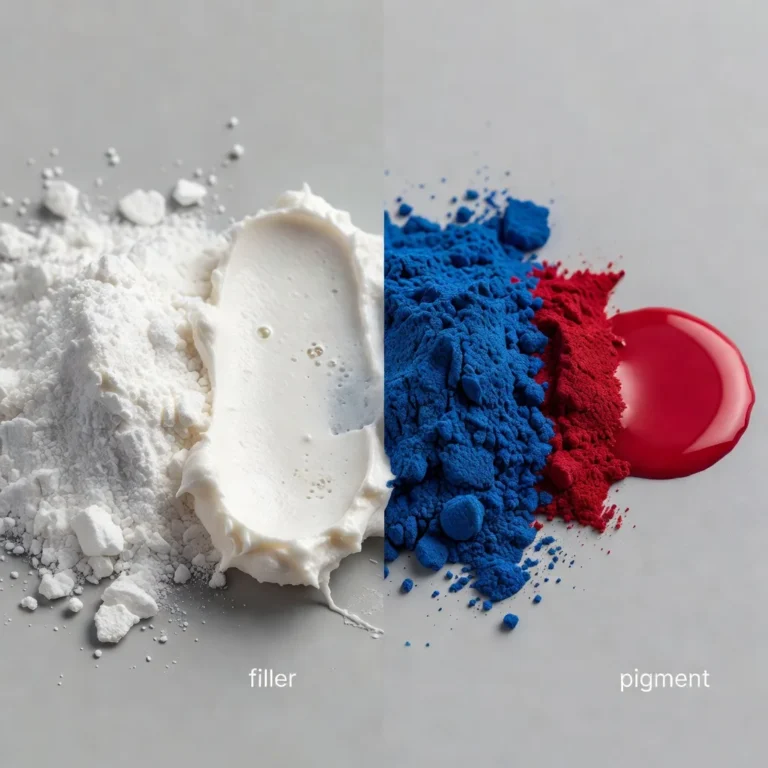
Makeup coverage depends mainly on how much light-scattering pigment the formula contains and how well it is dispersed. Titanium dioxide and, to a lesser extent, zinc oxide are white pigments that scatter light and create opacity, while iron oxides provide the colour to match skin tone. High-coverage products usually contain more of these pigments, with fine, evenly dispersed particles and less water or other ingredients to dilute them. Film formers and a thicker texture help the pigment stay in place.
Coverage is not the same as heaviness. A well-formulated high-coverage foundation can look surprisingly natural if applied thinly, while a poorly chosen medium-coverage product can look cakey if layered.
All colour additives used in cosmetics in the United States must be approved by the FDA for that use. The FDA maintains a list of colour additives permitted in cosmetics, which includes titanium dioxide and iron oxides, the pigments behind most foundations and concealers.
This guide explains the science of coverage in plain terms, how to read a label for coverage clues, and how to apply high-coverage makeup so it looks like skin rather than a mask.
Shopping these picks?
Amazon Prime members get fast, free shipping on eligible items, plus Prime Video, Amazon Music and member deals. New members can start with a free trial.
Start a free Prime trialAged 18 to 24? Prime for Young Adults comes with a longer free trial and a lower price after it.
Affiliate link: we may earn a commission at no extra cost to you.
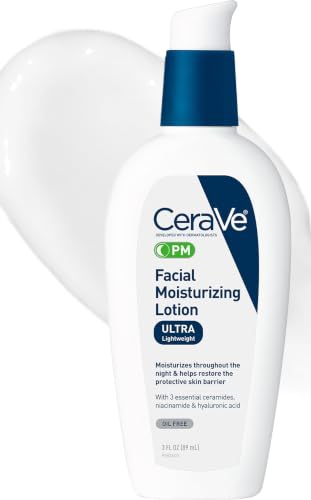
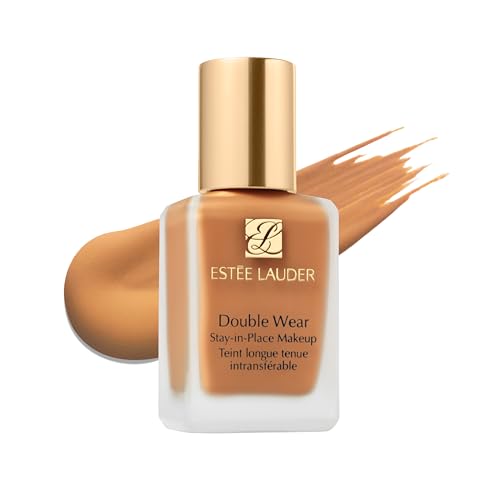
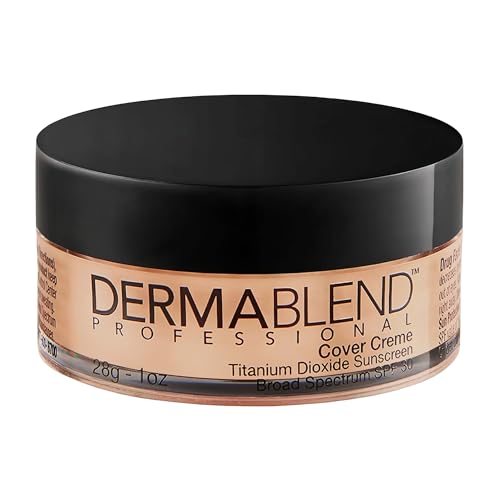
Recommended High-Coverage Foundations, Concealers and Tools


Jump to a Section
- The Pigments Behind Coverage
- What Else Affects Coverage
- Sheer, Medium and Full Coverage Compared
- How to Spot Coverage on a Label
- How to Apply High-Coverage Makeup So It Looks Natural
- Avoiding a Heavy or Cakey Look
- High Coverage and Your Skin
- Coverage, Shade Matching and Undertones
- Concealer Versus Foundation Coverage
- Dos and Don’ts
- Honest Limits
- When to See a Dermatologist
- Frequently Asked Questions
- Where This Leaves You
In Brief
- Coverage comes mostly from light-scattering pigments.
- Titanium dioxide provides most of the opacity in foundations.
- Iron oxides provide skin-tone colour.
- More pigment and less dilution usually means more coverage.
- Fine, well-dispersed particles give smoother coverage.
- High coverage does not have to look heavy if applied thinly.
- Good skin prep helps any coverage look better.
The Pigments Behind Coverage
| Pigment | What it does | Role in coverage |
|---|---|---|
| Titanium dioxide | White pigment that scatters light strongly | Main source of opacity |
| Zinc oxide | White pigment, less opaque than titanium dioxide | Adds some coverage; also used as a UV filter |
| Iron oxides (red, yellow, black) | Provide skin-tone colours | Match shade; add some opacity |
| Mica and other fillers | Add slip, softness or glow | Affect finish more than coverage |
| Silica and powders | Absorb oil, blur texture | Soften the look of pores |
Titanium dioxide does most of the work. Its particles bend and scatter light very efficiently, which is why a small amount makes a formula noticeably more opaque. Iron oxides are blended in different ratios to create the range of shades, from fair to deep.
Deeper shades often use more iron oxides and less titanium dioxide, since too much white pigment can leave a grey or ashy cast on darker skin. This is one reason shade ranges are harder to formulate well than they look.
Coverage is about hiding what is underneath; finish is about how the surface looks. A product can be high coverage with a matte, satin or dewy finish, depending on the rest of the formula.
What Else Affects Coverage
Pigment load. The simplest factor is how much pigment is in the product. Sheer tints contain relatively little; full-coverage foundations and concealers contain much more. Dilution. Water, oils and other liquids spread pigment out. Formulas with less of these, such as creams and sticks, are often more opaque than watery tints. Particle size and dispersion. Fine particles that are evenly spread give smooth, even coverage. Clumped pigment can look patchy or streaky. Film formers. Polymers that form a flexible layer on the skin help pigment stay where you put it, so coverage does not wear away as quickly. Texture. Thicker formulas hold more pigment in place when applied. That is why concealers, which usually need to cover small areas completely, are often thicker than foundations. Skin underneath. Coverage also depends on what it is covering. The same foundation looks more opaque over even, smooth skin than over strong redness or texture, and it performs better on hydrated skin than on dry patches, where pigment can catch and look uneven.Sheer, Medium and Full Coverage Compared
| Coverage | What it covers | Typical products | Best for |
|---|---|---|---|
| Sheer | Evens tone slightly; skin shows through | Tinted moisturisers, skin tints | Good skin days, minimal makeup |
| Light to medium | Evens redness and mild discoloration | Most liquid foundations | Everyday wear |
| Medium to full | Covers most redness, marks and uneven tone | Long-wear foundations, cream foundations | Events, photos, visible marks |
| Full | Covers birthmarks, tattoos, strong discoloration | Corrective foundations, concealers | Specific concerns, spot use |
There are no standard definitions for these terms, so one brand’s medium may be another’s full. Looking at the product on skin in natural light is more reliable than the label.
Our guide on what foundation is for covers how to choose the right level of coverage for your goals.
How to Spot Coverage on a Label
Ingredient lists can give clues. If titanium dioxide appears near the top of the list, or is listed as an active ingredient in a foundation with SPF, the product is likely to have good opacity.
In many countries, colour additives are listed at the end of the ingredient list, often after a phrase such as may contain, followed by codes such as CI 77891 for titanium dioxide and CI 77491, CI 77492 and CI 77499 for iron oxides.
Words such as buildable, full coverage, long-wear and corrective usually signal higher pigment loads. Sheer, skin tint and glow usually signal lighter coverage.
Swatch foundation on your jawline, not your hand, and check it in daylight. The jawline shows both coverage and shade match more accurately.
How to Apply High-Coverage Makeup So It Looks Natural
Prep your skin
Cleanse, moisturise and let your moisturiser settle for a few minutes.
Start with a small amount
Use less than you think, about half a pump of foundation for the whole face.
Apply where you need it most
Start in the centre of the face and blend outwards.
Use a damp sponge or brush
Press and bounce product into the skin rather than dragging it.
Build only where needed
Add a second thin layer or concealer on specific areas rather than the whole face.
Set lightly
Use a small amount of powder only where you get shiny.
Thin layers are the key. A single thick layer of full-coverage foundation is more likely to look heavy, crease and separate than two thin layers applied only where needed.
Tools make a difference as well. A damp sponge sheers out pigment slightly and presses it into the skin, which gives a softer finish. A dense brush gives more coverage with less product but can leave streaks if you drag it. Fingers warm the product and work well for cream formulas and concealer. Choose whichever gives you the finish you like, and clean your tools regularly.
Avoiding a Heavy or Cakey Look
High-coverage makeup looks cakey mainly when there is too much of it, when it sits on dry or flaky skin, or when too much powder is layered on top.
Well-moisturised skin gives pigment a smoother surface to sit on. Our guide on what to do when makeup looks cakey covers fixes in more detail.
If your foundation will not blend evenly, the problem may be your skincare underneath rather than the foundation. Our guide on why makeup does not blend into skin explains common causes.
If a high-coverage product stings, itches or causes a rash, remove it and stop using it. Fragrance and some pigments or preservatives can cause reactions in sensitive people.
High Coverage and Your Skin
Wearing full-coverage makeup does not harm healthy skin for most people, as long as you remove it properly at night. Long-wear formulas can be harder to remove, so a cleansing oil or balm followed by a gentle cleanser is often helpful.
If you are acne-prone, look for products labelled non-comedogenic or oil-free, and avoid layering heavy creams under full-coverage foundation.
Some corrective foundations are designed for covering birthmarks, vitiligo or scars, and are formulated to stay put for many hours. These can be very useful but need thorough removal.
Our guide to wearing the least amount of makeup is useful if you want to rely less on full coverage day to day.
Coverage, Shade Matching and Undertones
The more coverage a product has, the more its shade matters. A sheer tint lets your own skin show through, so a slightly wrong shade is forgiving. A full-coverage foundation replaces your skin tone across the face, so any mismatch in depth or undertone is easy to see, especially along the jaw and hairline.
Undertone is set by the balance of iron oxides. More yellow oxide gives a warmer, golden look; more red gives a pinker, cooler look; black oxide deepens the shade. Choosing the right undertone is often more important than matching the exact depth.
Because high-coverage products hide more of your natural variation, many people find they need two shades: one for most of the face and a slightly deeper one for the perimeter, or a lighter one for concealing under the eyes.
Oxidation can also shift the colour. Some foundations darken slightly after application as they mix with oil on the skin. Checking the shade after ten or fifteen minutes gives a truer picture than checking it immediately.
Concealer Versus Foundation Coverage
Concealers are usually more pigmented and thicker than foundations, because they are designed to hide small, specific areas completely: a spot, a dark circle or a patch of redness.
Using a full-coverage concealer only where needed, over a lighter foundation, often looks more natural than a full-coverage foundation all over. It keeps most of the face looking like skin while still covering what you want hidden.
Under the eyes, where skin is thin and moves a lot, a lightweight, creamy concealer applied in a thin layer is less likely to crease than a very thick, matte formula. For blemishes, a thicker, drier concealer tends to stay in place better.
Dos and Don’ts
Worth Doing
- Apply high-coverage makeup in thin layers
- Build coverage only where needed
- Moisturise before applying
- Swatch on the jawline in daylight
- Remove long-wear makeup thoroughly
Skip It
- Apply one thick layer all over
- Pile powder on top
- Apply over dry, flaky skin
- Choose shade based on the bottle
- Sleep in full-coverage makeup
Honest Limits
Makeup formulation is complex, and coverage depends on many interacting ingredients. This article simplifies the chemistry; two products with similar pigment levels can still look quite different on the skin.
Coverage labels are marketing terms without standard definitions. Trying products on your own skin, in daylight, is the only reliable way to judge them. Many shops offer samples, which are worth using before committing to a full-size bottle.
Makeup can hide discoloration but does not treat it. If you are covering persistent redness, dark patches or breakouts, it may be worth seeing a dermatologist about the underlying cause.
When to See a Dermatologist
- You rely on full coverage to hide persistent redness, dark patches or breakouts.
- Makeup regularly causes itching, redness or a rash.
- You have a birthmark, scar or pigment change you would like assessed.
- You notice a spot that is changing in size, shape or colour under your makeup.
This article is for general information and does not replace professional medical advice. See a dermatologist for persistent skin concerns.
Frequently Asked Questions
What makes a foundation high coverage?
A higher load of light-scattering pigments, mainly titanium dioxide, with less dilution.
Which pigment gives the most coverage?
Titanium dioxide scatters light most efficiently and provides most of the opacity.
What do iron oxides do in makeup?
They provide the skin-tone colours and add some coverage.
Is high-coverage makeup bad for skin?
Not for most people, as long as it is removed properly each night.
Why does full-coverage foundation look cakey?
Usually too much product, dry skin underneath or too much powder.
How do I make full coverage look natural?
Apply thin layers and build only where you need it.
Is concealer higher coverage than foundation?
Usually yes; concealers generally contain more pigment in a thicker base.
What does CI 77891 mean?
It is the colour index code for titanium dioxide.
Why do some foundations look ashy on dark skin?
Too much white pigment relative to iron oxides can leave a grey cast.
Can I get high coverage from a tinted moisturiser?
Not usually; tinted moisturisers are designed to be sheer.
Where This Leaves You
High coverage comes mainly from light-scattering pigments, especially titanium dioxide, combined with iron oxides for colour, fine dispersion and less dilution.
To make high-coverage makeup look natural, prep your skin, apply thin layers, build only where needed and set lightly. Remove it thoroughly at night.

Written by
Registered pharmacist and founder of Facial Adviser. Rakib's pharmacy training covers how skincare actives work and interact; a later course in cosmetology turned that into a focus on facial treatments and skincare products. He plans, researches and edits every guide on the site and checks health claims against sources such as the American Academy of Dermatology, the FDA and the NIH. He is not a dermatologist; see the Editorial Policy and Medical Disclaimer.
About · Editorial policy · How we choose products · Medical disclaimer · Contact
Keep reading: How cosmetics are made
- How to Read a Cosmetic Ingredient List: A Beginner Guide
- Which Cosmetic Preservatives Are Mild? A Plain-English Guide
- Physical vs Chemical SPF in Cosmetics: What the Difference Means
- What Is a Chelating Agent in a Cosmetic Formula?
- How to Tell if a Cosmetic Is Really Fragrance-Free
- What Is a Multi-Phase Formula? Bi-Phase Products Explained