Does BB Cream Clog Pores? Oily Skin, Ingredients and Safe Removal
BB cream is sold as a light, skin-friendly alternative to foundation, so it can be a surprise when small bumps and blackheads appear a few weeks after you start wearing it. Whether it is the culprit depends far more on the formula, your skin type and your evening routine than on the fact that it is a BB cream.
Part of our guide to makeup how-to. Start with: How to Find the Right Shade of Makeup: Undertone, Depth and Testing
BB cream can clog pores, but it does not have to. Rich formulas that contain heavy oils, butters, waxes or thick occlusive ingredients are more likely to block pores, especially on oily and acne-prone skin, and any BB cream can contribute to breakouts if it is left on overnight or removed poorly. A BB cream labelled oil-free or non-comedogenic is less likely to cause problems, although the label is not a guarantee. The safest approach is to choose a lightweight, non-comedogenic formula, apply a thin layer, and remove it fully every night with a gentle cleanser, then watch your skin for a few weeks.
In short: BB cream is not automatically pore-clogging, but the wrong formula or poor removal can be.
The American Academy of Dermatology advises people with acne to choose makeup and skin care labelled non-comedogenic or oil-free, and to remove makeup before going to bed, which are the two habits that matter most here.
This guide explains how BB cream can block pores, what happens on oily skin, which ingredients to watch for and how to take it off properly.
Shopping these picks?
Amazon Prime members get fast, free shipping on eligible items, plus Prime Video, Amazon Music and member deals. New members can start with a free trial.
Start a free Prime trialAged 18 to 24? Prime for Young Adults comes with a longer free trial and a lower price after it.
Affiliate link: we may earn a commission at no extra cost to you.
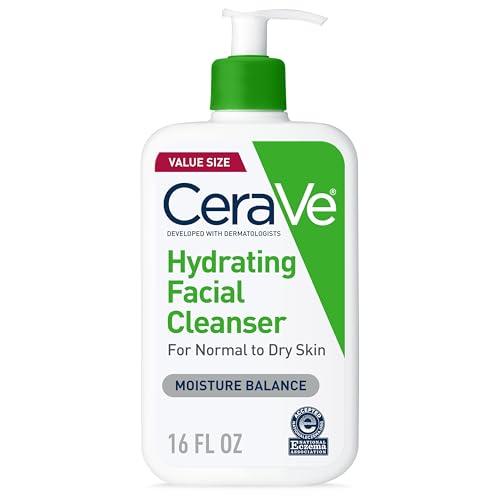
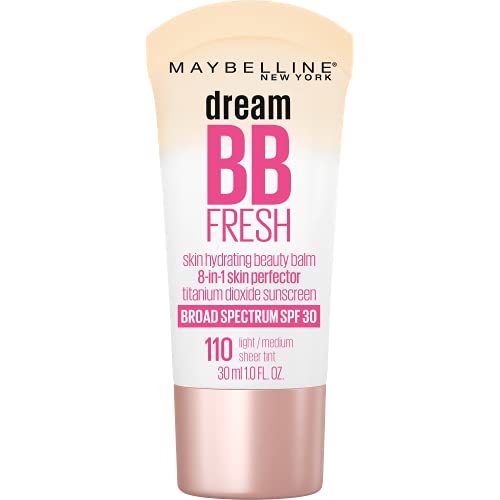
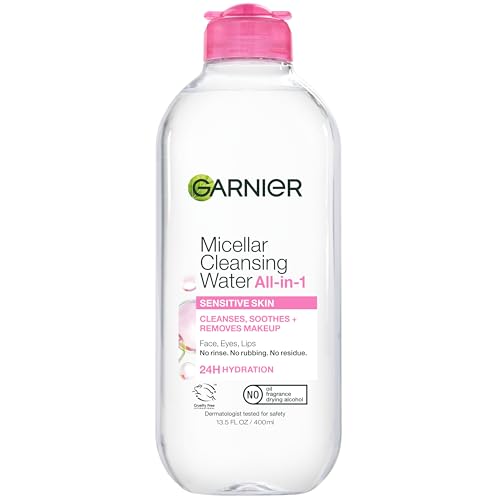
Recommended Non-Comedogenic BB Creams, Cleansers and BHA




What This Covers
- How BB Cream Can Clog Pores
- Does BB Cream Clog Pores on Oily Skin?
- Ingredients in BB Cream That Can Clog Pores
- What Non-Comedogenic and Oil-Free Labels Really Mean
- How to Choose a Non-Comedogenic BB Cream
- How to Remove BB Cream Without Clogging Pores
- Using BHA to Keep Pores Clear
- Signs Your BB Cream Is Clogging Your Pores
- Dos and Don’ts for Clear Pores With BB Cream
- Honest Limits
- When to See a Dermatologist
- FAQ
- The Takeaway
Quick Answer
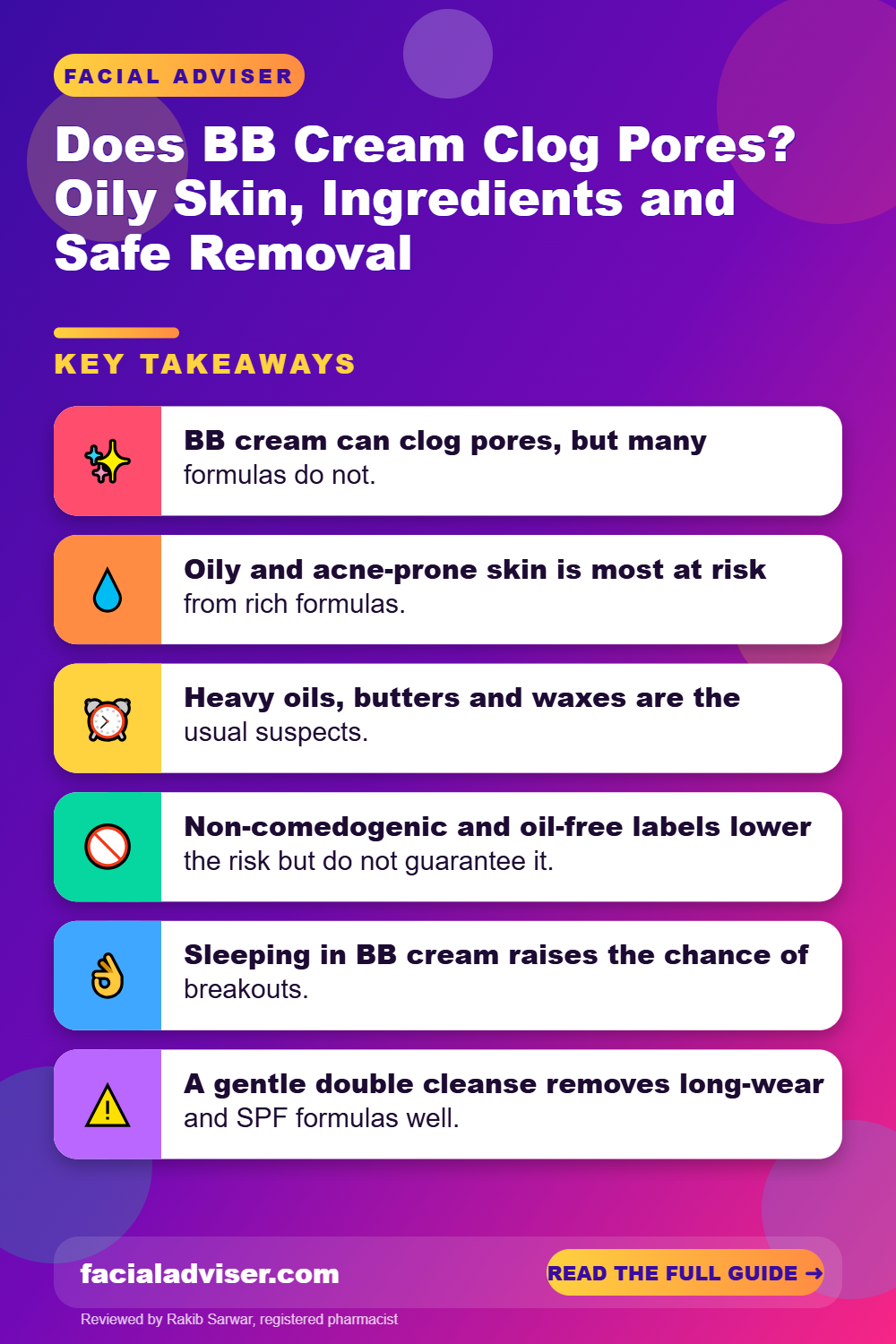
- BB cream can clog pores, but many formulas do not.
- Oily and acne-prone skin is most at risk from rich formulas.
- Heavy oils, butters and waxes are the usual suspects.
- Non-comedogenic and oil-free labels lower the risk but do not guarantee it.
- Sleeping in BB cream raises the chance of breakouts.
- A gentle double cleanse removes long-wear and SPF formulas well.
- A salicylic acid (BHA) product can help keep pores clear.
How BB Cream Can Clog Pores
A pore is the opening of a hair follicle, and each one is linked to an oil gland. A clog forms when dead skin cells and sebum build up inside the opening. Makeup does not create this process on its own, but it can add to it.
- Rich oils and butters can mix with your own sebum and make the plug thicker.
- Thick occlusive ingredients can trap oil and dead cells in the follicle.
- A heavy layer applied every day gives pores little chance to clear.
- Makeup left on overnight sits on the skin for many extra hours.
- Dirty sponges and fingers add oil and bacteria to the skin surface.
Breakouts caused by cosmetics are sometimes called acne cosmetica. They usually look like small, even bumps and closed comedones (whiteheads) on the areas where the product is worn, and they tend to appear a few weeks after starting a new product rather than overnight.
This is why two people can wear the same BB cream with very different results. Someone with dry skin may never have a problem, while someone with oily, acne-prone skin may notice clogged pores on the forehead and chin within a month.
Does BB Cream Clog Pores on Oily Skin?
Oily skin is the most likely to react, because it already produces more sebum for clogs to form around. Many classic BB creams were designed to be moisturising and dewy, which suits dry skin but can feel heavy on an oily face.
| Skin type | Risk of clogged pores | What usually works |
|---|---|---|
| Oily | Higher | Oil-free, non-comedogenic, matte or satin BB cream |
| Acne-prone | Higher | Non-comedogenic, fragrance-free, thin layer only |
| Combination | Moderate | Light formula; less on the T-zone |
| Normal | Low to moderate | Most light BB creams |
| Dry | Lower | Hydrating BB cream, still removed every night |
| Sensitive | Varies | Fragrance-free, short ingredient list |
If you have oily skin, look for gel or water-based textures, words such as oil-free or mattifying, and a formula that does not feel greasy after ten minutes. Apply only where you need coverage, blot with paper during the day instead of adding more product, and set the T-zone lightly with powder. If you are still deciding whether a BB cream is right at all, our guide on whether BB cream is better than foundation compares both for oily and acne-prone skin.
Ingredients in BB Cream That Can Clog Pores
No single ingredient list can predict how your skin will react, and comedogenicity ratings come mainly from older tests that do not always reflect finished products. Still, some ingredients are more often linked to clogged pores, especially near the top of the ingredient list where concentrations are highest.
| Ingredient or group | Why it may clog | How much to worry |
|---|---|---|
| Coconut oil | Rich, heavy oil often linked to comedones | Avoid if acne-prone |
| Cocoa butter and shea butter | Thick butters that sit on the skin | Caution on oily skin |
| Isopropyl myristate and isopropyl palmitate | Emollients often flagged as comedogenic | Caution near top of list |
| Lanolin and its derivatives | Heavy occlusive emollient | Caution if acne-prone |
| Heavy waxes such as beeswax | Thick, occlusive film | Caution in long-wear formulas |
| Algae or seaweed extracts | Some have been linked to comedones | Watch if breakouts start |
| Mineral oil and petrolatum | Occlusive, but cosmetic grades rarely clog | Low concern for most |
| Dimethicone and other silicones | Light film, not usually comedogenic | Low concern for most |
Context matters. An ingredient near the end of the list is present in small amounts, and a formula as a whole can behave differently from its parts. If you break out, compare the lists of the products you tolerate with the ones you do not, and look for shared ingredients rather than relying on online ratings alone.
What Non-Comedogenic and Oil-Free Labels Really Mean
These labels are helpful signposts, but they are not tightly regulated terms, so it helps to know what they can and cannot tell you.
- Non-comedogenic means the product is formulated not to block pores, sometimes backed by the brand’s own testing.
- Oil-free usually means no plant or mineral oils, but the product can still contain other heavy emollients.
- Acne-safe or dermatologist-tested are marketing terms without a fixed standard.
- A non-comedogenic label lowers the odds of breakouts; it does not promise that your skin will not react.
The AAD’s acne skin care tips recommend choosing products labelled non-comedogenic or oil-free. Our guide on how to tell if makeup is non-comedogenic explains how to read the label and ingredient list in more detail.
How to Choose a Non-Comedogenic BB Cream
A few quick checks at the shelf, or on the product page, rule out most of the formulas that tend to cause trouble for oily and acne-prone skin.
- Look for non-comedogenic or oil-free on the packaging.
- Scan the first five to seven ingredients for rich oils, butters and waxes.
- Choose a light, fluid or gel texture rather than a thick cream.
- Pick a fragrance-free formula if your skin is also sensitive.
- Prefer a broad-spectrum SPF so you need fewer layers overall.
- Buy the smallest size or a sample first so you can test it.
A thin layer matters as much as the formula. BB cream is designed to be sheer, and a pea-sized amount is usually enough for the whole face. Our guide on how to apply BB cream shows how to spread a small amount evenly so you are not tempted to pile on more.
How to Remove BB Cream Without Clogging Pores
Thorough removal is the single most useful habit if you are worried about clogged pores. Many BB creams contain SPF filters, silicones and pigments that are designed to stay put, so a quick splash of water is not enough.
Wash your hands
Start with clean hands so you are not adding oil or bacteria.
Start with a first cleanse
Massage a cleansing balm, cleansing oil or micellar water over dry skin for about 30 to 60 seconds to dissolve the BB cream.
Emulsify and rinse
Add a little lukewarm water so a balm or oil turns milky, then rinse well so no film is left behind.
Follow with a gentle cleanser
Use a mild, non-comedogenic cleanser to remove any leftover residue and oil.
Pat dry
Use a clean towel and pat rather than rub.
Check the hairline and jaw
These are the areas most often missed and a common site of small bumps.
Finish your routine
Apply acne treatment or BHA if you use it, then a light moisturiser.
If you are acne-prone, choose a cleansing balm or oil that says it rinses off cleanly or emulsifies with water, and always follow it with a second, water-based cleanser. This double cleanse removes long-wear and SPF formulas without harsh scrubbing.
Using BHA to Keep Pores Clear
Salicylic acid, a beta hydroxy acid (BHA), is oil-soluble, which means it can work inside the pore where clogs form. Used a few times a week, it can help loosen dead cells and reduce blackheads and whiteheads for people who wear makeup daily.
- Start with a leave-on BHA two or three evenings a week.
- Apply it after cleansing, on dry skin, before moisturiser.
- Increase slowly only if your skin stays calm.
- Do not combine it with scrubs or several other acids on the same night.
- Wear sunscreen every morning while using exfoliating acids.
The AAD guide on how to safely exfoliate at home advises choosing a method that suits your skin type and being gentle, because over-exfoliating can cause redness and more breakouts. BHA supports a good routine; it does not cancel out sleeping in makeup.
Signs Your BB Cream Is Clogging Your Pores
It can be hard to tell whether a new product is to blame, because breakouts also follow hormones, stress and changes in the weather. These signs point towards the BB cream.
- Small, skin-coloured bumps appear where you wear it, often on the forehead, cheeks or chin.
- More blackheads or whiteheads show up two to six weeks after you start using it.
- Your skin improves on days or weeks without it.
- Breakouts appear where you apply the most product, such as around the nose.
- Your skin looks shinier or feels congested by midday.
Stop using the product if you notice itching, burning, swelling or a rash. These suggest irritation or an allergy rather than clogged pores, and they need a different approach. Patch test new BB creams on your jawline for a few days before using them all over.
If you suspect your BB cream, stop using it for three to four weeks and keep the rest of your routine the same, so you can see whether it was the cause. Our guide on what to do if makeup is causing acne covers the next steps.
Dos and Don’ts for Clear Pores With BB Cream
Worth Doing
- Choose oil-free or non-comedogenic formulas
- Apply a thin layer only
- Double cleanse at night
- Wash sponges and brushes weekly
- Introduce one new product at a time
Skip It
- Sleep in BB cream
- Layer several heavy products under it
- Scrub hard to remove it
- Share applicators
- Assume a label means you cannot break out
Honest Limits
There is no way to know for certain in advance whether a BB cream will clog your pores. Labels and ingredient lists lower the risk, but every skin reacts differently, and a product that suits a friend may not suit you. Trying one product at a time for several weeks is the only reliable test.
Changing your BB cream will not cure acne either. If you have regular breakouts whether or not you wear makeup, the cause is more likely hormones, genetics or your wider routine, and it usually needs proper acne treatment rather than a different base product.
When to See a Dermatologist
- Breakouts continue after you have stopped the BB cream for a month.
- You have painful, deep or cyst-like spots.
- Acne is leaving dark marks or scars.
- You react to most makeup with rashes, itching or stinging.
This article is for general information and does not replace professional medical advice. See a board-certified dermatologist for acne, persistent breakouts and if you react to cosmetic products.
FAQ
Does BB cream clog pores?
It can, especially rich formulas or if left on overnight.
Does BB cream clog pores on oily skin?
Oily skin is more at risk, so choose an oil-free, non-comedogenic formula.
Is BB cream better for pores than foundation?
Not automatically; the ingredients matter more than the product type.
What makes a BB cream non-comedogenic?
A formula designed without pore-clogging ingredients, often tested by the brand.
Which ingredients should I avoid?
Coconut oil, heavy butters, some esters and thick waxes if you are acne-prone.
Can I wear BB cream if I have acne?
Yes, if it is non-comedogenic and removed fully every night.
What is the best way to remove BB cream?
A cleansing balm, oil or micellar water, followed by a gentle cleanser.
Does sleeping in BB cream cause breakouts?
It can, because pores stay covered for many extra hours.
Does BHA help with clogged pores from makeup?
Yes, salicylic acid can help keep pores clear when used gently.
How long before I know if BB cream is breaking me out?
Usually within two to six weeks.
The Takeaway
BB cream does not have to clog pores, but rich formulas, thick layers and poor removal can all lead to breakouts, especially on oily and acne-prone skin.
Choose a light, non-comedogenic BB cream, apply a thin layer, double cleanse every night and add a gentle BHA if blackheads build up, then give your skin a few weeks to show you how it responds.

Written by
Registered pharmacist and founder of Facial Adviser. Rakib's pharmacy training covers how skincare actives work and interact; a later course in cosmetology turned that into a focus on facial treatments and skincare products. He plans, researches and edits every guide on the site and checks health claims against sources such as the American Academy of Dermatology, the FDA and the NIH. He is not a dermatologist; see the Editorial Policy and Medical Disclaimer.
About · Editorial policy · How we choose products · Medical disclaimer · Contact
Keep reading: Foundation, BB cream and base
- How to Find the Right Shade of Makeup: Undertone, Depth and Testing
- Is Tinted Moisturizer the Same as BB Cream? Key Differences Explained
- Does BB Cream Expire? Shelf Life, Signs It Has Gone Bad and Storage
- What Does BB Cream Do to Your Face? Benefits, Limits and Who It Suits
- Is BB Cream Better Than Foundation? Coverage, Skin Types and When to Use Each
- Why Foundation Separates by Midday (and How to Stop It)
- Best Way to Use Makeup Remover: Micellar Water, Balms, Oils and Eye Removers
- How to Properly Put On Face Makeup: The Right Order, Step by Step