Should You Keep Cosmetics in the Fridge?
Should you keep cosmetics in the fridge, or is the trend mostly about a satisfying ritual rather than a real preservation upgrade?
For most products, no — modern skincare formulas are deliberately engineered to stay stable at room temperature, and refrigeration adds no measurable benefit. A genuine minority of products, including unstable vitamin C serums, preservative-light natural formulas, and gel eye creams for their cooling sensation, do get something real out of the cold.
Refrigeration can also actively hurt certain products, destabilizing oil-based formulas and introducing a real cross-contamination risk when jars are opened repeatedly in a shared kitchen fridge near food.
This guide breaks down which products genuinely benefit, which ones the cold can damage, and whether a dedicated skincare mini-fridge is actually worth buying.
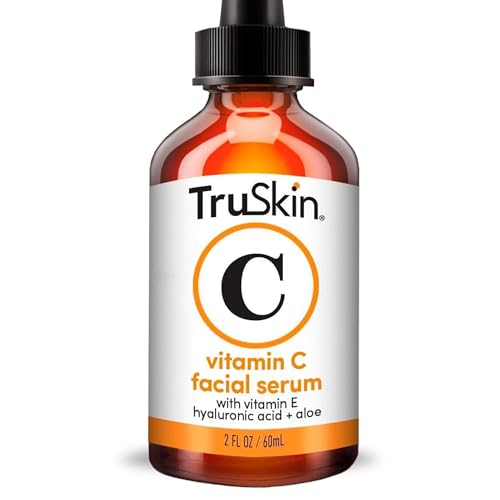
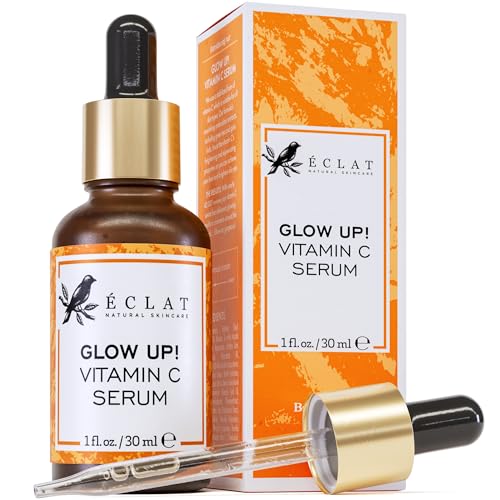
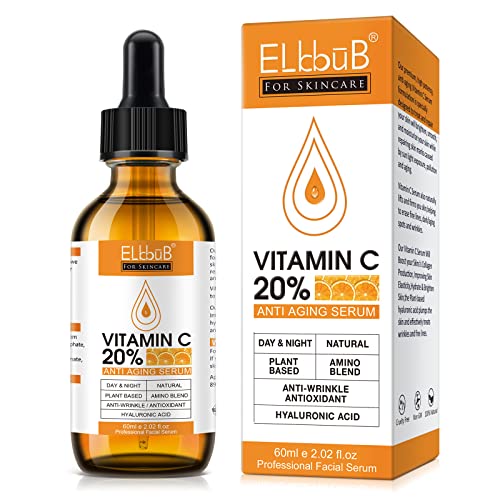
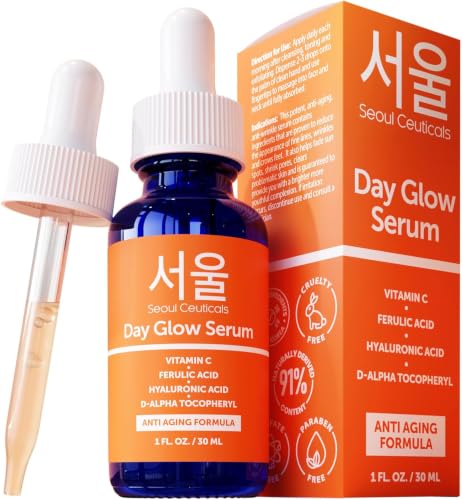
Recommended Vitamin C Serums Worth Refrigerating



The Short Version
- Most creams, cleansers, and lotions are formulated to be shelf-stable at room temperature — refrigeration doesn’t meaningfully extend their life.
- A genuine minority of products benefit: unstable vitamin C serums, preservative-light “natural” formulas, and gel eye creams (for the cooling sensation, not extra efficacy).
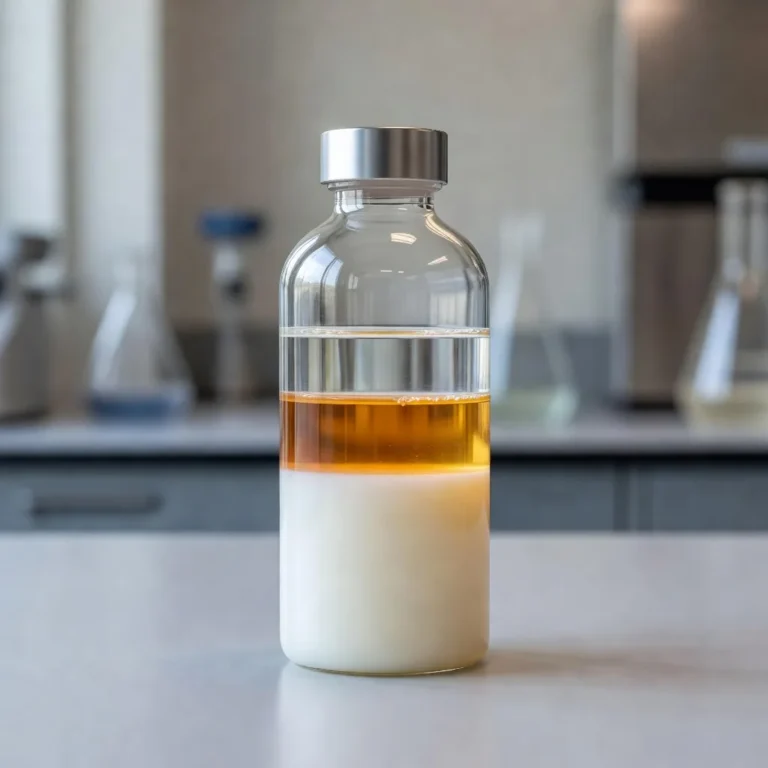
- Oil-based products and some emulsions can actually destabilize in the cold — separating, clouding, or turning grainy.
- The de-puffing feeling from a cold jar is real, but it’s a temporary blood-vessel response to cold on skin, not a property of the product itself.
- A shared kitchen fridge adds a real, underdiscussed risk: condensation and cross-contamination near food.
Jump to a Section
- Where the Skincare-Fridge Trend Came From
- Why Most Products Don’t Need It
- The One Real Exception: Unstable Vitamin C
- Preservative-Light and “Natural” Formulas
- The Cooling Feeling Is Real — Just Not What You Think
- Kitchen Fridge vs. Dedicated Skincare Mini-Fridge
- When Cold Storage Actually Hurts a Product
- Fridge or Counter? A Product-by-Product Table
- The Shared-Fridge Safety Problem Nobody Mentions
- Do You Need a Dedicated Skincare Mini-Fridge?
- Do This, Not That
- How to Decide What Goes in the Fridge
- What We Still Don’t Know
- Frequently Asked Questions
Where the Skincare-Fridge Trend Came From
Walk through the beauty aisle of a home-goods store and you’ll now find dedicated mini-fridges sized for serum bottles and sheet masks, marketed heavily through short-form video as a “self-care” display piece as much as a storage solution. The pitch is simple: cold keeps your skincare fresher and feeling more luxurious when you use it. The reality is more specific than the trend suggests — a handful of product categories get a genuine benefit from refrigeration, most get none, and a few can actually be harmed by it.
This matters because a $60 mini-fridge is a reasonable purchase if you know what to put in it, and a wasted purchase (or a real risk to your products) if you fill it with everything in your routine indiscriminately, assuming cold automatically equals “better preserved.”
Why Most Products Don’t Need It
Modern skincare emulsions — the creams, lotions, and many serums that make up most routines — are deliberately engineered to remain stable during shipping and storage at normal room temperature, typically cited as roughly 15–25°C (59–77°F). That’s a design requirement, not an accident: a product that degraded meaningfully between the factory and your bathroom shelf would be a manufacturing failure, not a quirk you’re supposed to work around with a mini-fridge.
Cosmetic chemists who discuss formulation publicly make this point directly. On the Chemists Corner community, formulator Perry Romanowski — who also co-hosts the Beauty Brains podcast — has stated plainly that it’s unlikely you’d be able to detect any real performance difference between a product that was refrigerated and one that wasn’t. The preservative systems, antioxidant stabilizers, and packaging (opaque bottles, airless pumps) built into a well-formulated product are doing the actual preservation work; ambient temperature is a minor variable by comparison.
The One Real Exception: Unstable Vitamin C
Vitamin C in its most active, most effective form — L-ascorbic acid — is also its least stable form. It oxidizes readily, and once it does, it loses potency and can even generate compounds that irritate skin. This is the strongest case for refrigeration in the whole category.
Even so, temperature is a secondary factor. The primary drivers of vitamin C degradation are airtight, opaque packaging (light and air exposure accelerate oxidation dramatically), formulation pH, and antioxidant co-ingredients like ferulic acid and vitamin E that stabilize the ascorbic acid molecule. Cold storage can marginally slow the oxidation reaction rate, but a well-packaged vitamin C serum kept at room temperature in a dark cabinet will usually outlast a poorly packaged one kept in the fridge. DIY or low-preservative vitamin C serums are the exception that most benefits from cold — some formulations are only expected to stay potent for 3–7 days regardless of storage, and refrigeration buys a little extra time on that short clock.
Fridge or Counter? A Product-by-Product Table
| Product type | Benefits from fridge? | Why |
|---|---|---|
| L-ascorbic acid (vitamin C) serum | Modest yes | Slows oxidation slightly; packaging and pH matter more |
| Preservative-free or “natural” formulas | Yes | Slows microbial/mold growth in low-preservative products |
| Gel eye creams | Sensory yes, chemical no | Cold feels de-puffing; doesn’t change the formula’s efficacy |
| Standard moisturizers/lotions | No | Formulated for room-temperature stability already |
| Face oils and oil cleansers | No — can hurt | Can solidify, cloud, or separate in the cold |
| Retinoids and other actives | No | Temperature cycling (fridge to counter) can be worse than steady room temp |
| Sunscreen | No | Formulated for room-temp stability; cold doesn’t improve UV filter performance |
Preservative-Light and “Natural” Formulas
This is the second genuinely legitimate reason to refrigerate a product, separate from the vitamin C case. Products marketed as minimally preserved, or made in small batches without a full synthetic preservative system, are more vulnerable to bacterial and mold growth over their use-life. Refrigeration slows microbial growth the same way it does in your kitchen — this isn’t a skincare-specific trick, it’s basic microbiology. If a product’s own label suggests refrigeration, or if it’s a preservative-free formula you made yourself (a DIY mask, for instance), the fridge is doing real protective work.
The Cooling Feeling Is Real — Just Not What You Think
People who keep their eye cream or a jade roller in the fridge often swear the puffiness-reducing effect is dramatic, and they’re not imagining it. Cold temporarily constricts the small blood vessels near the surface of the skin (vasoconstriction), which can visibly reduce the appearance of puffiness and redness for a short period. Dermatologists quoted in mainstream consumer coverage of the skin-fridge trend, including Dr. Azadeh Shirazi, describe this as a genuine physiological response.
The distinction that matters: this is a property of cold applied to skin, not a property of the product formula. A refrigerated jar of plain moisturizer would produce the same temporary de-puffing sensation as a refrigerated jar of an expensive eye cream. The cold is doing the work, not the ingredients working any harder because they’re chilled.
Kitchen Fridge vs. Dedicated Skincare Mini-Fridge
If you’ve decided a handful of products genuinely benefit from cold storage, the next question is where to put them. A shared kitchen fridge and a dedicated skincare mini-fridge solve different problems, and neither one fixes the underlying fact that most of a routine still doesn’t need refrigeration at all.
| Factor | Shared kitchen fridge | Dedicated mini-fridge |
|---|---|---|
| Condensation/cross-contamination risk | Higher — opening jars near food increases humidity exposure inside packaging not sealed like food containers | Lower — no food nearby, and it’s opened less frequently |
| Upfront cost | None — you already own it | Extra purchase, plus counter or shelf space |
| Solves the “does this need cold storage” question | No — most emulsion-based products still get no benefit | No — the same chemistry applies regardless of which fridge |
| Best suited for | The handful of genuinely cold-sensitive items, kept briefly and separated from food | Anyone who wants the ritual and cooling sensation as a regular part of their routine |
Do This, Not That
Do
- Refrigerate unstable vitamin C serums and preservative-free formulas.
- Use a dedicated small skincare fridge if you want the cooling sensation without opening your food fridge repeatedly.
- Keep face oils, sunscreen, and standard moisturizers at room temperature, out of direct sun.
Don’t
- Don’t assume refrigeration extends the shelf life of every product across the board.
- Don’t refrigerate oil-based cleansers or facial oils — they can separate or turn grainy.
- Don’t store open skincare jars in a shared food fridge without a sealed container or dedicated shelf.
When Cold Storage Actually Hurts a Product
Refrigeration isn’t a neutral “can’t hurt, might help” choice for every formula. Oil-based products — facial oils, oil cleansers, and some water-in-oil or oil-in-water emulsions — can destabilize in cold temperatures. The emulsifier system that keeps oil and water phases blended can fail at low temperatures, leading to visible separation, a grainy or lumpy texture, or cloudiness that doesn’t fully reverse once the product warms back up. Dermatologist Dr. Stacey Tull has put the general rule simply: unless a product specifically says it needs refrigeration, you don’t need to chill it.
There’s also a cycling problem separate from steady cold: repeatedly moving a product from a cold fridge to a warm bathroom counter and back introduces condensation and humidity swings that can affect some actives, including certain retinoid formulations, more than a stable room temperature would.
The Shared-Fridge Safety Problem Nobody Mentions
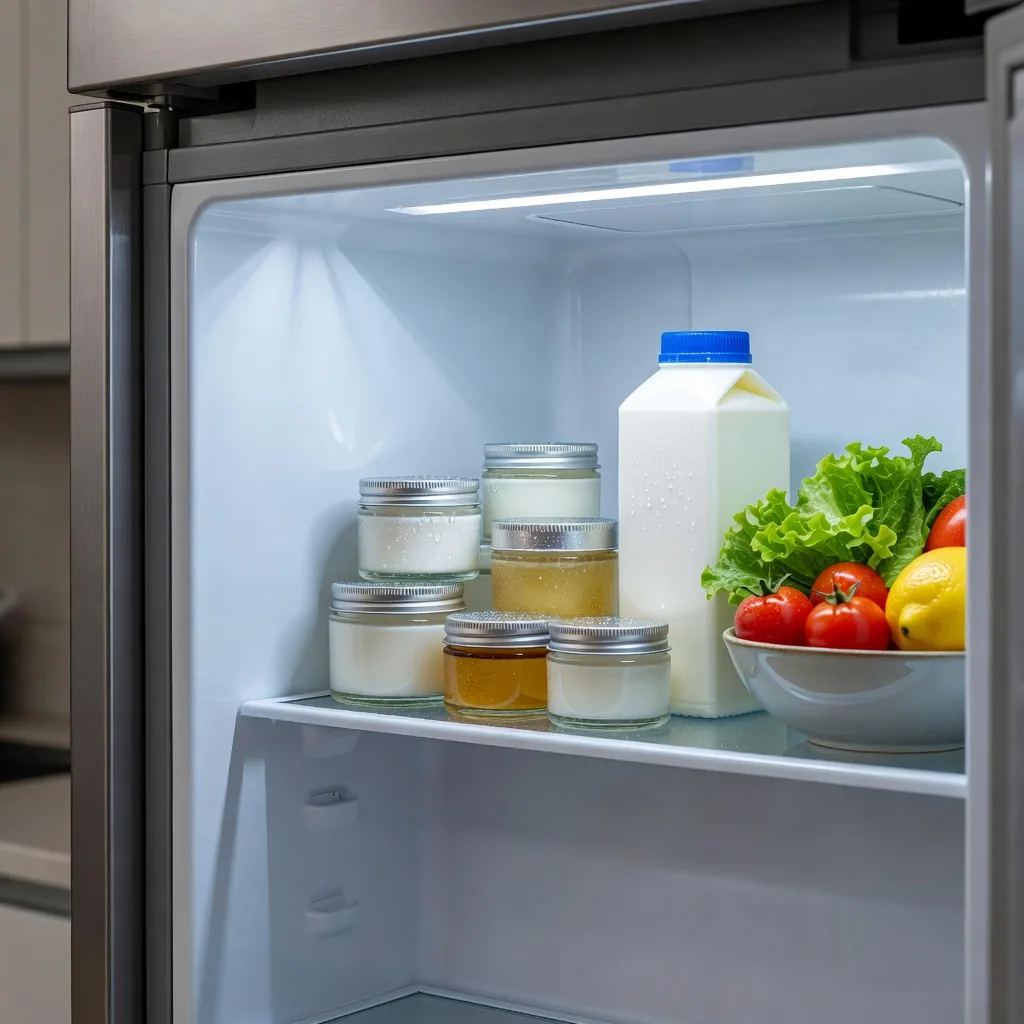
Most coverage of the skincare-fridge trend focuses on efficacy — does the cold help the product work better. A more practical safety issue gets skipped almost entirely: storing skincare in a shared kitchen fridge, next to food, carries its own risk. Opening jars and bottles repeatedly in a humid, food-adjacent environment increases the chance of condensation forming inside packaging not designed to handle it, introducing moisture and airborne microbes into a product. Skincare containers also generally aren’t sealed to the same food-safety standard as food storage containers, which raises a real (if modest) cross-contamination possibility in either direction.
A small, dedicated cosmetic mini-fridge avoids this specific problem, since it isn’t opened and closed around food. It doesn’t, however, resolve the more basic question of whether a given product benefits from cold in the first place.
Do You Need a Dedicated Skincare Mini-Fridge?
Whether a dedicated mini-fridge is worth buying depends on what’s actually in your routine and what you want from it. If you use an unstable vitamin C serum, keep preservative-free or DIY formulas, or simply enjoy the sensory ritual of a cold eye cream, a small dedicated fridge is a reasonable, low-risk purchase that also sidesteps the shared-fridge condensation issue above. If your routine is mostly standard moisturizers, cleansers, sunscreen, and oils, a mini-fridge won’t meaningfully improve how those products perform — it’s a display and ritual purchase at that point, which is a legitimate reason to buy one, just not a preservation one.
How to Decide What Goes in the Fridge
Check the label first
If a product explicitly instructs refrigeration, follow that instruction — it overrides any general rule.
Identify unstable actives
L-ascorbic acid vitamin C serums are the clearest candidate for a genuine, if modest, benefit from cold storage.
Flag preservative-free formulas
DIY masks, small-batch “clean” products with minimal preservative systems, and anything you’ve made yourself benefit from cold’s microbial slowdown.
Separate out oils and emulsions
Facial oils, oil cleansers, and some heavier creams are better left at room temperature to avoid destabilization.
Reserve the fridge sensation for what you enjoy
A cold gel eye cream or jade roller is a fine ritual choice even without a chemical benefit — just don’t extend that logic to every product in your cabinet.
What We Still Don’t Know
The available evidence here comes mostly from cosmetic-chemistry professional consensus and formulator commentary rather than controlled clinical trials measuring product potency over time at different storage temperatures. That’s a reasonable, credible source base for a practical question like this one, but it’s honest to note there isn’t a large body of peer-reviewed research specifically quantifying “how much longer does refrigeration extend the potency of product X.” The guidance above reflects what working formulators consistently say about how their own products are designed, not a clinical trial outcome.
A Note From a Dermatology Perspective
None of the products or storage choices discussed here are a substitute for a dermatologist’s guidance on your specific skin concerns. If you’re unsure whether a particular product in your routine needs special storage, check the manufacturer’s instructions first, and bring your routine to a board-certified dermatologist if you’re managing a skin condition where product stability and consistency matter more than usual.
Frequently Asked Questions
Does putting my moisturizer in the fridge make it last longer?
For most standard moisturizers, no. They’re formulated to be stable at room temperature already, and refrigeration doesn’t meaningfully extend their shelf life. The exceptions are unstable vitamin C serums and preservative-free formulas, which can genuinely benefit from the slower microbial and oxidative activity that cold provides.
Why does my eye cream feel more effective when it’s cold?
The cooling sensation temporarily constricts blood vessels near the skin’s surface, which can reduce the visible appearance of puffiness and redness. That’s a real physiological response to cold on skin, not a sign the ingredients themselves are working harder because they’re chilled.
Can refrigerating skincare products ruin them?
Yes, for some formulas. Oil-based products and certain emulsions can destabilize in cold temperatures, separating, clouding, or turning grainy. If a face oil or cleansing balm looks off after time in the fridge, that’s a sign the formula has been affected.
Is it safe to keep skincare in my regular kitchen fridge?
It can be, but a shared food fridge introduces a real risk of condensation forming inside product packaging and potential cross-contamination, since skincare containers aren’t sealed to food-safety standards. Keeping products in a sealed bag or bin reduces this risk.
Should I refrigerate my vitamin C serum?
It can help modestly, since L-ascorbic acid is prone to oxidation and cold slightly slows that reaction. However, airtight opaque packaging, correct pH, and antioxidant co-ingredients like ferulic acid and vitamin E matter more for a vitamin C serum’s stability than temperature does.
Do dedicated skincare mini-fridges actually work?
They work as intended for the products that genuinely benefit from cold storage — unstable vitamin C, preservative-free formulas, and anything you want for the cooling sensation. They don’t add a preservation benefit to products already formulated for room-temperature stability.
Does cold storage affect sunscreen performance?
Sunscreen is formulated to remain stable at room temperature, and refrigeration doesn’t improve how its UV filters perform. There’s no evidence that a chilled sunscreen offers better protection than one stored normally.
Why do some face oils separate after being in the fridge?
Cold temperatures can disrupt the emulsifier systems that keep oil and water phases blended in some formulas, or cause a pure oil to solidify or cloud. This is a sign the product wasn’t designed for cold storage, not a quality defect in the product itself.
Is the skincare-fridge trend just marketing?
Partly. The dedicated mini-fridge itself is largely a display and ritual product, but the underlying idea isn’t pure marketing — a genuine subset of products (unstable vitamin C, preservative-free formulas) does benefit from cold storage. The trend oversells how many products fall into that category.
How can I tell if a product needs refrigeration?
Check the product label and packaging insert first — manufacturers will note it if refrigeration is required or recommended. Beyond that, unstable actives like L-ascorbic acid vitamin C and preservative-free or DIY formulas are the most likely candidates to benefit.