Pre-Cleanse Oils vs Micellar Water: When to Use Each
If you wear sunscreen or makeup, a regular face wash does not always remove everything. That is where pre-cleansers come in. The two most popular are cleansing oils, including balms, and micellar water. Both lift makeup and sunscreen before or instead of your usual cleanser, but they work differently and suit different situations.
Part of our guide to makeup how-to. Start with: Best Way to Use Makeup Remover: Micellar Water, Balms, Oils and Eye Removers
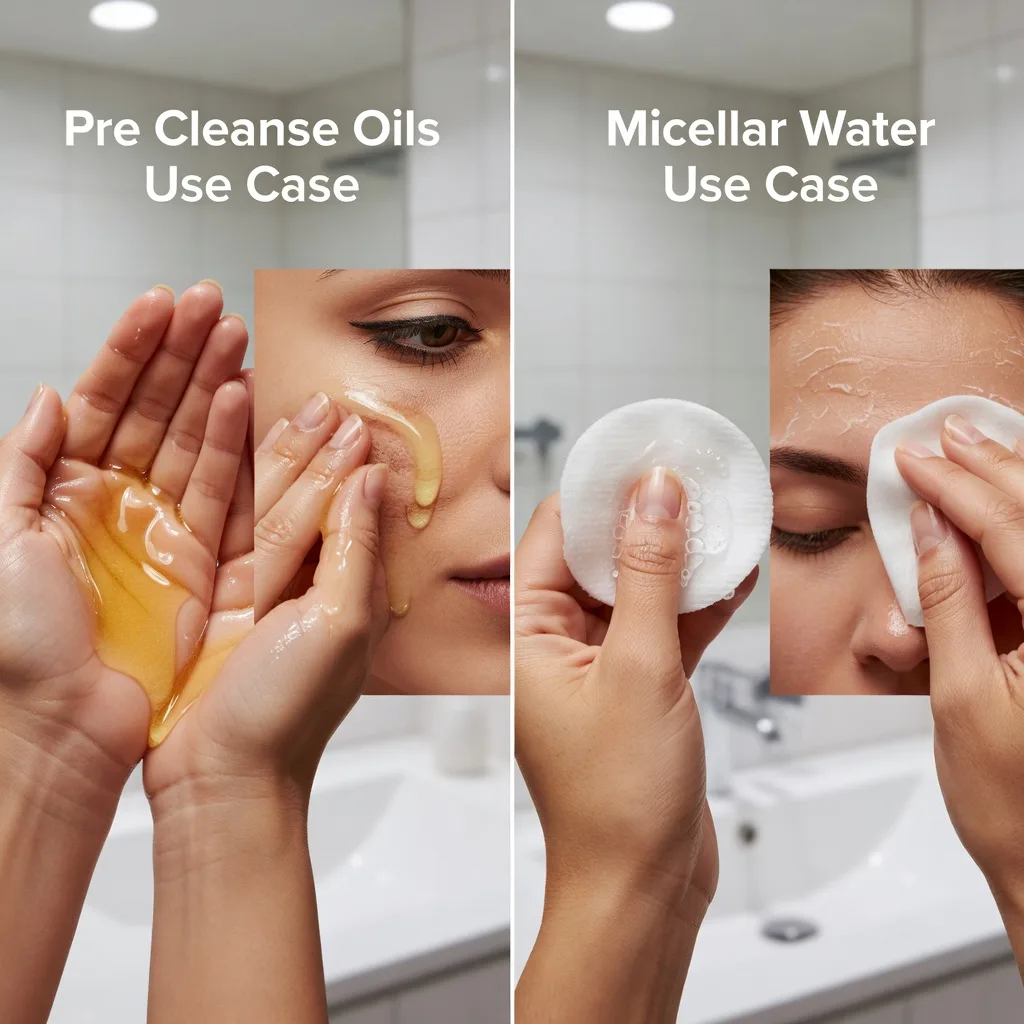
A cleansing oil or balm dissolves oily and long-wear products such as water-resistant sunscreen, foundation and waterproof mascara, then emulsifies with water and rinses away. Micellar water uses tiny clusters of mild cleansing molecules, called micelles, to lift light makeup, sunscreen and dirt onto a cotton pad, with no rinsing required for many formulas. Choose an oil for heavy or waterproof makeup and a thorough first cleanse; choose micellar water for light makeup, quick evenings, travel or very sensitive skin.
Neither is essential for everyone. If you wear little or no makeup and a light sunscreen, a single wash with a gentle cleanser is often enough. The American Academy of Dermatology recommends washing with a gentle, non-abrasive cleanser and lukewarm water, using your fingertips rather than a washcloth or sponge.
Pre-cleansers are most useful when your usual cleanser leaves a residue of makeup or sunscreen behind, or when scrubbing to remove it leaves your skin irritated.
This guide compares cleansing oils and micellar water side by side, explains when each works best, and shows how to use them without leaving residue or irritating your skin.
Shopping these picks?
Amazon Prime members get fast, free shipping on eligible items, plus Prime Video, Amazon Music and member deals. New members can start with a free trial.
Start a free Prime trialAged 18 to 24? Prime for Young Adults comes with a longer free trial and a lower price after it.
Affiliate link: we may earn a commission at no extra cost to you.
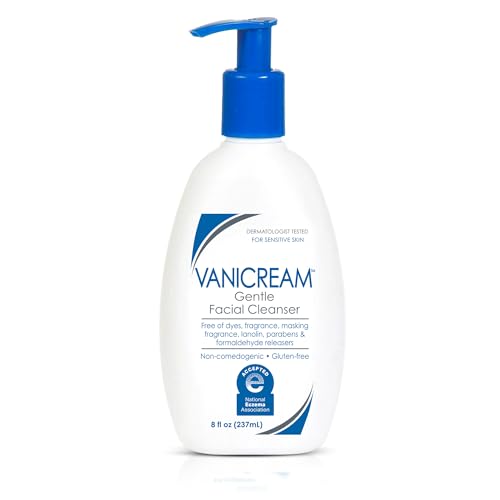
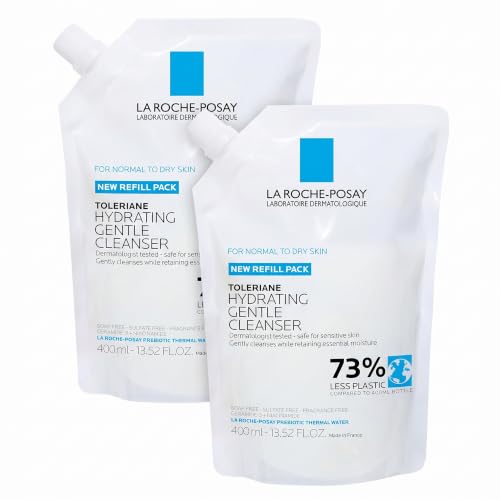
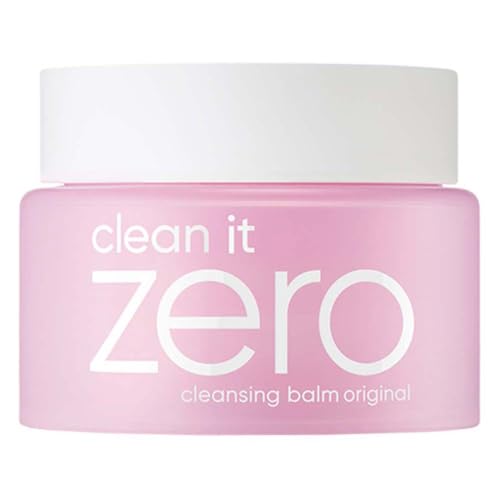
Recommended Pre-Cleansers and Gentle Cleansers



In Brief
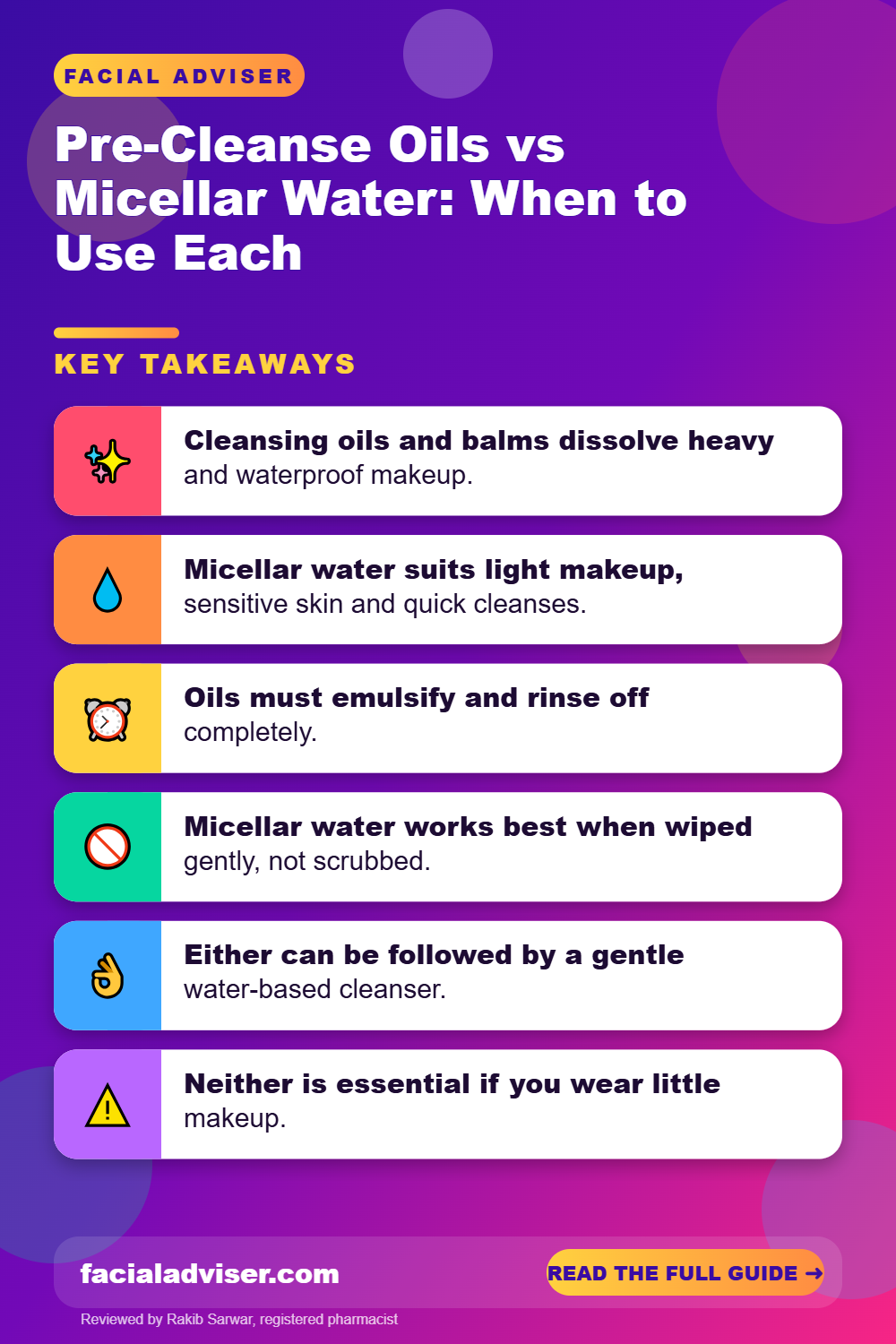
- Cleansing oils and balms dissolve heavy and waterproof makeup.
- Micellar water suits light makeup, sensitive skin and quick cleanses.
- Oils must emulsify and rinse off completely.
- Micellar water works best when wiped gently, not scrubbed.
- Either can be followed by a gentle water-based cleanser.
- Neither is essential if you wear little makeup.
- Choose fragrance-free formulas if your skin is sensitive.
Contents
- Cleansing Oil vs Micellar Water at a Glance
- How Cleansing Oils and Balms Work
- How Micellar Water Works
- Which Should You Use?
- How to Use a Cleansing Oil or Micellar Water
- Removing Sunscreen Properly
- Choosing by Skin Type
- Dos and Don’ts
- Common Mistakes
- Honest Limits
- When to See a Dermatologist
- Questions People Ask
- The Bottom Line
Cleansing Oil vs Micellar Water at a Glance
| Feature | Cleansing oil or balm | Micellar water |
|---|---|---|
| How it works | Dissolves oils, then emulsifies with water | Micelles attract and lift dirt and makeup |
| Best for | Heavy, long-wear or waterproof makeup, water-resistant sunscreen | Light makeup, everyday sunscreen, quick cleanses |
| Rinse needed | Yes | Often optional |
| Application | Massaged onto dry skin with dry hands | Applied with a cotton pad |
| Friction | Low, if massaged gently | Some, from wiping |
| Skin types | Dry, normal, many oily types | Sensitive, dry, normal; all types for light use |
| Travel-friendly | Less so | Very |
Both are designed to make the rest of your cleansing gentler, so you do not have to scrub to remove stubborn products.
Cleansing oils are different from face oils. They contain emulsifiers that turn the oil milky when mixed with water, so it rinses away instead of staying on the skin.
How Cleansing Oils and Balms Work
Makeup, sunscreen and sebum are largely oily, and oil dissolves oil. When you massage a cleansing oil into dry skin, it loosens long-wear foundation, mascara and water-resistant sunscreen without the need to rub hard.
Adding a little water turns the oil milky. This is emulsification, and it is what allows the oil and everything it has dissolved to rinse off. Balms work the same way but start solid and melt on contact with the skin, which some people find less messy.
Many people worry that oils will clog their pores. A well-formulated cleansing oil is designed to rinse away, so as long as you emulsify and rinse thoroughly, it is unlikely to leave a heavy layer behind. If you are acne-prone, look for products labelled non-comedogenic and follow with a second cleanse.
Our guide on when double cleansing is necessary explains who benefits most from an oil first cleanse.
How Micellar Water Works
Micellar water looks like plain water but contains mild surfactants arranged into micelles. One end of each molecule is attracted to oil and the other to water, so the micelles grab makeup, sunscreen and dirt and hold them on the cotton pad.
Because it is so mild, micellar water is popular with people who have sensitive or dry skin, and it is convenient when you are travelling, tired or have no access to a sink. Some formulas are labelled no-rinse, though many dermatologists suggest rinsing or following with a gentle cleanser if you wear makeup, to remove any leftover surfactant.
The main drawback is friction. Heavy or waterproof makeup can take several pads and a lot of wiping to remove, which can irritate the skin around the eyes. For those products, an oil or a dedicated bi-phase eye makeup remover is usually gentler.
Micellar water is also different from makeup wipes. Wipes combine cleanser with a textured cloth and are easy to overuse; our article on whether makeup wipes are bad for your face covers why.
Which Should You Use?
| Your situation | Better choice | Why |
|---|---|---|
| Full makeup or waterproof mascara | Cleansing oil or balm | Dissolves long-wear products without scrubbing |
| Water-resistant or mineral sunscreen | Cleansing oil or balm | Removes film-forming formulas more easily |
| Light makeup or tinted moisturiser | Micellar water | Quick and gentle |
| Very sensitive or reactive skin | Micellar water, fragrance-free | Minimal ingredients, no rinsing needed |
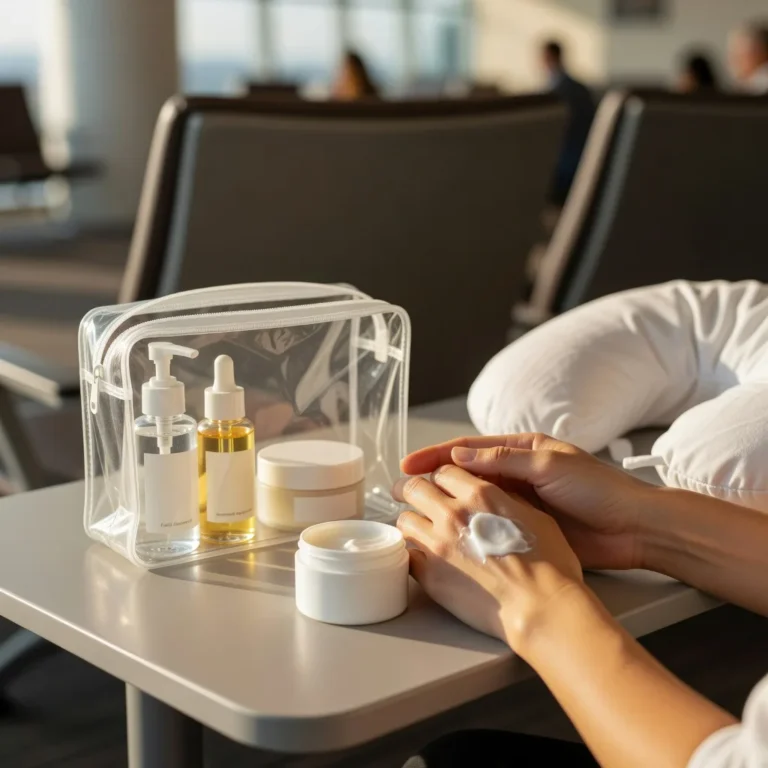
| Travel or no sink | Micellar water | Works with just a cotton pad |
| Acne-prone skin with heavy makeup | Non-comedogenic oil, then a gentle cleanser | Removes makeup and residue thoroughly |
| No makeup, light sunscreen | Neither may be needed | A gentle cleanser alone is often enough |
Many people use both, depending on the day. An oil on evenings after full makeup and micellar water on lighter days is a practical combination.
If you are not sure whether your cleanser is removing everything, swipe a damp cotton pad over your face after cleansing. If it picks up makeup or sunscreen, a pre-cleanse step may help.
How to Use a Cleansing Oil or Micellar Water
Start with dry hands and face for oils
Water on your skin stops the oil from dissolving makeup properly.
Massage gently
Work the oil or balm over your face for about a minute, including around the eyes if the product allows it.
Emulsify
Wet your fingertips and keep massaging until the oil turns milky.
Rinse thoroughly
Rinse with lukewarm water until no slippery film remains.
For micellar water, soak a pad
Hold a well-soaked pad on each eye for a few seconds, then wipe gently outward.
Follow with a gentle cleanser if needed
A water-based cleanser removes any remaining residue, especially after heavy makeup.
Pat dry and moisturise
Pat your skin with a clean towel and apply moisturiser.
The AAD’s face washing tips recommend lukewarm water, gentle cleansers and patting the skin dry, which apply whichever pre-cleanser you use.
Removing Sunscreen Properly
Sunscreen is the product many people forget to remove properly. Water-resistant formulas and mineral sunscreens with zinc oxide are designed to stay put, which is exactly what you want during the day, but it means a quick splash with a mild cleanser may not lift all of it.
Leftover sunscreen is not usually harmful, but it can leave skin feeling coated, make evening treatments sit unevenly, and contribute to clogged pores in some people. A cleansing oil or balm is often the easiest way to remove a water-resistant formula, while micellar water works well for lighter, everyday sunscreens.
You do not need to cleanse aggressively to get sunscreen off. Letting the oil or micellar water do the work for a minute, rather than scrubbing, is gentler and more effective. If your face still feels slightly waxy after cleansing, a gentle second cleanse usually solves it.
Removing sunscreen well each night also makes it easier to keep wearing it every morning, which matters far more for your skin than which pre-cleanser you choose.
Choosing by Skin Type
Dry skin: cleansing oils and balms tend to feel comfortable and leave skin soft. Follow with a hydrating cream cleanser rather than a foaming one if you double cleanse. Oily or acne-prone skin: a lightweight, non-comedogenic cleansing oil can remove sunscreen and makeup well, but rinse thoroughly and follow with a gentle cleanser. Micellar water is a good option on lighter days. Sensitive skin: choose fragrance-free products with short ingredient lists. Micellar water designed for sensitive skin is often the gentlest option, provided you avoid heavy wiping. Combination skin: either can work. Many people find an oil helps with sunscreen and makeup while a gentle second cleanse stops the T-zone feeling heavy.Our comparison of hydrating versus foaming cleansers can help you pick the right second step.
Dos and Don’ts
Good Habits
- Apply cleansing oil to dry skin with dry hands
- Emulsify the oil with water before rinsing
- Hold micellar-soaked pads on the eyes before wiping
- Choose fragrance-free formulas for sensitive skin
- Follow with a gentle cleanser after heavy makeup
Common Mistakes
- Rub hard with cotton pads
- Leave cleansing oil on the skin without rinsing
- Use a face oil as a cleanser
- Use several pre-cleansers every night
- Sleep in makeup because you are tired
Common Mistakes
Not emulsifying. Rinsing an oil straight off with water without first turning it milky can leave a greasy film, which may contribute to clogged pores or a heavy feel. Wiping too hard. Micellar water relies on the micelles, not force. If you are scrubbing, the product is not right for the makeup you are removing. Using a pre-cleanser when you do not need one. If you wear only a light sunscreen, an extra step adds cost and friction without much benefit. Ignoring the eye area. Waterproof mascara often needs an oil or a dedicated eye makeup remover. Tugging at lashes with a cotton pad can irritate the eyes.Stop using a cleansing product that causes stinging, redness, swelling around the eyes or a rash. Rinse your skin with water and see a doctor if the reaction does not settle.
Honest Limits
Pre-cleansers remove makeup and sunscreen; they do not treat acne, pigmentation or ageing. Claims about detoxifying or deep pore cleaning are best taken as marketing.
There is also no single right answer. Some people find oils make their skin break out even with thorough rinsing, and some find micellar water leaves their skin tight. Trying one product at a time for a couple of weeks is the most reliable way to find what suits you.
Price is not a reliable guide either. Simple, inexpensive micellar waters and cleansing oils often perform as well as luxury versions, and a gentle cleanser you use consistently will do more for your skin than an elaborate multi-step routine you abandon after a few weeks. Pick the approach that fits your makeup, your skin and your evenings, and keep it simple.
When to See a Dermatologist
- You break out or develop small bumps after starting a cleansing product.
- Your eyelids become red, itchy or swollen.
- Your skin feels tight, stings or peels after cleansing.
- You are unsure which cleanser suits acne-prone or sensitive skin.
This article is for general information and does not replace professional medical advice. See a dermatologist for persistent skin concerns.
Questions People Ask
What is the difference between cleansing oil and micellar water?
Cleansing oil dissolves heavy makeup and rinses off; micellar water lifts lighter makeup onto a cotton pad.
Which is better for waterproof makeup?
A cleansing oil or balm usually removes waterproof makeup more easily.
Do I need to rinse off micellar water?
Many are labelled no-rinse, but rinsing or a gentle second cleanse can remove any residue.
Will cleansing oil clog my pores?
A well-formulated oil that is emulsified and rinsed properly is unlikely to leave residue.
Can I use micellar water as my only cleanser?
On light-makeup days, many people do. After heavy makeup, a second cleanse helps.
Is micellar water good for sensitive skin?
Fragrance-free micellar water is often well tolerated, as long as you avoid heavy rubbing.
Should I use cleansing oil on dry or wet skin?
Dry skin and dry hands, then add water to emulsify.
Can I use both?
Yes. Many people use oil after heavy makeup and micellar water on lighter days.
Do I need a pre-cleanser if I do not wear makeup?
Often not, although it can help remove water-resistant sunscreen.
Can I use a face oil instead of a cleansing oil?
Not ideally. Face oils lack emulsifiers, so they do not rinse off cleanly.
The Bottom Line
Cleansing oils and balms are best for heavy or waterproof makeup and water-resistant sunscreen, while micellar water suits light makeup, sensitive skin and quick cleanses.
Use oils on dry skin, emulsify and rinse well; use micellar water with soaked pads and gentle strokes. Follow with a gentle cleanser when needed, and skip the extra step on days you do not need it.

Written by
Registered pharmacist and founder of Facial Adviser. Rakib's pharmacy training covers how skincare actives work and interact; a later course in cosmetology turned that into a focus on facial treatments and skincare products. He plans, researches and edits every guide on the site and checks health claims against sources such as the American Academy of Dermatology, the FDA and the NIH. He is not a dermatologist; see the Editorial Policy and Medical Disclaimer.
About · Editorial policy · How we choose products · Medical disclaimer · Contact
Keep reading: Makeup removal and hygiene
- Best Way to Use Makeup Remover: Micellar Water, Balms, Oils and Eye Removers
- How to Remove Waterproof Makeup Gently Without Tugging Your Skin
- How to Get Makeup Off Without Makeup Remover
- Can Makeup Expire? The Real Shelf-Life Rules
- Will Makeup Come Out of a White Shirt?
- Why Can't I Sleep With Makeup On?
- How to Choose Lipstick Shade: Undertone, Skin Tone and Testing Tips
- How to Find the Right Shade of Makeup: Undertone, Depth and Testing