10 Best Face Masks for Pregnancy (2026): Gentle Hydration and Clay
Pregnancy can change your skin in ways that are hard to predict. Some people glow, while others notice dryness, extra oil, breakouts or darker patches on the cheeks. This list covers 10 options, from hydrating sheet and jelly masks to clay masks for oily areas, chosen to avoid retinoids and strong peels, with notes on who each suits.
Part of our guide to skincare products. Start with: 10 Best Face Masks for Every Skin Type (2026): Clay, Gel and Sheet
The best facial mask for pregnancy is usually a simple one: a hydrating sheet or cream mask for dryness, a clay mask for oily or congested areas, or an oat-based mask for sensitive, itchy or irritated skin. These types rely on ingredients such as glycerin, hyaluronic acid, ceramides, kaolin clay and colloidal oatmeal, which are commonly considered gentle. Masks many doctors ask pregnant patients to avoid or check first are those containing retinoids, such as retinol or retinyl palmitate, and high-strength salicylic acid peels. Choose fragrance-free formulas, patch test first and run any product you are unsure about past your OB/GYN or midwife.
In short: pick a plain hydrating, clay or oat mask, skip retinoids and strong peels, and ask your OB/GYN when in doubt.
The US National Library of Medicine’s MedlinePlus encyclopedia notes that hormonal changes in pregnancy can cause darker patches on the face, often called the mask of pregnancy, and advises sun protection to stop them darkening.
Below you will find the ten picks, how we chose them, which mask types suit common pregnancy skin changes, which ingredients to check with your doctor, how to use a mask safely and what a mask cannot do.
Expecting a baby?
Create a free Amazon Baby Registry to keep everything you need in one list, with perks for eligible registrants such as a welcome box and completion discount.
Create a Baby RegistryAffiliate link: we may earn a commission at no extra cost to you.
As an Amazon Associate we earn from qualifying purchases. This does not change which products we include.


On This Page
- The 10 Best Face Masks for Pregnancy Right Now
- How We Chose These Products
- How Pregnancy Changes Your Skin
- Face Mask Types Usually Considered Gentle in Pregnancy
- Ingredients Commonly Avoided or Asked About
- Matching the Mask to Your Skin Concern
- Can a Face Mask Help the Mask of Pregnancy?
- How to Read a Face Mask Label
- How to Choose and Use a Face Mask While Pregnant
- How Often to Use a Face Mask
- Dos and Don’ts
- Honest Limits
- When to See a Dermatologist
- Common Questions
- The Bottom Line
At a Glance
- BIODANCE Bio-Collagen Real Deep Mask is our top pick for simple, long-contact hydration.
- Borghese Fango Active Mud is the best clay pick for oily or congested areas.
- Gleamin Vitamin C Clay Mask is the best brightening pick, with no retinoids highlighted on the listing.
- Hydrating, clay and oat masks are the types most often considered gentle in pregnancy.
- Check full labels for retinoids and strong salicylic or glycolic acid peels.
- Patch test every new mask; no mask removes melasma, but daily sunscreen helps.
- Your OB/GYN or midwife has the final say on any ingredient.
The 10 Best Face Masks for Pregnancy Right Now
These ten masks were shortlisted from widely reviewed Amazon listings, favouring simple hydrating, soothing and clay formulas whose highlighted ingredients do not include retinoids or strong peeling acids. None is a medical product: check every full ingredient list and ask your OB/GYN or midwife if you are unsure.
| # | Product | Best For | Standout Feature | |
|---|---|---|---|---|
| 1 | BIODANCE Bio-Collagen Real Deep Mask | Dry, tight pregnancy skin | Hydrogel mask worn for hours or overnight | View |
| 2 | Borghese Fango Active Mud Face Mask | Oily or congested areas | Mud mask that aims not to over-dry | View |
| 3 | Gleamin Vitamin C Clay Mask | Dull skin with oily areas | Vitamin C clay with turmeric, 10 minutes | View |
| 4 | +WIS+ Hyaluronic Acid Face Mask (24 pack) | Frequent hydrating masking | 24 thin sheets with triple hyaluronic acid | View |
| 5 | belif Vitamin E Jelly Overnight Mask | Dry skin at night | No-rinse jelly sleeping mask | View |
| 6 | #OOTD Hydrating Sheet Masks (30 pack) | Trying different mask types | 30 sheets across several formulas | View |
| 7 | Torriden DIVE IN Hyaluronic Acid Mask | Sensitive, dehydrated skin | Five hyaluronic acids, gentle formula | View |
| 8 | Ebanel Collagen Face Mask (20 pack) | Budget-friendly regular hydration | Collagen, hyaluronic acid and peptide sheets | View |
| 9 | FACETORY Sun Bae Soothing Aloe Mask | Hot, irritated or sun-exposed skin | Aloe and shea sheet masks | View |
| 10 | VT COSMETICS CICA Collagen Daily Mask | Quick daily calming care | Cica and low molecular collagen, 30 sheets | View |
BIODANCE Bio-Collagen Real Deep Mask

Best for: Dry, tight pregnancy skin
The BIODANCE hydrogel mask earns the top spot because it does one simple thing well: it keeps a hydrating essence in contact with the skin for a long time. The listing highlights hyaluronic acid and low molecular collagen, both humectant or film-forming ingredients commonly considered gentle, and it does not feature retinoids or peeling acids.
The gel turns transparent after a few hours or overnight, which suits dry, tight skin that feels uncomfortable by evening. Wearing a mask overnight is not for everyone, so start with a shorter session and see how your skin responds. Collagen in a mask will not rebuild collagen in the skin; treat it as a hydrating treatment.
- Hydrogel mask with hyaluronic acid
- Low molecular collagen
- 16-sheet set
- Turns transparent after about three hours or overnight
Pros
- Long contact time for deep hydration
- Simple, hydration-focused formula
- Stays put better than thin sheets
Cons
- Overnight wear may feel heavy on oily skin
- Collagen claims overstate what a mask can do
Skip it if: Skip it if your skin is oily or breakout-prone; the Borghese or Gleamin clay masks suit you better. Check the full ingredient list with your OB/GYN or midwife before use.
Check Price on AmazonBorghese Fango Active Mud Face Mask

Best for: Oily or congested areas
Pregnancy hormones can make some people oilier, and a clay or mud mask is one of the simplest ways to absorb excess oil. Borghese’s Fango mud is designed to deep-clean pores and help with the look of congestion, and the listing says it balances without over-drying, which matters because many people are also drier in pregnancy.
It can be used on the face and body, so it is a larger jar than most. Its listing does not highlight retinoids, but it does not show a full ingredient list either, so check the box. Use it on oily areas once a week rather than over the whole face, and follow with a moisturiser. Compared with the Gleamin clay at #3, it is more of a purifying mask than a brightening one.
- Deep-cleansing mud mask
- Aimed at blackheads and congestion
- Helps refine the look of texture
- For face and body
Pros
- Good for oily T-zones and congestion
- Designed not to over-dry
- Can be spot-applied to oily areas
Cons
- Full ingredient list not shown on the listing
- Clay can still feel drying on dry patches
Skip it if: Skip it if your skin is dry or itchy all over; the BIODANCE or belif masks are kinder. Check the full ingredient list with your OB/GYN or midwife before use.
Check Price on AmazonGleamin Vitamin C Clay Mask
Best for: Dull skin with oily areas
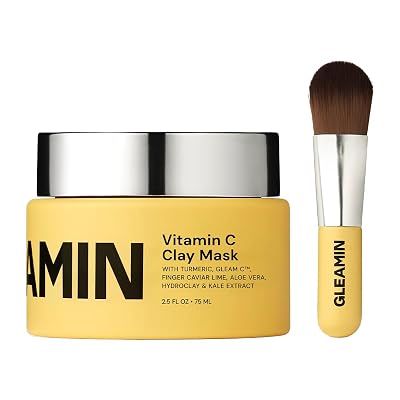
Gleamin’s clay mask combines clay with vitamin C-rich plant extracts such as Kakadu plum and desert lime, plus turmeric, and is designed to brighten and refine pores in about ten minutes. Vitamin C is generally regarded as one of the gentler brightening ingredients, and the listing does not highlight retinoids or strong peeling acids.
It suits dull skin with an oily T-zone, but clay plus active botanicals may be too much for skin that is already dry or reactive in pregnancy, so patch test first. Turmeric can briefly tint pale skin and fabrics. It will not fade melasma on its own; daily sunscreen matters far more for pregnancy pigmentation.
- 10-minute vitamin C clay mask
- Kakadu plum, desert lime and turmeric
- Aimed at oily skin and pores
- Jar provides 20+ treatments
Pros
- Short ten-minute routine
- Combines oil control with brightening
- Many uses per jar
Cons
- Active botanicals may irritate reactive skin
- Will not fade melasma on its own
Skip it if: Skip it if your skin is dry, itchy or sensitive right now; the FACETORY aloe mask is gentler. Check the full ingredient list with your OB/GYN or midwife before use.
Check Price on Amazon+WIS+ Hyaluronic Acid Face Mask (24 pack)

Best for: Frequent hydrating masking
The +WIS+ pack gives you 24 hydrating sheet masks, which suits people who like to mask several times a week. Each sheet uses three types of hyaluronic acid plus gentian extract, and the brand describes the formula as gentle and non-irritating, with an ultra-thin, elastic sheet that sits close to the face.
Sheet masks like this are among the simplest options in pregnancy because they are mainly hydrating and rinse-free. The listing does not feature retinoids or acids, but always read the full label. It is lighter and quicker than the #1 hydrogel mask, and a larger pack than the Torriden sheets at #7, though with less detail about fragrance.
- 24 gentle hydrating sheet masks
- Three types of hyaluronic acid
- Gentian extract
- Ultra-thin elastic sheet
Pros
- Large pack for regular use
- Simple, hydration-focused formula
- Thin sheet fits closely
Cons
- Listing gives little detail on fragrance
- Single-use sheets create more waste
Skip it if: Skip it if you want a mask for oily, congested skin; the Borghese mud targets that. Check the full ingredient list with your OB/GYN or midwife before use.
Check Price on Amazonbelif Vitamin E Jelly Overnight Mask

Best for: Dry skin at night
belif’s jelly mask is a leave-on sleeping mask rather than a sheet or wash-off mask. It is designed to deliver hydration overnight with a bouncy, memory-gel texture that the brand says is non-sticky and pillow-friendly, and it is free from parabens and sulfates. The listing centres on hydration and vitamin E, not on retinoids or acids.
A sleeping mask can replace your night cream on dry evenings, which keeps a pregnancy routine short. It is marketed as suitable for sensitive skin, but herbal brands can use plant extracts that some people react to, so patch test on the jaw first. It is a tub rather than single-use sheets, unlike the #4 and #6 picks.
- Bouncy jelly overnight mask
- Memory gel texture
- Non-sticky, no-rinse formula
- Free from parabens and sulfates
Pros
- Replaces a night cream on dry evenings
- No rinsing or sheets needed
- Tub creates less waste than sheets
Cons
- Leave-on formula means longer contact if you react
- Plant extracts may not suit very reactive skin
Skip it if: Skip it if you prefer to rinse products off before bed; a sheet mask such as the Torriden is shorter contact. Check the full ingredient list with your OB/GYN or midwife before use.
Check Price on Amazon#OOTD Hydrating Sheet Masks (30 pack)

Best for: Trying different mask types
The #OOTD combo gives you 30 sheet masks across several formulas, including collagen with hyaluronic acid and witch hazel, ceramide with peptide and vitamin C, and cica with chamomile. That variety is useful if you are not sure what your changing skin wants and would like to try a few gentle options.
Variety also means more ingredients to check. Witch hazel can feel drying or irritating on sensitive skin, so patch test each type separately rather than assuming all 30 behave the same. None of the highlighted formulas features retinoids. Compared with the single-formula +WIS+ and Torriden packs, it is more of a sampler than a routine staple.
- 30 sheet masks in several formulas
- Collagen, hyaluronic acid and witch hazel
- Ceramide, peptide and vitamin C
- Cica, hyaluronic acid and chamomile
Pros
- Lets you try several gentle formulas
- Large pack
- Includes soothing cica and chamomile options
Cons
- More ingredients to check and patch test
- Witch hazel may dry sensitive skin
Skip it if: Skip it if you want one simple formula you can rely on; the Torriden or +WIS+ packs are more consistent. Check the full ingredient list with your OB/GYN or midwife before use.
Check Price on AmazonTorriden DIVE IN Hyaluronic Acid Mask

Best for: Sensitive, dehydrated skin
Torriden’s DIVE IN mask is a serum-soaked sheet mask built around five different molecular weights of hyaluronic acid. The brand describes it as a gentle formula for sensitive skin, free from parabens, phthalates and several other ingredient groups, and it uses vegan cellulose sheets that are designed to hold moisture well.
It is one of the simplest formulas on this list, which is what many people want when pregnancy makes skin unpredictable. It will not help oiliness or breakouts much, but it is a good calming, hydrating option before an event or after a long day. It is a smaller pack than the #4 +WIS+ sheets, with more detail on what is left out.
- Serum-soaked hydrating sheet mask
- Five molecular weights of hyaluronic acid
- Vegan cellulose sheets
- Free from parabens and phthalates
Pros
- Very simple, hydration-focused formula
- Clear list of what is left out
- Suits sensitive skin
Cons
- Little help for oily or congested skin
- Smaller pack than some rivals
Skip it if: Skip it if oil and breakouts are your main concern; a clay mask such as the Borghese suits you better. Check the full ingredient list with your OB/GYN or midwife before use.
Check Price on AmazonEbanel Collagen Face Mask (20 pack)

Best for: Budget-friendly regular hydration
Ebanel’s pack offers 20 collagen sheet masks that also contain hyaluronic acid, vitamin C and a peptide, according to the product title on the listing. It is a straightforward hydrating sheet mask for people who want a simple, relaxing routine they can repeat through pregnancy without spending time on complicated multi-step treatments.
Its listing gives less detail than the higher-ranked sheet masks, so read the full ingredient list on the pack before you use it and patch test first. As with every collagen mask, it hydrates the surface rather than rebuilding firmness. Compared with the Torriden sheets, it covers more ingredients but explains less about what is left out.
- 20-pack of sheet masks
- Collagen and hyaluronic acid
- Vitamin C and a peptide
- Hydrating face mask format
Pros
- Good number of sheets per pack
- Hydration-focused ingredients
- Simple to use
Cons
- Less detailed listing than others here
- Collagen will not firm skin despite the name
Skip it if: Skip it if you want full ingredient detail before you buy; the Torriden listing explains more. Check the full ingredient list with your OB/GYN or midwife before use.
Check Price on AmazonFACETORY Sun Bae Soothing Aloe Mask

Best for: Hot, irritated or sun-exposed skin
FACETORY’s Sun Bae masks are soothing sheet masks with aloe and shea, which may suit skin that feels hot or stressed, for example after time outdoors. Aloe is widely used for its cooling feel, which many people find comforting when pregnancy hormones leave their skin feeling more reactive, warm or flushed.
It is a simple, single-purpose soothing mask with no retinoids or acids highlighted in its title, though the listing is brief, so check the label. It is not a treatment for sunburn; if skin is blistered or very painful, see a doctor. Use it as a calming extra alongside daily sunscreen, which is still the main defence against pregnancy pigmentation.
- Soothing Korean sheet mask
- Aloe and shea
- 10-pack
- Soothing sheet format
Pros
- Cooling, comforting feel
- Simple soothing formula
- Handy after time outdoors
Cons
- Brief listing with limited detail
- Not a substitute for sunscreen or sunburn care
Skip it if: Skip it if you need oil control; the Gleamin or Borghese clay masks target that. Check the full ingredient list with your OB/GYN or midwife before use.
Check Price on AmazonVT COSMETICS CICA Collagen Daily Mask

Best for: Quick daily calming care
VT’s CICA Collagen Daily Mask is designed for short, frequent use, which suits anyone who wants a few minutes of calm in a busy day. It combines cica, commonly used to soothe, with low molecular collagen and hyaluronic acid, according to the product title, and comes as a 30-sheet pack.
Daily masking is more than most skin needs, so two or three times a week is a sensible starting point, especially in pregnancy. The listing gives limited detail, so check the full label for fragrance and actives, and patch test. It is lighter than the #1 hydrogel mask, better for quick sessions, and less detailed than the Torriden listing.
- 30 sheet masks
- Cica for a calming feel
- Low molecular collagen
- Hyaluronic acid
Pros
- Quick sessions fit busy days
- Calming cica ingredient
- Large pack
Cons
- Daily use is more than most skin needs
- Limited detail on the listing
Skip it if: Skip it if you prefer occasional, longer treatments; the BIODANCE hydrogel mask suits that. Check the full ingredient list with your OB/GYN or midwife before use.
Check Price on AmazonHow We Chose These Products
We shortlisted face masks from Amazon listings that are highly rated by a large number of shoppers, favouring established brands and fuller-featured formulas built around hydrating, soothing or clay ingredients. We then checked each product’s highlighted ingredients against the guidance in this post and left out masks whose listings feature retinoids, such as retinol or retinyl palmitate, or strong peeling acids.
These are research-based picks, not hands-on lab tests, and not a medical judgement on any product. A listing does not always show the full ingredient list, so the absence of retinoids in the highlights is not a guarantee. Read the label on the box, patch test, and show it to your OB/GYN, midwife or pharmacist if you have any doubt.
- Strong ratings from a large number of shoppers
- Established brands and fuller-featured masks preferred
- Masks highlighting retinoids or strong peeling acids excluded
- Products with thin or unclear listings excluded
- No medical or pregnancy-safety claims made for any product
How Pregnancy Changes Your Skin
Hormone shifts, higher blood volume and changes in oil production all affect the skin during pregnancy. The effects differ from person to person and can even change from one trimester to the next, so the mask that suited you in month three may not suit you in month seven.
- Dryness and tightness, especially in winter or in heated rooms.
- Extra oil and breakouts, often around the chin and jaw.
- Darker patches on the cheeks, forehead and upper lip, known as melasma or chloasma.
- More sensitive skin that stings with products you used to tolerate.
- Redness and a flushed look from increased blood flow.
The MedlinePlus page on skin and hair changes during pregnancy explains that most of these changes fade in the months after delivery. Until then, the aim of a mask is comfort and support, not a dramatic transformation.
Face Mask Types Usually Considered Gentle in Pregnancy
When shopping, think in terms of mask type first and brand second. The table below matches common mask types with the skin concern they suit best. Always read the full ingredient list, because a mask can be labelled hydrating and still contain an acid or retinoid.
| Mask type | Key ingredients to look for | Best for | Watch for |
|---|---|---|---|
| Hydrating sheet mask | Glycerin, hyaluronic acid, panthenol | Dryness, dullness, tightness | Added fragrance, alcohol high on the list |
| Cream or gel mask | Ceramides, squalane, shea butter | Very dry or flaky skin | Heavy oils if breakout-prone |
| Clay mask | Kaolin, bentonite | Oily T-zone, congested pores | Over-drying if left on too long |
| Oat mask | Colloidal oatmeal, allantoin | Itchy, sensitive or irritated skin | Oat allergy (rare) |
| Soothing gel mask | Aloe, centella, cucumber | Redness, heat, post-sun comfort | Essential oils |
Plain formulas are your friend. Fewer ingredients means fewer chances of a reaction, and it makes it easier to show the label to your doctor or midwife if you want a second opinion.
Ingredients Commonly Avoided or Asked About
Some ingredients come up again and again in pregnancy skincare questions. Advice varies between doctors and countries, so treat this list as things to check with your OB/GYN rather than as fixed rules.
| Ingredient | Where it appears in masks | Common advice in pregnancy |
|---|---|---|
| Retinoids (retinol, retinyl palmitate, retinal) | Anti-ageing and resurfacing masks | Usually avoided; ask your doctor |
| High-strength salicylic acid | Peel-off and acne peel masks | Strong peels usually avoided; ask about low-dose rinse-off products |
| Strong glycolic or lactic peels | Resurfacing and at-home peel masks | Check with your doctor; skin may be more sensitive |
| Hydroquinone | Some brightening products | Usually avoided unless prescribed |
| Essential oils and heavy fragrance | Spa-style and aromatherapy masks | Can irritate more reactive skin |
Do not start any prescription or medicated product during pregnancy without your doctor’s approval, and tell your OB/GYN or midwife about every active skincare product you use, including masks.
If a mask promises to resurface, peel, or reverse ageing, it very likely contains one of these actives. Save those for after pregnancy and breastfeeding, and ask your doctor when it is sensible to restart.
Matching the Mask to Your Skin Concern
Pregnancy skin rarely stays the same for long, so it helps to choose a mask for how your skin feels this week rather than buying a big multi-pack in one style.
- Dry, tight or flaky: a hydrating sheet mask or rich cream mask once or twice a week.
- Oily T-zone or clogged pores: a kaolin clay mask on the forehead, nose and chin only.
- Breakouts: a gentle clay mask plus a mild cleanser, rather than strong acid peels.
- Redness or itching: an oat or aloe mask, cooled in the fridge for a few minutes.
- Dull or tired: a hydrating mask followed by moisturiser and sunscreen in the morning.
Multi-masking, where you use a clay mask on oily areas and a hydrating mask on dry areas at the same time, works well when pregnancy brings combination skin. Our guide on multi-masking explains how to do it without over-drying.
Can a Face Mask Help the Mask of Pregnancy?
Melasma is one of the most common concerns during pregnancy, and many products promise to brighten it. Honestly, a gentle face mask will not fade it in a meaningful way. Hormones and sunlight drive melasma, and many strong brightening actives are exactly the ones doctors often ask pregnant patients to avoid.
What helps most is protection. The AAD’s guide on how to apply sunscreen recommends broad-spectrum SPF 30 or higher, applied generously and reapplied when outdoors. Many people prefer mineral sunscreens with zinc oxide or titanium dioxide while pregnant, which is worth discussing with your doctor.
Melasma often fades gradually after delivery. If it persists, a dermatologist can suggest treatments once you are no longer pregnant or breastfeeding.
How to Read a Face Mask Label
Labels can be confusing, and marketing words such as natural, clean or pregnancy-safe are not regulated terms. The ingredient list is what matters.
- Scan for anything with retin in the name, such as retinol, retinal or retinyl palmitate.
- Look for salicylic acid or BHA and note whether the product is a peel.
- Check where fragrance, parfum or essential oils appear.
- Look for soothing and hydrating ingredients near the top of the list.
- Prefer products that say fragrance-free rather than unscented, which can still contain masking fragrance.
A photo of the label on your phone makes it easy to ask at your next appointment. If you also use makeup, our guide on whether it is safe to wear makeup while pregnant covers what to look for in cosmetics too.
- A clear mask type: hydrating, clay, oat or soothing, not a resurfacing peel.
- No retinoids anywhere on the ingredient list.
- No strong acid peel claims such as resurfacing, peeling or 10 percent acids.
- Fragrance-free, or fragrance very low on the list.
- Non-comedogenic wording if you are breaking out.
- Single-use sheets or a tube or pump rather than an open jar, for better hygiene.
- A clear use-by date or period-after-opening symbol.
How to Choose and Use a Face Mask While Pregnant
These steps help you pick a suitable mask and use it in a way that keeps irritation to a minimum.
Identify your main concern
Decide whether you need hydration, oil control or soothing this week.
Choose a simple mask type
Hydrating sheet, cream, clay or oat, with a short ingredient list.
Check the label
Avoid retinoids and strong acid peels, and ask your OB/GYN about anything you are unsure of.
Patch test first
Apply a little behind the ear or on the jaw and wait 24 hours.
Cleanse gently
Use a mild cleanser and pat skin dry before applying.
Follow the time on the pack
Remove clay masks before they crack fully, and sheet masks within about 15 to 20 minutes.
Moisturise afterwards
Seal in hydration with a plain moisturiser, and use sunscreen the next morning.
Store sheet and gel masks in the fridge. The cool temperature feels soothing on flushed or puffy pregnancy skin, without adding any extra ingredients.
How Often to Use a Face Mask
More is not better. Sensitive skin in pregnancy can react to products used too often, even gentle ones.
| Mask type | Suggested frequency | Signs to cut back |
|---|---|---|
| Hydrating sheet or gel | Up to 2 to 3 times a week | Stinging, small bumps |
| Cream mask | 1 to 2 times a week | Clogged pores, milia |
| Clay mask | Once a week, T-zone only | Tightness, flaking, redness |
| Oat or soothing mask | As needed, up to 3 times a week | Any itching or rash |
If your skin feels tight or looks red after a mask, your barrier may be stressed. Our guide on how to repair your moisture barrier explains how to calm things down.
Dos and Don’ts
Helps
- Choose short, fragrance-free ingredient lists
- Patch test every new mask
- Use clay only where you are oily
- Wear sunscreen every morning
- Ask your OB/GYN about any active ingredient
Backfires
- Use retinoid masks without medical advice
- Use strong at-home acid peels
- Leave clay masks on until they crack and pull
- Mask every day because your skin feels different
- Assume natural or organic means safe in pregnancy
Honest Limits
A face mask sits on the skin for a few minutes, so its effects are mostly temporary. Hydrating masks make skin feel softer and look plumper for a day or so, and clay masks reduce shine for a while, but neither changes how your skin behaves in the long run.
No mask prevents or removes melasma, stretch marks or hormonal acne. Labels such as pregnancy-safe are marketing claims rather than medical approvals, and there is limited research on most cosmetic ingredients in pregnancy. That is why simple formulas and your doctor’s advice matter more than any product promise.
When to See a Dermatologist
- Acne that is painful, cystic or leaving marks.
- A rash, hives or swelling after using any product.
- Severe itching, especially on the hands and feet, which should be checked by your OB/GYN promptly.
- Dark patches that are spreading quickly or changing in unusual ways.
- Any mole that changes in size, shape or colour.
This article is for general information only and does not replace medical advice. Always check skincare and any treatment with your OB/GYN, midwife or a board-certified dermatologist during pregnancy and breastfeeding.
Common Questions
What is the best facial mask for pregnancy?
A simple hydrating, clay or oat mask without retinoids or strong peels.
Is the most expensive pregnancy face mask worth it?
Not necessarily. The BIODANCE mask offers long contact time, but the Torriden or +WIS+ sheet masks hydrate well for less effort per use.
Which face mask on this list suits sensitive pregnancy skin?
The FACETORY Sun Bae aloe mask and Torriden DIVE IN are the simplest soothing picks. Patch test and check with your doctor.
Do any of these masks contain retinoids?
None highlights retinoids on its listing, but listings can be incomplete. Read the full label and ask your OB/GYN or midwife.
Are sheet masks safe during pregnancy?
Plain hydrating sheet masks are usually considered fine; check the ingredient list.
Can I use a clay mask while pregnant?
Kaolin and bentonite clay masks are generally considered gentle; ask your doctor if unsure.
Should I avoid retinol masks in pregnancy?
Yes, retinoids are usually avoided; ask your OB/GYN.
Is salicylic acid in a face mask safe in pregnancy?
Strong peels are usually avoided; ask about low-dose rinse-off products.
Can a mask fix pregnancy melasma?
No, sunscreen and time help far more.
Should I patch test masks during pregnancy?
Yes, skin can react differently while pregnant.
The Bottom Line
The best face mask for pregnancy is a gentle, simple one: a hydrating sheet, jelly or hydrogel mask for dryness or a clay mask for oily areas, without retinoids or strong peels; the BIODANCE Bio-Collagen Real Deep Mask is our top pick overall.
Patch test, keep masking to a few times a week, protect your skin with sunscreen every morning, and check any ingredient you are unsure about with your OB/GYN or midwife.
Our top pick: BIODANCE Bio-Collagen Real Deep Mask
The BIODANCE Bio-Collagen Real Deep Mask takes the top spot because it is a simple, hydrating hydrogel mask built around hyaluronic acid and collagen, which suits the dryness and sensitivity many people notice in pregnancy. Choose the Torriden DIVE IN mask instead if you want a lighter, serum-soaked sheet for frequent use, or the Borghese Fango mud if oily, congested areas are your main concern.
Check Price on Amazon
Written by
Registered pharmacist and founder of Facial Adviser. Rakib's pharmacy training covers how skincare actives work and interact; a later course in cosmetology turned that into a focus on facial treatments and skincare products. He plans, researches and edits every guide on the site and checks health claims against sources such as the American Academy of Dermatology, the FDA and the NIH. He is not a dermatologist; see the Editorial Policy and Medical Disclaimer.
About · Editorial policy · How we choose products · Medical disclaimer · Contact
Keep reading: Face masks and exfoliation
- 10 Best Face Masks for Every Skin Type (2026): Clay, Gel and Sheet
- 10 Best Face Masks for Dry Skin (2026): Hydrating Picks That Soothe
- 10 Best Facial Scrubs for African American Skin (2026): Gentle Picks
- Bumpy, Uneven Chin After Wearing a Mask? Causes and Fixes
- Sebaceous Filaments vs Blackheads: How to Tell the Difference
- 10 Best Facial Serums for Aging Skin (2026): Picks by Concern
- What Does a Facial Toner Do? The Real Answer