10 Best Facial Toners for Dry Skin (2026): Hydrate Without Sting
Toners used to mean stinging, alcohol-heavy liquids that left skin feeling tight. Modern hydrating toners are a different product altogether, designed to add a light layer of water-binding moisture right after cleansing. This list covers 10 options, from hydrating and milky toners to gentle pH 5.5 formulas, with notes on who each suits.
Part of our guide to skincare products. Start with: What Does a Facial Toner Do? The Real Answer
The best facial toner for dry skin is an alcohol-free, fragrance-free hydrating toner or essence built around humectants such as glycerin, hyaluronic acid, panthenol or betaine, ideally with soothing or barrier-supporting ingredients such as ceramides or allantoin. It should feel soft, not tingly, and leave skin more comfortable than before. Press it in with your hands while skin is still damp, then follow straight away with moisturiser to seal it in. Avoid toners high in drying alcohol, strong astringents, menthol and heavy fragrance. Lactic acid toners can help rough, flaky skin, but should be used only a few times a week.
In short: choose a gentle, alcohol-free hydrating toner, pat it in, and always follow with moisturiser.
The American Academy of Dermatology advises choosing gentle, fragrance-free products for dry skin and applying moisturiser soon after washing to trap moisture in the skin.
Below you will find the ten picks, how we chose them, which toner formulas and ingredients help dry skin, which to avoid, how to use an exfoliating toner safely and the best way to apply toner so it makes a real difference.
Shopping these picks?
Amazon Prime members get fast, free shipping on eligible items, plus Prime Video, Amazon Music and member deals. New members can start with a free trial.
Start a free Prime trialAged 18 to 24? Prime for Young Adults comes with a longer free trial and a lower price after it.
Affiliate link: we may earn a commission at no extra cost to you.
As an Amazon Associate we earn from qualifying purchases. This does not change which products we include.


At a Glance
- JIYU Toner Pads are our top pick, pairing snail mucin, niacinamide and centella in easy pre-soaked pads.
- PCA SKIN Hydrating Toner is the best classic liquid: alcohol-free, non-comedogenic and made for dry skin.
- PCA SKIN Nutrient Toner suits rough, flaky skin thanks to gentle lactic acid; use it a few times a week.
- Look for glycerin, hyaluronic acid, panthenol or betaine, and avoid drying alcohols.
- Toner works best on damp skin, pressed in with hands.
- Always follow toner with moisturiser to seal it in.
- A toner is optional; a good moisturiser matters more.
Jump to a Section
- The 10 Best Facial Toners for Dry Skin Right Now
- How We Chose These Products
- What a Hydrating Toner Does for Dry Skin
- Types of Toner and Which Suit Dry Skin
- Ingredients to Look For
- What to Avoid in a Toner for Dry Skin
- Toner vs Serum vs Moisturiser for Dry Skin
- Using Lactic Acid Toners on Dry Skin
- How to Apply Toner to Dry Skin
- A Simple Routine for Dry Skin With Toner
- Dos and Don’ts
- Honest Limits
- When to See a Dermatologist
- Common Questions
- Summing Up
The 10 Best Facial Toners for Dry Skin Right Now
These ten toners were shortlisted from widely reviewed Amazon listings and ranked by hydrating ingredients, gentleness and how clearly each one explains its use. Each pick lists who it suits, its trade-offs and who should skip it.
| # | Product | Best For | Standout Feature | |
|---|---|---|---|---|
| 1 | JIYU Hydrating Toner Pads | Dry, dull skin with uneven tone | Pre-soaked pads with soothing K-beauty ingredients | View |
| 2 | PCA SKIN Hydrating Face Toner | Dry and combination skin | Alcohol-free, non-comedogenic hydrating toner | View |
| 3 | PCA SKIN Nutrient Toner | Rough, flaky or dull dry skin | Gentle lactic acid with pumpkin wine | View |
| 4 | EltaMD Skin Recovery Essence Toner | Dry, sensitive or reactive skin | Amino acid blend supports the barrier | View |
| 5 | Rose Water and Glycerin Facial Toner (32oz) | Generous layering and body use | Glycerin humectant in a bulk bottle | View |
| 6 | NEOGEN Real Ferment Micro Essence Toner | A dewy, plump-looking finish | Watery essence toner with five ferments | View |
| 7 | ETUDE SoonJung pH 5.5 Relief Toner | Dry, easily irritated skin | Panthenol and madecassoside at pH 5.5 | View |
| 8 | ACWELL Licorice pH 5.5 Balancing Toner | Dry skin with dullness or uneven tone | Licorice root water at pH 5.5 | View |
| 9 | Hanskin Hyaluron Skin Essence Toner | Simple hydration for dry skin | Hyaluronic acid essence made for dry skin | View |
| 10 | HAYEJIN RiceFila Milky Oil Toner | Very dry skin and cold weather | Two-in-one milky rice bran toner | View |
JIYU Hydrating Toner Pads

Best for: Dry, dull skin with uneven tone
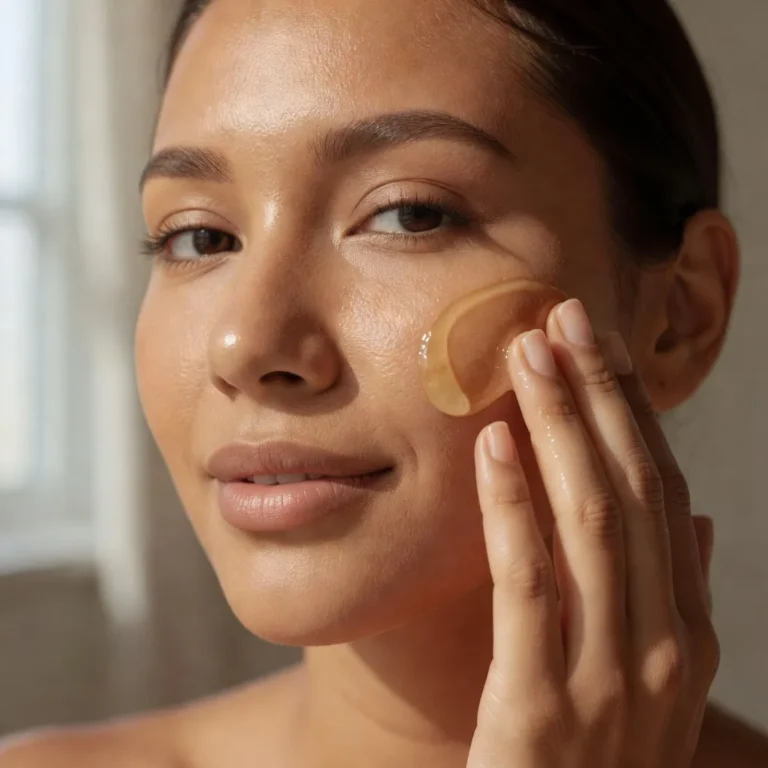
The JIYU pads earn the top spot because they combine hydration and soothing care with extra help for dullness in one easy step. Each pre-soaked pad carries snail mucin and niacinamide, along with centella asiatica and madecassoside, which are included to calm skin and support moisture after cleansing, something dry skin appreciates.
The formula also includes alpha-arbutin, licorice root, a vitamin C derivative and peptides aimed at the look of dark spots and fine lines, so it suits dry skin that also looks tired or uneven. Expect gradual, modest change in tone rather than dramatic results. Pads are convenient but less economical than a bottle, and those with very reactive skin should patch test first.
- Pre-soaked pads with snail mucin and niacinamide
- Alpha-arbutin, licorice root and peptides for the look of dark spots
- Vitamin C derivative and madecassoside for hydration
- Centella asiatica to help soothe redness
Pros
- Hydrating and soothing in one step
- Also targets dullness and uneven tone
- Convenient, mess-free pads
Cons
- More actives than very sensitive skin may need
- Pads cost more per use than a liquid toner
Skip it if: Skip it if you want the simplest possible formula; the ETUDE SoonJung or Hanskin toner is plainer.
Check Price on AmazonPCA SKIN Hydrating Face Toner

Best for: Dry and combination skin
PCA SKIN’s Hydrating Toner is the best choice if you want a straightforward liquid toner built for dry skin. It is alcohol-free, moisturises while lifting away leftover dirt after cleansing, and is labelled non-comedogenic, so it suits dry and combination skin that still gets the occasional clogged pore around the nose or chin.
Evening primrose oil, jania rubens extract and fruit extracts add antioxidant support and a soft, smooth feel. It is simpler than the #1 JIYU pads, with no spot-fading actives, which makes it an easy everyday step. Like any toner, it works best pressed into damp skin and followed straight away by a moisturiser, as it is not moisturising enough on its own.
- Alcohol-free hydrating toner
- Evening primrose oil and fruit extracts for antioxidant support
- Leaves skin soft and smooth
- Non-comedogenic; for dry and combination skin
Pros
- Made with dry skin in mind
- Alcohol-free and non-comedogenic
- Simple daily step
Cons
- No targeted actives for dullness
- Still needs a moisturiser on top
Skip it if: Skip it if you want exfoliation for rough patches; the PCA SKIN Nutrient Toner covers that.
Check Price on AmazonPCA SKIN Nutrient Toner

Best for: Rough, flaky or dull dry skin
The PCA SKIN Nutrient Toner is the pick for dry skin that feels rough or flaky. It gently exfoliates with lactic acid, an alpha hydroxy acid that also helps skin hold moisture, and uses pumpkin wine for a brighter look. It also contains aminoguanidine, included to help mature skin feel supple.
Because it exfoliates, use it only two or three evenings a week and keep a plain hydrating toner such as the #2 pick for other nights. AHAs can increase sun sensitivity, so the FDA advises daily sun protection while using them. Stop if it stings, as that is a sign your barrier needs a rest.
- Gentle exfoliation to refine texture and the look of pores
- Pumpkin wine for a brighter look
- Lactic acid, an alpha hydroxy acid, for moisture
- Aminoguanidine to help mature skin feel supple
Pros
- Smooths rough, flaky patches
- Lactic acid is one of the gentler acids
- Brightens dull-looking skin
Cons
- Not for daily use on dry skin
- Increases sun sensitivity; sunscreen is essential
Skip it if: Skip it if your skin is sensitive, stinging or already using a retinoid; the ETUDE SoonJung is gentler.
Check Price on AmazonEltaMD Skin Recovery Essence Toner

Best for: Dry, sensitive or reactive skin
EltaMD’s Skin Recovery toner is a strong choice when dry skin is also sensitive. It is alcohol-free and designed to help skin absorb and hold on to hydration without drying it out, and it uses a patented blend of amino acids aimed at supporting the skin barrier, which is often weakened in dry skin.
Malachite extract, a copper-rich mineral complex, is included to help lift impurities after cleansing. The brand says it suits all skin types, including sensitive and acne-prone skin, and the large bottle lasts well. It has fewer brightening extras than the #1 JIYU pads, which for reactive skin is an advantage rather than a drawback.
- Alcohol-free hydrating toner
- Amino acid complex to support the skin barrier
- Malachite extract to help remove impurities
- For all skin types, including sensitive
Pros
- Gentle and alcohol-free
- Barrier-focused formula
- Large bottle
Cons
- No exfoliating or brightening actives
- Needs moisturiser on top for very dry skin
Skip it if: Skip it if you mainly want to fade dark spots; the JIYU or ACWELL pick targets tone.
Check Price on AmazonRose Water and Glycerin Facial Toner (32oz)

Best for: Generous layering and body use
This rose water and glycerin toner comes in a large bulk bottle, which suits people who like to layer toner generously or use it beyond the face. Glycerin is one of the most reliable humectants for dry skin, and here it is paired with antioxidant-rich rose water in an alcohol-free, vegan formula.
It is designed to help keep skin’s natural pH in balance and to lift away leftover dirt without stripping. The brand is less established than the others on this list and the listing makes some broad anti-ageing claims, so treat it as a simple hydrating step. Rose water is naturally scented, so patch test if fragrance bothers your skin.
- Glycerin humectant for hydration
- Antioxidant-rich rose water
- Alcohol-free and vegan
- Large bulk bottle
Pros
- Very generous size
- Simple glycerin-based hydration
- Alcohol-free
Cons
- Natural rose scent may irritate sensitive skin
- Less established brand with broad claims
Skip it if: Skip it if you need a fragrance-free toner; the ETUDE SoonJung or EltaMD pick is safer.
Check Price on AmazonNEOGEN Real Ferment Micro Essence Toner

Best for: A dewy, plump-looking finish
The NEOGEN Real Ferment Micro Essence is a watery first essence toner used as the very first step after cleansing, morning or night. Its fermented complex blends bifida, saccharomyces, sake rice, birch and aspergillus ferments, and it is designed to help skin look more hydrated, plump and radiant, with benefits that build gradually.
The texture is light, fast-absorbing and not sticky, so it layers easily under a moisturiser, even in the morning. It is slightly more concentrated than a basic toner, which suits dry skin that wants a dewy finish. Ferments are generally well tolerated, but anyone with very reactive skin should patch test first, and it will not replace moisturiser.
- Fermented first essence toner
- Five-ferment blend including bifida and sake rice
- Watery, fast-absorbing, non-sticky texture
- Designed for a more hydrated, radiant look
Pros
- Layers easily under moisturiser
- Dewy, plump-looking finish
- Non-sticky
Cons
- Results build gradually
- Ferment-rich formulas may not suit everyone
Skip it if: Skip it if you prefer a single-ingredient, minimal formula; the Hanskin toner is simpler.
Check Price on AmazonETUDE SoonJung pH 5.5 Relief Toner

Best for: Dry, easily irritated skin
ETUDE’s SoonJung Relief Toner is our pick for dry skin that reacts easily. It pairs panthenol, which hydrates and soothes dryness, with madecassoside, a calming compound from centella, and it is balanced at pH 5.5. The brand says the formula is almost entirely made of moisturising ingredients, with a refreshing, watery feel.
It is also free of ten additives, including animal-derived ingredients and mineral oil, which keeps the ingredient list short. The large bottle makes it easy to layer two or three times on very dry days. It has no exfoliating or brightening actives, unlike the #1 and #3 picks, which is exactly why it suits sensitive skin.
- Panthenol and madecassoside to calm and hydrate
- pH balanced at 5.5
- Formula made mostly of moisturising ingredients
- Free of ten additives, including mineral oil
Pros
- Very gentle for sensitive skin
- Easy to layer
- Large bottle
Cons
- No brightening or exfoliating effect
- Watery texture may feel light for very dry skin
Skip it if: Skip it if you want a toner that targets dullness; the JIYU or ACWELL pick does more.
Check Price on AmazonACWELL Licorice pH 5.5 Balancing Toner

Best for: Dry skin with dullness or uneven tone
The ACWELL Licorice toner suits dry skin that also looks dull or uneven. It uses licorice root water and licorice extract to help with the look of dullness and uneven tone, and a pH 5.5 formula designed to support the skin’s natural moisture barrier without leaving it feeling tight or stripped afterwards.
It is also a cleansing toner, meant to lift leftover oil, sunscreen and residue after washing while adding light hydration, and green tea, peony root and perilla seed extracts help calm skin. It is gentler and simpler than the #1 JIYU pads. Because it has a cleansing role, very dry skin may prefer to follow it with a hydrating toner.
- Licorice root water and extract for the look of dullness
- pH 5.5 formula to support the moisture barrier
- Removes leftover impurities and sunscreen residue
- Green tea, peony root and perilla seed extracts
Pros
- Brightening without acids
- pH-balanced
- Helps clear sunscreen residue
Cons
- Lighter hydration than milky toners
- Cleansing role may not suit very dry skin alone
Skip it if: Skip it if you want maximum hydration; the HAYEJIN milky toner is richer.
Check Price on AmazonHanskin Hyaluron Skin Essence Toner

Best for: Simple hydration for dry skin
The Hanskin Hyaluron Skin Essence is a hydrating toner built around hyaluronic acid and labelled specifically for dry skin. Hyaluronic acid holds water in the top layer of skin, which is exactly the job a toner for dry skin should do, and the essence format tends to feel slightly richer than a watery toner.
Its listing is short, so we cannot say much beyond its focus on hyaluronic acid and hydration, which is why it ranks below the more detailed picks. It is a sensible, uncomplicated choice for layering two or three times on very dry days. Always press it into damp skin and seal it with moisturiser so the water does not evaporate.
- Hyaluronic acid toner
- Labelled for dry skin
- Essence-style hydrating texture
- Suits layering on very dry days
Pros
- Focused on hydration
- Easy to layer
- Simple formula focus
Cons
- Thin listing details
- No soothing or barrier extras stated
Skip it if: Skip it if your skin is sensitive and you want soothing ingredients; the ETUDE SoonJung covers that.
Check Price on AmazonHAYEJIN RiceFila Milky Oil Toner

Best for: Very dry skin and cold weather
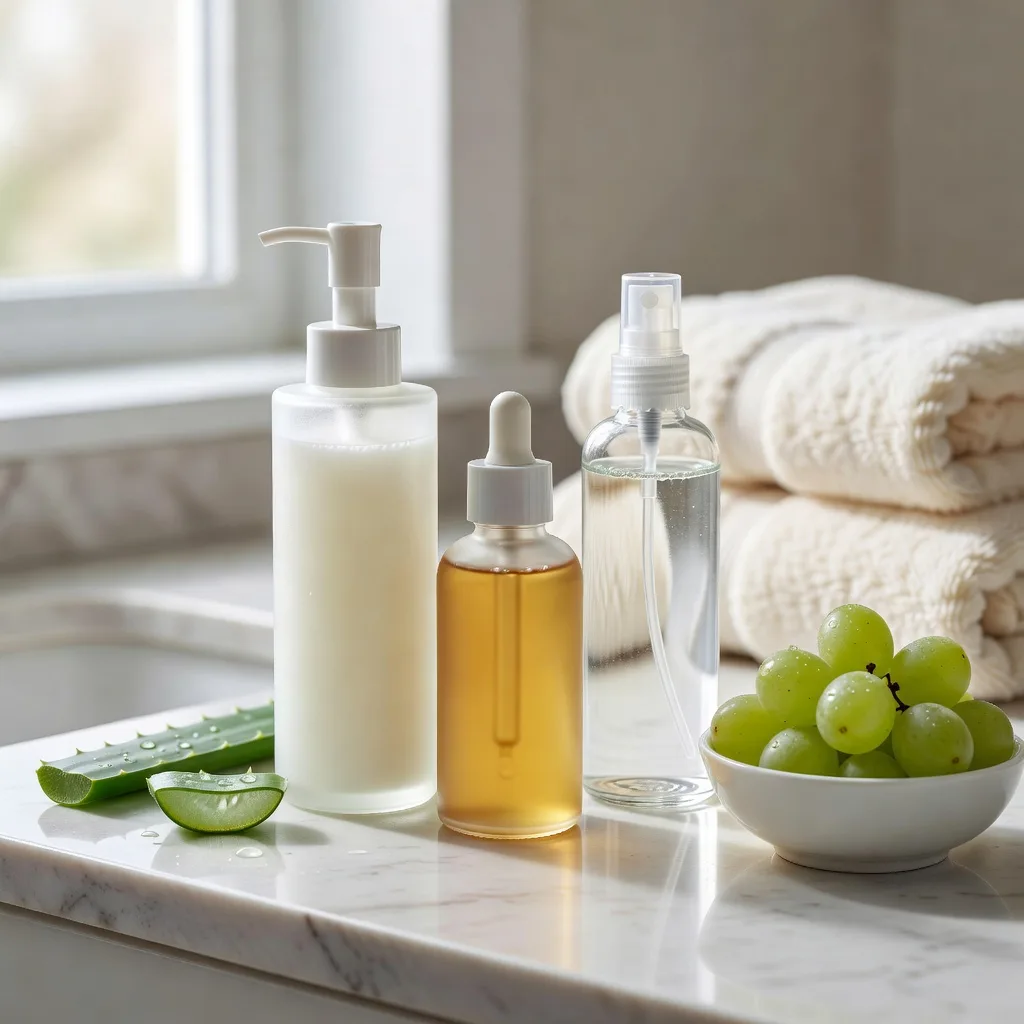
The HAYEJIN RiceFila toner is a milky, two-in-one toner cream made with rice bran, and it is the pick for very dry skin that finds watery toners too light. Milky toners combine hydration with a touch of emollient, so they feel more cushioning, which is especially welcome in winter or heated rooms.
Its listing is brief, so it ranks last, but the milky texture fills a gap that the watery #7 ETUDE and #9 Hanskin toners leave. Oil-containing toners can feel heavy on combination or breakout-prone skin, so use a small amount on the cheeks first. Follow it with moisturiser, and patch test before full use.
- Milky toner cream
- Rice bran based formula
- Two-in-one toner and light moisture
- Suits cold, dry weather
Pros
- Richer than watery toners
- Comforting in winter
- Good for very dry cheeks
Cons
- Brief listing details
- May feel heavy on oily areas
Skip it if: Skip it if you have oily or breakout-prone skin; the PCA SKIN Hydrating Toner is lighter.
Check Price on AmazonHow We Chose These Products
We shortlisted toners from Amazon listings that are highly rated by a large number of shoppers, favouring established skincare brands and fuller-featured formulas with clear ingredient lists, alcohol-free or pH-balanced formulas and simple directions. We then checked each product’s listed features against the guidance cited in this post, including the AAD’s advice to choose gentle products for dry skin and the FDA’s advice on sun protection with alpha hydroxy acids.
These are research-based picks, not hands-on lab tests. We did not assess texture or results ourselves, so rankings reflect listing detail and ingredients rather than personal experience. Where a listing makes strong claims about dark spots or wrinkles, we describe what the formula is designed to do instead.
- Strong ratings from a large number of shoppers
- Established brands and fuller-featured formulas preferred
- Listed ingredients checked against the cited dry-skin and acid guidance
- Serums and treatment essences meant for after toner excluded
- Products with thin or unclear listings excluded or ranked lower
What a Hydrating Toner Does for Dry Skin
A hydrating toner is a watery layer of humectants, ingredients that attract and hold water in the top layer of skin. Applied right after cleansing, it restores some of the comfort lost during washing and gives your moisturiser a damp surface to lock in.
It is not a moisturiser on its own, however soothing it feels when you first apply it. Humectants draw water in, but without an emollient and occlusive layer on top, much of that water evaporates again. Think of toner as a primer for hydration rather than the main event. Our guide on the difference between a toner and an astringent explains why the old-style, alcohol-based products are the wrong choice for dry skin.
Types of Toner and Which Suit Dry Skin
The word toner covers several quite different products. Knowing the category helps you pick one that suits dry skin.
| Type | Main job | Suits dry skin? |
|---|---|---|
| Hydrating toner | Adds humectants after cleansing | Yes, the best everyday choice |
| Essence | Slightly thicker hydrating layer | Yes, good for very dry skin |
| Milky toner | Hydration plus light emollients | Yes, especially in cold weather |
| Soothing toner | Calms redness with panthenol, allantoin or centella | Yes, for dry and sensitive skin |
| Exfoliating toner (lactic acid) | Loosens dead cells and flakes | Sometimes, a few times a week |
| Exfoliating toner (glycolic or salicylic) | Stronger exfoliation | Use with caution; can be drying |
| Astringent | Removes oil, tightens | No, usually too drying |
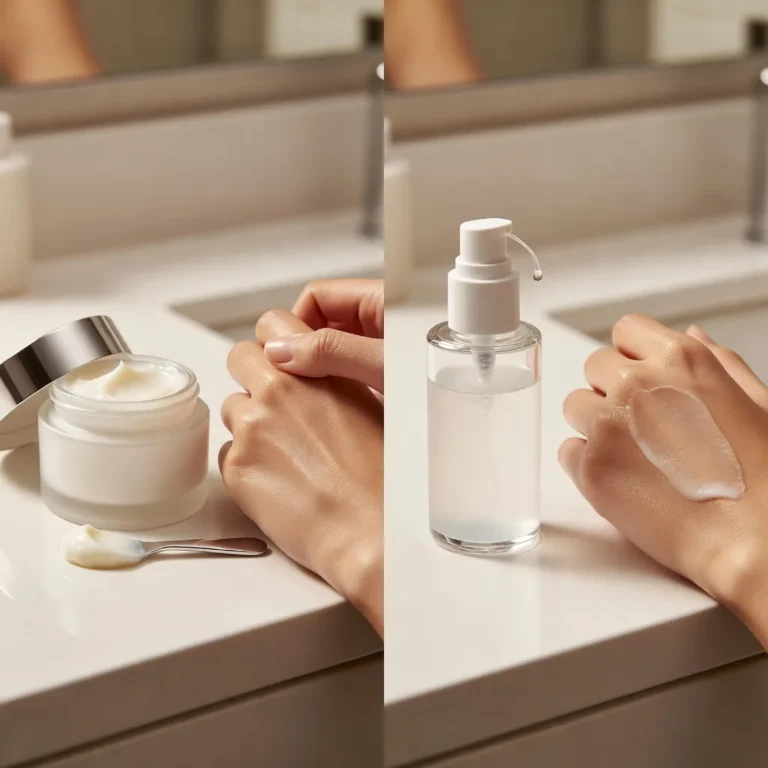
For most people with dry skin, a hydrating toner, milky toner or essence is the best fit. The section below explains how toners, essences, serums and moisturisers differ if you are unsure which layers you need.
Ingredients to Look For
Read the first several ingredients on the list. In a good hydrating toner, water is followed closely by humectants and soothing ingredients.
| Ingredient | What it does |
|---|---|
| Glycerin | Reliable, affordable humectant that keeps skin soft |
| Hyaluronic acid or sodium hyaluronate | Holds water in the skin’s surface |
| Panthenol (provitamin B5) | Hydrates and soothes |
| Betaine | Gentle humectant with a smooth feel |
| Ceramides | Support the skin barrier |
| Allantoin or centella | Calm redness and irritation |
| Urea (low amounts) | Humectant that also softens rough skin |
| Squalane or light emollients | Found in milky toners for extra comfort |
Several humectants together often feel better than a single one. Very high amounts of a single humectant can occasionally feel tacky, so a blend of glycerin, a hyaluronic acid and panthenol tends to give a smoother, more comfortable finish. Soothing extras are especially useful if your dry skin also reddens easily or reacts to weather changes, and barrier-supporting ingredients such as ceramides make the toner a little more nourishing without making it heavy. If you live in a very dry climate or spend time in heated rooms, a thicker essence or milky toner can feel more comforting than a watery one.
What to Avoid in a Toner for Dry Skin
Dry skin has a weaker barrier, so ingredients that are merely annoying on oily skin can cause real discomfort here.
- Alcohol denat. or SD alcohol high in the ingredient list.
- Witch hazel extracts with alcohol, often sold as astringents.
- Menthol, peppermint, eucalyptus and camphor, which give a cooling tingle but irritate.
- Strong fragrance or essential oils.
- High-strength acid toners used every day.
- Products described as pore tightening or oil controlling, which are usually aimed at oily skin.
Not all alcohols are bad. Fatty alcohols such as cetyl or cetearyl alcohol are gentle emollients. Our guide on whether alcohol is always bad in skincare explains how to tell the difference.
If a toner stings, burns or leaves your skin red and tight, stop using it. Stinging on dry skin often signals a damaged barrier, and continuing can make dryness and sensitivity worse.
Toner vs Serum vs Moisturiser for Dry Skin
It is easy to buy three products that all promise hydration and end up with an expensive, sticky routine. Each layer has a slightly different job, and understanding them helps you decide what you really need.
- Toner: a thin, watery layer of humectants applied right after cleansing, mainly for comfort and a damp base.
- Essence: similar to toner but slightly thicker and often more concentrated.
- Serum: a targeted treatment, such as a concentrated humectant, niacinamide or an antioxidant, used after toner.
- Moisturiser: the essential step that combines humectants, emollients and occlusives to hold water in.
- Facial oil: an optional final layer for very dry skin, mainly at night.
If you want to keep things simple, a hydrating toner plus a good moisturiser covers the basics for most dry skin. Add a serum only if you have a specific goal, and skip the toner entirely if your moisturiser already keeps you comfortable all day.
Using Lactic Acid Toners on Dry Skin
Lactic acid is an alpha hydroxy acid that loosens dead skin cells. It is often considered one of the gentler acids for dry skin because it also has some humectant properties. A lactic acid toner can help with rough, flaky patches and dullness.
Use it sparingly. Two or three evenings a week is plenty for most dry skin, and on the other nights stick with a plain hydrating toner. Do not combine it with a retinoid or other exfoliants on the same night at first. Alpha hydroxy acids can increase sun sensitivity, and the FDA advises sun protection when using alpha hydroxy acid products.
If you are new to acids, start with one evening a week and watch for stinging, redness or new flaking before increasing. More exfoliation is not better for dry skin.
How to Apply Toner to Dry Skin
How you apply toner makes a surprising difference to how hydrated your skin feels afterwards.
Cleanse gently
Use a mild, non-foaming or cream cleanser and lukewarm water.
Leave skin slightly damp
Pat lightly with a towel instead of drying completely.
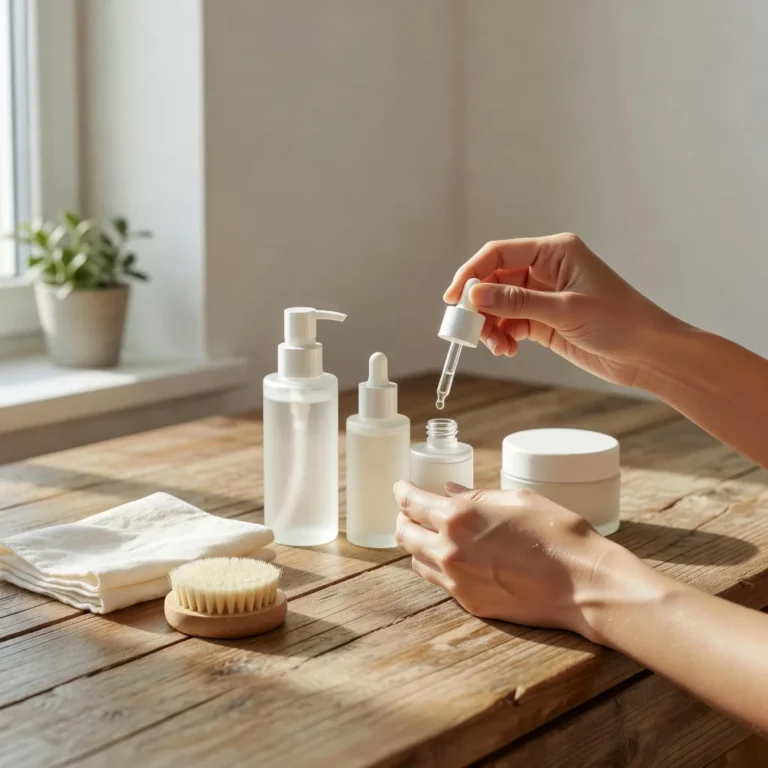
Pour toner into your palms
Use a few drops to a small pool, enough to cover the face.
Press and pat it in
Press your palms over your face and pat gently until mostly absorbed; skip rubbing with cotton pads.
Layer if very dry
Apply a second or third thin layer for extra hydration.
Moisturise straight away
Apply moisturiser within a minute or two to seal the hydration in.
Finish with sunscreen in the morning
Use a broad-spectrum sunscreen as the last step during the day.
Cotton pads soak up much of the product and add friction. Using your hands wastes less toner and is kinder to dry, sensitive skin.
A Simple Routine for Dry Skin With Toner
A toner earns its place when it sits in a short, steady routine that protects the barrier. Keeping the number of steps small also makes it easier to spot which product helps and which one causes trouble if your skin reacts.
- Morning: rinse or gentle cleanse, hydrating toner, moisturiser, sunscreen.
- Evening: gentle cleanser, hydrating toner, optional serum, richer moisturiser.
- Two or three evenings a week: lactic acid toner instead of the hydrating one.
- Add a few drops of facial oil over moisturiser on very dry nights.
- Use a humidifier in heated rooms during winter.
If your skin feels tight even with this routine, our guide on how to repair your moisture barrier covers what to change first.
Dos and Don’ts
Do
- Choose alcohol-free, fragrance-free toners
- Look for glycerin, hyaluronic acid or panthenol
- Apply toner to damp skin
- Pat it in with your hands
- Follow with moisturiser every time
Don’t
- Use astringents on dry skin
- Chase a cooling, tingly feeling
- Use acid toners every day
- Leave toner to dry without moisturiser
- Rub hard with cotton pads
Honest Limits
A toner is optional. Plenty of people with dry skin do perfectly well with just a gentle cleanser, a good moisturiser and sunscreen. A hydrating toner can make skin feel more comfortable and help moisturiser work better, but it will not fix severe dryness on its own.
Claims about toners balancing pH, shrinking pores or preparing skin to absorb more of later products are often overstated. Modern cleansers are generally close to skin-friendly pH already. Buy a toner because you like the extra hydration step, not because a routine is incomplete without one. Expensive toners are not automatically better than simple ones; a plain glycerin-based formula can hydrate as well as a luxury product with a long list of extracts.
When to See a Dermatologist
- Your skin is dry, cracked or bleeding despite gentle care.
- You have itchy, red or scaly patches that could be eczema or dermatitis.
- Most toners and skin care products sting or burn.
- Dryness came on suddenly or is spreading beyond the face.
This article is for general information and does not replace professional medical advice. See a board-certified dermatologist if dry skin is severe or persistent, or if you react to skin care products.
Common Questions
What type of toner is best for dry skin?
An alcohol-free, fragrance-free hydrating toner or essence.
Is toner necessary for dry skin?
No, but a hydrating toner can add comfort.
Should dry skin use toner with alcohol?
No, drying alcohols can make dryness worse.
Can I use a lactic acid toner on dry skin?
Yes, two or three times a week at most.
Is the most expensive toner for dry skin worth it?
Not always. JIYU and PCA SKIN offer more actives, but the ETUDE SoonJung or Hanskin toner covers basic hydration well.
Do I need moisturiser after toner?
Yes, to seal in the hydration.
Which toner is best for dry, sensitive skin?
The ETUDE SoonJung pH 5.5 toner and EltaMD Skin Recovery toner are the gentlest picks; patch test first.
Can I layer hydrating toner?
Yes, two or three thin layers suit very dry skin.
Which toner is best for very dry skin in winter?
A milky toner such as HAYEJIN RiceFila, or two thin layers of the Hanskin hyaluronic acid toner, then moisturiser.
Can toner cause dryness?
Yes, if it contains alcohol, astringents or strong acids.
Summing Up
The best facial toner for dry skin is an alcohol-free hydrating formula with humectants such as glycerin, hyaluronic acid or panthenol, pressed into damp skin; the JIYU pads are our top pick overall.
Follow it straight away with moisturiser, keep lactic acid toners to a few nights a week, and remember that a gentle, consistent routine matters more than any single toner.
Our top pick: JIYU Hydrating Toner Pads
The JIYU toner pads take the top spot because they combine hydrating and soothing ingredients such as snail mucin, niacinamide and centella in a convenient pre-soaked format that also targets dullness and uneven tone. Choose the PCA SKIN Hydrating Toner instead if you want a simple, alcohol-free liquid focused purely on moisture, or the EltaMD Skin Recovery toner if your dry skin is also sensitive and needs barrier support.
Check Price on Amazon
Written by
Registered pharmacist and founder of Facial Adviser. Rakib's pharmacy training covers how skincare actives work and interact; a later course in cosmetology turned that into a focus on facial treatments and skincare products. He plans, researches and edits every guide on the site and checks health claims against sources such as the American Academy of Dermatology, the FDA and the NIH. He is not a dermatologist; see the Editorial Policy and Medical Disclaimer.
About · Editorial policy · How we choose products · Medical disclaimer · Contact
Keep reading: Toners, mists and sunscreen
- What Does a Facial Toner Do? The Real Answer
- Uneven Tone After Sun Exposure: Tan, Sunspots or Melasma and How to Fade It
- Rough, Bumpy Forehead After Sunscreen? Causes and Fixes
- Do You Need a pH-Balancing Toner? When It Helps, When It Does Not
- Why Does My Toner Sting Sometimes? Causes and What to Do
- Should Men Use Toner? When It Helps and When to Skip It
- 10 Best Facial Serums for Aging Skin (2026): Picks by Concern
- 10 Best Face Masks for Every Skin Type (2026): Clay, Gel and Sheet