Why Does My Toner Sting Sometimes? Causes and What to Do
Most days your toner feels completely fine. Then one evening it stings the moment it touches your cheeks, or burns around your nose and mouth. Nothing about the bottle has changed, so why does it suddenly hurt? Occasional stinging is one of the most common skincare complaints, and it usually says more about the state of your skin that day than about the toner.
Part of our guide to skincare products. Start with: What Does a Facial Toner Do? The Real Answer
A toner usually stings because the skin barrier is temporarily weakened, for example after over-cleansing, exfoliating, shaving, sun exposure or cold wind, or because the toner contains ingredients that can sting, such as acids, alcohol, witch hazel, menthol or fragrance. Mild, brief tingling from an acid toner can be normal. Stinging that lasts, burns, or comes with redness, swelling or itching is a sign to stop the product, rinse, and let the skin recover.
When the outer layer of skin is healthy, it keeps irritants out and protects the nerve endings underneath. When it is thinned or damaged, even mild ingredients can reach those nerves and cause a stinging or burning sensation. That is why the same toner can feel fine one day and sting the next.
The American Academy of Dermatology advises people with sensitive or rosacea-prone skin to avoid products containing alcohol, camphor, fragrance, menthol and certain acids, and to test new products before using them on the face. Many traditional toners contain several of these ingredients.
This guide explains the common reasons toner stings, how to tell normal tingling from a problem, and what to do when it happens.
Shopping these picks?
Amazon Prime members get fast, free shipping on eligible items, plus Prime Video, Amazon Music and member deals. New members can start with a free trial.
Start a free Prime trialAged 18 to 24? Prime for Young Adults comes with a longer free trial and a lower price after it.
Affiliate link: we may earn a commission at no extra cost to you.
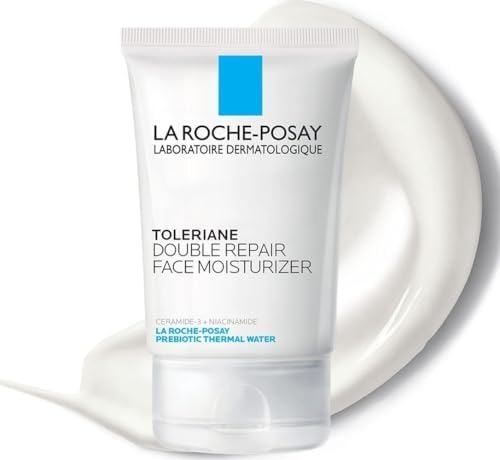
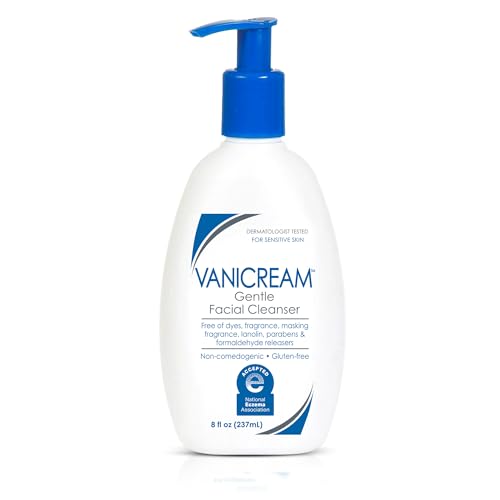
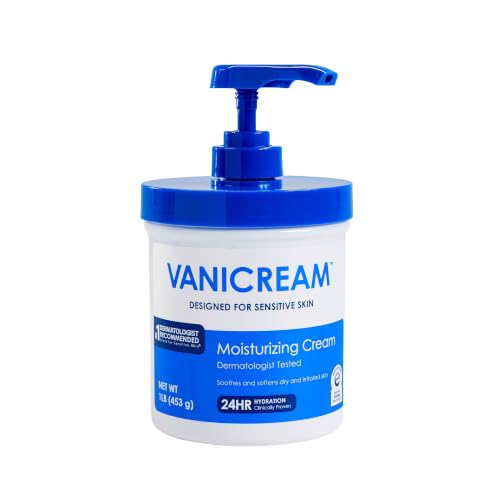
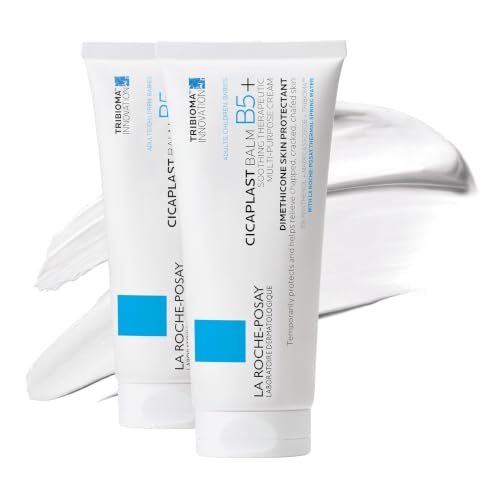
Recommended Gentle Toners and Barrier-Friendly Products



The Short Version
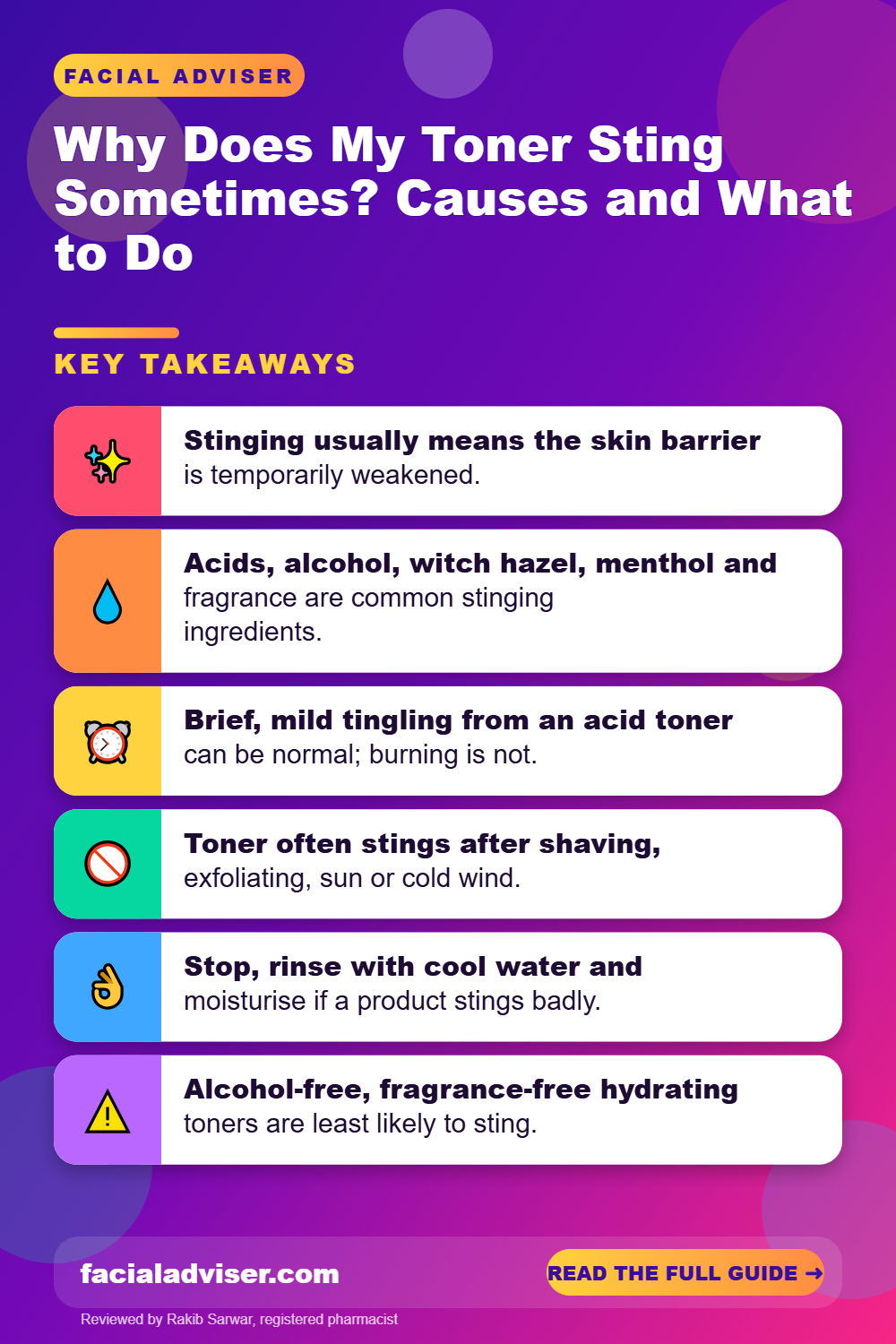
- Stinging usually means the skin barrier is temporarily weakened.
- Acids, alcohol, witch hazel, menthol and fragrance are common stinging ingredients.
- Brief, mild tingling from an acid toner can be normal; burning is not.
- Toner often stings after shaving, exfoliating, sun or cold wind.
- Stop, rinse with cool water and moisturise if a product stings badly.
- Alcohol-free, fragrance-free hydrating toners are least likely to sting.
- Stinging with redness, swelling or itching may be irritation or allergy.
Contents
- Common Reasons Your Toner Stings
- Ingredients Most Likely to Sting
- Normal Tingle or Warning Sign?
- How to Respond When Your Toner Stings
- When the Barrier Is the Real Problem
- Choosing a Toner That Does Not Sting
- Situations When Toner Is Best Skipped
- Testing a New Toner
- Where It Stings Tells You Something
- Adjusting Your Routine to Prevent Stinging
- Honest Limits
- When to See a Dermatologist
- Questions People Ask
- Where This Leaves You
Common Reasons Your Toner Stings
| Cause | What is happening | What to do |
|---|---|---|
| Over-exfoliation | Acids, retinoids or scrubs have thinned the outer layer | Pause actives; use only gentle products |
| Just-shaved skin | Tiny nicks and friction weaken the surface | Skip toner after shaving |
| Sunburn or windburn | Skin is inflamed and sensitive | Avoid actives; soothe and moisturise |
| Harsh cleanser | Surface lipids have been stripped | Switch to a gentle, non-foaming cleanser |
| Stinging ingredients | Alcohol, acids, menthol, fragrance | Choose an alcohol-free, fragrance-free toner |
| Underlying condition | Rosacea or eczema make skin reactive | See a dermatologist for a proper plan |
If your toner only stings on certain days, look at what happened in the previous 24 to 48 hours. A new exfoliant, a long day outdoors or a hot shower is often the trigger.
Hormonal changes, illness, lack of sleep and stress can also make skin more reactive for a few days. If nothing in your routine has changed, it may simply be a sensitive week, and a gentler routine until it passes is the best response.
Ingredients Most Likely to Sting
- Exfoliating acids: glycolic, lactic, salicylic and mandelic acid, especially at low pH.
- Alcohol: alcohol denat. or SD alcohol high in the ingredient list.
- Witch hazel: often combined with alcohol in astringent toners.
- Menthol, camphor and peppermint: give a cooling tingle that can irritate.
- Fragrance and essential oils: common irritants for sensitive skin.
- High-strength vitamin C: low-pH formulas can sting on sensitive skin.
Our guide on alcohol in skincare explains which alcohols are drying and which are harmless, and our article on spotting fragrance on labels covers hidden scent ingredients.
Normal Tingle or Warning Sign?
| Normal tingling | Warning sign |
|---|---|
| Mild, lasts a few seconds | Burning that lasts minutes |
| Only with acid toners | With a gentle, hydrating toner |
| No visible change afterwards | Redness, swelling or blotches |
| Skin feels fine after moisturiser | Skin stays tight, hot or itchy |
| Happens occasionally | Happens every time or is getting worse |
Tingling from an exfoliating toner is a sign that the acid is reaching the skin, but it should be brief and mild. Many dermatologists would say that if you feel it strongly, the product is too strong for you or you are using it too often.
Some brands describe stinging as a sign of results, but tingling is simply the skin registering irritation. Plenty of acid toners work well without any noticeable sensation, especially lower-strength formulas and gentler acids such as lactic or mandelic acid.
How to Respond When Your Toner Stings
Rinse it off
If the stinging is strong or lasts more than a few seconds, rinse your face with cool water.
Pat dry gently
Use a soft towel and do not rub.
Apply a bland moisturiser
Use a fragrance-free cream or barrier balm to soothe the skin.
Pause the toner and other actives
Stop acids, retinoids and alcohol-based products for several days.
Look for the trigger
Think about recent shaving, exfoliation, sun, wind or new products.
Reintroduce carefully
When your skin feels calm, try the toner again less often, or switch to a gentler one.
Keep a simple fragrance-free moisturiser as your fallback product. On days when anything stings, cleanse gently and use only that.
When the Barrier Is the Real Problem
Frequent stinging, not just with toner but with most products, usually means the skin barrier needs a break. Over-exfoliating, stacking actives and harsh cleansing are the most common causes.
Other signs that point to barrier damage include tightness soon after washing, a shiny but dry look, flaky patches around the nose and mouth, and new small bumps. If you recognise several of these, focus on repair before worrying about which toner to use.
Our guide to repairing your skin barrier sets out a simple routine to calm skin down within days and rebuild it over a few weeks.
Do not keep using a product that burns in the hope that your skin will get used to it. Continued use on irritated skin can lead to redness, peeling and a longer recovery.
Choosing a Toner That Does Not Sting
Try This
- Choose alcohol-free, fragrance-free formulas
- Look for glycerin, panthenol, centella or niacinamide
- Use acid toners only a few times a week
- Apply with hands rather than rough pads
- Patch test new toners
Avoid This
- Use astringents with alcohol and witch hazel daily
- Apply toner straight after shaving
- Use acid toners on sunburned skin
- Layer acid toners with retinoids
- Rub hard with cotton pads
The AAD suggests avoiding alcohol, fragrance, menthol and certain acids if your skin is sensitive, and testing new products before using them on your face (AAD). Our guide on whether you need a toner at all may also help you decide.
Price and packaging are poor guides. Expensive toners can contain fragrance and alcohol, while many inexpensive pharmacy toners are simple, alcohol-free and well tolerated. The ingredient list tells you far more than the brand or the bottle.
Situations When Toner Is Best Skipped
Even a gentle toner can sting at certain times, because the skin underneath is temporarily more vulnerable. It is worth leaving it out, or using only a bland moisturiser, in these situations:
- Right after shaving or waxing.
- After a day in strong sun, wind or cold.
- When you have a pimple you have picked or a small cut.
- During a flare of eczema, rosacea or seborrheic dermatitis.
- In the first days after a chemical peel or other in-clinic treatment.
Skipping toner for a few days will not harm your skin. It is one of the most optional steps in any routine.
Testing a New Toner
Before using a new toner on your whole face, apply it to a small area, such as the side of the jaw or the inside of the elbow, twice a day for several days. The AAD recommends testing new products for seven to ten days to check for reactions.
If the test area stays calm, introduce the toner on your face a few times a week at first, and watch the areas that sting most easily, such as around the nose and mouth.
Our guide to reactions to new products explains how to tell normal adjustment from irritation or allergy.
Where It Stings Tells You Something
The location of the stinging can point to the cause.
| Where it stings | Likely reason |
|---|---|
| Around the nose and mouth | Thin skin, frequent friction, often first to show over-exfoliation |
| Cheeks | Barrier damage from cleansing, weather or actives; possible rosacea |
| Jaw and neck after shaving | Micro-cuts and irritation from the razor |
| Around a spot you picked | Broken skin reacting to acids or alcohol |
| Whole face | General barrier damage or a reaction to the product |
Stinging that is limited to one small area is often due to something local, such as a picked spot or a shaving nick. Stinging all over is more likely to reflect your skin’s overall condition or the product itself.
Adjusting Your Routine to Prevent Stinging
Small changes to the rest of your routine often stop toner from stinging without giving it up entirely.
- Switch to a gentle, non-foaming cleanser and lukewarm water.
- Use exfoliating toners two or three times a week rather than daily.
- Keep acids and retinoids on different nights.
- Apply toner to fully dry skin; damp skin can make acids feel stronger.
- Follow with a moisturiser straight away to support the barrier.
- Cut back further in cold, dry or very sunny weather.
If you use a lot of actives, it may be worth asking whether you need an exfoliating toner at all. For many people, one well-chosen treatment, such as a retinoid at night, does more than an acid toner plus several other actives, with far less stinging. Our guide on whether skin gets used to products explains why more strength is not always better.
Honest Limits
Everyone’s skin has a different threshold for stinging. Some people feel a strong tingle from mild products; others feel nothing from strong acids. Your own skin’s response is a better guide than any label.
It is also worth remembering that a burning sensation right after applying a product can occasionally be a sign of allergy rather than simple irritation, especially if it is followed by itching or a rash over the next day or two. That is when patch testing by a dermatologist becomes useful.
Occasional stinging is not a disaster, but repeated stinging is a signal worth listening to. Adjusting your routine early usually prevents bigger problems later.
Sensitivity can also change over time. Skin often becomes more reactive in winter, during pregnancy, with age, or when you start a prescription treatment, so a toner that suited you for years may need to be swapped or used less often.
When to See a Dermatologist
- Most products, including gentle ones, sting or burn.
- Stinging comes with redness, swelling, itching or a rash.
- You have persistent flushing or visible blood vessels, which may be rosacea.
- Your skin stays sensitive for weeks despite a simple routine.
This article is for general information and does not replace professional medical advice. See a dermatologist for persistent stinging or irritation.
Questions People Ask
Why does my toner sting sometimes but not always?
Your skin barrier may be weaker on some days, for example after exfoliating, shaving, sun or wind.
Is it normal for toner to sting?
Mild, brief tingling from an acid toner can be normal; burning or lasting stinging is not.
What should I do if my toner burns?
Rinse with cool water, apply a bland moisturiser and stop the toner for a few days.
Which toner ingredients sting?
Acids, alcohol, witch hazel, menthol, fragrance and high-strength vitamin C are common culprits.
Can a hydrating toner sting?
Yes, if your barrier is damaged; even gentle products can sting on irritated skin.
Should I use toner after shaving?
It is best to skip it, especially if it contains alcohol or acids.
Does stinging mean the toner is working?
No. Stinging means irritation, not effectiveness.
Can I keep using a toner that stings?
Not if it burns or causes redness; switch to a gentler product.
Is toner necessary?
No. It is an optional step, and many people do well without one.
When should I worry about stinging skin?
If most products sting, or stinging comes with redness, swelling or rash, see a dermatologist.
Where This Leaves You
A toner that stings is usually telling you something about your skin that day: the barrier has been weakened by exfoliation, shaving, sun, wind or harsh cleansing, or the toner contains ingredients that sting sensitive skin.
Rinse, soothe and pause the toner if it burns. Choose alcohol-free, fragrance-free formulas, use acid toners sparingly, and see a dermatologist if stinging becomes the rule rather than the exception.

Written by
Registered pharmacist and founder of Facial Adviser. Rakib's pharmacy training covers how skincare actives work and interact; a later course in cosmetology turned that into a focus on facial treatments and skincare products. He plans, researches and edits every guide on the site and checks health claims against sources such as the American Academy of Dermatology, the FDA and the NIH. He is not a dermatologist; see the Editorial Policy and Medical Disclaimer.
About · Editorial policy · How we choose products · Medical disclaimer · Contact
Keep reading: Toners, mists and sunscreen
- Should Men Use Toner? When It Helps and When to Skip It
- Are Facial Sprays Useful? What Face Mists Can and Cannot Do
- What Does a Facial Toner Do? The Real Answer
- Facial Mist vs Toner: Differences, Benefits and Whether to Use Both
- Facial Toner vs Astringent: Which One Your Skin Actually Needs
- 10 Best Facial Moisturizers for Dry Skin (2026): Rich, Gentle Creams
- 10 Best Facial Serums for Aging Skin (2026): Picks by Concern