Can a Beanie Cause Hair Loss? Myths, Friction and What Actually Thins Hair
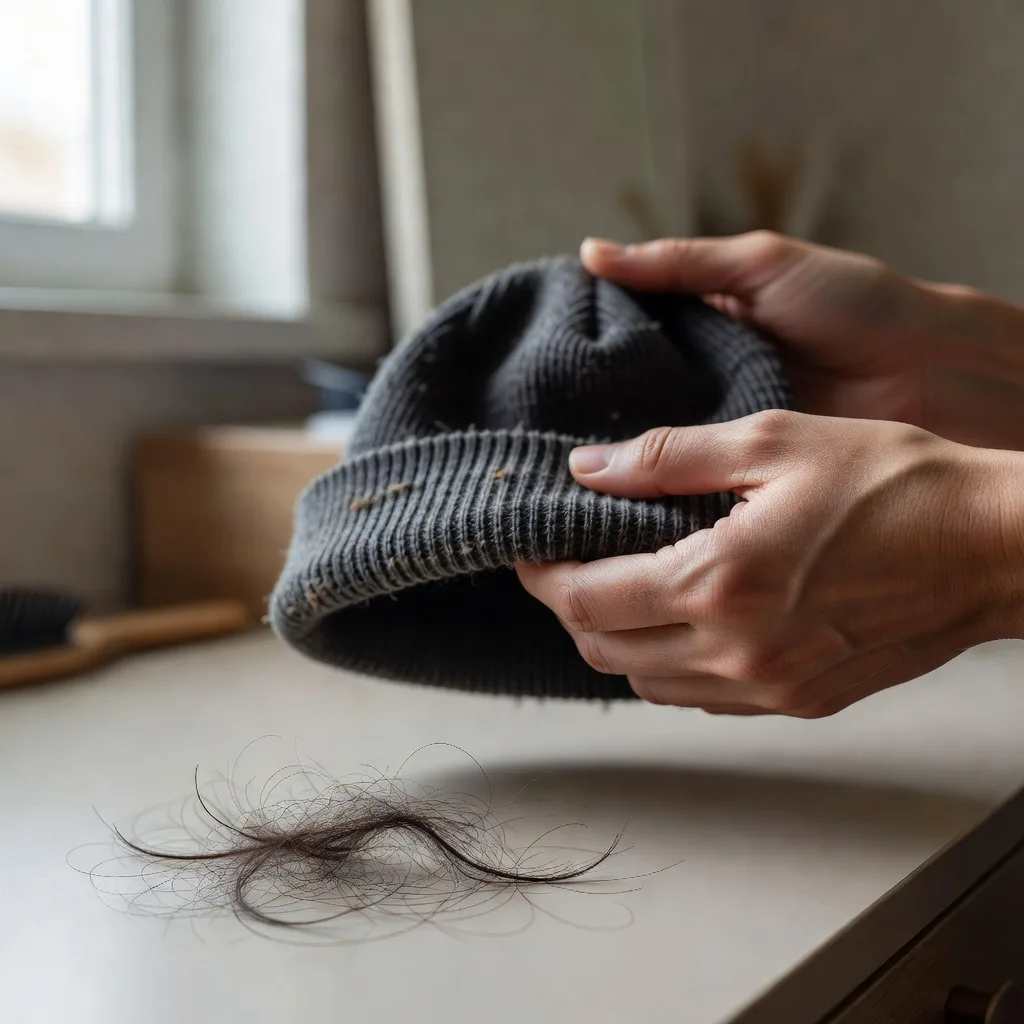
Every winter the same question comes up: you pull off your beanie, notice a few hairs clinging to the lining, and wonder whether the hat is slowly thinning your hair. It is an old worry, and it has survived for decades partly because hair loss often becomes noticeable at the same age people start wearing hats to hide it.
Part of our guide to men's grooming tools. Start with: 10 Best Hair Dryers (2026): Faster Drying With Less Heat Damage
A beanie cannot cause pattern hair loss, which is driven by genetics and hormones rather than anything you put on your head, and a normally fitting hat does not suffocate follicles or stop hair growing. What a beanie can do is break hair through friction, especially if it is tight, rough or worn over wet hair, and in rare cases a very tight hat worn constantly for years can contribute to traction alopecia along the hairline. It can also trap sweat and oil, which may irritate the scalp and make it itch or flake. The hairs you find inside the hat are almost always normal daily shedding that the fabric has caught, not new loss caused by the hat.
In short: beanies do not make you bald, but a tight or dirty one can snap hairs and annoy your scalp, so fit and hygiene matter.
Black Friday is coming: shop the deals with Prime
The American Academy of Dermatology notes that shedding between roughly fifty and a hundred hairs a day is normal, and that true hair loss happens when something stops hair growing, such as heredity, illness, certain medicines or hairstyles that pull. A hat does not appear on that list, but pulling does, which is where a too-tight beanie can tip over the line.
This guide separates myth from fact, explains what actually thins hair, shows how to tell normal shedding from a problem and gives a simple routine for wearing a beanie all winter without damage.
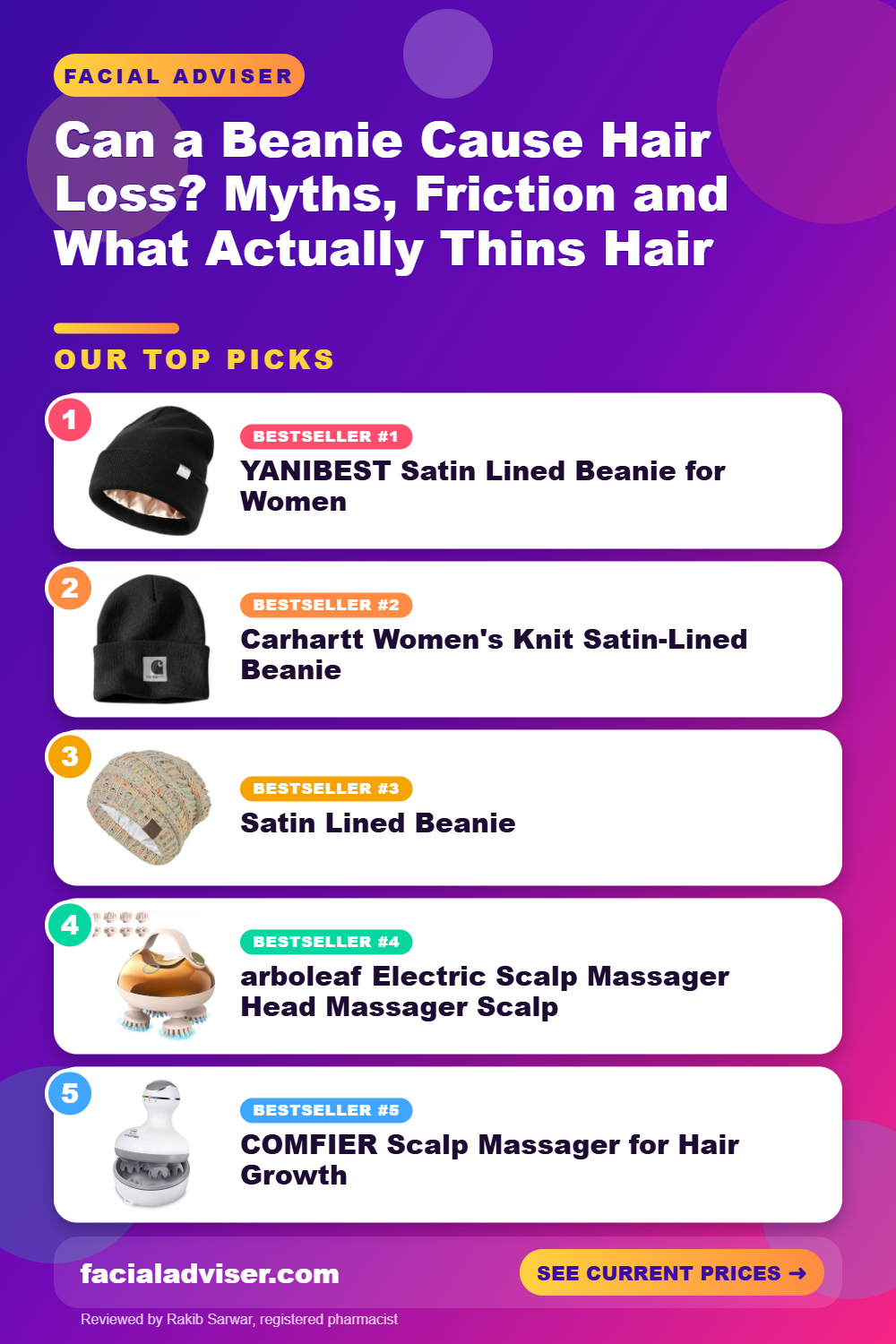
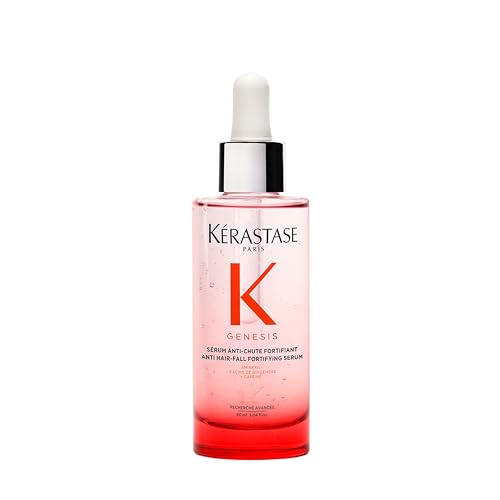
Recommended Scalp Care and Hair-Friendly Beanies


In Brief
- Beanies and hats do not cause male or female pattern hair loss.
- Tight hats can break hair through friction and, rarely, cause traction alopecia.
- Hair found inside a hat is usually normal daily shedding.
- Real causes are genetics, hormones, stress-related shedding, nutrition and scalp conditions.
- A loose fit and a silk or satin lining prevent most friction damage.
- Never wear a beanie over wet hair or an unwashed scalp for hours.
- Sudden or patchy loss needs a dermatologist, whatever hat you wear.
Jump to a Section
- Beanie Hair Loss: Myth vs Fact
- How a Beanie Can Actually Damage Hair
- Hair in Your Beanie: Normal Shedding or a Problem?
- What Actually Causes Hair to Thin
- Sweat, Oil and Scalp Hygiene Under a Hat
- How to Wear a Beanie Without Damaging Your Hair
- Scalp Care for Hat Season
- Dos and Don’ts
- Honest Limits
- When to See a Dermatologist About Hair Loss
- Frequently Asked Questions
- Final Word
Beanie Hair Loss: Myth vs Fact
Most of what people believe about hats and hair comes from folk wisdom rather than evidence. This table sorts the common claims.
| Myth | Fact |
|---|---|
| Hats suffocate the follicles | Follicles get oxygen from blood, not from the air; a hat changes nothing |
| Wearing a beanie makes you go bald | Pattern hair loss is genetic and hormonal and happens with or without hats |
| Hair in the hat lining means the hat is pulling it out | Those hairs were already at the end of their cycle; fabric simply catches them |
| A tight hat is fine as long as it is comfortable | Constant tension at the hairline can, over years, cause traction alopecia |
| Hats keep the scalp clean and protected | A sweaty, unwashed beanie can trap oil, yeast and bacteria against the scalp |
| Taking the hat off cures thinning | If the cause is genetic or hormonal, hats make no difference either way |
The one grain of truth in the myth is friction. Rough knits rub the cuticle every time you pull the hat on and off, leaving hair frizzy and shorter at the temples and crown, which looks like thinning even when the follicles are healthy.
How a Beanie Can Actually Damage Hair
A beanie does not stop hair growing, but it can damage the hair that has already grown and, in extreme cases, stress the follicles at the edges.
- Friction breakage: rough knits abrade the cuticle, leading to split ends, frizz and snapped strands, especially on fine, dry, bleached or curly hair.
- Traction: a hat that leaves a red band on your forehead is pulling on hairline follicles; repeated for years, this can cause the gradual recession seen in traction alopecia.
- Wet hair: hair is weakest when wet, so pulling a hat over damp hair stretches and breaks it.
- Trapped moisture and oil: sweat, sebum and product build up on the fabric and sit against the scalp, which can trigger itching, flaking or folliculitis.
Breakage looks different from true loss. Broken hairs have blunt or frayed ends and no bulb, and they appear as short, uneven lengths around the hairline. Shed hairs are full length with a small white bulb at the root.
Hair in Your Beanie: Normal Shedding or a Problem?
Everyone sheds hair daily. A hat is simply an efficient collector, so finding hair in it tells you less than it seems to.
- A few to a few dozen hairs in the lining after a day is normal, particularly if you do not brush often or wear your hair long.
- Hair with a white bulb at the end has shed naturally.
- Clumps of hair, hair coming away in the shower in handfuls or a widening parting suggest shedding beyond the normal range.
- Thinning in a pattern, such as a receding hairline or a thinning crown, points to a hormonal cause, not a hat.
- Patchy, round bald spots or scalp pain, scaling and redness need medical attention.
Shedding naturally rises in autumn for many people and after a stressful few months, which is exactly when beanies come out of the drawer. The timing makes the hat look guilty when it is simply the season.
What Actually Causes Hair to Thin
If your hair is genuinely thinning, the cause is almost always one of the following, and none of them involves a hat.
| Type of hair loss | Typical signs | Common cause |
|---|---|---|
| Androgenetic (pattern) hair loss | Receding temples, thinning crown or widening parting; gradual | Genetics and hormone sensitivity |
| Telogen effluvium | Diffuse shedding across the whole scalp starting two to three months after a trigger | Illness, fever, surgery, childbirth, crash dieting, severe stress, stopping some medicines |
| Traction alopecia | Thinning or recession along the hairline where tension is applied | Tight hairstyles, extensions, very tight headwear worn for years |
| Alopecia areata | Smooth, round bald patches that appear suddenly | Autoimmune reaction |
| Nutritional deficiency | Diffuse thinning, brittle hair and nails, fatigue | Low iron, protein, zinc or vitamin D |
| Scalp conditions | Itching, flaking, redness, sometimes scarring | Seborrhoeic dermatitis, psoriasis, fungal infection |
Diet and overall health show up in hair a few months after the fact, because the follicle responds slowly. Our guide on how diet affects the skin microbiome explains why what you eat reaches the scalp as much as the face. For diffuse shedding after illness, weight loss or stress, the AAD’s page on hair shedding explains that it usually starts a few months after the trigger and settles over several months once the cause has passed.
Sweat, Oil and Scalp Hygiene Under a Hat
Skin under a warm, close-fitting layer sweats, produces oil and can become irritated. That does not cause hair loss directly, but an unhappy scalp grows hair less well.
- Sweat and sebum trapped under a beanie can feed the yeast involved in dandruff and seborrhoeic dermatitis.
- Folliculitis, small red or pus-filled bumps around hairs, is more common where fabric rubs sweaty skin.
- Product build-up on the hat transfers back onto the scalp each time you wear it.
- Constant warmth makes an oily scalp oilier, which flattens hair and makes it look thinner than it is.
Washing the hat regularly and the scalp as often as it needs are the fixes. If a rash appears along the hat line, our guide on rashes triggered by sweating covers the same mechanism on the face and forehead.
How to Wear a Beanie Without Damaging Your Hair
A few habits remove almost all the risk, so you can keep warm without worrying about your hairline.
Choose a loose, stretchy fit
The beanie should sit comfortably without leaving a mark on your forehead. If it leaves a red band, it is too tight.
Pick a smooth lining
Silk or satin lined beanies let hair glide instead of catching. A smooth cotton or bamboo knit is the next best option.
Dry your hair first
Never put a hat over wet or damp hair. Hair is weakest when wet and stretches and snaps under fabric.
Detangle and smooth before putting it on
Brush or finger-comb, then slide the hat on from the back so the hairline is not dragged.
Loosen hair underneath
Avoid a tight ponytail or bun under the beanie, which doubles the tension on the roots.
Take breaks indoors
Remove the hat when you are inside so the scalp can breathe and sweat can evaporate.
Wash the hat often
Launder a daily beanie at least weekly, more if you sweat or use styling products.
Care for the scalp
Shampoo as often as your scalp needs, and use a gentle scalp massager or exfoliating wash occasionally to clear build-up.
If your hair is curly, fine or bleached, a satin lined beanie makes a visible difference within a week: less frizz, fewer broken hairs at the temples and no flat, static-filled hat hair.
Scalp Care for Hat Season
Winter is hard on the scalp: cold air outside, dry heating inside and hours under a hat all push it towards dryness and irritation.
- Shampoo on a schedule that suits your scalp, not your hat: oily scalps may need daily washing, dry ones every few days.
- Use a mild anti-dandruff shampoo a couple of times a week if you notice flakes or itching.
- Massage the scalp gently for a minute while washing to lift build-up and relax tension.
- Apply a lightweight scalp serum if the skin feels tight or dry, and let it absorb before putting on a hat.
Scalp massage is pleasant and may support circulation, but it is not a treatment for genetic hair loss. Our guide on whether daily face massage is good for skin gives the same realistic view of what massage does and does not do.
Dos and Don’ts
Good Habits
- Choose a loose, soft or satin lined beanie
- Dry hair fully before covering it
- Wash the hat at least weekly
- Take it off indoors to let the scalp breathe
- Watch for breakage versus shed hair
Common Mistakes
- Wear a hat that leaves a mark on your forehead
- Pull a beanie over wet hair
- Wear a tight bun or ponytail underneath
- Blame the hat for pattern thinning
- Ignore patchy loss or a sore, scaly scalp
A hat that is tight enough to cause headaches or a red band is tight enough to stress the hairline. Traction alopecia can become permanent if the pulling continues for years, so loosen the fit as soon as you notice thinning at the temples or along the front edge.
Honest Limits
No hat, lining or shampoo will prevent or reverse pattern hair loss. If thinning runs in your family, a silk lined beanie protects the hair you have from breakage but does nothing to the follicles that are slowly shrinking, and only medical treatments have evidence for that.
Biotin shampoos, scalp serums and massagers are reasonable for scalp comfort and the look of the hair, but the evidence that they grow new hair in people who are not deficient is weak. Treat them as care, not cure, and see a dermatologist early if loss is progressing, because the sooner a real cause is treated, the better the outcome.
When to See a Dermatologist About Hair Loss
- Hair coming out in clumps or noticeably more than usual for more than a few months.
- A receding hairline, widening parting or thinning crown that is getting worse.
- Round, smooth bald patches or loss of eyebrow or body hair.
- Scalp pain, burning, scaling, pustules or redness that does not clear with gentle washing.
- Thinning along the hairline where a hat or hairstyle has pulled for years.
- Hair loss alongside fatigue, weight change or irregular periods, which may signal a hormonal or nutritional cause.
This article is for general information and does not replace professional medical advice. A board-certified dermatologist can tell the difference between normal shedding, breakage and true hair loss, and the earlier a cause is identified, the more effective treatment tends to be.
Frequently Asked Questions
Can a beanie cause hair loss?
Not pattern hair loss. A tight one can break hair and, rarely, contribute to traction alopecia at the hairline.
Do hats suffocate hair follicles?
No. Follicles are fed by blood, not by air.
Why is there hair in my beanie?
It is normal daily shedding caught by the fabric.
Can wearing a beanie every day thin your hair?
Only through friction breakage or long-term tension if it is tight; a loose, lined beanie is safe daily.
Is a silk or satin lined beanie better for hair?
Yes, it reduces friction, frizz and breakage.
Can I wear a beanie over wet hair?
Best not to; wet hair stretches and snaps more easily.
Can a beanie cause dandruff or an itchy scalp?
It can trap sweat and oil that worsen flaking and itching, especially if it is not washed.
What actually causes hair to thin?
Genetics and hormones, stress-related shedding, nutrition, scalp conditions and some medicines.
How often should I wash a beanie?
At least weekly if worn daily, more if you sweat or use styling products.
When should I worry about hair loss?
If it is sudden, patchy, progressive or comes with scalp symptoms, see a dermatologist.
Final Word
A beanie cannot cause pattern hair loss, which is set by genetics and hormones, but a tight, rough or sweaty one can break hair, irritate the scalp and, over years, stress the hairline.
Choose a loose fit with a smooth lining, keep hair dry and the hat clean, and look to a dermatologist rather than your hat drawer if thinning is sudden, patchy or getting worse.

Written by
Registered pharmacist and founder of Facial Adviser. Rakib's pharmacy training covers how skincare actives work and interact; a later course in cosmetology turned that into a focus on facial treatments and skincare products. He plans, researches and edits every guide on the site and checks health claims against sources such as the American Academy of Dermatology, the FDA and the NIH. He is not a dermatologist; see the Editorial Policy and Medical Disclaimer.
About · Editorial policy · How we choose products · Medical disclaimer · Contact
Keep reading: Hair tools
- 10 Best Hair Dryers (2026): Faster Drying With Less Heat Damage
- Madison Reed Radiant Hair Color Kit: Gentler Home Colour?
- Why Does Chlorine Make My Hair Curly? Real Answer
- How Long Does a Hair Replacement System Last?
- Can You Shampoo After Dying Hair?
- Can I Bleach My Hair 2 Days in a Row?
- 10 Best Beard Trimmers (2026): Even Lengths, Clean Edges
- 10 Best Safety Razors (2026): Closer, Calmer Shaves for Every Level
Build a spa-like routine with ad-free music