10 Best Facial Cleansers for Hormonal Breakouts (2026): Calmer Skin
Hormonal breakouts tend to follow a pattern: tender spots along the jawline, chin and lower cheeks that flare before a period or during stressful weeks. This list covers 10 options, from salicylic acid gels to benzoyl peroxide washes, with notes on who each one suits and who should skip it.
Part of our guide to skincare products. Start with: 10 Best Facial Cleansers for Combination Skin (2026): Balanced Picks
The best facial cleanser for hormonal breakouts is usually one with benzoyl peroxide, which reduces acne-causing bacteria and inflammation, or salicylic acid, which clears dead skin and oil from inside pores. Benzoyl peroxide washes suit red, inflamed spots, while salicylic acid washes suit blackheads and clogged bumps. Start with a lower strength, leave the lather on for a short time before rinsing, and use it once or twice a day. A cleanser helps, but it cannot change the hormones behind the breakouts. If spots are deep, painful or persistent, a dermatologist can offer prescription options that work from the inside.
In short: a benzoyl peroxide or salicylic acid wash is a sensible first step, but hormonal acne often needs more than a cleanser.
The American Academy of Dermatology recommends gentle cleansing twice a day, avoiding scrubbing, and giving any acne treatment several weeks to work before judging it.
Below you will find the ten picks, how we chose them, which ingredients to look for, what to avoid, how to use a wash without drying your skin out, and when it is time to see a dermatologist.
Shopping these picks?
Amazon Prime members get fast, free shipping on eligible items, plus Prime Video, Amazon Music and member deals. New members can start with a free trial.
Start a free Prime trialAged 18 to 24? Prime for Young Adults comes with a longer free trial and a lower price after it.
Affiliate link: we may earn a commission at no extra cost to you.
As an Amazon Associate we earn from qualifying purchases. This does not change which products we include.


Jump to a Section
- The 10 Best Facial Cleansers for Hormonal Breakouts Right Now
- How We Chose These Products
- How to Recognise Hormonal Breakouts
- Benzoyl Peroxide vs Salicylic Acid Cleansers
- What Else to Look For in an Acne Cleanser
- Why Contact Time Matters
- What to Avoid When Cleansing Hormonal Breakouts
- Choosing an Acne Cleanser for Your Skin Type
- How to Use an Acne Cleanser for Hormonal Breakouts
- Building a Routine Around Your Cleanser
- Honest Limits of Cleansers for Hormonal Acne
- When to See a Dermatologist
- FAQ
- Summing Up
Quick Answer
- IMAGE Skincare Clear Cell is our top pick for its salicylic acid gel that foams gently for daily use.
- Kate Somerville EradiKate is the sulfur option, oil-absorbing and usable as a short mask.
- Revision Brightening Face Wash combines glycolic and salicylic acids for clogged, dull skin.
- Benzoyl peroxide washes target red, inflamed spots; salicylic acid targets clogged pores.
- Short contact time before rinsing helps the active work; lower strengths are often enough.
- Results take six to eight weeks or more.
- Deep or persistent hormonal acne usually needs a dermatologist.
The 10 Best Facial Cleansers for Hormonal Breakouts Right Now
These ten washes were shortlisted from widely reviewed Amazon listings and are ranked by active ingredient, gentleness, texture and how clearly each seller explains its use. Each pick notes who it suits, its trade-offs and who should skip it.
| # | Product | Best For | Standout Feature | |
|---|---|---|---|---|
| 1 | IMAGE Skincare Clear Cell Salicylic Gel Cleanser | Oily skin with clogged jawline spots | Salicylic acid in a gentle foaming gel | View |
| 2 | Kate Somerville EradiKate 3% Sulfur Cleanser | Oily skin that dislikes stronger actives | Sulfur wash that doubles as a mask | View |
| 3 | Revision Skincare Brightening AHA and BHA Face Wash | Clogged pores plus uneven, dull tone | Glycolic and salicylic acids in one wash | View |
| 4 | PanOxyl 10% Benzoyl Peroxide Foaming Wash (3-Pack) | Oily skin, face, chest and back | Maximum-strength benzoyl peroxide foam | View |
| 5 | Replenix BP 5% Benzoyl Peroxide Acne Face Wash | Red, inflamed spots on normal skin | Balanced 5% strength, pH-balanced base | View |
| 6 | iS Clinical Cleansing Complex 3-in-1 | Congested pores and daily makeup wearers | Cleanser and makeup remover in one | View |
| 7 | SVR Sebiaclear Foaming Gel Cleanser | Breakouts on the face, chest and back | Large face and body gel with PHA | View |
| 8 | COSRX Salicylic Acid Daily Gentle Cleanser | Mild breakouts and combination skin | Low-key salicylic acid foam for every day | View |
| 9 | Exposed Skin Care 0.5% Salicylic Acid Cleanser | Sensitive, easily irritated acne-prone skin | Low 0.5% salicylic acid strength | View |
| 10 | Cetaphil Gentle Clear 2% Salicylic Acid Face Wash | Beginners wanting a simple acne wash | Full 2% salicylic acid, gentle foam | View |
IMAGE Skincare Clear Cell Salicylic Gel Cleanser
Best for: Oily skin with clogged jawline spots
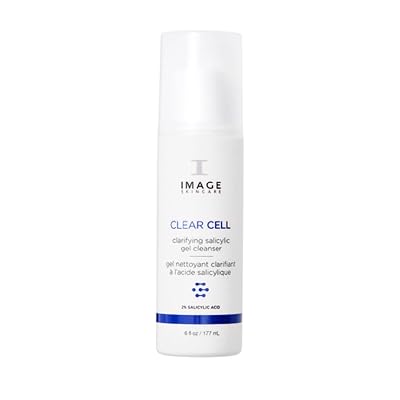
The IMAGE Skincare Clear Cell gel earns the top spot because it does the job most hormonal breakouts need from a wash: salicylic acid to loosen oil and dead skin inside pores, in a foaming gel described as gentle enough for everyday use. It is aimed at removing excess oil, which suits the shine that often comes with jawline and chin flares.
The listing stresses that skin is left smooth and soft rather than tight, which matters when you will use a medicated wash for months. It is simpler than the #3 Revision wash, which adds glycolic acid, and gentler in feel than the benzoyl peroxide picks at #4 and #5, making it a sensible first medicated cleanser for most readers.
- Salicylic acid gel cleanser
- Gentle foaming texture for daily use
- Designed to lift excess oil
- Leaves skin soft rather than tight
Pros
- Well suited to oily, congested skin
- Gentle enough for daily use
- Easy first step before leave-on treatments
Cons
- Listing gives little detail on strength
- Less helpful for deep, inflamed spots than benzoyl peroxide
Skip it if: Skip it if your breakouts are mostly red, sore pustules; a benzoyl peroxide pick such as the Replenix suits those better.
Check Price on AmazonKate Somerville EradiKate 3% Sulfur Cleanser

Best for: Oily skin that dislikes stronger actives
The Kate Somerville EradiKate takes a different route from most picks, using 3% sulfur to absorb excess oil and target blackheads and pimples. Sulfur is an older acne ingredient that many people find milder than benzoyl peroxide, and oat extract is added to help keep the whipped foam from over-drying skin that is already stressed by breakouts.
The formula is free of synthetic fragrance, mineral oil and parabens, which is useful for reactive skin. It can be used as a daily wash or left on briefly as a mask for extra contact time. Compared with the #1 IMAGE gel it works more on oil than on clogged pores, and sulfur has a distinctive smell some users dislike.
- 3% sulfur to absorb oil and target pimples
- Oat extract to limit dryness
- No synthetic fragrance, mineral oil or parabens
- Can be used as a daily wash or short mask
Pros
- Good alternative if benzoyl peroxide irritates
- Fragrance-free formula
- Flexible wash or mask use
Cons
- Sulfur has a noticeable smell
- Small tube for a daily cleanser
Skip it if: Skip it if you mainly have blackheads and want an exfoliating wash; the salicylic acid picks target those more directly.
Check Price on AmazonRevision Skincare Brightening AHA and BHA Face Wash

Best for: Clogged pores plus uneven, dull tone
The Revision Brightening wash suits people whose hormonal breakouts come with dull, uneven-looking skin. It combines glycolic acid, which loosens dead skin on the surface, with salicylic acid, which works inside pores, and adds vitamin C, licorice and lily extract to help skin look brighter and more even over time.
Mild coconut-derived cleansers are used to keep the wash from stripping the skin barrier, and it also removes makeup and oil. Because it pairs two acids, it is more exfoliating than the #1 IMAGE gel, so it is better used once a day at first, and it should not be stacked with a strong acid toner or retinoid on the same night.
- Glycolic and salicylic acids to exfoliate and unclog
- Vitamin C, licorice and lily extract for tone
- Mild coconut-derived cleansing agents
- Removes makeup, oil and impurities
Pros
- Tackles clogged pores and dullness together
- Gentle cleansing base
- Removes light makeup
Cons
- Two acids may be too much for sensitive skin
- Needs care when combined with retinoids
Skip it if: Skip it if your skin stings easily or you already use an acid toner; the COSRX or Exposed picks are milder.
Check Price on AmazonPanOxyl 10% Benzoyl Peroxide Foaming Wash (3-Pack)

Best for: Oily skin, face, chest and back
PanOxyl’s 10 percent foaming wash is the strongest benzoyl peroxide option on this list and comes as a pack of three tubes, which suits people who also treat breakouts on the chest or back. Benzoyl peroxide reduces acne bacteria and inflammation, so it is aimed at the red, tender spots that hormonal flares often bring.
The listing itself gives little product detail beyond the strength and size, so read the tube’s directions carefully. Higher strength is not automatically better: many people do just as well on lower strengths with less dryness, such as the 5% Replenix at #5. Rinse thoroughly and use white towels, because benzoyl peroxide bleaches fabric.
- 10 percent benzoyl peroxide foaming wash
- Pack of three tubes
- Foaming texture that rinses cleanly
- Suitable for larger areas such as chest and back
Pros
- Maximum over-the-counter strength
- Multi-pack lasts a long time
- Useful for body breakouts too
Cons
- More drying than lower strengths
- Bleaches towels, pillowcases and clothes
Skip it if: Skip it if you have dry or sensitive skin; start with the Replenix 5% or a salicylic acid pick instead.
Check Price on AmazonReplenix BP 5% Benzoyl Peroxide Acne Face Wash

Best for: Red, inflamed spots on normal skin
The Replenix BP wash sits in the useful middle ground for benzoyl peroxide, at 5%. That is strong enough to target the bacteria and inflammation behind red hormonal spots, but gentler than the 10 percent PanOxyl at #4. The seller describes it as pH-balanced and non-oily, designed to support the skin’s natural defences rather than strip them.
It is presented as non-drying and suitable for acne-prone skin, though any benzoyl peroxide wash can cause some dryness at first, so moisturising afterwards still matters. Compared with the salicylic acid picks, it is better for sore, inflamed bumps than for blackheads, and it will bleach fabric, so keep dark towels away.
- 5% benzoyl peroxide to target breakouts
- pH-balanced formula
- Non-oily, designed to limit dryness
- Simple wash, massage and rinse routine
Pros
- Good balance of strength and comfort
- Targets inflamed spots
- Suits normal to oily skin
Cons
- Can still dry skin at first
- Bleaches fabric like all benzoyl peroxide
Skip it if: Skip it if your breakouts are mostly blackheads and whiteheads; a salicylic acid wash is the better tool.
Check Price on AmazoniS Clinical Cleansing Complex 3-in-1

Best for: Congested pores and daily makeup wearers
The iS Clinical Cleansing Complex is a three-in-one deep pore cleanser that also removes makeup, which helps if foundation or concealer builds up along the jaw where hormonal spots cluster. The seller positions it for all skin types and ages, including acne-prone skin with large or congested pores, and says it smooths and softens.
It is designed to prepare skin for treatment products, so it works well as the first step before a leave-on acne treatment rather than as the treatment itself. It is less targeted than the #1 IMAGE gel or the benzoyl peroxide picks, making it a good choice for mornings or for pairing with a medicated wash at night.
- Three-in-one face wash and makeup remover
- Aimed at acne-prone and congested pores
- Suitable for all skin types and ages
- Prepares skin for treatment products
Pros
- Removes makeup in one step
- Gentle enough for twice-daily use
- Pairs well with leave-on actives
Cons
- Listing does not name a strong acne active
- May not be enough alone for inflamed spots
Skip it if: Skip it if you want one wash to treat active breakouts; the IMAGE or Replenix picks are more targeted.
Check Price on AmazonSVR Sebiaclear Foaming Gel Cleanser

Best for: Breakouts on the face, chest and back
The SVR Sebiaclear Foaming Gel is a large-size cleanser that can be used on both the face and body, which suits people whose hormonal breakouts spread to the chest or upper back. The title highlights PHA, a gentle exfoliating acid with larger molecules than glycolic acid, so it tends to be milder on the skin surface.
Because this listing gives fewer details than others, we describe it only from its title: a foaming gel for oily, acne-prone skin that covers large areas. It is gentler in approach than the 10 percent PanOxyl at #4, which also covers the body, and the big bottle makes it practical for daily use across several areas.
- Foaming gel for face and body
- Contains PHA, a gentle exfoliating acid
- Large bottle for daily use
- Aimed at oily, blemish-prone skin
Pros
- Covers face and body in one product
- Milder exfoliant than many acids
- Practical large size
Cons
- Limited product detail on the listing
- Less targeted than benzoyl peroxide for inflamed spots
Skip it if: Skip it if you only treat the face and want a strong active; the IMAGE or Replenix picks are more focused.
Check Price on AmazonCOSRX Salicylic Acid Daily Gentle Cleanser

Best for: Mild breakouts and combination skin
The COSRX Salicylic Acid Daily Gentle Cleanser is a foam cleanser for blemish-prone skin that aims to be mild enough for everyday use. It suits people with mild, recurring jawline spots who want a little salicylic acid in their routine without the dryness of a stronger medicated wash, and it works well alongside leave-on treatments.
Its listing is brief, so we describe it from the title only. Compared with the #1 IMAGE gel it is positioned as gentler, and it is a practical option for mornings if you use a benzoyl peroxide wash such as the Replenix at night. As with any acid cleanser, patch test first and moisturise afterwards.
- Salicylic acid foam cleanser
- Designed for daily use
- Aimed at blemish-prone skin
- Compact tube for face use
Pros
- Gentle enough for everyday use
- Easy to pair with other treatments
- Suits combination skin
Cons
- Limited product detail on the listing
- May be too mild for frequent inflamed flares
Skip it if: Skip it if your spots are deep and sore; a benzoyl peroxide wash targets those more directly.
Check Price on AmazonExposed Skin Care 0.5% Salicylic Acid Cleanser

Best for: Sensitive, easily irritated acne-prone skin
The Exposed Skin Care cleanser uses a low 0.5% salicylic acid strength and is positioned for sensitive and acne-prone skin. That makes it a sensible starting point if stronger washes have left you red, tight or flaky, or if you have a darker skin tone and want to avoid irritation that can leave lingering dark marks.
The listing gives few further details, so we describe it from its title. It is milder than the 2% Cetaphil wash at #10 and far gentler than the benzoyl peroxide picks, so it works best for mild breakouts or as the second cleanser in a routine that alternates with something stronger. Give it several weeks before judging results.
- 0.5% salicylic acid
- Positioned for sensitive and acne-prone skin
- Facial cleanser for daily use
- Low strength to limit irritation
Pros
- Low irritation potential
- Good starting strength
- Useful alternating wash
Cons
- May be too mild for moderate breakouts
- Limited detail on the listing
Skip it if: Skip it if your skin tolerates actives well and you want faster help; the IMAGE or Replenix picks are stronger.
Check Price on AmazonCetaphil Gentle Clear 2% Salicylic Acid Face Wash

Best for: Beginners wanting a simple acne wash
The Cetaphil Gentle Clear foaming wash offers the full over-the-counter 2% salicylic acid strength from a brand widely known for gentle cleansers. It is an easy, widely available first acne wash for people who have not used medicated products before, and the large bottle suits twice-daily use on the face.
The listing is short, so we describe it from its title. Compared with the #9 Exposed wash it is stronger, and compared with the #1 IMAGE gel it offers a simpler, more mainstream option. It targets clogged pores rather than deep inflamed spots, so pair it with a leave-on treatment if red hormonal bumps are your main concern.
- 2% salicylic acid foaming wash
- From a brand known for gentle cleansers
- Large bottle for regular use
- Aimed at acne-prone skin
Pros
- Full salicylic acid strength
- Simple and widely available
- Good first medicated wash
Cons
- Less help for deep, inflamed spots
- Limited detail on the listing
Skip it if: Skip it if you have very sensitive skin; the Exposed Skin Care 0.5% wash is a gentler start.
Check Price on AmazonHow We Chose These Products
We shortlisted acne cleansers from Amazon listings that are highly rated by a large number of shoppers, favouring established skincare brands and fuller-featured formulas with a clearly named active such as salicylic acid, benzoyl peroxide or sulfur. We then checked each product’s listed features against the guidance cited in this post, including the AAD’s advice on gentle cleansing for acne-prone skin.
These are research-based picks, not hands-on lab tests. Rankings reflect the listed ingredients, strength, texture and how clearly each seller explains use, rather than personal results. A cleanser supports treatment but does not change the hormones behind breakouts, so no pick here should be read as a cure.
- Strong ratings from a large number of shoppers
- Established brands and a clearly named acne active
- Listed features checked against the cited AAD guidance
- Products with thin or unclear listings excluded
- Body-only washes and multi-product kits left out
- No medical claims from listings repeated as fact
How to Recognise Hormonal Breakouts
Hormonal acne is not a formal diagnosis, but it describes a common pattern driven by changes in androgens and other hormones that increase oil production and make pores clog more easily. It is especially common in teenagers and in adults with menstrual cycles, and can continue well into the thirties and forties.
- Spots mainly on the jawline, chin, around the mouth and on the lower cheeks.
- Flares in the week or so before a period.
- Deeper, tender bumps that take a long time to come to a head.
- Breakouts that return in the same areas month after month.
- Sometimes linked to starting or stopping hormonal contraception, pregnancy or perimenopause.
Our guide on tiny pimples on the jawline covers other causes of breakouts in this area, such as friction from phones, masks or chin straps, which can look similar.
Benzoyl Peroxide vs Salicylic Acid Cleansers
These two ingredients are the most useful actives in an over-the-counter acne cleanser. They work differently, so the best choice depends on what your breakouts look like.
| Feature | Benzoyl peroxide wash | Salicylic acid wash |
|---|---|---|
| Main action | Reduces acne bacteria and inflammation | Exfoliates inside pores, loosens clogs |
| Best for | Red, inflamed papules and pustules | Blackheads, whiteheads, small bumps |
| Common strengths | About 2.5% to 10% | About 0.5% to 2% |
| Irritation risk | Dryness and peeling, higher at higher strengths | Mild dryness, usually gentler |
| Other notes | Bleaches towels, pillowcases and clothing | Oil-soluble, suits oily skin |
| Using both | Possible, but alternate if skin gets dry | Possible, but alternate if skin gets dry |
Higher strengths of benzoyl peroxide are not always better. Lower strengths are often just as helpful for many people and cause less dryness, so starting low is a sensible approach. If your breakouts are a mix of clogged pores and red spots, you can alternate the two washes, for example one in the morning and the other at night.
What Else to Look For in an Acne Cleanser
Beyond the active ingredient, a few formula details make a cleanser easier to live with, especially if you will be using it every day for months.
| Feature | Why it matters |
|---|---|
| Non-comedogenic or oil-free label | Reduces the chance of adding more clogging ingredients |
| Fragrance-free | Fewer irritants on skin that may already be sensitised by actives |
| Glycerin or other humectants | Softens the drying effect of actives |
| Gel, foam or creamy texture | Gel and foam for oily skin; creamy washes for drier or sensitive skin |
| Clear strength on the label | Lets you start low and step up only if needed |
| Face and body use | Useful if breakouts also affect the chest or back |
Some washes also include ingredients such as sulfur, niacinamide or zinc. These can be helpful extras, but the core choice is still benzoyl peroxide or salicylic acid.
Why Contact Time Matters
A cleanser is rinsed off quickly, which limits how much of the active reaches your pores. Giving the lather a short amount of time on the skin, rather than rinsing it off straight away, can help the ingredient work better.
A simple approach is to massage the wash over the affected areas, then leave it on while you count to sixty or brush your teeth, before rinsing well. Start with a shorter time if you have sensitive skin, and build up. If your skin stings, turns red or peels a lot, shorten the contact time or use the wash less often. The same applies if you are also using a leave-on retinoid or acid, because the combined effect can be stronger than either product alone. Many people find that contact time on the chin and jaw, where hormonal spots cluster, is enough, with a quicker rinse over drier areas such as the cheeks and around the eyes.
Leaving a cleanser on for many minutes, or using it like a mask overnight, is not the same as a leave-on treatment and can cause significant irritation. Keep contact time short and let leave-on products do the longer work.
What to Avoid When Cleansing Hormonal Breakouts
When spots are sore and persistent, it is natural to try to scrub them away. Many common habits make hormonal acne more inflamed rather than less.
- Gritty scrubs and rough cloths that tear inflamed skin.
- Brushes and devices used hard over active spots.
- Washing more than twice a day in the hope of drying spots out.
- Stacking a benzoyl peroxide wash, an acid toner and a strong retinoid all at once.
- Heavily fragranced cleansers and essential oils on already irritated skin.
- Squeezing or picking deep spots, which can lead to marks and scars.
Stop using an acne cleanser if you develop swelling, hives, severe burning or blistering, and seek medical advice. Mild dryness and peeling are common at first, but a true allergic reaction is not something to push through.
Choosing an Acne Cleanser for Your Skin Type
Hormonal breakouts happen on every skin type, and the right wash depends on how your skin behaves between flares as well as during them.
- Oily skin: a benzoyl peroxide or salicylic acid foaming gel usually feels best and rinses cleanly.
- Dry or combination skin: a creamy benzoyl peroxide wash at a lower strength, used once a day, is often easier to tolerate.
- Sensitive skin: alternate a medicated wash with a plain gentle cleanser, and keep contact time short.
- Darker skin tones: prioritise gentleness, because irritation can leave dark marks that last longer than the spots.
- Using prescription treatments: ask your dermatologist which wash to pair with them, as some combinations are too drying.
Whatever your skin type, the best cleanser is the one you can use consistently for months without irritation. A slightly milder wash used every day usually beats a strong one you have to stop after a week. If you are unsure, start with the gentlest version and only move up in strength once your skin has adjusted for a few weeks.
How to Use an Acne Cleanser for Hormonal Breakouts
Used well, an acne cleanser can calm breakouts and support the rest of your routine. These steps keep irritation low while giving the active a fair chance.
Patch test first
Try the wash on a small area along the jaw for a few days before using it all over.
Start once a day
Use it at night for the first week or two, with a gentle plain cleanser in the morning.
Massage over breakout areas
Focus on the jaw, chin and lower cheeks, using fingertips only.
Allow short contact time
Leave the lather on for up to about a minute, then rinse thoroughly with lukewarm water.
Moisturise straight away
Apply a fragrance-free, non-comedogenic moisturiser to offset dryness.
Increase slowly
Move to twice a day only if your skin tolerates it well.
Give it time
Assess results after six to eight weeks, not after a few days.
Keep a simple note of your cycle and your breakouts for two or three months. It helps you see whether the cleanser is making a difference and gives a dermatologist useful information if you need an appointment.
Building a Routine Around Your Cleanser
A cleanser is most effective as part of a short, consistent routine. The goal is steady treatment without damaging the skin barrier.
- Morning: gentle or medicated wash, light moisturiser, broad-spectrum sunscreen.
- Evening: medicated wash, a leave-on acne treatment such as an over-the-counter retinoid, then moisturiser.
- Use non-comedogenic makeup and remove it fully before bed.
- Change pillowcases regularly and clean your phone screen.
- Avoid resting your chin on your hands.
Our guide on how hormones affect sebum production explains why breakouts flare at certain times, and why a routine needs to be steady rather than reactive.
Do
- Choose benzoyl peroxide or salicylic acid
- Start with a lower strength
- Leave the lather on briefly before rinsing
- Moisturise after every wash
- Give it at least six to eight weeks
Don’t
- Scrub or pick at deep spots
- Wash more than twice a day
- Combine several strong actives at once
- Expect a cleanser alone to fix hormonal acne
- Ignore painful, scarring breakouts
Honest Limits of Cleansers for Hormonal Acne
A cleanser works on the surface for a minute or two a day, while hormonal acne starts deeper in the oil glands. That is why even a well-chosen acne wash often improves mild breakouts but struggles with deep, tender spots along the jaw.
Cleansers cannot rebalance hormones, and no wash can prevent a monthly flare on its own. For many people with hormonal acne, the biggest improvements come from leave-on treatments and prescription options, with the cleanser playing a supporting role. Be wary of any product that promises to cure hormonal acne or detox your skin.
When to See a Dermatologist
See a dermatologist if your breakouts are deep, painful or leave marks, or if over-the-counter products have not helped after two to three months. The AAD’s acne skin care tips note that a dermatologist can help when acne does not respond to home care.
- Prescription topical treatments, such as stronger retinoids and topical antibiotics used in combination with other agents.
- Oral options that work on hormones, such as certain hormonal contraceptives or anti-androgen medicines, for suitable patients.
- Oral antibiotics for a limited time in some cases.
- Isotretinoin for severe or scarring acne that has not responded to other treatment.
- Referral for tests if acne comes with irregular periods, excess hair growth or sudden changes.
This article is for general information and does not replace professional medical advice. Prescription treatments have benefits and risks that a board-certified dermatologist or doctor should discuss with you, especially if you are pregnant, planning pregnancy or breastfeeding.
FAQ
Which cleanser on this list is best overall?
The IMAGE Skincare Clear Cell gel, for its gentle salicylic acid formula that suits daily use on oily, breakout-prone skin.
Is benzoyl peroxide or salicylic acid better for hormonal breakouts?
Benzoyl peroxide for red spots, salicylic acid for clogged pores.
What strength of benzoyl peroxide should I start with?
A lower strength, then increase only if needed.
How long should I leave an acne cleanser on?
Up to about a minute, if your skin tolerates it.
Is the most expensive acne cleanser worth it?
Not always. The IMAGE and Kate Somerville washes add extras, but the Cetaphil Gentle Clear and COSRX picks cover the core salicylic acid role well.
Why do I break out on my jawline before my period?
Hormone shifts increase oil and clogging in that area.
Which cleanser is best for sensitive skin with hormonal spots?
Start with the Exposed Skin Care wash at 0.5% salicylic acid or the COSRX Daily Gentle Cleanser, and keep contact time short.
How long does an acne cleanser take to work?
Usually six to eight weeks or more.
Does benzoyl peroxide bleach fabric?
Yes, it can bleach towels, pillowcases and clothes.
When should I see a dermatologist for hormonal acne?
If spots are deep, painful, scarring or not improving.
Summing Up
The best facial cleanser for hormonal breakouts is usually a salicylic acid wash for clogged pores or a benzoyl peroxide wash for red, inflamed spots, used gently with a short contact time; the IMAGE Skincare Clear Cell gel is our top pick overall.
Treat the cleanser as one part of a steady routine, give it several weeks, and see a dermatologist if breakouts are deep, painful or not improving, because prescription options can work where washes cannot.
Our top pick: IMAGE Skincare Clear Cell Salicylic Gel Cleanser
The IMAGE Skincare Clear Cell gel takes the top spot because it pairs salicylic acid, the most useful active for clogged pores, with a gentle foaming base that suits daily use on oily, breakout-prone skin. Choose the Kate Somerville EradiKate instead if you want a sulfur wash that can double as a short mask, or the Revision Brightening wash if dull, uneven skin bothers you as much as the spots.
Check Price on Amazon
Written by
Registered pharmacist and founder of Facial Adviser. Rakib's pharmacy training covers how skincare actives work and interact; a later course in cosmetology turned that into a focus on facial treatments and skincare products. He plans, researches and edits every guide on the site and checks health claims against sources such as the American Academy of Dermatology, the FDA and the NIH. He is not a dermatologist; see the Editorial Policy and Medical Disclaimer.
About · Editorial policy · How we choose products · Medical disclaimer · Contact
Keep reading: Cleansers and face wash
- 10 Best Facial Wipes for Oily Skin (2026): Quick, Shine-Free Cleansing
- 10 Best Facial Bar Soaps for Sensitive Skin (2026): Gentle Syndet Bars
- 10 Best Facial Cleansers for Women Over 40 (2026): Gentle, Hydrating
- 10 Best Facial Cleansers for Sensitive Dry Skin (2026): Gentle Picks
- 10 Best Facial Cleansers for Combination Skin (2026): Balanced Picks
- 10 Best Face Masks for Every Skin Type (2026): Clay, Gel and Sheet
- What Does a Facial Toner Do? The Real Answer