Night Cream vs Leave-On Treatment: What Is the Difference?
Walk down any skincare aisle and you will find night creams promising to repair your skin while you sleep, sitting next to serums, gels and lotions labelled as overnight treatments. Both go on at bedtime and both stay on your skin until morning, so it is easy to assume they do the same job. They usually do not.
Part of our guide to skincare products. Start with: 10 Best Facial Moisturizers for Dry Skin (2026): Rich, Gentle Creams
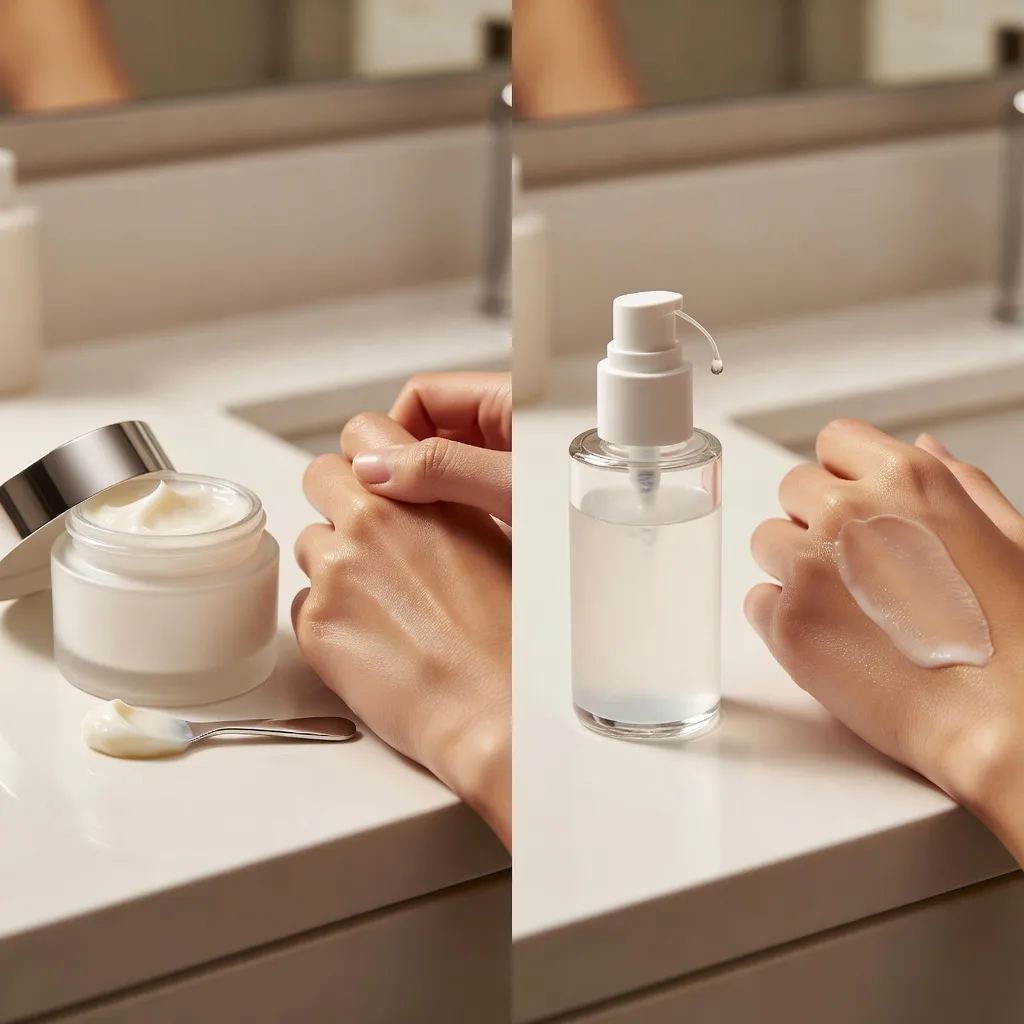
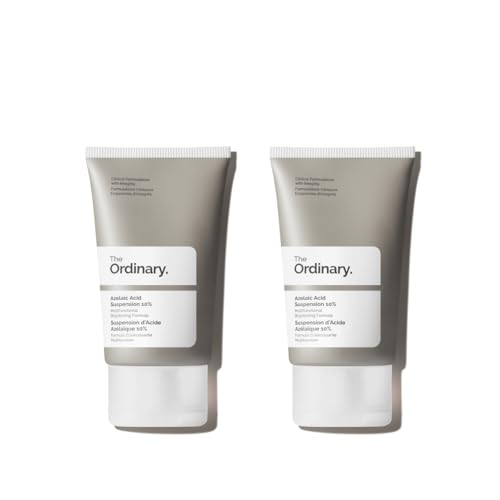
A night cream is a moisturiser designed for evening use. Its main job is to hydrate and support the skin barrier, though some add active ingredients. A leave-on treatment is a product built around an active ingredient, such as a retinoid, azelaic acid, benzoyl peroxide or an exfoliating acid, that targets a specific concern like acne, pigmentation or fine lines. Most people need a moisturiser at night; a treatment is optional and depends on your skin goals. When you use both, the treatment usually goes on first and the night cream follows.
The confusion comes from marketing. Some night creams contain retinol or peptides, which makes them part moisturiser, part treatment. Some treatments come in creamy bases that feel like moisturisers. Reading the ingredient list and the directions tells you far more than the name on the front.
The American Academy of Dermatology advises choosing a moisturiser that suits your skin type and using it regularly, and it recommends moisturising as part of any routine that targets ageing skin. Treatments can add benefits on top of that, but they rarely replace it.
This guide explains what each product does, how to tell which one you are holding, whether you need both, and how to layer them so you get results without irritation.
Shopping these picks?
Amazon Prime members get fast, free shipping on eligible items, plus Prime Video, Amazon Music and member deals. New members can start with a free trial.
Start a free Prime trialAged 18 to 24? Prime for Young Adults comes with a longer free trial and a lower price after it.
Affiliate link: we may earn a commission at no extra cost to you.
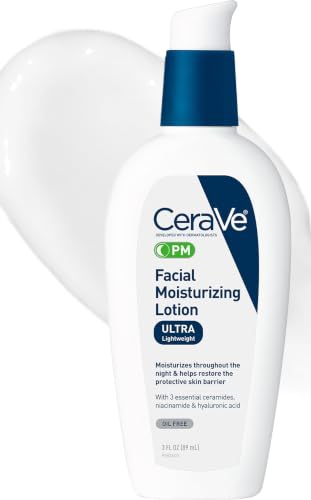
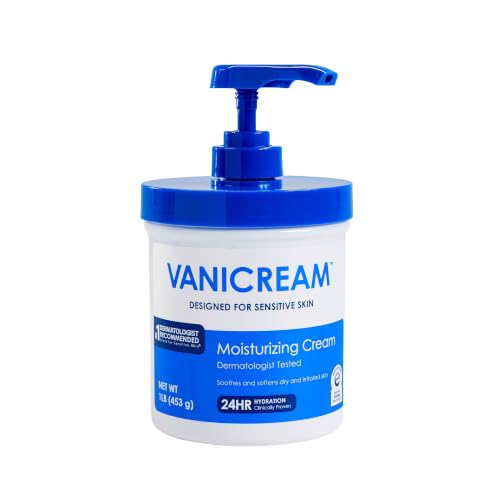
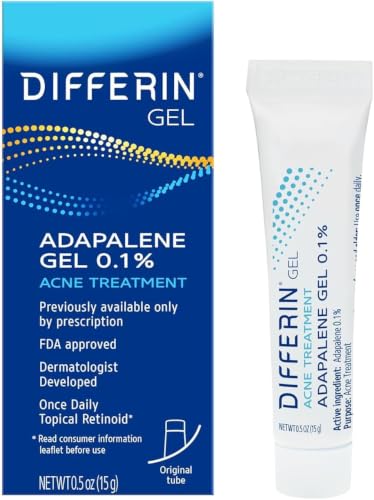
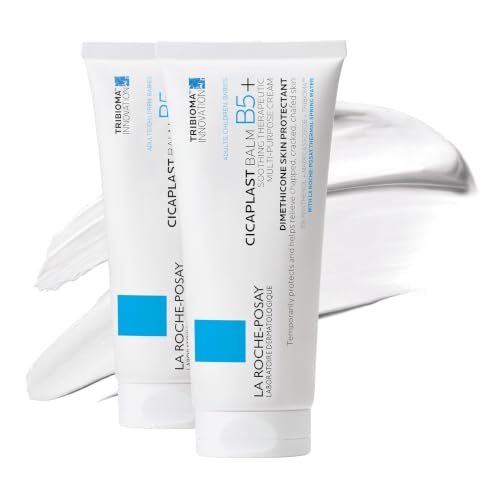
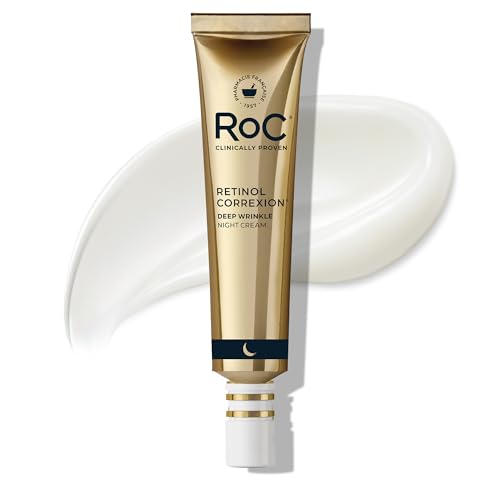
Recommended Night Creams and Leave-On Treatments

At a Glance
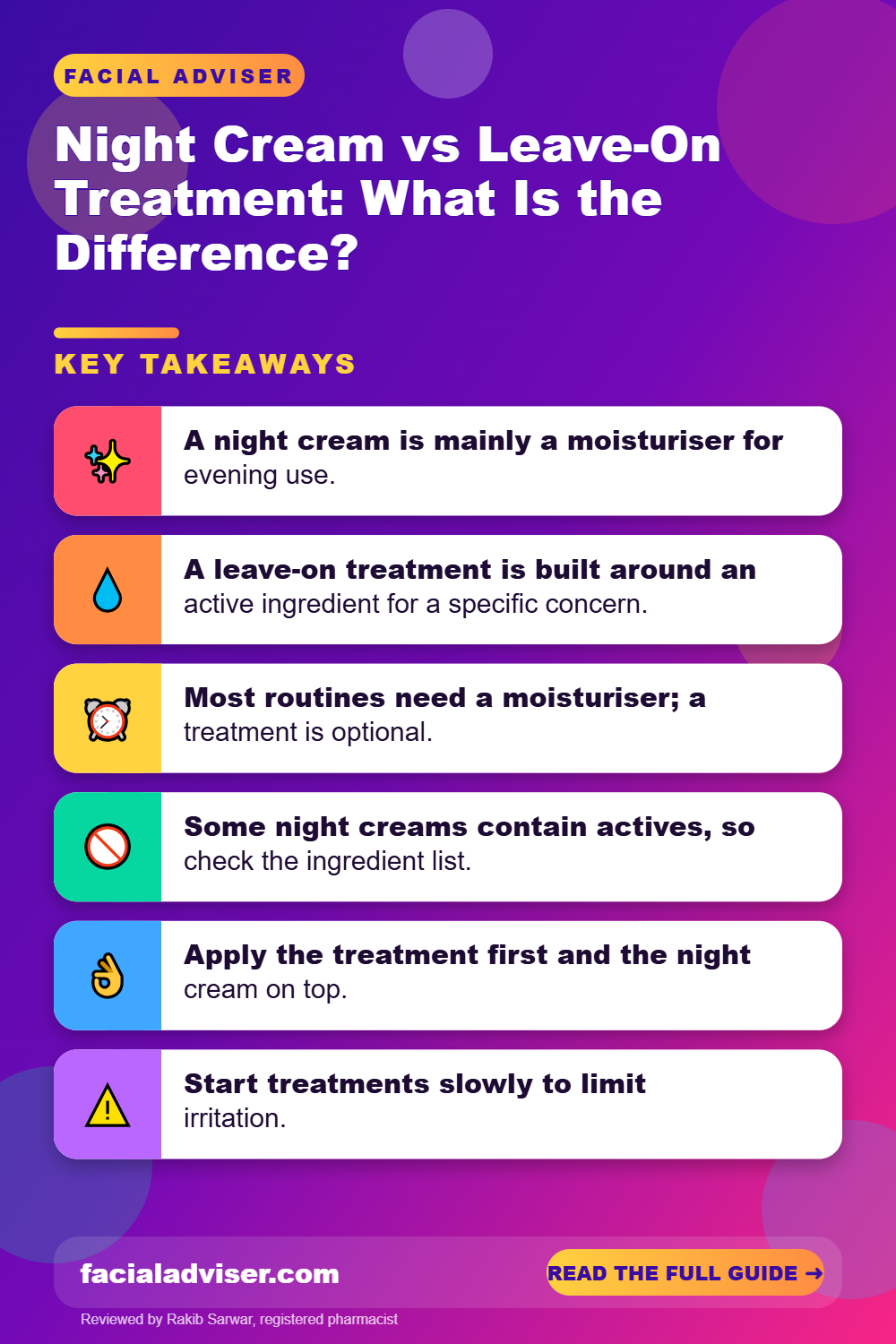
- A night cream is mainly a moisturiser for evening use.
- A leave-on treatment is built around an active ingredient for a specific concern.
- Most routines need a moisturiser; a treatment is optional.
- Some night creams contain actives, so check the ingredient list.
- Apply the treatment first and the night cream on top.
- Start treatments slowly to limit irritation.
- Do not stack several strong treatments on the same night.
On This Page
- Night Cream vs Leave-On Treatment at a Glance
- What a Night Cream Actually Does
- Common Leave-On Treatments and What They Target
- Which One Do You Need?
- How to Use a Treatment and Night Cream Together
- Where Each Step Fits in a Night Routine
- Choosing by Skin Type
- Dos and Don’ts
- Common Mistakes
- Honest Limits
- When to See a Dermatologist
- Questions People Ask
- The Takeaway
Night Cream vs Leave-On Treatment at a Glance
The simplest way to think about it: a night cream looks after the skin you have, while a treatment tries to change something about it.
| Feature | Night cream | Leave-on treatment |
|---|---|---|
| Main job | Hydrate and support the barrier | Target acne, pigment, texture or lines |
| Key ingredients | Humectants, emollients, ceramides, occlusives | Retinoids, acids, azelaic acid, benzoyl peroxide |
| Texture | Usually a cream or lotion | Gel, serum, lotion or cream |
| Amount used | Enough to cover the face | Often a pea-sized amount |
| Irritation risk | Low for most formulas | Moderate, especially at first |
| Needed by most people | Yes, in some form | Only if you have a specific goal |
| Where it goes | Last or near last | Before moisturiser, on clean skin |
A product can sit in both columns. A retinol night cream is a moisturiser with a treatment ingredient added, which is convenient but gives you less control over the strength of the active.
The words night cream and treatment are marketing terms, not regulated categories. What matters is what is in the product and how the directions tell you to use it.
What a Night Cream Actually Does
Most night creams are richer versions of daytime moisturisers without sunscreen. Because you are not wearing makeup or going outside, they can be heavier and include more occlusive ingredients that slow water loss overnight.
- Humectants such as glycerin and hyaluronic acid draw water into the outer layer of skin.
- Emollients such as squalane and plant oils soften and smooth rough patches.
- Barrier lipids such as ceramides and cholesterol help restore the skin’s protective layer.
- Occlusives such as petrolatum and dimethicone form a light seal to reduce water loss.
Whether you need a special night cream or can simply use your daytime moisturiser at night depends on your skin. Oily skin often does fine with the same light lotion twice a day. Dry skin tends to appreciate something richer in the evening. The AAD’s advice on choosing a moisturiser focuses on skin type and avoiding fragrance if you are sensitive, rather than on the time of day printed on the label.
Our comparison of moisturiser versus lotion explains how textures differ if you are deciding how rich your night cream needs to be.
Common Leave-On Treatments and What They Target
A leave-on treatment is anything with an active ingredient that you apply and do not rinse off. They are usually more concentrated than the same ingredient in a moisturiser.
| Treatment | Main uses | Things to know |
|---|---|---|
| Retinoids (retinol, adapalene) | Acne, fine lines, uneven texture | Start two or three nights a week; can dry and irritate at first |
| Azelaic acid | Redness, acne, dark marks | Often well tolerated; can tingle briefly |
| Benzoyl peroxide | Acne | Can bleach fabrics and dry the skin |
| AHAs and BHAs | Rough texture, clogged pores | Increase sun sensitivity; avoid overuse |
| Niacinamide | Oil, redness, uneven tone | Gentle for most skin types |
| Prescription creams | Specific conditions | Use exactly as your doctor directs |
Some of these, such as adapalene gel, are medicines, and others are cosmetic ingredients. Either way, they are more likely than a plain moisturiser to cause dryness, stinging or peeling, especially in the first few weeks.
Our guide on starting retinol smoothly covers how to build up a retinoid without a flare of irritation.
Which One Do You Need?
Start with your goal. If your skin feels tight, dry or rough in the morning, a better night cream is likely to help more than any treatment. If you want to tackle breakouts, dark marks or early lines, a treatment makes sense, with a moisturiser alongside it.
| Your main concern | Start with | Add later if needed |
|---|---|---|
| Dryness or tightness | A richer night cream | Nothing, or a gentle hydrating serum |
| Breakouts | Adapalene or benzoyl peroxide | A light non-comedogenic moisturiser |
| Dark marks | Azelaic acid or a retinoid | A soothing night cream |
| Fine lines and texture | A retinoid | A barrier-supporting night cream |
| Redness and sensitivity | A gentle, fragrance-free moisturiser | Azelaic acid, after checking with a dermatologist |
If you are new to skincare, begin with a cleanser, a moisturiser and a daytime sunscreen. Add one treatment only once that basic routine feels comfortable. Adding several products at once makes it hard to know what is helping and what is causing problems.
If you are unsure whether a product is a moisturiser or a treatment, check the directions. Treatments usually tell you to use a small amount, start slowly or avoid the eye area. Moisturisers rarely do.
How to Use a Treatment and Night Cream Together
Cleanse gently
Wash with a mild cleanser and lukewarm water, then pat your skin dry.
Wait briefly
Let your skin dry fully if your treatment’s directions recommend it, as damp skin can increase stinging with some actives.
Apply the treatment
Use the amount on the label, often a pea-sized amount for the whole face, and avoid the corners of the nose, eyes and mouth.
Let it settle
Give the treatment a minute or two to absorb.
Apply your night cream
Smooth on a normal amount of moisturiser over the treatment.
Protect in the morning
Wear sunscreen the next day, especially if you use retinoids or exfoliating acids.
If a treatment stings or dries you out, a common workaround is to apply moisturiser first and the treatment on top, or to mix a small amount of treatment with moisturiser. This can reduce irritation, though it may also slightly reduce how strongly the active works. Follow any specific directions from your doctor for prescription products.
Where Each Step Fits in a Night Routine
A typical evening routine is short: remove makeup and sunscreen, cleanse, apply a treatment if you use one, then moisturise. Thin, watery products go before thicker ones, so a serum-style treatment goes before a cream.
Our guide to morning versus night routine order sets out the full sequence, including where hydrating toners and eye creams fit.
If you use more than one treatment, it is usually better to alternate them on different nights than to layer them. Pairing a retinoid with an exfoliating acid on the same night is a common cause of stinging and peeling. Rotating nights, sometimes called skin cycling, is explained in our guide to how many nights off actives you need.
Choosing by Skin Type
Dry skin: a rich night cream with ceramides and an occlusive is the priority. Treatments can still work, but buffer them with plenty of moisturiser and introduce them slowly. Oily or acne-prone skin: you may not need a heavy night cream at all. A light, oil-free lotion over a treatment such as adapalene or benzoyl peroxide is often enough. Look for products labelled non-comedogenic. Sensitive skin: keep the night cream simple and fragrance-free. Choose gentler treatments, such as azelaic acid or a low-strength retinoid used a couple of nights a week, and patch test first. Combination skin: you can use a richer cream on dry areas and a lighter layer, or none, on oily areas. Treatments can also be applied only where they are needed. Mature skin: many people benefit from both a retinoid for texture and a supportive night cream for comfort. The AAD notes that moisturising and daily sunscreen are among the most useful habits for ageing skin.Dos and Don’ts
Do
- Use a moisturiser every night if your skin needs it
- Introduce one treatment at a time
- Start treatments two or three nights a week
- Apply the treatment before your night cream
- Wear sunscreen the next morning
Don’t
- Assume a night cream is a treatment because of its claims
- Layer several strong actives on the same night
- Use more treatment to speed up results
- Apply actives to broken or irritated skin
- Stop moisturising while using a treatment
Common Mistakes
Paying for claims you do not need. A night cream promising to transform your skin overnight is still mostly a moisturiser. If you want a specific result, a targeted treatment with a known active ingredient is usually a better investment. Doubling up without realising. Using a retinol night cream as well as a separate retinoid serum means two doses of the same type of ingredient, which raises the risk of irritation. Check every product in your routine for overlapping actives. Skipping moisturiser to let the treatment work. Moisturiser does not block most treatments, and it helps you tolerate them. Going without often leads to dryness that forces you to stop. Giving up too soon. Treatments often take several weeks or longer to show results. A night cream can make skin feel better the next morning, but changes in acne, marks or texture take time.Some treatments, including retinoids, are not recommended during pregnancy. If you are pregnant, trying to conceive or breastfeeding, check with a doctor before starting any leave-on treatment.
Honest Limits
No night cream or over-the-counter treatment will erase deep wrinkles, scars or long-standing pigmentation on its own. Results from treatments are gradual and vary from person to person, and many of the claims made for night creams are based on how skin feels rather than lasting changes.
If you already have a simple routine that keeps your skin comfortable, you do not need to add a treatment. A good moisturiser and consistent sunscreen use are a solid foundation, and everything else is optional.
When to See a Dermatologist
- Acne is painful, widespread or leaving scars.
- Dark patches keep spreading or do not fade.
- A treatment causes burning, swelling or a rash.
- You are not sure whether a prescription treatment would suit you.
A dermatologist can prescribe stronger treatments, such as prescription retinoids, and advise how to combine them with the right moisturiser for your skin.
This article is for general information and does not replace professional medical advice. See a dermatologist for persistent skin concerns.
Questions People Ask
What is the difference between a night cream and a leave-on treatment?
A night cream mainly moisturises; a leave-on treatment contains an active ingredient that targets a specific concern.
Do I need a night cream?
Most people need a moisturiser at night, but it does not have to be labelled night cream.
Can I use my day moisturiser at night?
Yes, as long as it suits your skin. Some people prefer a richer cream at night.
Which goes first, treatment or night cream?
Usually the treatment first, then the night cream on top.
Can a night cream replace a treatment?
Only if it contains an effective active ingredient, and even then the strength is often lower.
Can I use two treatments at night?
It is usually better to alternate strong treatments on different nights.
Will moisturiser stop my treatment from working?
For most treatments, no. Moisturiser helps you tolerate them.
How long do treatments take to work?
Often several weeks or longer, depending on the ingredient and concern.
Is a retinol night cream a treatment?
It is a moisturiser with a treatment ingredient, so it does both jobs to some degree.
Should I use sunscreen if I use night treatments?
Yes. Daily sunscreen is important, especially with retinoids and exfoliating acids.
The Takeaway
A night cream is a moisturiser for evening use, while a leave-on treatment is built around an active ingredient for a specific concern. Most people need the first; the second depends on your skin goals.
If you use both, apply the treatment to clean skin, let it settle and follow with your night cream. Introduce one treatment at a time, alternate strong actives and keep up daily sunscreen.

Written by
Registered pharmacist and founder of Facial Adviser. Rakib's pharmacy training covers how skincare actives work and interact; a later course in cosmetology turned that into a focus on facial treatments and skincare products. He plans, researches and edits every guide on the site and checks health claims against sources such as the American Academy of Dermatology, the FDA and the NIH. He is not a dermatologist; see the Editorial Policy and Medical Disclaimer.
About · Editorial policy · How we choose products · Medical disclaimer · Contact
Keep reading: Moisturisers and face oils
- 10 Best Facial Moisturizers for Dry Skin (2026): Rich, Gentle Creams
- Do Facial Oils Clog Pores? What Actually Matters
- Which Face Oil Is Best for Combination Skin?
- 10 Best Indoor Tanning Lotions (2026): Sunless Colour, No Tanning Bed
- Does Shea Butter Remove Dark Spots? Real Answer
- Can You Use Rosehip Oil With Retinol?
- 10 Best Face Masks for Every Skin Type (2026): Clay, Gel and Sheet
- What Does a Facial Toner Do? The Real Answer