10 Best Facial Washes for Oily Skin (2026): Clean and Matte, Not Tight
Oily skin can feel greasy by lunchtime, and it is tempting to reach for the strongest, most squeaky-clean face wash you can find. That tightness is not a sign that a cleanser is working. This list covers 10 options, from gentle gels and foams to salicylic acid and clay washes, with notes on who each suits.
Part of our guide to skincare products. Start with: 10 Best Facial Cleansers for Combination Skin (2026): Balanced Picks
The best facial wash for oily skin is usually a gentle foaming gel or light foam that is labelled oil-free and non-comedogenic, has a mild surfactant system and, if you also get clogged pores or spots, contains salicylic acid. Niacinamide or zinc in a wash can be a pleasant extra, but most of their benefit comes from leave-on products. Avoid harsh soaps, high amounts of drying alcohol, gritty scrubs and heavy fragrance. Wash no more than twice a day and after heavy sweating, rinse with lukewarm water and follow with a light moisturiser. The right wash leaves skin clean and matte, not tight, flaky or stinging.
In short: choose a gentle gel wash, add salicylic acid if you break out, and never judge a cleanser by how tight it leaves your face.
The American Academy of Dermatology advises washing the face twice a day and after sweating with a gentle, non-abrasive cleanser, and warns that scrubbing can irritate skin and make acne worse.
Below are our ten picks, followed by a buyer’s guide on which formulas and ingredients suit oily skin, what to skip, how to tell if a wash is too harsh and how to use it for the best result.
Shopping these picks?
Amazon Prime members get fast, free shipping on eligible items, plus Prime Video, Amazon Music and member deals. New members can start with a free trial.
Start a free Prime trialAged 18 to 24? Prime for Young Adults comes with a longer free trial and a lower price after it.
Affiliate link: we may earn a commission at no extra cost to you.
As an Amazon Associate we earn from qualifying purchases. This does not change which products we include.


At a Glance
- Cetaphil Pro Oil Removing Foam Wash is our top pick for controlling shine without stripping.
- Aveeno Clear Complexion suits oily skin that also gets blackheads and spots.
- Eight Saints Down To Earth Mud Gel is the clay option for a deeper, gentle clean.
- Gentle foaming gels and light foams suit most oily skin.
- Tightness after washing is a warning sign, not a good sign.
- Twice a day is enough; more often can irritate.
- Oily skin still needs a light moisturiser and sunscreen.
In This Guide
- The 10 Best Facial Washes for Oily Skin Right Now
- How We Chose These Products
- Which Type of Face Wash Suits Oily Skin?
- Ingredients Worth Looking For
- What to Avoid in a Face Wash for Oily Skin
- Does Stripping Oil Make Skin Oilier? The Rebound Myth
- Oily and Acne-Prone Skin: When to Use a Medicated Wash
- How Often Should You Wash Oily Skin?
- How to Wash Oily Skin the Right Way
- What to Use After Your Face Wash
- Dos and Don’ts
- Honest Limits
- When to See a Dermatologist
- Frequently Asked Questions
- The Bottom Line
The 10 Best Facial Washes for Oily Skin Right Now
These ten washes were shortlisted from widely reviewed Amazon listings and focus on gentle gels and foams that control shine without stripping, plus salicylic acid and clay options for congested skin. Each pick lists who it suits, its trade-offs and who should skip it.
| # | Product | Best For | Standout Feature | |
|---|---|---|---|---|
| 1 | Cetaphil Pro Oil Removing Foam Wash | Shiny skin that also reacts easily | Zinc foam that cuts shine gently | View |
| 2 | Aveeno Clear Complexion Foaming Cleanser | Oily skin with blackheads and spots | Salicylic acid foam in a three-pack | View |
| 3 | Eight Saints Down To Earth Mud Gel Face Wash | Oily and combination skin that likes clay | Kaolin and French clay in a gel | View |
| 4 | philosophy purity made simple Mattifying Cleanser | A matte finish without a tight feel | Oil-free light foam with bamboo extract | View |
| 5 | COSRX Low pH Good Morning Gel Cleanser (2 Pack) | Sensitive, oily skin that stings easily | Low pH gel with a touch of BHA | View |
| 6 | Avene Cleanance Cleansing Gel | Blemish-prone oily skin on face and body | Soap-free, alcohol-free gel for oily skin | View |
| 7 | Bulldog Oil Control Face Wash | Men with oily skin who want a simple wash | Witch hazel, willow bark and juniper | View |
| 8 | Neutrogena Skin Balancing Kaolin Clay Cleanser | Oily skin that wants a gentle clay and acid wash | Kaolin clay with 2% PHA | View |
| 9 | Bioderma Sebium Purifying Face Cleanser | Oily skin that wears daily makeup | Purifying gel that also removes makeup | View |
| 10 | Derma E Acne Face Wash, Gentle Oil Control | Oily, congested skin that wants a gentle acne wash | Oil-control acne wash from Derma E | View |
Cetaphil Pro Oil Removing Foam Wash

Best for: Shiny skin that also reacts easily
The Cetaphil Pro Oil Removing Foam Wash takes the top spot because it tackles shine without the stripping that makes oily skin feel worse. It uses zinc to reduce surface oil in a pH-balanced foam, and it is designed to remove dirt, impurities and makeup without over-drying, which is the balance this guide recommends.
It is fragrance-free and positioned for sensitive skin, so it suits people whose oily skin also flushes or stings with stronger washes. It does not contain salicylic acid, so if you have many blackheads the #2 Aveeno or COSRX picks will do more for congestion. Pair it with a light, oil-free moisturiser and daily sunscreen.
- Oil removing foam wash with zinc
- pH-balanced formula
- Cleanses without over-drying
- Fragrance-free, suitable for sensitive skin
Pros
- Controls shine without stripping
- Gentle enough for reactive skin
- Removes makeup as well
Cons
- No salicylic acid for blackheads
- Foam dispenser can run out quickly
Skip it if: Skip it if blackheads and spots are your main problem; the Aveeno salicylic acid wash suits you better.
Check Price on AmazonAveeno Clear Complexion Foaming Cleanser

Best for: Oily skin with blackheads and spots
The Aveeno Clear Complexion Foaming Cleanser is the pick for oily skin that also breaks out. It pairs salicylic acid, which dissolves in oil and helps loosen clogged pores, with soy extract in a formula that is oil-free, soap-free, hypoallergenic and non-comedogenic, so it treats congestion without piling on harshness.
It is designed not to overdry, which matters because irritated skin can look shinier and more uneven. It comes as a pack of three bottles, so it lasts a long time. Compared with the #1 Cetaphil Pro, it does more for blackheads but may be a little drier on sensitive areas, so start once a day.
- Salicylic acid foaming cleanser with soy
- Oil-free, soap-free and non-comedogenic
- Hypoallergenic formula
- Pack of three bottles
Pros
- Helps with blackheads and spots
- Gentle base for an acne wash
- Long-lasting three-pack
Cons
- May dry sensitive areas at first
- Less focused on shine than zinc or clay washes
Skip it if: Skip it if you rarely get spots; a plain gel such as the Bioderma Sebium is gentler.
Check Price on AmazonEight Saints Down To Earth Mud Gel Face Wash

Best for: Oily and combination skin that likes clay
The Eight Saints Down To Earth Mud Gel is the pick for people who like the fresh feel of clay but do not want a drying mask every day. It combines pink kaolin and French clay in a gel cleanser that also removes makeup, and the brand positions it for normal, oily, combination and sensitive skin.
Clay helps absorb surface oil, and the gel format rinses cleanly so it does not leave a film. The formula also includes vitamin C and DMAE, though in a rinse-off wash their contribution is small. Compared with the Neutrogena kaolin pick, it is more of an all-in-one daily cleanser with a richer ingredient list.
- Gel cleanser with pink kaolin and French clay
- Removes makeup as it cleanses
- Vitamin C and DMAE in the formula
- Positioned for normal, oily, combination and sensitive skin
Pros
- Clay helps absorb excess oil
- Gel rinses without residue
- Doubles as a makeup remover
Cons
- Clay can feel drying on dry patches
- Extra actives do little in a rinse-off wash
Skip it if: Skip it if your skin is oily but very dehydrated; the COSRX low pH gel is gentler.
Check Price on Amazonphilosophy purity made simple Mattifying Cleanser
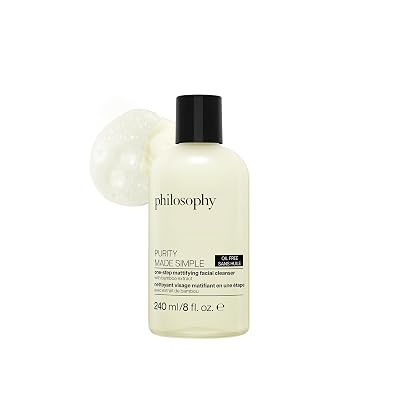
Best for: A matte finish without a tight feel
The philosophy purity made simple mattifying cleanser is the pick for people who want their skin to feel matte after washing without the squeaky tightness of harsh foams. It is an oil-free formula that creates a light foam as you lather, removing oil and dirt in one step, with bamboo extract included.
It suits oily and combination skin that is not especially acne-prone. It has no salicylic acid or zinc, so it relies on gentle cleansing rather than actives. Compared with the Cetaphil Pro, it is more about the finish and feel than treating shine at the source, and it is a good pick for people who dislike clinical-feeling washes.
- One-step mattifying cleanser
- Oil-free light foam
- Bamboo extract
- Removes oil and dirt
Pros
- Matte finish after rinsing
- Light, pleasant foam
- Simple one-step routine
Cons
- No active for blackheads
- Not the best pick for sensitive skin prone to reacting
Skip it if: Skip it if you break out often; the Aveeno or Avene Cleanance picks suit acne-prone skin better.
Check Price on AmazonCOSRX Low pH Good Morning Gel Cleanser (2 Pack)

Best for: Sensitive, oily skin that stings easily
The COSRX Low pH Good Morning Gel Cleanser is the pick for oily skin that is also sensitive. It is a mild gel designed for daily use, with a low pH that is closer to the skin’s natural level than many foaming washes, and a little BHA to help with light congestion without the punch of a full acne wash.
The two-pack means one purchase lasts months. Its mildness is its strength and its limit: it will not strip oil as quickly as the Cetaphil Pro or the clay picks, so very oily skin may still look shiny by afternoon. Compared with the Aveeno, it is gentler on sensitive skin but less targeted at breakouts.
- Low pH daily gel cleanser
- Contains BHA
- Mild enough for morning and evening use
- Supplied as a two-pack
Pros
- Gentle on sensitive, oily skin
- Light help with congestion
- Good value two-pack
Cons
- May not control heavy shine
- Mild BHA is not a full acne treatment
Skip it if: Skip it if you want strong shine control; the Cetaphil Pro or Bulldog Oil Control wash does more.
Check Price on AmazonAvene Cleanance Cleansing Gel

Best for: Blemish-prone oily skin on face and body
The Avene Cleanance Cleansing Gel is the pick for blemish-prone oily skin that needs a gentle, soap-free daily wash. It is alcohol-free and includes a plant-based extract, silymarin, intended to help reduce excess oil, and it can be used twice a day on both the face and body, such as the chest and back.
The formula is biodegradable and designed to clean without leaving skin tight, which fits the AAD advice to avoid harsh washes. It has no salicylic acid, so pair it with a leave-on treatment if you have many blackheads. Compared with the Bioderma Sebium, it is aimed a little more at blemishes than at removing makeup.
- Soap-free gel for blemish-prone, oily skin
- Silymarin plant extract to help reduce excess oil
- For face and body, twice daily
- Alcohol-free, biodegradable formula
Pros
- Gentle, soap-free cleansing
- Works on face and body
- Alcohol-free
Cons
- No salicylic acid for blackheads
- Not designed to remove heavy makeup
Skip it if: Skip it if you wear long-wear makeup daily; the Bioderma Sebium removes makeup more easily.
Check Price on AmazonBulldog Oil Control Face Wash

Best for: Men with oily skin who want a simple wash
The Bulldog Oil Control Face Wash is the pick for men with oily skin who want a straightforward, no-fuss daily wash. It contains witch hazel, willow bark and juniper, three botanical ingredients often used in classic oil-control products, and it is free from artificial colours, synthetic fragrances and animal-derived ingredients.
It is designed to leave skin clear and clean and to prepare it for shaving or the rest of a simple routine. Witch hazel can feel astringent on sensitive skin, so watch for tightness. Compared with the Cetaphil Pro, it is simpler and plant-led but has less clear evidence behind its oil-control approach. Nothing stops women using it too.
- Oil control face wash for men
- Witch hazel, willow bark and juniper
- No artificial colours or synthetic fragrances
- Prepares skin for shaving and skin care
Pros
- Simple routine for men
- Free of synthetic fragrance
- Plant-led formula
Cons
- Witch hazel may tighten sensitive skin
- Less targeted than zinc or salicylic acid washes
Skip it if: Skip it if your skin is sensitive; the COSRX low pH gel is gentler.
Check Price on AmazonNeutrogena Skin Balancing Kaolin Clay Cleanser

Best for: Oily skin that wants a gentle clay and acid wash
The Neutrogena Skin Balancing Kaolin Clay Cleanser pairs kaolin clay with 2% polyhydroxy acid, or PHA, in a mattifying wash. Clay helps absorb surface oil, while PHA is a gentle exfoliating acid with larger molecules than glycolic acid, so it is generally better tolerated by skin that reacts to stronger acids.
That makes it a good middle ground for oily skin with a rough texture that finds salicylic acid too drying. We describe it from its title, as the listing detail available to us is limited. Compared with the Eight Saints mud gel, it adds a mild acid, so avoid combining it with other exfoliating products in the same routine.
- Kaolin clay cleanser
- 2% polyhydroxy acid (PHA)
- Mattifying finish
- From an established skin care brand
Pros
- Clay and gentle acid together
- Mattifying for shiny skin
- Kinder than stronger acids for many people
Cons
- Acid can add up with other exfoliants
- Listing gives few details
Skip it if: Skip it if you already use an acid toner or serum; a plain gel such as the Bioderma Sebium is safer.
Check Price on AmazonBioderma Sebium Purifying Face Cleanser

Best for: Oily skin that wears daily makeup
The Bioderma Sebium cleanser is the pick for oily skin that wears makeup or sunscreen most days. Its title positions it as a skin-purifying face wash that also removes makeup, so it can handle the end-of-day clean in one step for lighter makeup, which helps prevent residue building up in pores overnight.
Sebium is Bioderma’s long-running range for combination and oily skin, and it is widely reviewed. We describe it from its title only. For heavy or waterproof makeup, a double cleanse may still be needed, as the guide below explains. Compared with the Avene Cleanance, it leans more towards makeup removal than blemish care.
- Purifying face cleanser for oily skin
- Removes makeup while cleansing
- Part of a range for combination and oily skin
- Face wash format
Pros
- One step for light makeup and cleansing
- Widely reviewed range
- Suits combination skin too
Cons
- May not remove heavy or waterproof makeup
- Listing gives few details
Skip it if: Skip it if blackheads are your main concern; the Aveeno salicylic acid wash does more.
Check Price on AmazonDerma E Acne Face Wash, Gentle Oil Control

Best for: Oily, congested skin that wants a gentle acne wash
The Derma E Acne Face Wash is positioned for deep pore cleansing and gentle oil control, which makes it a reasonable pick for oily, congested skin that wants an acne-focused wash without a harsh feel. Its title stresses gentleness, which matters because irritated skin often looks shinier and more uneven.
We describe it from its title, as the listing detail available to us is limited, so check the active ingredient on the product page if you need a specific one. It suits people who like the brand’s approach and want a simple acne wash. Compared with the Aveeno, it gives less information about its active on the listing.
- Acne face wash
- Deep pore cleansing
- Gentle oil control
- Facial cleanser format
Pros
- Combines acne and oil-control focus
- Positioned as gentle
- Simple one-product step
Cons
- Listing gives little detail about its active
- Not as widely known as other picks
Skip it if: Skip it if you want a clearly labelled salicylic acid strength; the Aveeno or COSRX picks are clearer.
Check Price on AmazonHow We Chose These Products
We shortlisted face washes from Amazon listings that are highly rated by a large number of shoppers, favouring established brands and fuller-featured formulas designed specifically for oily or combination skin: gentle gels and foams, low pH washes, and salicylic acid, zinc or clay options. We then checked each product’s listed features against the AAD guidance cited in this post, which favours gentle, non-abrasive cleansers used twice a day.
These are research-based picks, not hands-on lab tests. We did not trial the washes ourselves, so rankings reflect listing detail, ingredients and suitability for oily skin rather than personal results. We left out scrubs, charcoal exfoliating washes and oil-based cleansers, and anti-ageing washes not aimed at oily skin, because this guide advises against harsh or residue-leaving formulas.
- Strong ratings from a large number of shoppers
- Established brands and oily-skin formulas preferred
- Listed ingredients checked against the cited AAD guidance
- Scrubs, oil cleansers and off-target washes excluded
- No acne-cure or pore-shrinking claims repeated as fact
Which Type of Face Wash Suits Oily Skin?
Cleansers come in several textures, and texture tells you a lot about how much oil a product removes and how it will feel afterwards. For oily skin, lighter, rinse-off formulas usually feel best, but there is more than one good option.
| Format | How it feels | Suits oily skin? |
|---|---|---|
| Foaming gel | Clear gel that lathers lightly | Yes, the usual first choice |
| Light foam or mousse | Airy, rinses fast | Yes, good for oily and combination skin |
| Cream-to-foam | Creamy start, mild lather | Yes, if you also have dry patches |
| Clay or mud wash | Thicker, slightly absorbent | Sometimes, often better a few times a week |
| Micellar water | No rinse, very mild | As a first cleanse or light morning option |
| Rich cream or milk cleanser | Soft, leaves a film | Usually too heavy on its own |
| Bar soap | Strong lather, high pH | Often too harsh for the face |
A foaming gel remains the classic pick because it removes oil and sunscreen efficiently without needing to be scrubbed in. If your cheeks are drier than your T-zone, a cream-to-foam wash or a gentle gel can clean without over-drying. Our guide on hydrating versus foaming cleansers explains the trade-off in more detail.
Ingredients Worth Looking For
A cleanser only stays on your skin for a short time, so ingredient choice matters less than in a serum or moisturiser. Still, a few ingredients are genuinely useful for oily skin, especially when you give them a little contact time before rinsing.
| Ingredient | What it does | Best for |
|---|---|---|
| Salicylic acid (BHA) | Oil-soluble exfoliant that works inside pores | Blackheads, bumps, oily and acne-prone skin |
| Niacinamide | Soothing, may help oil and redness over time | Oily skin with redness or sensitivity |
| Zinc (such as zinc PCA) | Commonly used in oil-control formulas | Shine-prone T-zones |
| Glycerin | Humectant that keeps skin comfortable after washing | All oily skin, especially if easily tight |
| Kaolin or bentonite clay | Absorbs surface oil | Very oily skin, used a few times a week |
| Mild surfactants (glucosides, amino acid based) | Clean without stripping | Everyone, especially sensitive oily skin |
Look for these on the ingredient list rather than relying on marketing words such as purifying or mattifying. Niacinamide in particular tends to do more in a leave-on serum or moisturiser than in a wash, because it has more time on the skin.
What to Avoid in a Face Wash for Oily Skin
Many products marketed for oily skin are built to feel strong, and strong is often the problem. These features are worth skipping or using with caution.
- Bar soaps and high-pH washes that leave skin squeaky and tight.
- Drying alcohol high in the ingredient list, especially in a wash you use twice daily.
- Gritty scrubs with large or sharp particles that can cause tiny tears.
- Heavy fragrance or essential oils if your skin reddens or stings easily.
- Rich oils, butters or waxy film-formers that leave residue on already oily skin.
- Several strong actives in one routine, such as an acid wash plus an acid toner plus a retinoid, all at once.
If a face wash leaves your skin stinging, burning, flaking or red, stop using it. Irritated skin does not become less oily, and damaged skin can break out more. Switch to a plain, gentle wash until it settles.
Does Stripping Oil Make Skin Oilier? The Rebound Myth
You may have heard that harsh cleansers make your skin produce more oil to compensate. The truth is more nuanced. Oil production is driven mainly by hormones and genetics, so a single strong wash does not tell your glands to work harder in any simple, direct way.
What does happen is that over-cleansing damages the skin barrier. Stripped skin loses water, feels tight and can look flaky and shiny at the same time. People then pile on heavy creams or wash even more often, and the cycle feeds itself. So while the classic rebound story is oversimplified, the practical advice behind it holds: stripping your skin makes it look and feel worse, not better.
Shine and dehydration can happen together. If your face is oily but also tight, rough or flaky, your cleanser may be too harsh, and a gentler wash plus a light moisturiser often reduces both problems. Our guide on how hormones affect sebum production explains what really drives oil levels.
Oily and Acne-Prone Skin: When to Use a Medicated Wash
Oily skin and acne often go together, but not everyone with oily skin needs a medicated cleanser. Choose based on what you actually see on your skin.
- Mainly shine, no spots: a gentle foaming gel is enough.
- Blackheads and small bumps: a salicylic acid wash a few times a week, then daily if tolerated.
- Red, inflamed spots: a benzoyl peroxide wash may help; start with a lower strength.
- Sensitive skin plus spots: alternate a medicated wash with a plain gentle one.
- Breakouts on the back or chest: a body wash with the same actives can be used there.
Medicated washes work better if you leave the lather on for a short time before rinsing, rather than washing it straight off. Benzoyl peroxide can also bleach towels and pillowcases, so use white fabrics or rinse well. If you are unsure whether your wash is too strong, our guide on how to tell if a cleanser is too harsh lists the signs.
How Often Should You Wash Oily Skin?
Twice a day is the sweet spot for most oily skin: once in the morning to remove overnight oil and once at night to remove sunscreen, makeup and the day’s grime. Add a third wash only after heavy sweating, such as after exercise.
Washing four or five times a day rarely makes skin less oily for long and often leaves it irritated. If you get shiny between washes, blotting papers or a quick rinse with water are kinder options. In the morning, some people with oily but sensitive skin do well with just a splash of water or a very mild wash, keeping the fuller cleanse for the evening.
At night, if you wear water-resistant sunscreen or long-wear makeup, a double cleanse can help. Start with micellar water or a light cleansing oil, then follow with your gel wash. Oily skin can still use a cleansing oil because it rinses away with the rest.
How to Wash Oily Skin the Right Way
Technique matters as much as the product. These steps help any good wash work better and keep irritation low.
Use lukewarm water
Hot water feels satisfying but dries and irritates; cold water does not rinse oil as well.
Wash your hands first
Clean hands avoid moving dirt and bacteria onto your face.
Use a small amount
A pea to almond-sized amount of gel is usually enough for the whole face.
Massage gently with fingertips
Work it in for about 30 to 60 seconds, focusing on the T-zone, without scrubbing.
Give medicated washes a moment
Let salicylic or benzoyl peroxide lather sit briefly before rinsing, if your skin tolerates it.
Rinse thoroughly
Leftover cleanser at the hairline and jaw can irritate and clog.
Pat dry and moisturise
Use a clean towel, then apply a light, oil-free moisturiser within a few minutes.
Judge a new wash after two weeks of steady use. It should leave skin clean and comfortable for an hour afterwards, with no tightness, and your midday shine should look the same or better, not worse.
What to Use After Your Face Wash
A face wash is only the first step. Oily skin still needs a routine that supports the barrier and protects from the sun, or the benefits of a good cleanser are easily lost.
- A light gel or lotion moisturiser labelled oil-free or non-comedogenic.
- A leave-on serum with niacinamide or a mild exfoliant if you want more oil control.
- Broad-spectrum sunscreen every morning, in a fluid or gel texture.
- A retinoid at night if you also have clogged pores, introduced slowly.
- Blotting papers during the day instead of extra washing.
Skipping moisturiser does not make oily skin less oily. It usually makes it feel tight and look dull, which tempts you to over-wash again.
Dos and Don’ts
Good Habits
- Choose a gentle foaming gel or light foam
- Look for oil-free and non-comedogenic labels
- Use salicylic acid if you get blackheads
- Wash twice a day and after sweating
- Follow with a light moisturiser and sunscreen
Common Mistakes
- Chase a squeaky, tight feeling
- Scrub with grainy exfoliants every day
- Use hot water
- Wash many times a day to stop shine
- Stack several strong acne actives at once
Honest Limits
No face wash can permanently reduce how much oil your skin makes. Oil production is largely set by hormones and genetics, and a cleanser works on the surface for a few minutes a day. It can remove shine, keep pores clearer and make a good base for the rest of your routine, but it cannot change your skin type.
Claims such as pore-shrinking or all-day oil control are often exaggerated. Pores can look smaller when they are clean, but their size does not change much. For persistent oiliness or acne, leave-on treatments and, where needed, prescription options from a dermatologist do far more than any wash.
When to See a Dermatologist
- Your acne is painful, cystic or leaving marks and scars.
- Over-the-counter washes have not helped after two to three months.
- Your skin becomes very oily suddenly, especially with other symptoms such as irregular periods or excess hair growth.
- Every cleanser you try makes your skin red, stinging or flaky.
The AAD’s acne skin care tips recommend seeing a dermatologist when acne does not improve with gentle care and over-the-counter products.
This article is for general information and does not replace professional medical advice. See a board-certified dermatologist for persistent acne, sudden changes in your skin or any reaction to skin care products.
Frequently Asked Questions
What type of face wash is best for oily skin?
A gentle foaming gel or light foam that is oil-free and non-comedogenic.
Is salicylic acid face wash good for oily skin?
Yes, especially if you also get blackheads or clogged pores.
How many times a day should I wash oily skin?
Twice a day, plus after heavy sweating.
Which face wash on this list is best for sensitive oily skin?
The fragrance-free Cetaphil Pro foam and the COSRX Low pH Good Morning gel are the gentlest choices.
Can harsh cleansers make skin oilier?
Not directly, but they damage the barrier and make skin look worse.
Is the most expensive face wash for oily skin worth it?
Not always. Cetaphil Pro is refined, but the Bioderma Sebium and Avene Cleanance gels do the core job well.
Do I need moisturiser after washing oily skin?
Yes, a light oil-free one.
Is niacinamide useful in a face wash?
A little, but it works better in leave-on products.
Are clay face washes good for oily skin?
Yes; the Eight Saints mud gel and Neutrogena kaolin cleanser are gentle options, often best a few times a week.
Is bar soap okay for oily skin?
Usually too harsh and high in pH for the face.
The Bottom Line
The best facial wash for oily skin cleans away excess oil gently: a foaming gel or light foam, oil-free and non-comedogenic, with salicylic acid if you also get clogged pores or spots. The Cetaphil Pro Oil Removing Foam Wash is our top all-round pick.
Wash twice a day with lukewarm water, skip the squeaky-clean feeling, and pair your cleanser with a light moisturiser and sunscreen for skin that stays clearer and more balanced.
Our top pick: Cetaphil Pro Oil Removing Foam Wash
The Cetaphil Pro Oil Removing Foam Wash takes the top spot because it targets shine with zinc in a pH-balanced, fragrance-free foam designed not to over-dry, which is exactly the balance oily skin needs. Choose the Aveeno Clear Complexion instead if you also get blackheads and spots, or the Bioderma Sebium if you want a gel that also lifts light makeup.
Check Price on Amazon
Written by
Registered pharmacist and founder of Facial Adviser. Rakib's pharmacy training covers how skincare actives work and interact; a later course in cosmetology turned that into a focus on facial treatments and skincare products. He plans, researches and edits every guide on the site and checks health claims against sources such as the American Academy of Dermatology, the FDA and the NIH. He is not a dermatologist; see the Editorial Policy and Medical Disclaimer.
About · Editorial policy · How we choose products · Medical disclaimer · Contact
Keep reading: Cleansers and face wash
- 10 Best Facial Cleansers for Combination Skin (2026): Balanced Picks
- 10 Best Facial Cleansers for Hormonal Breakouts (2026): Calmer Skin
- 10 Best Facial Wipes for Oily Skin (2026): Quick, Shine-Free Cleansing
- 10 Best Facial Bar Soaps for Sensitive Skin (2026): Gentle Syndet Bars
- 10 Best Facial Cleansers for Women Over 40 (2026): Gentle, Hydrating
- 10 Best Facial Cleansers for Sensitive Dry Skin (2026): Gentle Picks
- 10 Best Facial Serums for Aging Skin (2026): Picks by Concern
- 10 Best Face Masks for Every Skin Type (2026): Clay, Gel and Sheet