10 Best Facial Exfoliators for Mature Skin (2026): Lactic, AHA and PHA
As skin matures, cell turnover slows, and dead cells linger on the surface for longer. The result is often a dull, rough or uneven look and moisturisers that seem to sit on top. This list covers 10 options, from lactic acid and PHA formulas to enzyme masks and daily pads, chosen with thinner, drier skin in mind.
Part of our guide to skincare products. Start with: 10 Best Face Masks for Every Skin Type (2026): Clay, Gel and Sheet
The best facial exfoliator for mature skin is usually a gentle chemical exfoliant rather than a gritty scrub, most often lactic acid or a polyhydroxy acid (PHA) such as gluconolactone, and sometimes a low-strength glycolic or mandelic acid for skin that tolerates it. Lactic acid and PHAs loosen dead cells while also attracting water, so they suit drier, older skin well. Start once or twice a week at night, build up slowly, moisturise afterwards and always wear broad-spectrum sunscreen, because acids increase sun sensitivity. Stinging, redness, shine or flaking are signs of over-exfoliation, not a sign it is working.
In short: choose a gentle lactic acid or PHA product, use it a few nights a week and protect your skin from the sun every day.
The US Food and Drug Administration notes that alpha hydroxy acids can increase the skin’s sensitivity to the sun, and the American Academy of Dermatology advises choosing an exfoliation method that suits your skin type and exfoliating gently.
Below you will find the ten picks, how we chose them, how the main exfoliant types compare, how to choose a strength and format, how often to use it, what to avoid and how to spot over-exfoliation.
Shopping these picks?
Amazon Prime members get fast, free shipping on eligible items, plus Prime Video, Amazon Music and member deals. New members can start with a free trial.
Start a free Prime trialAged 18 to 24? Prime for Young Adults comes with a longer free trial and a lower price after it.
Affiliate link: we may earn a commission at no extra cost to you.
As an Amazon Associate we earn from qualifying purchases. This does not change which products we include.


In This Guide
- The 10 Best Facial Exfoliators for Mature Skin Right Now
- How We Chose These Products
- Why Mature Skin Benefits From Exfoliation
- Chemical vs Physical Exfoliators for Mature Skin
- Lactic Acid, Glycolic Acid and PHAs Compared
- How to Choose Strength and Format
- How Often to Exfoliate Mature Skin
- How to Add an Exfoliator to a Mature Skin Routine
- Combining Exfoliants With Retinol, Other Actives and Sunscreen
- Signs of Over-Exfoliation
- What to Avoid and What to Do Instead
- Honest Limits
- When to See a Dermatologist
- FAQ
- Summing Up
Quick Answer
- ELEMIS Dynamic Resurfacing Facial Pads are our top pick: gentle AHA and enzyme pads that are easy to use little and often.
- BIOSSANCE Squalane + Lactic Acid serum is the best lactic acid option for dry, mature skin.
- Peter Thomas Roth Pumpkin Enzyme Mask suits people who prefer a weekly enzyme treatment over daily acids.
- Chemical and enzyme exfoliants are usually kinder to mature skin than scrubs.
- Start one to two nights a week and build up slowly; do not combine several acids and retinoids at first.
- Daily broad-spectrum sunscreen is essential with acids.
- Stinging, tightness and a shiny look mean you are overdoing it.
The 10 Best Facial Exfoliators for Mature Skin Right Now
These ten exfoliators focus on the gentler options that suit mature skin, from lactic acid and PHA formulas to enzyme masks, cleansers and daily pads. Each pick explains who it suits, its trade-offs and who should skip it.
| # | Product | Best For | Standout Feature | |
|---|---|---|---|---|
| 1 | ELEMIS Dynamic Resurfacing Facial Pads | Gentle, regular exfoliation | Non-drying AHA and enzyme daily pads | View |
| 2 | BIOSSANCE Squalane + Lactic Acid Resurfacing Night Serum | Dry, mature skin | 10% lactic acid with squalane | View |
| 3 | Peter Thomas Roth Pumpkin Enzyme Mask | A once-a-week glow treatment | Enzyme mask for dull-looking skin | View |
| 4 | ELEMIS Dynamic Resurfacing Facial Wash | Very gentle, low-effort exfoliation | Non-stripping enzyme gel cleanser | View |
| 5 | StriVectin Daily Reveal Exfoliating Pads | Smoother texture before serums | AHA pads from an anti-ageing brand | View |
| 6 | Peter Thomas Roth FIRMx Peeling Gel | Visible flakes and rough patches | Rub-off peeling gel for flaky skin | View |
| 7 | First Aid Beauty Brighten and Glow Radiance Pads | Sensitive skin trying AHAs | AHA pads positioned for sensitive skin | View |
| 8 | Good Molecules Overnight Exfoliating Treatment (3-Pack) | Experienced acid users | AHA and BHA leave-on treatment | View |
| 9 | The INKEY List PHA Toner | Sensitive or very dry mature skin | Fragrance-free PHA toner | View |
| 10 | Neutrogena Skin Perfecting 7% AHA/PHA Exfoliant | First step into liquid exfoliants | AHA/PHA blend with hyaluronic acid | View |
ELEMIS Dynamic Resurfacing Facial Pads

Best for: Gentle, regular exfoliation
The ELEMIS Dynamic Resurfacing Pads earn the top spot because they make gentle exfoliation simple for mature skin. The listing describes non-drying AHA pads with the brand’s Tri-Enzyme Technology and a dual texture, designed to smooth uneven texture, support the skin’s natural shedding of dead cells and even out the look of dark spots.
Pre-soaked pads mean the same small dose each time, which helps you avoid the over-exfoliation this guide warns about. The brand calls them daily pads, but mature skin should start with two or three nights a week and build up. The added enzymes make them a softer choice than acid-only pads such as the #5 StriVectin, but they still need daily sunscreen because they contain an AHA.
- Non-drying AHA resurfacing pads
- Tri-Enzyme Technology with a dual-texture pad
- Designed to smooth texture and even the look of tone
- Can be used before makeup for a smoother base
Pros
- Pre-measured dose every time
- Gentle enzyme and AHA combination
- Quick to use at night
Cons
- Textured side can feel rough on thin skin
- AHAs still increase sun sensitivity
Skip it if: Skip it if you have very sensitive skin; start with the PHA toner instead.
Check Price on AmazonBIOSSANCE Squalane + Lactic Acid Resurfacing Night Serum

Best for: Dry, mature skin
BIOSSANCE’s Squalane + Lactic Acid serum is the pick for people who want the acid this guide recommends first for drier, older skin. The title describes a vegan night serum with 10% lactic acid paired with squalane, an emollient that helps offset the dryness acids can cause. Lactic acid loosens dead cells while also attracting water to the skin.
As a leave-on night serum it works more steadily than the #3 enzyme mask, but 10% is a moderate strength, so start two nights a week and never on the same night as a retinoid at first. Its listing gives little detail beyond the title, so we have not assumed other ingredients. Wear sunscreen daily.
- Night serum with 10% lactic acid
- Squalane for a softer feel
- Vegan formula
- Leave-on resurfacing treatment
Pros
- Uses the acid best suited to dry, mature skin
- Squalane helps cushion dryness
- Simple night-time step
Cons
- 10% may sting very sensitive skin at first
- Listing gives little ingredient detail
Skip it if: Skip it if you already use a strong retinoid most nights and your skin is irritated.
Check Price on AmazonPeter Thomas Roth Pumpkin Enzyme Mask

Best for: A once-a-week glow treatment
The Peter Thomas Roth Pumpkin Enzyme Mask is the pick for people who would rather exfoliate once a week than add another daily step. The title describes an enzymatic resurfacing mask aimed at dullness and the look of fine lines. Fruit enzymes break down the bonds between dead cells on the surface, which many people find gentler than scrubs.
Used as a short mask, it suits mature skin that feels rough or dull but does not want regular acids. Enzyme masks can still tingle, so follow the timing on the pack and rinse off if it stings. It is a treat rather than a routine step, unlike the #1 pads, and it will not change deeper lines.
- Enzymatic exfoliating face mask
- Designed for dull-looking skin
- Positioned to soften the look of fine lines
- Rinse-off format
Pros
- Weekly routine, not a daily step
- Enzymes are an alternative to scrubs
- Leaves skin looking brighter
Cons
- Can tingle on sensitive skin
- One-off effect needs regular repeats
Skip it if: Skip it if you are allergic to pumpkin or fruit enzymes.
Check Price on AmazonELEMIS Dynamic Resurfacing Facial Wash
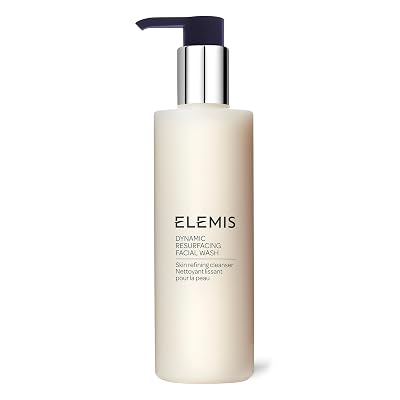
Best for: Very gentle, low-effort exfoliation
The ELEMIS Dynamic Resurfacing Facial Wash is the pick for people who want the gentlest possible start. The listing describes a non-stripping, non-drying enzyme gel cleanser that turns into a light lather, uses the same Tri-Enzyme approach as the #1 pads and adds a hydrating ingredient called Cocos Poria. It is described as suitable for all skin types.
Because it is rinsed off after a minute, its effect is mild, which is a good thing for thin, dry skin. You can use it on nights when you are not using a stronger acid, and it pairs naturally with the #1 pads. Do not expect big changes in texture on its own; it is a maintenance step.
- Daily enzyme exfoliating cleanser
- Non-stripping, non-drying formula
- Creamy gel with a light lather
- Suitable for all skin types
Pros
- Very gentle rinse-off exfoliation
- Replaces your usual cleanser
- Easy to combine with other steps
Cons
- Mild effect on rough texture
- Adds another active if you already use acids
Skip it if: Skip it if your skin is very reactive and already uses another acid or retinoid nightly.
Check Price on AmazonStriVectin Daily Reveal Exfoliating Pads

Best for: Smoother texture before serums
StriVectin’s Daily Reveal pads are the pick for people who like the pad format but want a brand focused on ageing skin. The listing says to swipe a pad over clean skin in the morning or evening and follow with serum and moisturiser, and it carries a clear warning that the AHA inside can increase sun sensitivity, which is honest labelling.
Sixty pads last a long time if you use them two or three nights a week, which is where mature skin should start. They are a simpler, acid-led alternative to the #1 ELEMIS pads, without the enzyme component. Use sunscreen every morning and pause them if you notice stinging or tightness.
- Pre-soaked AHA exfoliating pads
- Use morning or evening on clean skin
- Follow with serum and moisturiser
- Clear sun-sensitivity warning on the label
Pros
- Pad format is quick and tidy
- Sixty pads in a jar
- Honest sun-safety labelling
Cons
- AHA can sting dry or sensitive skin
- Listing gives little ingredient detail
Skip it if: Skip it if you want an acid-free option; the enzyme picks will suit you better.
Check Price on AmazonPeter Thomas Roth FIRMx Peeling Gel

Best for: Visible flakes and rough patches
The FIRMx Peeling Gel is the pick for mature skin with visible dry flakes. The title describes a gentle exfoliant for dry, flaky skin that removes impurities and smooths, and the listing says it suits all skin types. Peeling gels are massaged over the skin, where they roll up and lift loose surface flakes as they go.
It works more like a gentle physical exfoliant than an acid, so use very light pressure and keep it to once a week on thin skin. It gives a quick smoothness before makeup, but it does not build results the way the #2 lactic serum can. Avoid the delicate eye area.
- Peeling gel exfoliant
- Aimed at dry, flaky skin
- Removes impurities and smooths
- Suitable for all skin types
Pros
- Instant smoothness on flaky patches
- No leave-on acid
- Quick weekly step
Cons
- Rubbing can irritate thin or fragile skin
- Short-lived effect compared with acids
Skip it if: Skip it if your skin is thin, easily bruised or has broken capillaries.
Check Price on AmazonFirst Aid Beauty Brighten and Glow Radiance Pads

Best for: Sensitive skin trying AHAs
First Aid Beauty’s Brighten and Glow Facial Radiance Pads are the pick for people with sensitive skin who want to try an AHA pad. The title describes AHA radiance pads for sensitive skin with a multi-tasking role, and the brand is known for products aimed at easily irritated skin.
The listing gives little detail beyond its title, so we have not assumed a specific acid strength. Start once or twice a week at night and compare how your skin feels with the #1 ELEMIS pads if you have used them. They are more active than the #9 PHA toner, so very reactive skin should begin there instead.
- AHA facial radiance pads
- Positioned for sensitive skin
- Multi-tasking pad format
- Pre-soaked for easy use
Pros
- Pads aimed at sensitive skin
- Easy, measured dose
- Good step up from a PHA toner
Cons
- Listing gives little ingredient detail
- Still an AHA, so sun protection is essential
Skip it if: Skip it if even mild acids make your skin sting; use the PHA toner instead.
Check Price on AmazonGood Molecules Overnight Exfoliating Treatment (3-Pack)

Best for: Experienced acid users
Good Molecules’ Overnight Exfoliating Treatment is the pick for people whose mature skin already tolerates acids well. The title describes an AHA and BHA leave-on treatment that resurfaces overnight, sold as a pack of three, so you have a long supply once you know it suits you.
Combining AHA and BHA makes it stronger than the lactic-only #2 serum or the PHA #9 toner, and BHA suits skin that still gets clogged pores. For drier or sensitive mature skin, start once a week. The listing gives little detail beyond its title, so we have not assumed particular strengths. Always pair it with daily sunscreen.
- Overnight exfoliating treatment
- AHA and BHA combination
- Leave-on format
- Pack of three
Pros
- Stronger option for acid-tolerant skin
- Helps oily or congested areas
- Multi-pack for a long supply
Cons
- Too strong for many dry, sensitive skin types
- Listing gives little ingredient detail
Skip it if: Skip it if you are new to acids; start with the PHA toner or lactic serum.
Check Price on AmazonThe INKEY List PHA Toner

Best for: Sensitive or very dry mature skin
The INKEY List PHA Toner is the most gentle pick on this list. The title describes a fragrance-free PHA toner designed to lock in moisture and improve the look of skin texture. PHAs have larger molecules than AHAs, so they work more slowly at the surface and are generally better tolerated by sensitive and dry skin.
That makes it the easiest way to begin exfoliating mature skin, or a good option on nights between stronger products such as the #2 lactic serum. Results are subtler than with glycolic or AHA pads, so give it several weeks. Its listing gives little detail beyond its title, so we have not assumed other ingredients.
- PHA exfoliating toner
- Fragrance-free formula
- Designed to help lock in moisture
- Aimed at smoother-looking texture
Pros
- Gentlest acid type on this list
- Fragrance-free
- Easy starting point for beginners
Cons
- Subtle, slow results
- Listing gives little ingredient detail
Skip it if: Skip it if your skin already tolerates stronger acids and you want faster results.
Check Price on AmazonNeutrogena Skin Perfecting 7% AHA/PHA Exfoliant

Best for: First step into liquid exfoliants
Neutrogena’s Skin Perfecting Daily Liquid Exfoliant is the pick for people who want an easy-to-find liquid exfoliant with a clear strength. The title describes a 7% AHA/PHA blend with hyaluronic acid, which combines a faster-acting AHA with a gentler PHA and adds a humectant for comfort.
It is stronger than the #9 INKEY PHA toner but milder than the #8 Good Molecules treatment, so it sits nicely in the middle. The brand calls it a daily product, but mature skin should start two or three evenings a week. Its listing gives little detail beyond its title, so we have not assumed other ingredients. Wear sunscreen daily.
- Liquid facial exfoliant
- 7% AHA/PHA blend
- Contains hyaluronic acid
- Designed for regular use
Pros
- Clear strength on the label
- Balanced AHA and PHA blend
- Easy to find in pharmacies
Cons
- Daily use is too frequent for many mature skins
- Listing gives little ingredient detail
Skip it if: Skip it if you only want an acid-free exfoliant; the enzyme cleanser suits you better.
Check Price on AmazonHow We Chose These Products
We shortlisted exfoliators from Amazon listings that are highly rated by a large number of shoppers, favouring established brands and fuller-featured formulas based on lactic acid, PHAs, gentle AHA blends or fruit enzymes. We then checked each product’s listed features against the FDA and AAD guidance cited in this post, which stresses sun protection with AHAs and gentle exfoliation suited to your skin type, and left out gritty scrubs, body products and acne-focused treatments.
These are research-based picks, not hands-on lab tests. We have not used each product on mature skin for weeks, so rankings reflect listing detail, ingredient type and how gentle each format is rather than personal results. Where a listing makes anti-wrinkle or clinical claims, we have not repeated them as fact.
- Strong ratings from a large number of shoppers
- Established brands and fuller-featured formulas preferred
- Lactic acid, PHA, gentle AHA and enzyme formulas prioritised
- Listed features checked against the cited FDA and AAD guidance
- Scrubs, body washes and acne treatments excluded
Why Mature Skin Benefits From Exfoliation
From middle age onwards, the skin renews itself more slowly and makes less oil. Dead cells build up in an uneven layer, which scatters light and makes skin look dull. Rough patches also make fine lines and makeup texture more noticeable.
Regular gentle exfoliation removes some of this build-up, so skin looks smoother and brighter, and serums and moisturisers spread more evenly. Over time, some acids used consistently may also help the look of fine lines and uneven tone.
The catch is that mature skin often has a weaker barrier and is slower to recover from irritation. That is why the goal is gentle, regular exfoliation rather than strong, occasional stripping. Hormonal changes around menopause can make skin drier and more reactive than it was even a few years earlier, so a product you used happily in your thirties may now feel too strong.
Chemical vs Physical Exfoliators for Mature Skin
There are two broad ways to exfoliate: dissolving the bonds between dead cells with acids or enzymes, or removing them with friction.
| Type | Examples | Mature skin fit | Notes |
|---|---|---|---|
| Lactic acid (AHA) | Serums, toners, lotions | Very good | Exfoliates and hydrates; gentler than glycolic |
| PHA | Gluconolactone, lactobionic acid | Very good | Largest molecules, gentlest acid option |
| Glycolic acid (AHA) | Toners, pads, serums | Good if tolerated | Strongest common AHA; more stinging |
| Mandelic acid (AHA) | Serums | Good | Larger molecule, fairly gentle |
| Salicylic acid (BHA) | Toners, gels | Fair | Best for oily or clogged areas; can dry |
| Enzymes | Papain, bromelain masks | Good | Very mild, occasional use |
| Grainy scrubs | Beads, sugar, shell | Poor | Friction can irritate thin skin |
| Brushes and tools | Rotating brushes, rough cloths | Poor to fair | Easy to overdo |
The FDA page on alpha hydroxy acids explains what AHAs are and why sun protection matters when you use them.
Lactic Acid, Glycolic Acid and PHAs Compared
These three are the most useful options for mature skin, and they differ mostly in how strong and how hydrating they are.
Lactic acid is often the best first choice. It exfoliates effectively but tends to sting less than glycolic acid, and it acts as a humectant, drawing water into the skin, which suits dryness. PHAs are the gentlest acids, with larger molecules that penetrate more slowly, so they are a good choice for sensitive or very dry mature skin, or for anyone who has reacted to other acids.
Glycolic acid has the smallest molecule and works fastest. It can give noticeable smoothing for skin that tolerates it, but it is more likely to cause stinging, redness and dryness. If you have used acids happily for years, a low-strength glycolic product may suit you; if you are new to exfoliation, start with lactic acid or a PHA. Mandelic acid sits somewhere in between and is sometimes chosen by people with darker skin tones who want to lower the risk of irritation leading to dark marks, though any acid can cause this if overused.
How to Choose Strength and Format
The same acid can feel very different depending on its strength, pH and whether you leave it on or rinse it off.
| Format | How it works | Good for |
|---|---|---|
| Rinse-off cleanser with acid | Short contact time | Beginners and very sensitive skin |
| Leave-on toner or pads | Daily or alternate-day use | Those building tolerance |
| Leave-on serum or lotion | Longer contact, more effect | Regular users wanting visible smoothing |
| Wash-off mask or peel | Stronger, occasional | Experienced users only |
| Night cream with low-level acid | Gentle, combined with moisture | Dry mature skin wanting simplicity |
Lower strengths used consistently tend to suit mature skin better than a strong product used occasionally. Pads are convenient but make it easy to rub; press them on rather than scrubbing. Serums and lotions let you control how much you use and are easy to follow with moisturiser. If a product does not show its strength, judge by how your skin reacts and start slowly. Formulas that combine an acid with soothing ingredients such as glycerin, panthenol or ceramides are usually easier to tolerate than acid-only toners.
How Often to Exfoliate Mature Skin
There is no single right frequency. It depends on the product strength, your skin and what else is in your routine.
- New to acids: once a week for two weeks, then twice a week.
- Tolerating well after a month: two to three nights a week.
- Very gentle PHA products: some people use them most nights.
- Using a retinoid: exfoliate on different nights, and less often.
- In winter or after sunburn: cut back or pause.
The AAD’s advice on how to safely exfoliate at home stresses that dry and sensitive skin usually needs a milder method and less frequent exfoliation. Our guide on how often to exfoliate sensitive skin gives more detail on building a schedule.
How to Add an Exfoliator to a Mature Skin Routine
Introduce one exfoliant at a time so you can tell how your skin reacts. Keep the rest of your routine simple for the first month, with a gentle cleanser, a plain moisturiser and sunscreen, so any reaction is easy to trace.
Patch test
Apply a little to the jawline for a few nights before using it on your whole face.
Cleanse gently
Use a mild, non-stripping cleanser and pat skin dry.
Apply at night
Use the exfoliant on dry skin in the evening, avoiding the eye area and lips.
Wait briefly
Let it absorb for a minute or two, following the product directions.
Moisturise
Apply a nourishing, fragrance-free moisturiser to support the barrier.
Protect in the morning
Apply broad-spectrum SPF 30 or higher every day, even when cloudy.
Build up slowly
Increase frequency only if skin stays comfortable for two weeks.
Alternate nights with other actives. For example, use your acid on Monday and Thursday, a retinoid on other nights once your skin is used to both, and keep one or two nights for moisturiser only.
Combining Exfoliants With Retinol, Other Actives and Sunscreen
Many people with mature skin already use a retinoid, vitamin C or an anti-ageing serum, and adding an acid on top is the most common way to end up irritated. Each of these can be useful, but they do not all need to be used on the same night.
- Retinoids: use on different nights from acids, and introduce one at a time.
- Vitamin C: usually best in the morning, with acids kept for the evening.
- Niacinamide and peptides: generally easy to pair with gentle acids.
- Benzoyl peroxide or prescription creams: ask your doctor before adding acids.
If you are starting both a retinoid and an exfoliant, begin with one, wait until your skin is comfortable for several weeks, then add the other on alternate nights. Our guide on how to transition to retinol smoothly explains how to build tolerance without flaking.
AHAs increase sensitivity to UV light, which can make skin burn more easily and undo the benefits of exfoliation. The effect can last for some time after you stop using the product.
Use a broad-spectrum sunscreen of SPF 30 or higher every morning, apply enough to cover the face and neck and reapply during long periods outdoors. For the face and neck, that is roughly a generous half teaspoon, more than most people use. A hat and shade add further protection, especially in summer.
If you are not willing to wear sunscreen daily, it is better not to use AHAs regularly. Sun damage is a major cause of wrinkles, dark spots and uneven texture, the very things exfoliation aims to improve.
Signs of Over-Exfoliation
Mature skin shows over-exfoliation quickly, and it can take weeks to recover. Because the damage builds gradually, many people only notice it after several sessions, so check how your skin feels the morning after each use. Watch for these signs.
- Stinging or burning when you apply plain moisturiser or water.
- A tight, shiny, almost plastic-looking surface.
- Redness, rawness or new sensitivity.
- Flaking or peeling that is worse than before.
- New breakouts or small bumps.
- Fine lines that suddenly look more obvious because skin is dehydrated.
If you notice these signs, stop all exfoliants, retinoids and strong actives, and use only a gentle cleanser, a plain moisturiser and sunscreen until skin feels normal. Seek medical advice if skin is blistered, weeping or very painful.
What to Avoid and What to Do Instead
A few common habits cause most exfoliation problems in mature skin.
Try This
- Choose lactic acid or PHA first
- Start once or twice a week
- Moisturise after exfoliating
- Wear SPF 30 every morning
- Pause during irritation or sunburn
Avoid This
- Scrub with rough grains
- Layer several acids at once
- Use acids on broken or sunburned skin
- Exfoliate before waxing or procedures
- Expect overnight results
If your skin never tolerates acids, you still have options. Our article on gentler alternatives to exfoliation covers enzyme masks, soft cloths and hydrating routines that smooth skin with less risk.
Honest Limits
Exfoliation improves surface texture, brightness and how well other products spread, but it does not lift sagging skin or remove deep wrinkles. At-home strengths work gradually, and visible results usually take several weeks of consistent use.
No single acid is best for everyone. Some mature skin loves glycolic acid, while other skin stings with even a mild lactic product. Deeper concerns such as sun damage, pronounced lines or stubborn dark spots may respond better to prescription retinoids or professional treatments such as chemical peels, which should be done by a trained professional. The AAD chemical peels overview explains what these involve.
When to See a Dermatologist
- Your skin burns, blisters or stays red after exfoliating.
- You have rosacea, eczema or very sensitive skin and want to try acids.
- You use prescription skin treatments.
- You notice a new, changing or bleeding spot.
- You want stronger results, such as peels or prescription retinoids.
This article is for general information and does not replace professional medical advice. See a board-certified dermatologist for persistent irritation, skin conditions or before starting strong treatments.
FAQ
What is the best exfoliator for mature skin?
A gentle chemical or enzyme exfoliant. Our top pick is the ELEMIS Dynamic Resurfacing Facial Pads, with the BIOSSANCE lactic acid serum as the best lactic option.
Are scrubs bad for mature skin?
Rough scrubs can irritate thinner, drier skin.
Is glycolic acid good for mature skin?
It can be, if your skin tolerates it.
How often should mature skin be exfoliated?
Start once or twice a week and adjust.
Can I use an acid with retinol?
Yes, but usually on different nights.
Do I need sunscreen with AHAs?
Yes, every day.
What does over-exfoliation look like?
Stinging, redness, shine and flaking.
Which exfoliator is best for sensitive mature skin?
PHAs are generally gentler, so The INKEY List PHA Toner is the easiest start; the Neutrogena AHA/PHA exfoliant is a stronger next step.
Is the most expensive exfoliator worth it?
Not always. The Good Molecules and INKEY List picks use well-known acids too; strength, format and how often you use it matter more than price.
Should I exfoliate in the morning or at night?
Night is usually best.
Summing Up
The best facial exfoliator for mature skin is a gentle chemical or enzyme exfoliant used a few times a week; the ELEMIS Dynamic Resurfacing Facial Pads are our top pick overall.
Build up slowly, moisturise after, wear sunscreen daily and stop at the first signs of over-exfoliation.
Our top pick: ELEMIS Dynamic Resurfacing Facial Pads
The ELEMIS Dynamic Resurfacing Facial Pads take the top spot because they combine a gentle AHA with enzymes in a non-drying, pre-measured daily pad, which makes it easy for mature skin to exfoliate little and often without overdoing it. Choose the BIOSSANCE Squalane + Lactic Acid serum instead if you want the lactic acid this guide recommends first for drier skin, or The INKEY List PHA Toner if your skin is sensitive.
Check Price on Amazon
Written by
Registered pharmacist and founder of Facial Adviser. Rakib's pharmacy training covers how skincare actives work and interact; a later course in cosmetology turned that into a focus on facial treatments and skincare products. He plans, researches and edits every guide on the site and checks health claims against sources such as the American Academy of Dermatology, the FDA and the NIH. He is not a dermatologist; see the Editorial Policy and Medical Disclaimer.
About · Editorial policy · How we choose products · Medical disclaimer · Contact
Keep reading: Face masks and exfoliation
- 10 Best Face Masks for Redness (2026): Cool, Calm, Fragrance-Aware
- 10 Best Face Masks for Men With Acne (2026): Clay, Mud and Patches
- 10 Best Facial Masks for Aging Skin (2026): Plumper, Smoother Skin
- 10 Best Face Masks for Pregnancy (2026): Gentle Hydration and Clay
- 10 Best Face Masks for Every Skin Type (2026): Clay, Gel and Sheet
- 10 Best Facial Cleansers for Combination Skin (2026): Balanced Picks
- 10 Best Facial Moisturizers for Dry Skin (2026): Rich, Gentle Creams