10 Best Face Masks for Men With Acne (2026): Clay, Mud and Patches
Men’s skin tends to be oilier than women’s, and shaving, sweat and beard growth add their own problems. This list covers 10 options, from clay and mud masks to salicylic acid formulas and hydrocolloid patches, with notes on who each one suits and who should skip it.
Part of our guide to skincare products. Start with: 10 Best Face Masks for Every Skin Type (2026): Clay, Gel and Sheet
The best facial mask for men to fight acne is a rinse-off mask built around one of three proven types: a clay mask to absorb excess oil, a sulfur mask to calm red spots, or a salicylic acid mask to clear clogged pores. Kaolin or bentonite clay suits oily skin and blackheads, sulfur is a good choice for inflamed pimples and sensitive skin, and salicylic acid suits blackheads, whiteheads and oily patches. Use a mask once or twice a week, keep it off freshly shaved skin, and remember it supports rather than replaces daily acne care such as a gentle cleanser, a proven acne treatment and a non-comedogenic moisturiser.
In short: choose clay, sulfur or salicylic acid, use it weekly and keep your daily routine going.
The American Academy of Dermatology advises washing acne-prone skin gently, avoiding scrubbing and choosing non-comedogenic products, and it notes that acne treatments need several weeks to show results.
Below you will find the ten picks, how we chose them, which acne mask types actually work, how to choose one for your skin and beard, how often to use it and what to avoid.
Shopping these picks?
Amazon Prime members get fast, free shipping on eligible items, plus Prime Video, Amazon Music and member deals. New members can start with a free trial.
Start a free Prime trialAged 18 to 24? Prime for Young Adults comes with a longer free trial and a lower price after it.
Affiliate link: we may earn a commission at no extra cost to you.
As an Amazon Associate we earn from qualifying purchases. This does not change which products we include.


On This Page
- The 10 Best Acne Face Masks for Men Right Now
- How We Chose These Products
- Why Men Get Acne and Where a Mask Fits In
- Acne Mask Types Compared
- Ingredients Worth Looking For
- Choosing a Mask for Your Skin Type
- Using an Acne Mask Around the Beard
- How Often Should Men Use an Acne Mask?
- How to Use an Acne Mask Step by Step
- What to Avoid
- Where a Mask Fits in an Acne Routine
- Honest Limits
- When to See a Dermatologist
- Your Questions, Answered
- The Bottom Line
What to Know First
- Borghese Fango Active Mud is our top pick for targeting blackheads without over-drying.
- philosophy purity made simple pore extractor adds salicylic acid to white clay for clogged pores.
- Gleamin Vitamin C Clay Mask suits oily skin with dull, uneven-looking tone.
- Clay absorbs oil; sulfur calms spots; salicylic acid clears pores.
- Use an acne mask once or twice a week, not daily, and never on freshly shaved skin.
- Peel-off and harsh scrub masks do more harm than good.
- A mask supports, but does not replace, a daily acne routine.
The 10 Best Acne Face Masks for Men Right Now
These ten masks were shortlisted from widely reviewed Amazon listings and are ranked by mask type, oil control, gentleness and how clearly each seller explains its use. Each pick notes who it suits, its trade-offs and who should skip it.
| # | Product | Best For | Standout Feature | |
|---|---|---|---|---|
| 1 | Borghese Fango Active Mud Mask | Oily skin with blackheads and congestion | Deep-cleansing mud that avoids over-drying | View |
| 2 | philosophy Purity Pore Extractor Clay Mask | Blackheads and bumpy, clogged texture | White clay plus salicylic acid | View |
| 3 | Gleamin Vitamin C Clay Mask | Oily skin with dull, uneven-looking tone | Oil-absorbing clays with brightening botanicals | View |
| 4 | Proactiv Amazonian Clay Face Mask | Sensitive, oily or combination skin | Bentonite and kaolin blend for all skin types | View |
| 5 | LEROSETT Clay Mask and Spot Treatment | Reactive skin that dislikes actives | Just mineral clay and water | View |
| 6 | Rugged and Dapper Deep Pore Face Mask for Men | Men wanting a simple oil-control mask | Kaolin mask formulated for men | View |
| 7 | PLANTIFIQUE Korean Clay Mask for Pores | Oily skin on a sensible budget | Pore-cleansing clay, dermatologically tested | View |
| 8 | Mario Badescu Drying Mask | Very oily skin and occasional blemishes | Clarifying mask designed to cut oil | View |
| 9 | New York Biology Dead Sea Mud Mask | Oily face plus chest or back breakouts | Dead Sea mud for face and body | View |
| 10 | Hero Cosmetics Mighty Patch Face XL | Clusters of surfacing spots on bare skin | Full hydrocolloid sheet for acne | View |
Borghese Fango Active Mud Mask

Best for: Oily skin with blackheads and congestion
The Borghese Fango Active Mud earns the top spot because it targets what bothers most men with acne-prone skin: blackheads, congestion and excess oil, especially around the nose. The listing positions it as a deep-cleansing mask that draws out impurities and helps pores look smaller and texture look smoother over time.
What sets it apart from harsher clays is that it is designed to leave skin comfortable rather than tight, which matters if shaving already irritates your jaw and neck. It is also usable on the body, so it can double up for chest or back congestion. It lacks the salicylic acid of the #2 philosophy mask, so it works more on oil than inside pores.
- Mud mask for face and body
- Aimed at blackheads and congestion
- Designed to refine the look of pores and texture
- Formulated to avoid over-drying
Pros
- Targets blackheads and oil together
- Comfortable finish for shaved skin
- Also usable on chest and back
Cons
- No salicylic acid or sulfur active
- Mud is harder to rinse from stubble
Skip it if: Skip it if your breakouts are mostly red, inflamed spots; a sulfur or benzoyl peroxide treatment will do more.
Check Price on Amazonphilosophy Purity Pore Extractor Clay Mask

Best for: Blackheads and bumpy, clogged texture
The philosophy purity made simple pore extractor mask combines purifying white kaolin clay with salicylic acid and natural exfoliants. That pairing makes it the best pick here for clogged pores, because the clay soaks up surface oil while salicylic acid works inside the pore, where blackheads and whiteheads usually form.
The creamy texture spreads more easily than a thick paste, which helps around stubble. It is more active than the #1 Borghese mud, so start once a week and keep it away from freshly shaved or broken skin. The exfoliating particles mean it should be massaged gently, not scrubbed, over inflamed spots.
- White kaolin clay to absorb oil
- Salicylic acid to target clogged pores
- Natural exfoliants for smoother texture
- Creamy, easy-to-spread formula
Pros
- Clay and acid in one step
- Well suited to blackheads
- Creamy texture rinses easily
Cons
- Exfoliants can sting on shaved skin
- Too active for very sensitive skin
Skip it if: Skip it if you already use a strong acid or retinoid nightly; the LEROSETT or Proactiv picks are gentler.
Check Price on AmazonGleamin Vitamin C Clay Mask
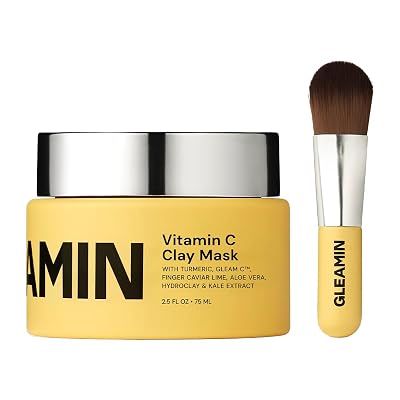
Best for: Oily skin with dull, uneven-looking tone
The Gleamin Vitamin C Clay Mask suits men whose breakouts leave skin looking dull and uneven. It uses hydroclay and kaolin to absorb excess oil and help with blackheads and pores, and adds Kakadu plum, desert lime and turmeric, antioxidant botanicals aimed at a brighter, more even-looking tone over time.
The seller suggests leaving it on for about ten minutes, two to three times a week, with one jar lasting for many uses. For acne-prone skin we would start at once or twice a week. It does not contain a salicylic acid active like the #2 philosophy mask, so treat it as an oil and tone mask rather than an acne treatment.
- Hydroclay and kaolin to absorb oil
- Kakadu plum, desert lime and turmeric
- Ten-minute rinse-off treatment
- Jar provides many full-face uses
Pros
- Oil control plus tone support
- Short ten-minute routine
- Lasts a good while
Cons
- Turmeric can leave a faint tint if not rinsed well
- No acne active such as salicylic acid
Skip it if: Skip it if you want a mask that directly targets inflamed spots; the Mighty Patch or a sulfur treatment suits that better.
Check Price on AmazonProactiv Amazonian Clay Face Mask

Best for: Sensitive, oily or combination skin
The Proactiv Amazonian Clay mask blends bentonite and kaolin clays with minerals to absorb oil and impurities, and the brand positions it as suitable for all skin types, including sensitive skin. That makes it a sensible first mask for men who find stronger acid masks sting, particularly around the beard line.
It is designed to moisturise as well as purify, with vitamins and antioxidants in the formula, and aims to refine the look of pores. Compared with the #2 philosophy mask it has no exfoliating acid, so it is gentler but less targeted at blackheads. Rinse the jawline carefully, as clay can cling to stubble.
- Bentonite and kaolin clay blend
- Minerals to absorb oil and impurities
- Vitamins and antioxidants for softer skin
- Suitable for all skin types, including sensitive
Pros
- Gentle enough for sensitive skin
- Absorbs oil without acids
- From an established acne-care brand
Cons
- Less effective on stubborn blackheads
- Small tube for regular use
Skip it if: Skip it if you have very oily skin with many blackheads; the philosophy salicylic mask is more targeted.
Check Price on AmazonLEROSETT Clay Mask and Spot Treatment

Best for: Reactive skin that dislikes actives
LEROSETT stands out for its minimal formula: micronised Moroccan clay and water, with no acids or strong actives. The seller positions it for normal, combination and oily skin at all ages, and it can be used as a thin all-over mask or dabbed on as a spot treatment on individual blemishes.
That simplicity suits men who react to fragrance, acids or long ingredient lists, and it fits alongside a prescription acne routine without stacking actives. The trade-off is that clay alone mainly absorbs oil, so it is less targeted than the #2 philosophy mask. It is vegan, and a short ingredient list also helps on freshly trimmed skin.
- Two ingredients: mineral clay and water
- Use as a thin mask or a spot treatment
- Designed for normal, combination and oily skin
- Vegan, with no acids or strong actives
Pros
- Very short ingredient list
- Doubles as a spot treatment
- Easy to pair with prescription care
Cons
- No exfoliating active for blackheads
- Clay can dry out cheeks if overused
Skip it if: Skip it if you want a mask with salicylic acid for clogged pores; the philosophy pick is the better tool.
Check Price on AmazonRugged and Dapper Deep Pore Face Mask for Men

Best for: Men wanting a simple oil-control mask
The Rugged and Dapper mask is one of the few picks made specifically for men, positioned as a deep pore cleansing treatment with kaolin clay. Kaolin is the gentler of the common mask clays, so it suits oily T-zones without being as drying as bentonite, which matters if you shave several times a week.
The listing detail is limited, so we describe it from its title. It sits between the #4 Proactiv and #7 PLANTIFIQUE masks as a straightforward clay option, and suits men who want an easy weekly routine rather than an acid treatment. As with any clay, apply thinly around stubble and rinse the jawline thoroughly.
- Face mask formulated for men
- Kaolin clay for gentle oil absorption
- Deep pore cleansing treatment
- Rinse-off weekly mask
Pros
- Designed with men’s skin in mind
- Gentle kaolin base
- Simple weekly routine
Cons
- Limited detail on the listing
- No acne active such as salicylic acid
Skip it if: Skip it if you mainly have inflamed spots; a sulfur or hydrocolloid option will help more.
Check Price on AmazonPLANTIFIQUE Korean Clay Mask for Pores

Best for: Oily skin on a sensible budget
The PLANTIFIQUE Korean Clay Mask is a straightforward pore-cleansing clay mask that the seller describes as dermatologically tested. It suits men who want a no-fuss weekly clay treatment for shine and congestion without paying for extras it does not need, and its large number of reviews suggests it is a familiar choice.
Its listing is brief, so we describe it from its title only. Compared with the #1 Borghese mud it is simpler, and compared with the #2 philosophy mask it lacks salicylic acid. Use it on the forehead, nose and chin if your cheeks are drier, and moisturise afterwards so the clay does not leave skin tight.
- Clay mask for pore cleansing
- Dermatologically tested, per the seller
- Rinse-off weekly treatment
- Suits oily and combination skin
Pros
- Simple, familiar clay mask
- Good for oily T-zones
- Easy weekly habit
Cons
- Limited detail on the listing
- No active ingredient for blackheads
Skip it if: Skip it if you want a mask with an acne active; the philosophy or Mario Badescu picks are more targeted.
Check Price on AmazonMario Badescu Drying Mask

Best for: Very oily skin and occasional blemishes
The Mario Badescu Drying Mask is positioned as a clarifying mask that eliminates oil, suited to all skin types according to its title. It is a long-standing choice for people with oily, blemish-prone skin who want a quick weekly reset for shine, and it can be applied only to the oiliest zones.
The listing gives little further detail, so we describe it from its title. It is more drying than the #4 Proactiv or #5 LEROSETT masks by design, so keep it off drier cheeks and freshly shaved skin, and moisturise afterwards. It suits the T-zone of oily skin better than a full-face application.
- Clarifying mask to reduce oil
- Positioned for all skin types
- Can be used on oily zones only
- Rinse-off weekly treatment
Pros
- Strong focus on oil control
- Easy to zone-apply
- Long-established brand
Cons
- Can be too drying for cheeks
- Limited detail on the listing
Skip it if: Skip it if your skin is dry or easily irritated; the Proactiv or LEROSETT masks are gentler.
Check Price on AmazonNew York Biology Dead Sea Mud Mask

Best for: Oily face plus chest or back breakouts
The New York Biology Dead Sea Mud Mask is a widely reviewed mud mask for both face and body, which suits men who also get congestion on the chest, shoulders or back. Mud masks work much like clay, absorbing surface oil and helping pores look clearer, and the tub makes larger areas practical.
The listing detail is limited, so we describe it from its title. It is less refined than the #1 Borghese mud and lacks the salicylic acid of the #2 philosophy mask, but it is a sensible all-rounder for weekly oil control. Treat added extras such as collagen as cosmetic rather than as acne ingredients.
- Dead Sea mud mask
- For face and body
- Aimed at pore congestion
- Rinse-off weekly treatment
Pros
- Covers face and body
- Widely reviewed
- Practical tub size
Cons
- Limited detail on the listing
- Messy to rinse from a full beard
Skip it if: Skip it if you only want a face product with an acne active; the philosophy pick is more targeted.
Check Price on AmazonHero Cosmetics Mighty Patch Face XL

Best for: Clusters of surfacing spots on bare skin
The Mighty Patch Face XL is a different kind of mask: a hydrocolloid sheet designed to cover a whole area of breakouts rather than a single spot. Hydrocolloid absorbs fluid from surfacing pimples and forms a protective cover, which also stops you picking, one of the most common reasons spots leave marks.
The listing is brief, so we describe it from its title. It suits clusters of whiteheads on the chin, cheeks or forehead, but it will not stick well over stubble or a beard, so it works best on clean-shaven areas or overnight. Unlike the clay picks, it does not control oil; it is for active spots only.
- Hydrocolloid face mask for acne
- Covers a larger area than single patches
- Protects spots from picking
- Pack of several masks
Pros
- Targets surfacing spots directly
- Discourages picking
- No drying clay or acids
Cons
- Poor adhesion over stubble or beards
- Does nothing for blackheads or oil
Skip it if: Skip it if you have a full beard or mainly blackheads; a clay or salicylic acid mask fits better.
Check Price on AmazonHow We Chose These Products
We shortlisted acne face masks from Amazon listings that are highly rated by a large number of shoppers, favouring established skincare brands and fuller-featured formulas built on clay, mud, salicylic acid or hydrocolloid. We then checked each product’s listed features against the guidance cited in this post, including the AAD’s advice on gentle care and non-comedogenic products for acne-prone skin.
These are research-based picks, not hands-on lab tests. Rankings reflect the listed ingredients, mask type and how clearly each seller explains use, rather than personal results. No mask here treats moderate or severe acne on its own, and we have not repeated any listing claims about permanently shrinking pores.
- Strong ratings from a large number of shoppers
- Established brands and clear ingredient lists preferred
- Listed features checked against the cited AAD guidance
- Hydrating-only sheet masks, pads and bulk powders left out
- Peel-off masks excluded, as this guide advises against them
- No medical claims from listings repeated as fact
Why Men Get Acne and Where a Mask Fits In
Acne starts when oil, dead skin cells and bacteria block a pore and inflammation follows. Higher androgen levels mean many men produce more oil, and shaving can irritate the skin and spread bacteria. Sweat from sport or physical work, helmets and hats add friction and trapped heat.
A mask gives a concentrated dose of oil-absorbing or pore-clearing ingredients for ten to fifteen minutes. That can reduce shine, make pores look clearer and calm some spots, but it does not keep working all day the way a leave-on treatment does. Think of it as a weekly extra on top of the basics.
Masks are most useful for men with oily skin, blackheads and a scattering of small red spots. They are least useful for deep, painful lumps under the skin, which a surface treatment cannot reach. If most of your breakouts sit along the jaw and neck, shaving habits and beard care may matter as much as any mask.
Acne Mask Types Compared
Most acne masks fall into three groups. Knowing which group a mask belongs to tells you more than the marketing on the front of the pack.
| Mask type | Main action | Best for | Watch out for |
|---|---|---|---|
| Clay (kaolin, bentonite) | Absorbs excess oil | Oily T-zone, blackheads, shine | Can dry out cheeks |
| Sulfur | Reduces spots and redness | Inflamed pimples, sensitive oily skin | Distinctive smell |
| Salicylic acid (BHA) | Clears inside pores | Blackheads, whiteheads, bumpy texture | Stinging on broken skin |
| Clay plus salicylic acid | Absorbs oil and exfoliates | Very oily, congested skin | Easy to overdo |
| Charcoal | Absorbs oil, like clay | Oily skin if you like the feel | No proven extra acne benefit over clay |
Charcoal masks are popular, but there is little evidence that charcoal does more than a plain clay mask. Choose them for feel, not for special detox claims.
Ingredients Worth Looking For
Beyond the main active, the rest of the formula decides whether a mask leaves your skin calm or tight and irritated.
- Kaolin clay: gentler, suits combination skin.
- Bentonite clay: stronger oil absorption for very oily skin.
- Sulfur: often listed at a few percent; calming for red spots.
- Salicylic acid: oil-soluble, so it gets into pores.
- Niacinamide: helps with oil and redness and is usually well tolerated.
- Glycerin, aloe or panthenol: soften the drying effect of clay.
- Fragrance-free formulas: lower the risk of irritation on shaved skin.
Skip masks that list alcohol high up alongside strong fragrance or menthol if your skin stings easily. A tingling sensation is not a sign that a mask is working.
Texture matters too. Cream-clay masks spread more evenly than thick pastes and are easier to rinse from stubble, while gel masks with salicylic acid feel lighter and suit men who dislike the tight feel of clay. Tubes and pumps also stay cleaner than open jars you dip your fingers into.
Choosing a Mask for Your Skin Type
The same mask can suit one man and irritate another. Match the type to your skin rather than to the strongest claim on the label.
| Your skin | Best mask type | How often |
|---|---|---|
| Very oily, large pores | Bentonite clay or clay with salicylic acid | Up to twice a week |
| Oily T-zone, normal cheeks | Kaolin clay on the T-zone only | Once or twice a week |
| Red, inflamed spots | Sulfur mask | Once or twice a week, or as a spot treatment |
| Blackheads and bumpy texture | Salicylic acid mask | Once a week to start |
| Sensitive or easily irritated | Sulfur or kaolin with soothing ingredients | Once a week |
If you are new to skincare, our guide to what a male facial involves explains how professionals approach cleansing and oil control for men’s skin.
Using an Acne Mask Around the Beard
Beards trap oil, sweat and dead skin, and breakouts along the jaw and neck are common. A mask can help, but hair makes application and removal harder.
- Apply a thin layer only to bare skin and short stubble.
- Avoid working clay deep into a full beard, where it is hard to rinse out.
- Use a salicylic acid mask or cleanser for skin under a longer beard.
- Rinse with plenty of lukewarm water and check the jawline for residue.
- Wash beard hair with a gentle cleanser, not harsh soap.
Do not apply an acne mask to freshly shaved skin, razor cuts or razor bumps. Leave at least a day between shaving and masking to avoid stinging, redness and irritation.
How Often Should Men Use an Acne Mask?
Once or twice a week is enough for most men. Using a clay or acid mask every day tends to strip the skin, and dry, irritated skin can produce more oil and more breakouts rather than fewer.
If you already use a strong leave-on treatment such as a retinoid or benzoyl peroxide, start with a mask once a week and watch for dryness. Our guide on whether daily mask use is okay explains why more is not always better.
Timing within the week helps as well. Many men find a mask works best the evening before a day off shaving, which gives the skin time to settle. If your skin feels tight, flaky or hot for more than a few hours afterwards, drop back to once a week or switch to a gentler type.
Watch for signs that a mask is too harsh for you:
- Burning or stinging that lasts after rinsing.
- Tight, flaky patches on the cheeks or around the nose.
- Redness that is still there the next morning.
- New small bumps or a rash where the mask was applied.
- Shaving becoming more painful than usual.
If you notice any of these, stop the mask for a week and use only a gentle cleanser and moisturiser. When you restart, choose a milder type, such as kaolin instead of bentonite, shorten the time on the skin and use it once a week at most.
How to Use an Acne Mask Step by Step
A simple routine gets the most from the mask with the least irritation.
Cleanse
Wash your face with a gentle cleanser and pat dry.
Apply a thin layer
Spread an even, thin layer over oily or spot-prone areas, avoiding eyes and lips.
Time it
Leave it on for the time on the pack, usually ten to fifteen minutes.
Do not let clay crack
Remove clay masks before they dry completely and pull at the skin.
Rinse well
Use lukewarm water and a soft cloth; check the hairline, ears and jaw for leftover residue.
Moisturise
Apply a light, non-comedogenic moisturiser.
Protect in the morning
Use sunscreen the next day, especially after an acid mask.
Try targeted masking: put clay only on the forehead, nose and chin, and a gentler hydrating product on the cheeks. Our guide to multi-masking shows how to split the face by zone.
What to Avoid
Try This
- Pick clay, sulfur or salicylic acid
- Patch test on the jaw first
- Use it once or twice a week
- Moisturise afterwards
- Keep your daily acne routine
Avoid This
- Use peel-off masks on acne
- Mask over razor cuts or bumps
- Scrub with gritty masks
- Leave clay on until it cracks
- Stack several acid products at once
Peel-off masks can tug at inflamed skin and remove the top layer along with hairs, while gritty scrub masks can tear open spots. Homemade masks with lemon, baking soda or toothpaste are also best avoided, because they can burn and irritate the skin. Finally, avoid sleeping in a rinse-off mask or leaving it on longer than the pack says; extra time adds irritation, not results.
Where a Mask Fits in an Acne Routine
The AAD’s acne skin care tips focus on gentle daily habits: cleansing, using acne treatments consistently, choosing non-comedogenic products and not picking. A weekly mask sits on top of that foundation.
- Morning: gentle cleanser, light moisturiser, sunscreen.
- Evening: gentle cleanser, acne treatment, moisturiser if needed.
- Once or twice a week: acne mask in the evening instead of your usual treatment that night.
- After sport: rinse sweat off promptly.
- Weekly: wash pillowcases and clean razors.
Consistency matters more than any single product. Most acne treatments need several weeks of regular use before breakouts improve, so judge a new routine after about six to eight weeks rather than after one mask. Changing products every few days makes it hard to tell what is helping and raises the risk of irritation.
Honest Limits
A mask cannot clear moderate or severe acne on its own. It can reduce oil for a day or two and help mild blackheads and spots, but painful lumps, deep cysts and scarring need proper treatment. Masks also cannot change the hormones that drive oil production.
Be sceptical of masks that promise to detox the skin or shrink pores permanently. Pores can look smaller when they are clear, but their size is largely set by genetics and age.
Results also vary from person to person. Some men see a clear difference in shine and blackheads within a few weeks of weekly masking, while others notice little change. If a mask does nothing useful after a month of regular use, it is fine to drop it and put the effort into your daily routine instead.
When to See a Dermatologist
- You have painful, deep lumps or cysts.
- Acne is leaving scars or dark marks.
- Over-the-counter products have not helped after two to three months.
- You get frequent razor bumps along the beard line.
- Acne is affecting your confidence or mood.
This article is for general information and does not replace professional medical advice. See a board-certified dermatologist for persistent, painful or scarring acne, or if you react to skincare products.
Your Questions, Answered
Which acne mask on this list is best overall?
The Borghese Fango Active Mud, for targeting blackheads and congestion while being designed not to over-dry skin.
Is a clay mask good for acne?
Yes for oily skin and blackheads, used once or twice a week.
What does a sulfur mask do?
It helps calm red, inflamed spots and absorbs oil.
How often should men use an acne mask?
Once or twice a week is enough for most.
Can I use a mask after shaving?
Wait at least a day to avoid stinging and irritation.
Is the most expensive acne mask worth it?
Not always. The Borghese and philosophy masks add refinements, but the PLANTIFIQUE and New York Biology picks cover basic oil control well.
Can I use a mask with a beard?
Yes, apply thinly to bare skin and rinse thoroughly.
Can a mask replace acne treatment?
No, it supports but does not replace daily treatment.
Which mask is best for sensitive skin or razor irritation?
The Proactiv Amazonian Clay or LEROSETT masks are the gentlest starting points here; use them on unshaved days and patch test first.
How long before I see results?
Oil control is immediate; fewer spots can take weeks.
The Bottom Line
The best facial mask for men to fight acne is a simple clay, mud or salicylic acid rinse-off mask chosen to suit your skin and used once or twice a week; the Borghese Fango Active Mud is our top pick overall.
Keep it off freshly shaved skin, rinse the beard area well and stick with a gentle daily acne routine, and see a dermatologist if breakouts are painful or scarring.
Our top pick: Borghese Fango Active Mud Mask
The Borghese Fango Active Mud takes the top spot because it targets blackheads and congestion while being designed not to over-dry, which suits oily male skin that also gets irritated by shaving. Choose the philosophy pore extractor mask instead if you want salicylic acid in the formula, or the Proactiv Amazonian Clay mask if your skin is sensitive.
Check Price on Amazon
Written by
Registered pharmacist and founder of Facial Adviser. Rakib's pharmacy training covers how skincare actives work and interact; a later course in cosmetology turned that into a focus on facial treatments and skincare products. He plans, researches and edits every guide on the site and checks health claims against sources such as the American Academy of Dermatology, the FDA and the NIH. He is not a dermatologist; see the Editorial Policy and Medical Disclaimer.
About · Editorial policy · How we choose products · Medical disclaimer · Contact
Keep reading: Face masks and exfoliation
- 10 Best Facial Masks for Aging Skin (2026): Plumper, Smoother Skin
- 10 Best Face Masks for Pregnancy (2026): Gentle Hydration and Clay
- 10 Best Face Masks for Every Skin Type (2026): Clay, Gel and Sheet
- 10 Best Face Masks for Dry Skin (2026): Hydrating Picks That Soothe
- 10 Best Facial Scrubs for African American Skin (2026): Gentle Picks
- 10 Best Facial Moisturizers for Dry Skin (2026): Rich, Gentle Creams
- 10 Best Facial Serums for Aging Skin (2026): Picks by Concern