10 Best Facial Washes for Sensitive Skin (2026): Gentle, Low-Sting Picks
If your face stings, flushes or feels hot after washing, the cleanser is often the first thing to look at. Sensitive, reactive skin has a lower tolerance for fragrance, harsh surfactants and friction. This list covers 10 options, from fragrance-free creams and milks to mild gels, with notes on who each suits and who should skip it.
Part of our guide to skincare products. Start with: 10 Best Facial Cleansers for Combination Skin (2026): Balanced Picks
The best facial wash for sensitive skin is a mild, fragrance-free syndet cleanser, meaning a soap-free wash made with gentle synthetic detergents, with a short ingredient list and a pH close to that of the skin. It can be a soft foaming gel or a non-foaming cream or lotion; what matters is that it cleans without leaving your face tight, hot or stinging. Look for labels such as fragrance-free, soap-free and non-comedogenic, and supportive ingredients like glycerin or ceramides. Avoid scrubs, strong acids, menthol, essential oils and traditional bar soap. Use lukewarm water, your fingertips and a soft towel, and pat rather than rub.
In short: choose the simplest fragrance-free, soap-free wash you can find, and treat your face gently while using it.
The American Academy of Dermatology advises using a gentle, non-abrasive cleanser, applying it with your fingertips and avoiding washcloths, sponges and scrubbing, which is especially important for sensitive skin.
Below you will find the ten picks, how we chose them, which wash types are safest, which ingredients to avoid, and how small habits like water temperature and towel use affect how your skin reacts.
Shopping these picks?
Amazon Prime members get fast, free shipping on eligible items, plus Prime Video, Amazon Music and member deals. New members can start with a free trial.
Start a free Prime trialAged 18 to 24? Prime for Young Adults comes with a longer free trial and a lower price after it.
Affiliate link: we may earn a commission at no extra cost to you.
As an Amazon Associate we earn from qualifying purchases. This does not change which products we include.


Quick Answer
- Meaningful Beauty Skin Softening Cleanser is our top pick: soap-free, fragrance-free and oil-free, and it removes mascara.
- PCA SKIN Creamy Face Cleanser suits sensitive skin that is also dry and tight after washing.
- CLn Facial Cleanser is a physician-developed, fragrance-free gel for skin prone to dryness, redness and eczema.
- Sensitive skin does best with fragrance-free, soap-free syndet washes and short ingredient lists.
- Menthol, essential oils, scrubs and strong acids often cause stinging.
- Use lukewarm water and pat dry with a clean, soft towel.
- Patch test every new cleanser before using it on your whole face.
In This Guide
- The 10 Best Facial Washes for Sensitive Skin Right Now
- How We Chose These Products
- What Makes Skin Sensitive or Reactive
- Syndet vs Soap: Why It Matters
- Foaming vs Non-Foaming Wash for Sensitive Skin
- Signs Your Face Wash Is Too Harsh for Sensitive Skin
- What to Look For on the Label
- Ingredients and Products to Avoid
- Water Temperature and Towel Use
- How to Wash Sensitive Skin Without Triggering a Reaction
- Dos and Don’ts
- Honest Limits
- When to See a Dermatologist
- Common Questions
- Summing Up
The 10 Best Facial Washes for Sensitive Skin Right Now
These ten washes were shortlisted from widely reviewed Amazon listings and ranked on how mild, simple and clearly labelled each formula is for reactive skin. Each pick explains who it suits, its trade-offs and who should skip it.
| # | Product | Best For | Standout Feature | |
|---|---|---|---|---|
| 1 | Meaningful Beauty Skin Softening Cleanser (2 Pack) | Reactive skin that wears makeup | Soap-free, fragrance-free and oil-free wash | View |
| 2 | PCA SKIN Creamy Face Cleanser | Sensitive skin that also feels tight | Creamy wash designed for dry, sensitive skin | View |
| 3 | CLn Hydrating Facial Cleanser | Skin prone to eczema, redness or dryness | Physician-developed, fragrance-free gel wash | View |
| 4 | Biossance Squalane + Amino Aloe Face Wash | Oily yet reactive skin | Foaming gel with squalane and aloe | View |
| 5 | Vanicream Gentle Facial Cleanser (3 Pack) | Everyday use on very reactive skin | Simple, sulfate-free wash that lathers mildly | View |
| 6 | SKIN1004 Centella Double Cleansing Duo | Sensitive skin that wears sunscreen and makeup | Centella cleansing oil and foam in one set | View |
| 7 | PURITO Mighty Bamboo Panthenol Cleanser | Barrier-focused daily cleansing | Low-pH gel with panthenol and bamboo | View |
| 8 | KORRES Greek Yoghurt Foaming Cream Cleanser | Dry skin that likes a soft lather | Cream that turns into a gentle foam | View |
| 9 | TULA The Cult Classic Purifying Cleanser | Normal to combination sensitive skin | pH-balanced gel with prebiotic extracts | View |
| 10 | DIME Beauty Gentle Jelly Cleanser | All skin types that dislike foam | Non-foaming jelly that melts makeup | View |
Meaningful Beauty Skin Softening Cleanser (2 Pack)

Best for: Reactive skin that wears makeup
The Meaningful Beauty Skin Softening Cleanser takes the top spot because it avoids the three things reactive skin most often objects to in a wash: soap, fragrance and heavy foaming. It is a non-foaming, oil-free formula that the seller says removes excess oil, impurities and makeup, even mascara, without drying the skin.
That makes it one of the few gentle washes here that can handle eye makeup in a single step, which cuts down on rubbing. The listing is short, which is a plus for sensitive skin because there are fewer claims to decode, though it gives little ingredient detail. It comes as a two pack, and it is lighter than the #2 PCA SKIN cream, which suits combination skin.
- Non-foaming, oil-free cleansing formula
- Soap-free and fragrance-free
- Removes oil, impurities and makeup, including mascara
- Two bottles in one pack
Pros
- Avoids fragrance and soap, two common triggers
- Handles eye makeup without extra products
- Non-foaming texture feels calm on reactive skin
Cons
- Listing gives little ingredient detail
- Non-foaming feel may not satisfy oily skin
Skip it if: Skip it if you like a rich lather; the Vanicream or Biossance picks foam while staying mild.
Check Price on AmazonPCA SKIN Creamy Face Cleanser

Best for: Sensitive skin that also feels tight
The PCA SKIN Creamy Face Cleanser is our pick for sensitive skin that is also dry, where a gel wash can leave the face tight and stinging. The seller designs it for dry and sensitive skin and says it cleanses without stripping moisture, so it suits cold weather, retinoid users and anyone whose face feels uncomfortable straight after washing.
It contains aloe vera plus rose hip seed and sunflower seed oils, and the creamy texture cleanses and hydrates at the same time. Plant oils are a possible trigger for a small number of people, so patch test on the jaw first. Compared with the #1 Meaningful Beauty wash it is richer and more cushioning, but it is less suited to oily or combination skin.
- Made for dry and sensitive skin
- Aloe vera, rose hip seed oil and sunflower seed oil
- Creamy texture that cleanses and hydrates
- Small amount used on damp skin
Pros
- Very comfortable on dry, reactive skin
- Leaves skin soft rather than tight
- Simple twice-daily routine
Cons
- Plant oils may not suit every reactive skin
- Too rich for oily or combination skin
Skip it if: Skip it if your skin is oily or you react to plant oils; the Vanicream or PURITO picks are simpler.
Check Price on AmazonCLn Hydrating Facial Cleanser

Best for: Skin prone to eczema, redness or dryness
The CLn Facial Cleanser is the pick for sensitive skin that tends to flare, including skin prone to dryness, redness, irritation or eczema. It was developed by physicians for compromised skin, and the seller lists a long set of exclusions, including fragrance, dyes, parabens, SLS, steroids and antibiotics, which is reassuring for reactive faces.
The gel includes glycerin for moisture and sodium hypochlorite, an ingredient that is unusual in face washes, so ask your dermatologist if you are unsure whether it suits you. The directions are clear: massage for about thirty seconds, rinse and follow with sunscreen. It is more specialised than the #5 Vanicream, which is a better everyday default for simply sensitive skin.
- Physician-developed gel for compromised skin
- Contains glycerin and sodium hypochlorite
- Free of fragrance, dyes, parabens, SLS and steroids
- Also positioned for pre and post-procedure care
Pros
- Long list of common irritants left out
- Suited to flare-prone, eczema-prone skin
- Clear, simple directions
Cons
- Sodium hypochlorite may not suit everyone
- Not a treatment for eczema or rosacea
Skip it if: Skip it if your skin is only mildly sensitive; the Vanicream or Meaningful Beauty picks are simpler everyday washes.
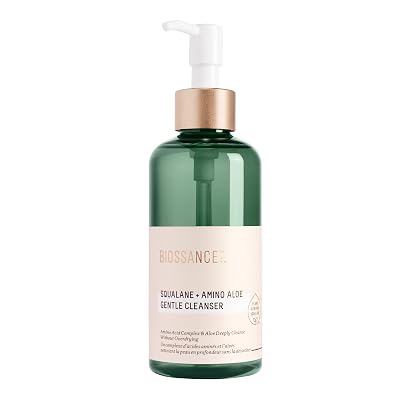
Check Price on AmazonBiossance Squalane + Amino Aloe Face Wash
Best for: Oily yet reactive skin
The Biossance Squalane + Amino Aloe Gentle Face Wash is the pick for people with oily but reactive skin who still want a foaming gel. The seller designs it as a gentle cleanser for all skin types, particularly oily and reactive skin, and pairs the lather with squalane and aloe vera to help maintain moisture.
It breaks down makeup and impurities, and it includes moringa extract to lift away grime. The listing also describes it as mildly exfoliating, so if your skin is very reactive, use it once a day at first. Compared with the #5 Vanicream it has more botanical ingredients, which some sensitive skin handles well and some does not, so patch test first.
- Foaming gel cleanser
- Squalane and aloe vera for moisture
- Moringa extract to lift impurities
- Designed for oily and reactive skin
Pros
- Satisfying lather without a tight feel
- Good fit for oily, sensitive skin
- Removes everyday makeup
Cons
- Described as mildly exfoliating
- More botanicals than the simplest washes
Skip it if: Skip it if your skin reacts to plant extracts or is very dry; the PCA SKIN or CLn picks are gentler.
Check Price on AmazonVanicream Gentle Facial Cleanser (3 Pack)

Best for: Everyday use on very reactive skin
The Vanicream Gentle Facial Cleanser is one of the simplest washes on this list, which is exactly why reactive skin often does well with it. It removes dirt, oil and makeup without drying, will not clog pores and is sulfate-free and gluten-free, and the brand is known for keeping common irritants out of its products.
It still lathers well in hard or soft water, so it suits people who dislike cream cleansers. It is sold as unscented in a three pack, which covers many months of use. Unscented is not always identical to fragrance-free, so check the full label if you are very fragrance-sensitive. It is a better everyday default than the more specialised #3 CLn.
- Removes dirt, oil and makeup without drying
- Sulfate-free and will not clog pores
- Lathers in hard or soft water
- Unscented; three bottles in one pack
Pros
- Very short, simple positioning
- Mild lather suits most skin types
- Three pack lasts for months
Cons
- Few extra hydrating ingredients
- May not remove waterproof makeup alone
Skip it if: Skip it if you wear heavy or waterproof makeup and want one step; pair it with an oil like the SKIN1004 set instead.
Check Price on AmazonSKIN1004 Centella Double Cleansing Duo

Best for: Sensitive skin that wears sunscreen and makeup
The SKIN1004 Centella Double Cleansing Duo is the pick for sensitive skin that wears makeup or water-resistant sunscreen daily. The set pairs a centella cleansing oil made with plant-based oils with a centella ampoule foam that adds sodium hyaluronate, so you can dissolve makeup first and then wash gently, rather than scrubbing with one product.
Centella asiatica is widely used in products aimed at calm, comfortable skin. The oil goes on dry skin with dry hands and is rinsed off before the foam. Two products mean more steps and more ingredients to patch test, so this set is less minimal than the #5 Vanicream, but it avoids the rubbing that makeup wipes often cause.
- Centella cleansing oil plus centella foam cleanser
- Plant-based oils in the cleansing oil
- Sodium hyaluronate in the foam
- Clear two-step directions
Pros
- Removes makeup and sunscreen with little rubbing
- Centella-based, comfort-focused formulas
- Both double-cleanse steps in one purchase
Cons
- Two products to patch test instead of one
- Extra step each evening
Skip it if: Skip it if you rarely wear makeup; a single mild wash such as the Vanicream pick is enough.
Check Price on AmazonPURITO Mighty Bamboo Panthenol Cleanser

Best for: Barrier-focused daily cleansing
The PURITO Mighty Bamboo Panthenol Cleanser is the pick for people who want a mild gel with a clear focus on the skin barrier. The seller describes a low-pH formula designed to protect the barrier, with panthenol and Korean bamboo extract, and says skin stays hydrated after cleansing rather than feeling squeaky.
It is made for sensitive skin and described as hypoallergenic, and it works both morning and night, removing sunscreen and light makeup in the evening. As with every hypoallergenic label, that is not a guarantee, so patch test first. It is lighter than the #2 PCA SKIN cream and suits normal to combination sensitive skin better than very dry skin.
- Low-pH gel formula for barrier protection
- Panthenol and Korean bamboo extract
- Designed to keep skin hydrated after cleansing
- Removes sunscreen and makeup morning or night
Pros
- Barrier-friendly, low-pH positioning
- Light gel suits combination sensitive skin
- Works for both AM and PM
Cons
- May not remove heavy makeup alone
- Hypoallergenic labelling is not a guarantee
Skip it if: Skip it if your skin is very dry and craves a cream; the PCA SKIN or Meaningful Beauty picks feel softer.
Check Price on AmazonKORRES Greek Yoghurt Foaming Cream Cleanser

Best for: Dry skin that likes a soft lather
The KORRES Greek Yoghurt Foaming Cream Cleanser is the pick for dry, sensitive skin that still enjoys some lather. It starts as a cream and turns into a soft foam, and the seller says it removes makeup, cleans pores and keeps skin hydrated, with real Greek yoghurt as its signature ingredient.
The brand describes it as dermatologically tested and vegetarian, and the directions are simple: a small amount massaged into damp skin twice a day. The listing does not clearly state that it is fragrance-free, so check the ingredient list if fragrance is a trigger for you. For the most fragrance-averse skin, the #1 Meaningful Beauty or #3 CLn picks are safer.
- Cream-to-foam texture
- Formulated with real Greek yoghurt
- Removes makeup and cleans pores while hydrating
- Dermatologically tested, vegetarian formula
Pros
- Soft lather that feels cushioning
- Suits dry skin that dislikes gels
- Removes everyday makeup
Cons
- Listing does not state fragrance-free
- Small bottle compared with the multi-packs
Skip it if: Skip it if fragrance often triggers your skin; choose a clearly fragrance-free wash such as the Meaningful Beauty or CLn pick.
Check Price on AmazonTULA The Cult Classic Purifying Cleanser

Best for: Normal to combination sensitive skin
The TULA Cult Classic Purifying Face Cleanser is the pick for people with mildly sensitive, normal to combination skin who want a gel that cleans pores without over-drying. The seller describes a pH-balanced formula that lifts makeup, dirt and excess oil, with prebiotic extracts intended to support the skin’s natural balance.
It also includes turmeric, white tea and blueberry extracts, which the brand links to soothing, though botanical extracts can be a trigger for very reactive skin. The listing does not state that it is fragrance-free, so check the label. It is more of a clean-feeling daily gel than the #5 Vanicream, which remains the safer choice for highly reactive faces.
- pH-balanced purifying gel cleanser
- Prebiotic extracts for the skin’s balance
- Turmeric, white tea and blueberry extracts
- Removes makeup, dirt and excess oil twice daily
Pros
- Cleans pores without a stripped feel
- Removes makeup in one step
- Suits combination skin
Cons
- Several botanical extracts that may trigger some skin
- Listing does not state fragrance-free
Skip it if: Skip it if your skin reacts to plant extracts or fragrance; the Vanicream or CLn picks are simpler.
Check Price on AmazonDIME Beauty Gentle Jelly Cleanser

Best for: All skin types that dislike foam
The DIME Beauty Gentle Jelly Cleanser is the pick for people who want a light, non-foaming wash that still removes makeup. The jelly melts away makeup, oil and impurities, and the seller uses naturally derived surfactants with coconut oil, vitamin E and lycopene, positioning it for sensitive, dry, oily and combination skin alike.
It leaves out parabens, sulfates, phthalates and silicones, and the directions stress lukewarm water, which matches good practice for reactive skin. The bottle is small, so it will run out faster than the #5 Vanicream three pack. It is a gentler, lower-lather option than the #9 TULA gel and simpler than the #6 SKIN1004 two-step set.
- Non-foaming jelly cleanser and makeup remover
- Naturally derived surfactants with coconut oil
- Vitamin E and lycopene
- No parabens, sulfates, phthalates or silicones
Pros
- Removes makeup without foam
- Suits most skin types
- Lightweight, comfortable feel
Cons
- Small bottle
- Coconut-derived ingredients may not suit everyone
Skip it if: Skip it if you want a large, budget-friendly bottle for daily use; the Vanicream three pack goes further.
Check Price on AmazonHow We Chose These Products
We shortlisted face washes from Amazon listings that are highly rated by a large number of shoppers, favouring established brands and fuller-featured formulas made for sensitive, reactive or easily irritated skin. We then checked each product’s listed features against the guidance cited in this post, including the AAD’s advice to use a gentle, non-abrasive cleanser and avoid scrubbing.
These are research-based picks, not hands-on lab tests. We did not use the washes ourselves, so the ranking reflects listing detail, fragrance status, texture and gentleness rather than personal results. Where a listing does not state that a wash is fragrance-free, we say so, because fragrance is one of the most common triggers for reactive skin.
- Strong ratings from a large number of shoppers
- Established brands and fuller-featured formulas preferred
- Fragrance-free and soap-free formulas ranked higher
- Listed features checked against the cited AAD guidance
- Scrubs, strong acid washes and thin or unclear listings excluded
What Makes Skin Sensitive or Reactive
Sensitive skin is not a medical diagnosis on its own. It describes skin that reacts easily with stinging, burning, tightness, itching or redness after contact with products, weather or friction. For some people it is linked to a condition such as rosacea, eczema or contact allergy; for others the skin barrier is simply easily disrupted.
When the barrier is weakened, irritants reach the nerve endings in the skin more easily, and that is why a product can sting within seconds. Cleansers matter because they are designed to break down oils, and a strong one can loosen the protective lipids that sensitive skin already struggles to keep. This is different from dry skin, which mainly needs added moisture. A reactive face can be oily, normal or dry, and still sting.
Syndet vs Soap: Why It Matters
Traditional soap is made by combining fats with an alkali. It cleans well, but it is usually strongly alkaline, while the surface of healthy skin is mildly acidic. Syndets, short for synthetic detergents, are designed to clean at a pH closer to the skin’s own.
| Feature | Traditional soap | Syndet wash |
|---|---|---|
| Typical pH | Alkaline | Close to skin pH |
| Effect on barrier | Can disrupt it | Usually gentler |
| Residue | Can leave film in hard water | Rinses more cleanly |
| Feel after washing | Often tight or squeaky | Usually soft |
| Suitability for sensitive skin | Often poor | Usually better |
| Common forms | Bar | Gel, cream, lotion or syndet bar |
Not every bar is soap. Some cleansing bars are syndet bars made with mild detergents, and the label or ingredient list will usually say soap-free. Likewise, a liquid wash is not automatically gentle; check the ingredients rather than the format.
Foaming vs Non-Foaming Wash for Sensitive Skin
Foam is not good or bad in itself. Lather comes from surfactants, and some foaming washes use mild ones while some creamy washes are more irritating than they look. Still, each texture tends to suit different kinds of sensitive skin.
| Wash type | Best for | Watch out for |
|---|---|---|
| Non-foaming cream or lotion | Reactive skin that also feels dry | Can feel less clean on oily skin |
| Milky cleanser | Very reactive or flushing skin | May not remove heavy sunscreen alone |
| Soft foaming gel | Sensitive skin that is also oily | Stronger foams can leave tightness |
| Micellar water | Days when skin is very irritated | Rubbing with pads can cause friction |
| Syndet bar | People who prefer bars | Must be labelled soap-free |
A simple test is how your face feels five minutes after rinsing. If it feels comfortable and calm, the texture suits you. If it feels tight, hot or itchy, choose something milder. Our comparison of hydrating and foaming cleansers explains the difference in more depth.
Signs Your Face Wash Is Too Harsh for Sensitive Skin
Reactive skin often gives quick feedback, but some signs build up slowly over a week or two. Watch for these after switching to a new wash, and remember that a reaction can appear even when the product is labelled for sensitive skin.
- Stinging, prickling or burning within a minute of applying the wash.
- Redness or a hot, flushed feeling that lasts after rinsing.
- Tightness that makes you want to apply moisturiser straight away.
- Moisturiser or sunscreen that suddenly stings when it did not before.
- Small bumps, rough patches or flaking around the nose, mouth or eyes.
- Skin that looks shiny and tight at the same time.
If you notice any of these, go back to your previous cleanser or a very plain one and let your skin settle before testing again. It can take one to two weeks for reactive skin to calm down. Our guide on how to tell if a cleanser is too harsh covers these warning signs in more detail, and explains why stinging after a wash is worth taking seriously even when it fades quickly.
What to Look For on the Label
The label will not guarantee that a wash suits you, but it can narrow the choice quickly.
- Fragrance-free, rather than unscented, since unscented products can contain masking fragrance.
- Soap-free or syndet, for a gentler pH.
- A short ingredient list, which makes it easier to avoid triggers.
- Glycerin, ceramides, panthenol or niacinamide, which support comfort and the skin barrier.
- Non-comedogenic, if you are also prone to breakouts.
- No added colour, menthol or essential oils.
Hydrating washes that leave a little moisture behind are often the most comfortable for reactive skin, even if your face is not especially dry. They lower the chance of the tight, prickly feeling that can follow a stronger wash.
Ingredients and Products to Avoid
Many stinging reactions come from a small group of common ingredients. If your skin reacts easily, these are the ones to skip first.
The American Academy of Dermatology guide to exfoliating safely at home notes that people with sensitive skin should be especially careful with scrubs and strong exfoliants.
- Fragrance and essential oils, including citrus, mint, eucalyptus and lavender.
- Menthol, camphor and other cooling agents that give a tingle.
- Scrubs with grains, beads or crushed shells.
- Strong exfoliating acids in a daily wash, such as high-strength glycolic acid.
- Benzoyl peroxide washes, unless a doctor has advised one.
- Drying alcohol high on the ingredient list.
- Cleansing brushes and rough cloths that add friction.
A burning or tingling feeling is not a sign that a wash is working. On sensitive skin it usually means irritation. Rinse the product off with lukewarm water and stop using it if the feeling returns.
Water Temperature and Towel Use
Small habits around washing can trigger as much redness as the cleanser itself. Hot water loosens skin oils and can make flushing worse, while very cold water can sting reactive skin and does not remove oily residue well. Lukewarm water, about the temperature you would use for a baby’s bath, is the safest choice.
Some people splash their face with icy water to close pores or calm redness. Pores do not open and close in that way, and sudden temperature changes can trigger flushing in reactive skin, particularly if you have rosacea. Hard water can also leave a mineral residue that some people find drying, so a thorough rinse and prompt moisturiser matter even more in hard-water areas.
Towels matter too. Rubbing with a rough towel adds friction, and a damp towel that stays in the bathroom for days collects bacteria and residue from laundry products. Use a clean, soft towel, pat the skin until it is just damp and apply moisturiser straight away.
Keep a separate small towel just for your face, change it every few days, and wash it with a fragrance-free detergent. This removes one of the most overlooked triggers for reactive skin.
How to Wash Sensitive Skin Without Triggering a Reaction
Follow these steps to test a new wash safely and use it in the gentlest way.
Patch test first
Apply a little wash to the side of your neck or jawline once a day for several days.
Wet your face with lukewarm water
Avoid hot showers running over the face.
Use a small amount
A pea-sized amount is enough for the whole face.
Apply with fingertips
Use light circles for 20 to 30 seconds; skip brushes and cloths.
Rinse thoroughly
Leftover cleanser can irritate, especially around the hairline and jaw.
Pat dry with a clean, soft towel
Do not rub or tug the skin.
Moisturise within a minute or two
Choose a fragrance-free moisturiser to seal in water.
Wash once or twice a day at most
Many people with reactive skin only need water in the morning.
Dos and Don’ts
Try This
- Choose fragrance-free, soap-free washes
- Patch test every new product
- Use lukewarm water
- Pat dry with a clean, soft towel
- Change only one product at a time
Avoid This
- Assume unscented means fragrance-free
- Use scrubs or cleansing brushes
- Wash in hot shower water
- Keep using a wash that stings
- Wash several times a day
More washing does not mean cleaner or calmer skin. For many people with sensitive skin, a single wash in the evening to remove sunscreen, sweat and makeup is enough, with a splash of lukewarm water in the morning.
Honest Limits
Terms such as sensitive, hypoallergenic and dermatologist-tested are not strictly standardised, and they do not guarantee that a product will suit you. Anyone can react to almost any ingredient, including mild ones, so testing on your own skin matters more than claims on the bottle.
A gentle wash can stop your cleanser being part of the problem, but it will not treat rosacea, eczema or allergies. If your skin still stings with a very simple routine, the cause may be a condition that needs a diagnosis, or an ingredient in another product you use. Shampoo, conditioner, hair styling products and laundry detergent are common hidden culprits because they run down the face or touch it every night on the pillowcase.
When to See a Dermatologist
- Your face stings or burns with even the mildest products.
- You have ongoing redness, visible blood vessels or flushing.
- You get itchy, scaly or weeping patches.
- You suspect an allergy and want patch testing to find the cause.
This article is for general information and does not replace professional medical advice. See a board-certified dermatologist if your skin is persistently reactive or if you have a skin condition.
Common Questions
What is the best type of face wash for sensitive skin?
A fragrance-free, soap-free syndet wash with a short ingredient list.
Is foaming or non-foaming better for sensitive skin?
Either can work; non-foaming is often gentler for very reactive skin.
What is a syndet cleanser?
A soap-free wash made with mild synthetic detergents at a skin-friendly pH.
Why does my face wash sting?
Fragrance, menthol, acids or harsh surfactants are common causes.
Is unscented the same as fragrance-free?
No; unscented products can contain masking fragrance.
Which face wash on this list is the most gentle?
The Vanicream Gentle Facial Cleanser and Meaningful Beauty Skin Softening Cleanser have the simplest, fragrance-free positioning here.
Can I use a face cloth on sensitive skin?
Fingertips are gentler; cloths add friction.
Is the most expensive face wash for sensitive skin worth it?
Not necessarily. The Meaningful Beauty pick leads on formula, but the Vanicream three pack is just as mild for everyday use.
Which pick is best for removing makeup on sensitive skin?
The SKIN1004 double cleansing duo or DIME Gentle Jelly Cleanser; both are designed to lift makeup without scrubbing.
How do I patch test a new face wash?
Use it on a small area such as the jawline for several days first.
Summing Up
The best facial wash for sensitive skin is a gentle, fragrance-free, soap-free cleanser that leaves your face comfortable rather than tight or stinging. Foaming or non-foaming both work if the formula is mild.
Pair it with lukewarm water, fingertips, a clean soft towel and a simple moisturiser, patch test new products, and see a dermatologist if your skin still reacts to a basic routine.
Our top pick: Meaningful Beauty Skin Softening Cleanser (2 Pack)
The Meaningful Beauty Skin Softening Cleanser takes the top spot because it is soap-free, fragrance-free and oil-free, removes makeup including mascara, and has a short, easy-to-read listing that keeps common triggers out. Choose the PCA SKIN Creamy Face Cleanser instead if your sensitive skin is also dry, or the CLn Facial Cleanser if you are prone to eczema-type flare-ups and want a physician-developed formula.
Check Price on Amazon
Written by
Registered pharmacist and founder of Facial Adviser. Rakib's pharmacy training covers how skincare actives work and interact; a later course in cosmetology turned that into a focus on facial treatments and skincare products. He plans, researches and edits every guide on the site and checks health claims against sources such as the American Academy of Dermatology, the FDA and the NIH. He is not a dermatologist; see the Editorial Policy and Medical Disclaimer.
About · Editorial policy · How we choose products · Medical disclaimer · Contact
Keep reading: Cleansers and face wash
- 10 Best Facial Cleansers for Combination Skin (2026): Balanced Picks
- 10 Best Facial Cleansers for Combination Skin (2026): Gels That Balance
- 10 Best Facial Cleansers for Clogged Pores (2026): BHA and BP Picks
- 10 Best Facial Washes for Oily Skin (2026): Clean and Matte, Not Tight
- 10 Best Facial Cleansers for Hormonal Breakouts (2026): Calmer Skin
- 10 Best Facial Wipes for Oily Skin (2026): Quick, Shine-Free Cleansing
- What Does a Facial Toner Do? The Real Answer
- 10 Best Facial Moisturizers for Dry Skin (2026): Rich, Gentle Creams